
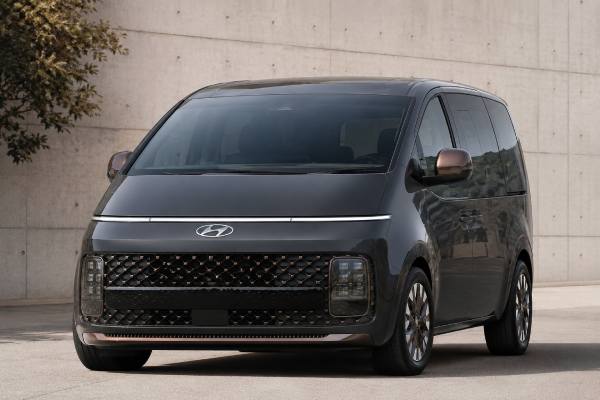
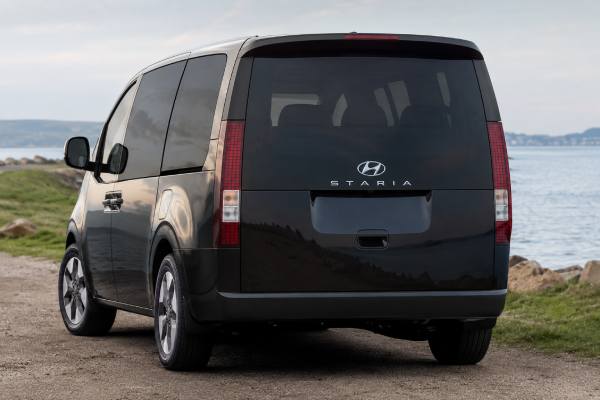
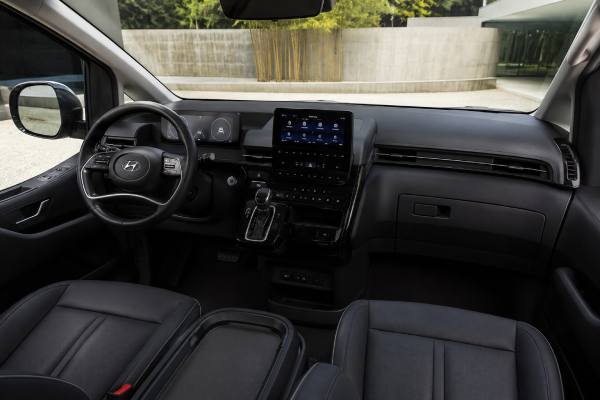
The Hyundai STARIA FWD 2.2 CRDi is a large, front-wheel-drive diesel people mover built for space, long-distance comfort, airport transfers, family hauling, and shuttle work. In US4 form, it replaced the older rear-drive Starex/H-1 idea with a more modern van-like MPV layout, a lower step-in feel, a wide cabin, and a smoother 8-speed automatic in most passenger versions.
For 2021–2024 buyers, the key questions are practical: is the 177 hp diesel strong enough, how costly is it to maintain, how safe is it, and what should be checked before buying used? The short answer is that the STARIA is very useful when it has been serviced properly, but its size, emissions hardware, tyre wear, and heavy-duty use history matter more than badge prestige or trim level.
Final Verdict
The 2021–2024 Hyundai STARIA FWD 2.2 CRDi is a strong choice for buyers who need serious passenger space, easy access, diesel torque, and long-trip comfort without moving into a full commercial minibus. Its best quality is packaging: few vehicles this size feel as car-like from the driver’s seat while carrying people and luggage so easily. The main tradeoff is ownership discipline. The D4HB diesel, 8-speed automatic, brakes, tyres, and emissions system all need proper servicing, especially on short-trip, shuttle, or high-load vehicles. Buy one with documented maintenance, completed campaigns, clean diesel-system behavior, and no neglected underbody or interior abuse.
| Pros | Cons |
|---|---|
| Huge cabin with useful 7-seat and 9-seat layouts | Large body needs space in tight city parking |
| 430 Nm diesel torque suits loaded highway driving | Not quick when fully loaded or climbing steep grades |
| 8-speed automatic is smoother than older van transmissions | Fluid condition matters on shuttle or towing vehicles |
| Strong ANCAP safety result for petrol and diesel variants | ADAS calibration can add cost after glass or bumper repairs |
| Comfortable ride for a large people mover | Tyres, brakes, and suspension wear reflect its weight |
| Diesel economy is reasonable for the vehicle size | Short trips can stress DPF, EGR, and SCR systems |
Table of Contents
- STARIA FWD 2.2 CRDi Overview
- Specifications and Technical Data
- Trims, Safety, and Driver Assistance
- Reliability, Common Issues, and Service Actions
- Maintenance and Buying Guide
- Driving, Performance, and Efficiency
- How the STARIA Compares to Rivals
STARIA FWD 2.2 CRDi Overview
The STARIA FWD 2.2 CRDi is best understood as a large diesel MPV with van-level space and more modern passenger-car manners than the older Hyundai people carriers. It is not a sporty vehicle, but it is practical, stable, and far more comfortable for long passenger work than many ladder-frame or commercial-based alternatives.
The US4-generation STARIA arrived with a bold one-box design, a very long wheelbase, sliding rear doors, and a high-roof cabin. In diesel form, it uses Hyundai’s 2.2-litre R-series CRDi four-cylinder, known by the D4HB engine family in many markets. Output is typically listed at 130 kW, or 177 PS, with 430 Nm of torque from low revs. That torque is the reason the diesel suits this body: it does not need to be worked hard in normal traffic, and it copes better with passengers and luggage than the petrol engine in many real-world use cases.
The FWD layout also changes the STARIA’s character compared with the older rear-drive Starex/H-1. It gives the cabin a more space-efficient floor plan and a lower, more modern driving feel. The tradeoff is that front tyres, front suspension parts, and alignment become important wear items because the front axle has to steer, drive, brake, and carry much of the vehicle’s load.
Most passenger versions use an 8-speed torque-converter automatic. Some commercial and regional variants used a 6-speed manual or different rear suspension layouts, but the common 2021–2024 FWD passenger diesel is the automatic. For used buyers, the automatic is generally the better fit for a people mover because it keeps the engine in its torque band and makes city work easier.
The STARIA’s appeal is strongest for large families, hotels, executive shuttles, taxi operators, school transport, and buyers who regularly need more than five proper seats. It is less ideal for owners who only occasionally need extra space, because the footprint is large, the tyres are not small-car cheap, and diesel emissions hardware does not enjoy repeated short cold trips.
Specifications and Technical Data
The FWD 2.2 CRDi version combines Hyundai’s R-series diesel with a front-drive platform and, in most passenger models, an 8-speed automatic. The important ownership points are the strong low-rpm torque, the large 75-litre fuel tank, the long wheelbase, and the weight: this is a big vehicle, so brakes, tyres, suspension, and fluids matter more than the modest horsepower number suggests.
| Item | Hyundai STARIA FWD 2.2 CRDi |
|---|---|
| Engine family | D4HB / R-series 2.2 CRDi diesel |
| Displacement | 2,199 cc |
| Layout | Inline-4, transverse front-mounted |
| Valvetrain | 16 valves with hydraulic lash adjusters |
| Induction | Turbocharged, electronically controlled variable-geometry turbo |
| Fuel system | Common-rail direct injection |
| Bore × stroke | 85.4 × 96.0 mm |
| Compression ratio | 16.0:1 |
| Maximum power | 130 kW / 177 PS at 3,800 rpm |
| Maximum torque | 430 Nm at 1,500–2,500 rpm |
| Timing drive | Timing chain |
| Fuel tank | 75 litres |
| Typical WLTP combined figure | 8.5 L/100 km, about 27.7 mpg US / 33.2 mpg UK |
| Item | Specification |
|---|---|
| Drive type | Front-wheel drive |
| Common passenger transmission | 8-speed torque-converter automatic |
| Manual availability | 6-speed manual in selected van and regional versions |
| Automatic gear ratios | 1st 4.808, 2nd 2.901, 3rd 1.864, 4th 1.424 |
| Higher automatic ratios | 5th 1.219, 6th 1.000, 7th 0.799, 8th 0.648 |
| Reverse ratio | 3.425 |
| Final drive | Market data commonly lists about 3.52 for FWD automatic |
| Item | Specification |
|---|---|
| Body style | 5-door large MPV / minibus with sliding side doors |
| Seating | Commonly 7, 8, 9, 10, or 11 seats by market |
| Length | 5,253 mm |
| Width | 1,997 mm |
| Height | 1,990 mm for standard passenger versions |
| Wheelbase | 3,273 mm |
| Ground clearance | 186 mm |
| Turning circle | About 11.9 m |
| Front suspension | MacPherson struts |
| Rear suspension | Multi-link on passenger versions |
| Common tyres | 215/65 R17 or 235/55 R18 |
| Kerb weight | Roughly 2,300–2,440 kg depending on seating and equipment |
| Braked towing | 1,500 kg in many European FWD passenger specifications |
| Item | Specification |
|---|---|
| 0–100 km/h | About 12.4 seconds for FWD automatic |
| Top speed | About 185 km/h |
| WLTP low-speed consumption | 11.1 L/100 km, about 21.2 mpg US / 25.4 mpg UK |
| WLTP high-speed consumption | 7.2 L/100 km, about 32.7 mpg US / 39.2 mpg UK |
| WLTP extra-high consumption | 8.6 L/100 km, about 27.4 mpg US / 32.8 mpg UK |
| WLTP CO₂ | About 222 g/km for FWD automatic in European data |
| Emissions equipment | DPF and market-dependent SCR/AdBlue aftertreatment |
| Item | Reference value |
|---|---|
| Engine oil capacity | About 6.5 litres for exchange service |
| Common oil grade | 0W-30 low-SAPS oil, ACEA C2/C3 type in many service schedules |
| Coolant capacity | About 9.6 litres in published technical data |
| Automatic transmission fluid capacity | About 7.1 litres listed in some FWD specifications |
| Wheel nut torque | 11–13 kgf·m, about 108–127 Nm |
| Service interval examples | 12,000–30,000 km by market and duty cycle |
Trims, Safety, and Driver Assistance
Trim names vary heavily by market, but the hardware differences that matter most are seating layout, wheel size, door/tailgate equipment, infotainment level, and safety-assist availability. For a used buyer, the best STARIA is not always the highest trim; it is the one with the right seating layout and the cleanest service history.
In Europe and several export markets, the STARIA passenger range included versions similar to Trend, Prime, Signature, Luxe, Prestige, or Lounge depending on country. In Australia, early passenger trims were commonly Staria, Elite, and Highlander, though diesel passenger models there were usually AWD rather than the FWD version covered here. Malaysia and some Asian markets used Lite, Plus, Max, Prestige, or 10-seat naming. The equipment can look similar at first glance, so check the build sheet rather than relying only on badges.
Useful quick identifiers include:
- Wheel size: 17-inch wheels usually appear on lower or more comfort-focused versions; 18-inch wheels are common on higher trims.
- Sliding doors: manual sliding doors on lower trims; power sliding doors on many premium versions.
- Tailgate: manual liftgate on lower trims; smart power tailgate on high trims in many markets.
- Dashboard: larger digital cluster and bigger infotainment screen usually indicate a higher trim.
- Seats: 7-seat lounge layouts may have captain chairs or relaxation seats; 9-, 10-, and 11-seat versions are more shuttle-focused.
- Safety tells: blind-spot view monitor, surround-view monitor, and smart cruise control are useful signs of a better-equipped vehicle.
The core mechanical setup of the FWD 2.2 CRDi automatic is broadly the same across trims, but wheels and seating can affect ride, tyre cost, cargo space, and resale demand. A 9-seat diesel may be more practical for transport work; a 7-seat premium layout may be nicer for private family or executive use but can sacrifice luggage volume.
On safety, the STARIA performed well where tested under ANCAP. The 2021 ANCAP rating applied to eight-seat petrol and diesel variants in Australia and New Zealand, with a five-star result and scores of 85% adult occupant protection, 86% child occupant protection, 65% vulnerable road user protection, and 74% safety assist. The rating covered petrol and diesel variants, not later hybrid variants.
The safety structure is one of the STARIA’s strengths compared with older people movers. Standard airbag coverage in the ANCAP-tested vehicle included dual front airbags, side chest airbags, side head-protecting curtain airbags, and a centre airbag between the front occupants. That centre airbag matters in side impacts because it helps reduce occupant-to-occupant contact.
Child-seat provision depends on seating layout and market. In the ANCAP report, ISOFIX lower anchorages were fitted to the second-row outboard seats, with top tether anchorage points for second-row positions. The third row was less suitable for some child restraint use in the tested configuration because top tether availability was not the same as the second row. Families should check the exact seat layout and anchor points in the vehicle they are buying, not just the model name.
Driver-assistance equipment can include forward collision-avoidance assist, lane keeping assist, lane following assist, blind-spot monitoring, rear cross-traffic alert, smart cruise control with stop-and-go, driver attention warning, high-beam assist, safe exit assist, surround-view monitor, blind-spot view monitor, parking sensors, and rear occupant alert. Availability varies by trim and year.
A practical warning: ADAS equipment is useful, but it adds repair sensitivity. If the windshield, front bumper, grille, radar bracket, camera mount, suspension, or steering geometry has been repaired, ask for calibration proof. A STARIA with warning lights, mismatched bumper repairs, or a poorly aligned steering wheel can become expensive even if it drives normally around the block.
Reliability, Common Issues, and Service Actions
The STARIA 2.2 CRDi is not known as a fragile design, but it is a heavy diesel vehicle that is often used hard. Reliability depends less on the engine’s headline strength and more on oil quality, diesel-system health, emissions-system use, automatic transmission care, brakes, tyres, and whether the cabin has lived as a private vehicle or a commercial shuttle.
| System | Prevalence | Cost tier | What to watch for |
|---|---|---|---|
| DPF, EGR, SCR/AdBlue | Occasional, higher on short-trip diesels | Medium to high | Warning lights, limp mode, poor regeneration history |
| Tyres and alignment | Common wear item | Low to medium | Inner-edge wear, steering pull, uneven front tyres |
| Brakes | Common wear item | Low to medium | Vibration, lip wear, corrosion, heavy shuttle use |
| Sliding doors and tailgate | Occasional | Medium | Slow operation, sensor faults, misalignment, rattles |
| 8-speed automatic | Usually durable if serviced | Medium to high | Harsh shifts, delayed engagement, dirty fluid, towing history |
| Suspension and wheel bearings | Occasional with high mileage or bad roads | Medium | Knocks, humming, poor tracking, loaded-use fatigue |
The D4HB diesel is a mature Hyundai/Kia engine family. In this application, the main advantage is the broad torque band. It does not need high rpm to move the STARIA, and that usually helps long-term drivability. Still, it is a modern common-rail diesel, so fuel quality, oil quality, and emissions-system condition matter.
Common diesel-related symptoms and likely causes include:
- Check-engine light with reduced power: possible EGR, boost-control, MAF/MAP sensor, DPF pressure sensor, NOx sensor, or SCR-related fault.
- AdBlue or SCR warning countdown: low AdBlue, crystallized dosing components, failed sensor, or software-related diagnosis issue.
- Frequent DPF regeneration: repeated short trips, weak thermostat, failed pressure sensor, poor injector behavior, or interrupted regeneration cycles.
- Rough idle or diesel knock: injector correction issue, fuel contamination, intake/EGR fouling, or software calibration need.
- Whistling or underboost: intake hose leak, intercooler plumbing issue, actuator fault, or turbo-control problem.
Short urban trips are the enemy of this engine’s emissions hardware. A private family STARIA that regularly does open-road journeys is usually a better bet than a city shuttle that idles for long periods, crawls through traffic, and never gets properly hot.
The timing chain is not a scheduled belt-replacement item, which is good for running costs. It should still be listened to during cold starts. A brief diesel clatter is normal, but persistent chain rattle, cam/crank correlation faults, rough running, or metallic noise from the timing side should be investigated. Chain, guide, or tensioner replacement is not routine maintenance, but it can become necessary if wear is out of specification.
The 8-speed automatic generally suits the engine well. During a test drive, it should engage Drive and Reverse promptly, pull away smoothly, and shift without flares or thumps. A slight diesel-automatic hesitation from rest is not unusual in a heavy vehicle, but harsh downshifts, hunting on light throttle, or shudder under load should be treated seriously. For vans used in towing, shuttle work, mountain roads, or hot climates, conservative transmission-fluid servicing is wise even where the official schedule is light on replacement language.
Chassis wear is predictable rather than alarming. The STARIA is wide, long, and heavy, so front tyres, brake pads, rotors, suspension bushes, drop links, and wheel bearings deserve close inspection. A vehicle that has carried passengers daily can still be a good buy, but only if it has not been maintained like a light hatchback.
Look carefully for corrosion if the car comes from a coastal region, snowy climate, or commercial fleet. Inspect the underbody, rear suspension mounts, sliding-door lower tracks, jacking points, exhaust hangers, brake lines, and exposed fasteners. The body is modern, but dirt, salt, and shuttle use can age a large people mover quickly.
Public recall history for the exact 2021–2024 FWD 2.2 CRDi depends on country and VIN. Use the official Hyundai recall checker for the registration market, and ask a dealer to print completed campaigns. For this model, do not rely on general internet lists because the STARIA was sold with different seating, driveline, emissions, and safety specifications by region.
Before purchase, request:
- Full service invoices, not just stamped books.
- Oil grade and interval proof.
- Automatic transmission service history on high-mileage or hard-use vehicles.
- Diesel fault-code scan, including DPF soot/load data where available.
- Recall and service-campaign completion proof.
- ADAS calibration proof after windshield, bumper, steering, or suspension repairs.
- Evidence that tyres match in size, load rating, and axle wear pattern.
Maintenance and Buying Guide
A STARIA 2.2 CRDi should be maintained like a heavy diesel work vehicle, even if it is privately owned. The safest approach is to follow the official schedule for your market and shorten intervals when the vehicle does city work, idles often, tows, carries full loads, or operates in heat, dust, mountains, or cold weather.
| Item | Practical interval | Buyer note |
|---|---|---|
| Engine oil and oil filter | Every 10,000–15,000 km or yearly for mixed use | Use correct low-SAPS diesel oil; avoid stretched intervals |
| Engine air filter | Inspect each service; replace around 36,000–48,000 km | Replace sooner in dust or shuttle use |
| Cabin air filter | Every 12 months in urban use | Important for rear HVAC airflow and odour control |
| Fuel filter | Often around 24,000–48,000 km by market | Do not delay on common-rail diesel engines |
| Brake fluid | Every 2 years | Heavy vehicle; fluid condition affects pedal consistency |
| Coolant | Inspect regularly; replace by official time schedule | Check radiator, hoses, expansion tank, and heater performance |
| Automatic transmission fluid | Inspect by schedule; replace earlier under severe use | Especially important for towing, heat, or shuttle duty |
| Drive belt and hoses | Inspect each service; replace on cracks, glazing, or swelling | Do not ignore belt noise on cold start |
| Timing chain | Inspect by symptoms, not routine belt interval | Listen for rattle and scan for timing-correlation faults |
| Tyres and alignment | Rotate every 10,000–12,000 km; align when wear appears | Front inner-edge wear is a key used-car clue |
| 12 V battery | Test from year 3 onward | Weak battery can trigger confusing electronic faults |
The oil choice is not the place to economize. Many official service schedules for the R2.2 use 0W-30 low-SAPS oil, such as ACEA C2/C3 type oils. The low-SAPS requirement matters because ash content affects diesel particulate filter life. If a used example has a history of generic oil changes with no specification listed, treat that as a risk.
For brakes, inspect the front and rear discs for lip wear, grooves, corrosion, and heat spots. A STARIA used in hills or passenger transfer work can consume brakes faster than a lightly used private vehicle. Brake vibration under gentle highway braking often points to rotor thickness variation or heat history.
Tyres must have the correct load rating. The common 235/55 R18 size is not rare, but cheap under-rated tyres are a red flag. Uneven shoulder wear often means the vehicle needs alignment, suspension inspection, or both. Because the STARIA is front-drive and heavy, mismatched front tyres can affect steering feel and traction in rain.
For the buyer’s inspection, start with the basics:
- Cold start: watch for excess smoke, warning lights, rough idle, chain rattle, and abnormal belt noise.
- Diesel-system scan: check stored and pending codes, DPF status, SCR/AdBlue data, and sensor plausibility.
- Transmission test: check Drive and Reverse engagement, light-throttle shifts, kickdown, and hill behavior.
- Brake test: feel for vibration, long pedal travel, pulling, or ABS/ESC warnings.
- Door test: open and close sliding doors and tailgate repeatedly, including power functions if fitted.
- HVAC test: check front and rear cooling and heating; large cabins expose weak air-conditioning quickly.
- Interior wear check: inspect seat rails, belts, floor trim, USB ports, door handles, and rear plastics.
- Undercarriage: check for scrapes, leaks, corrosion, damaged exhaust parts, and loose shields.
The best years or trims are the ones that match your use. A lower-trim 9-seat vehicle with clean service history can be a better business purchase than a tired high-trim lounge model. For family use, a higher trim with surround camera, blind-spot monitoring, power doors, and better lighting can be worth paying for. For commercial use, prioritize simpler equipment, durable seat material, easy-clean floors, and documented servicing.
Avoid vehicles with repeated unresolved diesel warning lights, missing oil-service proof, accident repairs around the front radar or camera area, badly worn mismatched tyres, damp carpets, or evidence of neglected shuttle use. A STARIA can age well, but deferred maintenance on a vehicle this big quickly becomes expensive.
Long-term durability should be good when the vehicle is serviced sensibly. The diesel engine has enough torque to avoid strain in normal use, the automatic is well matched, and the cabin structure is practical. The weak point is not one dramatic failure; it is the combined cost of diesel emissions parts, tyres, brakes, suspension, electronics, and interior wear if the previous owner treated it like a disposable fleet van.
Driving, Performance, and Efficiency
The STARIA FWD 2.2 CRDi drives better than its size suggests, but it still feels like a large, high-roof people mover. Its strengths are smooth cruising, low-rpm torque, visibility, ride comfort, and cabin usefulness; its limits are weight, body width, and modest acceleration when fully loaded.
The diesel engine is relaxed in normal driving. Peak torque arrives low, so the STARIA does not need aggressive throttle input to keep up with traffic. Around town, the automatic usually shifts early and keeps revs low. In Eco or Normal modes, throttle response can feel soft, which suits passengers but can make the van feel heavy from a stop. Sport mode sharpens response and holds gears longer, but it does not turn the STARIA into a quick vehicle.
Turbo lag is present but not dramatic. The engine is happiest when rolling, where the torque converter and 8-speed gearbox can keep it in the 1,500–2,500 rpm range. When fully loaded, steep hills and fast overtakes require planning. The official 0–100 km/h time of about 12.4 seconds is realistic for the vehicle type: acceptable, not lively.
The 8-speed automatic is a major part of the driving experience. When healthy, it shifts smoothly and avoids the busy feel of smaller engines with fewer gears. It may downshift on long motorway gradients, especially with passengers and luggage, but it should not flare, thump, or shudder. Any transmission harshness during a test drive deserves a specialist inspection.
Ride comfort is one of the STARIA’s best qualities. The long wheelbase helps it settle on highways, and the multi-link rear suspension in passenger versions gives it a more polished feel than many commercial vans. It can still bounce or thump over sharp potholes, especially on 18-inch wheels, but the overall tuning is passenger-friendly.
Handling is safe and predictable rather than agile. The steering is light at low speeds, which helps parking, and the vehicle tracks confidently at motorway speeds when tyres and alignment are correct. In corners, you feel the height and mass. It leans more than an SUV, and quick direction changes remind you that this is a wide, tall vehicle. Good tyres make a noticeable difference.
Braking feel is generally secure, but the STARIA’s weight means brake condition matters. A heavily loaded vehicle descending hills will work its brakes hard. On a used test drive, vibration through the pedal or steering wheel is not “normal van character”; it usually points to brake wear, heat history, or wheel/suspension issues.
Noise levels are better than older commercial vans. The diesel is audible on cold start and under acceleration, but it settles at highway speed. Wind noise can appear around the large mirrors and upright body, while tyre noise depends heavily on tyre brand and road surface. Higher trims with better cabin trim and glazing can feel more refined.
Real-world fuel use depends strongly on speed and load. Sensible mixed driving often lands around 8.5–10.0 L/100 km, or about 23.5–27.7 mpg US and 28.2–33.2 mpg UK. City driving with cold starts, school runs, idling, and short trips can move into the 10.5–12.0 L/100 km range. Open-road cruising at moderate speeds can be closer to the official high-speed figures if the vehicle is not fully loaded.
Green NCAP tested a heavier AWD diesel version and recorded high consumption under demanding cold and highway tests, which is a useful reminder that this is a large van even when it feels modern. The FWD version is lighter and simpler than AWD, but aerodynamic drag and mass still dominate at higher speeds. At 120 km/h, do not expect small-diesel economy.
Towing ability depends on the market specification. Many European FWD passenger versions list 1,500 kg braked towing, while other regional STARIA derivatives publish different figures. As a tow vehicle, the diesel torque is helpful, but the front-drive layout and long body mean proper tongue weight, tyre pressure, brake condition, and transmission temperature management are important. If towing is a major use case, compare the exact VIN-rated capacity before buying.
How the STARIA Compares to Rivals
The STARIA’s main advantage over rivals is its mix of cabin space, modern safety equipment, diesel torque, and passenger-friendly ride. It is not the cheapest or most compact option, but it feels more modern than many older van-based people movers and more spacious than most large SUVs.
Against the Kia Carnival, the STARIA feels taller, more van-like, and more spacious in upright passenger use. The Carnival is easier to live with as a family car, especially in tight suburbs, and it often feels more polished from the driver’s seat. The STARIA counters with a more open cabin, easier walk-through feel in some layouts, and stronger shuttle or commercial usefulness.
Against the Toyota HiAce or older Hyundai H-1/Starex-type vans, the STARIA is much more modern in safety, comfort, and driving position. The HiAce still has a strong durability reputation and broad fleet support in many markets, but the STARIA is a more pleasant passenger vehicle. Buyers moving from an older rear-drive van will notice the STARIA’s quieter cabin, lower floor feel, better driver assistance, and smoother automatic.
Against the Volkswagen Multivan, Caravelle, or Transporter passenger models, the STARIA often wins on value and standard space, while the Volkswagen range can offer a more modular European feel, stronger brand cachet, and different powertrain options. The Hyundai is simpler to understand as a used buy if you want a large diesel automatic with plenty of equipment.
Against the Mercedes-Benz V-Class or Vito Tourer, the STARIA is usually the more value-driven choice. The Mercedes can feel more premium and may have stronger executive appeal, but running costs and repair prices can be higher. For hotel transfers, large families, or practical fleet use, the Hyundai’s equipment-per-money argument is strong.
Against the Ford Tourneo Custom, the STARIA feels more MPV-like in some trims, while the Ford can offer a more commercial-duty personality and strong European fleet familiarity. Which is better depends on the role: STARIA for comfort and cabin ambience, Tourneo for a more conventional van ecosystem.
The STARIA is less convincing against rivals if you do not need its size. A large SUV may be easier to park, quicker, and more desirable on the used market, while still carrying five people and luggage. But once you need seven adults, sliding doors, luggage space, and diesel range, the STARIA becomes much more compelling.
The best rival comparison is not only about spec sheets. Ask what the vehicle will do every week. For airport runs, large families, passenger transfer, or long-distance group travel, the STARIA FWD 2.2 CRDi is one of the more comfortable and sensible choices in its class. For short urban errands, occasional third-row use, or buyers worried about diesel emissions systems, a smaller petrol, hybrid, or SUV alternative may be easier to own.
References
- STARIA. 2024 (Specifications)
- Hyundai Staria | Safety Rating & Report | ANCAP 2021 (Safety Rating)
- Green NCAP assessment of the Hyundai STARIA 2.2 CRDi diesel AWD automatic, 2023 2023 (Efficiency Test)
- PERIODIC MAINTENANCE SERVICE FOR STARIA R2.2 (US4) PRIME 2025 (Maintenance Schedule)
- Changing tyres 2024 (Owner’s Manual)
Disclaimer
This article is for informational purposes only and is not a substitute for professional diagnosis, repair, or inspection by a qualified technician. Specifications, torque values, service intervals, fluids, towing limits, safety equipment, emissions hardware, and repair procedures vary by VIN, market, model year, seating configuration, trim, and equipment. Always verify the correct data against the official owner’s manual, service documentation, dealer records, and vehicle identification number before buying, servicing, towing, or repairing a Hyundai STARIA.
If this guide helped you, please share it on Facebook, X/Twitter, or your preferred social platform to support our work and help other STARIA buyers make a better decision.