
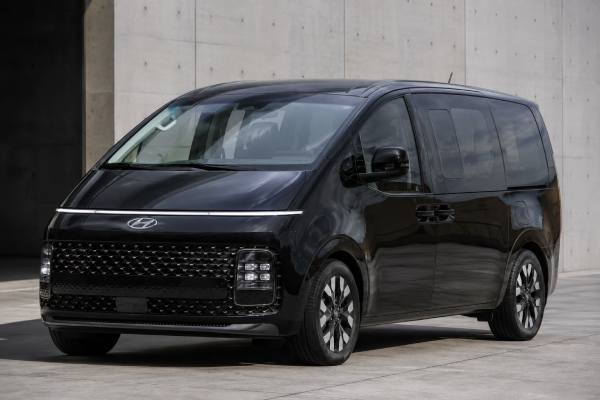
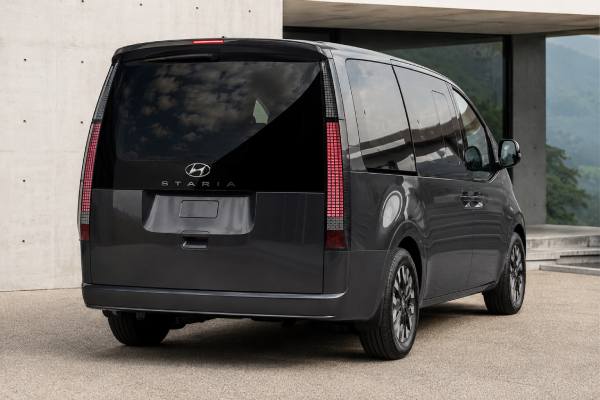
The Hyundai STARIA HTRAC 2.2 CRDi is a large diesel people mover built for families, shuttle operators, hotels, executive transport, and long-distance users who need space without moving into a full commercial van. In US4 form, it replaced the older H-1/iLoad style with a much more modern cabin, stronger safety equipment, and available HTRAC all-wheel drive.
This guide focuses on the 2021–2024 STARIA HTRAC with the 2.2-litre CRDi diesel rated at about 177 PS, paired with an 8-speed automatic transmission. It covers what matters when buying or running one used: technical specs, safety ratings, common issues, servicing, real-world driving, and how it compares with rival vans and MPVs.
Final Verdict
The 2021–2024 Hyundai STARIA HTRAC 2.2 CRDi is a strong choice if you need a genuinely roomy diesel people mover with confident all-weather traction, useful torque, modern safety tech, and a calmer cabin than older van-based alternatives. It suits large families, airport-transfer work, hotel fleets, and long-distance private buyers better than tight city use. The main tradeoff is running complexity: diesel emissions hardware, HTRAC driveline parts, heavy tyres, and large brakes all need proper maintenance. Buy one only with clear service history, completed recall checks, healthy DPF/SCR behavior, and no neglected transmission or AWD fluid work.
| Pros | Cons |
|---|---|
| Huge cabin with adult-friendly second and third rows | Large body feels bulky in narrow streets and tight car parks |
| 177 PS diesel gives relaxed torque for passengers and luggage | Short-trip diesel use can stress DPF, EGR, and SCR systems |
| HTRAC AWD improves wet-road, snow, and gravel traction | AWD adds weight, driveline service needs, and extra tyres sensitivity |
| 8-speed automatic suits long-distance cruising and shuttle work | ATF changes are wise sooner than many “sealed” claims suggest |
| Strong ANCAP safety result for rated 8-seat variants | Safety rating coverage varies by market, seating, and later hybrid models |
| 2,500 kg braked towing rating in many published AWD specifications | Heavy towing increases fuel use, brake wear, and cooling demand |
Table of Contents
- Detailed STARIA HTRAC Overview
- 2.2 CRDi Specifications and Data
- Trims, Safety and Driver Assistance
- Reliability, Issues and Service Actions
- Maintenance Schedule and Buying Guide
- Driving, Performance and Economy
- How STARIA HTRAC Compares to Rivals
Detailed STARIA HTRAC Overview
The STARIA HTRAC 2.2 CRDi is best understood as a modern people mover with van-like space, not a traditional SUV. Its appeal is simple: it carries many people comfortably, offers diesel torque for loaded driving, and adds all-wheel-drive security that many rival MPVs do not offer.
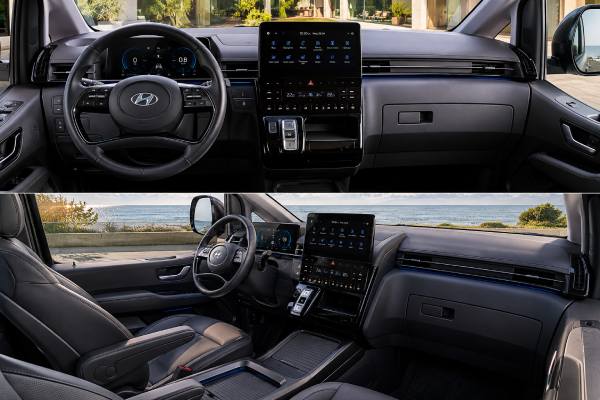
The US4 STARIA arrived with a very different design from the Hyundai H-1 it effectively replaced in many markets. The body is smooth and futuristic, the dashboard is more car-like, and the safety package is much stronger. For a buyer coming from an older shuttle van, the difference in refinement, technology, seating comfort, and driver assistance is substantial.
The 2.2 CRDi version uses Hyundai’s R-series/D4HB diesel family in this application. Output is commonly quoted as 177 PS, or 130 kW, with about 430 Nm of torque from low engine speeds. That torque figure is more important than the horsepower number because the STARIA is a large, heavy vehicle. With passengers, luggage, and climate control running, it needs low-rpm pull more than high-rpm sparkle.
HTRAC is Hyundai’s name for its electronically controlled all-wheel-drive system. In normal driving, it prioritizes efficiency and stability, then shifts torque rearward when traction or acceleration demand calls for it. Some markets also include a 4WD Lock function, useful for slippery driveways, snow, wet grass, unsealed roads, or low-speed traction situations. It is not an off-road transfer-case system, but it gives the STARIA a clear advantage over front-drive-only vans in poor weather.
The strongest reason to buy this version is packaging. The STARIA’s long wheelbase, upright body, and wide cabin make it more useful than most large SUVs if people-moving is the priority. Adults can use the rear rows without feeling like they are sitting in emergency seats, and the sliding doors are ideal when children, elderly passengers, or luggage are involved. In many markets, it is offered in 7-, 8-, 9-, 10-, or 11-seat formats, though equipment and safety-rating coverage can differ.
The diesel HTRAC model makes the most sense for long-distance use, mixed road conditions, shuttle work, or households that regularly carry passengers and cargo. It is less ideal for drivers who only do short urban trips. Like any modern diesel, it relies on exhaust aftertreatment systems that prefer proper warm-up, regular highway running, and the correct low-ash engine oil.
Used buyers should treat it as a high-value working vehicle, not just a big family car. Inspect it for sliding-door wear, tyre mismatch, brake condition, software updates, emissions faults, fluid history, and signs of commercial abuse. A well-maintained STARIA can be an excellent long-haul people mover. A neglected one can become expensive because everything from tyres to brakes to emissions sensors is sized for a heavy vehicle.
2.2 CRDi Specifications and Data
The STARIA HTRAC 2.2 CRDi combines a transverse 2.2-litre four-cylinder turbo-diesel, an 8-speed automatic transmission, and Hyundai’s active on-demand AWD system. The most important ownership facts are its strong low-rpm torque, large 75-litre fuel tank, heavy kerb weight, and long 3,273 mm wheelbase. Specifications vary slightly by market and seating layout, so the figures below reflect widely published 2021–2024 diesel AWD passenger specifications.
| Item | Hyundai STARIA HTRAC 2.2 CRDi |
|---|---|
| Engine family | R-series / D4HB 2.2 CRDi diesel |
| Displacement | 2.2 L / 2,199 cc |
| Layout | Inline-four, 16-valve, transverse mounted |
| Induction | Turbocharged diesel with electronically controlled VGT |
| Fuel system | Common-rail direct injection |
| Maximum power | 177 PS / 130 kW at 3,800 rpm |
| Maximum torque | About 430 Nm from 1,500–2,500 rpm |
| Bore × stroke | 85.4 mm × 96.0 mm |
| Compression ratio | 16.0:1 |
| Fuel type | Diesel |
| Fuel tank | 75 L |
| Official combined economy | About 8.2 L/100 km in published AWD passenger data |
| Item | Specification |
|---|---|
| Transmission | 8-speed automatic torque-converter transmission |
| Gear selector | Shift-by-wire buttons on many trims |
| Drive type | HTRAC active on-demand all-wheel drive |
| AWD lock function | Available on many diesel AWD specifications |
| Drive modes | Comfort, Eco, Sport, and Smart in many markets |
| Final drive | 3.32 in published AWD automatic data |
| Item | Specification |
|---|---|
| Body style | Large MPV / people mover |
| Length | 5,253 mm |
| Width | 1,997 mm |
| Height | 1,990 mm in many passenger specifications |
| Wheelbase | 3,273 mm |
| Ground clearance | 186 mm |
| Turning circle | 11.94 m |
| Front suspension | MacPherson strut |
| Rear suspension | Multi-link |
| Common tyre size | 235/55 R18 104H |
| Kerb weight | About 2,255–2,325 kg, depending on trim |
| Gross vehicle mass | About 3,040 kg in published AWD passenger data |
| Item | Specification or practical note |
|---|---|
| Braked towing capacity | 2,500 kg in many AWD passenger specifications |
| Unbraked towing capacity | 750 kg |
| Maximum towball weight | 100 kg in published Australian-style data |
| Front brakes | Ventilated discs, 345 mm × 30 mm |
| Rear brakes | Ventilated discs, 325 mm × 20 mm |
| Cargo volume | About 831 L behind row 3, 1,303 L behind row 2 |
| Top speed | Typically around 185 km/h in European data |
| Item | Useful value |
|---|---|
| Engine oil grade | 0W-30 low-SAPS diesel oil, ACEA C2/C3 type where specified |
| Engine oil quantity | About 6.5 L in published service data |
| Brake fluid | DOT 4 |
| Automatic transmission fluid | Hyundai/Kia SP-IV type where specified |
| Wheel nut torque | 107–127 Nm / 79–94 lb-ft |
| Timing drive | Timing chain; inspect for noise, stretch, and correlation faults |
The specification story is clear: the STARIA HTRAC is not a lightweight MPV. It is a large, heavy, diesel AWD vehicle with useful torque and serious passenger capacity. That makes maintenance discipline more important than it would be on a smaller family car.
Trims, Safety and Driver Assistance
Trim names vary by country, but the STARIA HTRAC 2.2 CRDi usually sits in the better-equipped part of the range. The features that matter most are seating layout, sliding-door equipment, infotainment size, camera coverage, ADAS package, and whether the vehicle has the diesel AWD system with 4WD Lock.
Common trim and equipment patterns
In Australia-style specifications, trim names such as Staria, Elite, and Highlander are common. Other markets use names such as Premium, Signature, Luxury, Style, Trend, or Lounge. The mechanical package may remain similar, but the cabin and safety equipment can vary a lot.
Base and mid-grade models usually give you the essentials: 18-inch wheels, LED lighting in many markets, a large touchscreen, Apple CarPlay and Android Auto, rear climate vents, sliding doors, multiple USB outlets, smart cruise control, lane support, AEB, and rear camera or surround-view features depending on trim.
Higher trims typically add more comfort and convenience rather than major mechanical changes. Look for power sliding doors, smart tailgate, 10.25-inch infotainment, larger digital cluster, leather-appointed trim, power driver seat, heated and ventilated front seats, premium cabin materials, sunroof, surround-view monitor, blind-spot view monitor, and rear passenger monitoring.
The quickest identifiers are simple:
- HTRAC or AWD badging, plus a 4WD Lock control where fitted.
- Shift-by-wire button selector instead of a conventional lever on many versions.
- Power sliding-door buttons on higher trims.
- Larger infotainment and digital driver display on upper grades.
- Dual-panel sunroof and blind-spot camera view on top specifications.
- Seating layout: 7-seat luxury-style versions often have captain’s chairs; 8-seat versions suit family and fleet use better.
Mechanically, the key differences are usually drivetrain and equipment, not big changes in suspension or braking between passenger trims. Tyre condition matters more than trim name. On an AWD STARIA, all four tyres should be the same size, similar tread depth, and preferably the same model. Mismatched tyres can upset AWD behavior and increase driveline stress.
Safety rating coverage
ANCAP awarded the Hyundai STARIA a five-star safety rating in 2021 for rated 8-seat petrol and diesel variants sold in Australia and New Zealand. The published assessment scores were strong for a vehicle of this size: 85% adult occupant protection, 86% child occupant protection, 65% vulnerable road-user protection, and 74% safety assist.
This is a major advantage over many older people movers and commercial vans. The STARIA was designed with a modern safety structure, front and side airbags, curtain airbags, and a front centre airbag in rated markets. That centre airbag helps reduce front-occupant contact in some side-impact situations.
The safety rating should still be matched to the exact vehicle. Imported models, different seating layouts, wheelchair conversions, commercial versions, and later hybrid variants may not have identical rating coverage. When buying used, check the VIN, build plate, market specification, and seat configuration.
ADAS and calibration points
The STARIA’s driver-assistance suite can include forward collision-avoidance assist, pedestrian and cyclist detection, smart cruise control with stop-and-go, lane keeping assist, lane following assist, blind-spot monitoring, rear cross-traffic assist, safe-exit warning or assist, driver-attention warning, intelligent speed-limit assist, parking sensors, and surround-view cameras.
These systems are useful, but they depend on correct sensor alignment. After a windscreen replacement, front-end repair, bumper removal, wheel-alignment work, or accident repair, ask for evidence that camera and radar calibration was performed if required. A STARIA with warning lights, unavailable cruise control, or lane-assist errors may need more than a simple reset.
For family buyers, child-seat provisions are an important detail. Many 8-seat versions include ISOFIX anchors on the outboard second-row seats and top-tether anchors in the second row. Check the exact seat layout before buying, especially if you need three child seats across, a rear-facing seat plus adult access, or wheelchair conversion compatibility.
Reliability, Issues and Service Actions
The STARIA HTRAC 2.2 CRDi is still relatively young, so the best reliability judgment comes from known Hyundai diesel patterns, early owner experience, service records, and inspection quality. The engine and automatic transmission are capable of high mileage, but modern diesel emissions systems, AWD driveline parts, and heavy-vehicle wear items can become expensive if neglected.
| Area | Prevalence | Cost tier | Typical trigger |
|---|---|---|---|
| DPF regeneration problems | Occasional | Medium to high | Short trips, low-speed fleet use, wrong oil |
| AdBlue/SCR or NOx sensor faults | Occasional | Medium | High mileage, poor fluid quality, sensor ageing |
| EGR soot and intake contamination | Occasional | Medium | Urban diesel use and long idle time |
| Sliding-door or tailgate issues | Occasional | Low to medium | Fleet use, dirty tracks, weak battery voltage |
| Brake and tyre wear | Common | Low to medium | Vehicle weight, city driving, airport-transfer use |
| AWD tyre mismatch sensitivity | Occasional | Medium | Replacing only one or two tyres |
| ADAS warning or calibration faults | Occasional | Medium | Windscreen, bumper, alignment, or crash repair |
Diesel emissions systems
The DPF, EGR, SCR catalyst, AdBlue system, and NOx sensors are the main areas to check on any modern 2.2 CRDi STARIA. These systems are not inherently a reason to avoid the vehicle, but they need the right usage pattern.
Symptoms of DPF or emissions trouble include frequent forced regeneration, rising oil level, poor fuel economy, warning lights, limp mode, strong exhaust smell, fan running after shutdown, and repeated messages related to AdBlue or emissions countdown. The likely root causes are short trips, failed temperature or pressure sensors, soot loading, poor AdBlue quality, injector issues, or software/calibration problems. The remedy should begin with proper diagnostic data, not parts guessing.
A good buyer’s inspection should include a scan for stored and pending fault codes, DPF soot and ash data where available, regeneration history, AdBlue level and quality, and a road test long enough to see whether the engine warms fully. If the seller says “it just needs a sensor,” ask for a diagnostic report.
Engine and timing chain considerations
The 2.2 CRDi uses a timing chain rather than a routine timing belt. That does not mean it is maintenance-free forever. Timing-chain wear is usually linked to high mileage, poor oil quality, extended oil intervals, repeated cold starts, and low oil level.
Symptoms to watch for are cold-start rattle, cam/crank correlation fault codes, rough running, metallic chain noise, or delayed oil-pressure build. The correct response is inspection, oil-pressure verification, and chain/tensioner/guide replacement if out of spec. Preventive oil changes with the correct low-SAPS grade are far cheaper than chain or turbo damage.
Also inspect for injector leaks, diesel smell, coolant stains, oil seepage around the timing cover or rocker area, loose boost hoses, and intercooler pipe oil misting. A light oil film in charge pipes is normal on many diesels; dripping oil or underboost faults are not.
Transmission and AWD system
The 8-speed automatic should shift smoothly when cold and warm. Watch for harsh engagement, delayed Drive or Reverse selection, flare between gears, vibration under light throttle, or repeated hunting on hills. Some behavior can be software-related, but neglected fluid or internal wear should not be dismissed.
The HTRAC AWD system should be quiet and transparent in normal driving. A binding sensation on tight turns, driveline clunk, rear coupling noises, or mismatched tyres are warning signs. On a used vehicle, confirm that all four tyres are matched and that the transfer case, rear differential, and driveline components are not leaking.
For shuttle or towing use, earlier fluid changes are sensible. Even when a market schedule is relaxed, heavy-duty operation changes the real service need.
Chassis, brakes and body
The STARIA’s weight means tyres, brake pads, rotors, suspension bushes, ball joints, and wheel bearings work hard. City shuttle use is especially tough because the vehicle is heavy, stops often, and spends much of its time loaded.
During inspection, look for uneven tyre wear, vibration under braking, steering shimmy, rear suspension knocks, damaged undertrays, bent jacking points, and corrosion around suspension hardware. In snowy or coastal climates, check subframes, brake lines, door bottoms, sliding-door tracks, tailgate edges, and underbody seams.
Power sliding doors should open and close smoothly without bouncing back, grinding, or needing manual help. Dirty tracks, worn rollers, weak 12 V battery condition, and poor alignment can all cause trouble.
Recalls, service campaigns and updates
Recall coverage is market-specific, so the right method is a VIN check through Hyundai or the official recall authority in the country where the vehicle is registered. Do not rely only on a seller’s statement. Ask for dealer printouts showing completed recalls, field service actions, software campaigns, and warranty repairs.
Software updates may cover infotainment behavior, ADAS faults, engine management, transmission shift logic, or emissions-system diagnostics. A reflash can be the official remedy for some complaints, but it should be documented. If warning lights return after an update, the root cause still needs diagnosis.
Maintenance Schedule and Buying Guide
The STARIA HTRAC 2.2 CRDi rewards preventive servicing. The most important habits are frequent DPF-safe oil changes, clean filters, brake-fluid renewal, careful tyre matching, and earlier driveline-fluid service if the vehicle tows or works commercially.
| Item | Recommended interval | Why it matters |
|---|---|---|
| Engine oil and filter | Every 10,000–15,000 km or 6–12 months | Protects turbo, timing chain, DPF, and bearings |
| Engine air filter | Inspect each service; replace about 36,000 km or sooner | Dusty use shortens turbo and sensor life |
| Cabin filter | Every 12,000–24,000 km depending on climate | Maintains rear HVAC airflow and defogging |
| Fuel filter | About every 24,000 km in stricter service schedules | Protects common-rail pump and injectors |
| Brake fluid | Every 2 years, or stricter local schedule | Preserves ABS/ESC operation and pedal feel |
| Automatic transmission fluid | About 48,000–60,000 km for severe use | Useful for towing, fleets, heat, and stop-start work |
| Coolant | Inspect yearly; replace around 96,000 km or local interval | Protects EGR cooler, radiator, pump, and heater circuit |
| Auxiliary drive belt | Inspect each service; replace if cracked or noisy | Failure can leave the vehicle stranded |
| Timing chain | Inspect by symptoms, scan data, and mileage | Replace only when noisy, stretched, or out of spec |
| Differential and transfer oils | Inspect for leaks; consider 60,000 km severe-use changes | HTRAC driveline longevity depends on clean lubricant |
| Tyre rotation and alignment | Every 10,000–12,000 km | Prevents shoulder wear and AWD tyre mismatch |
| 12 V battery test | Annually after year three | Low voltage causes door, sensor, and module faults |
Use low-SAPS oil that matches the official diesel/DPF specification for your VIN. Generic diesel oil can be the wrong choice if it does not meet the emissions-system requirement. The published 6.5-litre service quantity is useful for planning, but the dipstick and official service data should decide the final fill.
Pre-purchase inspection checklist
A used STARIA deserves a careful inspection because many examples work hard. Before committing, check:
- Full service history with dates, mileage, oil grade, and filters listed.
- Evidence of recall checks and dealer software updates.
- DPF, SCR, AdBlue, and NOx sensor data from a diagnostic scan.
- Smooth cold start with no excessive chain rattle or smoke.
- Automatic transmission behavior from cold, warm, uphill, and reverse.
- AWD operation with no tight-turn binding or rear driveline noise.
- Matched tyres with even tread depth and correct load rating.
- Brake rotor thickness, pad life, and vibration under hard stops.
- Sliding-door rollers, tracks, latches, and power operation.
- Rear climate control, USB ports, cameras, parking sensors, and infotainment.
- Undercarriage, subframes, seams, and door bottoms for corrosion.
- Evidence of towing, commercial wrap removal, airport-transfer use, or accident repair.
A high-mileage privately used STARIA with excellent maintenance can be better than a lower-mileage shuttle vehicle that idled all day and received only minimum servicing.
Best versions to seek
For most buyers, a mid-to-high trim diesel HTRAC with documented servicing is the sweet spot. It gives the traction, torque, safety features, and comfort that make the STARIA special without relying only on badge level. If you carry children, inspect the exact seating layout before choosing a luxury captain-chair version. If you carry adults or run transport work, the more conventional 8-seat layout may be more useful.
Avoid examples with unresolved emissions warnings, missing service history, mismatched tyres, neglected brakes, water leaks, damaged sliding doors, or vague explanations for warning lights. A discounted STARIA can lose its appeal quickly if it needs DPF work, AdBlue components, tyres, brakes, ATF service, and door repairs at the same time.
Long-term durability should be good when the vehicle is serviced correctly and used as intended. The main risk is not a weak basic design; it is treating a heavy modern diesel AWD people mover like a simple old van.
Driving, Performance and Economy
The STARIA HTRAC 2.2 CRDi drives better than its size suggests, but it is still a very large vehicle. Its strengths are relaxed torque, long-distance stability, cabin space, and secure traction rather than sharp handling or quick acceleration.
The diesel engine is most comfortable in the low and middle rev range. Around town, the 430 Nm torque figure helps the vehicle move away cleanly even with passengers aboard. Turbo lag is present if you ask for sudden power from very low rpm, but the 8-speed automatic usually masks it well by choosing a lower gear.
The transmission is generally smooth and suits the STARIA’s character. In Eco mode it may upshift early and feel a little lazy. Sport mode sharpens throttle response and holds gears longer, which helps on hills or when loaded. Smart mode is often the best daily setting because it adapts without making the vehicle feel busy.
Ride comfort is one of the STARIA’s best features. The long wheelbase helps it settle at highway speeds, and the multi-link rear suspension gives it a more composed feel than many older van-based people movers. It still rides firmly over sharp bumps when lightly loaded, especially on 18-inch wheels, but it becomes more settled with passengers aboard.
Steering is light and easy, which is helpful in town. Feedback is limited, but that is normal for this class. The biggest adjustment is width and length. At more than five metres long and nearly two metres wide, the STARIA needs planning in old parking structures, narrow hotel entrances, and urban side streets.
Braking performance feels adequate when the system is in good condition, but wear should be watched closely. Loaded vans create heat quickly. If the pedal pulses, the steering shakes, or the vehicle pulls under braking, budget for pads, rotors, tyres, or suspension work rather than assuming it is minor.
Real-world fuel economy depends heavily on use. Sensible expectations are:
- City and school-run use: about 10–12 L/100 km, or roughly 20–24 mpg US / 24–28 mpg UK.
- Highway cruising: about 7.5–9.0 L/100 km, or roughly 26–31 mpg US / 31–38 mpg UK.
- Mixed family or shuttle use: about 8.5–10.5 L/100 km, or roughly 22–28 mpg US / 27–33 mpg UK.
Cold weather, roof boxes, towing, mountain roads, heavy loads, and long idling all raise consumption. Short urban trips are also the least friendly pattern for the diesel aftertreatment system.
HTRAC is a major benefit in rain, snow, gravel, and steep slippery access roads. It does not turn the STARIA into an off-roader, but it makes the vehicle feel more secure when loaded. The 4WD Lock function, where fitted, is best used at low speeds on slippery surfaces, not as a dry-road performance setting.
For towing, the diesel’s torque and the long wheelbase are helpful, but the 100 kg towball figure in some published data means trailer loading matters. Keep trailer nose weight, tyre pressures, brake condition, cooling-system health, and ATF condition in mind. Expect a serious fuel penalty when towing; a loaded box trailer or caravan can easily push consumption far beyond normal highway figures.
How STARIA HTRAC Compares to Rivals
The STARIA HTRAC stands out because it combines big-MPV comfort, diesel torque, and available AWD. Many rivals offer one or two of those strengths, but not always all three.
The Kia Carnival is the closest mainstream rival in many markets. It often feels more car-like, has a smart interior, and is excellent for families. The Carnival may be easier to drive daily and can feel more polished from behind the wheel. The STARIA counters with a taller, more van-like cabin, sliding-door practicality, and the HTRAC advantage where AWD is available. If you need maximum passenger space and poor-weather traction, the STARIA has the edge. If you want a more conventional family vehicle feel, the Carnival is compelling.
The Mercedes-Benz V-Class and Vito Tourer bring premium badge appeal, efficient diesel options, and available 4MATIC in some markets. The Mercedes feels more upmarket in the right trim and has strong business-shuttle credibility. The STARIA usually offers better value, more standard safety equipment for the money, and lower purchase cost. Mercedes servicing and parts can be noticeably more expensive, especially on high-mileage commercial examples.
The Volkswagen Multivan, Caravelle, and Transporter-based people movers are strong rivals for refinement, modular seating, and European fleet support. The VW products often feel mature and well-developed, with excellent seating flexibility in some versions. The STARIA fights back with bold design, generous equipment, a strong safety package, and simple ownership value. Used VW buyers should also be just as careful with diesel emissions systems and DSG or automatic service history.
The Toyota Proace Verso and related Stellantis vans are practical and efficient, especially in Europe. They are more conventional van-based people movers and can be cheaper to run in fleet service. The STARIA feels more distinctive and often more comfortable as a private family or executive transport vehicle. Toyota’s dealer network and reputation are strong advantages, but the Hyundai’s cabin design and AWD availability can make it more attractive.
The Ford Tourneo Custom is another serious rival, especially for commercial users. It has strong load practicality, good parts support, and a familiar van platform. The STARIA feels more futuristic and passenger-focused, while the Ford can be easier to configure for work use. Buyers should compare seating needs, local service support, and warranty terms rather than choosing on badge alone.
For a private family, the STARIA HTRAC is best when space, safety tech, all-weather use, and relaxed diesel cruising matter more than compact size. For commercial users, it is strongest as premium passenger transport, not as a stripped-out work van. For city-only drivers, a smaller hybrid MPV or large SUV may be easier to live with and less vulnerable to diesel short-trip problems.
References
- STARIA Performance | MPV – Hyundai Worldwide 2026 (Manufacturer specifications)
- Hyundai STARIA. 2023 (Manufacturer specification table)
- Hyundai Staria | Safety Rating & Report | ANCAP 2021 (Safety rating)
- Green NCAP assessment of the Hyundai STARIA 2.2 CRDi diesel AWD automatic, 2023 2023 (Emissions and efficiency test)
- Car Recalls | Owning | Hyundai Australia 2026 (Recall and VIN-check information)
Disclaimer
This article is for informational purposes only and is not a substitute for professional diagnosis, repair, or inspection by a qualified technician. Specifications, torque values, fluid requirements, service intervals, safety equipment, software updates, and repair procedures can vary by VIN, market, build date, trim, seating configuration, and equipment. Always verify critical information against the official owner’s manual, service documentation, dealer data, and recall records for the exact vehicle.
If this guide helped you, please consider sharing it on Facebook, X/Twitter, or with someone comparing large diesel people movers. Your share helps support our work and keeps practical vehicle guides available to more readers.