
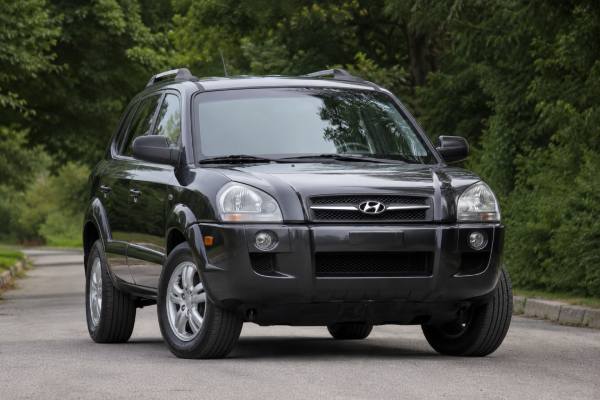
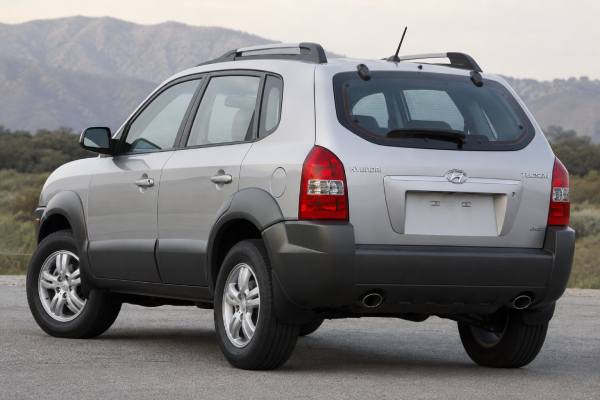
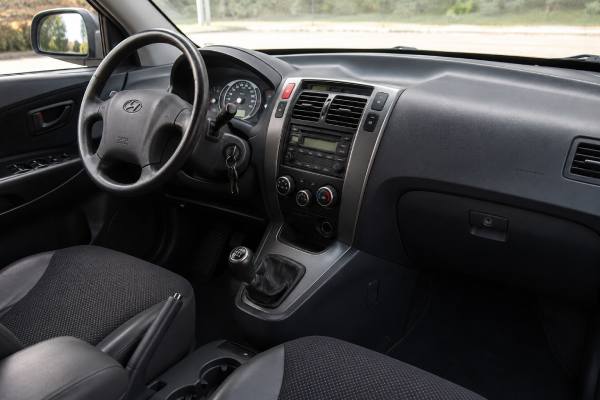
The first-generation Hyundai Tucson JM with the Delta 2.7 V6 is a compact SUV from the era when small crossovers were still simple, boxy, and easy to live with. In front-wheel-drive form, it gives buyers the smoother V6 engine without the extra weight and driveline complexity of AWD. It is not a fast or especially fuel-efficient SUV by modern standards, but it is comfortable, practical, and mechanically straightforward.
For used buyers, the main question is not whether the 2.7 V6 Tucson feels modern. It does not. The real question is whether the timing belt, automatic transmission, cooling system, recalls, and rust-prone underside have been cared for properly. A clean, serviced example can still make sense as a low-cost family runabout, winter-capable urban SUV with good tyres, or simple second car.
Final Verdict
The 2005–2009 Hyundai Tucson FWD 2.7 V6 is a sensible used SUV for buyers who want simple controls, useful cargo space, standard safety equipment for its age, and smoother performance than the four-cylinder versions. It suits short commutes, school runs, light touring, and owners who value low purchase cost over modern refinement. Its main tradeoff is fuel use that feels heavy for a compact SUV, especially in city driving. Buy only with proof of timing-belt service, clean automatic shifts, a dry engine, completed recalls, and a solid underside, because deferred maintenance can quickly exceed the value of the vehicle.
| Pros | Cons |
|---|---|
| Smooth 2.7 V6 suits relaxed daily driving | City fuel economy is poor for a compact SUV |
| FWD avoids AWD transfer and rear driveline costs | Less traction than AWD versions on snow or mud |
| Simple four-speed automatic is easy to service | Only four gears means higher highway revs |
| Useful cargo area with folding rear seats | Cabin design feels dated beside newer rivals |
| Standard stability control and six airbags were strong for 2005 | IIHS roof-strength result is weak by later standards |
| Parts availability is generally good and inexpensive | Timing-belt neglect can cause costly engine damage |
Table of Contents
- Hyundai Tucson JM V6 Overview
- Tucson 2.7 V6 Specifications
- Trims, Options and Safety
- Reliability, Common Issues and Recalls
- Maintenance and Used Buying Guide
- Driving, Performance and Efficiency
- Tucson V6 vs Rivals
Hyundai Tucson JM V6 Overview
The Hyundai Tucson JM 2.7 V6 FWD is best understood as a simple, comfort-biased compact SUV rather than a sporty crossover. Its strongest points are low used prices, easy controls, decent passenger space, and a V6 that feels smoother than the base four-cylinder.
The JM Tucson arrived as Hyundai’s first compact SUV and shared much of its basic engineering with the Kia Sportage of the same period. The body is short by today’s standards, but the tall roof, upright tailgate, and folding rear seat make it more useful than its footprint suggests. It seats five, has a conventional steel body, and uses a transverse front-engine layout.
The Delta-series 2.7-litre V6 was the premium petrol engine. In this Tucson, it produced 173 hp and 178 lb-ft of torque. It came with a four-speed automatic transmission with manual-style SHIFTRONIC selection. Front-wheel drive was available alongside four-wheel-drive versions in many markets, and the FWD V6 is the lighter and simpler version to own.
Compared with modern Tucsons, the JM feels narrow, upright, and mechanical. There are no large screens, no turbocharged downsized engine, no dual-clutch gearbox, and no advanced driver-assistance package. For some buyers, that simplicity is the appeal. Repairs tend to involve familiar mechanical systems rather than expensive integrated electronics.
The V6 is not an economy choice. Its official EPA rating for the 2009 2WD V6 automatic is 18 mpg city, 24 mpg highway, and 20 mpg combined. That is acceptable for a mid-2000s V6 compact SUV, but a modern four-cylinder crossover will use much less fuel. The Tucson makes the most sense when purchase price, simplicity, and condition matter more than low running costs.
The most important ownership point is the timing belt. The 2.7 V6 uses a belt, not a lifetime timing chain. A seller who cannot prove recent timing-belt replacement should be treated as selling a car that needs immediate major maintenance. A proper belt service should include the belt, tensioner, idlers, and usually the water pump, because labour overlaps.
Tucson 2.7 V6 Specifications
This version uses Hyundai’s naturally aspirated Delta 2.7 V6, mounted transversely and driving the front wheels through a four-speed automatic. The layout is conventional and durable when serviced, but the engine bay is compact, so rear-bank spark plugs, valve-cover leaks, and timing-belt work take more labour than on a simple inline-four.
| Item | Hyundai Tucson FWD 2.7 V6 |
|---|---|
| Engine family | Hyundai Delta 2.7 V6 petrol |
| Engine code | Commonly listed as G6BA-family 2.7 V6 |
| Displacement | 2.7 L / 2,656 cc |
| Layout | 60-degree V6, transverse front engine |
| Valvetrain | DOHC, 24 valves, four valves per cylinder |
| Induction | Naturally aspirated with variable intake system |
| Fuel system | Multi-point electronic fuel injection |
| Maximum power | 173 hp at 6,000 rpm |
| Maximum torque | 178 lb-ft / 241 Nm at 4,000 rpm |
| Timing drive | Timing belt |
| Fuel type | Regular unleaded petrol |
| EPA economy, 2009 2WD V6 | 18 city / 24 highway / 20 combined mpg US |
| Item | Specification |
|---|---|
| Transmission | Four-speed automatic with overdrive |
| Manual selection | SHIFTRONIC-style manual gate |
| Drive type | Front-wheel drive |
| Transfer case | Not fitted on FWD models |
| Rear differential | Not fitted on FWD models |
| Best service fluid note | Use Hyundai/Kia SP-III type ATF specification |
| Item | Value |
|---|---|
| Body style | Five-door compact SUV |
| Seating | Five seats |
| Length | 4,325 mm / 170.3 in |
| Width | About 1,795–1,831 mm / 70.7–72.1 in by source and trim |
| Height | About 1,680–1,730 mm / 66.1–68.1 in by roof-rail specification |
| Wheelbase | 2,630 mm / 103.5 in |
| Ground clearance | About 196 mm / 7.7 in |
| Turning circle | About 10.8 m / 35.4 ft |
| Cargo volume | 22.7 cu ft seats up; about 65.5 cu ft maximum |
| Fuel tank | About 65 L / 17.2 US gal |
| Suspension | Front struts; independent rear suspension |
| Common wheel size | 16-inch alloy wheels on many V6 trims |
| Item | Useful value or note |
|---|---|
| 0–60 mph | About 10 seconds in typical instrumented testing |
| Towing rating | Often listed around 2,000 lb / 907 kg when properly equipped |
| Engine oil capacity | About 4.5 L / 4.8 qt with filter |
| Common oil viscosity | 5W-20 or 5W-30 depending on market and temperature |
| Oil drain plug torque | About 29 lb-ft / 39 Nm |
| Timing belt interval | Typically around 60,000 mi / 96,000 km; verify by VIN |
| Wheel-nut torque | Commonly 65–80 lb-ft / 88–108 Nm |
Trims, Options and Safety
The V6 FWD Tucson was generally sold in better-equipped trims, not as the stripped base model. In North America, GLS, SE, LX, and Limited names appear across the 2005–2009 period, depending on model year.
Trim and equipment differences
The exact trim names vary by market, but the pattern is simple. Four-cylinder models usually filled the lower-price role, while the 2.7 V6 appeared in higher grades with automatic transmission, alloy wheels, more cabin equipment, and upgraded trim.
Common V6 equipment included air conditioning, power windows and locks, cruise control, keyless entry, roof rails, split-folding rear seats, and a CD audio system. Higher trims could add leather upholstery, heated front seats, fog lamps, a sunroof, automatic climate control, upgraded audio, and exterior chrome or body-colour details.
For quick identification, look for the V6 badge or engine cover, automatic shifter, five-lug alloy wheels, fog lamps on better trims, and higher-grade seat materials. A VIN decode or under-hood emissions label is the safest way to confirm the 2.7 engine, especially on imported vehicles or cars with unclear badging.
For 2009, Hyundai made several detail updates in some markets, including improved fuel-economy calibration, revised exterior trim, new wheel designs, additional audio input features, and availability of a navigation/audio system. These updates do not transform the vehicle, but a late 2008 or 2009 car can feel a little better equipped.
Crash-test ratings and safety equipment
Safety equipment was a major selling point when the Tucson launched. Hyundai offered Electronic Stability Program, ABS, traction control, front airbags, front seat-mounted side airbags, and roof-mounted side curtain airbags as standard on U.S.-market examples. For 2005, that was unusually generous in the compact-SUV class.
IIHS ratings for the 2005–2009 Tucson show an Acceptable result in the original moderate-overlap front test and an Acceptable result in the original side test. Head restraints and seats were rated Good. The weak point is roof strength, where the rating was Poor under the test used at the time. That matters because rollover protection expectations have become much tougher since this SUV was new.
Child-seat practicality is typical for a mid-2000s compact SUV. Rear outboard positions are the most useful, and LATCH/ISOFIX provision should be checked against the owner’s manual for the exact market. The rear bench is fairly upright, so bulky rear-facing seats may reduce front-seat travel.
There is no modern ADAS package here. Do not expect automatic emergency braking, lane keeping, adaptive cruise control, blind-spot monitoring, or a factory surround-view camera. After windshield, suspension, or collision repairs, there are no modern camera calibrations to worry about, but wheel alignment, ABS sensor condition, and steering-angle sensor health still matter for stable ESP operation.
Reliability, Common Issues and Recalls
The Tucson 2.7 V6 can be durable, but age now matters more than mileage alone. The best cars have documented belt service, clean coolant, regular ATF changes, working electrical systems, and little underside corrosion.
Common and important issues
| Issue | Prevalence | Severity | What to look for |
|---|---|---|---|
| Overdue timing belt | Common | High | No service proof, belt noise, oil contamination |
| Valve-cover or cam/crank seal leaks | Common | Medium | Burning-oil smell, wet rear bank, oily timing cover |
| Old ATF or harsh shifts | Occasional | Medium | Flare, clunk, delayed engagement, dark fluid |
| Cooling-system neglect | Occasional | High | Overheating, coolant stains, weak heater output |
| Stop-lamp switch faults | Known recall | Medium | Brake lights stuck on/off, ESC light, shifter stuck in Park |
| Fuel tank band corrosion | Known campaign on early JM | Medium | Rusty tank straps, loose tank, underbody corrosion |
| Suspension bushings and links | Common with age | Low to medium | Knocks, wandering, uneven tyre wear |
The timing belt is the big-ticket item. On an older 2.7 V6, the belt should not be judged only by how it looks through a cover. Age hardens the belt, tensioners wear, idlers get noisy, and oil leaks can weaken rubber. If the belt fails, engine damage is possible. A complete service is cheaper than gambling on an unknown belt.
Oil leaks are common with age. Valve-cover gaskets, cam seals, crank seals, and the oil pan area deserve a close look. Oil leaking into the timing-belt area is more serious than a light seep at the outside of the engine, because it can shorten belt life.
The four-speed automatic is not sophisticated, but it is generally easier to live with than many later complex gearboxes. It should engage Drive and Reverse cleanly, shift without flare, and downshift without a hard bang. Harsh shifts can be caused by old fluid, engine mounts, sensors, or internal wear. Avoid cars with slipping, burnt-smelling ATF, or a seller who claims “they all shift like that.”
Misfires can come from plugs, ignition leads, coils, vacuum leaks, or intake-related faults. The rear bank is less convenient to access, so some owners postpone spark-plug work. A smooth idle, clean acceleration under load, and no flashing check-engine light are essential.
The cooling system deserves extra attention because a V6 Tucson with an old water pump, weak radiator, cracked hoses, or neglected coolant can overheat quickly. Since the water pump is often serviced with the timing belt, a proper belt receipt should ideally show a pump, coolant, and related hardware.
Recalls and service campaigns
Several stop-lamp switch recalls affected Hyundai models from this era, including Tucson production ranges. Symptoms include brake lights not working, brake lights staying on, cruise control not cancelling properly, ESC warning lights, or the transmission shifter being stuck in Park. The remedy is switch replacement and correct adjustment.
Early JM Tucsons also had a service campaign for fuel tank band replacement on certain 2005–2007 vehicles. Corroded fuel tank bands can allow the tank to loosen, especially in rust-belt climates. This is exactly the kind of underbody issue buyers should not ignore simply because the engine runs well.
For any used Tucson, verify recalls by VIN through an official recall checker and ask for dealer records. A clean-looking car can still have an open recall, and a completed recall does not guarantee the surrounding area is rust-free or correctly adjusted today.
Maintenance and Used Buying Guide
A cheap Tucson V6 is only a good deal when maintenance is current. Budget first for timing belt status, fluid services, tyres, brakes, battery, and rust repair before spending money on cosmetic upgrades.
| Item | Practical interval |
|---|---|
| Engine oil and filter | 5,000 mi / 8,000 km or 6 months for older daily use |
| Engine air filter | 15,000–30,000 mi / 24,000–48,000 km, sooner in dust |
| Cabin air filter | Yearly, or sooner if airflow drops |
| Timing belt kit | Around 60,000 mi / 96,000 km; respect time limits |
| Water pump | Best replaced with timing belt service |
| Spark plugs | Typically around 60,000 mi / 96,000 km |
| Coolant | Every 3–5 years, or with belt/water-pump service |
| Automatic transmission fluid | 30,000–60,000 mi / 48,000–96,000 km depending on use |
| Brake fluid | Every 2 years |
| Brake pads and rotors | Inspect at every service; clean sliders yearly in wet climates |
| Tyre rotation and alignment | Rotate every 5,000–7,500 mi; align if wear is uneven |
| Auxiliary belts and hoses | Inspect yearly; replace if cracked, glazed, swollen, or soft |
| 12 V battery | Test yearly after year four; replace before winter weakness |
Use oil viscosity from the owner’s manual for the market and climate. Many North American references list 5W-20 or 5W-30, with 10W-30 usable in warmer conditions. The automatic transmission should use fluid meeting Hyundai/Kia SP-III specification; using a generic fluid without the correct friction behaviour can make shift quality worse.
The fuel filter is not a frequent external service item on many petrol JM Tucsons. If a manual for the exact VIN lists a replaceable filter interval, follow it. Otherwise, diagnose fuel pressure, pump performance, and contamination symptoms rather than replacing random parts.
Valve clearance is not normally a routine owner-service item on this V6 in the way it is on some older engines. Ticking, misfires, compression problems, or abnormal valvetrain noise should be diagnosed rather than dismissed as normal ageing.
Used-buying inspection checklist
Start cold. A seller who warms the car before arrival may be hiding start-up noise, smoke, idle flare, or coolant issues. The engine should start quickly, settle smoothly, and rev cleanly. Look under the oil cap for sludge and around the timing cover for oil.
During the test drive, check that the automatic shifts cleanly when cold and hot. Try gentle acceleration, a firm kickdown, steady cruising, and reverse parking. Any slipping, delayed engagement, repeated flare, or harsh 2–3 shift deserves a professional inspection.
Inspect the underside carefully. Look at fuel tank straps, rear suspension mounting points, brake lines, front subframe areas, rocker seams, wheel arches, and exhaust hangers. Surface rust is normal on old cars in salted climates; flaking structural rust is not.
Check all electrical basics: brake lights, ABS/ESC lights, windows, locks, heater fan speeds, air conditioning, rear wiper, instrument cluster, and remote locking. The ESC and ABS lights should illuminate at key-on and go out after start-up.
The best examples to buy are late-model V6 FWD cars with complete records, recent timing-belt service, clean ATF, good tyres, and no structural rust. Avoid the cheapest car in the classifieds if it needs a belt, tyres, brakes, battery, exhaust, and suspension work at the same time.
Driving, Performance and Efficiency
The Tucson V6 drives like a relaxed early crossover: smooth enough, easy to place, and more comfortable than exciting. Its V6 gives useful low- and mid-range pull, but the four-speed automatic and upright body limit performance and refinement.
Around town, the 2.7 V6 feels stronger than the four-cylinder Tucson. It moves away smoothly and does not need to rev hard for normal traffic. The throttle response is simple and predictable, which makes the car easy to drive in parking lots and stop-start traffic.
The four-speed automatic is the main reminder of the Tucson’s age. It can feel busy on hills and sometimes leaves a wide gap between gears. Kickdown is adequate rather than sharp. At highway speeds, it cruises acceptably, but it does not have the relaxed low-rpm feel of newer six-, eight-, or CVT-equipped crossovers.
Ride quality is generally comfortable on standard wheels and sensible tyres. The short wheelbase can feel choppy over broken pavement, but the suspension is soft enough for daily use. Steering is light, parking is easy, and the upright glass makes visibility better than in many modern SUVs.
Handling is safe rather than playful. The front-drive V6 will understeer if pushed, and body roll is noticeable. Good tyres matter more than most upgrades. Cheap, old, or mismatched tyres can make braking, wet grip, and ESP behaviour much worse.
Braking feel is adequate for normal use. On an old example, the difference between “average” and “worrying” often comes down to maintenance: fresh brake fluid, clean caliper sliders, good pads, smooth rotors, and tyres with proper grip.
Real-world fuel economy depends heavily on traffic. In city use, many owners should expect roughly 14–16 L/100 km, equal to about 15–17 mpg US or 18–20 mpg UK. Mixed driving often lands around 11–13 L/100 km, or about 18–21 mpg US and 22–26 mpg UK. Steady highway use can improve to around 9–10.5 L/100 km, or roughly 22–26 mpg US and 26–31 mpg UK, if the car is healthy and not loaded heavily.
Cold weather, short trips, roof racks, low tyre pressure, old oxygen sensors, dragging brakes, and neglected ignition parts all hurt economy. The V6 is smooth, but it will not reward aggressive driving with good fuel use.
For towing, treat the Tucson as a light-duty vehicle. It can handle small trailers within its rating when properly equipped, but it is not a heavy tow SUV. Keep cooling-system condition, brake condition, tyre load rating, tongue weight, and local towing rules in mind. FWD versions also have less launch traction on wet grass, gravel, or steep ramps than AWD models.
Tucson V6 vs Rivals
The Tucson V6 FWD competes best on price, simplicity, standard safety equipment for its age, and low parts cost. It loses to many rivals on fuel economy, modern refinement, and crash-test performance by newer standards.
| Rival | How it compares | Best choice for |
|---|---|---|
| Toyota RAV4 V6 | Much quicker and more desirable, usually more expensive | Buyers prioritizing performance and resale value |
| Honda CR-V | More efficient four-cylinder, roomier feel, no V6 smoothness | Practical buyers wanting economy and cabin space |
| Kia Sportage V6 | Mechanically close, with similar strengths and issues | Shoppers choosing by condition and service history |
| Ford Escape V6 | Stronger market presence, but rust and age also matter | Buyers wanting more engine choice and availability |
| Suzuki Grand Vitara | More truck-like character, often better off-road orientation | Drivers needing rough-road ability over cabin polish |
Against a Honda CR-V, the Tucson V6 feels smoother under acceleration but uses more fuel and has less of Honda’s reputation for long-term resale. Against a Toyota RAV4 V6, the Hyundai is usually much cheaper, but the Toyota is faster, more refined, and more sought after.
The closest comparison is the Kia Sportage V6 because it shares the same basic platform era. In that matchup, condition matters more than badge. Buy the cleaner car with better maintenance records, fewer warning lights, and less rust.
For a buyer with a tight budget, the Tucson’s main advantage is that it can be bought cheaply enough to leave money for immediate servicing. That is important. A $3,000 SUV with $1,500 held back for belt, tyres, brakes, and fluids is often smarter than a $4,500 example with no records and shiny paint.
The V6 FWD is also a better fit than the AWD version for drivers who do not need snowbelt traction or rough-lane use. It avoids the extra weight, rear differential, prop shaft, and AWD coupler concerns. The tradeoff is simple: less grip in poor conditions, lower driveline complexity, and slightly better efficiency.
References
- Hyundai Owners manuals | Hyundai Motor UK 2026 (Owner’s Manual) ([Hyundai][1])
- Gas Mileage of 2009 Hyundai Tucson 2009 (Fuel Economy) ([Fuel Economy][2])
- 2009 Hyundai Tucson 2009 (Safety Rating) ([IIHS][3])
- KMA Draft ver 2017 (Recall TSB) ([NHTSA Static][4])
- HMA TSB 2018 (Service Campaign) ([NHTSA Static][5])
Disclaimer
This article is for informational purposes only and is not a substitute for professional diagnosis, repair, or inspection. Specifications, torque values, maintenance intervals, fluids, recall applicability, and service procedures can vary by VIN, market, build date, and equipment. Always verify details against the official owner’s manual, workshop information, dealer records, and the vehicle’s identification plate before buying parts or authorizing work.
If this guide helped you, please share it on Facebook, X/Twitter, or your preferred social platform to support our work.