
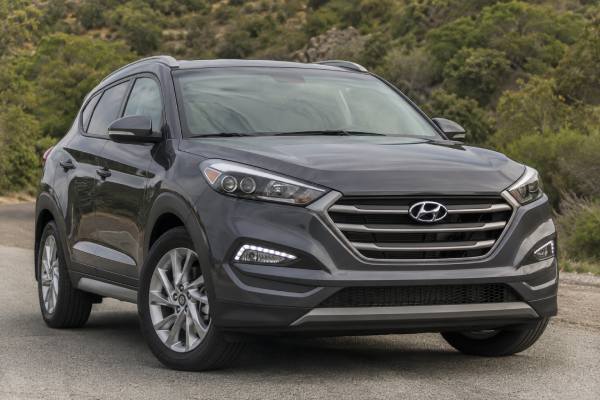
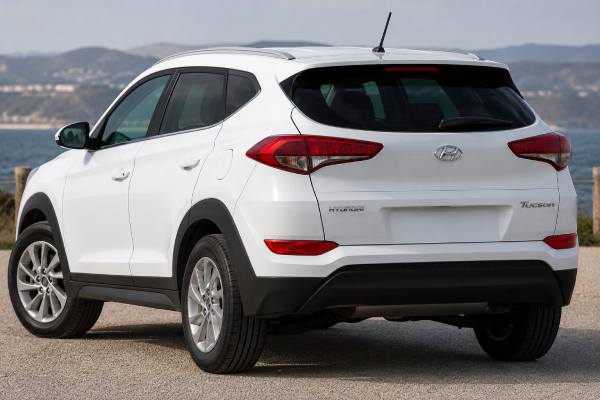
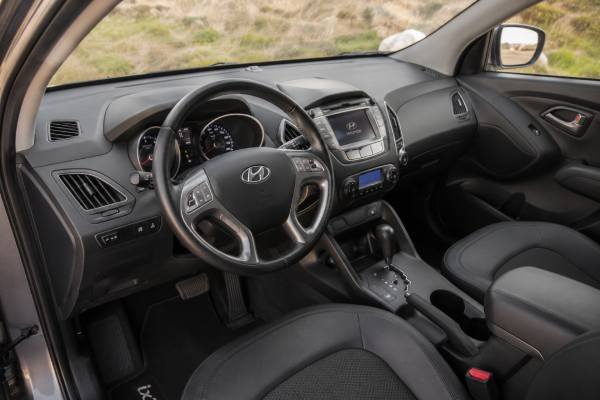
The facelifted 2014–2015 Hyundai Tucson AWD with the Nu 2.0 GDi engine is a compact SUV aimed at buyers who want simple size, available all-wheel drive, and useful everyday practicality without moving into a larger, thirstier crossover. In North America, this 164 hp 2.0-liter gasoline direct-injection engine was mainly tied to the GLS trim, while higher trims usually used the stronger 2.4-liter engine.
This version is not the quickest Tucson of its generation, but it is easy to live with, compact enough for city parking, and more capable in snow or wet weather than the front-wheel-drive model. Its strongest ownership appeal is value; its biggest buying concern is condition, service history, and recall completion.
Final Verdict
The 2014–2015 Hyundai Tucson AWD 2.0 GDi is a sensible used compact SUV for drivers who want a manageable size, winter traction, a conventional six-speed automatic, and lower purchase prices than many Japanese rivals. It suits commuting, small-family use, light outdoor duty, and buyers who value straightforward features over speed. The tradeoff is that the 164 hp Nu engine feels modest with AWD weight, fuel economy is only average, and direct-injection engines reward consistent oil service. Buy one only with clean maintenance records, matched tires, smooth cold starts, no AWD noises, and documented completion of applicable Hyundai safety recalls.
| Pros | Cons |
|---|---|
| Compact footprint with useful five-seat SUV practicality | 2.0 GDi feels modest once AWD weight is added |
| Conventional six-speed automatic is easier to trust than a dual-clutch | EPA 22 mpg combined is average, not especially efficient |
| Available AWD improves snow, rain, and loose-surface traction | AWD adds tire-matching and rear driveline maintenance sensitivity |
| Good cargo shape and comfortable rear-seat space for the class | Small-overlap IIHS result is a clear safety weakness |
| Used prices are usually friendlier than RAV4 and CR-V rivals | Recall history makes VIN verification especially important |
Table of Contents
- 2014–2015 Tucson AWD Overview
- Tucson 2.0 GDi Specifications
- Trims, Options, and Safety
- Reliability, Issues, and Recalls
- Maintenance and Buying Guide
- Driving, Performance, and Efficiency
- Tucson AWD vs Rivals
2014–2015 Tucson AWD Overview
The 2014–2015 Tucson AWD 2.0 GDi is best understood as the value-focused AWD version of the facelifted LM-generation Tucson. It gives buyers the refreshed styling, direct-injection 2.0-liter engine, and available all-wheel drive, but it does not have the stronger performance or extra equipment of the 2.4-liter SE and Limited models.
Hyundai refreshed the Tucson for 2014 with updated engines, lighting, cabin details, infotainment options, and trim packaging. The LM platform itself dated back to the 2010 model year, so by 2014 it was a mature design rather than an all-new SUV. That is not a bad thing for used buyers. A mature platform often means many known problems have already surfaced, parts availability is decent, and independent mechanics are familiar with the vehicle.
The exact vehicle covered here is the AWD Tucson with the Nu 2.0 GDi gasoline engine rated at 164 hp. In the U.S. lineup, this engine was mainly the entry powertrain. It used gasoline direct injection, dual continuously variable valve timing, and a timing chain. AWD versions used a six-speed automatic transmission rather than the manual gearbox available on some front-wheel-drive base configurations.
The Tucson’s size is one of its practical advantages. It is shorter than many modern compact SUVs, yet it still has a useful rear seat, a wide tailgate opening, and enough cargo room for daily errands, luggage, pet use, or a folded stroller. It is not a heavy-duty towing vehicle and should not be bought as one. It is better as an all-weather commuter and small-family crossover.
For buyers comparing used examples, the main question is not whether the Tucson is luxurious or sporty. It is whether the specific vehicle has been maintained properly. The 2.0 GDi engine can last well when oil changes are frequent and the cooling system is healthy, but neglected direct-injection engines can develop oil consumption, carbon buildup, rough running, or expensive drivability complaints. AWD also adds parts that must be inspected: rear differential, prop shaft, transfer case, rear coupler, axle seals, and tire matching.
The 2014–2015 model years are also important because recall completion matters. The ABS-module fire-risk recall covering certain 2014–2015 Tucson LM vehicles is a must-check item. Some 2014 vehicles may also fall under the driver airbag mounting recall, depending on production date. A clean-looking Tucson with open safety campaigns is not a finished purchase until a Hyundai dealer verifies the VIN.
Tucson 2.0 GDi Specifications
The 2.0 GDi AWD Tucson uses a naturally aspirated direct-injection four-cylinder, a six-speed automatic transmission, and an on-demand AWD system. The important practical points are modest output, average fuel economy, compact dimensions, and a simple mechanical layout compared with turbocharged or hybrid SUVs.
| Item | 2014–2015 Tucson AWD 2.0 GDi |
|---|---|
| Engine family | Hyundai Nu 2.0 GDi inline-four |
| Displacement | 1,999 cc / 2.0 liters |
| Valvetrain | DOHC, 16 valves, Dual CVVT |
| Induction | Naturally aspirated |
| Fuel system | Gasoline direct injection |
| Maximum power | 164 hp at 6,200 rpm / 122 kW |
| Maximum torque | 151 lb-ft at 4,000 rpm / 205 Nm |
| Timing drive | Timing chain |
| Fuel type | Regular unleaded gasoline |
| EPA fuel economy | 21 city / 25 highway / 22 combined mpg US |
| Metric fuel economy | 11.2 city / 9.4 highway / 10.7 combined L/100 km |
| Item | Specification |
|---|---|
| Transmission | Six-speed automatic with SHIFTRONIC manual mode |
| Drive type | Front-engine, on-demand AWD |
| AWD hardware | Electronically controlled rear coupling with low-speed lock function |
| Front suspension | MacPherson struts |
| Rear suspension | Multi-link independent rear suspension |
| Brakes | Four-wheel disc brakes with ABS, EBD, and brake assist |
| Item | Value |
|---|---|
| Body style | Five-door compact SUV |
| Seating capacity | 5 |
| Length | 4,410 mm / about 173.6 in |
| Width | 1,820 mm / about 71.7 in |
| Height | About 1,655 mm / 65.2 in without roof rails |
| Wheelbase | 2,640 mm / 103.9 in |
| Ground clearance | About 170 mm / 6.7 in |
| Curb weight | About 1,530 kg / 3,373 lb for 2.0 AWD automatic |
| Fuel tank | About 58 liters / 15.3 US gal |
| Cargo volume | About 728 L / 25.7 cu ft behind rear seats |
| Maximum cargo volume | About 1,580 L / 55.8 cu ft with rear seats folded |
| U.S. tow rating | 454 kg / 1,000 lb |
| Item | Common value |
|---|---|
| Common tire size | 225/60R17 on GLS; 225/55R18 on higher trims |
| Cold tire pressure | 33 psi / 230 kPa for common factory sizes |
| Wheel-lug torque | 88–107 Nm / 65–79 lb-ft |
| Engine oil capacity | About 4.0 L / 4.2 US qt with filter |
| Engine oil viscosity | 5W-20 or 5W-30 commonly specified; verify by manual and climate |
| Oil drain plug torque | About 39 Nm / 29 lb-ft with a new washer |
| Automatic transmission fluid | Hyundai SP-IV type fluid |
| Coolant | Ethylene-glycol coolant for aluminum engines |
| Brake fluid | DOT 3 or DOT 4, depending on market documentation |
The most important spec is the torque figure, not just horsepower. With 151 lb-ft at 4,000 rpm, the 2.0 GDi needs revs when climbing hills, merging quickly, or carrying passengers. AWD traction is useful, but it does not make the engine stronger. Buyers who regularly drive mountain highways or tow even light loads may prefer the 2.4-liter Tucson or a rival with more torque.
Trims, Options, and Safety
For the U.S. market, the 2.0 GDi AWD configuration is mainly a GLS story. SE and Limited trims generally move to the 2.4-liter engine, so a buyer looking specifically at the 164 hp 2.0 AWD should verify the trim, engine label, VIN, and equipment rather than assuming every AWD Tucson has the same powertrain.
Trim and equipment position
The GLS was the entry trim, but it was not bare. Typical equipment included air conditioning, power accessories, Bluetooth, USB input, satellite radio capability, split-folding rear seats, stability control, and six airbags. AWD was optional and is identifiable by the AWD badging and by looking underneath for the rear differential and prop shaft.
SE and Limited models added comfort and appearance features such as larger wheels, heated seats, a power driver’s seat, upgraded audio or touchscreen equipment, rearview camera availability, leather trim on Limited models, and more exterior brightwork. The key mechanical difference is that many SE and Limited examples use the 2.4-liter engine rather than the 2.0 GDi covered here.
Useful quick checks:
- Look at the underhood emissions label for engine family and displacement.
- Check the VIN and build label before ordering parts.
- Confirm AWD by inspecting the rear driveline, not only the tailgate badge.
- Compare tire sizes on all four corners; AWD cars dislike mixed rolling diameters.
- Check whether the vehicle has a rearview camera, touchscreen, heated seats, and roof rails, because equipment varies by trim and option group.
Crash-test ratings
The Tucson’s safety record is mixed by modern standards. In NHTSA government testing, the 2015 Tucson was widely listed with a four-star overall rating, including strong side-impact performance but less impressive frontal and rollover scores. For a compact SUV of this age, that is acceptable but not class-leading.
IIHS results are more revealing. The 2010–2015 Tucson earned Good ratings in moderate-overlap front, side, roof-strength, and head-restraint tests. The weak point is the driver-side small-overlap front test, where the Tucson was rated Poor. That test is important because it simulates a crash where only a small part of the vehicle’s front corner hits another object. If safety is the top buying priority, this result should be weighed carefully against newer compact SUVs or rivals with better small-overlap results.
Safety systems and driver assistance
Standard safety equipment was conventional rather than advanced. The Tucson had front airbags, front seat-mounted side airbags, side curtain airbags, ABS, electronic brake-force distribution, brake assist, electronic stability control, traction control, and LATCH/ISOFIX child-seat anchors. Hill-start assist and downhill brake control were available on many models and are useful in slippery or steep conditions.
What it does not have is just as important. The 2014–2015 Tucson does not offer modern driver assistance such as automatic emergency braking, adaptive cruise control, blind-spot intervention, lane-keeping assist, or a 360-degree camera. A rearview camera may be present depending on trim and year, but it should not be assumed on every GLS.
After windshield, bumper, or suspension repairs, there are fewer ADAS calibration concerns than on a newer SUV because this Tucson lacks many radar and camera-based systems. Still, ABS, ESC, wheel-speed sensors, steering-angle sensors, and yaw sensors must work correctly. A dashboard with ABS, ESC, AWD, or tire-pressure lights illuminated is not a minor bargaining point; it needs diagnosis before purchase.
Reliability, Issues, and Recalls
A well-maintained Tucson 2.0 GDi AWD can be a durable used SUV, but neglected examples can become expensive quickly. The main risk areas are direct-injection engine condition, recall completion, AWD driveline wear, suspension wear, and corrosion in harsh climates.
| System | Prevalence | Cost tier | What to watch for |
|---|---|---|---|
| GDi carbon buildup | Occasional | Medium | Rough idle, hesitation, misfires, poor cold drivability |
| Oil consumption | Occasional | Medium to high | Low oil level, smoke, fouled plugs, timing-chain noise |
| ABS recall issue | VIN-dependent | Recall repair | Open campaign, ABS warning lights, fire-risk notices |
| Automatic shift complaints | Occasional | Medium | Harsh shifts, delayed engagement, old ATF, adaptation issues |
| AWD coupler or rear driveline | Occasional | Medium | Binding, clunks, mismatched tires, rear differential noise |
| Suspension and wheel bearings | Common with age | Low to medium | Clunks, humming, uneven tire wear, loose steering feel |
| Rust and underbody corrosion | Climate-dependent | Medium to high | Subframes, brake lines, rear arches, exhaust hangers |
Engine and fuel-system issues
The Nu 2.0 GDi is a direct-injection gasoline engine. Direct injection improves efficiency and power, but it can leave intake valves without the same fuel-washing effect found in port-injection engines. Over time, some engines develop intake-valve deposits. Symptoms include rough idle, reduced response, misfire codes, and poor cold operation. Walnut-shell cleaning or professional intake cleaning is the usual remedy when deposits are confirmed.
Oil service is critical. Long oil intervals, low oil level, or poor-quality oil can increase chain, tensioner, cam-phaser, and bearing wear. On any used Tucson, check the dipstick before starting the engine, look for oil sludge under the filler cap, listen for timing-chain rattle at cold start, and scan for cam/crank correlation faults.
Oil consumption should be treated seriously. A seller saying “it just needs topping off sometimes” may be describing worn rings, stuck oil-control rings, PCV issues, or long-term neglect. A pre-purchase inspection should include a leak check, oil-level check, smoke check after idling, and ideally a compression or leak-down test if symptoms appear.
High-pressure fuel pumps, injectors, ignition coils, and spark plugs can also cause drivability complaints. Misfire codes under load are not always “just plugs,” especially on a GDi engine. Diagnosis should look at fuel trims, misfire counters, plug condition, coil behavior, injector noise, and carbon buildup.
Transmission and AWD problems
The six-speed automatic is generally more predictable than many later dual-clutch units, but it still needs clean fluid and correct adaptation. Harsh 2–3 shifts, delayed reverse engagement, flares, or shudder can come from old ATF, software/adaptive values, worn mounts, valve-body problems, or internal wear. A proper test drive should include cold start, parking-lot maneuvers, gentle acceleration, kickdown, highway cruising, and a full stop-to-reverse check.
The AWD system should feel transparent on dry pavement. Binding, hopping, groaning, or heavy drivetrain wind-up during tight turns suggests tire mismatch, coupler problems, transfer-case issues, or rear differential trouble. Because AWD systems depend on similar rolling circumference, all four tires should be the same brand, model, size, and wear level. A cheap two-tire replacement can create expensive AWD stress.
Chassis, brakes, and corrosion
By age, many Tucson examples need normal suspension reconditioning. Sway-bar links, front struts, rear shocks, control-arm bushings, ball joints, and wheel bearings are all realistic wear items. A humming noise that changes with road speed often points to wheel bearings, while a hollow knock over small bumps often points to links, bushings, or strut mounts.
Brake condition deserves close inspection, especially in wet or salted climates. Check for seized slide pins, grooved rotors, corroded backing plates, rusty brake lines, and uneven pad wear. The parking brake should hold securely without excessive lever travel or pedal travel, depending on market configuration.
Corrosion can be the difference between a good buy and a walk-away car. Inspect rear subframe areas, front subframe mounting points, rocker seams, rear wheel arches, brake and fuel lines, exhaust flanges, tailgate lower edge, and suspension pickup points. Surface rust is normal on an older SUV. Flaking structural rust is not.
Recalls and service actions
The key recall for this vehicle is Hyundai Recall 218, NHTSA 22V-056, covering certain 2014–2015 Tucson LM vehicles built from August 10, 2013 through May 15, 2015. The issue involves ABS modules that could malfunction internally and cause an electrical short, creating an engine-compartment fire risk. The remedy involves replacing the ABS multi-fuse and upper cover as specified by Hyundai. Until completion, owner notices advised parking outside and away from structures.
Some 2014 Tucson vehicles may also be affected by Hyundai Recall 118, NHTSA 14V-245, involving the driver airbag assembly in the steering wheel possibly coming loose from its mounting. This recall affected certain 2011–2014 Tucson vehicles built through December 23, 2013. The remedy was inspection and tightening of the driver airbag mounting bolts.
Do not rely on memory, model year, or seller claims. Use the VIN with Hyundai’s official recall tool and ask the dealer for campaign history. A printed service invoice showing the recall number, date, and dealer repair is better than “the previous owner said it was done.”
Maintenance and Buying Guide
The best Tucson 2.0 GDi AWD to buy is the one with frequent oil changes, matched tires, completed recalls, clean underbody condition, and smooth cold operation. A cheaper example with missing records, warning lights, mixed tires, and rust can cost more than a cleaner car within the first year.
Practical maintenance schedule
Use the owner’s manual for the exact market and VIN, but the schedule below is a sensible ownership baseline for an older 2.0 GDi AWD Tucson.
| Interval | Service items |
|---|---|
| Every 5,000–7,500 miles / 8,000–12,000 km | Engine oil and filter; tire rotation; fluid and leak inspection |
| Every 12 months | Brake inspection, battery test, underbody rust check, suspension check |
| Every 15,000 miles / 24,000 km | Cabin filter, engine air filter inspection, brake fluid condition check |
| Every 30,000 miles / 48,000 km | Engine air filter, throttle body inspection, coolant and hose inspection |
| Every 45,000–60,000 miles / 72,000–96,000 km | Automatic transmission fluid service in severe or city use |
| Every 60,000 miles / 96,000 km | Serpentine belt inspection, AWD fluid inspection, brake fluid replacement |
| Every 75,000–100,000 miles / 120,000–160,000 km | Spark plugs, coolant service, AWD fluid service if history is unknown |
| At every service | Check oil level, warning lights, tire matching, leaks, and recall status |
The timing chain does not have a normal replacement interval like a timing belt. That does not mean it should be ignored. Listen for rattle, check for cam timing fault codes, and investigate poor oil history. Chain, guides, and tensioners should be replaced when wear is confirmed, not simply because the vehicle reaches a certain mileage.
For AWD vehicles, fluid history matters even when the factory schedule looks light. If the transfer case or rear differential history is unknown, a fluid change is cheap protection. The same applies to the automatic transmission. Many “lifetime fluid” claims work better on paper than on a 10-year-old used SUV doing short trips and winter driving.
Pre-purchase inspection checklist
Before buying, insist on a cold start. The engine should start quickly, settle into a steady idle, and avoid heavy chain rattle, smoke, or strong fuel smell. A hot engine can hide start-up noises and some oil-smoke symptoms.
Check these items carefully:
- Recall completion for Hyundai 218 and any other VIN-specific campaigns.
- Oil level, oil color, coolant level, and signs of oil/coolant mixing.
- Service records showing regular oil changes, not just tire invoices.
- Smooth automatic engagement from Park to Drive and Reverse.
- No hard AWD binding in tight parking-lot turns.
- Four matching tires with similar tread depth.
- No ABS, ESC, AWD, TPMS, airbag, or check-engine lights.
- Clean underbody structure, brake lines, rear subframe, and rocker seams.
- Working air conditioning, heater blend doors, rear camera, audio, windows, and locks.
- No water leaks in the cargo area, spare-tire well, sunroof drains, or footwells.
A diagnostic scan should include all modules, not only generic engine codes. Stored ABS, airbag, AWD, or body-control faults can reveal hidden electrical or safety-system problems.
Best versions to seek or avoid
For this exact 2.0 GDi AWD variant, seek a clean GLS AWD with full records, low rust, original-style tire sizing, and no signs of engine neglect. A one-owner vehicle with dealer service and recall invoices is more valuable than a higher-trim car with uncertain history.
Avoid examples with persistent misfires, heavy oil consumption, mixed tires, AWD warning lights, water intrusion, structural corrosion, or harsh transmission behavior. Also avoid cars where the seller cannot provide a VIN or discourages a pre-purchase inspection.
Long-term durability is fair to good when maintained. The Tucson is not as bulletproof in reputation as a Toyota RAV4, and it is not as polished as a Honda CR-V, but it can be a solid used buy when priced correctly and inspected carefully.
Driving, Performance, and Efficiency
The 2.0 GDi AWD Tucson drives like a practical compact SUV, not a sporty crossover. It is easy to place on the road, stable at normal highway speeds, and reassuring in poor weather, but acceleration is only adequate.
Powertrain character
The Nu 2.0 GDi engine is smooth enough in daily use, but it does its best work when the driver is patient. Around town, light throttle response is fine and the six-speed automatic shifts without drama when healthy. At highway speeds or on hills, the engine needs downshifts and higher rpm to make useful power.
This is where the 2.0 AWD version shows its main compromise. The AWD hardware adds weight, while the engine has modest torque. Passing at 60–75 mph / 100–120 km/h requires planning, especially with passengers, cargo, headwinds, or steep grades. The transmission will kick down, but the engine can sound busy.
The automatic’s SHIFTRONIC manual mode is useful for holding a lower gear on hills or in snow, but it does not transform the Tucson into a performance SUV. It simply gives the driver more control over gear choice.
Ride, handling, and noise
The Tucson’s ride is generally firm but not harsh on factory tire sizes. Seventeen-inch wheels with 225/60R17 tires are the better comfort choice. Eighteen-inch tires look sharper but can make the ride busier over broken pavement.
Steering is light and easy in town. On the highway, straight-line stability is good for the vehicle’s size, though the Tucson does not feel as substantial as some newer compact SUVs. Body roll is controlled enough for daily driving, but quick cornering reminds you that this is a tall crossover with a comfort-first setup.
Cabin noise is acceptable, not premium. Expect some tire roar on coarse pavement, wind noise around highway speeds, and more engine sound during hard acceleration. If a test-drive vehicle has a loud rear hum, do not assume it is normal road noise; wheel bearings and rear driveline parts should be checked.
Real-world fuel economy
The EPA rating for the 2015 2.0 AWD automatic is 21 mpg city, 25 mpg highway, and 22 mpg combined. In metric terms, that is about 11.2 L/100 km city, 9.4 L/100 km highway, and 10.7 L/100 km combined.
In real use, many owners should expect:
- City driving: about 11–13 L/100 km, or 18–21 mpg US.
- Highway driving: about 8.8–10.0 L/100 km, or 23–27 mpg US.
- Mixed driving: about 10–11.5 L/100 km, or 20–24 mpg US.
- Cold winter short trips: often worse, especially with AWD, winter tires, and idling.
Fuel economy is not terrible, but it is not a major selling point. A front-wheel-drive 2.0 Tucson is more efficient, and some rivals do better on the highway. The AWD Tucson’s advantage is traction, not low fuel cost.
Traction, snow, and light-load use
The AWD system is helpful in snow, slush, rain, gravel roads, and steep driveways. It is not a rock-crawling 4×4 and should not be treated like one. Ground clearance is modest, the tow rating is low, and there is no low-range transfer case.
The lock function can help at low speeds when starting on slippery surfaces, but tires matter more than badges. A Tucson AWD on worn all-season tires will not outperform a front-wheel-drive SUV on good winter tires. For winter climates, buy quality tires and keep all four matched.
When loaded with passengers and luggage, the Tucson remains stable but slower. Braking and suspension feel are acceptable when maintained, but old shocks, cheap tires, or warped rotors can make the vehicle feel much older than it is.
Tucson AWD vs Rivals
The 2014–2015 Tucson AWD 2.0 GDi competes best on value, compact size, and equipment for the money. It does not beat the strongest rivals on resale value, safety technology, cargo space, or long-term reputation.
| Model | Strength vs Tucson | Where Tucson can make sense |
|---|---|---|
| Toyota RAV4 AWD | Stronger resale, broader reliability reputation, more cargo room | Tucson usually costs less for similar age and mileage |
| Honda CR-V AWD | Roomier cabin, better efficiency, excellent practicality | Tucson feels more compact and may be cheaper to buy |
| Mazda CX-5 AWD | Sharper steering, better driving feel, efficient Skyactiv engines | Tucson has a simpler, softer everyday character |
| Subaru Forester | Standard AWD, better visibility, more rugged image | Tucson avoids Subaru-specific CVT and boxer-engine concerns |
| Kia Sportage AWD | Closely related platform with sportier styling | Tucson may have a calmer ride and simpler appearance |
| Ford Escape AWD | Stronger turbo options and more modern tech in some trims | Tucson’s non-turbo 2.0 is less complex than EcoBoost models |
Against the RAV4 and CR-V, the Tucson’s biggest advantage is price. Toyota and Honda rivals often command higher used prices even with more mileage. That can make the Hyundai attractive if the buyer is disciplined about inspection and does not overpay.
Against the Mazda CX-5, the Tucson feels less athletic. The Mazda has better steering and a more refined chassis, while the Tucson feels more basic. Buyers who care about driving feel should try both. Buyers who want a cheaper winter commuter may still prefer the Hyundai.
Against the Subaru Forester, the Tucson’s AWD system is less central to the vehicle’s identity. Subaru has the traction reputation, but many used Foresters come with their own maintenance concerns. The Hyundai can be a simpler choice if it has a clean service history and a lower price.
The best reason to buy this Tucson is not because it is the class leader. It is because a clean, well-documented example can deliver useful AWD practicality at a sensible price. The worst reason to buy one is because it is the cheapest SUV nearby. Cheap examples with neglected oil changes, rust, and warning lights are rarely bargains.
References
- Gas Mileage of 2015 Hyundai Tucson 2015 (Fuel Economy Database)
- 2015 Hyundai Tucson 2015 (Safety Rating)
- Vehicle Detail Search – 2015 HYUNDAI TUCSON SUV AWD | NHTSA 2015 (Safety and Recall Database)
- Part 573 Safety Recall Report 22V-056 2022 (Recall Report)
- Hyundai Owners Manuals 2026 (Owner’s Manual Index)
Disclaimer
This article is for informational purposes only and is not a substitute for professional diagnosis, repair advice, or factory service documentation. Specifications, torque values, service intervals, fluids, recall applicability, and repair procedures can vary by VIN, market, production date, equipment, and later manufacturer updates. Always verify critical information against the official owner’s manual, service manual, Hyundai dealer records, and a VIN-specific recall check before buying, servicing, or repairing a vehicle.
If this guide helped you, please consider sharing it on Facebook, X/Twitter, or your favorite automotive community to support our work.