
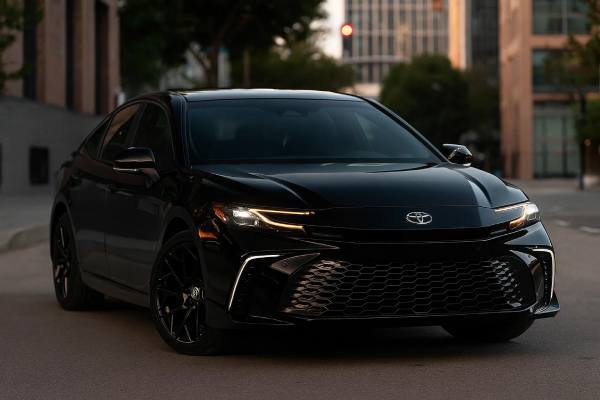
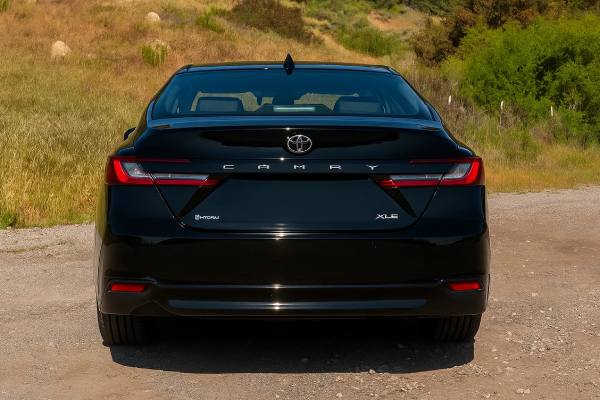
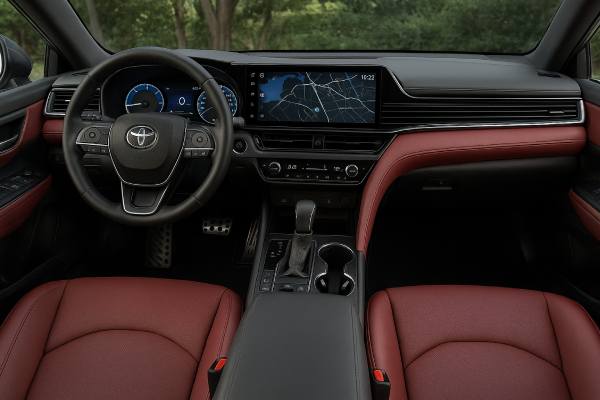
The ninth-generation Toyota Camry Hybrid (AXVH80) shifts the nameplate to hybrid power as standard, pairing Toyota’s long-stroke A25A-FXS 2.5-liter engine with the latest hybrid drive for a combined 225 hp in front-drive form (232 hp with the electronic on-demand AWD). The redesign brings a calmer ride, tighter body control, and a more modern cabin with larger screens and wireless smartphone integration. Fuel economy is the headline: mid-50s mpg in efficient trims, with little penalty for real-world highway use. Safety tech also moves forward with the newest Toyota Safety Sense suite now standard across the board. For shoppers, the big questions are which trim to choose, whether AWD is worthwhile for winter traction, and how the hybrid system affects maintenance. This guide answers those questions with the numbers, the context, and a practical owner’s view—so you can buy confidently and care for your Camry Hybrid the right way.
At a Glance
- Excellent economy: up to ~53/50/51 mpg (city/highway/combined) in efficient trims; AWD close behind.
- Smooth, quiet hybrid drive with confident passing; optional AWD improves winter traction without heavy mpg loss.
- Spacious cabin and trunk (five adults fit; ~15 ft³ cargo) with intuitive, modern infotainment.
- Caveat: windscreen or radar/camera work can require ADAS recalibration; budget for this after glass repairs or collision work.
- Service rhythm: oil and filter every 10,000 miles / 12 months; rotate tyres every 5,000 miles (or 6–8,000 km).
Explore the sections
- 2025 Camry Hybrid overview
- Camry Hybrid specs and data
- Camry Hybrid trims and safety
- Reliability, issues and actions
- Maintenance and buyer’s guide
- Driving and performance
- How Camry Hybrid compares
2025 Camry Hybrid overview
The AXVH80 Camry Hybrid makes hybrid the default powertrain and narrows the choice to what matters: trim level, wheels/tyres, and whether you want electronic on-demand AWD. Under the hood sits Toyota’s A25A-FXS 2.5-liter “Dynamic Force” Atkinson-cycle four-cylinder paired with a compact hybrid transaxle. In front-drive form the system delivers 225 hp; adding the rear e-axle lifts combined output to 232 hp with a modest weight increase. The new calibration favors smooth step-off, brisk midrange response, and low engine rpm during cruising—helping the car feel more refined than many non-hybrid rivals.
Interior packaging remains a strength. Adults fit comfortably in both rows, and the hybrid battery’s location preserves a useful trunk. Cabin updates focus on modern screens (8.0- to 12.3-inch center display depending on trim), clear menus, and standard wireless Apple CarPlay/Android Auto. Insulation and body sealing are improved, so the Camry reads quieter over coarse pavement than the outgoing model.
Standard Toyota Safety Sense (latest generation) brings an expanded set of driver assists and better object detection. The result is a sedan that is easy to live with, inexpensive to fuel, and—crucially—simple to recommend whether your commute is urban, suburban, or a long highway grind. If you drive in snow, the hybrid AWD option is a smart add that barely dents economy while noticeably improving launch and hill traction.
Camry Hybrid specs and data
Powertrain & Efficiency (HEV)
| Item | Specification |
|---|---|
| Code | A25A-FXS (engine) with hybrid transaxle; rear e-axle for AWD |
| Engine layout & cylinders | Inline-4, DOHC, 16-valve; VVT-iE intake / VVT-i exhaust; bore × stroke 87.5 × 103.4 mm (3.44 × 4.07 in) |
| Displacement | 2.5 L (2,487 cc) |
| Induction | Naturally aspirated (Atkinson cycle) |
| Fuel system | D-4S dual injection (direct + port) |
| Compression ratio | ~14.0:1 |
| Electric motors | PMSM traction motor at front; AWD adds rear PMSM e-axle (on-demand) |
| System voltage | ~259 V nominal (lithium-ion) |
| Battery chemistry & location | Lithium-ion, under rear seat |
| Max power (system) | 225 hp (FWD); 232 hp (AWD) |
| Engine output (reference) | ~176 hp (131 kW) @ ~5,700 rpm; ~221 Nm (163 lb-ft) |
| Timing drive | Chain |
| Rated efficiency (FWD LE) | ~53/50/51 mpg US (city/hwy/comb) ≈ 4.4/4.7/4.6 L/100 km |
| Rated efficiency (AWD LE) | ~51/49/50 mpg US (city/hwy/comb) ≈ 4.6/4.8/4.7 L/100 km |
| Real-world highway @ 120 km/h (75 mph) | typically 5.0–5.6 L/100 km (47–42 mpg US), trim/tire and weather dependent |
Notes: Combined system torque is not published. Real-world economy reflects steady 65–75 mph cruising with climate control engaged.
Transmission & Driveline
| Item | Specification |
|---|---|
| Transmission | eCVT (planetary gear split) with integrated traction motor |
| Gear ratios | Not applicable (eCVT) |
| Final drive | eCVT planetary reduction (calibrated per trim; not a fixed gearset like a conventional auto) |
| Drive type | FWD standard; Electronic On-Demand AWD optional (rear e-axle engages when needed) |
| Differential(s) | Open front; electronically controlled coupling for rear e-axle |
| Refuel to full | ~5 minutes at a standard petrol pump |
Chassis & Dimensions
| Item | Specification |
|---|---|
| Platform | TNGA-K |
| Suspension (front/rear) | MacPherson strut / multi-link |
| Steering | Electric power steering; quick on-center, low-effort parking |
| Brakes | Vented front discs / solid rear discs; electronic brake-force distribution and regen blending |
| Wheels/Tyres | 16-in (LE), 18-in (SE), 19-in (XSE); all-season touring tyres common |
| Ground clearance | ~145 mm (5.7 in) |
| Length / Width / Height | ~4,915 / 1,840 / 1,445 mm (193.5 / 72.4 / 56.9 in) |
| Wheelbase | 2,825–2,829 mm (111.2 in) |
| Turning circle (curb-to-curb) | ~11.4 m (37.4 ft) |
| Curb weight (typical range) | ~1,575–1,680 kg (3,470–3,705 lb) depending on trim/AWD |
| Fuel tank | ~50 L (13.2 US gal / 11.0 UK gal) |
| Cargo volume (SAE) | ~428 L (15.1 ft³); 60/40-split rear seatbacks |
Performance & Capability
| Metric | FWD | AWD |
|---|---|---|
| 0–60 mph (manufacturer-typical range) | ~7.4–7.9 s | ~7.5–8.1 s |
| 50–80 mph passing | ~5.5–6.0 s (typical road-test range) | similar |
| Top speed (governed) | ~185 km/h (115 mph) | ~185 km/h (115 mph) |
| Braking 62–0 mph | ~38–40 m (125–131 ft) depending on tyres | |
| Towing capacity | Not rated for towing (USA/Canada) | |
| Roof load | Light accessories (racks/boxes) OK within accessory limits; verify per kit |
Fluids & Service Capacities
| System | Specification / Capacity |
|---|---|
| Engine oil | SAE 0W-16, ILSAC GF-6B; approx. 4.5–4.7 L (4.8–5.0 qt) with filter (verify by VIN) |
| Engine/inverter coolant | Toyota Super Long Life Coolant (pink), premixed 50/50; change per schedule |
| Hybrid transaxle | Toyota WS ATF (no routine change in basic schedule; inspect for leaks) |
| Rear e-axle (AWD) | Toyota specified gear oil; service only if seep/leak or water intrusion |
| A/C refrigerant | R-1234yf; service label under hood lists exact charge |
| A/C compressor oil | ND-11 (for electric compressor) |
| Key torque (example) | Wheel lug nuts 103 Nm (76 lb-ft); always confirm per wheel/trim |
Always confirm capacities and torque by VIN in the official service information; small differences exist by trim and running change.
Safety & Driver Assistance
| Item | Summary |
|---|---|
| Crash ratings | Earns top safety awards in current testing; structure and restraints perform strongly |
| Headlights | Projector or premium LED by trim; high-beam assist standard; performance varies with wheel/tire and trim |
| ADAS suite (standard) | Pre-Collision with Pedestrian Detection, Lane Departure Alert with Steering Assist, Lane Tracing Assist, Full-Speed Range Adaptive Cruise, Road Sign Assist, Proactive Driving Assist, Emergency Stop Assist |
| Options / enhancements | Blind Spot Monitor with Rear Cross-Traffic Alert; Parking sensors with Auto Braking; Panoramic View Monitor; Front Cross-Traffic Alert (availability by trim) |
| Child-seat provisions | Lower anchors (LATCH) on outboard rear seats; three top tether anchors; spacious lower-anchor access |
Camry Hybrid trims and safety
Trim structure (USA/Canada): LE, SE, SE Nightshade, XLE, XSE. All trims share the same hybrid powertrain; AWD is available on most builds and is a worthwhile add for frequent snow or steep driveways.
- LE — Efficiency leader. 16-inch wheels with higher-profile tyres, cloth seating, 8-inch touchscreen, analog + digital driver display, wireless Apple CarPlay/Android Auto, Toyota Safety Sense latest version, and key driver aids standard. Quiet ride, best mpg, and lowest tyre replacement cost.
- SE — Sport-tuned dampers and 18-inch wheels sharpen response. SofTex-trimmed seats and a slightly firmer ride. Steering feels a bit weightier off-center. Good balance for drivers who enjoy a more tied-down feel.
- SE Nightshade — SE equipment with blacked-out exterior details and 19-inch wheels. Purely cosmetic, but the additional sidewall loss can increase impact harshness on broken pavement.
- XLE — Comfort-oriented. 18-inch wheels, upgraded seat materials with power adjustment and ventilation availability, ambient lighting, larger center screen available, and expanded convenience options (heated steering wheel, premium audio).
- XSE — Sport-styled top trim. 19-inch wheels/tyres, unique fascia, and the broadest options list. Ride is tautest; noise levels remain low at highway speed.
Packages and identifiers:
- AWD adds a compact rear e-axle, indicated by “AWD” badging and a modestly higher curb weight. Underbody shows rear motor unit aft of the axle with no prop shaft.
- Audio/Tech upgrades bring the 12.3-inch center display and (on higher trims) a 12.3-inch fully digital cluster. Premium JBL audio is package-dependent.
- Driver assistance add-ons vary by trim: Blind Spot Monitor/RCTA is common; 360° camera and front cross-traffic warnings are typically bundled with higher trims.
Safety ratings snapshot:
- The latest Camry achieves top marks from major U.S. safety bodies, with strong occupant protection and robust crash-avoidance performance. Headlight performance improves with the premium LED setup and is sensitive to wheel/tire choices (glare and cutoff can vary slightly).
Calibration and service implications:
- Windscreen replacement, front bumper cover removal, or ride-height changes can require camera/radar recalibration. Many procedures are target-based and time-consuming—budget for this at independent shops or dealers after glass or collision work. Wheel alignment should be precise on SE/XSE with larger wheels to preserve ADAS accuracy and steering-wheel centering.
Reliability, issues and actions
Toyota’s hybrid sedan track record is excellent. The Camry Hybrid’s engine (A25A-FXS), eCVT hybrid transaxle, and lithium-ion battery chemistry are proven across millions of vehicles. That said, every new generation sees fresh software, sensors, and packaging. Here is how 2025-present models map out so far, plus what to watch as mileage accumulates.
Common (low severity):
- Brake feel variations (regen blending): A firmer pedal than non-hybrids, and a slightly different initial “bite” in cold/damp conditions is normal. If you hear scraping at low speeds or feel vibration, inspect rear pads/rotors for surface corrosion—hybrids can see more rust because of high regen use. Remedy: periodic high-load stops to clean rotors; brake service if pulsation persists.
- Road-noise sensitivity to tyres: The platform is quiet; most cabin noise is tyre-generated. OE touring tyres are efficient but can drone on rough concrete after ~25–35k miles. Remedy: rotate on schedule; when replacing, choose tyres with strong noise scores and a modest sidewall (18-inch rims ride softer than 19s).
Occasional (medium severity):
- 12-V battery aging: Hybrids use a small 12-V unit to boot systems. Short-trip, accessory-heavy use can age it early (3–5 years). Symptoms: intermittent no-ready, warning icons, or infotainment reboots. Remedy: test annually after year 3; replace proactively before winter in cold climates.
- ADAS camera/radar faults after glass or bumper work: If the forward camera or radar is disturbed, the car may disable cruise/assist functions. Remedy: perform target-based calibration with a level floor and correct tyre pressures; clear DTCs and verify road test.
Rare (higher cost if ignored):
- Coolant seep at hose joints after service: Improper hose clocking can lead to slow weeps. Remedy: retighten clamps to spec and confirm air bleeding on the engine/inverter loop. Watch for sweet smell or low reservoir level.
- Water intrusion at rear lamps or trunk seams (car-wash test): Uncommon but possible after body work. Remedy: reseal lamp gaskets or seam sealer; verify with torch/soak test.
Software and updates:
- Hybrid ECU/TCU and ADAS modules receive refinements addressing drivability edge cases and improved object detection. A reflash is the official remedy when bulletins exist—ask the dealer to check for calibration updates during scheduled service.
Recalls, TSBs, extended coverage:
- Early in the cycle, major recalls are limited. Always run a VIN recall check before purchase and at each service. Keep dealer records for any field service actions or warranty extensions (hybrid components typically carry long federal/state emissions coverage).
Pre-purchase checklist (used purchase or off-lease):
- Complete service history with time-based services (brake fluid, coolant) done on time.
- Four even tyres with recent rotation; confirm no feathering or cupping; alignment printout ideal.
- ADAS health: verify adaptive cruise, lane tracing, and road-sign assist on a test loop.
- No windscreen/post-collision glass without calibration proof.
- Under-tray and wheel-arch liners intact; no missing fasteners.
- Trunk leak check (car-wash), and verify 60/40 rear seatbacks operate smoothly.
Maintenance and buyer’s guide
Practical maintenance schedule (USA/Canada):
(Distance = miles; time = months. Replace “or” whichever comes first.)
- Engine oil and filter: Every 10,000 / 12 with 0W-16 (ILSAC GF-6B). Severe service or frequent short trips: consider 5,000 / 6.
- Tyre rotation and pressure check: 5,000 / 6; inspect tread wear patterns; align if inner/outer wear shows.
- Cabin air filter: Inspect 10,000 / 12, replace 20,000–30,000 / 24 (sooner in dusty/pollen-heavy areas).
- Engine air filter: Inspect 15,000 / 18, replace 30,000–45,000 / 36 depending on conditions.
- Brake fluid: Replace 36 months regardless of mileage; hybrids see moisture load from low brake temperatures.
- Coolant (engine/inverter loop): First change at 100,000 / 120, then 50,000 / 60 thereafter.
- Spark plugs (iridium): 120,000 / 144; check for timing-correlation or misfire codes if idle roughens.
- eCVT transaxle fluid: Inspect for leaks/contamination at 60,000 / 72; replacement typically not in basic schedule—reasonable to change around 120,000 as preventative maintenance if you plan long-term ownership.
- Rear e-axle (AWD): No routine fluid change; inspect for leaks at 60,000 / 72.
- 12-V battery test: Annually after year 3; replace proactively 4–6 years in cold climates.
- Alignment check: Annually or after pothole impacts; SE/XSE ride heights and 18–19-inch tyres are more sensitive to toe settings.
Fluid specifications and essentials:
- Engine oil: SAE 0W-16, ILSAC GF-6B.
- Coolant: Toyota Super Long Life Coolant (pink), premixed.
- Transaxle fluid: Toyota WS ATF.
- A/C refrigerant: R-1234yf; compressor oil ND-11.
- Wheel lug torque: 103 Nm (76 lb-ft).
- Tyre pressures (typical placard): ~35 psi (240 kPa) cold; adjust for load/ambient.
Buyer’s guide—what to choose and why:
- Best economy: LE FWD with 16-inch wheels. You’ll see the highest EPA figures and the softest ride.
- All-weather commuter: LE or XLE with AWD. Minimal fuel-economy penalty, meaningful traction gain for wet/snow starts.
- Balanced daily driver: SE FWD. Sharper steering and body control without the ride firmness of 19s.
- Feature-rich tourer: XLE or XSE with tech/audio packages; check you’re comfortable with the slightly firmer ride (especially on 19-inch tyres).
Long-term durability outlook:
With routine maintenance and clean driving inputs, the A25A-FXS hybrid system commonly shows high-mileage reliability. Expect brake service life to be long (regen reduces pad wear), tyres and alignment to be the primary consumables, and the 12-V battery to be the most likely early replacement. Keep software current and protect sensors from minor parking knocks; these two steps prevent many nuisance warnings.
Driving and performance
Ride, handling, and noise:
This Camry rides with more polish than its predecessor. The structure feels taut, and the suspension filters small ripples without losing steering precision. LE on 16-inch tyres glides over patched city streets; SE dials in extra body control and a bit more road feel through the wheel, ideal for drivers who carve on-ramps. XSE on 19-inch wheels looks great but transmits the most impact harshness on sharp edges—something to weigh if your commute includes broken pavement. Highway stability is excellent, with the body staying settled in crosswinds. Wind noise is subdued; most cabin sound comes from tyre texture and the occasional distant engine hum climbing grades.
Powertrain character:
The hybrid system steps off in near-silence on electric assist, then blends engine torque seamlessly above neighborhood speeds. Throttle mapping is predictable; passing power arrives promptly once you press through the initial pedal travel. At steady 70–75 mph, engine rpm stays low, and the cabin remains calm. Drive modes subtly shift steering weight, throttle mapping, and climate logic; “Sport” mainly sharpens pedal response rather than changing absolute output.
Efficiency in the real world:
Expect high-40s mpg on the highway at an honest 75 mph and easy 50+ mpg in mixed suburban use if you avoid aggressive throttle spikes. In winter, fuel economy typically drops 10–20% until the powertrain and cabin are fully warmed; remote starts and short trips amplify the effect. AWD trims are impressively close to FWD on long trips, especially with sensible tyres and careful pressure management.
Traction and control:
The electronic on-demand AWD engages the rear motor when slip is predicted or detected. On wet uphill starts or light snow, you feel the rear end nudge the car straight. It disengages at cruise to save energy. Stability control is well-tuned; it avoids heavy-handed interventions if your inputs are smooth.
Load and long trips:
The trunk and cabin swallow luggage for five without drama. Under full vacation load, braking remains consistent and straight, and coolant and hybrid temperatures stay stable on extended grades—just downshift early on long descents to blend friction braking with regen and maintain pedal feel.
How Camry Hybrid compares
Honda Accord Hybrid: The Accord Hybrid emphasizes a punchier electric-first feel around town and a slightly roomier rear seat. Its real-world highway economy is a touch lower at higher speeds, and road noise can be more pronounced on some tyre options. Camry counters with better observed highway mpg, optional hybrid AWD, and a calmer ride on rough surfaces—plus a stronger record for low running costs over time.
Hyundai Sonata Hybrid: Stylish and quiet with an efficient powertrain, the Sonata Hybrid is closest to the Camry on serenity and features. Hyundai’s long warranty is a draw. Camry typically does better in resale, offers optional AWD, and keeps the cabin simpler to operate.
Nissan Altima / Kia K5 (non-hybrid rivals): Both remain solid sedans, but without hybrid fuel economy or hybrid-specific driveline advantages. Camry’s mid-50s mpg capability and smoother commuting character are hard to ignore if you value low fuel cost and fewer fill-ups.
Bottom line: If you prize fuel efficiency without sacrificing comfort and long-term dependability—and want the security of AWD without moving to an SUV—the Camry Hybrid sits at the top of the class. Choose LE FWD for maximum mpg or add AWD for snow country with almost no lifestyle sacrifice.
References
- Five Things To Know About the New 2025 Toyota Camry 2024 (Press Release)
- Compare Side-by-Side 2025 (Fuel Economy)
- Compare Side-by-Side 2025 (Fuel Economy)
- IIHS names winners of 2025 TOP SAFETY PICK and TOP SAFETY PICK+ 2025 (Safety Rating)
Disclaimer
This guide is for informational purposes only and is not a substitute for professional diagnosis, repair, or official service information. Specifications, torque values, capacities, and maintenance intervals can vary by VIN, model year, market, equipment, and running changes. Always verify values and procedures against your vehicle’s official owner’s manual, warranty and maintenance guide, and service documentation.
If this article helped, please consider sharing it on Facebook or X/Twitter to support xcar’s work.