
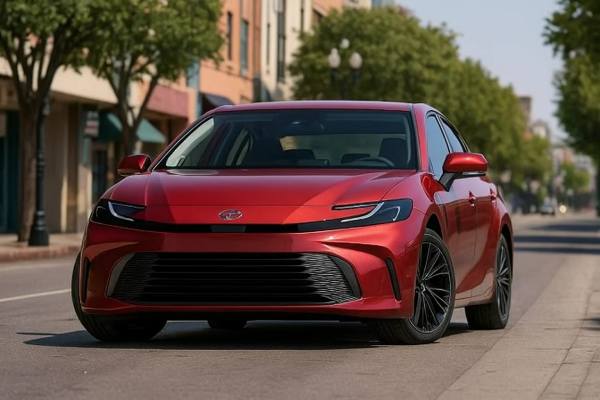
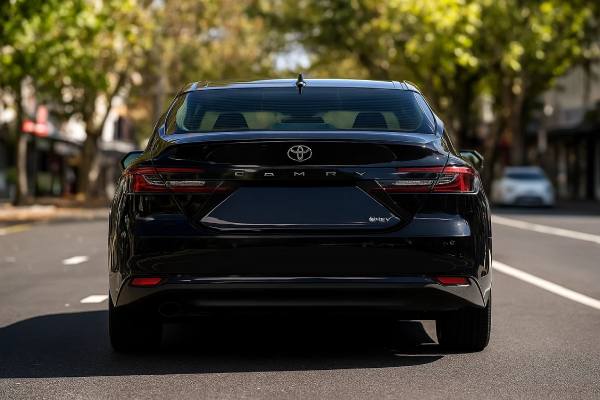
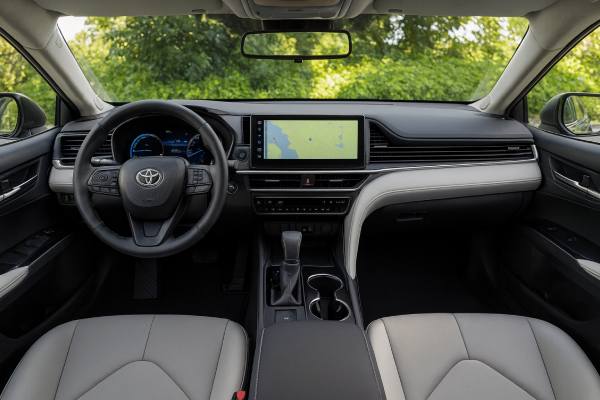
The 2025–present Toyota Camry Hybrid AWD (AXVH85) takes a proven mid-size formula and makes it simpler: hybrid is standard, with available electric all-wheel drive (AWD-i) and a combined system output of 232 hp. It rides on Toyota’s TNGA-K architecture, brings the latest Toyota Safety Sense 3.0 driver aids, and targets excellent real-world economy while preserving the comfortable, quiet demeanor many owners expect. Compared with the prior Camry Hybrid, the AWD version adds a compact rear e-motor for traction without a mechanical driveshaft, so there is no penalty in cabin packaging. Inside, the cockpit gets updated screens and connectivity; underneath, it keeps an eCVT that emphasizes smooth step-off and low-rpm cruising. For shoppers cross-shopping sedans and small crossovers, this Camry Hybrid AWD offers winter-friendly traction, predictable handling, and operating costs that rival compact cars. Below, you will find the specs, maintenance details, reliability notes, and an objective buyer’s guide.
Fast Facts
- Confident traction: electric rear axle (AWD-i) adds grip in rain and snow with minimal weight gain.
- Excellent economy for the size: EPA combined up to ~50 mpg (AWD LE) with careful driving.
- Cabin quality: quiet highway manners, roomy rear seat, and large trunk (about 15 cu ft / 425 L).
- Watch-out: hybrid system uses specialized fluids and cooling—follow intervals to protect warranty.
- Typical service: engine oil and filter every 10,000 miles (16,000 km) or 12 months, whichever comes first.
Explore the sections
- Camry Hybrid AWD overview
- Camry Hybrid AWD specs and data
- Trims, options, and safety tech
- Reliability and common issues
- Maintenance and buyer’s guide
- Driving and performance
- Camry AWD compared to rivals
Camry Hybrid AWD overview
Toyota’s 2025–present Camry Hybrid AWD (internal code AXVH85) is the all-hybrid, all-new generation of America’s best-selling sedan configured with electric on-demand all-wheel drive. Power comes from the A25A-FXS 2.5-liter Atkinson-cycle four-cylinder paired with Toyota’s latest hybrid transaxle and a compact rear e-motor that engages automatically when the front tires need help. There’s no center differential or driveshaft; instead, a small permanent-magnet motor powers the rear wheels as needed, improving launch traction and stability on wet, slushy, or gravel surfaces while keeping weight and complexity in check.
With 232 hp total system output in AWD form, the Camry Hybrid has brisk everyday pace and highway merging performance comparable to larger V6 sedans from a few years ago—yet with fuel economy you can treat like a budget line item rather than a concern. The hybrid battery (lithium-ion) is packaged so that trunk capacity remains generous and the rear seat folds, preserving the Camry’s practical character. Toyota Safety Sense 3.0 (TSS 3.0) is standard across the range, bringing advanced automatic emergency braking, lane centering, and enhanced adaptive cruise.
The TNGA-K platform carries over its strengths: a rigid body, multi-link rear suspension, and careful noise isolation. Steering is light at parking speeds but settles nicely on the highway. Wheel packages scale road feel and cabin noise—LE on 16-inch tires emphasizes comfort, SE with 18s adds crisp turn-in, and XSE on 19s looks and feels sportier. Inside, the new interface centers around an 8- or 12.3-inch touchscreen with wireless Apple CarPlay/Android Auto and an available 12.3-inch driver display. Importantly for cold-climate buyers, available heated seats and heated steering wheel are integrated with remote start pre-heat functions that work efficiently thanks to the hybrid’s ability to run accessories without idling a large engine.
For owners, the Camry’s hybridized powertrain reduces routine wear (fewer hot restarts, less idling), pads on regenerative braking last longer, and eCVT duty is gentle. The tradeoff is that cooling and fluids must meet hybrid-specific specs, and software updates—when issued—should be performed promptly. If you want a sedan that is easy to own and confident in poor weather without the fuel burn of an SUV, this AWD Camry Hybrid is squarely aimed at you.
Camry Hybrid AWD specs and data
Powertrain & Efficiency
| Item | Specification |
|---|---|
| Code | A25A-FXS (ICE) + hybrid transaxle + rear e-motor (AWD-i) |
| Engine layout & cylinders | Inline-4, DOHC, 16 valves; dual VVT-i (intake VVT-iE) |
| Bore × stroke | ~87.5 × 103.4 mm (3.44 × 4.07 in) |
| Displacement | 2.5 L (2,487 cc) |
| Induction | Naturally aspirated (Atkinson cycle) |
| Fuel system | Electronic fuel injection (hybrid-tuned); 87 AKI fuel recommended |
| Compression ratio (ICE) | ~14.0:1 (Atkinson) |
| Max power (system) | 232 hp (173 kW) — AWD |
| Max power (engine) | ~176–184 hp (131–137 kW) |
| Max torque (engine) | ~221 Nm (163 lb-ft) |
| Battery | Lithium-ion; under rear seat |
| Rated economy (AWD) | Up to ~50 mpg combined (4.7 L/100 km) on LE; other trims lower |
| Real-world highway @ 75 mph (120 km/h) | ~44–48 mpg (5.9–5.2 L/100 km), weather and tires dependent |
| Aerodynamics | Low-drag body; active grille shutters (trim-dependent) |
Transmission & Driveline
| Item | Specification |
|---|---|
| Transmission | eCVT hybrid transaxle with two motor-generators (P/R/EV blending) |
| Final drive ratio | Hybrid-specific (varies by calibration) |
| Drive type | On-demand AWD-i (electric rear axle) |
| Differential(s) | Open front; independent rear e-motor (no prop shaft) |
| Refuel to full | ~5 minutes (gasoline) |
Chassis & Dimensions
| Item | Specification |
|---|---|
| Platform | TNGA-K (MacPherson strut front / multi-link rear) |
| Steering | Electric power assist; quick ratio with sport tuning on SE/XSE |
| Brakes | 4-wheel discs with integrated regen; ABS/EBD/BA; electronic parking brake |
| Wheels/Tires (typical) | LE: 205/65R16; SE: 235/45R18; XSE: 235/40R19 |
| Length / Width / Height | ~4,920 / 1,840 / 1,445 mm (193.7 / 72.4 / 56.9 in) |
| Wheelbase | ~2,820 mm (111.0 in) |
| Ground clearance | ~145 mm (5.7 in) |
| Turning circle (curb-to-curb) | ~11.4 m (37.4 ft) |
| Curb weight (AWD) | ~1,640–1,700 kg (3,615–3,748 lb), trim-dependent |
| Fuel tank | ~50 L (13.2 US gal / 11.0 UK gal) |
| Cargo volume (SAE) | ~428 L (15.1 ft³) |
Performance & Capability
| Metric | Value |
|---|---|
| 0–60 mph (0–97 km/h) | ~7.2–7.8 s (tire/trim dependent) |
| 0–100 km/h (0–62 mph) | ~7.6–8.2 s |
| Top speed | ~187 km/h (116 mph) |
| Braking 100–0 km/h | ~36–39 m (118–128 ft), tire/road dependent |
| Towing / Payload / Roof load | Not rated for heavy towing; light accessory carriers permissible—check manual |
Fluids & Service Capacities (confirm by VIN in service documentation)
| System | Specification | Capacity (approx.) |
|---|---|---|
| Engine oil | Toyota-approved 0W-16; API SP/ILSAC GF-6B | ~4.3–4.7 L (4.5–5.0 qt) |
| Engine coolant | Toyota Super Long Life (pink) premix | ~6–7 L (6.3–7.4 qt) |
| Hybrid transaxle (eCVT) | Toyota ATF WS | ~3.5–4.3 L (3.7–4.5 qt) |
| Rear e-axle reduction | Lifetime fill; inspect for leaks | — |
| A/C refrigerant | R-1234yf | ~500–600 g (17.6–21.2 oz) |
| A/C compressor oil | ND-Oil 12 | ~120–150 mL (4–5 fl oz) |
| Key torque examples | Wheel lugs: ~103 Nm (76 lb-ft); drain plugs per service manual |
Electrical
| Item | Specification |
|---|---|
| 12V battery | AGM or EFB, trunk-mounted; group size varies by trim |
| Alternator | Not applicable (DC-DC converter from hybrid system) |
| Spark plugs | Iridium long-life; gap pre-set (inspect only) |
Safety & Driver Assistance
| Item | Details |
|---|---|
| Crash ratings | IIHS: strong results for 2025 Camry, including top-tier award (trim/lighting dependent) |
| Headlight rating | Good/Adequate on higher-content trims; basics vary by package |
| ADAS suite (TSS 3.0) | AEB with pedestrian/cyclist detection, enhanced lane tracing, lane departure alert with steering assist, full-speed adaptive cruise, road sign assist, proactive driving assist; blind-spot monitor with rear cross-traffic alert widely available |
Trims, options, and safety tech
Trims and key equipment (AWD availability highlighted):
- LE AWD-i – Efficiency leader with smaller wheel/tire package, cloth seating, 8-in touchscreen, wireless CarPlay/Android Auto, TSS 3.0, rearview camera, and standard AWD-i. Great ride quality; the lightest AWD Camry and usually the best EPA ratings.
- SE AWD-i – Sport exterior details, firmer suspension tune, 18-in wheels/tires, leatherette (SofTex) upholstery, and paddle “steps” for simulated shifts. Sharper steering response, a good balance for drivers who value feel.
- XLE AWD-i – Luxury-leaning: 18-in wheels, available leather, larger center screen (up to 12.3 in), optional panoramic roof, ventilated seats, and premium audio. More sound insulation; ride remains composed on long trips.
- XSE AWD-i – The most athletic look: 19-in tires, available two-tone paint, sport-tuned suspension, larger display options, and the broadest package list. Expect a mild efficiency trade-off for the bigger rubber.
Option packages and identifiers
- Convenience/Luxury packs may bundle a 12.3-in touchscreen, 12.3-in digital cluster, JBL audio, panoramic roof, heated/ventilated seats, and a power passenger seat.
- Safety add-ons include Blind Spot Monitor (BSM) with RCTA, front/rear parking assist with automatic braking, and Traffic Jam Assist (market/trim dependent).
- Quick identifiers: SE/XSE have sportier fascias and larger wheels; XSE often shows a subtle deck-lid spoiler; LE/XLE carry more conservative styling. Build codes are printed on the driver-door label; VIN 8th/engine digit identifies the hybrid.
Year-to-year notes (2025–present)
- 2025 marks the first all-hybrid Camry lineup with two power levels: FWD (~225 hp) and AWD-i (~232 hp). Cabin tech, driver-assist sensors, and camera/radar hardware are updated to TSS 3.0 standards. Packaging is simplified; the V6 exits the lineup.
Safety ratings in brief
- The 2025 Camry performs at the top of its class in IIHS testing, qualifying for Top Safety Pick+ when equipped with specific headlights and crash-avoidance options. Child-seat anchors (LATCH) are accessible, and structure/airbag tuning is strong. Always verify the exact trim and headlight package when cross-checking ratings.
ADAS behavior and service implications
- Lane tracing, adaptive cruise, and proactive driving assist reduce fatigue in traffic, but sensor calibration is precise: after windshield replacement, bumper repairs, or wheel alignment, follow calibration procedures. Wheel/tire changes affect camera-based speed limit recognition and some lane-keeping thresholds; keep OE rolling diameter.
- Rear e-axle has no driver controls; the system engages smoothly on low-μ surfaces and during take-off with minimal driver awareness.
Reliability and common issues
Overall outlook: Toyota’s hybrid hardware has a strong durability record. The AXVH85 adds a rear e-motor to an already proven 2.5-liter hybrid powertrain. While long-term data for the new generation is still accumulating, patterns from related Toyota hybrids help frame expectations.
Common / low-to-medium severity
- Noises during cold starts (brief): Hybrid system may run the engine at an elevated idle to bring catalysts up to temp. Symptom: short period of higher engine speed after a cold soak. Remedy: normal behavior; ensure correct 0W-16 oil and software up to date.
- Brake feel changes in stop-and-go: Regenerative/ friction brake blending can vary with battery temperature. Symptom: slightly different pedal take-up on a cold morning. Remedy: normal; if spongy, bleed per hybrid procedure and inspect rear calipers for corrosion in salt states.
Occasional / medium severity
- 12-V battery aging: Cabin-mounted small AGM/EFB batteries last 4–6 years in mixed climates. Symptoms: intermittent “not ready” in cold weather, weak accessory power. Remedy: test annually after year 3; replace proactively before winter in cold regions.
- Wheel bearing hum on larger wheels: 19-in packages put more load on bearings. Symptoms: speed-related hum growing with mileage. Remedy: replace affected hub/bearing; verify alignment and tire balance.
Rare / higher severity (watch-list)
- Inverter pump or cooling circuit issues: Modern Toyota hybrids rely on dedicated cooling loops. Symptoms: hybrid system warnings, reduced power, or shutdown under high load. Remedy: scan for hybrid DTCs; pressure-test the circuit; replace pump if flow is low; bleed carefully to avoid air pockets.
- Transaxle fluid neglect: While “lifetime” by book for many drivers, harsh duty (mountain grades, high ambient, rideshare) benefits from periodic ATF WS drain-and-fill. Symptoms: whine or shudder at certain speeds. Remedy: fluid analysis or preventive service around 60–90k miles under severe duty.
Software and calibrations
- Expect periodic updates improving camera/radar object detection, traffic-sign recognition, and driveability refinements (engine stop/start smoothness, idle flare on cold starts). If a TSB prescribes a reflash for a symptom you have, applying that calibration is the correct repair.
High-voltage battery health
- Lithium-ion pack is thermally managed and robust in moderate climates. Best practices: keep cabin air filter fresh (many packs draw cooling air from cabin), avoid blocking intake vents, and park in shade during heat waves. In the U.S., hybrid battery coverage is lengthy (mileage/time varies by state); confirm terms for your VIN.
Corrosion and body
- Subframe and rear suspension arms resist rust well, but in heavy salt regions, inspect rear brake backing plates, parking brake cables, and front subframe seams around 5–7 winters. Touch up paint chips early; modern clearcoats are thin.
Recalls, TSBs, extended coverage
- Check completion status by VIN before purchase or sale. Keep printed proof with service records. For ADAS, windshield brand and bracket alignment matter—use OE-spec glass to avoid recurrent calibration faults.
Pre-purchase checklist
- Full maintenance history, including engine air and cabin filters, brake fluid exchange, and any alignment/wheel-bearing work.
- VIN recall check and a scan for stored/permanent DTCs.
- Battery state-of-health report (12-V and hybrid) and an HVAC performance test (A/C performance affects hybrid thermal management in heat).
- Road-test from cold: listen for bearing hum, evaluate brake feel in mixed regen, and confirm no ADAS warning lights.
Maintenance and buyer’s guide
Practical maintenance schedule (typical U.S. usage; confirm per VIN):
- Engine oil + filter: every 10,000 miles / 12 months (16,000 km / 12 months) with 0W-16. Severe duty (short trips, extremes): 5,000 miles / 6 months.
- Engine air filter: inspect at 15,000 miles (24,000 km); replace 30,000–45,000 miles depending on dust.
- Cabin air filter: 15,000–20,000 miles (24,000–32,000 km) or annually—more often in smog/pollen or for battery cooling hygiene.
- Spark plugs (iridium): 120,000 miles (193,000 km); inspect condition at 90k.
- Coolant (engine and hybrid loops): first at 100,000 miles / 10 years, then 50,000 miles / 5 years; replace with Toyota SLLC (pink).
- Hybrid transaxle ATF WS: inspect; consider 60,000–90,000 miles drains for severe duty (mountains, rideshare, high heat).
- Brake fluid: 3 years / 36,000 miles (salt states: test yearly); ABS modulators prefer dry fluid.
- Brake pads/rotors: inspect each tire rotation; regen extends pad life but rear sliders can stick in salt—clean and lube annually.
- Tires and alignment: rotate 5,000–7,500 miles (8,000–12,000 km); alignment check yearly (ADAS camera alignment benefits from correct thrust line).
- Serpentine/aux belts and hoses: inspect every 30,000 miles; replace on condition.
- 12-V battery test: annually after year 3; replace at 4–6 years.
- HV battery health check: request during scheduled service; ensure cooling intake clear and cabin filter fresh.
Fluid specs and essentials
- Oil: 0W-16, API SP / ILSAC GF-6B.
- Coolant: Toyota Super Long Life Coolant (pink).
- ATF: Toyota Genuine ATF WS for eCVT.
- Refrigerant: R-1234yf with ND-Oil 12.
- Critical torques: wheel lugs ~103 Nm (76 lb-ft); oil drain plug and filter housing per service manual to avoid leaks and warping.
Buyer’s guide: what to look for
- Exterior: panel alignment (especially bumpers) and windshield brand (ADAS camera mounting). Avoid poor-quality aftermarket glass if ADAS errors persist.
- Underside: check for fluid seepage at transaxle and inverter coolant junctions; surface rust on exhaust shields/brackets is normal.
- Steering/suspension: road-test at 60–70 mph (100–113 km/h) and over light bumps. Listen for clunks (stabilizer links) and bearing hum (especially on 19-inch tires).
- Brakes: ensure smooth low-speed stops; a “step” in pedal feel transitioning from regen to friction suggests service/bleed is due.
- Electronics: verify all ADAS functions, cross-traffic alerts, parking sensors, and camera views.
- Which trim to target: LE AWD-i for maximum efficiency and ride comfort; SE AWD-i if you value steering feel; XLE/XSE AWD-i for tech and seats.
- Years to prefer: 2025–present brings the updated sensors, infotainment, and refined ride/handling; it is the one to have if you want AWD with top-tier safety outcomes.
- Durability outlook: With correct fluids and basic care, expect 200,000+ miles (320,000+ km) without major hybrid component replacement in typical private use.
Driving and performance
Ride, handling, and NVH
The Camry Hybrid AWD is tuned for quiet confidence. On 16-inch LE tires, the car absorbs sharp edges and expansion joints cleanly; body motions settle quickly thanks to a stiff shell and multi-link rear. The steering is light yet accurate; on-center feel is improved from prior generations, lending straight-line stability at interstate speeds. Step up to SE/XSE and the firmer dampers and wider tires add immediacy in turn-in—handy on winding two-lanes—while keeping cabin noise modest. Wind hush is good; at 70 mph (113 km/h), conversation requires no raised voices on smooth pavement.
Powertrain character
The Atkinson-cycle 2.5 pairs with the eCVT and electric torque for smooth step-off. In city driving, the rear e-motor quietly adds thrust during the first wheel rotations, so wet-road launches are drama-free. Around town the car often glides on electric assist with the engine at low load; pushing past mid-pedal brings a linear surge without traditional shift shocks. On hills, the hybrid will raise revs; Toyota’s latest calibration better matches engine sound to acceleration, making sustained climbs feel natural.
Real-world efficiency
Owners can realistically see mid-40s to ~50 mpg (5.2–4.7 L/100 km) combined in LE AWD-i with eco-biased driving. Highway at 60–70 mph (100–113 km/h) often sits in the high-40s; at 75 mph (120 km/h), expect mid-40s depending on wind and temperature. Winter penalties vary by trip length—short commutes in sub-freezing temps can trim 10–20% until the engine and cabin are warm. Larger 18–19-inch tires, roof racks, and cargo loads reduce economy a bit; careful tire pressures and smooth throttle restore much of it.
Key performance metrics
- 0–60 mph: roughly 7.2–7.8 seconds depending on trim and conditions—plenty for merging and two-lane passes.
- Passing 50–80 mph (80–129 km/h): linear pull aided by electric torque; plan a down-pedal squeeze rather than a kickdown “shift.”
- Braking: confident and repeatable; the pedal is well-tuned for regen/friction blending, with only minor step-changes at walking speeds.
- AWD behavior: transparent. You will notice it most pulling away uphill on rain-polished intersections or threading through slush; otherwise it stays in the background.
Load and long grades
With four adults and luggage, the hybrid keeps coolant temps stable and maintains speed on interstate grades. Expect a ~10–15% economy penalty fully loaded. The car is not rated for heavy towing; light accessory carriers are fine—keep loads within published tongue/roof limits and re-check tire pressures.
Camry AWD compared to rivals
Honda Accord Hybrid (FWD only): The Accord Hybrid is the Camry’s most direct foil for space and refinement. It rides a touch softer and posts excellent economy, but lacks AWD, which matters in snow-belt regions. Camry AWD-i is the better pick for winter trailheads and steep driveways; Accord counters with strong infotainment and a notably airy cabin.
Hyundai Sonata Hybrid (FWD only): Sonata Hybrid emphasizes features and warranty value but, again, no AWD. Its solar-roof option is novel, and the cabin is quiet. The Camry feels more cohesive in ride/handling and offers superior all-weather traction.
Subaru Legacy (AWD, non-hybrid): The Legacy’s standard AWD is sure-footed and roomy, yet fuel economy trails the Camry Hybrid AWD by a wide margin. If you prioritize snow performance and don’t mind higher fuel costs, Legacy is capable; otherwise, Camry delivers most of the traction with dramatically lower operating expense.
Nissan Altima (AWD option, non-hybrid): Altima’s available AWD helps winter confidence, but the non-hybrid powertrains return lower mpg and the driving experience is less polished. Camry’s hybrid smoothness and TSS 3.0 driver aids feel more modern.
Compact AWD crossovers (RAV4, CR-V, etc.): Crossovers offer ride height and cargo flexibility; however, the Camry Hybrid AWD often matches or beats them on economy, rides more quietly, and is more stable at speed. If you do not need the hatch and extra clearance, the Camry is easier to live with and to park.
Bottom line: If you live where it snows and you want a sedan’s comfort with crossover-like traction and compact-car fuel bills, the Camry Hybrid AWD is the current sweet spot in the mid-size class.
References
- 2025 Toyota Camry 4-door sedan 2025 (Safety Rating)
- Fuel Economy of the 2025 Toyota Camry HEV AWD LE 2025 (EPA Ratings)
- ‘It’s a Vibe’ in Toyota’s All-New 2025 Camry Campaign 2024 (Manufacturer Newsroom)
- Safety Issues & Recalls 2025 (Recall Database)
Disclaimer
This article is for informational purposes and does not replace professional diagnosis or repair. Specifications, torque values, service capacities, and maintenance intervals can vary by VIN, market, model year, and equipment. Always verify procedures and numbers against your vehicle’s official owner’s manual and service documentation. If you found this guide useful, please share it with fellow enthusiasts and owners on Facebook or X/Twitter to support xcar’s work.