
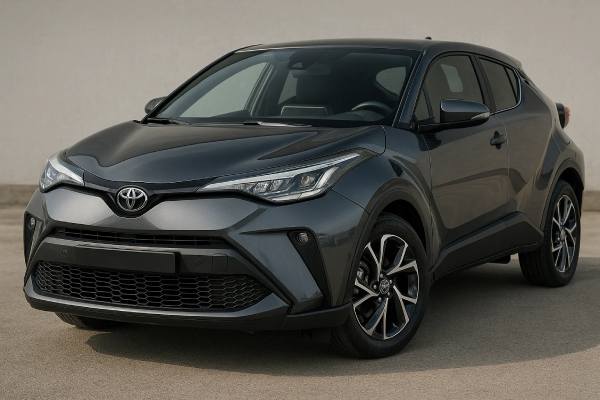
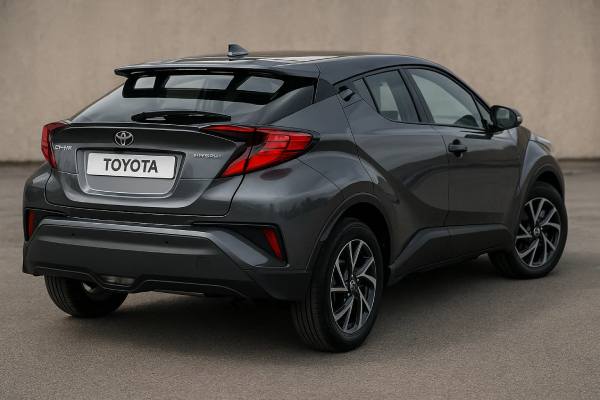
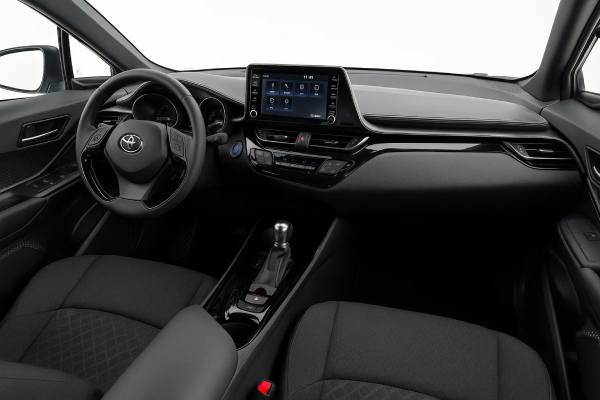
The 2020–2022 Toyota C-HR facelift sharpened the quirky subcompact crossover with crisper styling, expanded active-safety tech, and small cabin-tech updates while keeping its proven 2.0-liter four-cylinder and CVT. For shoppers who value reliability, standard driver assistance, and urban maneuverability over outright speed or towing, the C-HR is a sensible daily companion. It is front-wheel drive only in this period, with a well-tuned suspension that favors stability and a quieter ride than many rivals on rough pavement. Fuel economy is competitive for a non-hybrid, and cargo space is workable once you learn the seat and load-floor tricks. This guide distills the essentials—specs, real-world behavior, known issues, maintenance, and what to check before you buy—so you can decide quickly if a facelifted C-HR fits your use case and budget without combing through forums or marketing copy.
Fast Facts
- Composed ride and predictable handling; standard active safety across all trims.
- Practical city footprint, good visibility forward, wide-opening rear doors.
- Infotainment and cabin materials improved after the facelift; Android Auto/CarPlay standard.
- Watch for rear brake and pad wear on short-trip urban use; inspect for wheel-bearing noise by ~60–80k miles.
- Oil and filter every 10,000 miles (or 12 months) with synthetic; rotate tyres every 5,000–7,500 miles.
Navigate this guide
- Detailed Overview
- Specifications and Technical Data
- Trims and Options, Safety and Driver Assistance
- Reliability, Common Issues and Service Actions
- Maintenance and Buyer’s Guide
- Driving and Performance
- How Toyota C-HR Compares to Rivals
Detailed Overview
The facelifted 2020–2022 Toyota C-HR (ZGX10) retains Toyota’s TNGA-C underpinnings with a naturally aspirated 2.0-liter inline-four (3ZR-FAE), paired to a continuously variable transmission (CVT with simulated steps). Output is 144 hp (107 kW) and roughly 139 lb-ft (189 Nm) of torque, driving the front wheels. The refresh brought revised bumpers, headlamp and taillamp designs, new wheel styles, and an updated infotainment head unit with standard Apple CarPlay and Android Auto. Crucially, Toyota Safety Sense with automatic emergency braking and lane support is standard across trims, and blind-spot monitoring and rear cross-traffic alert became more widely available or standard depending on year and grade.
Packaging is a C-HR strength: a small footprint that parks easily, yet an elevated seating position with supportive front seats and usable adult space in the second row. The cargo bay’s square shape accommodates bulky items, and the split-folding rear seat backs let you carry long packages while retaining a rear passenger seat. On the road, the C-HR emphasizes smoothness: a compliant suspension, confident body control, and linear steering. The CVT is tuned for relaxed commuting and moderate passing; when you need more control, a manual “step” mode keeps revs steadier on grades.
Where it lags: no AWD option in this period in North America, modest acceleration by class standards, and sound insulation that can reveal coarse-surface tyre noise at highway speeds on certain OEM tire fitments. Ownership costs are generally low thanks to long service intervals, mainstream consumables, and a broad dealer network. For buyers prioritizing efficiency without hybrid complexity, as-standard safety tech, and dependable daily usability, the facelifted C-HR makes a clear, value-led case.
Specifications and Technical Data
All figures below reflect the facelifted 2020–2022 model years with the 2.0-liter gasoline engine and CVT. Values can vary slightly by trim, tyre package, and market options.
Engine and Performance (ICE)
| Item | Specification |
|---|---|
| Code | 3ZR-FAE (Valvematic) inline-four |
| Displacement | 2.0 L (1,986 cc) |
| Valvetrain | DOHC, 16 valves; continuously variable valve lift (Valvematic) and timing (VVT-i) |
| Induction | Naturally aspirated |
| Fuel system | Port fuel injection |
| Compression ratio | ~10.0:1–10.4:1 (variant-dependent) |
| Max power | 144 hp (107 kW) @ ~6,100 rpm |
| Max torque | ≈ 139 lb-ft (189 Nm) @ ~3,900–4,400 rpm |
| Timing drive | Chain |
| Emissions/efficiency standard | EPA light-duty (US); LEV III compliance |
| Rated economy (EPA) | 27/31/29 mpg (city/hwy/combined) ≈ 8.7/7.6/8.1 L/100 km |
| Real-world highway @ 75 mph | ~31–33 mpg US (7.6–7.1 L/100 km), tyre/wind sensitive |
| Aerodynamics | Cd ~0.31–0.33 (est. by package), modest frontal area for class |
Transmission and Driveline
| Item | Specification |
|---|---|
| Transmission | CVT (CVTi-S) with 7 simulated steps; manual mode |
| Gear ratios | Continuously variable; “step” logic in S mode |
| Final drive | ~4.07 (typical for CVT variants) |
| Drive type | Front-wheel drive (FWD) only |
| Differential | Open front differential |
Chassis and Dimensions
| Item | Specification |
|---|---|
| Platform | TNGA-C |
| Suspension (front/rear) | MacPherson strut / Double-wishbone |
| Steering | Electric power steering; ~2.7 turns lock-to-lock |
| Brakes (front/rear) | Ventilated disc / Solid disc; ABS with EBD and brake assist |
| Wheels/Tyres | 215/60R17 (LE/XLE) or 225/50R18 (Limited/Nightshade) |
| Ground clearance | ~5.9–6.1 in (150–155 mm) |
| Length × Width × Height | ~172.6 × 70.7 × 61.6 in (4,385 × 1,796 × 1,565 mm) |
| Wheelbase | 103.9 in (2,640 mm) |
| Turning circle (curb-to-curb) | ~35.4 ft (10.8 m) |
| Curb weight | ~3,300–3,330 lb (1,497–1,510 kg) depending on trim |
| GVWR | ~4,255–4,365 lb (1,930–1,980 kg) |
| Fuel tank | 13.2 US gal (50 L; 11.0 UK gal) |
| Cargo volume (SAE) | 19.0 ft³ seats up / ~36–37 ft³ seats down (538 / ~1,020 L) |
Performance and Capability
| Metric | Result |
|---|---|
| 0–60 mph (0–100 km/h) | ~10.5–11.0 s (street-tested range) |
| Top speed | ~120 mph (193 km/h), speed-limited |
| 60–0 mph braking | ~123–130 ft (37–40 m) on 18-in all-seasons (tire-dependent) |
| Towing | Not rated for trailer towing in many trims/markets during this period |
| Roof load | ~75 kg (165 lb) with approved crossbars (check VIN-specific limits) |
Fluids and Service Capacities
| System | Specification / Capacity |
|---|---|
| Engine oil | SAE 0W-20 synthetic; ~4.4 US qt (4.2 L) with filter |
| Coolant | Toyota Super Long Life (pink), premix; system capacity ~6–7 L (varies by HVAC spec) |
| CVT fluid | Toyota CVT FE type; service fill varies (~3–4 L), total capacity higher—service by level procedure |
| Brake fluid | DOT 3 or DOT 4 compatible; replace by interval |
| A/C refrigerant | R-134a; typical charge ~450–500 g (15.9–17.6 oz), confirm label under hood |
| A/C compressor oil | ND-Oil 8 equivalent; small charge within compressor |
| Essential torque notes | Wheel lug nuts ~103 Nm (76 lb-ft); oil drain plug ~40 Nm (30 lb-ft); spark plugs ~18–22 Nm (13–16 lb-ft) — verify by VIN/manual |
Electrical
| Item | Specification |
|---|---|
| Alternator output | ~100–130 A (trim-dependent) |
| 12V battery | Group H4/LN1 or similar; ~45–60 Ah (CCA varies by supplier) |
| Spark plugs | Iridium (long-life), 0.7–0.8 mm (0.028–0.031 in) gap; 120k-mile design life under normal use |
Safety and Driver Assistance
| Item | Summary |
|---|---|
| Crash ratings | Strong small-overlap and side structures; roof strength favorable |
| Headlights | Performance varies by trim and year; projector and LED units differ in cutoff/spread |
| ADAS suite (TSS) | Pre-collision with pedestrian detection, lane departure alert with steering assist, lane-tracing assist (later MY), full-speed dynamic radar cruise (availability varies by year), automatic high beams; blind-spot monitoring and RCTA standard or optional by trim |
Trims and Options, Safety and Driver Assistance
Trim overview (2020–2022):
- LE: The value play. 17-inch wheels, cloth seats, 8-inch touchscreen with Apple CarPlay/Android Auto, single-zone climate, Toyota Safety Sense as standard. Key visual tells: plain-finish 17-inch alloys, unpainted lower trim (varies by color pack), halogen or projector headlights depending on MY.
- XLE: Adds proximity key with push-button start, 18-inch wheels on some years, seat and trim upgrades, additional driver-assist availability. Quick ID: machined-face wheels, more color-accent interior.
- Limited: Top grade with leather-trimmed seats (Toyota SofTex), LED headlamps, fogs (availability by MY), and premium interior accents. Some years include adaptive front lighting and an upgraded driver display.
Packages and options:
- Audio and connectivity: 8-inch display with six speakers standard; some years add a higher-spec head unit with HD Radio and integrated navigation via app-based or embedded systems.
- Appearance: Two-tone roof options and Nightshade Edition (black-out trim, dark wheels) for selected years.
- Safety add-ons: Blind-spot monitoring with rear cross-traffic alert becomes standard on most 2021–2022 trims; on 2020, it may be tied to XLE or higher depending on build.
Mechanical differences by trim:
All trims share the same engine, CVT tuning, brakes, and suspension geometry. The primary mechanical variability is wheel/tire package: 17-inch tyres ride quieter and absorb sharp edges better; 18-inch tyres improve initial turn-in and curb appeal but can add impact harshness and noise on coarse asphalt.
Year-to-year highlights:
- 2020 (facelift launch): Exterior refresh, revised headlamp/taillamp internals, new wheel designs, expanded standard infotainment with smartphone integration.
- 2021: Broader standardization of blind-spot monitoring and RCTA; minor interior trim and color changes.
- 2022: Feature mix optimization and special appearance variants; safety software refinements and light tune to lane-trace assist logic in many builds.
Safety ratings snapshot:
Body structure and restraints score well in mainstream crash tests for this period, with comprehensive airbag coverage (front, side-torso, side-curtain, and driver knee airbag) and robust roof strength. Headlight performance is trim-dependent—LED projectors typically test better than halogen units. Seat anchorages support LATCH/ISOFIX with accessible lower anchors and clearly marked top tethers. The standard ADAS package handles city-speed forward collision scenarios reliably; cyclist detection works best in daylight and at moderate speeds, typical of this class.
Calibration notes after service:
- ADAS camera/radar: Windshield replacement or front bumper repairs often require camera aiming and radar beam-axis alignment using targets and scan-tool routines.
- TPMS and wheel-speed sensors: After tyre changes or rotation, follow relearn procedures; avoid inductive damage to wheel-speed sensor wiring at the knuckle.
- Headlamp leveling (LED): If equipped with auto-leveling, ensure reference-height initialization on alignment rack after suspension work.
Reliability, Common Issues and Service Actions
Overall reliability during 2020–2022 is strong, with few systemic faults when maintained on schedule. The items below are organized by prevalence and cost impact to help you triage inspections and set expectations.
Common (low to medium cost):
- Brake pad wear (rear-biased in city driving): Symptoms include early rear pad replacement (sometimes before 30–40k miles) and light rotor grooving. Cause: stability/traction logic and urban stop-and-go increase rear brake duty. Remedy: quality pads/rotors; ensure slider pins are lubricated correctly; consider more frequent brake-clean/inspect intervals if mostly urban.
- Wind/tyre noise on coarse surfaces (18-inch packages): Owners report droning at 60–75 mph on certain OE all-season tyres. Remedy: rotate on schedule; when replacing, choose tyres with lower rolling noise ratings; verify wheel-arch liner clips are fully seated after service.
- 12V battery aging in low-mileage cars: Short trips and accessory use can undercharge the small AGM/flooded batteries. Remedy: mid-winter and pre-summer battery tests; consider a smart maintainer if parked long stretches.
Occasional (medium cost):
- Wheel-bearing hum (rear) at 50–80k miles: Steady growl increasing with speed and road temperature. Confirm by chassis-ears; replace hub assembly; check torque on axle nut and verify wheel offset/tyre size are OE-equivalent.
- CVT service neglect: While “lifetime” language exists, harsh use or heat can shear fluid. Symptoms: flare/hunt under high loads, shudder on light throttle up a grade. Remedy: fluid inspection and drain/fill with Toyota CVT FE using temperature-controlled level set; software calibration check.
Rare (higher cost):
- A/C performance drop from minor under-charge or condenser fin damage: Diagnosed as high vent temps at idle, better at cruise. Remedy: weigh-in recharge to label spec after leak test; inspect for road-debris damage; keep condenser face clean.
- ABS/VSC lights from wheel-speed sensor or tone-ring contamination: Often after hub/knuckle work. Remedy: clean or replace sensor; ensure harness routing and seal integrity.
Software and calibration notes:
- Periodic updates refine lane-tracing assist, pre-collision detection thresholds, and head-unit stability. After collision repair or module replacement, check for applicable calibration files and perform techstream-guided learns (yaw rate/accel sensor, steering angle, radar/camera aim).
Recalls/field actions to verify:
- Wheel-speed sensor or ABS-related recalls and airbag control unit updates have been issued on select vehicles and years in the segment; run the VIN through the official recall portal. Proof of completion (dealer work order) should be included in the vehicle file.
- Fuel-pump supplier campaigns touched various Toyota models in these years; check C-HR VIN specifically since applicability varies by production date and plant.
Pre-purchase requests:
- Full service history (oil/cabin/engine filters, brake fluid, coolant), VIN recall printout, alignment records, and any CVT fluid service documentation. For cars with aftermarket wheels or suspension, request the alignment sheet and verify correct load index and rolling radius.
Maintenance and Buyer’s Guide
Practical maintenance schedule (normal service):
(Use whichever comes first of distance or time; adapt for severe service—frequent short trips, dusty roads, extreme temps, or heavy urban use.)
- Engine oil and filter: Every 10,000 miles / 12 months with API SN Plus or SP, ILSAC GF-5/6, 0W-20 full synthetic. Consider 5,000–7,500 miles if most trips are short/cold.
- Engine air filter: Inspect at 15,000 miles; replace at 30,000–45,000 miles depending on environment.
- Cabin (pollen) filter: Replace every 15,000–20,000 miles or 12–18 months.
- Coolant (SLLC pink): First replacement ~100,000 miles or 10 years; then every 50,000 miles / 5 years.
- Spark plugs (iridium): Inspect at 100,000 miles; replace around 120,000 miles or earlier if misfire counters rise.
- Fuel filter: In-tank lifetime design; no routine replacement—monitor fuel-pressure trims if drivability symptoms appear.
- CVT fluid (Toyota CVT FE): Inspect condition by 60,000 miles; drain/fill at 60,000–90,000 miles if operating in heat/hills/urban cycles. Always set level at temperature per service procedure.
- Brake fluid: Replace every 3 years regardless of mileage.
- Brake pads/rotors: Inspect every 10,000 miles; clean/lube slide pins; measure rotor runout and thickness.
- Serpentine/aux belts and hoses: Inspect every 30,000 miles; replace on cracking/noise or 90,000–120,000 miles preventively.
- Alignment and tyre rotation: Rotate every 5,000–7,500 miles in a forward cross (non-directional) or front-to-rear (directional); alignment check annually or after pothole impacts.
- 12V battery: Test annually after year 3; typical replacement window 4–6 years depending on climate.
- A/C service: Cabin filter on schedule; evacuate/charge by weight only if performance deteriorates—avoid “top-offs.”
- Parking brake and cable: Inspect and adjust annually, especially in salted regions.
Fluid cheat-sheet (decision-grade):
- Oil: SAE 0W-20 synthetic, ~4.4 qt (4.2 L) with filter.
- Coolant: Toyota SLLC pink 50/50 premix; keep system free of stop-leak.
- CVT: Toyota CVT FE only; avoid universal fluids.
- Brake fluid: DOT 3/4; replace 3 years.
- Power steering: Electric (no fluid).
- Refrigerant: R-134a; charge to label weight after verified vacuum hold.
Essential torque quick-list:
- Wheels: ~103 Nm (76 lb-ft) on clean, dry studs.
- Spark plugs: ~18–22 Nm (13–16 lb-ft) on cold aluminum head.
- Oil drain: ~40 Nm (30 lb-ft) with new gasket.
(Always verify against the under-hood label and the specific service manual for your VIN.)
Buyer’s checklist (what to inspect):
- Brakes: Measure pad thickness—rear pads often wear first. Check for rotor lip and pulses on gentle stops.
- Tyres and wheels: Look for inner-edge wear on 18-inch packages (alignment), flat-spot thumps from storage, and uneven feathering (toe).
- Suspension and hubs: Listen for rear bearing hum from 35–60 mph; check front lower control arm bushings for cracking.
- CVT behavior: From 10–45 mph light throttle, feel for shudder or flare; on a steady grade at 50 mph, watch if revs oscillate. Smooth operation with consistent rpm is expected.
- Body and trim: Inspect bumper brackets and wheel-arch liners for broken clips; confirm hatch struts hold at full extension.
- ADAS and glass: Verify no ADAS warning lights; ask about windshield replacements and proof of camera calibration.
- Electronics: Confirm all steering-wheel buttons, head-unit features, Bluetooth, CarPlay/Android Auto, and backup camera clarity.
- Cargo practicality: Fold the rear seats; check the load floor, spare tire well, and under-floor tool kit for moisture signs.
- Documentation: VIN recall printout, last coolant and brake-fluid dates, and any CVT fluid service paperwork.
Recommended years/trims to target:
- 2021–2022 XLE or Limited balance equipment and safety updates well, and typically include blind-spot monitoring and RCTA standard.
- 17-inch wheel cars ride quieter and are friendlier to winter tyre sizing. Choose 18-inch if you prioritize turn-in feel and the Nightshade look.
Long-term durability outlook:
Expect typical Toyota longevity with routine service. Consumables (pads, tyres, 12V battery) drive most costs; the chain-driven engine is robust, and the CVT responds well to sensible fluid care when used within its design envelope.
Driving and Performance
Ride and handling, NVH:
The C-HR’s TNGA-C chassis feels planted for its size. The front strut and rear double-wishbone layout strike a friendly balance: it filters sharp impacts (expansion joints, manhole covers) without float, and it resists mid-corner heave over patched pavement. Body roll is moderate and progressive, encouraging consistent steering inputs rather than late corrections. On 17-inch tyres, the cabin is notably calmer over coarse chipseal; 18-inch tyres transmit more texture but also sharpen the initial steering bite. Straight-line stability is strong at motorway speeds, even in gusty crosswinds—credit the aero tuning and rear suspension geometry. Wind noise is acceptably low; tyre roar varies with brand and wear state.
Powertrain character:
The 3ZR-FAE’s Valvematic system favors smooth, predictable torque. Throttle response is linear from a stop; there is no turbo lag to manage, and the CVT’s step-simulation helps avoid the “rubber-band” sensation common to earlier CVTs. In routine commuting, the powertrain feels relaxed; under full throttle, it holds higher revs until speed builds, then steps down as load drops. Manual mode is useful on long grades or when you want to hold a steady ratio through a series of bends. Kickdown logic is conservative; pre-selecting a lower “step” yields crisper passing.
Real-world efficiency:
Owners typically see 29–33 mpg US combined (8.1–7.1 L/100 km) with highway runs at 60–70 mph returning low-to-mid 30s mpg. At a steady 75 mph (120 km/h), expect ~31–33 mpg US (7.6–7.1 L/100 km), varying with roof-rack use, tyre selection, and winter fuel. City results depend on trip length and climate—short, cold trips can dip into the mid-20s mpg US (≈ 9–10 L/100 km). Using Eco mode smooths initial throttle and can add ~0.5–1.0 mpg in stop-and-go.
Selective metrics that matter:
- 0–60 mph: ~10.5–11.0 s; adequate for urban merges, modest for high-speed two-lane passes.
- 50–70 mph passing: Plan ~6–8 seconds; pre-select a lower CVT step.
- Braking 60–0 mph: Typically 123–130 ft on quality all-seasons; winter tyres lengthen this.
- Turning circle: ~35.4 ft (10.8 m) aids U-turns and tight garage maneuvers.
Traction and control:
There’s no AWD option in this period; traction control and stability programming are conservative but predictable in rain and light snow with appropriate tyres. “Snow” or “Normal/Eco” drive modes (availability by MY) alter throttle mapping more than absolute torque. For frequent snow use, 17-inch wheels with dedicated winter tyres significantly improve take-off and braking confidence.
Load and long-grade behavior:
With passengers and a full cargo bay, the CVT increases ratio to keep revs in the 3–4k band on grades; coolant and CVT temperatures remain well-managed in normal ambient conditions, but long, hot climbs benefit from proactive manual-mode use to stabilize rpm and reduce heat.
How Toyota C-HR Compares to Rivals
Versus Honda HR-V (non-hybrid, similar years): The HR-V offers clever Magic Seat packaging and, in some years, available AWD. The C-HR counters with a nicer ride on broken pavement and a richer driver-assist bundle standard. If you need AWD or maximum cargo tricks, HR-V wins; for ride quality and out-of-the-box safety tech, the C-HR is stronger.
Versus Hyundai Kona (gas): The Kona is quicker in 1.6-turbo trims and offers AWD widely. However, base Konas ride more firmly and can be noisier at speed. The C-HR’s cabin materials and switchgear feel more durable long-term, and dealer service networks are extensive.
Versus Mazda CX-30: The CX-30 has the premium driving feel and a class-above cabin; it’s also typically pricier comparably equipped. The C-HR’s controls are simpler, its ADAS tuning is gentler day-to-day, and maintenance costs are usually lower.
Versus Kia Seltos: The Seltos maximizes space and offers AWD across most trims. The C-HR’s stability on the highway and standard safety loadout remain competitive, and projected long-term reliability leans Toyota.
Bottom line: If your priorities are reliability, standard safety, and a calm ride in a tidy package—and you can live without AWD—the facelifted C-HR is a smart, low-drama pick. If you need quicker acceleration or all-weather traction from the factory, consider rivals or step to Toyota’s hybrid offerings in adjacent models.
References
- Fuel Economy of the 2021 Toyota C-HR 2021 (Fuel Economy)
- 2020 Toyota C-HR 2020 (Safety Rating)
- Vehicle Detail Search – 2022 TOYOTA C-HR 5 HB FWD 2022 (Recall Database)
- 2020 QUICK REFERENCE GUIDE 2020 (Owner’s Manual)
Disclaimer
This guide is for informational purposes and is not a substitute for professional diagnosis or repair. Specifications, torque values, capacities, and service intervals can vary by VIN, market, production date, and equipment. Always verify details against your vehicle’s official service documentation and the under-hood labels. If this article helped you, consider sharing it on Facebook or X/Twitter—your support helps xcar keep producing thorough, people-first guides.