
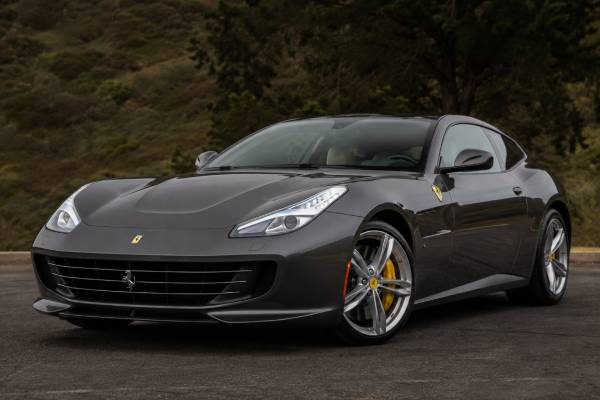
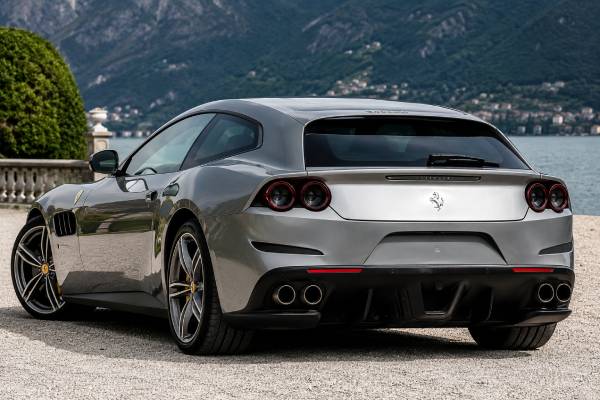
The Ferrari GTC4Lusso is the V12, all-wheel-drive evolution of the Ferrari FF, built as Ferrari’s four-seat grand tourer for buyers who wanted real usability without giving up a naturally aspirated twelve-cylinder engine. Known internally as F151M, it arrived in 2016 with the F140 ED 6.3-liter V12, 690 hp, a 7-speed dual-clutch gearbox, 4RM-S all-wheel drive, and rear-wheel steering. It was not a limited-series halo car, yet it has become important because it belongs to a disappearing category: a front-mid-engine, naturally aspirated V12 Ferrari with space for four people and luggage. Today, the GTC4Lusso appeals to owners who actually drive their cars, collectors who value modern V12 Ferraris, and buyers who want a grand tourer with unusual breadth, from long-distance comfort to serious pace on difficult roads.
Table of Contents
- A Four-Seat V12 Ferrari With Modern GT Purpose
- F140 ED V12 and Key Factory Specifications
- Variants, Options, and Identification Points
- Shooting-Brake Design and 4RM-S Engineering
- How the V12 GTC4Lusso Drives
- Maintenance Risks and Specialist Ownership Needs
- Market Values and Buying Checklist
A Four-Seat V12 Ferrari With Modern GT Purpose
The GTC4Lusso matters because it is one of Ferrari’s most usable modern V12 cars, not because it tries to be the lightest or most extreme. It replaced the FF and refined the same unusual idea: a four-seat Ferrari shooting brake with a front-mid-mounted V12 and all-weather traction.
Ferrari has a long history of fast 2+2 grand tourers, from elegant front-engine classics to later cars such as the 456, 612 Scaglietti, and FF. The GTC4Lusso belongs to that line, but it is more technically complex than most of its predecessors. The FF introduced Ferrari’s 4RM all-wheel-drive concept to production, while the GTC4Lusso added an integrated system that combined four-wheel drive, four-wheel steering, E-Diff, magnetorheological dampers, and electronic stability controls into one coordinated package.
The name also looks backward. “GTC” points to Ferrari grand touring heritage, “4” refers to the four seats and four-wheel-drive layout of the V12 model, and “Lusso” recalls luxury-focused Ferrari road cars such as the 250 GT Berlinetta Lusso. In practice, the car was aimed at owners who wanted one Ferrari to handle ski trips, long motorway days, school runs, mountain roads, and fast weekend driving.
Production ran from 2016 to 2020. The V12 GTC4Lusso was joined by the GTC4Lusso T, a rear-wheel-drive, twin-turbo V8 version aimed at buyers who wanted a lighter, slightly more urban-focused grand tourer. This article focuses on the V12 F140 ED car: the all-wheel-drive, naturally aspirated, 690 hp version that best represents the model’s engineering identity.
The car’s reputation has improved with time. When new, some buyers saw it as too large, too expensive, or too practical to feel like the obvious enthusiast choice beside a mid-engine Ferrari. In the used and collector market, those same qualities now help it stand out. It is fast enough to feel special, comfortable enough to use often, and rare enough compared with ordinary luxury GTs to remain interesting.
For collectors, the key point is not simply that it has a V12. It is that it combines a naturally aspirated Ferrari V12 with a format Ferrari is unlikely to repeat in exactly the same way. Later Ferrari grand tourers moved toward different packaging, different powertrain strategies, and broader electrification. That makes the GTC4Lusso a bridge between the old-school V12 GT and the software-managed modern Ferrari.
F140 ED V12 and Key Factory Specifications
The V12 GTC4Lusso uses the F140 ED engine, a 6,262 cc naturally aspirated 65-degree V12 tuned for high-rev power and smooth grand touring response. Its factory figures put it far beyond the traditional 2+2 category, with 690 hp, 697 Nm of torque, and a 335 km/h top speed.
| Item | Specification |
|---|---|
| Model code | F151M |
| Engine code | F140 ED |
| Engine type | 65-degree naturally aspirated V12 |
| Displacement | 6,262 cc |
| Bore x stroke | 94.0 mm x 75.2 mm |
| Compression ratio | 13.5:1 |
| Maximum power | 690 cv at 8,000 rpm |
| Maximum torque | 697 Nm at 5,750 rpm |
| Maximum engine speed | 8,250 rpm |
| Transmission | 7-speed F1 dual-clutch automatic |
| Drivetrain | 4RM-S all-wheel drive with rear-wheel steering |
The V12 is oversquare, meaning the bore is larger than the stroke. In simple terms, that helps the engine rev freely and suit high-rpm power delivery. The high compression ratio and lack of turbocharging also shape the way it responds. Instead of a sudden boost-heavy surge, the engine builds power in a clean, progressive way and becomes more intense as the revs rise.
Ferrari’s 7-speed dual-clutch gearbox is mounted at the rear as part of the transaxle layout. That helps weight distribution and gives the car a more balanced feel than its size might suggest. The all-wheel-drive hardware is unusual because Ferrari’s 4RM system does not use a conventional transfer case like many front-engine AWD cars. Instead, a compact front power transfer unit assists the front axle in lower gears and poor-traction situations, while the rear transaxle remains central to the car’s character.
| Item | Factory figure |
|---|---|
| Length | 4,922 mm |
| Width | 1,980 mm |
| Height | 1,383 mm |
| Wheelbase | 2,990 mm |
| Front / rear track | 1,674 mm / 1,668 mm |
| Dry weight | 1,790 kg |
| Kerb weight | 1,920 kg |
| Weight distribution | 47% front / 53% rear |
| Boot capacity | 450 liters, expandable to 800 liters |
| Fuel tank | 91 liters |
| Front tires | 245/35 ZR20 |
| Rear tires | 295/35 ZR20 |
| Carbon-ceramic brakes | 398 x 38 mm front, 360 x 32 mm rear |
| 0–100 km/h | 3.4 seconds |
| 0–200 km/h | 10.5 seconds |
| Top speed | 335 km/h |
| 100–0 km/h braking | 34 meters |
For U.S. buyers, EPA fuel economy is part of the ownership reality rather than the appeal. The V12 car is rated at 13 mpg combined, with 12 mpg city and 17 mpg highway. That is normal for a large, naturally aspirated V12 Ferrari, but it matters if the car will be used for regular long-distance driving.
The figures tell only part of the story. The important engineering mix is the combination of a high-revving V12, rear transaxle, complex front-axle drive assistance, rear-wheel steering, and a body that can carry four people. Very few modern cars put those pieces together.
Variants, Options, and Identification Points
The main distinction is simple: the GTC4Lusso V12 is the all-wheel-drive, naturally aspirated model, while the GTC4Lusso T is the rear-wheel-drive, twin-turbo V8 model. Buyers should not treat the two as interchangeable, because they differ in sound, drivetrain layout, weight balance, market value, and long-term appeal.
| Version | Engine | Power | Drive layout | Character |
|---|---|---|---|---|
| GTC4Lusso V12 | 6.3L naturally aspirated V12 | 690 cv | 4RM-S all-wheel drive | The full technical statement, strongest collector interest |
| GTC4Lusso T | 3.9L twin-turbo V8 | 610 cv | Rear-wheel drive | Lighter-feeling, less costly, less V12-focused |
The V12 model is identified by its 12-cylinder engine, 4RM-S drivetrain, V12 badging and specification records, and VIN-level build documentation. The GTC4Lusso T can look very similar at a glance, especially to non-specialists, so buyers should verify the exact variant through the VIN, factory options printout, dealer records, and inspection by a Ferrari specialist.
Ferrari did not publish a simple public production number for the V12 GTC4Lusso in the same way it did for numbered limited-series cars. That means buyers should be careful with unsupported “only X built” claims in listings. The model is uncommon, especially in special colors or high-option specifications, but rarity should be proven by documentation, not sales talk.
Options that affect desirability
GTC4Lusso values are heavily influenced by specification. Two cars with the same year and mileage can feel very different in the market if one has a strong color combination, carbon options, passenger display, lift system, and full Ferrari service history, while the other has a plain configuration and gaps in documentation.
Commonly desirable equipment includes:
- Front suspension lift, because the nose is long and the car may be used on real roads.
- Passenger display, one of the signature modern Ferrari interior options.
- Panoramic roof, popular with buyers who value the GT side of the car.
- Carbon-fiber steering wheel with LEDs, a widely desired Ferrari option.
- Carbon-fiber interior and exterior trim, especially when tastefully specified.
- Upgraded audio, useful in a car designed for long-distance driving.
- Forged or special-finish wheels in factory sizes.
- Daytona-style or specially trimmed seats.
- Atelier or Tailor Made paint and interior combinations.
Color matters, but not always in the same way as on mid-engine Ferraris. Red cars remain recognizable, yet many buyers prefer darker or more elegant GT colors such as blue, silver, grey, black, or historical shades. Interior condition is especially important because pale leather, contrast stitching, seat bolsters, rear seats, and luggage-area trim show how the car has been used.
Documentation and authenticity
For a modern Ferrari, authenticity is less about matching carburetors and coachwork than it is about digital records, service history, factory specification, and campaign status. A serious buyer should request:
- Original window sticker or factory options sheet.
- Ferrari dealer service history or a complete specialist record.
- Warranty booklet entries.
- Recall and campaign completion evidence.
- Battery replacement history.
- Tire date codes and alignment history.
- Brake disc wear measurements.
- Paint meter readings and accident repair documentation.
- Keys, books, tools, charger, and accessories.
Because many GTC4Lussos were used as practical Ferraris, mileage alone should not scare buyers. A higher-mileage car with annual service, fresh tires, clean paintwork, and documented recall work may be better than a low-mileage car that sat unused with old tires, weak battery history, and sticky electronics.
Shooting-Brake Design and 4RM-S Engineering
The GTC4Lusso looks unusual because Ferrari packaged a V12 grand tourer, four real seats, a usable hatch, and all-wheel-drive hardware into one low shooting-brake body. Its shape is not decoration; it is the reason the car can be both a Ferrari and a practical long-distance machine.
The exterior was designed by the Ferrari Styling Centre under Flavio Manzoni’s design leadership. Compared with the FF, the GTC4Lusso has a more resolved front end, stronger side sculpting, quad round rear lamps, and a cleaner rear treatment. The roofline flows into a fastback-style hatch rather than ending like a conventional coupe. That helps cargo space and rear-seat headroom while preserving a low, sporting profile.
The car is large by Ferrari sports-car standards, but its proportions are deliberate. The long hood signals the V12’s front-mid placement. The cabin sits rearward enough to keep the car visually balanced. The rear mass is softened by the tapering side glass and rear hatch shape. It is not as delicate as a classic 2+2 Ferrari, but it has a confident modern GT stance.
Under the skin, the most distinctive system is 4RM-S. This integrates several systems that would otherwise feel separate:
- 4RM Evo front-axle drive assistance.
- Rear-wheel steering.
- Electronic rear differential.
- Side Slip Control logic.
- Magnetorheological SCM-E dampers.
- Stability and traction control systems.
The result is a car that can put down huge V12 power in poor weather without feeling like a conventional heavy AWD coupe. The front axle helps when traction demands it, especially in lower gears, while rear-wheel steering helps the long wheelbase feel more responsive. At lower speeds, rear steering can make the car feel smaller. At higher speeds, it helps stability and lane-change confidence.
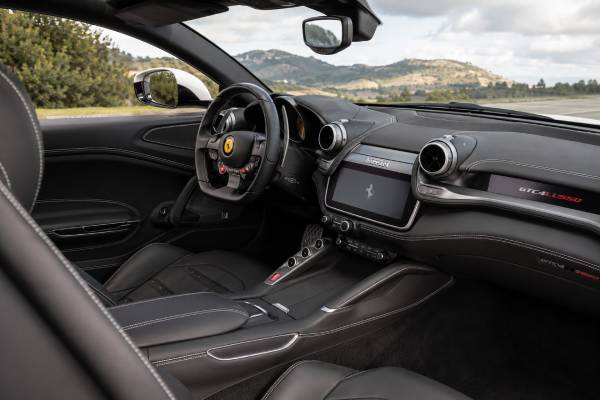
The cockpit follows Ferrari’s “dual cockpit” idea. The driver faces a busy but focused command center, with the manettino drive-mode switch on the steering wheel and large shift paddles fixed to the column. The passenger can be more involved when the optional passenger display is fitted, showing performance information that turns the front seat into a more active place during spirited driving.
The sound is central to the car’s appeal. Turbocharged engines can make huge power, but they usually filter some of the intake and exhaust sharpness. The GTC4Lusso’s V12 has a cleaner, more layered voice. It can be civil at steady speed, but under load it builds from cultured GT sound into a hard-edged Ferrari V12 note. That split personality is part of why the car feels special even when driven gently.
How the V12 GTC4Lusso Drives
The V12 GTC4Lusso drives like a grand tourer with supercar speed rather than like a pure sports car stretched into a four-seater. Its strongest quality is breadth: it can be calm, comfortable, and secure, then become shockingly fast when the road opens.
The engine defines the experience. At low rpm, it is smooth and tractable enough for city driving. It does not need to be revved hard to move the car quickly, because the torque curve is broad and the gearbox responds fast. But the real reward comes higher up, where the V12 becomes sharper, louder, and more urgent. The final stretch toward 8,000 rpm is what separates it from almost every luxury GT.
The dual-clutch gearbox is smooth in normal use and quick when driven harder. In automatic mode, it suits relaxed driving, but the fixed paddles are a better match for the car’s character on mountain roads. The shifts are fast enough to feel modern, yet not so invisible that the driver feels detached.
Steering is quick, as in many modern Ferraris. The first few miles can make the car feel more alert than expected for its size. Rear-wheel steering helps here, but the long wheelbase and weight do not disappear completely. On tight roads, it is still a wide, expensive car that asks for attention. On flowing roads, it comes alive because the chassis can settle, the V12 can work through its range, and the AWD system gives confidence on imperfect surfaces.
Ride quality is one of the reasons owners like the GTC4Lusso. With magnetorheological dampers and a relatively GT-focused mission, it can cover distance without the brittle feel of more extreme performance cars. Tire choice and condition matter a lot. Old tires, mismatched tires, or tires with poor date codes can make the car tramline, ride harshly, or lose the polished feel Ferrari intended.
Braking performance is strong, but carbon-ceramic brakes must be judged differently from ordinary iron brakes. They may feel less grabby when cold, and their real value is heat resistance, weight reduction, and high-speed stopping power. On a used car, the important question is not only pad thickness but also disc wear, edge condition, surface damage, and whether the brake system has had proper fluid service.
In city use, the car is manageable but not small. Visibility is better than in many mid-engine exotics, yet the long nose, wide body, expensive wheels, and low front overhang make the lift system and parking cameras valuable. The rear seats are usable for smaller adults over shorter trips and genuinely useful for children. The hatch area makes the car more practical than most Ferraris, especially with rear seats folded.
The GTC4Lusso is not a track car first. It can run quickly, but its weight, tire load, brake cost, and GT mission make it better suited to fast roads than repeated circuit abuse. Buyers who want a Ferrari for regular track days will usually be happier with a lighter two-seat model. Buyers who want one Ferrari to drive in more conditions will understand the Lusso immediately.
Maintenance Risks and Specialist Ownership Needs
The GTC4Lusso is not fragile when maintained properly, but it is a complex V12 Ferrari with expensive systems and little tolerance for neglect. The best ownership experience starts with annual service discipline, strong battery care, correct tires, clean recall status, and a pre-purchase inspection by someone who knows modern Ferraris.
Ferrari’s maintenance framework for these cars centers on regular service and proper recording of work. For relevant modern Ferrari vehicles, regular maintenance is treated as an annual or mileage-based obligation, and official records matter for value. Once a car is beyond its original included maintenance window, owners should budget like they are maintaining a high-performance V12, not a normal luxury coupe.
| Area | What to check | Why it matters |
|---|---|---|
| V12 engine | Oil leaks, coolant leaks, misfires, service records, warm idle quality | Major engine work is expensive and specialist-dependent |
| DCT gearbox | Shift quality, leaks, warning lights, service bulletins, diagnostic codes | Dual-clutch transaxle issues can become costly quickly |
| 4RM-S system | Fault codes, front drive system behavior, rear steering operation | The V12 car’s identity depends on these systems working correctly |
| Carbon-ceramic brakes | Disc wear readings, chips, cracks, pad life, fluid service | Replacement costs can materially change the value of a car |
| Suspension | Damper leaks, lift function, bushings, alignment, tire wear | A tired suspension makes the car feel heavy and vague |
| Electrical system | Battery age, tender use, warning lights, infotainment behavior | Low voltage can create confusing faults on modern Ferraris |
| Body and paint | Paint depth, underside scrape damage, panel gaps, wheel damage | Accident history and poor cosmetic repair hurt value |
| Interior | Seat bolsters, leather shrinkage, sticky switches, rear cargo trim | GT use often shows inside before it shows mechanically |
The battery deserves special attention. Modern Ferraris are sensitive to low voltage, and cars that sit unused can develop warning messages or module issues that disappear only after proper charging and diagnostics. A quality battery tender should be treated as normal equipment, not an optional accessory.
Tires are another major point. A GTC4Lusso with old tires may still look fine in photos, but tire age affects grip, ride, steering feel, wet-weather behavior, and braking. Because the car uses advanced traction and stability systems, it should be on correct, high-quality tires with matching specifications and healthy tread.
Brake-fluid maintenance is not a place to save money. The car’s braking system is powerful and complex, and recall history shows why VIN-level checks matter. Buyers should confirm that applicable brake-related recall work has been completed and that the brake fluid history is documented.
Known recall areas for U.S. cars include a door-lock Bowden cable issue affecting certain 2017–2019 GTC4Lusso cars and a brake fluid reservoir cap campaign covering 2017–2020 GTC4 Lusso vehicles. Recall applicability depends on VIN, market, production range, and completion status, so it should always be checked through an authorized Ferrari dealer or official recall database.
The most expensive mistakes usually come from buying the cheapest car without understanding why it is cheap. Deferred maintenance, old tires, weak records, aftermarket modifications, accident repair, missing keys, worn carbon brakes, and unresolved warning lights can erase any saving. A specialist inspection should include diagnostic scans, underside inspection, paint readings, brake measurements, suspension checks, and confirmation of option codes.
Market Values and Buying Checklist
The V12 GTC4Lusso sits in an interesting market position: no longer new, not yet old, and increasingly valued as one of Ferrari’s last naturally aspirated V12 four-seat GTs. As of 2026, typical asking prices and public sales vary widely, but many V12 cars trade or list roughly from the high-$100,000s to the mid-$200,000s, with exceptional low-mileage, late-production, rare-color, or special-spec cars higher.
The market is not uniform. A 2017 car with miles, common colors, and average options may be priced far below a 2020 car with low mileage, strong Atelier specification, complete Ferrari history, and desirable options. The V12 cars generally command more collector interest than the GTC4Lusso T because they carry the full all-wheel-drive system and the naturally aspirated twelve-cylinder engine.
What drives value
The strongest cars usually have the following traits:
- V12 specification confirmed by VIN and records.
- Complete Ferrari dealer or recognized specialist service history.
- Desirable color combination.
- Passenger display, lift system, LED carbon steering wheel, and good interior options.
- Clean paintwork with no poor accident repairs.
- Fresh or recent tires from a proper brand and date range.
- Healthy carbon-ceramic brake measurements.
- No unresolved warning lights or stored fault codes.
- Completed recalls and service campaigns.
- Books, keys, charger, tools, and factory accessories.
- Sensible mileage supported by maintenance, not long storage with neglect.
Mileage affects value, but condition and history matter more than a simple odometer reading. A collector may pay more for a very low-mileage late car, especially in an unusual color. A driver may be better served by a well-maintained car with moderate mileage and recent wear-item replacement.
Cars to avoid
Be cautious with cars that show any of these signs:
- Missing or vague service records.
- A seller who cannot provide option information.
- Old tires on a supposedly premium example.
- Battery warnings or repeated low-voltage faults.
- DCT hesitation, harsh engagement, or visible leaks.
- Suspension lift faults.
- Unmeasured carbon-ceramic brake wear.
- Mismatched paint readings without a clear explanation.
- Non-factory wheels, exhausts, tuning, or cosmetic changes that cannot be reversed.
- Interior wear inconsistent with the mileage.
- Imported cars with unclear market specification or incomplete documentation.
A modified GTC4Lusso is not automatically bad, but originality matters. Exhaust changes, aftermarket wheels, lowered suspension, carbon add-ons, or tuning can narrow the buyer pool and complicate warranty or dealer support. Factory options and Ferrari-approved work are generally easier to defend at resale.
Pre-purchase inspection priorities
A proper buying process should be methodical:
- Confirm the VIN, model year, exact variant, and factory options.
- Review the full service history, not just the most recent invoice.
- Check recall and campaign completion with Ferrari or an official database.
- Scan all modules for current and stored fault codes.
- Inspect engine, gearbox, PTU-related areas, cooling system, and suspension for leaks.
- Measure carbon-ceramic brake disc wear and inspect pads.
- Check tire age, tire specification, alignment, and wheel damage.
- Inspect paint depth, underside scrape points, and repair quality.
- Test all interior electronics, screens, passenger display, lift system, and seat functions.
- Drive the car from cold to fully warm and verify smooth behavior in city and faster conditions.
Long-term collectability looks favorable, but not every car will appreciate equally. The best examples will be original, well specified, well documented, and maintained without gaps. Average cars may remain useful and enjoyable rather than becoming major collectibles. Poor cars will stay expensive to rescue.
The GTC4Lusso is best bought with a clear purpose. For a collector, the target is low mileage, rare specification, complete provenance, and excellent preservation. For an owner-driver, the better choice may be a properly serviced car with enough mileage to use without fear. Either way, the V12 car deserves careful inspection because the ownership joy comes from using its engineering, not merely owning the badge.
References
- Ferrari GTC4Lusso – Ferrari.com 2016 (Manufacturer Specifications) ([Ferrari][1])
- Gas Mileage of 2018 Ferrari GTC4Lusso 2018 (Fuel Economy) ([fueleconomy.gov][2])
- Ferrari North America Technical Information 2019 (TSB)
- Part 573 Safety Recall Report 22V-536 2022 (Recall Database)
- Part 573 Safety Recall Report 19V-089 2019 (Recall Database)
Disclaimer
This article is for informational purposes only and is not a substitute for professional diagnosis, repair, inspection, or valuation. Specifications, torque values, service intervals, recall applicability, fluids, procedures, and equipment can vary by VIN, market, production date, and option package. Always verify details against official Ferrari service documentation, dealer records, and a qualified Ferrari specialist before buying, servicing, or repairing a vehicle.
If you found this guide useful, please consider sharing it on Facebook, X/Twitter, or your favorite automotive community to support our work.