
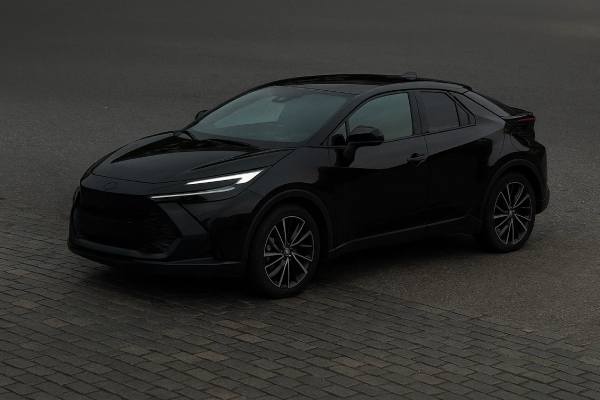
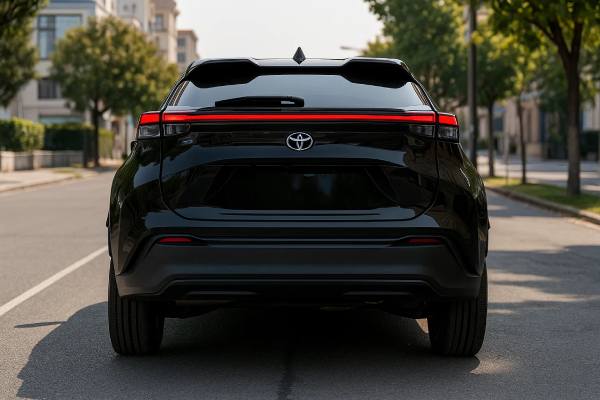
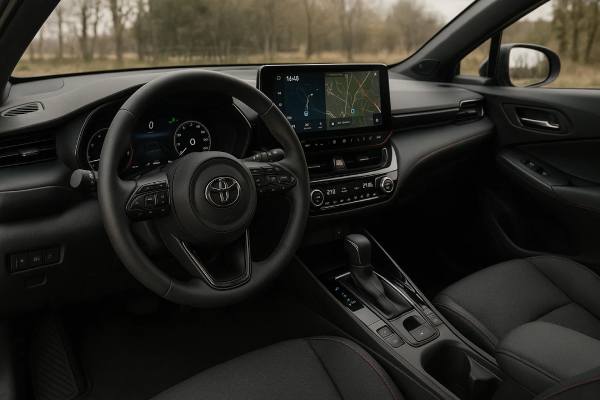
The second-generation Toyota C-HR in AWD-i form pairs Toyota’s fifth-generation hybrid system with an on-demand electric rear axle, giving confident traction without the weight or friction of a mechanical propshaft. The 2.0-litre M20A-FXS Atkinson-cycle engine and dual electric motors deliver 197 hp (145 kW) combined, wrapped in a sharp, coupe-inspired body that is sized for European cities yet stable on motorways. Inside, you get modern Toyota Safety Sense, a clean interface, and quiet, low-effort driving that rewards smooth inputs. For owners, the big draws are excellent real-world economy, simple servicing, and Toyota’s robust hybrid record. This guide focuses on the AWD-i (model code MAXH25) sold in Europe, with the facts, maintenance guidance, and buying tips you need to choose well and look after the car for the long run.
Fast Facts
- Strong hybrid efficiency with secure AWD-i traction; quiet at motorway speeds.
- Fuss-free ownership: yearly servicing, long component life, high residuals.
- Latest Toyota Safety Sense and stiff body yield excellent active safety.
- Watch for tyre wear differences front-to-rear; keep rotations on schedule.
- Typical service cadence: every 12 months or 15,000 km (9,300 miles), whichever comes first.
Explore the sections
- C-HR AWD-i essentials
- C-HR AWD-i: specs and tech
- Trims, options, and safety tech
- Reliability and known issues
- Maintenance and buying advice
- On-road driving and performance
- C-HR AWD-i versus rivals
C-HR AWD-i essentials
The AWD-i C-HR sits at the sweet spot of Toyota’s compact lineup for drivers who want hybrid efficiency with all-weather confidence. The system adds a compact, sealed electric motor on the rear axle that engages automatically when the front tyres need help—at step-off, on wet or snowy surfaces, and when cornering on low-μ roads. Because there’s no prop shaft or centre differential, the packaging is tidy, weight gain is modest, and fuel economy remains close to the front-drive 2.0 hybrid.
The 2.0-litre M20A-FXS engine is part of the Dynamic Force family. It runs an efficient, long-stroke Atkinson cycle with a high 14.0:1 compression ratio, strong tumble flow, and Toyota’s D-4S combined port/direct injection. Paired with the latest eCVT transaxle and a lithium-ion traction battery, the whole system is tuned to reduce engine rev “flare” and improve throttle linearity versus earlier hybrids. The result is smooth progress in town and relaxed motorway cruising around 2,000–2,500 rpm under light load.
Packaging is classic C-segment crossover: five doors, five seats, a usefully square rear opening, and a boot sized for weekly life rather than cross-country removals. The second-generation body uses more ultra-high-strength steel and structural adhesives than its predecessor, improving crash energy management and torsional stiffness. Cabin refinement benefits from extra sound insulation at the firewall and floorpan, laminated glass on upper trims, and careful powertrain mounting to keep hybrid transitions unobtrusive.
Features that matter day-to-day include native navigation with live updates, wireless smartphone mirroring, over-the-air software updates for infotainment and safety systems, and a comprehensive Toyota Safety Sense suite. Owners also value Toyota’s “Relax” extended warranty programme (market-dependent) when the car is serviced on schedule. In short, MAXH25 is the all-weather, low-stress choice within the C-HR family for drivers who want the security of rear-axle assistance without the cost or consumption penalty of a full mechanical AWD system.
C-HR AWD-i: specs and tech
Below are consolidated technical details for the Toyota C-HR Hybrid AWD-i (MAXH25). Figures are representative for European-market cars; small variations occur by trim, wheels/tyres, and homologation updates.
Powertrain & Efficiency
| Item | Detail |
|---|---|
| Hybrid system code | M20A-FXS + dual electric drive (AWD-i) |
| Engine layout & valvetrain | Inline-4, DOHC, 16-valve, VVT-iE (intake), VVT-i (exhaust) |
| Bore × stroke | 80.5 × 97.6 mm (3.17 × 3.84 in) |
| Displacement | 2.0 L (1,987 cc) |
| Induction & fuel | Naturally aspirated; Toyota D-4S combined port/direct injection |
| Compression ratio | 14.0:1 |
| Engine max output | ~150–152 hp (112 kW) @ 6,000 rpm |
| Engine max torque | ~188–190 Nm (139–140 lb-ft) @ 4,400–5,200 rpm |
| Electric motors | PMSM traction motor (front); PMSM e-axle (rear, on-demand) |
| System output | 197 hp (145 kW) |
| Traction battery | Lithium-ion; compact under-floor pack |
| Official economy (WLTP, mixed) | Typically 4.8–5.1 L/100 km (49–59 mpg US / 59–71 mpg UK) depending on wheels/trim and AWD-i engagement |
| CO₂ (WLTP, mixed) | Typically 108–116 g/km (wheel/tyre dependent) |
| Real-world highway @ 120 km/h (75 mph) | ~5.5–6.0 L/100 km (39–43 mpg US / 47–52 mpg UK) in mild weather |
Notes: AWD-i engages automatically and may increase consumption in cold/wet conditions. Larger 19–20-inch wheels increase CO₂ and fuel use relative to 18-inch fitments.
Transmission & Driveline
| Item | Detail |
|---|---|
| Transmission | eCVT hybrid transaxle (planetary power split) |
| Final drive (front) | Hybrid-specific; ratio varies with transaxle code |
| Drive type | AWD-i: front-drive by default with on-demand rear e-axle |
| Rear differential | Integrated within electric e-axle (sealed unit) |
| Traction control modes | Normal/Eco/Sport; Snow mode availability varies by trim |
Chassis & Dimensions
| Item | Detail |
|---|---|
| Platform | TNGA-C (second-generation C-HR) |
| Front / rear suspension | MacPherson strut / multi-link |
| Steering | Electric power steering; quick rack tuned for stability |
| Brakes | 4-wheel discs with blended regen; electronic parking brake |
| Wheels & tyres | 18–20 in alloys; common sizes include 225/50 R18, 225/45 R19 |
| Length / width / height | ~4,360 mm × 1,830 mm × 1,560 mm (171.7 × 72.0 × 61.4 in) |
| Wheelbase | ~2,640 mm (103.9 in) |
| Ground clearance | ~150–160 mm (5.9–6.3 in) |
| Turning circle (kerb-to-kerb) | ~11.0 m (36.1 ft) |
| Kerb (curb) weight | ~1,550–1,600 kg (3,417–3,527 lb) depending on grade/wheels |
| Fuel tank | ~43–47 L (11.4–12.4 US gal / 9.5–10.3 UK gal) |
| Cargo volume (seats up) | ~370–400 L (13.1–14.1 ft³) VDA, grade-dependent |
Performance & Capability
| Metric | Value |
|---|---|
| 0–100 km/h (0–62 mph) | ~8.0 s (grade/wheel dependent) |
| Top speed | ~180 km/h (112 mph) |
| Braking 100–0 km/h | Typical 36–38 m on quality tyres |
| Towing (braked) | 725–800 kg (1,598–1,764 lb) where homologated |
| Roof load | Up to 75 kg (165 lb) with approved bars |
Fluids & Service Capacities (owner verification recommended)
| Component | Spec / capacity |
|---|---|
| Engine oil | Toyota-approved 0W-16 (preferred) or 0W-20; ~4.2–4.4 L (4.4–4.6 US qt) with filter |
| Hybrid coolant (engine loop) | Toyota Super Long Life Coolant (SLLC), premixed; initial change typically 10 years/160,000 km then 5-year intervals |
| Inverter/e-motor coolant | Toyota SLLC; service per manual/inspection |
| eCVT transaxle | Toyota ATF WS; inspect at major services, replace if contaminated or per severe-use schedule |
| A/C refrigerant | R-1234yf (charge varies by optioning) |
| Tyre pressures (typical) | 230–240 kPa (33–35 psi) light load; check door placard |
Electrical
| Item | Detail |
|---|---|
| 12-V battery | AGM or EFB low-profile unit in boot area (spec varies by trim) |
| DC-DC converter | Converts HV to 12-V; charges the auxiliary battery (no alternator) |
| Spark plugs | Iridium; typical replacement ~120,000 km (75,000 miles) or 6 years |
Safety & Driver Assistance
| Item | Detail |
|---|---|
| Crash ratings | Euro NCAP 2024: strong percentages across Adult, Child, Vulnerable Road User, and Safety Assist; five-star overall outcome on contemporary Toyota models in this class |
| Headlight tech | LED; adaptive and matrix LED availability by trim |
| Toyota Safety Sense | Pre-Collision with pedestrian/cyclist detection, Intersection Turn Assist, Adaptive Cruise, Lane Trace Assist, Road Sign Assist, Emergency Steering Assist, Proactive Driving Assist |
| Rear safety | Blind-Spot Monitor, Rear Cross-Traffic Alert/Braking, Safe Exit Assist (door opening guard) availability varies by grade |
| Child seat | ISOFIX/LATCH outer rear, top tethers; booster-friendly rear bench |
Equipment, weights, and some performance figures vary with trim, market packs, and wheel/tyre size. Always check the exact car’s data label and the official spec sheet supplied at sale.
Trims, options, and safety tech
Typical grade walk (Europe):
- Icon / Active / Mid (market naming varies): cloth seats, 18-inch wheels, full Toyota Safety Sense, smartphone mirroring on mid-size screen, manual tailgate. AWD-i availability may start from middle trims depending on country.
- Design / Excel: upgraded 12.3-inch infotainment, ambient lighting, power tailgate (pack-dependent), parking sensors with auto-brake, intelligent park assist in some packs, heated front seats and wheel, privacy glass.
- GR SPORT: sport seats, unique wheels (often 19-inch), dark exterior accents, tuned cabin trim, and the broadest ADAS pack as standard; matrix LED and JBL audio commonly bundled.
- Premiere / First Edition (launch year only): bi-tone/tri-tone paint, full options, panoramic roof availability, and the most comprehensive driver aids.
Mechanical/equipment differences to watch
- Wheels and tyres: 19–20-inch packages look great but raise CO₂ and reduce ride compliance over broken surfaces. Choosing 18-inch wheels keeps WLTP consumption lower and improves winter tyre choice and cost.
- AWD-i fitment: The additional rear e-motor aids low-speed traction and turn-in on slippery roads. It adds modest mass and may slightly reduce boot volume or under-floor storage depending on market.
- Seats and visibility: Sports seats in GR SPORT hug more tightly; drivers who prefer easier ingress may favour Excel/Design. Matrix LED headlights and Safe Exit Assist (door opening protection) are significant safety upgrades in busy urban settings.
- Infotainment/audio: JBL systems bring a dedicated amp/sub; if you commute at speed, the uplift in clarity at low volume is notable.
Safety ratings (Europe)
The current C-HR tested by Euro NCAP (2024) achieved very strong protection scores across Adult and Child Occupant, Vulnerable Road Users, and Safety Assist. Matrix LED headlamps with proper auto-levelling significantly improve high-beam coverage without dazzle; base LEDs remain competent. Child-seat anchors are easy to access and allow two ISOFIX seats plus a booster (centre lap-shoulder fitment permitting). Curtain airbags run the full length of the side glass; the front centre airbag is present on most grades, enhancing far-side crash performance.
ADAS and service implications
- Calibration: After windscreen replacement or front bumper repair, radar/camera calibration is required. Budget for this during insurance work.
- Updates: Safety Sense modules and infotainment receive periodic software updates; enabling over-the-air updates keeps features current.
- Tyre choice: The ADAS performance depends on tyre grip and low rolling resistance characteristics; winter tyres should be fitted in season in snowy regions to maximise AEB and lane support effectiveness.
Reliability and known issues
Toyota’s 2.0-litre fifth-generation hybrid hardware has an excellent track record so far. Still, every car has a few patterns owners and technicians should know.
Common to occasional (low–medium cost)
- 12-V battery discharge (short-trip use): Frequent short drives with heater/defroster and parking camera loads can leave the small AGM/EFB battery low. Symptoms: intermittent “Ready” refusal or warning messages. Remedy: verify DC-DC charging, test the 12-V battery, and consider a smart maintainer if the car sits. Replacement interval is typically 4–6 years.
- Wheel alignment and inner shoulder wear: Aggressive camber/toe specs for stability, plus big 19–20-inch tyres, can produce faster inner shoulder wear. Rotate every 10,000–12,000 km, check toe annually, and monitor pressures weekly.
- Brake service with regen: Rust lip on rear discs from light-footed urban use; symptoms include light grinding after rain. Perform a few firm stops to scrub rotors; during services, request a slider pin clean and pad deglaze.
Less frequent (medium cost)
- Windscreen camera/radar calibration after glass work: Misaligned ADAS can trigger warnings or poor lane keeping. Always request calibration on Toyota-approved equipment following glass replacement.
- Infotainment glitches after updates: Occasional reboots or lost profiles. A hard reset and software update (or re-provisioning the user account) usually resolves it.
Rare (higher cost)
- Inverter cooling loop contamination (improper service): Mixing non-Toyota coolant or incorrect bleed procedures can trigger thermal faults under heavy load. Remedy: full system flush with Toyota SLLC, correct vacuum fill and bleeding.
- Rear e-axle noise (misdiagnosed tyre roar): On rough asphalt, tyre pattern noise can be mistaken for bearing hum. Confirm with tyre rotation and chassis-ear check before replacing rear unit.
Hybrid battery and electronics
- The lithium-ion pack is liquid-cooled and shows low degradation under European duty cycles. Keep the HV filter path clear (do not block under-seat or boot vents), and avoid long-term storage at very high or very low states of charge. Annual Hybrid Health Check (market programme) helps extend warranty coverage and documents battery condition for resale.
Recalls and service actions
- Always run the VIN through the official recall checker in your local Toyota portal and keep dealer printouts with your history file. For a used purchase, ask for a DTC scan printout, timestamps of all software updates, and the hybrid health certificate.
Pre-purchase quick checks
- Cold start: listen for auxiliary pump and fan noises; the engine should settle smoothly, with no rattles.
- Tyres: measure tread across the width; look for inner shoulder wear and mismatched sets.
- Brakes: confirm even rotor finish, no deep corrosion grooves, and balanced braking on a road test.
- ADAS: verify cruise, lane tracing, traffic sign assist, and parking sensors all function; check for dash messages after a 20-minute drive.
- HVAC: ensure heat and demist performance is strong (hybrids rely on coolant heat); a weak response may indicate low coolant or an air pocket post-service.
Maintenance and buying advice
Service schedule (practical guide)
(Follow the official schedule for your VIN; items below reflect common European intervals.)
- Engine oil & filter: every 12 months/15,000 km (9,300 miles). Use Toyota-approved 0W-16 (preferred) or 0W-20 where climate or availability dictates.
- Cabin air filter: inspect at 12 months, replace every 24 months (12 months in high-pollution/pollen regions).
- Engine air filter: inspect at 12 months; replace at 30,000–45,000 km.
- Brake fluid: every 24 months regardless of mileage.
- Coolant: SLLC typically 10 years/160,000 km initial, then every 5 years/80,000 km; confirm by VIN.
- Spark plugs (iridium): 120,000 km / 6 years.
- eCVT/ATF WS: inspect for condition at major services; replace if contaminated or per severe-use interval (e.g., frequent towing, high-temperature operation).
- Inverter/e-motor coolant: inspect level/clarity at every service; change with the engine loop per manual when due.
- Tyre rotation and alignment: rotate every 10,000–12,000 km; alignment check annually or after impacts.
- 12-V battery test: load-test annually from year 3; typical replacement window 4–6 years.
- HV system: annual Hybrid Health Check; keep air paths to the battery unobstructed.
- Brakes: inspect pads/rotors at each service; regen hides pad wear, so visual checks matter.
- Body & corrosion points: clean drains in tailgate and door bottoms; inspect rear subframe and fasteners after winters.
Essential torque values (typical; verify for your VIN)
- Wheel nuts: 103 Nm (76 lb-ft)
- Engine oil drain plug: 40 Nm (30 lb-ft)
- Spark plugs: 18–22 Nm (13–16 lb-ft) on clean, dry threads (follow plug maker’s spec)
Fluid quick-reference (owner level)
- Oil: Toyota 0W-16/0W-20; change annually.
- Coolant: Toyota SLLC (pink).
- Brake fluid: DOT 3 or DOT 4 per cap/label; flush every 2 years.
- Washer fluid: premix for freezing temps (winter blend).
Buyer’s guide (used or nearly new)
- Best all-rounder: mid-grade with 18-inch wheels and AWD-i—balanced ride, cost, and winter grip.
- Seek: cars with yearly dealer stamps, hybrid health certificates, and documented tyre rotations.
- Avoid (or budget for): big-wheel cars on original tyres past 25,000–35,000 km (likely due); cars with recent glass replacement but no ADAS calibration invoice; cars with uneven brake rotor finish (may need de-rusting or replacement).
- Options worth it: matrix LED headlights, heated screen/wheel in cold climates, front parking sensors with auto-brake for tight cities, and JBL if you value audio at lower cabin noise levels.
Long-term outlook
Expect 200,000+ km without major hybrid component work when serviced on time and kept on correct coolant and ATF. The e-axle is sealed and typically maintenance-free. Consumables—tyres and brakes—are the main costs; staying on 18-inch wheels and rotating on schedule keeps both in check.
On-road driving and performance
Ride, handling, and noise
The MAXH25 balances the TNGA-C platform’s inherent stiffness with a compliant damper tune. On 18-inch wheels, the ride is calm over patchwork tarmac. 19–20-inch packages tighten body control but transmit more coarse-chip roar; winter tyre swaps are also pricier in those sizes. Straight-line stability is excellent for the class, with gentle self-centering at motorway speeds. Wind noise is low thanks to tight sealing and aero mirrors; tyre choice is the dominant NVH variable.
Powertrain character
This is Toyota’s most refined non-plug-in hybrid in the segment. Step-off is brisk because the front motor supplies instant torque while the engine lights gently in the background. In normal driving, the eCVT keeps revs modest; only full-throttle climbs will raise engine speed, and even then the calibration limits “drone” compared with earlier models. The AWD-i e-axle lends an extra push out of damp roundabouts and improves confidence on frosty mornings, all without driver intervention. Drive modes are simple: Eco tempers pedal mapping and HVAC, Sport sharpens response and adds a touch of artificial steering weight.
Measured and observed metrics
- 0–100 km/h (0–62 mph): around 8.0 s, depending on grade and tyres.
- 50–80 mph (80–120 km/h) passing: confident with a short initial pause while the eCVT and motor decide how much assist to supply; best delivered with a decisive pedal.
- 100–0 km/h braking: mid-30-metre stops on quality rubber; repeatability is good thanks to regen blending that preserves pad temperatures in daily use.
- Turning circle: approx. 11.0 m, easy to slot into tight bays.
Efficiency and weather
In mixed European driving you can expect 4.8–5.6 L/100 km (42–59 mpg US, 50–71 mpg UK) depending on traffic and wheel size. On a steady 120 km/h motorway run, ~5.5–6.0 L/100 km is typical in 15–20°C weather with 18-inch tyres. Winter conditions, short trips, and snow tyres can add +10–20% consumption. The AWD-i system’s contribution to energy loss is small when inactive, which is most of the time on dry roads.
Load and light towing
Where homologated, the C-HR AWD-i permits ~725–800 kg braked trailers. Keep speeds moderate, use Sport for quicker response on grades, and expect a consumption penalty of +25–40% depending on profile and mass. The hybrid’s thermal management is robust for European hills when coolant and inverter loops are bled correctly.
C-HR AWD-i versus rivals
Kia Niro Hybrid
- Pros: roomier rear seat and boot, long warranty, calm ride on 18-inch wheels.
- Cons: no true AWD option in HEV; cabin design is calmer but less dramatic.
- Verdict: efficiency rival; if you live where winters bite, the Toyota’s AWD-i traction is a clear advantage.
Nissan Qashqai e-Power
- Pros: strong EV-like response from series-hybrid drive; practical packaging.
- Cons: FWD only; real-world efficiency can trail Toyota’s on long motorway runs.
- Verdict: great urban smoothness; Toyota is quieter at steady speed and adds AWD-i security.
Honda HR-V e:HEV
- Pros: clever space use, light cabin ambiance, efficient around town.
- Cons: smaller footprint, less power, FWD only.
- Verdict: if you prioritise compact size and practicality over pace, the HR-V is compelling; C-HR AWD-i suits drivers needing faster motorway work and winter-road traction.
Mazda CX-30 (e-Skyactiv MHEV)
- Pros: premium cabin finish, sweet steering, available mechanical AWD on some engines.
- Cons: mild hybrid cannot match Toyota’s city economy; higher CO₂ for similar performance.
- Verdict: a driver’s choice; Toyota is the efficiency and total-cost winner for mixed use.
In-family: Corolla Cross Hybrid AWD-i
- Pros: more boot and rear headroom; same hybrid backbone.
- Cons: less style-forward, slightly boxier dynamics.
- Verdict: if space trumps style, Corolla Cross delivers; if you want a smaller footprint with the same all-weather reassurance, the C-HR AWD-i hits the brief.
References
- World premiere of the all-new Toyota C-HR 2023 (Press Release)
- Toyota C-HR 2024 (Safety Rating)
- All-new Toyota C-HR prices and equipment details 2023 (Equipment and Grades)
- Owner’s Manual 2024 (Owner’s Manual Portal)
- Toyota C-HR | Plug-in Hybrid and Hybrid SUV 2024 (Model Page)
Disclaimer
This guide is for informational purposes only. Specifications, torque values, service intervals, and procedures can vary by VIN, market, model year, and equipment. Always verify details against your vehicle’s official service information, on-car labels, and the paperwork supplied by your Toyota retailer. If you suspect a fault, consult a qualified technician.
If this article helped, feel free to share it with fellow drivers on Facebook or X to support xcar’s work.