
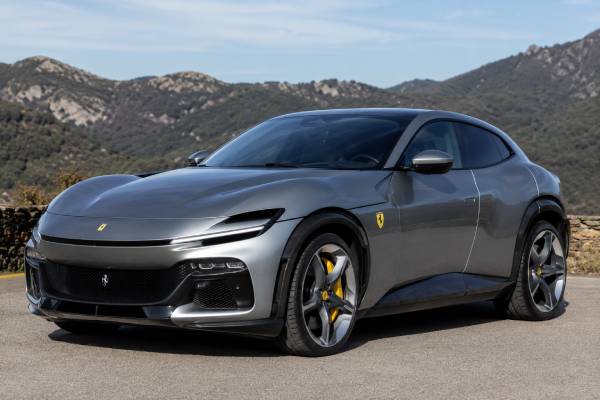
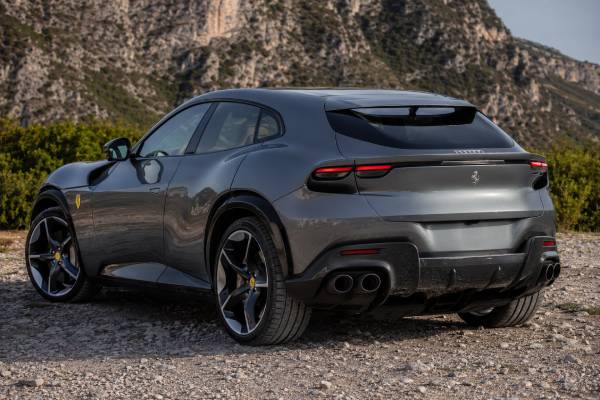
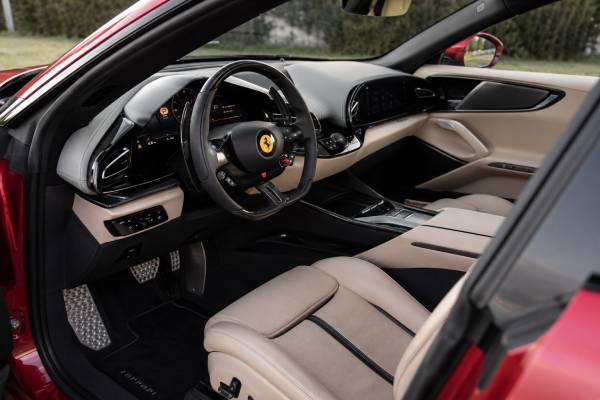
The Ferrari Purosangue F175 is Ferrari’s first series-production four-door, four-seat model, built around the F140 IA naturally aspirated 6.5-liter V12. Launched for the 2023 model year, it places a front-mid-mounted twelve-cylinder engine, rear transaxle, active suspension, rear-wheel steering, and Ferrari’s 4RM-S all-wheel-drive system into a taller, more practical body than any previous modern Ferrari. That makes it more than a fast luxury SUV rival. It is Ferrari’s answer to the demand for a usable, family-capable grand touring car without abandoning the sound, response, and drama of a high-revving V12. Buyers care because it is expensive, allocation-led, highly configurable, and technically complex. Enthusiasts care because it tries to make a practical four-seat car behave, sound, and feel like a real Ferrari.
Table of Contents
- Why the Purosangue Matters
- V12 Drivetrain and Key Specs
- Production, Options, and Identification
- Design, Engineering, and Special Details
- Road Feel, Performance, and Usability
- Maintenance, Reliability, and Recall Checks
- Market Value and Buying Advice
Why the Purosangue Matters
The Purosangue matters because it changed Ferrari’s format without changing Ferrari’s core promise: a front-mid V12, sharp chassis response, and a driver-first character. It is the car Ferrari built after years of resisting the normal luxury-SUV formula.
Ferrari has made practical grand tourers before. The 250 GT 2+2, 365 GT 2+2, 456 GT, 612 Scaglietti, FF, and GTC4Lusso all gave owners more space than a two-seat berlinetta. The Purosangue continues that lineage, but it does it with four full doors, four individual seats, a rear hatch, and a higher seating position. That makes it a major historical break for Maranello.
Ferrari avoids calling it a conventional SUV. The company presents it as a Ferrari with unusual usability, not as a truck-based luxury vehicle or a softened crossover. That distinction matters because the engineering layout is much closer to a front-mid-engine Ferrari GT than to a typical performance SUV. The V12 sits behind the front axle line, the dual-clutch gearbox is mounted at the rear as a transaxle, and the all-wheel-drive hardware is packaged to preserve Ferrari-style weight distribution and response.
The Purosangue also arrived at an important moment for the brand. Ferrari was already expanding hybrid technology through cars such as the SF90 and 296, yet the Purosangue launched with no turbochargers and no hybrid motor. Its naturally aspirated V12 was a deliberate statement. In a market full of turbocharged V8 SUVs and electrified high-performance crossovers, Ferrari chose revs, throttle response, and sound.
For collectors and long-term owners, the car’s significance comes from three things:
- It is the first series-production Ferrari with this body and seating layout.
- It uses one of Ferrari’s final naturally aspirated V12 families in a new application.
- It introduced advanced active suspension technology that became one of the model’s defining features.
The Purosangue is not a numbered limited edition, but access is controlled by allocation, market demand, and Ferrari’s normal ordering discipline. Early examples are especially specification-sensitive. A conservative color with a poor option mix may not appeal to the same buyer as a carefully ordered Atelier or Tailor Made car with desirable paint, carbon details, forged wheels, panoramic roof, and the right interior.
Its reputation today is unusual. Some purists still dislike the idea of a high-riding Ferrari. Many owners and reviewers, however, see it as one of the most convincing ways to combine a V12 grand tourer with real passenger space. That tension is part of what will keep it interesting. It is both controversial and technically serious.
V12 Drivetrain and Key Specs
The Purosangue’s most important specification is its F140 IA V12: a naturally aspirated 6.5-liter engine producing 725 cv, commonly listed as 715 hp, with a high 8,250 rpm ceiling. Unlike most rivals, it does not rely on turbo boost for its main character.
| Item | Specification |
|---|---|
| Model code | F175 |
| Engine code | F140 IA |
| Engine type | 65-degree naturally aspirated V12, dry sump |
| Displacement | 6,496 cc |
| Bore x stroke | 94 mm x 78 mm |
| Compression ratio | 13.6:1 |
| Maximum power | 725 cv at 7,750 rpm, commonly listed as 715 hp / 533 kW |
| Maximum torque | 716 Nm at 6,250 rpm |
| Maximum engine speed | 8,250 rpm |
| Transmission | 8-speed F1 dual-clutch transaxle |
| Drivetrain | 4RM-S all-wheel drive with rear-wheel steering |
The engine is the emotional center of the car. Ferrari tuned it to deliver strong low-speed torque while keeping the long, rising power curve expected from a naturally aspirated V12. That is important in a heavy four-seat car. A peaky engine would feel dramatic on a mountain road but tiring in city driving. The Purosangue instead gives enough torque at normal road speeds while still rewarding the driver who lets it rev.
The rear-mounted gearbox is just as important as the engine. Placing the transmission at the back helps the car achieve a 49:51 front-to-rear weight distribution, which is unusual for a tall four-seat vehicle with a V12 ahead of the cabin. The layout also helps the Purosangue feel less nose-heavy than many front-engine performance SUVs.
Ferrari’s 4RM-S system is not a simple full-time SUV-style drivetrain. It is designed to add front-axle drive when useful while preserving the feel of a rear-biased Ferrari. Combined with four-wheel steering, it helps the car rotate into corners and remain stable at higher speeds.
| Category | Ferrari Purosangue F175 |
|---|---|
| Length | 4,973 mm |
| Width | 2,028 mm |
| Height | 1,589 mm |
| Wheelbase | 3,018 mm |
| Front / rear track | 1,737 mm / 1,720 mm |
| Dry weight | 2,033 kg |
| Weight distribution | 49% front / 51% rear |
| Fuel tank | 100 liters |
| Cargo capacity | 473 liters |
| Front tires | 255/35 R22 |
| Rear tires | 315/30 R23 |
| Front brakes | 398 x 38 mm carbon-ceramic discs |
| Rear brakes | 380 x 34 mm carbon-ceramic discs |
| 0–100 km/h | 3.3 seconds |
| 0–200 km/h | 10.6 seconds |
| Top speed | Over 310 km/h |
Fuel consumption depends heavily on market testing cycle and driving style. The U.S. EPA rating for the 2024 model is 12 mpg combined, 11 mpg city, and 15 mpg highway. In real ownership, the bigger cost is not fuel. Tires, brakes, insurance, paint protection, annual servicing, and depreciation risk matter far more.
Production, Options, and Identification
The Purosangue is a regular-production Ferrari model, but it is not a normal high-volume luxury SUV. The cars that matter most to buyers are the ones with strong factory documentation, desirable configuration, clean history, and correct recall or service records.
There is one main body style: a four-door, four-seat Ferrari with a rear hatch and rear-hinged back doors. Ferrari has not treated the Purosangue like a broad trim-line SUV with many engines. The core identity is the F140 IA V12, 8-speed DCT, all-wheel drive, and four-seat cabin.
Identification is straightforward at the basic level. A genuine Purosangue should have the correct F175 model identity, matching factory records, and Ferrari dealer history. For buyers, the more meaningful question is not whether the car is real, but whether the specification and history justify the price.
Factory specification areas that affect desirability
Ferrari personalization can change the feel and value of a Purosangue dramatically. Two cars with the same base model year can feel very different in the market.
Important specification areas include:
- Exterior paint, especially historical colors, triple-layer paints, or Tailor Made finishes
- Wheel design and finish
- Carbon-fiber exterior trim
- Carbon-fiber interior trim
- Panoramic or electrochromic glass roof
- Front lift system where fitted
- Seat style, leather, Alcantara, contrast stitching, and special inserts
- Passenger display and cabin technology
- Audio upgrades
- Advanced driver-assistance equipment by market
- Brake caliper color and exterior badge details
- Luggage, accessories, and factory cover
Subtle specification choices can help or hurt resale. A tasteful dark exterior over a distinctive but not garish interior may attract a broad buyer pool. A very personal Tailor Made build can be valuable to the right buyer but harder to sell quickly if the color mix is polarizing.
| Area | Why it matters |
|---|---|
| Factory build sheet | Confirms original paint, trim, options, and market equipment |
| Service history | Shows whether the car has been maintained inside the authorized network |
| Recall completion | Confirms safety campaigns have been performed |
| Paint condition | Large panels and costly finishes make paintwork important |
| Tire age and type | Correct high-performance tires are essential to ride and handling |
| Carbon-ceramic brakes | Replacement cost is high, so disc and pad condition matters |
| Interior wear | Light leather, bolsters, touch surfaces, and rear seats show use quickly |
For modern Ferraris, originality is different from classic-car matching-numbers culture. The engine, gearbox, and chassis still matter, but buyers focus more on factory order, warranty status, service records, paint meter readings, accident history, and whether any modifications are reversible.
A Purosangue with aftermarket wheels, exhaust changes, suspension alterations, or non-factory carbon parts should be approached carefully. Some upgrades may be high quality, but they can complicate warranty, resale, and Ferrari certification. A stock car with a complete official history usually carries the least market friction.
Design, Engineering, and Special Details
The Purosangue looks different because Ferrari had to hide unusual mass and height inside a shape that still reads as a Maranello grand tourer. The best design details are functional: airflow management, packaging, door access, and chassis control.
The exterior avoids the blunt nose and upright grille look of many luxury SUVs. Ferrari uses a slim upper lighting treatment, a sculpted front section, large side forms, and technical surfaces around the lower body. The result is not small, but it is visually lighter than its dimensions suggest.
The rear-hinged back doors are one of the signature features. They make rear-seat access easier while preserving a cleaner side profile. The B-pillar remains, which helps body stiffness. That matters because a large, powerful four-door Ferrari needs a strong structure to make its suspension and steering work properly.
The cabin follows a dual-cockpit idea. The driver gets a Ferrari-style steering wheel, digital instruments, shift paddles, and driving controls. The front passenger can be more involved than in a normal SUV because the dashboard design gives them their own display area. The rear seats are individual chairs rather than a bench, reinforcing the idea that this is a four-seat GT rather than a family shuttle.
Active suspension is the hidden centerpiece
The Purosangue’s active suspension is one of its most important engineering features. The system uses Multimatic TrueActive Spool Valve dampers with 48-volt electric actuation. In plain language, each damper can do more than soften or stiffen. It can actively apply force to help control body movement.
That matters because a tall, heavy car naturally wants to pitch, roll, and squat. Traditional anti-roll bars can control roll, but they also create compromises in ride comfort and wheel independence. The Purosangue’s active system reduces the need for those traditional compromises. It helps the body stay flatter in corners while allowing the car to remain comfortable on rough roads.
For the driver, the benefit is simple: the car feels smaller and more controlled than its weight suggests. For the owner, the warning is just as simple: this is advanced, expensive hardware that must be inspected and serviced by people who understand it.
Sound and sensory character
The F140 IA engine gives the Purosangue a different character from turbocharged rivals. Turbo engines often deliver huge low-rpm torque but filter some intake and exhaust drama. The Purosangue’s V12 builds speed in a more progressive, mechanical way. The sound rises with revs, and the throttle feels more directly connected to the engine.
The intake, exhaust, and engine calibration are all part of the experience. At low speed, the car can be civil. When extended, it has the layered metallic sound people expect from a modern Ferrari V12. That sound is a major reason buyers choose this car over faster or more efficient alternatives.
Road Feel, Performance, and Usability
The Purosangue is fast enough to match supercars from a previous era, but its real achievement is how it combines speed with four-seat use. It is not the lightest or most delicate Ferrari, yet it feels far more alert than its size suggests.
Acceleration is immediate and clean. There is no turbo lag, so the engine responds naturally to pedal movement. At low revs, the car has enough torque for relaxed traffic and highway driving. Above the middle of the rev range, the V12 becomes much more intense, pulling hard toward its 8,250 rpm limit.
The 8-speed dual-clutch gearbox is smooth in normal driving and quick when pushed. In automatic mode, it can make the car feel easy. In manual mode, the large paddles and fast shifts bring it closer to Ferrari’s sports-car character. The gearbox is part of the reason the Purosangue does not feel like a conventional luxury SUV.
Steering is quick and accurate. The rear-wheel steering helps reduce the sense of length in tighter bends and improves stability at speed. Drivers coming from a Lusso or 812 will notice the Purosangue’s extra height and mass, but drivers coming from other high-performance SUVs may be surprised by how sharply the Ferrari turns in.
Ride quality is one of the car’s strengths. The active suspension can give the Purosangue a calm, controlled feel over imperfect roads without letting the body float. It is still a Ferrari on large wheels and performance tires, so it will never isolate occupants like a Rolls-Royce Cullinan. The point is different. The Purosangue aims to keep the road connected to the driver without punishing the passengers.
Braking performance is strong, but carbon-ceramic brakes need heat, correct pads, and careful inspection. In normal road use, some owners may notice a different initial feel than with iron discs. That is normal for many carbon-ceramic systems. What is not normal is vibration, warning lights, obvious scoring, uneven wear, or a long pedal.
Daily use and compromises
The Purosangue is more usable than most Ferraris, but it is not a normal family SUV. The rear seats are real, the luggage area is useful, and visibility is better than in a low mid-engine supercar. Still, the car is wide, expensive to park, and sensitive to tire and wheel damage.
Practical ownership considerations include:
- Wide body and large wheels in city parking
- Expensive tire replacement
- Low-profile tire vulnerability on potholes
- High insurance and repair costs
- Need for secure parking
- Fuel consumption that reflects a large V12
- Attention from the public in almost every setting
On a highway, the Purosangue can feel like a fast grand tourer. On a mountain road, it feels more composed than its size suggests. On track, it is capable, but that is not its natural home. Track use will accelerate tire, brake, and fluid wear, and buyers should treat repeated circuit use as a major inspection point.
Maintenance, Reliability, and Recall Checks
The Purosangue is too new for long-term reliability patterns to be fully settled, so the best ownership approach is preventive: stay inside Ferrari’s service network, verify recalls by VIN, and inspect expensive wear items before purchase. The car’s complexity makes records more valuable than promises.
A modern Ferrari V12 can be durable when serviced correctly, but the Purosangue adds layers of cost and complexity: active suspension, 4RM-S all-wheel drive, rear-wheel steering, carbon-ceramic brakes, advanced electronics, and a high-end interior full of powered systems.
The first major public recall item buyers should know about is the 2025 safety recall affecting certain 2023–2025 Purosangue vehicles. The issue involves possible contact between the fuse box power supply and the passenger-side footrest, which could cause a short circuit and reduce braking capability. The remedy is installation of a plastic spacer. Any buyer should verify completion by VIN with an authorized Ferrari dealer or official recall database.
| System | What to check | Why it matters |
|---|---|---|
| V12 engine | Oil service history, coolant condition, warning lights, leaks, abnormal noise | The engine is robust when maintained, but repairs are specialist-only and costly |
| DCT gearbox | Shift quality, fluid service records, clutch behavior, fault codes | Low-speed shudder or harsh shifts need proper diagnosis |
| 4RM-S drivetrain | Front-drive operation, warning messages, driveline noises | The system is central to the car’s traction and handling character |
| Active suspension | Ride-height behavior, leaks, damper faults, calibration updates | Advanced dampers are expensive and require specialist equipment |
| Carbon-ceramic brakes | Disc condition, pad life, pedal feel, service measurements | Replacement costs can be very high |
| Tires and wheels | Correct sizes, matching set, date codes, wheel damage | Handling depends heavily on tire condition and correct fitment |
| Electronics | Software updates, infotainment behavior, displays, driver aids | Modern Ferrari electronics should be checked before warranty expiry |
| Body and paint | Paint-meter readings, panel alignment, underside marks, PPF quality | Large panels and special paints make repairs expensive |
Service planning
Owners should follow the official maintenance schedule for their market and VIN. Annual servicing is the safe baseline even for low-mileage cars, because fluids age and software campaigns may be released after delivery. Cars that sit unused can develop battery, tire, and seal issues just as surely as cars that are driven hard.
A good maintenance file should include:
- Annual service invoices
- Dealer inspection reports
- Recall and campaign completion records
- Tire replacement records with date codes
- Brake measurements
- Battery replacement or conditioning notes
- Software update records
- Warranty or extended-warranty documents
Battery care is important. Like many modern high-end cars, the Purosangue depends on stable voltage for control modules, sensors, and comfort systems. A battery maintainer is not a luxury accessory; it is part of responsible ownership.
Avoid heavily modified examples unless the work was done by a respected Ferrari specialist and can be reversed. Exhaust modifications, non-factory wheels, lowered suspension, or electronic tuning can affect warranty, diagnostics, and resale. A Ferrari that looks cheaper because it has questionable upgrades may become more expensive after purchase.
Market Value and Buying Advice
The best Purosangue to buy is not simply the cheapest one. It is the car with the right factory specification, clean history, complete service records, warranty coverage, and no unresolved recall, paint, brake, tire, or electronic concerns.
As of the current market, the Purosangue sits in the upper tier of high-performance luxury SUVs and crossover-style grand tourers. New pricing is already in the low-to-mid $400,000 range in the U.S. before heavy options, and many real cars cost much more once personalization is included. Lightly used examples can vary widely. Some trade near or below original list depending on mileage and timing; others are advertised far above list when availability, specification, and color are exceptional.
Do not judge value only by mileage. A 1,000-mile car with poor storage, weak documentation, damaged wheels, and overdue campaigns may be less attractive than a 5,000-mile car with perfect dealer history and a better factory build.
What drives value
Strong-value Purosangues usually have:
- Desirable factory paint and interior combination
- Complete Ferrari dealer service history
- Warranty or extended warranty still active
- Clean accident and paintwork history
- Low but realistic mileage
- Correct tires with recent date codes
- Healthy carbon-ceramic brakes
- No unresolved recalls or campaigns
- Original books, keys, charger, cover, and accessories
- Factory documentation matching the car’s current configuration
Lower-value or higher-risk cars often have:
- Missing service history
- Unexplained paintwork
- Aftermarket modifications
- Heavy wheel damage
- Worn tires or mismatched brands
- Brake wear not reflected in the asking price
- Interior damage from family use or poor cleaning
- Export/import complications
- Unclear tax, title, or registration history
| Priority | Inspection step |
|---|---|
| 1 | Confirm VIN, factory build, market specification, and title status |
| 2 | Verify all recalls, campaigns, and software updates with Ferrari |
| 3 | Review every service invoice from delivery to present |
| 4 | Inspect paint depth, panel gaps, glass, wheels, and underside |
| 5 | Measure brake discs and pads rather than relying on appearance |
| 6 | Check tire brand, size, date code, tread depth, and sidewall condition |
| 7 | Run a Ferrari diagnostic scan for stored or cleared faults |
| 8 | Test all seat, door, display, lift, suspension, and driver-assistance functions |
| 9 | Drive the car long enough to check hot behavior, braking, shifts, and warning messages |
| 10 | Price the car against specification, condition, warranty, and upcoming service needs |
The safest purchase is usually an authorized-dealer car with warranty, full records, and a specification you would have ordered yourself. Private-sale cars can be excellent, but the inspection needs to be stricter. Do not skip a specialist pre-purchase inspection just because the car is nearly new.
For long-term collectability, the Purosangue has a good foundation. It is historically important, powered by a naturally aspirated Ferrari V12, and controversial enough to remain part of brand discussion. The main risk is supply. Because it is not a numbered limited model, ordinary examples may behave like expensive modern Ferraris rather than instant collectibles. The most collectible cars are likely to be early, beautifully specified, low-mileage, fully documented examples, especially those with unusual but tasteful factory configurations.
References
- Ferrari Purosangue – Ferrari.com 2023 (Official Model Page)
- FERRARI PUROSANGUE: UNLIKE ANY OTHER 2022 (Press Kit)
- Gas Mileage of 2024 Ferrari Purosangue 2024 (EPA Fuel Economy)
- Part 573 Safety Recall Report 25V479 2025 (Recall Database)
- Multimatic | Multimatic’s breakthrough TrueActive™ damper technology featured on Ferrari Purosangue 2022 (Suspension Technology)
Disclaimer
This article is for informational purposes only and is not a substitute for professional diagnosis, maintenance, repair, valuation, or pre-purchase inspection. Specifications, torque values, service intervals, recall status, software updates, and procedures can vary by VIN, model year, market, and equipment. Always verify details against the official Ferrari service documentation and an authorized Ferrari dealer or qualified specialist.
If you found this guide useful, please consider sharing it on Facebook, X/Twitter, or your favorite car community to support our work.