
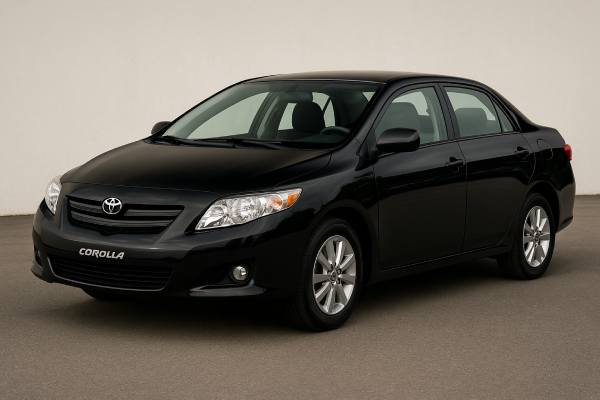
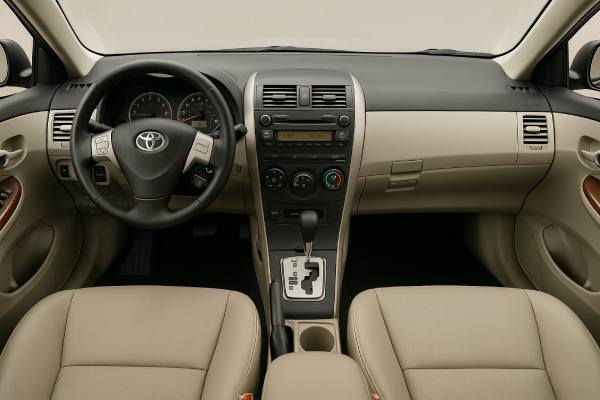
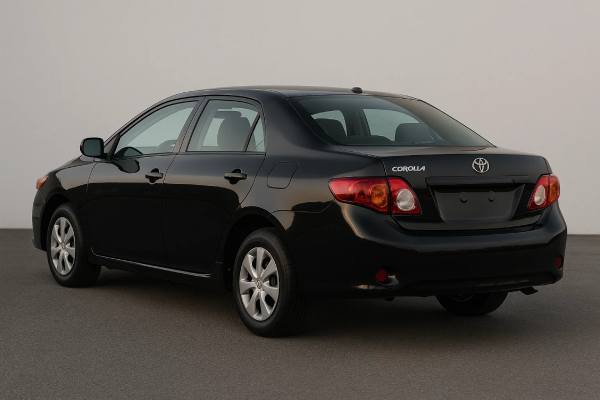
Toyota’s tenth-generation Corolla (code ZRE142) pairs a modern, chain-driven 1.8-litre 2ZR-FE with dual VVT-i and a light, stiff body to deliver exactly what most owners want: low running costs, simple service, and everyday comfort. Offered with a five-speed manual or a four-speed automatic, it prioritises smooth response over outright speed and returns strong highway economy for its era. The cabin is roomy for a compact, controls are intuitive, and parts availability is unmatched. For shoppers comparing commuter sedans from 2008–2010, this Corolla is the benchmark for durability—provided you keep up with fluids, filters, and basic inspections. This guide focuses on the 1.8-litre trims (the vast majority of cars on the road), explains what varies by year and package, and calls out the few checks that protect your wallet over a long service life.
Fast Facts
- Proven 2ZR-FE with timing chain (no belt) and dual VVT-i; easy access for routine service.
- Excellent real-world highway economy for its class; relaxed cruising at 65–75 mph (105–120 km/h).
- Straightforward chassis: MacPherson struts/torsion beam; inexpensive brakes and tires.
- Watch for aging water pumps, rear brake-shoe adjustment, and recall completion on pedal/floor-mat campaigns.
- Typical interval: engine oil and filter every 5,000–7,500 miles (8,000–12,000 km) or 6–12 months.
Navigate this guide
- Detailed Overview
- Specifications and Technical Data
- Trims and Options, Safety and Driver Assistance
- Reliability, Common Issues and Service Actions
- Maintenance and Buyer’s Guide
- Driving and Performance
- How Corolla 1.8 Compares to Rivals
Detailed Overview
The ZRE142 Corolla arrived for model year 2009 in North America (late-2008 on sale), replacing the ninth generation with a cleaner, quieter platform. The star is the 2ZR-FE: a 1.8-litre, aluminum-block, DOHC inline-four with dual VVT-i on intake and exhaust cams. Rated at 132 hp (98 kW) and 174 Nm (128 lb-ft), it trades high-rpm theatrics for efficient, flexible mid-range torque. In traffic, the engine feels unstrained; on the highway it settles into low noise and vibration—even with the four-speed automatic’s tall gearing.
Trim strategy focuses on comfort and running costs. Most grades use front discs with rear drums (simple and inexpensive), electric power steering for reduced parasitic loss, and tire sizes that keep replacement bills modest. Compared with the same-era “sport” compacts, this Corolla is tuned to be calm, predictable, and cheap to own, not edgy. The body structure and restraint systems were a safety step forward versus the outgoing generation, and stability control availability expanded through the line as the years progressed.
Inside, seats are supportive for long commutes, visibility is good, and the 60/40 split-fold rear expands the trunk’s useful length. Controls are large and clearly labeled. Audio systems vary by trim and model year; Bluetooth and steering-wheel audio controls appear on mid/upper grades. Practical touches—wide door openings, durable fabrics, generous cupholders—make daily life easy.
Ownership case: routine fluids and filters are mainstream and affordable; the timing chain requires no scheduled replacement; and common wear items (links, bushings, pads, rotors) are inexpensive. The few “watch-fors” are well known and easy to inspect: water pump seepage, rear shoe adjustment leading to a longer pedal, and making sure all recall campaigns are complete. For many buyers, that’s the appeal—nothing exotic, just a compact that quietly does the job for years.
Specifications and Technical Data
Engine and Performance (ICE-only)
| Item | Detail |
|---|---|
| Engine code | 2ZR-FE |
| Layout & valvetrain | Inline-4, aluminum block/head, DOHC, 16 valves, Dual VVT-i |
| Displacement | 1.8 L (1,798 cc) |
| Bore × stroke | 80.5 × 88.3 mm (3.17 × 3.48 in) |
| Compression ratio | ~10.0:1 |
| Induction | Naturally aspirated |
| Fuel system | Sequential multi-port fuel injection |
| Max power | 132 hp (98 kW) @ ~6,000 rpm |
| Max torque | 174 Nm (128 lb-ft) @ ~4,400 rpm |
| Timing drive | Chain |
| Emissions certification | Tier 2 Bin 5 era (USA) |
| Rated efficiency (EPA, typical) | ~27/35 mpg US (city/hwy), ~30 mpg US combined (8.7 L/100 km combined) |
| Real-world highway @ 120 km/h (75 mph) | ~6.9–7.6 L/100 km (31–34 mpg US / 37–41 mpg UK), wind/grade dependent |
| Aerodynamics (approx.) | Cd ~0.29–0.30 (trim-dependent) |
Transmission and Driveline
| Item | Detail |
|---|---|
| Drive type | Front-wheel drive |
| Manual | 5-speed |
| Automatic | 4-speed electronically controlled |
| Final drive | ~3.72–4.31 (varies by trans/trim) |
| Differential | Open (traction/stability control availability by year/trim) |
| “Refuel to full” time | ~5 minutes typical station stop |
Chassis and Dimensions
| Item | Detail |
|---|---|
| Front / rear suspension | MacPherson strut / torsion beam |
| Steering | Electric power rack-and-pinion |
| Brakes (most 1.8 trims) | Ventilated front discs; rear drums |
| Wheel / tire packages | 195/65R15 or 205/55R16; some appearance packages with 16-inch alloys |
| Ground clearance | ~150 mm (5.9 in) |
| Length × width × height | ~4,540 × 1,760 × 1,465 mm (178.7 × 69.3 × 57.7 in) |
| Wheelbase | 2,600 mm (102.4 in) |
| Turning circle (curb-to-curb) | ~10.8 m (35.6 ft) |
| Curb weight | ~1,215–1,255 kg (2,680–2,765 lb), equipment-dependent |
| GVWR | ~1,700–1,745 kg (3,748–3,846 lb) |
| Fuel tank | 50 L (13.2 US gal / 11.0 UK gal) |
| Cargo volume (SAE) | ~348–368 L (12.3–13.0 ft³), seats up |
Performance and Capability
| Metric | Typical Result |
|---|---|
| 0–60 mph (0–97 km/h) | ~9.0–10.0 s (manual slightly quicker) |
| 0–100 km/h (0–62 mph) | ~9.5–10.5 s |
| Top speed | ~180–190 km/h (112–118 mph), limiter-dependent |
| 100–0 km/h (62–0 mph) braking | ~38–42 m (125–138 ft) on quality tires |
| Towing (light utility) | Up to ~680 kg (1,500 lb) with proper equipment (verify locally) |
| Payload | ~385–430 kg (850–950 lb), configuration-dependent |
| Roof load | ~45–75 kg (100–165 lb), rack-system dependent |
Fluids and Service Capacities (Confirm by VIN and owner’s manual.)
| System | Spec / Grade | Capacity (approx.) |
|---|---|---|
| Engine oil | ILSAC/API 5W-20 or 5W-30 (climate-based) | ~3.9–4.3 L (4.1–4.5 US qt) w/ filter |
| Coolant | Toyota Super Long Life Coolant (pink), 50/50 premix | ~5.7–6.6 L (6.0–7.0 US qt) total |
| Manual transmission | API GL-4/GL-5 per manual | ~2.0–2.3 L (2.1–2.4 US qt) |
| Automatic transmission | Toyota WS ATF | ~6.5–7.6 L (6.9–8.0 US qt) service fill (varies by method) |
| A/C refrigerant | R-134a | ~430–500 g (15–18 oz) |
| A/C compressor oil | ND-Oil 8 (PAG) | ~120–150 mL (4–5 fl oz) |
Electrical
| Item | Detail |
|---|---|
| Alternator output | ~100–110 A |
| 12-V battery | Group 35/24F common; ~45–60 Ah (CCA varies) |
| Spark plugs | Long-life iridium; gap ~0.7–0.8 mm (0.028–0.031 in) |
Safety and Driver Assistance
| Area | Detail |
|---|---|
| Airbags | Dual-stage front, front side, full-length curtains; active head restraints |
| Brakes and stability | ABS, EBD, Brake Assist; stability and traction control availability by trim/year |
| IIHS outcomes | Strong crashworthiness for the era across major tests |
| Child-seat | LATCH lower anchors (rear outboard) and top tether points |
Trims and Options, Safety and Driver Assistance
Trim overview (1.8-litre grades):
Common North American grades include base, LE, and S. All share the 2ZR-FE and FWD, with a five-speed manual standard on many early build combinations and a four-speed automatic widely fitted. The S grade adds sportier exterior trim, fog lamps, and typically larger wheels/tires (often 205/55R16), but keeps the same drivetrain. The XLE focuses on comfort features (auto climate on some packages, premium audio) while retaining the 1.8. The 2.4-litre XRS exists but sits outside this 1.8-focused guide.
Mechanical/functional differences by trim (typical):
- Brakes: Most 1.8 trims use rear drums for lower running costs; pedal feel depends on correct shoe adjustment.
- Suspension: Spring/damper rates vary slightly for S vs LE; all use the same basic geometry.
- Steering: One EPS calibration across trims; steering-wheel audio controls on better-equipped versions.
- Wheels/tires: 15-inch steel on base; 16-inch alloys common on LE/S.
Feature and package notes (2009–2010):
- Safety: ABS standard; stability/traction control availability expanded, becoming common across the range as equipment packages evolved.
- Convenience: Bluetooth and steering-wheel controls were bundled on mid/upper trims; Smart Key appeared with specific option groups.
- Audio: Upgraded head units with additional speakers and auxiliary input on better trims.
Safety ratings summary:
The body’s crash performance tested well for the period. Side airbags and curtains are standard, and head-restraint geometry is effective. While modern ADAS (AEB, lane-keep, adaptive cruise) did not exist here, the fundamentals—structure, belts, airbags, and stability control—are solid. Headlight performance reflects early-2000s halogen norms.
Child-seat and service calibration considerations:
LATCH anchors are accessible at the outboard rear positions. After windshield replacement, steering angle or yaw-rate zero-point resets may be required; check procedures when ABS/VSC lights are on following service. After any seat or airbag work, observe SRS handling rules and perform required checks.
Quick identifiers for 1.8 trims:
- Absence of “XRS” badging and rear disc brakes.
- 15- or 16-inch wheels/tires, conservative aero trim.
- Tachometer redline lower than 2.4-litre; build labels confirm engine code.
Reliability, Common Issues and Service Actions
The 2ZR-FE Corolla has an excellent reputation when maintained. Most issues are age- and mileage-related rather than design flaws. Use the map below to prioritize pre-purchase checks and preventive work.
Engine and engine bay
- Water pump seep or bearing noise (common / low–medium): Check for pink coolant residue around the pump or a faint chirp that rises with rpm. Remedy: Replace pump and belt; bleed cooling system.
- PCV and oil control (occasional / low): Stuck PCV valves can contribute to minor oil use. Remedy: Replace PCV at intervals; monitor oil level monthly.
- MAF contamination (occasional / low): Rough idle or lean codes from dusty filters/duct leaks. Remedy: Clean MAF correctly, ensure filter seal and intact intake boot.
- Throttle body deposits (occasional / low): Sticky pedal or idle flare. Remedy: Clean bore; perform idle relearn as required.
- Thermostat aging (occasional / low): Slow warm-up or unstable temperature. Remedy: Replace thermostat and cap with quality parts.
Ignition and fuel
- Coil-on-plug misfires (occasional / low–medium): Single-cylinder misfire under load; stored P030X. Remedy: Replace affected coil and iridium plug; inspect for oil in tubes.
Exhaust and emissions
- O2 sensor aging (common / low): Drop in fuel economy, intermittent CEL. Remedy: Replace upstream sensor at high mileage; verify harness integrity.
- EVAP purge valve (occasional / low): Hard warm starts, EVAP codes. Remedy: Test/replace purge valve; verify hoses and canister.
Transmission and driveline
- 4-speed automatic (occasional / low–medium): Harsh downshift or slight flare when fluid is old. Remedy: Drain/fill with Toyota WS; repeat in stages to refresh. Avoid “power flush.”
- 5-speed manual (occasional / medium): Clutch wear or release-bearing noise with city use. Remedy: Clutch kit and bearing; inspect rear main seal while open.
- CV axle boots (occasional / low): Cracks leading to grease fling. Remedy: Reboot early; replace axle if joint noisy.
Chassis, steering, and brakes
- Front sway-bar links/bushes (common / low): Light clunks over sharp bumps. Remedy: Replace links/bushings; torque at ride height.
- Rear drum adjustment (common / low): Long pedal travel if self-adjusters sticky. Remedy: Clean/adjust; replace hardware; flush fluid.
- Wheel bearings (occasional / medium): Speed-dependent growl. Remedy: Replace hub assembly.
- Alignment drift (occasional / low): Requires periodic toe set; EPS is sensitive to tire quality/pressures. Remedy: Four-wheel alignment; ensure even tire wear.
Electrical and HVAC
- Blower resistor (occasional / low): Some speeds inoperative. Remedy: Replace resistor pack; check cabin filter restriction.
- Door lock actuators (occasional / low): Intermittent operation. Remedy: Replace actuator.
Recalls, TSBs, and verification (2008–2010 build range):
- Floor mat/pedal interference and sticky accelerator campaigns: Verify shield/fastener/bracket updates and pedal components per official campaigns.
- Cold-weather brake vacuum port freezing (specific VINs/regions): Confirm completion where applicable.
- Airbag-related campaigns (supplier-specific, later years): Always run an official VIN check to confirm status.
Pre-purchase evidence to request:
- Oil change history and current oil level condition.
- Cooling-system service (pump, thermostat, coolant age).
- Transmission service proof (ATF drain/fill intervals or clutch work).
- Brake service with measurements, including rear-drum adjustment notes.
- Alignment records and tire brand/age; road-force balance results if available.
Maintenance and Buyer’s Guide
A conservative, repeatable schedule protects the 2ZR-FE and keeps the Corolla feeling new. The intervals below reflect typical mixed use; shorten for repeated short trips, high heat, or dusty environments.
Service schedule (verify by VIN and official manual):
- Engine oil and filter: 5,000–7,500 miles (8,000–12,000 km) or 6–12 months.
- Engine air filter: Inspect 15,000 miles (24,000 km); replace ~30,000 miles (48,000 km) or sooner in dust.
- Cabin air filter: 15,000–20,000 miles (24,000–32,000 km) or annually.
- Spark plugs (iridium): ~120,000 miles (192,000 km) or 10 years; earlier if misfires or oil use.
- Coolant (SLLC pink): First at 100,000 miles (160,000 km) or 10 years; then every 50,000 miles (80,000 km) or 5 years.
- Accessory/serpentine belt and tensioner: Inspect 30,000 miles; replace at first noise/cracking.
- Brake fluid: Flush every 3 years regardless of mileage.
- Manual-transmission oil: Inspect at 30,000 miles; replace ~60,000–90,000 miles (96,000–144,000 km).
- Automatic transmission (WS ATF): Drain/fill ~60,000–90,000 miles based on use/heat; gentle service method only.
- Alignment and rotation: Rotate tires every 5,000–7,500 miles; align annually or with any odd wear.
- PCV valve: Inspect ~60,000 miles; replace if restricted.
- Battery: Load-test annually after year 3; typical replacement 4–6 years.
- Timing chain: No fixed interval—inspect for correlation codes or rattle; service only if out of spec.
- Brake hardware: Rear drum clean/adjust at every brake service; front slide-pin clean/lube each pad change.
Fluid quick picks (decision-oriented):
- Engine oil: Quality synthetic 5W-20/5W-30 meeting ILSAC.
- ATF: Toyota WS only.
- Coolant: Toyota Super Long Life (pink).
- Brake fluid: DOT 3 or DOT 4; condition/flush interval is key.
Buyer’s inspection checklist (on-car):
- Cold start: Listen for belt chirp or tensioner noise; confirm steady idle.
- Cooling system: No sweet smell; no pink residue around pump; quick cabin heat.
- Transmission: Manual—smooth take-up, quiet release bearing; Automatic—no flare or harsh kicks, clean 1–2 and 2–3.
- Brakes: Firm pedal after rear adjustment; straight stops; parking brake holds on a grade.
- Suspension/steering: Quiet over ripples; no steering nibble at 65–75 mph (105–120 km/h).
- Tires: Even wear; no cupping.
- Body: Rocker panels and underbody lines in salt regions; look for surface corrosion at clip points.
- Recalls: Proof of completion for pedal/floor-mat and any region-specific campaigns.
What to seek or avoid:
- Seek: Documented oil changes, coolant service within age limits, recent brake fluid flush, aligned suspension with printout, quality tires.
- Caution: Long intervals on ATF, chronic long-pedal feel (rear adjusters), neglected coolant, or cars lacking recall documentation.
Durability outlook:
With routine fluids and attention to small items, 200k+ miles (320k+ km) is realistic on the original powertrain. Consumables are inexpensive, and independent shops know the platform well.
Driving and Performance
Ride and handling: This Corolla favors calm, predictable responses. The suspension filters big hits well and limits body roll enough for confident lane changes. On 15-inch or 16-inch tires it rides quietly and shrugs off patchy asphalt; there’s little thump or boom from the rear beam unless tires are over-inflated. Straight-line stability is a strength, especially in crosswinds, and the car tracks cleanly with a proper alignment and balanced tires.
Steering and braking: Electric power steering is light at parking speeds and builds weight progressively. On center, it’s tuned for low fatigue rather than razor feedback—ideal for long commutes. Brakes deliver consistent, linear stops. Pedal travel stays short if rear drums are clean and self-adjusters free; a periodic cleaning/adjustment makes a noticeable difference.
Powertrain character: The 2ZR-FE is smooth and quiet. Throttle response is crisp enough for gaps in traffic; torque arrives early and the engine rarely needs to rev past 4,500 rpm in normal driving. The five-speed manual makes the most of the mid-range and keeps highway rpm down. The four-speed automatic is geared tall; it prefers early upshifts for economy but will kick down promptly for passing.
Real-world efficiency:
- City: ~8.7–9.8 L/100 km (24–27 mpg US / 29–32 mpg UK) in mixed urban use.
- Highway (100–120 km/h / 60–75 mph): ~6.5–7.8 L/100 km (30–36 mpg US / 36–43 mpg UK) depending on wind, grade, and tire choice.
- Mixed: ~7.8–8.7 L/100 km (27–30 mpg US / 32–36 mpg UK).
Cold weather, short trips, and roof racks shave a few mpg; steady cruise at 65–70 mph (105–113 km/h) often beats sticker numbers.
Selective metrics that matter:
- 0–60 mph (0–97 km/h): Around high-9s with the automatic; manual can dip toward ~9 seconds.
- 50–70 mph (80–113 km/h) passing: Adequate; plan one downshift with the automatic for best response.
- Braking consistency: Strong for daily use; premium pads and fresh fluid improve pedal confidence.
- Turning circle: Tight enough for urban U-turns and easy parking.
Winter and traction notes: Stability and traction control tame wheelspin on slick starts; dedicated winter tires (16-inch) dramatically reduce stopping distances and improve steering authority on packed snow.
How Corolla 1.8 Compares to Rivals
Honda Civic (2009–2010): Civic’s steering is livelier and high-rev trims feel sportier, but ride is busier on rough highways. Corolla’s strengths are a quieter cabin at cruise, a more relaxed drivetrain, and lower parts prices in many markets.
Mazda3 (2010 redesign): The Mazda3 handles better and offers richer interior design. It also tends to run firmer and louder on coarse pavement. Corolla counters with comfort, simpler maintenance, and strong long-term reliability records.
Ford Focus (2008–2011 sedan): Focus brings accurate steering and available features like SYNC of the era. Corolla usually wins on perceived durability, resale, and the breadth of independent service knowledge.
Hyundai Elantra (2008–2010): Value-packed and roomy, the Elantra undercuts on price. Corolla keeps an edge in long-term parts availability, residuals, and noise isolation at highway speeds.
Ownership calculus: If you measure a commuter by low cost per mile, minimal surprises, and straightforward upkeep, the ZRE142 Corolla remains a top pick. It is not the sportiest; it is among the easiest to own well past 10 years.
References
- Gas Mileage of 2009 Toyota Corolla 2009 (EPA/FuelEconomy.gov)
- 2009 Toyota Corolla 2009 (Safety Rating)
- 2009 Corolla – Owners’s Manual 2009 (Owner’s Manual)
- Safety Recall (Special Service Campaign) – 90H 2009 (Recall Document)
Disclaimer
This guide is for informational purposes and is not a substitute for professional diagnosis or repair. Specifications, torque values, fluid types and capacities, and service intervals can vary by VIN, market, model year, and equipment. Always confirm procedures and numbers against your official service documentation and follow all safety precautions when working on a vehicle.
If this helped, please consider sharing it with other owners on Facebook or X/Twitter to support xcar’s work.