
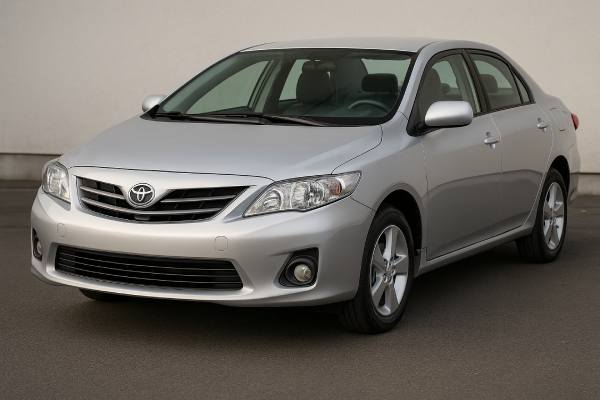

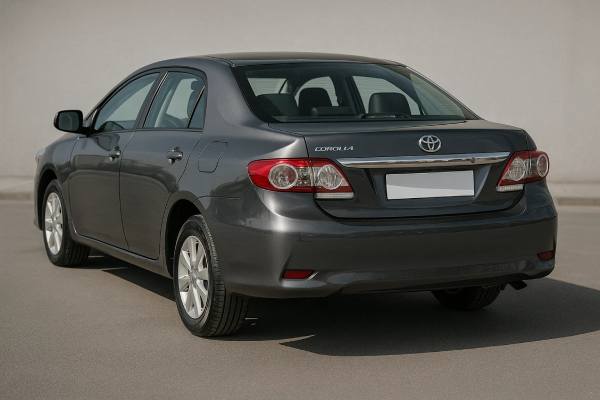
The facelifted 2010–2013 Toyota Corolla sedan (NDE150) with the 1ND-TV 1.4-litre D-4D engine targets owners who value economy, longevity, and predictable running costs. This all-aluminium diesel uses common-rail injection and a compact turbo to deliver 90 hp (66 kW) and stout mid-range torque for everyday use. The facelift brought quieter trim, minor suspension refinements, improved infotainment integration, and cleaner Euro-5 calibrations—often with a diesel particulate filter (DPF) where required. It is not a performance car, but it feels unflustered on motorways, sips fuel in traffic, and fits into tight parking with ease. Key ownership wins are simple servicing, inexpensive consumables, and a cabin that ages well. The main watch-outs are DPF use patterns, injector/SCV health on older cars, and the usual wear to bushings and brakes after a decade. If your priorities are reliability and low total cost of ownership, this Corolla diesel still makes a very strong case.
Fast Facts
- Robust 1.4 D-4D with chain-driven cams, strong mid-range, and excellent economy.
- Calm motorway manners, roomy boot (~450 L VDA), and straightforward ergonomics.
- Parts are widely available; most routine work is DIY-friendly with basic tools.
- Verify airbag recall completion and assess DPF health if you do short trips.
- Oil and filter: every 10,000–15,000 km or 12 months (use shorter interval for urban use).
Explore the sections
- Corolla NDE150 diesel overview
- Corolla 1.4 D-4D specs
- Corolla diesel trims and safety
- Reliability and service actions
- Maintenance and buyer’s guide
- Driving and economy
- Corolla diesel versus rivals
Corolla NDE150 diesel overview
The 2010–2013 facelift kept the E150-series Corolla sedan familiar while subtly improving its day-to-day polish. Externally, the bumpers, grille, and lamps were reshaped for a crisper look; inside, Toyota enhanced perceived quality with cleaner switchgear, better steering-wheel feel, and quieter trims. Beneath the skin, the 1ND-TV 1.4-litre D-4D remained the economy champion of the line-up. This engine combines an aluminium block with common-rail injection and a small turbocharger to prioritise torque where you actually use it—urban pull-away, stop-start traffic, and relaxed 5th/6th-gear cruising.
Euro-5 calibrations trimmed emissions and, in many markets, added a DPF with active regeneration logic. Owners who drive medium to long trips report few DPF concerns; repeated short hops without reaching operating temperature can trigger regens more often, so this powertrain suits commuters who see at least one 15–20-minute drive in a week. The timing system uses a chain (no scheduled belt change), and the fuel system’s Denso hardware is long-lived when fed clean diesel and serviced on time. Typical failure points are well known, inexpensive to prevent, and straightforward to diagnose with a capable scan tool.
Packaging is a strength: the torsion-beam rear axle preserves a square, usable boot (around 450 L VDA) and predictable ride quality on rough tarmac. Sound insulation is decent for the class and era; on motorways the engine settles into a muted thrum, and tyre roar is modest on quality rubber. Steering is light at parking speeds and steady when cruising. Brakes are easy to service, parts are plentiful, and the chassis responds well to fresh dampers and good tyres—simple, honest gains without exotic parts.
Who should shortlist it? Drivers who value reliability, cheap fuel bills, and minimal drama. If you cover 12,000–25,000 km per year with mixed urban and motorway use, the 1.4 D-4D delivers the ownership calm that made the Corolla nameplate famous, with the extra frugality many buyers still want.
Corolla 1.4 D-4D specs
Engine and Performance
| Item | Detail |
|---|---|
| Code | 1ND-TV (D-4D common-rail) |
| Layout and cylinders | Inline-4, SOHC, 8 valves (2 per cylinder) |
| Bore × stroke | 73.0 × 81.5 mm (2.87 × 3.21 in) |
| Displacement | 1.4 L (1,364 cc) |
| Induction | Turbocharged with intercooler (variable-geometry on most Euro-5 units) |
| Fuel system | Common-rail direct injection (Denso) |
| Compression ratio | ~16.5:1 (Euro-5 calibrations) |
| Max power | 90 hp (66 kW) @ ~3,800 rpm |
| Max torque | 205 Nm (151 lb-ft) @ ~1,800–2,800 rpm |
| Timing drive | Chain |
| Emissions standard | Euro 5 (market-dependent DPF fitment) |
| Rated economy (mixed) | ~4.7–5.0 L/100 km (50–47 mpg US / 60–56 mpg UK) |
| Real-world highway @ 120 km/h (75 mph) | ~5.0–5.8 L/100 km (47–40 mpg US / 56–48 mpg UK), wind/tyre dependent |
| Aerodynamics | Cd ≈ 0.28 (typical for E150 sedan) |
Transmission and Driveline
| Item | Detail |
|---|---|
| Transmission | 6-speed manual common; some markets retained a 5-speed manual on entry trims |
| Drive type | Front-wheel drive |
| Typical 6-speed ratios* | 1st 3.73 · 2nd 2.05 · 3rd 1.39 · 4th 1.03 · 5th 0.82 · 6th 0.69 |
| Final drive (typical) | ~3.7–3.9 (varies by gearbox and tyre size) |
*Ratios vary by VIN/calibration; confirm from the gearbox tag where critical.
Chassis and Dimensions
| Item | Detail |
|---|---|
| Platform | Toyota MC / E150 series |
| Front suspension | MacPherson strut, coil springs, anti-roll bar |
| Rear suspension | Torsion beam, coil springs |
| Steering | Electric power steering |
| Brakes | Front ventilated discs; rear solid discs on most 1.4 D-4D trims |
| Wheels and tyres | 195/65 R15 (common) or 205/55 R16 (higher trims) |
| Ground clearance | ~150 mm (5.9 in) |
| Length × width × height | ~4,540 × 1,760 × 1,470 mm (178.7 × 69.3 × 57.9 in) |
| Wheelbase | 2,600 mm (102.4 in) |
| Turning circle (kerb-to-kerb) | ≈10.4 m (34.1 ft) |
| Kerb (curb) weight | ~1,250–1,310 kg (2,756–2,888 lb) |
| GVWR | ~1,760–1,800 kg (3,880–3,968 lb) |
| Fuel tank | ~55 L (14.5 US gal / 12.1 UK gal) |
| Cargo volume (seats up) | ~450 L (15.9 ft³), VDA method |
Performance and Capability
| Metric | Figure |
|---|---|
| 0–100 km/h (0–62 mph) | ~12.0–13.0 s (spec and tyre dependent) |
| Top speed | ~175–180 km/h (109–112 mph) |
| Braking 100–0 km/h | Class-typical; condition of pads/tyres dominates outcomes |
| Towing (braked/unbraked)* | Up to ~1,200–1,300 kg / 450 kg (2,646–2,866 lb / 992 lb), market approval dependent |
*Always verify the VIN plate and local type-approval.
Fluids and Service Capacities
| System | Specification | Capacity (approx.) |
|---|---|---|
| Engine oil | Low-SAPs ACEA C2 0W-30 or 5W-30 meeting Toyota spec | ~4.6–4.8 L (4.9–5.1 US qt) with filter |
| Coolant | Toyota Super Long Life Coolant (pink, ethylene glycol, premixed) | ~5.5–6.0 L (5.8–6.3 US qt) |
| Manual transmission oil | 75W-90 GL-4/GL-5 (per Toyota spec) | ~2.0–2.3 L (2.1–2.4 US qt) |
| Brake fluid | DOT 3 or DOT 4 | Fill to reservoir markings |
| A/C refrigerant | R-134a | ~450–550 g (15.9–19.4 oz) |
| A/C compressor oil | ND-OIL 8 (PAG) | ~120–150 mL (4.1–5.1 fl oz) |
Electrical
| Item | Detail |
|---|---|
| Alternator output | ~100–120 A (variant dependent) |
| 12V battery | ~60 Ah, DIN form factor |
| Glow plugs | 4-unit set, 11–12 V; test by current draw and resistance |
Safety and Driver Assistance
| Area | Key points |
|---|---|
| Structure and airbags | Front, side, curtain airbags common; ISOFIX rear outboard points; some markets include driver’s knee airbag |
| Stability control | ESC widely fitted (standard in late production; market dependent) |
| Crash ratings | Strong Euro NCAP performance for this generation under the 2007 protocol |
| Headlights | Halogen reflectors; aim and bulb quality materially affect performance |
| ADAS | Era-typical: no factory AEB; cruise control availability varies; TPMS adoption varies by country/year |
Corolla diesel trims and safety
Trim structure and key equipment (typical European markets)
Names vary by country (often running from base → mid → high), but the content pattern is consistent:
- Entry grade: steel or basic alloy wheels, manual A/C, cloth upholstery, CD/radio with AUX (later USB), steering-wheel audio controls, front electric windows, remote locking.
- Mid grade: 15–16-inch alloys, leather steering wheel, Bluetooth/USB, rear parking sensors, split-fold rear bench, height-adjustable driver seat, cruise control availability.
- High grade: 16-inch alloys, automatic climate control, added soft-touch trim, fog lamps, auto-dimming mirror, and—where offered—mirror-integrated reversing camera.
Mechanical differences by trim
The 1.4 D-4D tune, brakes, and steering are broadly shared. Wheel/tyre packages alter ride and response slightly: 205/55 R16 brings crisper turn-in; 195/65 R15 is the comfort pick and often cheaper to replace. Most facelift-era cars use a 6-speed manual, though some entry versions retained a 5-speed depending on market. Final-drive choices and software calibrations (idle speed, glow strategy, DPF logic) can vary by emission class and VIN.
Year-to-year changes (facelift window)
- 2010: Exterior refresh, updated cabin materials, cleaner integration of AUX/USB, broader Bluetooth availability.
- 2011: Expanded standard fitment of ESC in more countries; incremental NVH tweaks; DPF adoption aligned with local Euro-5 roll-out.
- 2012–2013: Equipment bundling simplified, navigation/reversing-camera options more common from dealers.
Safety ratings—what they mean here
This generation achieved a strong rating under Euro NCAP’s earlier test regime. That score reflects robust core structure and restraint performance for the era, but it predates today’s active-safety measures. Expect multi-airbag protection and effective ESC; do not expect lane-keeping or autonomous braking. For child seats, ISOFIX anchor access is straightforward and top-tether points are clearly marked; always cross-check your seat’s fit list.
Calibration and workshop notes
- After windscreen or steering work, re-zero the steering-angle sensor and verify ESC interventions on a safe road.
- If equipped with a mirror-display reversing camera, ensure the image path and guidelines are correctly reinstated after mirror or harness replacement.
- No radar/camera ADAS to calibrate on this era; most “calibration” relates to throttle/idle learn, clutch learn on certain actuators, and injector coding.
Reliability and service actions
At a glance
The 1.4 D-4D Corolla earns its reputation for durability. Most issues are age- and usage-related rather than intrinsic design faults. Prevention is simple: timely fluids, quality filters, clean diesel, and occasional long runs to keep the DPF happy.
Engine and fuel system
- EGR/Intake soot build-up — Common / Low–Medium: Hesitation, rough idle, or reduced MPG after many short trips. Remedy: remove and clean EGR valve and intake elbow; update software if applicable; adopt periodic longer drives.
- DPF load/regen frequency — Occasional / Medium: Frequent short trips can raise soot load and trigger warnings. Remedy: complete a proper regeneration drive (steady 60–100 km/h for 15–25 minutes), check for stored DTCs, and inspect pressure/temperature sensors.
- Suction Control Valve (SCV) wear — Occasional / Medium: Warm-start stumbles or surging, often without hard codes. Remedy: replace SCV on the Denso pump; perform fuel-learn procedure.
- Injector correction out of spec — Occasional / Medium–High: Knock at idle, smoke, or poor economy. Remedy: leak-off test, code new/overhauled injectors with correct trim values; recheck pilot injection noise.
- Water pump seepage — Common / Low–Medium: Pink residue at weep hole, gradually falling coolant. Remedy: new pump and gasket; renew SLLC.
Driveline and transmission
- Clutch and dual-mass flywheel wear — Occasional / Medium–High: Judder on take-up or chatter at idle. Remedy: replace clutch/DMF assembly; check rear main seal and slave cylinder while in there.
- Driveshaft inner CV noise — Occasional / Medium: Rhythmic vibration on throttle at motorway speeds. Remedy: inspect inner joint plunge wear; replace shaft or joint.
Suspension, steering, and brakes
- Front drop links and ARB bushes — Common / Low: Knocks over sharp edges. Remedy: replace as a pair; torque with wheels at normal ride height.
- Front top mounts — Occasional / Medium: Creaks during steering at low speed. Remedy: replace mount and bearing; inspect struts.
- Rear beam bushes — Occasional / Medium: Thump over expansion joints, mild rear steer effect. Remedy: press in quality bushes; align afterwards.
- Caliper slider corrosion — Common / Low: Inner pad wears faster; uneven braking. Remedy: clean/lube sliders; replace boots; fit quality pads and discs.
Electrical and HVAC
- Aging 12 V battery — Common / Low: Slower crank and voltage-related warning lights in winter. Remedy: test with conductance meter; replace around year 5–7.
- Blower resistor pack — Occasional / Low: Fan speeds fail except “max”. Remedy: replace resistor and inspect cabin filter.
- Glow plugs/relay — Occasional / Low–Medium: Long crank in cold weather, glow MIL. Remedy: test and replace faulty plugs; verify relay function.
Body and corrosion
- Subframe/fasteners surface rust — Occasional / Low: Clean and treat early; under-body wash helps.
- Boot and lower door edges — Occasional / Low: Address chips and seal edges to prevent creep.
Recalls and campaigns
- Airbag inflators (Takata family in many markets): verify via your official VIN recall portal and request documented completion.
- Other safety-related campaigns: market-specific items may include window switch packs or steering intermediate shafts; ask for a dealer printout showing status.
Pre-purchase documentation to request
- Full service history with dates/mileage, including brake fluid, coolant, and any DPF-related repairs.
- VIN recall check printout and receipts for completed campaigns.
- Evidence of recent brakes/tyres and suspension checks.
- Cold-start video and a full-throttle pull in 3rd to screen for misfires, smoke, or surging.
Maintenance and buyer’s guide
Practical maintenance schedule (distance/time)
(Use the shorter distance if you mainly do short urban trips.)
- Engine oil and filter: 10,000–15,000 km or 12 months; low-SAPs ACEA C2 oil only.
- Engine air filter: Inspect every 15,000 km; replace 30,000–45,000 km (sooner in dusty climates).
- Cabin filter: 15,000–20,000 km or 12 months; more often in urban/dusty use.
- Fuel filter: Replace every 60,000–90,000 km; sooner if contaminated fuel suspected.
- Coolant (SLLC pink): First at 160,000 km or 10 years, then every 80,000 km or 5 years.
- Brake fluid: Every 2 years regardless of mileage.
- Manual transmission oil: Inspect at 60,000 km; replace by 90,000–120,000 km.
- Aux/serpentine belt: Inspect each service; expect 90,000–120,000 km.
- Glow plugs: Test at major services after year 5; replace sets as needed.
- Tyre rotation and pressures: Rotate 10,000–15,000 km; check pressures monthly.
- Alignment check: Annually or after any suspension/tyre replacement.
- 12 V battery test: Annually after year 4; many last 5–7 years.
- DPF care: Complete a sustained 15–25-minute drive at steady speed at least monthly if your usage is mostly short urban trips.
Essential torque values (typical; verify for your VIN)
- Wheel nuts: ~103 Nm (76 lb-ft).
- Glow plugs: ~10–12 Nm (7–9 lb-ft) on clean, lightly oiled threads (observe manufacturer guidance).
- Engine oil drain plug: ~39–40 Nm (29–30 lb-ft).
- Front caliper guide pins: ~30–35 Nm (22–26 lb-ft).
Fluid selection tips
- Use only low-SAPs diesel-compatible engine oil to protect the DPF.
- Toyota Super Long Life Coolant is premixed; do not dilute further.
- If in doubt about gearbox feel, fresh quality 75W-90 often sharpens shift quality in older manuals.
Buyer’s inspection checklist
- Engine/DPF health: Warm idle smoothness, easy cold starts, no excessive smoke. Check learned injector values and DPF differential pressure.
- Fuel system: Look for dampness around the high-pressure pump, injector seats (black “tar” indicates blow-by), and fuel filter housing.
- Driveline: Smooth clutch take-up, no slip/shudder, no vibration at 100–120 km/h.
- Suspension/brakes: No knocks over small bumps; straight, quiet braking from motorway speeds.
- Body: Subframe surface rust treated? Boot seam and lower door edges clean and intact?
- Electrics: All windows/locks/heater modes OK; blower runs on all speeds; glow MIL out after warm-up.
- Tyres: Even wear; avoid cars with mismatched, budget-grade tyres that may hide alignment issues.
What to seek or avoid
- Seek: Full records, recent brake/coolant service, documented fuel-filter changes, and long-trip usage patterns.
- Be cautious: Cars used almost exclusively for short urban trips (DPF stress), poor fuel history, or persistent SCV/injector complaints without receipts.
Long-term outlook
With quality fuel and conservative service intervals, the 1.4 D-4D powertrain regularly covers 300,000 km+ with original long-block components. Suspension rubber, clutches/DMFs, and ancillaries are routine wear items—not warning signs.
Driving and economy
Ride, handling, and noise
Comfort is the brief. The torsion-beam rear and well-tuned dampers keep the car settled on patchy roads, and the cabin stays composed at motorway speed. Steering is light and accurate rather than chatty; straight-line stability is good, and cross-winds rarely upset its course. On 16-inch tyres you feel a touch more immediacy without losing ride compliance; 15-inch packages favour calmness and lower replacement cost. Brake feel is consistent when the sliders are maintained and quality pads are fitted.
Powertrain character
The 1.4 D-4D is about accessible torque, not peak numbers. It pulls cleanly from ~1,500 rpm, with best response between 1,800 and 3,000 rpm. The 6-speed manual pairs well: short gearing in the lower ratios for city drivability and a relaxed top gear for economy. NVH is subdued for a small diesel—cruise in top at legal limits sits below the boom range, and the firewall/under-bonnet damping introduced with the facelift helps. Warm-up is quick; glow time is brief above freezing.
Real-world efficiency
Owners typically report 4.7–5.5 L/100 km mixed (50–43 mpg US / 60–52 mpg UK). At a steady 120 km/h (75 mph), expect ~5.0–5.8 L/100 km (47–40 mpg US / 56–48 mpg UK) depending on wind, gradient, load, and tyre compound. Winter urban use, short trips, and heavy HVAC can pull averages above 6.0; conversely, unhurried A-road cruising on summer tyres can dip below 4.7. Tyre pressures set correctly and a fresh engine air filter make measurable differences.
Key performance metrics
This Corolla is easy to merge and overtake if you plan one gear down. Typical 0–100 km/h times fall around 12–13 seconds, with 80–120 km/h passing feeling stronger than the numbers suggest thanks to mid-band torque. Braking distances hinge on pad/disc quality and tyres; refresh consumables and flush the fluid on schedule to keep pedal feel high. The ≈10.4 m turning circle is handy in cities.
Load and towing
Boot space (~450 L) accommodates prams, weekly shops, and two medium suitcases. Towing approvals vary by market and equipment; VIN plates often allow ~1,200–1,300 kg braked with appropriate cooling and hitch hardware. Under moderate tow or full-load motorway climbs, expect a 10–25% fuel-use penalty; downshift early to keep EGT and DPF load in check on long grades.
Corolla diesel versus rivals
Versus Volkswagen Jetta 1.6 TDI (Mk6)
The Jetta’s chassis can feel more planted at high speed and the cabin offers crisper infotainment. However, ownership brings more complex aftertreatment and, on some years, timing/EA189 dieselgate baggage. The Corolla counters with simpler emissions hardware, a chain-driven small diesel, and typically lower long-term repair exposure.
Versus Ford Focus 1.6 TDCi (Mk2/Mk3)
Focus steering remains a benchmark and high-spec cabins feel more modern. Yet some 1.6 TDCi variants carry EGR/DPF and turbo issues at higher mileages. The Corolla trades a little sharpness for calmer ageing, fewer expensive gremlins, and cheaper consumables.
Versus Hyundai i30/Elantra 1.6 CRDi (FD/MD)
Hyundai’s value proposition is strong; equipment levels and warranties were generous. Over time, the Corolla’s cabin trim often squeaks less, and parts availability (OE and aftermarket) is superb. If you plan to keep the car beyond 10 years, the Toyota’s conservative engineering and predictable resale can outweigh the Hyundai’s spec sheet.
Bottom line
If your aim is no-surprise ownership—predictable economy, steady reliability, and easy servicing—the Corolla 1.4 D-4D remains one of the safest used-diesel bets in its class. It is not the flashiest choice, but it is often the smartest one for real-world budgets.
References
- Owner’s Manual | Toyota Europe 2025 (Owner’s Manual)
- Corolla 2010 2010 (Press information)
- Official Toyota Corolla 2007 safety rating 2007 (Safety Rating)
- Check if a vehicle, part or accessory has been recalled – GOV.UK 2017 (Recall Database)
Disclaimer
This article is for informational purposes and is not a substitute for professional diagnosis or repair. Specifications, torque values, capacities, and service intervals vary by VIN, model year, market, and equipment. Always verify figures and procedures against your official Toyota service documentation. If you found this guide helpful, please consider sharing it on Facebook or X/Twitter to support xcar’s work.