
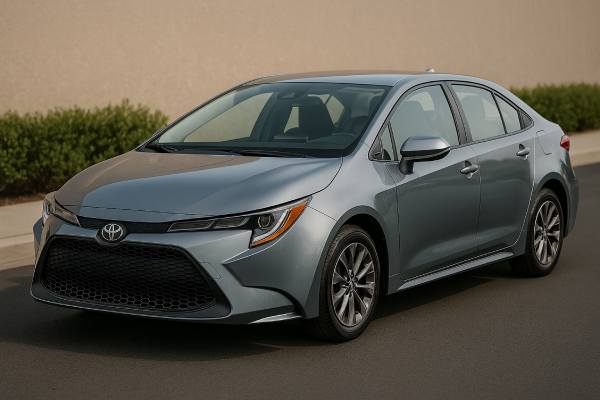
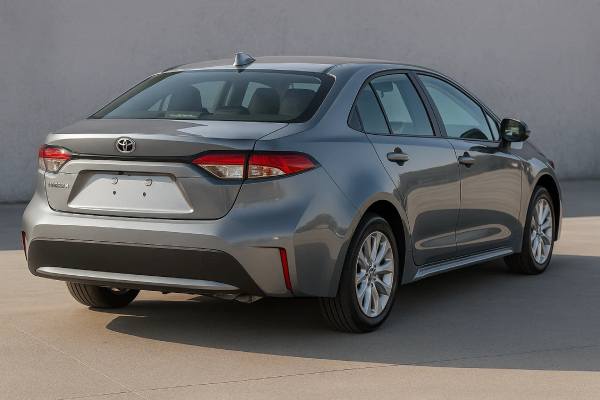
The twelfth-generation Toyota Corolla sedan (ZRE211) with the 1.8-liter 2ZR-FAE four-cylinder is the “bread-and-butter” choice in the 2019–2022 era if you value calm road manners, low running costs, and bulletproof daily usability. Its naturally aspirated 139-hp engine and CVT emphasize efficiency and smoothness over speed, while the TNGA chassis delivers a planted, quiet ride that resists fatigue on long drives. Standard driver-assist tech is unusually generous for the class, cabin ergonomics are straightforward, and parts availability is excellent. This guide focuses on the North American sedan sold for the 2020–2022 model years (with production spanning late-2019 through 2022), using official U.S. specs, ratings, and service guidance as the default baseline and noting meaningful differences only when they matter to ownership.
Fast Facts
- Calm, quiet commuter with low running costs; real-world highway economy often matches the official 38 mpg (6.2 L/100 km).
- Standard active safety (AEB with pedestrian detection, lane support, adaptive cruise) on all trims; strong crash-test results.
- Cabin and controls are durable and simple to live with; parts, tires, and consumables are widely available and affordable.
- Watch for CVT fluid neglect and headlight-performance differences by trim; keep software updated after recall or service actions.
- Typical service: engine oil and filter (0W-20) every 10,000 miles/12 months under normal driving (or 5,000 miles/6 months severe use).
Explore the sections
- Corolla ZRE211 detailed overview
- Corolla ZRE211 specs and technical data
- Trims, options and safety tech
- Reliability, issues and service actions
- Maintenance and buyer’s guide
- Driving, efficiency and performance
- How Corolla compares to rivals
Corolla ZRE211 detailed overview
Toyota moved the Corolla sedan to its TNGA platform for this generation, and the 1.8-liter ZRE211 variant targets owners who value comfort, predictability, and cost control over outright speed. The aluminum 2ZR-FAE inline-four uses dual overhead cams, variable valve timing, and an economy-minded calibration to produce 139 hp and 126 lb-ft; paired to a continuously variable transmission (CVT), it delivers steady thrust in traffic and relaxed cruising manners on the highway. The suspension is tuned for composure rather than playfulness, with confident tracking on the freeway and secure responses during emergency maneuvers.
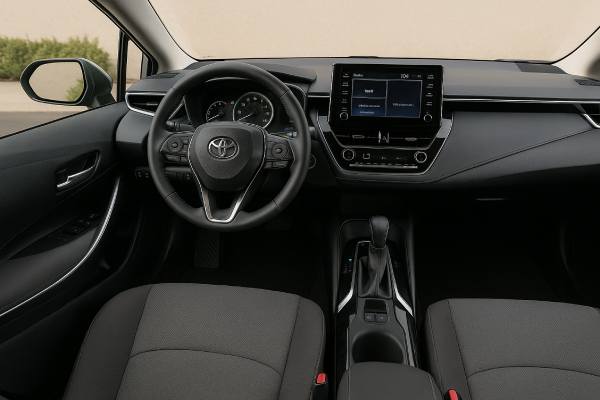
Inside, the Corolla emphasizes ergonomics: clear gauges, logical climate controls, and high-wear surfaces that tolerate years of daily use. The front seats accommodate a wide range of body types, and rear legroom is usable even for adults on short trips. Road and wind noise are kept in check by TNGA’s stiffer structure and improved door sealing; tire roar varies with wheel and tire packages (16-inch trims are the quietest). Trunk space is competitive for the class, with a low liftover and split-folding rear seatbacks aiding cargo flexibility.
Standard active safety is a headline feature. Every ZRE211 sedan leaves the factory with forward collision warning and automatic emergency braking with pedestrian detection, lane departure alert with steering assist, lane tracing assist for light centering on marked highways, road sign assist, and adaptive cruise control. Blind-spot monitoring and rear cross-traffic alert appear on mid- and upper-trims or through convenience packages. In independent crash testing, the Corolla performs strongly for occupant protection, and its forward-collision system earns top marks for vehicle-to-vehicle and pedestrian performance when properly equipped and calibrated.
From an ownership standpoint, the car is easy to maintain. Oil changes are straightforward, the oil filter is accessible, and the 2ZR family’s timing chain eliminates scheduled belt services. Brake service is conventional and inexpensive, and consumables like air filters, cabin filters, and wiper blades are common shelf items. The CVT is reliable when serviced sensibly, and wheel-bearing or suspension-bushing replacements are rare before high mileage unless the car lives on poor roads. For buyers, the sweet spot in this line is a well-maintained LE or XLE with the convenience and safety packages, 16-inch wheels, and documented fluid services.
Corolla ZRE211 specs and technical data
Engine and performance (ICE)
| Item | Detail |
|---|---|
| Code | 2ZR-FAE (inline-4, DOHC, 16V, Valvematic) |
| Displacement | 1.8 L (1798 cc) |
| Bore × stroke | 80.5 × 88.3 mm (3.17 × 3.48 in) |
| Compression ratio | ~10.5:1 (market calibration; premium not required) |
| Induction | Naturally aspirated |
| Fuel system | Port fuel injection (PFI) with electronic throttle control |
| Max power | 139 hp (104 kW) @ ~6,100 rpm |
| Max torque | 171 Nm (126 lb-ft) @ ~3,900 rpm |
| Timing drive | Chain (no scheduled replacement) |
| Emissions/efficiency standard | U.S. EPA light-duty gasoline |
| Rated fuel economy | 30/38/33 mpg (city/hwy/combined) ≈ 7.8/6.2/7.1 L/100 km (typical LE/XLE CVT) |
| Real-world highway @ 120 km/h (75 mph) | ~6.7–7.4 L/100 km (35–31 mpg US), depending on wind, grade, and tires |
| Firing order | 1-3-4-2 |
Notes: The 12th-gen North American sedan with this 1.8-liter powertrain is sold for model years 2020–2022. Trim-dependent aerodynamics and tire choices account for small economy differences; XLE’s additional equipment and wider tires typically cost 1 mpg versus LE.
Transmission and driveline
| Item | Detail |
|---|---|
| Transmission | CVT (continuously variable), console-mounted selector with manual range |
| Drive type | Front-wheel drive (FWD) |
| Final drive | Stepless ratio via CVT; effective overall ratio varies with throttle/load |
| Differential | Open (electronic brake-based torque management) |
| “Gear ratios” | Not applicable (CVT uses pulleys and a steel belt) |
| Replenishment time | Refuel ~3–4 min from near-empty (typical gas station flow) |
Chassis and dimensions
| Item | Detail |
|---|---|
| Platform | TNGA-C |
| Suspension (front/rear) | MacPherson strut / multi-link |
| Steering | Electric power assist; tight on-center, light in parking |
| Brakes | 4-wheel disc; ventilated front/solid rear; ABS with EBD and brake assist |
| Wheels/tires | 205/55R16 (LE/XLE); 225/40R18 optional on sport trims (note: ride/road noise increase) |
| Ground clearance | ~130 mm (5.1 in) nominal |
| Length/width/height | ~4630 / 1780 / 1435 mm (~182.3 / 70.1 / 56.5 in) |
| Wheelbase | 2700 mm (106.3 in) |
| Turning circle (curb-to-curb) | ~10.8 m (35.4 ft) |
| Curb weight | ~1310–1350 kg (2885–2975 lb), trim-dependent |
| Fuel tank | 50 L (13.2 US gal / 11.0 UK gal) |
| Cargo volume (trunk) | ~371 L (13.1 ft³), SAE method |
Performance and capability
| Metric | Result |
|---|---|
| 0–60 mph (0–97 km/h) | ~8.8–9.5 s (typical CVT LE/XLE on 16-inch tires) |
| 0–100 km/h (0–62 mph) | ~9.5–10.2 s |
| Top speed | ~190 km/h (118 mph) governed |
| 100–0 km/h braking | ~38–41 m (125–135 ft), tire-dependent |
| Towing | Not rated for trailer towing in U.S. guidance |
| Payload | ~385–430 kg (850–950 lb) including occupants and cargo |
| Roof load | 68–75 kg (150–165 lb) with approved crossbars (check accessory spec) |
Fluids and service capacities
| System | Specification | Capacity / Torque |
|---|---|---|
| Engine oil | SAE 0W-20 (API SP / ILSAC GF-6) recommended; use 0W-16 only if explicitly specified on the under-hood label | ~4.2 L (4.4 US qt) with filter; drain plug ~36–40 Nm (27–30 lb-ft); wheel nuts 103 Nm (76 lb-ft) |
| Coolant | Toyota Super Long Life Coolant (pink); premixed 50/50 | ~6–7 L (varies by HVAC spec); replace at 10 yr/100k mi, then every 5 yr/50k mi |
| CVT fluid | Toyota CVT Fluid FE (as specified for this unit) | Level set via temperature/overflow procedure; service by time/miles rather than “lifetime” |
| Brake fluid | DOT 3 (DOT 4 acceptable if fully flushed) | Replace every 3 years |
| A/C refrigerant | R-1234yf; oil: PAG (per label) | Charge mass per under-hood label; evacuate/charge with certified equipment |
| Key torque specs | Oil filter cap ~25 Nm (18 lb-ft); front caliper slider ~25–35 Nm; wheel nuts 103 Nm (76 lb-ft) |
Tip: Always verify fluid types and capacities against the under-hood labels and the service manual for the exact VIN and options (e.g., cold-weather package, dual-zone HVAC).
Electrical
| Item | Detail |
|---|---|
| Alternator output | Integrated with engine management; ample for factory loads; check charging voltage 13.5–14.8 V |
| 12-V battery | Group H4/140R (commonly), 45–60 Ah range; smart-charging monitored |
| Spark plugs | Iridium, long-life; gap typically ~0.7–0.8 mm (0.028–0.031 in); service ~120,000 miles |
Safety and driver assistance
| Item | Detail |
|---|---|
| Crash ratings (IIHS) | Overall strong crashworthiness; Top Safety Pick when equipped with the better headlights; updated side test Acceptable |
| Headlight rating | Varies by trim and lamp: some trims Adequate, others Marginal; “award applies only to vehicles with specific headlights” |
| NHTSA | Tested configuration earns strong star results; verify for 4-door FWD sedan build |
| ADAS suite | Standard: AEB w/ pedestrian detection, lane departure alert w/ steering assist, lane tracing assist, full-speed adaptive cruise (trim-dependent stop-and-go), road sign assist; Optional: blind-spot monitoring, rear cross-traffic alert |
| Child seats | Rear LATCH anchors with good accessibility; three top-tether anchors |
Trims, options and safety tech
Trim overview (U.S. 2020–2022, 1.8-liter CVT):
- L (2020–2021): Steel 15-inch wheels, basic infotainment, cloth seats. Rare in the wild; fleet-leaning spec.
- LE: Popular value trim. 16-inch alloys, upgraded audio, remote keyless entry, automatic climate on later model years.
- XLE: Comfort-oriented. SofTex-trimmed heated front seats, power driver seat, premium audio options, blind-spot monitoring often packaged, available moonroof.
- SE/XSE: Typically paired with the 2.0-liter; if you are shopping only the 1.8-liter ZRE211, focus on LE/XLE.
Key option packages and mechanical differences
- Wheels/tires: 16-inch packages ride quieter and resist tramlining; 18-inch sport wheels (on 2.0-liter trims) sharpen turn-in but add impact noise and can lengthen braking distances on all-season tires.
- Brakes and suspension: Caliper and rotor specs are consistent across 1.8-liter trims; “sport” trims change tires and damping but not basic hardware on the 1.8.
- Lighting: Headlight performance varies by lamp type and trim; the “better” headlight configuration is necessary for the top insurance-industry safety award. When shopping used, test nighttime cut-off and spread, and verify the exact lamp build code.
- Infotainment and driver aids: Apple CarPlay/Android Auto support rolls in across years; higher trims can add blind-spot monitoring and rear cross-traffic alert. Lane tracing assist works best on clearly marked highways and requires proper camera calibration after windshield replacement.
Year-to-year notes (1.8-liter sedan)
- 2020: First U.S. model year on TNGA for the sedan. Broad adoption of Toyota Safety Sense 2.0.
- 2021: Minor feature shuffles; more widespread smartphone integration; special editions emphasize styling.
- 2022: Entry “L” typically dropped at many dealers; equipment consolidation on LE; ongoing map/software updates for infotainment.
Safety ratings in context
Independent tests show strong occupant protection, with high marks in frontal and original-side impacts and standard crash-avoidance tech scoring at the top level. The updated, more severe side test is “Acceptable,” which is competitive in the class for these years. Headlight performance differences explain why some used examples carry the coveted safety award and others do not; verify the headlamp type and aim on a test drive.
Quick identifiers and build info
- VIN decoding: Position 8 indicates engine (2ZR for 1.8-liter), and positions 12–17 sequence the build.
- Badges and cabin tells: LE/XLE cars on 16-inch wheels with a traditional shifter and tach redline near ~6,200 rpm are the typical 1.8-liter ZRE211; 2.0-liter cars advertise “Dynamic Shift” CVT and have different wheel/tire sets.
- Child-seat prep: Two lower anchors per outboard rear seating position; accessible top-tethers on the rear shelf.
Reliability, issues and service actions
The ZRE211 1.8-liter Corolla is widely regarded as low-drama transportation. Most cars run high mileage with routine maintenance. Still, understanding patterns helps you buy smart and maintain wisely.
Engine and fuel system (ICE)
- Cold-start flare and mild valve tick (common/low): Brief rev flare on cold start with a momentary tick is normal for the 2ZR family. Ensure oil level and correct viscosity (0W-20) and verify there are no intake leaks.
- Oil weep at valve cover or timing cover (occasional/low-medium): At higher mileage or heat cycles, light weep can appear. Remedy with gasket reseal; monitor oil level between services.
- Carbon on intake valves (rare/low): This PFI engine is less prone than DI units; long highway drives help keep deposits at bay. Replace the engine air filter on time.
Cooling and HVAC
- Coolant service overdue (common/low): Long-life coolant has a long first interval, leading to owner neglect later on. Replace by time, bleed correctly, and inspect hoses and the water pump for seep.
- A/C performance complaints after body glass work (occasional/low): Windshield replacement requires camera calibration; ensure HVAC sensors are re-seated and the cabin filter is oriented correctly.
CVT and driveline
- CVT fluid neglect (occasional/medium): “Lifetime fluid” marketing often delays service. Symptoms include flaring, droning at steady throttle, or tardy engagement. A measured drain-and-fill with the correct CVT FE fluid and temperature-controlled level set can restore feel. Avoid aggressive flushes on very high-mileage units.
- Axle seal seeping (occasional/low): Look for sling inside the wheel and at the transmission case. Replace the seal and top up fluid to spec.
Brakes and chassis
- Rear pad taper and early wear (occasional/low): City cars that see little highway mileage can taper outer rear pads. Proper slider pin lubrication and pad bed-in at service prevents recurrence.
- Wheel bearing noise (rare/medium): Usually road-salt or impact related; the TNGA hub units are durable when the splash shields are intact.
Electrical and infotainment
- Head unit glitches (occasional/low): Audio/nav reboots or Bluetooth hiccups typically resolve with software updates; verify the latest calibration during pre-purchase inspection.
- Battery sulfation (common/low): Short-trip drivers may see early 12-V battery fatigue. Load-test annually after year three; keep terminals clean.
Body/trim
- Wind noise after glass service (occasional/low): Check cowl panel clips and weatherstrip seating.
- LED lamp condensation (occasional/low): Temporary fogging after car washing is normal; persistent pooling suggests a compromised housing seal.
Recalls, TSBs, and extended coverage (high-level)
- Occupant classification and airbag-related service actions (various years): Some campaigns have addressed sensor calibration or harness issues. Confirm status by VIN and keep documentation with the vehicle.
- Software and calibration updates: Dealer reflashes have addressed driveability and ADAS performance edge cases; after any windshield or radar service, perform required calibrations.
- How to verify: Run a VIN recall check and ask the seller for printed dealer service history showing recall completion and any campaign-specific calibration.
Pre-purchase checks
- Full maintenance records (especially oil changes by time, not just mileage).
- CVT service evidence (temperature-controlled level set; no “universal” fluid).
- Tire age and even wear; many cars retain original tires past six years.
- Headlight type and aim; test night visibility on unlit roads.
- HVAC performance and any odor (clogged cabin filter or drain).
- Clean crash-report and consistent panel gaps; look for overspray at door edges.
Maintenance and buyer’s guide
Practical service schedule (time/distance; adjust for severe use, dust, towing, or extreme temps)
- Engine oil + filter: 10,000 miles / 12 months with SAE 0W-20; severe duty 5,000 miles / 6 months. Always replace the crush washer and torque the drain plug correctly.
- Engine air filter: Inspect every 10,000 miles; replace ~30,000 miles (sooner in dust).
- Cabin air filter: Inspect 10,000 miles; replace 15,000–20,000 miles, or annually for allergy control.
- Spark plugs (iridium): ~120,000 miles; check gap and torque on install.
- Coolant: First replacement 10 years / 100,000 miles, then every 5 years / 50,000 miles. Inspect hoses each service.
- CVT fluid: Conservative drain-and-fill every 60,000–90,000 miles (or earlier if heavy urban use/hills). Level set with temperature procedure.
- Brake fluid: Replace every 3 years regardless of mileage.
- Brake pads/rotors: Inspect at each tire rotation; typical pad life is 35,000–70,000 miles depending on use.
- Serpentine belt: Inspect annually after 60,000 miles; replace for cracks/noise.
- Alignment + tire rotation: Rotate every 5,000–7,500 miles; align if uneven wear or after impacts.
- 12-V battery: Test annually after year three; typical life 4–6 years.
- HVAC service: Replace cabin filter on time; sanitize evaporator if odors occur; confirm correct refrigerant and oil type from the under-hood label.
Fluid pointers and essential torques
- Engine oil capacity: ~4.4 qt (4.2 L) with filter. Drain plug ~27–30 lb-ft (36–40 Nm). Oil filter cap ~18 lb-ft (25 Nm).
- Wheel lug nuts: 76 lb-ft (103 Nm); retorque after tire service.
- Coolant system: Use Toyota Super Long Life Coolant (pink) only; never mix with green or orange generic coolants.
- CVT fluid: Use the Toyota-specified CVT FE; set level at the correct temperature window.
Buyer’s short list
- Best value: LE with 16-inch wheels and blind-spot/rear cross-traffic package; the ride is calmer than on 18-inch tires and the ADAS suite is fuller.
- Comfort pick: XLE for heated SofTex seats, power driver seat, and additional amenities.
- Years to favor: Any 2020–2022 with complete maintenance and clean VIN recall status; prioritize examples that have had brake fluid replacement and at least one CVT drain-and-fill by ~60,000–90,000 miles.
- What to avoid: Cars with aftermarket “universal” CVT fluid, neglected tires (age-cracked originals), or multiple body-glass replacements with no ADAS calibration documentation.
Long-term outlook
With routine maintenance and periodic CVT fluid care, the 2ZR-powered Corolla routinely exceeds 150,000–200,000 miles with minimal component replacement beyond wear items. Corrosion resistance is good; keep the underbody rinsed in road-salt regions. Electronics are robust when battery voltage is healthy and software is kept current.
Driving, efficiency and performance
Ride, handling, and NVH
On city streets the Corolla feels settled and quiet, with light steering that eases parking and a predictable, linear brake pedal. The TNGA structure helps quell creaks over driveways and speed bumps. Mid-corner composure is better than earlier generations; body motions are calmly controlled rather than floaty. The 16-inch tire setup balances impact isolation and grip; larger, lower-profile tires sharpen initial response but add tread roar on coarse asphalt and can ride more firmly over expansion joints.
Powertrain character
The 2ZR-FAE is tuned for smoothness. Throttle response is gentle off the line and the CVT keeps revs low in casual driving. Push harder and the transmission holds the engine near its power peak, which sounds busier but effectively delivers passing power on ramps and two-lane merges. Manual “shift” steps are accessible for engine braking on long grades. Compared with the optional 2.0-liter/“Dynamic Shift” CVT cars, the 1.8-liter is less eager but also less prone to lugging or downshift “hunting.”
Real-world economy
- City: 28–33 mpg (8.4–7.1 L/100 km) depending on climate, traffic, and short-trip frequency.
- Highway (60–75 mph / 100–120 km/h): 34–42 mpg (6.9–5.6 L/100 km), with best numbers on 16-inch tires and mild weather.
- Mixed: 31–36 mpg (7.6–6.5 L/100 km), aligning closely with official combined ratings.
Cold weather, winter tires, and heavy HVAC use can trim 2–4 mpg from these ranges. A properly aligned car on quality low-rolling-resistance tires will meet or beat the official highway figure in mild temperatures. Keep tire pressures at the door-jamb spec and replace a clogged engine air filter to hold economy steady over time.
Selective metrics that matter
- 0–60 mph: high-8s to low-9s (CVT LE/XLE), adequate for modern traffic.
- 50–80 mph passing: plan on a downrange of ~6–7 seconds with a firm throttle squeeze; anticipate with lane changes.
- Emergency braking: stable and repeatable; high-friction replacement pads and fresh fluid bring the best consistency on mountain descents.
- Steering feel: light around center, firming with speed; lane tracing assist gently centers without tugging when lane lines are clear.
Load and grades
With four adults and luggage, the Corolla maintains highway speed on typical U.S. grades but will require more throttle and revs. Fuel economy drops 10–20% when fully loaded or when cruising at 75 mph into a headwind. The car is not tow-rated in U.S. guidance; for hitch-mounted accessories, respect tongue-weight limits and verify legality.
How Corolla compares to rivals
Honda Civic (2.0-liter NA)
Civic’s chassis feels livelier and steering feedback is stronger, but base-engine cars aren’t meaningfully quicker than the 1.8-liter Corolla in day-to-day driving. Cabin tech and packaging are excellent. Corolla counters with a simpler, more conservative powertrain that many owners prefer for long-term durability and a lower appetite for premium-priced tires and brakes.
Hyundai Elantra (2.0-liter)
Feature content per dollar is high, and the warranty is a draw. Ride quality can be firmer on some trims and long-term interior wear varies by owner care. Corolla’s resale and parts availability are stronger, and its baseline safety tech is just as comprehensive.
Mazda3 (2.0/2.5-liter)
Best steering and dynamics in the class when equipped similarly, and a premium-feeling cabin. However, ride noise can be higher on certain tires and repair/parts pricing tends to be above Corolla’s. If you prize a quiet commute and low cost of ownership, the Corolla is the safer long-term bet.
Nissan Sentra (2.0-liter)
Recent Sentras ride well and look upscale, but the Corolla’s track record for long-term dependability is stronger and driver-assist tuning is more consistent across conditions.
Bottom line
If your priorities are safety, predictability, steady real-world economy, and a low-stress ownership experience, the ZRE211 Corolla with the 1.8-liter is the benchmark for “quietly excellent.” Shoppers who want a little more punch or sport feel should try the 2.0-liter variants, but most commuters will be happiest with an LE or XLE on 16-inch tires and a documented maintenance history.
References
- 2020 Toyota Corolla 2020 (Safety Rating)
- Gas Mileage of 2020 Toyota Corolla 2020 (EPA Fuel Economy)
- 2020 Toyota Corolla – Toyota USA Newsroom 2019 (Manufacturer Information)
- Part 573 Safety Recall Report 23V-865 2023 (Recall Database)
- 2023 Corolla – Maintenance data (fuel, oil level, etc.) 2023 (Owner’s Manual)
Disclaimer
This guide is for informational purposes and does not replace professional diagnosis or official service procedures. Specifications, torque values, fluid types/capacities, and maintenance intervals can vary by VIN, market, trim, and equipment. Always confirm against your vehicle’s under-hood labels and the official Toyota service documentation for your exact model.
If this article helped, consider sharing it with friends on Facebook or X/Twitter—your support helps us keep producing detailed, owner-focused guides.