
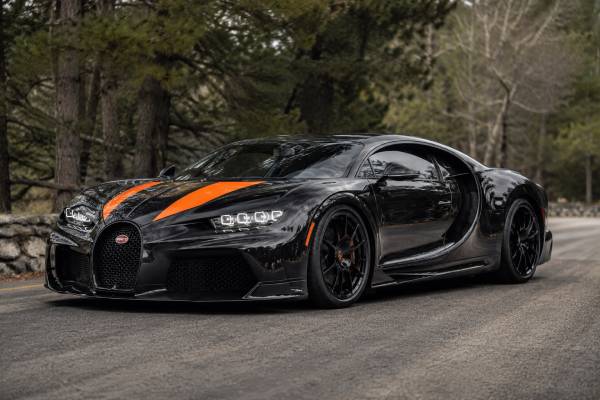
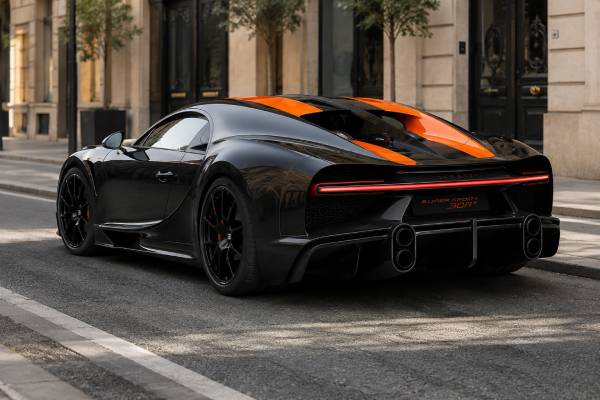
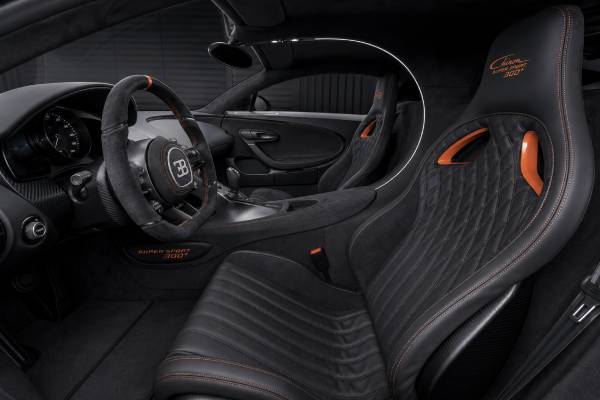
The Bugatti Chiron Super Sport 300+ is the Chiron built around one clear idea: make 300 mph feel like a finished production concept, not a laboratory stunt. It was created after Bugatti’s record-setting high-speed run in 2019 and offered to customers as a 30-car edition with a 1,600 hp version of the 8.0-liter quad-turbo W16, longtail bodywork, magnesium wheels, and a visual link to Bugatti’s earlier world-record cars. It is not simply a faster Chiron with orange stripes. The 300+ uses a body shape, cooling strategy, gearing approach, and chassis setup aimed at extreme straight-line stability. For collectors, it sits in a rare place: modern enough to be usable, limited enough to be investment-grade, and historically tied to one of the most famous speed achievements of the combustion-engine era.
Table of Contents
- Why the 300+ Still Matters
- W16 Specs and Performance Data
- Production Run, Variants, and Identification
- Longtail Aero and Record-Car Engineering
- How the 300+ Feels to Drive
- Maintenance Realities for a 1,600 hp Bugatti
- Collector Buying Guide and Inspection Priorities
Why the 300+ Still Matters
The Chiron Super Sport 300+ matters because it turned Bugatti’s 300 mph breakthrough into a customer car with a real production identity. It is one of the clearest links between the Chiron program, the Veyron Super Sport legacy, and Bugatti’s long tradition of using speed as a design target.
Bugatti introduced the model in 2019 during the company’s 110th anniversary celebrations. The timing was important. The Chiron had already replaced the Veyron as Bugatti’s main hypercar, but the 300+ gave the Chiron its defining speed story. The name refers to the pre-production prototype that reached 304.773 mph, or 490.484 km/h, at Ehra-Lessien with Andy Wallace driving.
The production 300+ was not an identical copy of that record car. The record prototype used special equipment for the run, while customer cars were finished as usable road cars. Even so, the production version carried over the main idea: a lower-drag Chiron with a longer tail, more power, and a body tuned for very high-speed stability.
It also arrived at a turning point in hypercar history. Electric performance cars and hybrid systems were starting to change the meaning of extreme acceleration. Bugatti answered with a deeply developed combustion-engine machine: 16 cylinders, four turbochargers, seven speeds, permanent all-wheel drive, and a shape created to reduce drag without making the car feel nervous.
Today, the Chiron Super Sport 300+ is important for four reasons:
- It is limited to 30 units, making it much rarer than the regular Chiron.
- It has the 1,600 hp version of the W16, not the 1,500 hp tune used by the standard Chiron.
- It carries the longtail body that became central to the Super Sport family.
- It is directly tied to Bugatti’s 300 mph milestone.
For buyers, this makes the car more than a specification sheet. It is a collector-grade object with a clear story, a recognizable finish, and a place in the final years of Bugatti’s W16 era.
W16 Specs and Performance Data
The key fact is simple: the Chiron Super Sport 300+ uses Bugatti’s 8.0-liter quad-turbocharged W16 in 1,600 hp form. The extra power, longtail body, modified cooling, and high-speed chassis tuning make it more specialized than the standard Chiron.
| Category | Specification |
|---|---|
| Model | Bugatti Chiron Super Sport 300+ |
| Production era | 2019–2022 edition period |
| Body style | Two-seat hypercar coupe |
| Engine | 8.0-liter quad-turbocharged W16 |
| Output | 1,600 hp |
| Torque | 1,600 Nm |
| Transmission | 7-speed dual-clutch automatic |
| Drivetrain | Permanent all-wheel drive |
| Production-car top speed | Electronically limited to 440 km/h |
| Record speed basis | 304.773 mph / 490.484 km/h pre-production record car |
| Longtail body extension | Approximately 25 cm longer rear bodywork than a standard Chiron |
| Combined WLTP fuel consumption | 21.5 l/100 km |
| Combined CO2 emissions | 487 g/km |
The W16 is the center of the car’s character. It is not a small engine pushed to the edge by one giant turbocharger. It is a huge 8.0-liter unit with four turbochargers, built to deliver vast airflow and sustained power at speeds where aerodynamic drag rises brutally. Above 400 km/h, adding speed is not just about horsepower. The car must manage air pressure, tire load, cooling demand, transmission heat, and body stability all at once.
Bugatti’s 1,600 hp tune required more than a software change. The Super Sport family received work to the turbochargers, oiling, cylinder head and valve train, transmission, clutch, and thermal management. That matters because a high-speed Bugatti is expected to run hard without feeling fragile. The 300+ was built around repeated stability and cooling, not just a single headline number.
The transmission is a seven-speed dual-clutch unit. In this application, gearing is part of the performance story. The car needs shorter response at road speeds but also enough ratio length to keep pulling in the upper speed range. The Chiron Super Sport engineering program used longer seventh-gear behavior than the regular Chiron family, helping the W16 stay effective during extreme acceleration.
The all-wheel-drive system is also central. With 1,600 hp, rear-wheel drive would make traction management dominate the experience. All-wheel drive lets the car deploy power with less drama and gives the driver a level of confidence that suits Bugatti’s grand touring purpose. The result is not a raw, nervous track car. It is a high-speed machine that tries to make impossible numbers feel controlled.
Production Run, Variants, and Identification
The Chiron Super Sport 300+ is a 30-unit edition, and that limited production is one of its strongest collector signals. Correct identification depends on the longtail body, exposed carbon finish, Jet Orange detailing, magnesium wheels, interior trim, and documentation from Bugatti.
The car was presented as a customer version of the record-breaking concept, but it should not be confused with the later Chiron Super Sport. The two share the 1,600 hp W16 idea and longtail aerodynamic direction, yet they serve different buyer moods. The 300+ is more directly tied to the 300 mph story and uses the dramatic black-and-orange record-car visual theme. The Chiron Super Sport is the more elegant grand touring version, with a broader choice of colors and a slightly less single-purpose identity.
| Model | Main focus | Power | Production character |
|---|---|---|---|
| Chiron | Original luxury hypercar | 1,500 hp range | Main production model |
| Chiron Sport | Sharper handling and lighter feel | 1,500 hp range | Sportier chassis setup |
| Chiron Super Sport 300+ | 300 mph record tribute and high-speed aero | 1,600 hp | 30-unit limited edition |
| Chiron Super Sport | Longtail speed with more grand touring luxury | 1,600 hp | Broader Super Sport production |
The most obvious identifier is the finish. The 300+ uses exposed jet-black carbon fiber with Jet Orange striping, a clear nod to Bugatti’s earlier world-record Veyron models. The wheels are lightweight magnesium items finished in Nocturne. The Bugatti “Macaron” badge is made from genuine silver and black enamel, adding another small but meaningful detail that separates it from ordinary Chiron specification.
Inside, the car uses black carbon, leather, and Alcantara with Jet Orange accents. The interior is still a Bugatti cabin, not a stripped racing shell. Customer cars retained a usable luxury layout, unlike the record prototype, which used special equipment for measurement and safety.
Important authenticity checks include:
- Factory build confirmation and chassis documentation.
- Matching original color and trim specification.
- Correct magnesium wheels and finish.
- Correct Super Sport 300+ interior branding.
- Service history through Bugatti-authorized or highly qualified specialists.
- Evidence of software, tire, brake, and high-speed inspection history.
A genuine 300+ should feel complete as a package. A modified Chiron with similar colors is not the same thing, and the market will treat factory provenance as essential.
Longtail Aero and Record-Car Engineering
The longtail body is the main engineering difference that makes the 300+ more than a power upgrade. Bugatti extended the rear bodywork to hold airflow to the car for longer, reduce aerodynamic stall, and improve stability at speeds where normal road-car shapes stop making sense.
At 300 mph, air behaves like a heavy physical load. The car is not just pushing through it; the body is being pressed, lifted, heated, and shaken by it. Bugatti’s answer was to make the shape calmer. The longer rear section gives air more time to leave the body cleanly. This reduces the messy wake behind the car and helps lower drag.
The rear design also changes how the wing and diffuser work. In Top Speed mode, a large rear wing can add stability but also drag. Bugatti’s longtail concept allows the rear wing to stay less exposed while the diffuser and body shape do more of the balancing work. This is why the 300+ does not look like a track car with an enormous fixed wing. It looks stretched, smooth, and purposeful.
The front matters just as much. Air curtains at the front corners guide pressure away from the nose. Outlets near the front wheel arches help remove pressure from the wheel wells. This reduces lift and drag at the same time. The goal is not maximum downforce like a circuit car. The goal is stable, low-drag balance at extreme speed.
The exhaust layout also supports the aerodynamic package. By moving and reshaping the tailpipe arrangement, Bugatti created more room for the diffuser to work. On a car like this, exhaust placement is not just a styling decision. It changes airflow, heat paths, rear packaging, and the visual identity of the whole tail.
The 300+ body also brings emotional value. The exposed carbon and orange center stripe tell people what the car is from across a lawn at a concours. That matters in the collector world. The best special editions are not only rare; they are instantly readable. The 300+ passes that test.
How the 300+ Feels to Drive
The Chiron Super Sport 300+ should feel calmer than its numbers suggest. Its purpose is not to scare the driver with constant drama, but to make enormous speed feel stable, repeatable, and almost strangely civilized.
The first sensation is likely the scale of torque. A 1,600 hp W16 does not need to be worked hard in normal traffic. Even gentle throttle inputs move the car with huge reserve. The four turbochargers help create the sense that the engine is never finished pulling. At road speeds, the car is already operating far below its real performance ceiling.
Full acceleration is different. The all-wheel-drive system and dual-clutch gearbox let the W16 deliver power in a clean, controlled way. The car does not need to feel loose to feel fast. Instead, the experience is more like being pushed by a massive, continuous force. The sound is deep, mechanical, and layered, with the W16’s unusual cylinder layout giving it a character unlike a V8, V10, or V12.
Steering feel is tuned for high-speed confidence rather than delicate low-speed playfulness. A car capable of 440 km/h cannot feel nervous. Small steering inputs must translate cleanly without making the driver tense. This gives the 300+ a different personality from a lightweight track special. It is less about flicking through tight corners and more about stability, precision, and trust.
Ride quality is also part of the Bugatti mission. The 300+ is firm and focused, but it is still a luxury hypercar. In normal modes, it should feel usable on smooth highways and grand touring routes. The cabin, seating position, sound insulation, and driving modes are all designed to reduce fatigue. That is one of the reasons Bugatti is different from many rawer hypercar brands.
Tire temperature matters. Michelin’s high-speed tire work is vital to the Super Sport concept, and tires on a car like this are not ordinary consumables. Owners should respect warm-up, age, pressure, and inspection requirements. A cold tire, an old tire, or a tire with hidden damage changes the risk profile dramatically at high speeds.
Braking performance is huge, but condition is everything. Carbon-ceramic brakes need proper inspection, not just a quick glance through the wheel spokes. The owner should watch for disc wear, pad condition, surface damage, vibration, and evidence of track or high-speed abuse.
In short, the 300+ driving experience is not about being the sharpest Chiron in corners. It is about the surreal calm of a car built for speeds most drivers will never see.
Maintenance Realities for a 1,600 hp Bugatti
The Chiron Super Sport 300+ is not maintained like a normal performance car. Its real ownership cost comes from tires, brakes, fluids, cooling systems, software, high-voltage-free but electronics-heavy control systems, specialist labor, and the need to preserve factory originality.
The W16 itself is a masterpiece, but it is a complex and tightly packaged engine. Heat management is a major theme. Owners should care about coolant condition, oil service history, radiator cleanliness, turbocharger health, intercooler performance, and any warning history stored in control modules. A low-mileage car that has sat unused can still need expensive recommissioning.
The dual-clutch transmission and all-wheel-drive system also need expert attention. Smooth low-speed behavior does not prove the drivetrain is perfect. A proper inspection should include diagnostic scans, fluid history, clutch behavior, launch-control use where recorded, and any software updates recommended by Bugatti.
Carbon-ceramic brakes require specialist inspection. Replacement costs can be extreme, and visual condition alone is not enough. Buyers should ask for measured wear data and inspect for heat stress, chips, uneven pad transfer, or vibration under braking.
Tires are one of the biggest ownership topics. On a 300+ mph-capable car, tire age may matter as much as tread depth. The right Michelin tires, correct specification, storage history, pressure control, and inspection records are central to safe ownership. Any car with old tires should be treated as needing replacement before serious use.
Common ownership priorities include:
- Annual or mileage-based service with proper documentation.
- Battery maintenance during storage.
- Brake disc and pad measurement.
- Tire date-code and condition checks.
- Cooling-system inspection.
- Diagnostic scans for all major control modules.
- Suspension and lift-system checks.
- Verification of software updates.
- Careful inspection of exposed carbon bodywork.
The body finish deserves special mention. Exposed carbon fiber is beautiful but unforgiving. Stone chips, poor paint protection film, incorrect polishing, or UV-related finish issues can affect value. Repairs must be handled by people who understand carbon structure and Bugatti-level cosmetic standards.
Originality usually matters more than upgrades. A collector-grade 300+ should not be improved casually. Non-factory exhaust changes, aftermarket tuning, unusual wheel finishes, or reversible cosmetic changes may still make serious buyers hesitate. With only 30 cars, the safest value position is factory-correct condition with documented care.
Collector Buying Guide and Inspection Priorities
The best Chiron Super Sport 300+ to buy is the most original, best-documented car with clean factory provenance, correct specification, healthy tires and brakes, and no questionable repair history. Mileage matters, but documentation and condition matter more.
A very low-mileage car can be desirable, yet it should not be assumed perfect. Hypercars dislike neglect. Long storage without correct battery support, climate control, fluid care, and periodic inspection can create issues that only appear when the car is driven. A slightly used car with careful servicing may be a better ownership choice than a delivery-mile car that was parked without proper attention.
What to verify before purchase
Ask for a full file, not just a service stamp. The ideal file includes factory build records, purchase documents, service invoices, tire records, brake measurements, software update history, battery replacement history, and any correspondence about warranty or extended coverage.
The inspection should cover:
- VIN and factory build confirmation.
- Original exterior and interior specification.
- Paint and exposed carbon condition under strong light.
- Tire type, date codes, and replacement history.
- Brake disc and pad measurements.
- Suspension, lift system, and chassis fault codes.
- Cooling system and oil-service records.
- Evidence of accident repair or carbon repair.
- Interior wear, switchgear condition, and infotainment function.
- All keys, books, tools, chargers, and accessories.
Value factors
The strongest examples will usually have the clearest link to the original 300+ identity. Correct black exposed carbon, Jet Orange details, proper wheels, complete documents, and untouched factory equipment are major positives. Cars with unusual stories, missing records, heavy repainting, or unclear servicing should trade differently, even if mileage is low.
| Priority | Why it matters |
|---|---|
| Factory provenance | Confirms the car is a genuine 30-unit 300+ edition. |
| Original specification | Protects collector value and market confidence. |
| Specialist service history | Shows the W16, gearbox, brakes, and electronics were cared for correctly. |
| Tire and brake condition | These are safety-critical and costly on a high-speed Bugatti. |
| Carbon body condition | Exposed carbon repairs are expensive and can affect originality. |
| Warranty or support coverage | Factory-backed support can reduce ownership risk. |
The right buyer should also be honest about intended use. A 300+ can be driven, but it is not a casual daily exotic. It needs planned servicing, careful storage, and a serious relationship with a Bugatti dealer or specialist. Any high-speed event should be approached with professional preparation, fresh tires, full inspection, and a suitable venue.
For collectors, the 300+ has a strong long-term story. It represents one of the final great expressions of the quad-turbo W16, a direct tribute to a 300 mph milestone, and a rare production Bugatti with unmistakable visual identity. Its value is not only in speed. Its value is in being a complete historical marker from the end of the pure-combustion hypercar arms race.
References
- Bugatti Chiron Super Sport 300+ – a gift to celebrate the record 2019 (Manufacturer Press Release)
- First Bugatti Chiron Super Sport 300+ Ready for Launch 2021 (Manufacturer Press Release)
- The Bugatti Chiron Super Sport – The Quintessence of Luxury and Speed 2021 (Manufacturer Press Release)
- Bugatti Delivers First Chiron Super Sports to Customers 2022 (Manufacturer Press Release)
Disclaimer
This article is for informational purposes only and is not a substitute for professional diagnosis, inspection, repair, valuation, or legal advice. Specifications, torque values, service intervals, software status, tire approvals, procedures, and equipment can vary by VIN, market, and individual factory configuration. Always verify details against official Bugatti service documentation and have any purchase or repair decision reviewed by a qualified Bugatti dealer or specialist.
If this guide helped you, please consider sharing it on Facebook, X/Twitter, or your preferred car community to support our work.