
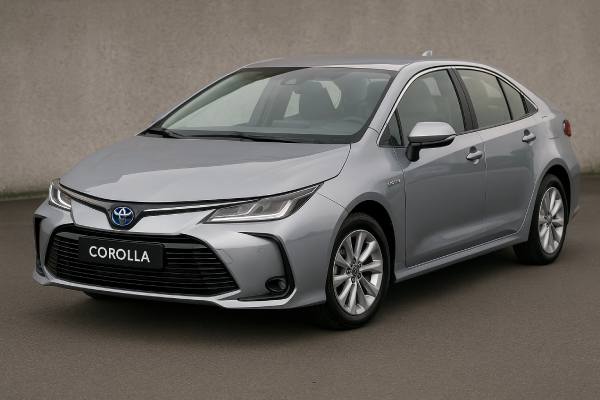
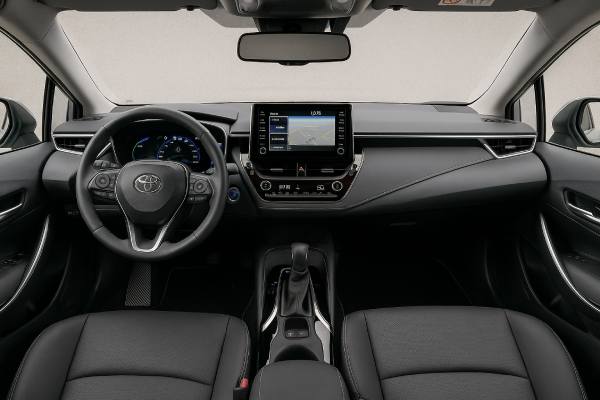
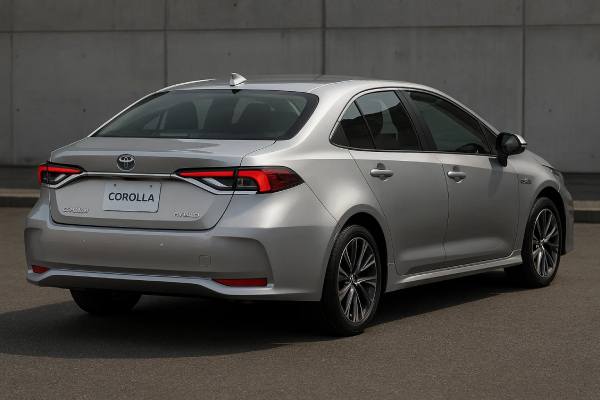
The facelifted Corolla Hybrid pairs Toyota’s frugal 1.8-liter Atkinson-cycle four with a stronger electric drive and updated software, lifting system output to 134 hp and improving response. Built on the TNGA-C platform, it gained the newer Toyota Safety Sense 3.0 suite, an 8-inch multimedia system with wireless Apple CarPlay/Android Auto, and—crucially—available electronic on-demand all-wheel drive. For daily duty, it’s quiet, comfortable, and unusually efficient for a non-plug-in hybrid. For buyers, the headline strengths are fuel economy, low routine service costs, and broad parts availability. The cabin is straightforward and durable, and the sedan’s trunk is more useful than the spec sheet suggests. The trade-offs are modest passing power at highway speeds and a transmission that prioritizes efficiency over engagement. This guide covers what changed in the facelift, the exact specs and dimensions, real-world performance and efficiency, maintenance needs, reliability notes, and which trims and options make the most sense.
Fast Facts
- Smooth, thrifty hybrid: real-world 48–53 mpg (US) mixed; relaxed ride and low running costs.
- Added tech: Toyota Safety Sense 3.0 and a clearer 8-inch infotainment, plus optional AWD.
- Practical sedan: 13.1 ft³ (371 L) trunk, 60/40 split rear seat; easy to park and live with.
- Watch for updates: ensure recall/software campaigns and ADAS calibrations are current after glass or radar work.
- Typical service: tire rotation every 5,000 mi (8,000 km); oil and filter every 10,000 mi/12 months (0W-16).
Navigate this guide
- Corolla Hybrid Facelift Overview
- Specifications and Technical Data
- Trims, Options, and Safety
- Reliability and Service Actions
- Maintenance and Buyer’s Guide
- Driving and Performance
- Corolla Hybrid vs Rivals
Corolla Hybrid Facelift Overview
Toyota’s mid-cycle update brought the Corolla Hybrid in line with the brand’s newer hybrid tuning. The 2ZR-FXE 1.8-liter four-cylinder continues in Atkinson cycle for efficiency, but the traction motor, power electronics, and battery were revised, delivering a system output of 134 hp and improved low-speed torque feel. A lithium-ion battery replaced earlier packs in most trims, saving weight and enhancing regeneration. The eCVT (planetary-gear power-split device) remains the same conceptually but benefits from recalibrated logic.
For North America, the facelift also expanded the lineup: the affordable LE remains the volume trim; SE adds sportier wheels/seats and firmer tuning; XLE introduces more amenities. Starting with the facelift, buyers can spec electronic on-demand AWD (a compact rear e-motor that engages automatically for takeoff or slip), trading a small fuel-economy hit for winter traction. Toyota Safety Sense 3.0 became standard, adding better pedestrian/cyclist detection, lane tracing refinements, and Proactive Driving Assist. Inside, the 8-inch Toyota Audio Multimedia system is faster with a cleaner UI and wireless smartphone mirroring; connected services enable cloud navigation and over-the-air updates for maps/features.
The TNGA-C chassis (strut front, multi-link rear) gives the Corolla Hybrid a settled, mature ride. Steering is light but precise; braking performance is consistent thanks to coherent blending between regen and the friction system. Practicality is strong for the class: a real back seat for two adults, ISOFIX/LATCH points that are easy to access, and a trunk that swallows bulky daily items despite the hybrid hardware. Ownership costs remain a major draw: long service intervals, no timing belt (it uses a chain), and a straightforward maintenance calendar. The areas to consider: passing power at 60–75 mph is adequate rather than brisk, and the eCVT can sound busy under heavy throttle—typical for this hybrid architecture.
Specifications and Technical Data
Below are focused, scannable specs for the facelifted Corolla Hybrid (sedan), with North American figures prioritized. Where ranges appear, they reflect FWD vs AWD and trim-weight differences.
Powertrain and Efficiency (HEV)
| Item | Specification |
|---|---|
| Code | 2ZR-FXE (engine) + permanent-magnet traction motor (MG2) |
| Engine layout & cylinders | Inline-4, DOHC, 16 valves (VVT-i on intake) |
| Bore × stroke | 80.5 × 88.3 mm (3.17 × 3.48 in) |
| Displacement | 1.8 L (1798 cc) |
| Induction | Naturally aspirated (Atkinson cycle) |
| Fuel system | Electronic fuel injection (port + EGR for efficiency) |
| Compression ratio | ~13.0:1 |
| Max power (system) | 134 hp (100 kW) |
| Max power (ICE) | ~97 hp (72 kW) @ ~5200 rpm (typical 2ZR-FXE rating) |
| Max torque (ICE) | ~142 Nm (105 lb-ft) @ ~3600 rpm |
| Electric motor (MG2) | Permanent-magnet synchronous; front axle; peak ~70–80 kW class |
| Hybrid battery | Lithium-ion pack (model-year dependent); nominal ~200–350 V class |
| Timing drive | Chain |
| Emissions/efficiency standard | EPA light-duty (North America) |
| Rated efficiency (EPA, FWD) | ~50–52 mpg combined (US) ≈ 4.7–4.5 L/100 km (≈60–62 mpg UK) depending on trim |
| Rated efficiency (EPA, AWD) | ~47–48 mpg combined (US) ≈ 5.0–4.9 L/100 km (≈56–58 mpg UK) |
| Real-world highway @ 120 km/h (75 mph) | 5.0–5.6 L/100 km (47–42 mpg US) typical |
| Aerodynamics | Approx. Cd ~0.28–0.29 (trim-dependent) |
Toyota does not publish combined torque for the hybrid system; engine and motor torque are not simply additive due to the power-split transaxle.
Transmission and Driveline
| Item | Specification |
|---|---|
| Transmission | eCVT (planetary power-split transaxle) |
| Drive type | FWD standard; electronic on-demand AWD available (rear e-axle engages on launch/slip) |
| Final drive | Multiple reductions via eCVT; no fixed gear ratios as in stepped automatics |
| Differential | Open (front); rear e-motor drives a simple reduction (AWD) |
Chassis and Dimensions
| Item | Specification |
|---|---|
| Platform | TNGA-C |
| Suspension (front/rear) | MacPherson strut / multi-link |
| Steering | Electric power assist; rack-and-pinion |
| Brakes | 4-wheel disc with regenerative blending; rear solid discs |
| Wheels/tires (typical) | 16–18 in alloys; 205/55R16 to 225/40R18 depending on trim |
| Ground clearance | ~135 mm (5.3 in) |
| Length / Width / Height | ~4630 / 1780 / 1435 mm (182.3 / 70.1 / 56.5 in) |
| Wheelbase | 2700 mm (106.3 in) |
| Turning circle (curb-to-curb) | ~10.8 m (35.6 ft) |
| Curb weight | ~1415–1490 kg (3120–3285 lb) FWD/AWD and trim-dependent |
| Fuel tank | ~43 L (11.4 US gal / 9.5 UK gal) |
| Cargo volume (sedan trunk) | ~371 L (13.1 ft³), SAE |
Performance and Capability
| Item | Specification |
|---|---|
| 0–100 km/h (0–62 mph) | ~9.5–10.0 s (FWD quicker than AWD) |
| Top speed | ~180 km/h (≈112 mph), limited |
| Braking (62–0 mph) | Class-typical 37–41 m (120–135 ft), tire-dependent |
| Towing capacity | Not rated for towing in North America |
| Roof load | Light accessories (racks) only; follow OEM system limits |
Fluids and Service Capacities
| System | Spec / Capacity (typical) |
|---|---|
| Engine oil | Toyota-approved 0W-16; ~4.2 L (4.4 qt) with filter |
| Coolant | Toyota Super Long Life (pink); follow mix; multiple loops (engine/inverter) |
| Transaxle (eCVT) | Toyota ATF WS; drain-and-fill ~3.5–4.0 L (3.7–4.2 qt) |
| Brake fluid | DOT 3 or DOT 4 as specified; flush 2–3 years |
| A/C refrigerant | R-1234yf; charge ~450–550 g (varies by MY/trim) |
| A/C compressor oil | ND-11; add only with service; typical ~120 mL total system |
| Key torque specs | Wheel lugs ~103 Nm (76 lb-ft); oil drain plug ~39 Nm (29 lb-ft) |
Always verify fluid types, capacities, and torque values against the exact VIN/service manual.
Electrical
| Item | Specification |
|---|---|
| Alternator | None (DC–DC converter from HV battery) |
| 12-V battery | Absorbent-glass-mat (AGM) or flooded, ~35–45 Ah; common size H4/LN1 |
| Spark plugs | Iridium; gap ~0.8 mm (0.031 in) |
Safety and Driver Assistance
| Item | Specification |
|---|---|
| Crash ratings | Strong results in IIHS tests for 4-door sedan; trims with better headlights fare best |
| Headlights (IIHS) | Varies by trim/wheel/options: Good to Marginal historically |
| ADAS suite (TSS 3.0) | Pre-Collision with Pedestrian/Cyclist detection; Lane Departure Alert w/ Steering Assist; Lane Tracing Assist; Full-Speed Dynamic Radar Cruise; Road Sign Assist; Proactive Driving Assist; Automatic High Beams |
| Blind spot / RCTA | Available/standard by trim and package; calibration needed after certain repairs |
Trims, Options, and Safety
Trims and equipment (facelift years):
- LE (FWD or AWD): Cloth seats, 16-inch alloys, automatic climate, 8-inch multimedia with wireless CarPlay/Android Auto, TSS 3.0, LED headlights. Best efficiency and value.
- SE (FWD or AWD): 18-inch wheels, sport seats, leather-wrapped wheel, paddle-style shifter feel (virtual steps), cosmetic aero bits; slightly firmer ride, marginally lower mpg due to tires/wheels.
- XLE (FWD): Softex-trimmed seating, power driver seat (availability varies by MY), more sound insulation, blind-spot monitor/RCTA standard on many builds, upgraded lighting/audio.
- Nightshade (select MYs): Style package based on SE with dark exterior trim and bronze-tone wheels; FWD or AWD.
Mechanical/functional differences by trim:
- Wheel/tire packages change ride and noise. SE/18-inch packages increase road feel but cost 1–3 mpg compared to LE.
- AWD versions add a compact rear e-motor and revised ECU tuning for launch/low-speed grip. There is no driveshaft; rear engagement is predictive/reactive.
- Brake hardware and regen tuning are shared; pedal feel depends mainly on tire package and software revision.
Option highlights and quick identifiers:
- Packages: Convenience/technology bundles may add blind-spot monitoring, parking sonar, heated seats, ambient lighting, and JBL audio (availability varies by MY).
- Visual tells: LE rides higher on 16-inch tires with plainer grille; SE shows a mesh grille, larger wheels, and sportier bumper corners; Nightshade darkens exterior trim including badges and adds bronze wheels.
- VIN/build clues: Look for plant code and hybrid model code ZWE211 in the VIN data label; AWD variants indicate rear e-axle in build sheet.
Year-to-year notable changes (facelift period):
- 2023: System output increases to ~134 hp; TSS 3.0; updated infotainment; AWD becomes available on LE/SE.
- 2024: Nightshade returns/appears for Hybrid with unique styling; equipment reshuffles in packages; minor software updates.
- 2025: Feature mix and colors adjust; technology/connected features refined; AWD availability follows prior pattern in most regions.
Safety Ratings summary:
The sedan maintains strong crash-test results in IIHS evaluations during this period, with headlight ratings dependent on trim. Advanced front crash prevention scores well for vehicle-to-vehicle and vulnerable road users. For best safety scores, prioritize trims with the higher-rated headlight configuration and ensure ADAS sensor calibrations are current after windshield, radar cover, bumper, or alignment work.
Safety/ADAS evolution notes:
Toyota Safety Sense 3.0 adds wider-field camera/radar hardware and refined software logic. Lane Tracing Assist is calmer on center and better recognizes merges; the pre-collision system detects cyclists/pedestrians in more scenarios; Proactive Driving Assist gently supports distance/speed control in low-risk situations (not a collision-avoidance system). Many features depend on clean sensors, correct wheel alignment, and the latest calibration data.
Reliability and Service Actions
The Corolla Hybrid has a strong reputation for durability, thanks to conservative engine output, proven hybrid hardware, and robust cooling. The facelift adds a lighter battery and updated electronics; most components are shared with high-volume Toyota hybrids, aiding parts supply and technician familiarity.
Common to occasional issues (facelift years):
- 12-V battery aging (common, low cost): Short-trip use and accessory loads can drain the small 12-V battery. Symptoms: slow cranking of relays, odd warning lights at startup. Remedy: load test; replace with correct AGM/flooded type and register if required; check parasitic draw and ensure smart-key settings aren’t waking the car frequently.
- Brake feel inconsistencies after service (occasional, low cost): Air in the hydraulic circuit or incorrect bleed procedure affects pedal feel due to the hybrid brake booster. Remedy: follow hybrid-specific scan-tool bleed procedure to cycle valves; perform bedding to re-establish friction-regen balance.
- Windshield/camera ADAS calibration (occasional, medium cost): Camera replacement or glass work can misalign lane tracing and pre-collision performance. Symptoms: ADAS warnings or poor lane-keeping behavior. Remedy: static/dynamic calibration with targets; verify with aligned thrust angle and correct tire sizes.
- Tire noise or cupping on 18-inch packages (occasional, low cost): Root cause: toe settings out of spec over time; heavier wheels. Remedy: keep 5k-mile rotations and annual alignments on rough-road use.
Hybrid-specific watch-outs (less common):
- Inverter cooling loop maintenance neglect (rare, medium): Long-life coolant lasts many years but low levels or contamination can trigger thermal derating. Remedy: inspect coolant reservoirs; use Toyota SLLC and vacuum fill to avoid air pockets when serviced.
- Water intrusion at rear e-axle connectors (AWD, rare, medium): After deep slush/salt exposure or body repairs, poor sealing could corrode connectors. Remedy: inspect boots/seals during tire change; apply dielectric where appropriate per service literature.
Software/ECU updates:
Dealers periodically release calibration updates for engine, hybrid control, brake booster, and ADAS modules. Updates can improve idle NVH, low-speed shift-feel simulation, and lane-tracing behavior. Ask for a scan of applicable campaign codes at each service.
Recalls and field actions (facelift span):
- Skid-control ECU programming (selected 2023–2025 Corolla Hybrid): Certain vehicles require updated programming to ensure correct brake assist/ABS behavior in specific scenarios. Verify via VIN and complete at no charge.
- Other campaigns: Toyota issues customer support programs for items like radar covers, HVAC blend doors, or headlamp aim—coverage varies by VIN and time in service.
How to verify:
- Run the official VIN recall lookup and confirm completion dates on the repair order.
- Request a dealer health report showing calibration IDs and campaign status.
- After windshield or radar/grille service, ask to see the ADAS calibration printout.
Maintenance and Buyer’s Guide
Practical maintenance schedule (typical North American guidance):
- Every 5,000 mi (8,000 km) / 6 months: Tire rotation; inspect brakes, suspension, steering, and coolant levels; check 12-V battery health.
- Every 10,000 mi (16,000 km) / 12 months: Engine oil and filter (0W-16); cabin air filter as needed (often 15–20k mi in dusty areas).
- 30,000–40,000 mi (48–64k km): Engine air filter; brake fluid test and likely flush by year 2–3; alignment check.
- 100,000–120,000 mi (160–192k km): Spark plugs (iridium); inspect water pump and cooling hoses; consider transaxle fluid drain-and-fill (WS) if towing/steep grades or for peace of mind.
- Coolant: Toyota SLLC often listed for 10 years/100,000 mi initial, then 5 years/50,000 mi; hybrid inverter loop follows similar long-life guidance—verify by VIN.
- Timing drive: Chain—no scheduled replacement; inspect for noise/correlation codes only.
- Belts/hoses: Inspect at each oil service; replace on condition.
- 12-V battery: Load-test yearly after year 3; typical life 4–6 years depending on climate and usage.
- Brakes: Visual check at every rotation; hybrids can show rotor corrosion with gentle driving—perform occasional firm stops from speed to clean.
- AWD e-axle: Visual inspection for boots/connectors; no routine fluid service unless specified or leaking.
Fluids quick reference:
- Engine oil 0W-16 (Toyota spec), filter with anti-drainback valve.
- Coolant Toyota Super Long Life (pink).
- ATF WS in hybrid transaxle (no additives).
- R-1234yf refrigerant; ND-11 oil for electric compressor.
- Brake fluid DOT 3/4 (per cap/manual).
Essential torque values (typical):
- Wheel lugs ~103 Nm (76 lb-ft).
- Oil drain plug ~39 Nm (29 lb-ft).
- Spark plugs ~18–21 Nm (13–15 lb-ft) on clean, dry threads (check plug maker’s spec).
Buyer’s checklist (used or new):
- Proof of campaigns: Ask for a dealer printout showing all recalls/field actions completed; verify by VIN.
- Service history: Oil services at 10k-mile/annual intervals, 5k-mile rotations; brake-fluid exchange at 2–3 years; cabin/engine filters replaced on time.
- ADAS health: After any windshield or front-end repairs, calibration documentation should be present. Road-test lane tracing/cruise on a marked highway.
- Tires and alignment: Look for uneven wear on 18-inch packages; insist on a fresh alignment if outer-edge wear shows.
- Brakes: Check for rotor rust ridging from long storage; light pulsation is often cured by proper bedding.
- Hybrid checks: Quiet coolant pumps, stable HV battery state-of-charge (no rapid swings on scan), no inverter cooling warnings.
- Corrosion hotspots: Rocker pinch welds, rear subframe mounts, and brake lines in salt states—inspect on a lift.
- Recommended trims: LE FWD for maximum mpg/value; SE FWD if you prefer sharper turn-in and appearance; LE/SE AWD if you regularly start on snow/ice. XLE suits drivers prioritizing comfort and features over ultimate efficiency.
- Years to target: Any facelift year with complete software updates and campaign history; consider 2024+ if you want the Nightshade appearance.
Long-term outlook:
The 2ZR-FXE hybrid system has an excellent reliability record when serviced properly. Expect brake and tire wear to be modest, the cooling system to go the distance with periodic checks, and the eCVT to be trouble-free absent contamination. The most common owner expenses are tires (every ~30–45k mi depending on wheel size), 12-V battery replacement within 4–6 years, and routine fluids/filters.
Driving and Performance
Ride, handling, and NVH:
On the road, the Corolla Hybrid favors composure. The TNGA-C body is stiff, which lets the suspension work without shakes or bangs. The car glides over broken city pavement with a gentle initial stroke, then settles quickly. Body roll is well-controlled for a commuter—more “calm” than “sporty.” Road noise is trim-dependent; LE on 16-inch tires is the quietest on coarse asphalt, while SE/18-inch tires transmit more thrum. Wind noise remains low at 70–75 mph, aided by good door sealing and smooth mirrors.
Steering and braking:
Steering is light at parking speeds and naturally weights up off-center. It’s not chatty, but it’s predictable and accurate. Brake feel—a frequent weak point in hybrids—is impressively coherent here; Toyota’s calibration blends regen and friction smoothly. Panic-stop distances track the segment average; the limiting factor is tire compound rather than hardware.
Powertrain character:
From rest, the electric motor gives tidy, linear step-off. Around town, the car feels sprightlier than the numbers suggest because the hybrid can deliver short bursts of electric assist. At highway speeds, a firm throttle request raises revs as the eCVT seeks efficient power. Passing from 50–80 mph is adequate; plan your move, and it does the job. Drive modes subtly alter response: Eco smooths pedal mapping and encourages early up-ratio behavior; Normal is the default; Sport sharpens initial response and holds more electric assist for short spurts.
Real-world economy:
- City: 3.8–4.7 L/100 km (62–50 mpg US) depending on temperature and traffic density.
- Highway 100–120 km/h (60–75 mph): 4.7–5.6 L/100 km (50–42 mpg US); the 18-inch tire package trends to the higher end.
- Mixed: 4.5–5.0 L/100 km (52–47 mpg US).
Cold weather and short trips reduce economy; pre-conditioning and block heaters help in severe climates.
AWD behavior (if equipped):
Electronic on-demand AWD adds confidence on slick surfaces. The rear e-motor primarily helps with launch; at steady speed it decouples to save energy. There’s no “center diff” to lock; stability control quietly manages yaw with brake-based torque vectoring.
Load, towing, and grades:
The Corolla Hybrid is not tow-rated in North America. With four adults and luggage, it remains composed, though climbs require more time. Cooling is robust; on long grades the hybrid will hold SoC within its operating window and avoid overheating, provided the cooling loops are healthy and the grille isn’t obstructed.
Key numbers (typical test setups):
- 0–60 mph: ~9.2–9.8 s (FWD quicker).
- Passing 50–80 mph: ~7.0–8.5 s depending on load/grade.
- 62–0 mph braking: ~37–41 m (120–135 ft), tire-dependent.
- Turning circle: ~35.6 ft (10.8 m).
Corolla Hybrid vs Rivals
Honda Civic (2.0 / 1.5T, forthcoming Civic Hybrid):
The non-hybrid Civic 2.0 is quieter than before but trails Corolla Hybrid on fuel economy in traffic. The 1.5T is quicker but needs premium-level care to avoid intake-valve deposits over the very long term. The new Civic Hybrid promises competitive mpg and more punch; if you want hybrid efficiency with a slightly sportier chassis feel, it’s worth a look, but availability and pricing may vary.
Hyundai Elantra Hybrid:
Better on paper for combined mpg in some trims and generally quicker to 60 mph, with an interior that feels airy. The dual-clutch gearbox gives a different character—snappier but occasionally jerky in heavy stop-and-go. Toyota counters with a smoother eCVT, typically stronger resale value, and a larger dealer network.
Kia Niro (HEV):
A small crossover body with similar hybrid tech; easier to load bulky items and offers more cargo room. It rides taller and uses more fuel at highway speeds due to aero/weight. The Corolla Hybrid is quieter and more refined, especially on 16-inch tires.
Toyota Prius (HEV):
If you love the Corolla Hybrid’s efficiency but want more performance, the latest Prius is significantly quicker and can be similarly frugal. The Prius’ sloping roof compromises rear headroom and trunk opening versatility compared with the Corolla sedan’s conventional layout.
Mazda3 (2.5):
A driver’s favorite with richer cabin materials and sharper steering. Without hybridization, it cannot match the Corolla Hybrid’s fuel savings and low running costs, and AWD models sip considerably more fuel. Ride quality is firmer.
Bottom line:
If your priorities are reliability, outstanding fuel economy, and low-drama ownership, the Corolla Hybrid remains a benchmark. Choose the LE FWD for maximum efficiency, SE if you value stance and steering heft, and AWD if you regularly start on snow or gravel.
References
- Gas Mileage of 2023 Toyota Corolla 2023 (EPA Ratings)
- 2023 Toyota Corolla 4-door sedan 2023 (Safety Rating)
- Toyota Recalls Certain 2023-2024 Toyota Corolla Cross Hybrid and 2023-2025 Corolla Hybrid Vehicles 2024 (Recall / Safety Campaign)
Disclaimer
This guide is for informational purposes only and is not a substitute for professional diagnosis, repair, or official service literature. Specifications, torque values, fluid types/capacities, intervals, safety ratings, and procedures vary by VIN, model year, trim, market, and equipment. Always confirm details against your vehicle’s owner’s manual and official service documentation, and follow all applicable recalls and service campaigns.
If you found this helpful, please share it with fellow owners and shoppers on Facebook or X/Twitter to support xcar’s work.