
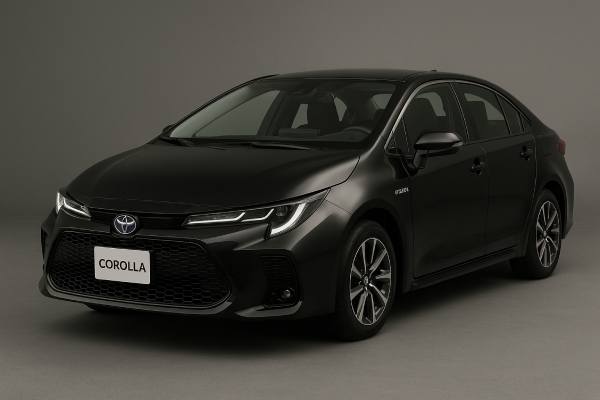
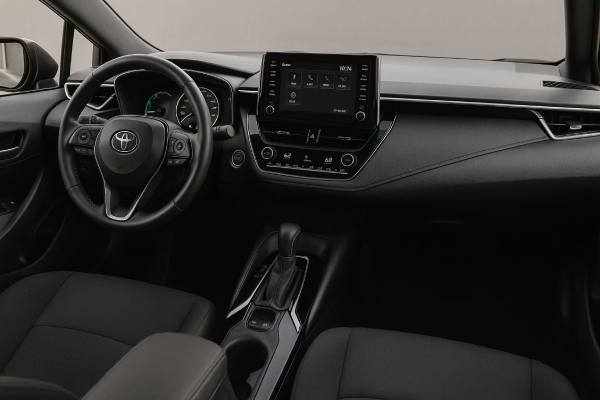
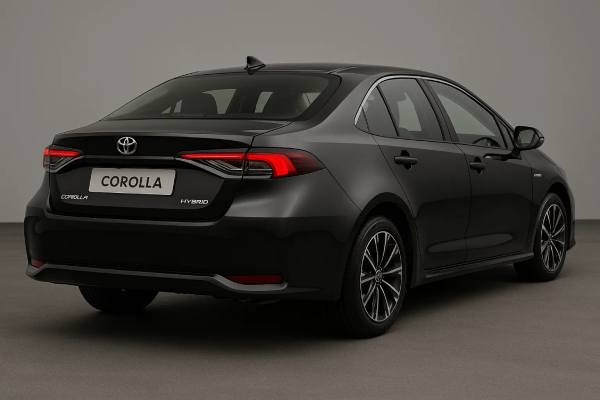
The 2023 refresh of the Toyota Corolla Hybrid brought the fifth-generation Toyota Hybrid System to the TNGA-C platform, improving response, refinement, and real-world economy while keeping ownership simple and predictable. The 1.8-litre 2ZR-FXE Atkinson-cycle engine works with a planetary eCVT and lithium-ion battery, with output increased over pre-facelift cars. Trim and feature availability widened, infotainment became quicker and cleaner, and Toyota Safety Sense gained capability. For daily commuting, this Corolla balances comfort with efficiency that stays strong in mixed driving and winter weather. Costs remain low thanks to chain-driven timing, long-life iridium plugs, and conservative fluid intervals. Shoppers should pay attention to wheel/tire packages (they meaningfully affect noise and efficiency) and to headlight spec if they care about top safety awards. This guide focuses on the mainstream North American sedan configuration while noting where European figures differ, so owners and buyers can confidently compare trims, plan maintenance, and assess long-term durability.
Fast Facts
- Fifth-gen hybrid system improves step-off torque and cabin quietness; typical mixed use returns mid-to-high 40s mpg (≈5.0–5.8 L/100 km).
- Quiet, comfortable ride with multi-link rear suspension; simple ownership and long service intervals.
- Broad standard driver assistance, with better headlights on certain trims.
- Watch for brake corrosion on low-mileage, short-trip cars in salted climates; 12 V batteries often age by year 4–6.
- Oil and filter: every 10,000 miles / 12 months (16,000 km / 12 months) with 0W-16 meeting the current spec.
Navigate this guide
- Corolla Hybrid 2023+ Overview
- Specs and Technical Data
- Trims, Options, and Safety
- Reliability and Known Issues
- Maintenance and Buyer’s Guide
- Driving and Performance
- How Corolla Hybrid Compares
Corolla Hybrid 2023+ Overview
Toyota’s mid-cycle changes for 2023 concentrated on powertrain refinement and active safety while keeping the Corolla’s strengths—comfort, efficiency, and low running costs—firmly intact. The 2ZR-FXE inline-four remains the heart of the system, but motor-generator tuning and software calibration were updated for quicker torque delivery and smoother engine engagement. In North America, the facelift expanded hybrid availability across more trims and wheel options; Europe quotes a 140 hp (103 kW) combined output for the 1.8 hybrid, whereas North American listings for similar hardware typically round differently by test protocol and trim. Either way, the character is the same: calm, predictable acceleration and impressive economy.
Cabin updates include a faster infotainment stack, larger centre screen on many trims, wireless smartphone integration, and expanded connected services. Toyota Safety Sense advances lane-centering logic, pedestrian/cyclist detection, and adaptive-cruise behaviour. Packaging stays practical: adult-friendly front seating, adequate rear room, and a straightforward trunk with split-fold. Owners praise the easygoing ride, light steering in town, and the way the hybrid system masks stop-and-go stress. If you prefer a firmer, sport-leaning tune, choose smaller wheels/tires or look at rivals known for a stiffer setup. For most commuters, the facelifted Corolla Hybrid hits the “set-and-forget” sweet spot.
Specs and Technical Data
Powertrain and Efficiency (HEV)
| Item | Data |
|---|---|
| Engine code | 2ZR-FXE (Atkinson cycle) |
| Layout & cylinders | Inline-4, DOHC, 4 valves/cyl |
| Bore × stroke | 80.5 × 88.3 mm (3.17 × 3.48 in) |
| Displacement | 1.8 L (1,798 cc) |
| Induction | Naturally aspirated |
| Fuel system | Electronic fuel injection (Toyota hybrid strategy) |
| Compression ratio | ~13.0:1 (effective higher via Atkinson cycle) |
| Electric drive | Front traction motor-generator; lithium-ion battery |
| System voltage | ≈ 600–650 V bus (nominal) |
| HV battery | Lithium-ion, under rear seat |
| Max system power | Europe quoted ≈ 140 hp (103 kW); North America typically ~138 hp depending on trim/test |
| Engine torque | ≈ 142 Nm (105 lb-ft); blended with motor torque |
| Timing drive | Chain |
| Rated economy (FWD) | Up to high-40s/≈50 mpg combined (US) ≈ 4.7–5.0 L/100 km (≈ 56–59 mpg UK), trim-dependent |
| Real-world @ 120 km/h (75 mph) | ≈ 5.3–6.0 L/100 km (≈ 39–44 mpg US / 47–53 mpg UK) |
| Aerodynamics | Cd ≈ 0.28–0.30 (wheel/trim dependent) |
Transmission and Driveline
| Item | Data |
|---|---|
| Transmission | eCVT (planetary power-split) |
| Drive type | FWD (Electronic On-Demand AWD available on certain trims/markets) |
| Final drive | Planetary/electric-blended; effective ratio varies with load |
| Differential | Open (front transaxle); torque apportionment via hybrid control |
| Refuel to full | Gasoline, typically 3–4 minutes |
Chassis and Dimensions
| Item | Data |
|---|---|
| Platform | TNGA-C |
| Suspension (front/rear) | MacPherson strut / Multi-link |
| Steering | Electric power assist; compact, direct ratio |
| Brakes | 4-wheel discs with regen blending (front ventilated) |
| Wheels/Tires | 15–18 in depending on grade (e.g., 205/55R16, 225/40R18) |
| Ground clearance | ≈ 135 mm (5.3 in) |
| Length / Width / Height | ≈ 4,630–4,650 × 1,780 × 1,435–1,450 mm (≈ 182–183 × 70 × 56–57 in) |
| Wheelbase | 2,700 mm (106.3 in) |
| Turning circle (curb-to-curb) | ≈ 10.8 m (35.6 ft) |
| Curb weight (FWD) | ≈ 1,360–1,470 kg (3,000–3,240 lb), by trim |
| GVWR | ≈ 1,780–1,840 kg (3,924–4,056 lb) |
| Fuel tank | ≈ 43 L (11.4 US gal / 9.5 UK gal) |
| Cargo volume (sedan) | ≈ 370 L (13.1 ft³) SAE |
Performance and Capability
| Metric | Value |
|---|---|
| 0–60 mph / 0–100 km/h | ≈ 9.0–9.7 s (trim/conditions) |
| Top speed | ≈ 180 km/h (112 mph) |
| Braking 100–0 km/h | ≈ 38–40 m (125–131 ft) on quality all-season tyres |
| Towing | Not rated in North America |
| Roof load | ≈ 75 kg (165 lb) with approved accessories |
Fluids and Service Capacities
| System | Specification & Capacity |
|---|---|
| Engine oil | 0W-16 meeting ILSAC GF-6B; ≈ 4.2–4.5 L (4.4–4.8 US qt) with filter |
| Coolant | Toyota Super Long Life Coolant (pink); ≈ 6–7 L (6.3–7.4 US qt) total (loops combined) |
| Transaxle fluid | Toyota WS ATF; drain & fill ≈ 3–4 L (3.2–4.2 US qt) |
| Rear e-axle (if AWD) | Sealed; no routine service listed |
| A/C refrigerant | R-1234yf; ≈ 420–550 g (14.8–19.4 oz) per label |
| A/C compressor oil | ND-11; ≈ 100–150 mL (3.4–5.1 fl oz) as service requires |
| Key torque specs | Wheel nuts ≈ 103 Nm (76 lb-ft); oil drain ≈ 40 Nm (30 lb-ft); spark plugs ≈ 18 Nm (13 lb-ft) |
Electrical
| Item | Data |
|---|---|
| 12 V battery | ≈ 45–60 Ah AGM; trunk or rear area mounting (vented) |
| Spark plugs | Long-life iridium; gap ≈ 0.7–0.8 mm (0.028–0.031 in) |
Safety and Driver Assistance
- Strong crashworthiness across major categories; Top Safety Pick eligibility may vary by headlight package and model year.
- Toyota Safety Sense (generation varies by MY): Pre-Collision (pedestrian/cyclist), Lane Departure Alert with Steering Assist, Lane Tracing Assist, Full-Speed DRCC, Road Sign Assist.
- Blind Spot Monitor and Rear Cross-Traffic Alert common or standard on upper trims; surround-view/parking aids availability varies.
- LATCH points are accessible; check seat and base compatibility for rear-facing installations.
Figures vary modestly by trim, wheel/tire, and test protocol. For decisions that depend on a number (e.g., torque, capacities), verify by VIN and under-hood labels.
Trims, Options, and Safety
Trim strategy (North America):
Hybrid availability broadened during the facelift, with LE as the volume entry and additional appearance/equipment lines adding larger wheels, upgraded upholstery, and convenience features. Some packages bring heated seats, heated steering wheel, and enhanced driver-assist bundles. Wheel size is the easiest external tell: 16-inch fitments ride quieter and are more efficient; 18-inch wheels sharpen turn-in but add road noise and can trim economy.
Mechanical/functional differences:
- Brake pad formulations and rear disc sizing can differ slightly by wheel/trim for NVH tuning.
- Headlight technology (projector type and beam pattern) differs by trim and can affect top safety award eligibility.
- AWD availability varies by model and year; FWD remains the baseline for efficiency.
Infotainment tiers:
The updated multimedia platform loads faster, supports wireless smartphone integration, and offers cloud-based navigation in certain markets. Higher trims increase screen size and speaker count; connected-services telematics can add vehicle-health reports and remote features (subscription and market dependent).
Safety ratings (summary):
Crash-test organizations have consistently rated the Corolla sedan highly, with variances largely tied to headlight performance and, occasionally, minor changes to test procedures by year. When shopping, document the exact grade’s headlight type and look for vehicles that meet the higher headlight scores if night driving is frequent.
ADAS notes and calibration:
- Windshield replacement usually requires forward-camera recalibration; lane-centering and pre-collision features may be disabled until this is complete.
- Rear bumper repairs can disturb blind-spot radar alignment; re-aim after body work.
- After suspension work, verify radar/ride-height dependencies per the service manual.
Model-year highlights:
- 2023: Fifth-gen hybrid system; infotainment and TSS updates; wider hybrid availability.
- 2024–present: Packaging tweaks, software refinements, subscription/telematics adjustments by market.
Reliability and Known Issues
Overall pattern:
The 2ZR-FXE/eCVT hybrid architecture is proven, with most owner complaints centred on usage conditions rather than inherent defects. Preventive maintenance and attention to calibration after glass/body work go a long way.
Common (low cost):
- 12 V battery aging (years 4–6): Slow crank/“Not Ready,” random warning lights after cold soaks. Fix: load-test and replace with correct AGM unit; confirm vent routing.
- Brake rotor corrosion on low-mileage cars: Pulsation after long sits, especially in salted regions. Fix: periodic firm stops from cruising speeds; seasonal cleaning/servicing of slide pins and pad abutments.
- Cabin air filter saturation (12–24 months): Musty smell, blower noise, reduced flow. Fix: replace filter; confirm cowl drains are clear.
Occasional (medium cost):
- Wheel-speed sensor/reluctor contamination: ABS/traction warnings after slush/mud. Fix: clean, inspect wiring; replace sensor if signal is unstable; perform calibration.
- Windshield camera misalignment: Lane-keeping faults post-glass replacement. Fix: proper camera calibration; steering-angle zero-point check.
Rare (medium–high cost):
- HV battery module imbalance at high mileage/heat: SOC deviation codes, reduced performance. Fix: dealer diagnosis; pack/module service under warranty where applicable; keep cooling intakes clean.
- Transaxle bearing noise (uncommon): Rising whir with road speed; rule out tyre noise first. Fix: transaxle repair/replacement.
Software and updates:
ECU/ADAS updates appear periodically to refine engine-start thresholds, lane-centering, and false-positive filtering in adverse weather. Dealers can check calibration status by VIN.
Corrosion hotspots:
Front subframe edges and rear suspension links in heavy-salt zones; exhaust flange hardware. Underbody rinses and anti-corrosion coatings help.
Pre-purchase requests:
- Full VIN recall printout and dealer service history.
- Proof of brake-fluid change and recent brake inspection in snowbelt markets.
- 12 V battery test result, especially on low-mileage, short-trip vehicles.
- ADAS calibration paperwork after any glass/bumper repair.
- Scan for DTCs across powertrain, hybrid, ABS, and SRS.
Maintenance and Buyer’s Guide
Practical maintenance schedule (distance/time):
- Engine oil & filter: 10,000 miles / 12 months (16,000 km / 12 months) with 0W-16 GF-6B. Severe use/short trips: halve the distance.
- Engine air filter: inspect 15,000 miles (24,000 km); replace 30,000–45,000 miles (48,000–72,000 km) based on dust load.
- Cabin filter: 12–24 months.
- Coolant (engine/hybrid loops): first at 10 years / 100,000 miles (160,000 km), then every 5 years / 50,000 miles (80,000 km).
- Spark plugs (iridium): 120,000 miles (192,000 km).
- Brake fluid: test annually; replace every 3 years in humid/snowbelt climates.
- Hybrid transaxle (WS) preventive drain/fill: owner-choice at 60,000–100,000 miles (96,000–160,000 km); not required by the basic schedule.
- Belts/hoses: inspect annually after 60,000 miles.
- Tyres: rotate 5,000–7,500 miles (8,000–12,000 km); alignment annually or after impacts.
- 12 V battery: load-test yearly after year 3; typical replacement year 4–6.
- Brake hardware: inspect at each rotation; clean/lube pins where salt is common.
- HV system: keep battery cooling intake clear; perform software health checks during regular service.
Fluid specifications (quick reference):
- Oil: 0W-16 GF-6B; ~4.2–4.5 L with filter.
- Coolant: Toyota SLLC (pink).
- Transaxle: Toyota WS ATF; ~3–4 L drain/fill.
- A/C: R-1234yf with ND-11 oil; charge mass per under-hood label.
Essential torques:
- Wheel nuts 103 Nm (76 lb-ft); oil drain ≈ 40 Nm (30 lb-ft); spark plugs ≈ 18 Nm (13 lb-ft).
Buyer’s checklist:
- Service history: oil on time, brake-fluid every 3 years, documented inspections.
- Brakes: look for rust lip, uneven wear, sticky slide pins.
- ADAS: verify all driver-assist features engage/disengage normally and no warning messages appear.
- Glass/body: proof of camera/radar calibration after windshield/bumper work.
- Tyres/wheels: even wear; avoid cars with repeated curbing (possible alignment/arm damage).
- Headlights: favour trims with higher-rated lamps if night driving matters.
Durability outlook:
Expect excellent long-term service with routine care. Typical non-warranty expenses are tyres, brake hardware in salted regions, and a 12 V battery within the usual window. The hybrid battery is designed for vehicle life under normal use; keep its cooling path clean and software current.
Driving and Performance
Ride, handling, NVH:
The TNGA-C chassis is inherently quiet and solid. Multi-link rear suspension keeps the body settled over broken pavement, and straight-line stability is confident at motorway speeds. Steering is light in town and builds predictably on the highway; feedback is modest but consistent. On 18-inch wheels the car feels crisper but transmits more thumps and tyre roar; 16-inch packages are calmer and more efficient.
Powertrain character:
From a stop, the electric motor provides smooth step-off, masking the small engine’s low-rpm torque deficit. Under heavier throttle, engine speed rises in a familiar hybrid way, yet the cabin remains quieter than older generations. EV-only operation occurs at low loads and speeds; in cold weather, earlier engine engagement is normal as the system heats the catalyst and cabin.
Real-world efficiency:
Mixed commuting typically yields mid-to-high 40s mpg (≈ 5.0–5.8 L/100 km). Gentle suburban driving can touch the high-40s/≈50 mpg; fast highway cruising or sub-freezing temps drop economy into the low-40s mpg. Winter tyres and roof accessories reduce range; careful tyre pressures and smooth driving help.
Key metrics that matter:
- 0–60 mph: roughly 9–10 s, adequate for merges and two-lane passes.
- 100–0 km/h: high-30s metres on quality all-seasons; consistent pedal feel thanks to well-tuned regen-to-friction blending.
- Turning circle: about 10.8 m (35.6 ft), helpful in tight car parks.
Load/towing:
No North American tow rating; light hitch-mount carriers within tongue limits are fine. With four adults and luggage, the Corolla remains composed; plan for a modest economy penalty when fully loaded or climbing long grades.
How Corolla Hybrid Compares
Hyundai Elantra Hybrid (FWD):
Similar efficiency and strong tech value, but no AWD option to match Toyota’s traction where offered. Warranty length favours Hyundai; Toyota counters with a longer-running hybrid track record and typically higher resale.
Honda Civic (FWD; hybrid availability varies by market/year):
The Civic feels sportier and roomier in back; however, where a Civic hybrid is absent or limited, Toyota’s economy advantage and broad availability win. Civic’s road noise can be higher on coarse asphalt.
Subaru Impreza (AWD, non-hybrid):
All-weather confidence and poised chassis, but materially lower fuel economy and more drivetrain noise than the Corolla Hybrid. Great for snowbelts if you prioritise grip over mpg.
Mazda3 (optional AWD, non-hybrid):
Premium interior and engaging dynamics, offset by higher consumption and, often, higher tyre and brake costs. Corolla’s cost-of-ownership is notably lower for high-mileage commuters.
Bottom line:
If your priorities are efficiency, low hassle, and strong active safety, the facelifted Corolla Hybrid remains a benchmark. Rivals can feel quicker or sportier, but few match its blend of economy, comfort, and ownership simplicity.
References
- 2023 Toyota Corolla: Toyota’s Best-Selling Compact Rolls into 2023 with Updated Style and Enhanced Hybrid Grades 2022 (Press Release)
- Fuel Economy of the 2023 Toyota Corolla Hybrid 2023 (EPA Fuel Economy)
- 2023 Toyota Corolla 4-door sedan 2023 (Safety Rating)
- 2023 Corolla Owner’s Manual (U.S.) 2023 (Owner’s Manual)
Disclaimer
This article is for informational purposes only and is not a substitute for professional diagnosis or repair. Specifications, torque values, capacities, intervals, and procedures vary by VIN, model year, market, and equipment. Always verify figures and steps against your official service documentation and the vehicle’s under-hood labels before performing any work.
If this guide helped you, please share it with fellow owners on Facebook or X/Twitter to support xcar’s work.