
The Trofeo 580 is one of the Levante variants that rewards exact identification. With 580 hp and 730 Nm (538 lb-ft), it occupies a clear technical and market position, but similar badges, regional calibrations, and model-year updates often cause online listings to mix specifications. Buyers should establish what the car is before judging whether it is good value.
Maserati designed the 2020–2023 Levante Trofeo as a sporting five-seat grand tourer with SUV clearance, not as a conventional utility vehicle. Its double-wishbone front suspension, rear-biased Q4 system, limited-slip rear differential, adaptive damping, and air springs support that goal. The result can be fast, comfortable, and distinctive, provided maintenance has kept pace with age and use.
This article examines the Maserati Levante Trofeo for 2020–2023 from that practical viewpoint. It explains the verified performance package, production and option differences, the feel behind the numbers, recurring ownership needs, and a structured buying process. The aim is to preserve what makes the car special while avoiding vague assumptions that every Levante shares the same risks or value.
Table of Contents
- The European Trofeo’s Final Phase
- 580 hp V8 Specifications and Hardware
- Year Changes Colors and Trim Content
- The Engineering of a 300 km/h SUV
- Trofeo Performance Beyond the Headline
- Managing Heat Wear and V8 Costs
- Buying a 580 hp Trofeo Wisely
The European Trofeo’s Final Phase
The useful way to view this version is straightforward: The 580 hp Trofeo represents the European metric calibration carried through the Levante’s mature years. It retained the same 730 Nm torque plateau and basic hardware as the more highly quoted export version, but official performance numbers differed slightly.
The 2020–2023 580 hp version marked the point where the Levante became more than a sporty luxury SUV. Maserati used the V8, specific calibration, Corsa mode, launch control, larger wheels, and stronger brakes to create a model with genuine supercar-level straight-line speed.
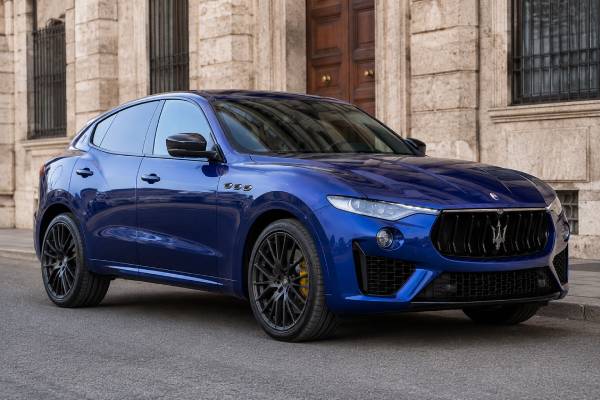
The 2020–2023 580 hp Levante Trofeo occupies a clear place in Maserati history because it broadened the brand without abandoning several traditional cues. A long hood, a set-back cabin, frameless side glass, a large vertical-bar grille, and three fender vents keep the shape recognizable. Underneath, the vehicle uses a steel-and-aluminum unibody, double-wishbone front suspension, a multi-link rear layout, adjustable air springs, electronically controlled Skyhook dampers, and Q4 all-wheel drive. In normal conditions Q4 favors the rear axle, then can direct up to half the torque forward when grip demands it.
580 hp V8 Specifications and Hardware
The mechanical package is highly specific to this version: 580 hp, 730 Nm (538 lb-ft), an eight-speed automatic, and rear-biased Q4 all-wheel drive. The core dimensions are shared with most Levantes, but engine mass, brake size, tires, calibration, and official performance differ meaningfully.
| Model and coverage | Maserati Levante Trofeo (Trofeo 580), 2020–2023 |
|---|---|
| Engine | European-specification F154 twin-turbo gasoline V8 |
| Displacement | 3,799 cc |
| Induction | two twin-scroll turbochargers with intercooling |
| Fuel system | gasoline direct injection |
| Maximum output | 580 hp |
| Maximum torque | 730 Nm (538 lb-ft) |
| Transmission | ZF eight-speed torque-converter automatic |
| Drivetrain | Q4 rear-biased all-wheel drive with rear limited-slip differential |
| Acceleration | 0–100 km/h in 4.1 seconds |
| Top speed | about 300 km/h (186 mph) |
| Approximate curb weight | about 2,170 kg (4,784 lb) |
| Fuel capacity | 80 L (21.1 US gal) |
Figures published for the 2020–2023 580 hp Levante Trofeo may use PS, SAE horsepower, metric acceleration, or U.S. acceleration standards depending on the market. The numbers above follow the assignment’s stated output and the matching regional specification; they should not be mixed with a different market’s badge or test method.
| Body construction | Steel-and-aluminum five-door unibody |
|---|---|
| Front suspension | Double wishbones, air springs, adaptive Skyhook damping |
| Rear suspension | Five-link layout, air springs, adaptive Skyhook damping |
| Steering | Hydraulic on some early cars; electric on later model years |
| Brakes | 380 x 34 mm six-piston Brembo front discs; 330 x 22 mm rear discs |
| Wheels and tires | 22-inch staggered Trofeo fitments |
| Length | 5,020 mm (197.6 in) |
| Width | 1,968 mm (77.5 in) |
| Height | 1,698 mm (66.9 in) |
| Wheelbase | 3,004 mm (118.3 in) |
| Luggage volume | 580 L seats up |
In the 2020–2023 Levante Trofeo, Q4 does not make the vehicle behave like a permanently front-driven crossover. Under steady grip it retains a rear-led character, and the electronically controlled transfer system can send torque forward quickly when wheel slip, steering angle, throttle position, or road conditions require it. A mechanical limited-slip differential at the rear helps distribute drive across the axle. That system depends on four tires with closely matched rolling circumference; mixing sizes, models, or wear levels can create driveline stress and confused control behavior.
The 2020–2023 580 hp version uses air suspension with several ride heights for entry, normal road use, high-speed stability, and rough surfaces. Height changes alter ground clearance and the center of gravity, but they do not turn low-profile performance tires into off-road tires. The double-wishbone front geometry is one reason the steering feels more precise than the class average, while the multi-link rear keeps the body settled under power. Steel brake discs are used; condition and thickness matter, but buyers should not assume the car has carbon-ceramic hardware simply because replacement costs are high.
Year Changes Colors and Trim Content
The most important distinction is easy to state: production details matter because the Levante changed more through electronics, trim logic, and market calibration than its familiar silhouette suggests. This span crosses the MY21 design and infotainment update and the MY22 GT-Modena-Trofeo range reorganization. A 2020 car and a 2023 car therefore share the engine architecture but not every badge, lamp, screen, assistance feature, or option code.
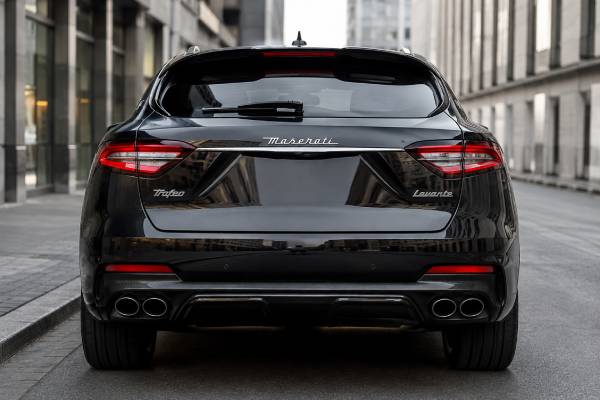
The 2020–2023 Levante Trofeo began with a strongly defined package: vented hood, aggressive fascias, carbon-fiber details, 22-inch wheels, red cabin and exterior accents, Corsa mode, and launch control. The 2021 model update brought the new grille and boomerang rear-light graphics, while 2022 placed Trofeo at the top of the simplified GT-Modena-Trofeo range.
How to identify an authentic specification
When verifying a 2020–2023 580 hp Levante Trofeo, start with the VIN and build data, then compare the engine family, emissions label, brake hardware, wheel size, interior trim, and original market. Badges are easy to replace. Software tunes can also alter output without changing visible parts. A factory options list helps distinguish desirable equipment from later additions and clarifies whether missing features are faults or simply were never ordered.
Useful items to verify include:
- factory-correct exterior and interior colors for the Maserati Levante Trofeo with 580 hp, including trim material and stitching;
- wheel design, diameter, and correct staggered tire sizes;
- brake caliper color and front-disc specification;
- panoramic roof, heated or ventilated seats, driver-assistance packages, and audio system;
- adaptive LED or earlier bi-xenon lighting, depending on model year;
- GranLusso, GranSport, GT, Modena, S, Trofeo, or Ultima details appropriate to the market;
- MTC+ or later MIA infotainment and the related control layout;
- two keys, handbook pack, cargo equipment, compressor or mobility kit, and service records.
The Engineering of a 300 km/h SUV
The 2020–2023 580 hp Levante Trofeo stands apart because its engineering and visual proportions support the same message: it is a road-focused Maserati first and an SUV second. The long hood, low roof for the class, frameless door glass, muscular rear haunches, and cab-rearward stance avoid the upright, square profile common to utility vehicles.
On the 2020–2023 Trofeo 580, the grille is tall and concave, with vertical bars and a central Trident. Three vents sit behind each front wheel, while the side glass tapers toward the rear under a sweeping roofline. Early cars use a cleaner lamp graphic; later cars gain boomerang-style rear lights inspired by historic Maserati designs. GranSport, Modena, GTS, Trofeo, and Ultima treatments change the lower fascias, dark trim, carbon content, wheel design, and badge treatment without disguising the core shape.
The V8 installation in the 2020–2023 Levante Trofeo required revised cooling, airflow management, and front-end detailing. Large intake areas, hood vents on the most aggressive versions, and carefully managed under-hood heat are functional parts of the package, not only styling devices.
Cabin layout and sensory character
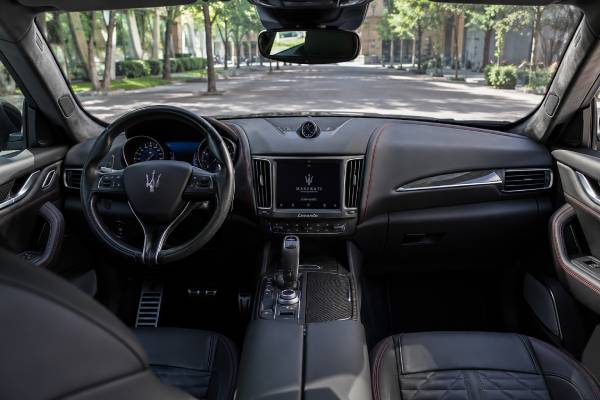
In the 2020–2023 580 hp Levante Trofeo, the driving position is lower and more car-like than in many luxury SUVs. A broad center tunnel divides the front seats, substantial column-mounted paddles remain fixed as the wheel turns, and the instrument layout keeps major driving information directly ahead. Physical controls for climate and several vehicle functions reduce dependence on the touchscreen, although the exact switchgear and software generation vary by year.
The exhaust and intake character depend strongly on the powertrain. It is devastatingly fast yet remains more progressive than its numbers imply. Corsa mode sharpens the response and reduces intervention, while the softer modes allow genuine long-distance use. Drive modes alter throttle, gearbox, damping, ride height, stability control, and exhaust behavior where valves are fitted. These systems create real differences between settings; they also mean a fault can flatten the car’s character without preventing it from moving.
Practicality in the 2020–2023 Levante Trofeo remains visible in the split-folding rear seat, power tailgate, useful cargo floor, roof-rail availability, and adjustable ride height. Rear space is adequate for adults, though the sloping roof and large transmission tunnel make the cabin less box-like than the exterior length suggests. Visibility is good forward but tighter over the rear quarters, making cameras and parking sensors valuable rather than decorative options.
Trofeo Performance Beyond the Headline
This version feels faster and more agile than its size suggests, but its strongest quality is balance rather than a single acceleration number. It is devastatingly fast yet remains more progressive than its numbers imply. Corsa mode sharpens the response and reduces intervention, while the softer modes allow genuine long-distance use.
In the 2020–2023 Trofeo 580, throttle response depends on engine speed, drive mode, and gear selection. The eight-speed automatic can be smooth and unobtrusive in normal driving, then deliver fast, decisive changes when the driver uses Sport or the paddles. A healthy gearbox should engage drive and reverse without a long pause, shift cleanly under light load, and avoid flare or harshness when warm. Software adaptation and fluid condition can affect behavior, so one imperfect shift is a reason to investigate rather than immediately condemn the unit.
In the 2020–2023 Levante Trofeo, steering is one of the model’s defining traits. Hydraulic early cars communicate more road texture, while later electric systems enable lane-support functions and can feel lighter around center. Both should track straight and return naturally after a corner. A wandering car may have tire, alignment, control-arm, wheel, or ride-height issues rather than an inherent steering flaw.
In the 2020–2023 580 hp version, Corsa mode and launch control add a more aggressive calibration, but they belong on a dry, open road or circuit with warm tires and full mechanical temperature. The air suspension keeps body movement controlled without eliminating it. In the softer setting the Levante breathes with the road; in firmer modes it resists roll and pitch more strongly. Very large wheels can make sharp impacts busy and noisy, especially on old or overinflated tires. A 19- or 20-inch setup often provides the best road compromise, while 21- and 22-inch packages prioritize response and appearance.
The 2020–2023 580 hp Levante Trofeo has firm braking feel when the discs, pads, fluid, and tires are healthy. The vehicle is heavy, so repeated high-speed stops generate substantial heat. A lip on the disc edge, vibration through the pedal, blue spots, cracking around drilled holes where applicable, or uneven inner-pad wear all deserve measurement. The official stopping figures were achieved on suitable tires and fresh hardware; budget replacements can alter the result dramatically.
In the 2020–2023 Trofeo 580, engine braking is modest in the automatic modes, so paddle downshifts are useful before a steep descent or a tight sequence of bends. On a motorway the long wheelbase, quiet cabin, broad torque delivery, and stable aero behavior make the Levante an effective grand tourer. In a city its width, turning circle, expensive wheels, and limited rear-quarter view require care. On a mountain road the rear-led balance and strong brakes are rewarding, but physics still applies: enter a corner with restraint, settle the chassis, then use the traction on exit.
Managing Heat Wear and V8 Costs
Reliability in the 2020–2023 580 hp version depends less on a simple model score than on service history, operating pattern, and the number of deferred systems. The Levante can be dependable, but one neglected car may simultaneously need tires, front brakes, air-suspension work, a battery, cooling repairs, and fluid service.
Powertrain and cooling
The F154 V8 in the 2020–2023 Trofeo 580 is robust when serviced carefully, but it creates substantial heat in a confined engine bay. Inspect the coolant reservoir, hoses, water-pump area, radiator faces, auxiliary coolers, turbo oil and coolant lines, and any staining that suggests a slow leak. A car that repeatedly idled in traffic after hard use may age hoses and electrical connectors faster than its odometer implies.
On the 2020–2023 Levante Trofeo, cold-start misfires can come from plugs, coils, injector issues, or low battery voltage. Oil seepage around covers and lines should be priced by a specialist because access time matters as much as the seal itself. Engine mounts can soften under the V8’s torque, creating vibration or driveline movement. Listen for abnormal turbo noise, check boost control under load, and review oil-change dates as well as mileage. Long factory intervals are not a reason to leave old oil in a low-mileage collector car.
The ZF eight-speed in the 2020–2023 580 hp version is widely used and generally durable, but “lifetime fluid” should not be read as “fluid that never ages.” Check the pan, connector area, cooler lines, and service history for leaks or neglected fluid. Harsh engagement, delayed reverse, shudder under light acceleration, or inconsistent shifts need diagnosis. Transfer-case and differential fluids also age, and the AWD system depends on matched tires.
Suspension, brakes, and electronics
On the 2020–2023 Trofeo 580, air springs can leak, compressors can weaken, valve blocks can stick, and ride-height sensors can report implausible positions. Leave the car parked overnight and compare all four corners before starting it. A compressor that runs for an extended period after every start may be compensating for leakage. Adaptive dampers, upper and lower control-arm bushes, anti-roll-bar links, and wheel bearings also wear; knocking should not be dismissed as “normal for big wheels.”
For the 2020–2023 Levante Trofeo, brake wear is a major cost driver. Measure disc thickness and runout rather than judging only through the wheel spokes. Inspect both pad faces, parking-brake operation, flexible hoses, and fluid age. Tires should match by brand, model, size, speed rating, and similar tread depth across each axle and ideally all four corners. Check date codes because a low-mileage car can still sit on hardened tires.
The modules in the 2020–2023 580 hp version are sensitive to battery condition. Confirm that the conventional battery is correctly specified and registered or initialized when required. Test every window, frameless-glass drop function, mirror, lock, key, seat motor, climate zone, camera, sensor, headlamp, tailgate, and infotainment input. Water from roof drains, door membranes, or previous windshield work can create electrical problems that appear unrelated.
Service planning and parts reality
For the 2020–2023 Trofeo 580, use the VIN-specific schedule as the minimum, then adjust for age, heat, short journeys, and performance use. Annual oil and inspection service is sensible for lightly driven examples. Brake fluid, coolant, filters, plugs on gasoline engines, diesel fuel filters, driveline fluids, belts, and air-conditioning service all have time as well as mileage considerations. Exact intervals and torque values vary by market and equipment.
Before buying a 2020–2023 Levante Trofeo, check the VIN for open recalls and completed campaigns in the country where the vehicle is registered. Rear-camera software, fuel-system details, and other campaigns have varied by model year and market. Recall completion does not replace a physical inspection, and the absence of an open campaign does not prove a problem-free car.
Buying a 580 hp Trofeo Wisely
The best purchase is the car with the clearest identity, strongest maintenance file, and fewest combined needs—not automatically the newest, lowest-mileage, or cheapest example. Choose condition and history over model year. A carefully serviced 2020 car can be a better purchase than a cosmetically fresher 2023 example with hard launches, heat cycles, or mismatched tires.
Inspection sequence
- Confirm the VIN, market, model year, engine code, output, trim, and factory options for the Maserati Levante Trofeo with 580 hp.
- Review dated invoices, not only stamps, and map major work against time and mileage.
- Inspect the car cold for fluid levels, leaks, startup noise, smoke, warning lights, and battery behavior.
- Measure tires, wheels, brakes, ride height, and suspension wear before the test drive.
- Drive through city, rough-road, motorway, braking, and heat-soak conditions.
- Run a full-module diagnostic scan and investigate stored, pending, and recently cleared faults.
- Obtain a written specialist estimate for every defect, then add a contingency for hidden work.
A proper pre-purchase inspection for the 2020–2023 580 hp version should put the vehicle on a lift. Look for undertray damage, oil or coolant traces, crushed lifting points, corrosion on fasteners and subframes in salted climates, exhaust damage, differential or transfer-case seepage, and evidence of a previous impact. Panel gaps, paint depth, glass dates, lamp dates, wheel finish, and overspray help reveal body history. Quality repairs are not automatically disqualifying, but undisclosed structural or airbag work is.
Questions that protect the buyer
Build a first-year budget for the 2020–2023 Trofeo 580 before negotiating. It should cover baseline fluids and filters if the history is incomplete, alignment, battery testing, tire or brake reserve, and one unexpected electronic or cooling repair. The gap between purchase price and a sorted car can be large, particularly on V8 or heavily optioned examples. Conversely, paying more for recent tires, measured brakes, fresh fluids, and documented suspension work can be economical.
Buy the 2020–2023 Levante Trofeo primarily for the driving and ownership experience; speculative rarity should be a secondary reason. Avoid cars with mismatched tires, persistent suspension warnings, unexplained coolant loss, recently cleared fault memory, incomplete ownership documents, or performance modifications without supporting engineering and maintenance records. Cosmetic flaws can be priced; an uncertain mechanical story is harder to contain.
When the right 2020–2023 580 hp version appears, preserve the same discipline after purchase. Establish a baseline service, keep the battery charged, warm the powertrain before heavy load, cool it after sustained hard use, maintain matched tires, and address small leaks or warning messages early. That approach protects the Levante’s best qualities: unusual style, real cross-country ability, and a driving character that still feels distinct from mainstream luxury SUVs.
References
- Spotlight on the Maserati Levante with V8 engine in the GTS and Trofeo trims at the Los Angeles Auto Show | Maserati | Stellantis Media 2018 (Technical Overview)
- Maserati Levante MY19 Press Kit | Maserati | Stellantis Media 2018 (Technical Press Kit)
- Maserati Levante MY22: GT, Modena and Trofeo | Maserati | Stellantis Media 2021 (Model Update)
- Maserati Service Bundle: All-Inclusive Care | Maserati 2024 (Service Information)
Disclaimer
This article is for informational purposes only and is not a substitute for professional diagnosis or repair. Specifications, torque values, service intervals, and procedures can vary by VIN, market, equipment, and production date. Verify all work against the vehicle’s official service documentation and use a qualified Maserati specialist when appropriate.
Please share this guide on Facebook, X/Twitter, or another enthusiast community if it helped you make a better-informed decision.