
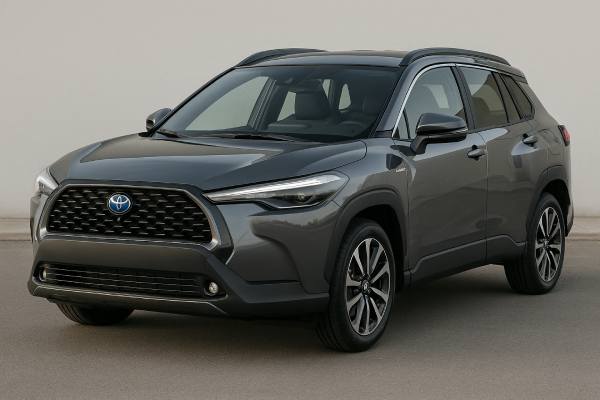
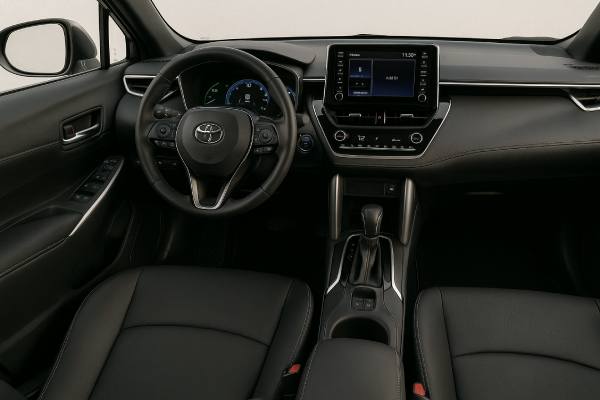
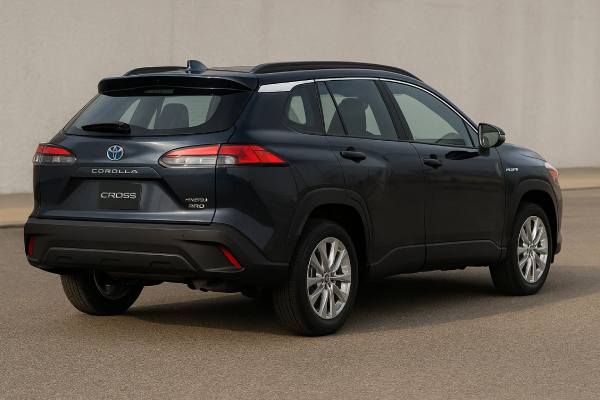
The Corolla Cross Hybrid with Toyota’s fifth-generation hybrid drive lands in a sweet spot: compact-SUV practicality, near-RAV4 ride height, and real-world economy that makes every errand cheaper. Built on the TNGA-C platform, the MXGH15 pairs the M20A-FXS 2.0-liter Atkinson-cycle four-cylinder with dual motor-generators and an electronic rear axle. The result is quiet urban pace, confident all-weather traction, and an EPA-rated 42 mpg combined. Drivers shopping this class want simple ownership, low running costs, and credible safety tech; this Corolla Cross Hybrid delivers with Toyota Safety Sense 3.0, an 8-inch touchscreen running the latest Toyota Audio Multimedia, and a standard Electronic On-Demand AWD system. Below, you will find the key specifications and dimensions, what changes across trims and years, objective safety ratings, and a pragmatic maintenance plan. If you are cross-shopping HR-V, Crosstrek, CX-30, or Kia Niro, the sections at the end outline where the Corolla Cross Hybrid leads—and where rivals still have an edge.
Fast Facts
- Electronic On-Demand AWD adds traction without a driveshaft; efficiency remains strong at 42 mpg combined (45 city / 38 highway).
- Spacious cabin, easy step-in height, and simple controls make it an excellent daily family car.
- Toyota Safety Sense 3.0 with active lane support and adaptive cruise is standard; headlights vary by trim.
- Watch for the 2023–2024 brake-assist recall (free ECU update) and keep hybrid cooling intakes clean.
- Typical oil and filter service: every 10,000 miles / 12 months (0W-16). Rotate tires every 5,000–7,500 miles.
Navigate this guide
- Detailed overview: Corolla Cross Hybrid AWD
- Specs and technical data (MXGH15)
- Trims, safety and driver assistance
- Reliability issues and service actions
- Maintenance and buyer’s guide
- Driving impressions and performance
- Corolla Cross rivals compared
Detailed overview: Corolla Cross Hybrid AWD
Toyota’s MXGH15 Corolla Cross Hybrid takes the familiar Corolla formula—durable engineering, inexpensive ownership, and transparent ergonomics—and adds the utility buyers want. The headline is the hybrid system (M20A-FXS 2.0-liter Atkinson four with dual motor-generators) feeding an e-CVT transaxle and an independent rear e-motor that engages seamlessly for traction. Toyota’s net system output is quoted at 196 hp for the U.S. market. Some literature lists 194 hp due to rounding or alternate calculation methods; in practice, performance and calibration are unchanged. The powertrain’s bandwidth is wide: easy EV-only gliding in traffic, hushed suburban cruising, and brisk enough highway merging (about 8.0 seconds 0–60 mph).
Packaging is a strong point. Compared with many subcompact SUVs, the Corolla Cross Hybrid keeps a gentler step-in height, useful rear-seat space for two adults or child seats, and a square cargo opening that fits strollers and luggage. The hybrid battery sits low and central to preserve cargo floor height. Typical daily use emphasizes quietness, predictable steering, and a suspension tune that favors comfort without slop. Electronic On-Demand AWD (no center driveshaft) keeps mass down and eliminates a rear differential service interval common to mechanical AWD systems. On wet pavement or snow, the rear motor adds just enough push to stabilize launches and reduce front-tire scrabble, then decouples to save fuel.
Standard Toyota Safety Sense 3.0 brings forward-collision mitigation with pedestrian/cyclist detection, active lane centering, and adaptive cruise. Blind-spot monitoring and rear cross-traffic alert are commonly fitted on SE/XSE grades. Cabin tech is straightforward: an 8-inch touchscreen with wireless Apple CarPlay and Android Auto, over-the-air update support, and easy physical controls for climate. Material quality is honest and hard-wearing; the XSE trim adds soft-touch finishes and available heated power driver’s seat. With EPA ratings of 45/38/42 mpg (city/highway/combined), owners routinely report mid-40s in town and high-30s to low-40s on the freeway at U.S. speeds. In a segment where many rivals still rely on naturally aspirated non-hybrid fours, the Corolla Cross Hybrid’s real advantage is cost stability: fewer fuel stops, conservative tire sizes, and long service intervals.
Specs and technical data (MXGH15)
The figures below reflect the North American Corolla Cross Hybrid MXGH15 with Electronic On-Demand AWD. Where manufacturer or regulatory ranges exist, the baseline official number is shown first.
Powertrain and efficiency
| Item | Specification |
|---|---|
| Engine code | M20A-FXS (2.0-L Atkinson-cycle I-4, DOHC, 16-valve) |
| Displacement | 2.0 L (1,987 cc) |
| Induction | Naturally aspirated |
| Fuel system | D-4S (combined direct + port injection) |
| Compression ratio | ≈14.0:1 |
| Electric drive | Permanent-magnet synchronous motors: front traction + generator; independent rear traction motor (e-axle) |
| Hybrid system | Toyota Hybrid System Gen 5 (planetary-gear e-CVT) |
| System output | 196 hp (146 kW) net (some literature cites 194 hp) |
| Engine-only output (reference) | ~150 hp (111 kW) |
| Timing drive | Chain |
| Rated economy (EPA) | 45 / 38 / 42 mpg (city / hwy / combined) — 5.2 / 6.2 / 5.6 L/100 km |
| Real-world highway @ 75 mph (120 km/h) | ~38–41 mpg US (6.9–6.2 L/100 km), temperature and tires dependent |
| Emissions / standard | U.S. EPA SULEV30 tier class |
| Aerodynamics (Cd) | ~0.33–0.34 (trim/wheels dependent) |
Transmission and driveline
| Item | Specification |
|---|---|
| Transmission | e-CVT hybrid transaxle (planetary gearset); no stepped ratios |
| Gear ratios | Not applicable (electronic/planetary) |
| Final drive | Hybrid transaxle reduction; rear e-axle reduction (no mechanical driveshaft) |
| Drive type | Electronic On-Demand AWD (front-drive default; rear motor engages as needed) |
| Differential(s) | Front open; rear integrated in e-axle (no serviceable LSD) |
| Replenishment time | Refuel ~3–5 minutes; no plug-in charging |
Chassis and dimensions
| Item | Specification |
|---|---|
| Platform | TNGA-C |
| Suspension | Front MacPherson strut; rear multi-link (Hybrid/ AWD) |
| Steering | Electric power assist; ratio ~14–16:1 (calibration dependent) |
| Brakes | 4-wheel discs with regenerative blending; front ventilated |
| Wheels/tires (typical) | 215/65R17 (S/SE); 225/55R18 (XSE) |
| Ground clearance | ~8.1 in (206 mm) |
| Length / Width / Height | 176.1 in / 71.9 in / ~64.8–64.9 in (4,474 / 1,826 / ~1,647 mm) |
| Wheelbase | 103.9 in (2,640 mm) |
| Turning circle (curb-to-curb) | ~35.4 ft (10.8 m) |
| Curb weight (range) | ~3,300–3,500 lb (1,497–1,588 kg) by trim |
| GVWR | ~4,575 lb (approx.; verify by VIN label) |
| Fuel tank | 10.6 U.S. gal (40 L / 8.8 UK gal) |
| Cargo volume | ~21.5 ft³ (seats up) — SAE; seats-down varies by trim/accessories |
Performance and capability
| Metric | Result |
|---|---|
| 0–60 mph (0–97 km/h) | ~8.0 s (manufacturer estimate) |
| Top speed | ~112 mph (180 km/h), electronically limited |
| Braking 62–0 mph (100–0 km/h) | Typical class result; depends on tires; ABS with regenerative blending |
| Towing capacity | Not rated for towing in U.S. (verify local market guidance) |
| Payload | Check driver-side door jamb label (varies by trim/options) |
| Roof load | Typically up to ~165 lb (75 kg) with proper crossbars; check owner’s manual |
Fluids and service capacities (verify by VIN/label)
| System | Spec / Capacity |
|---|---|
| Engine oil | 0W-16 full-synthetic meeting Toyota spec; ~4.3–4.5 qt (4.1–4.3 L) with filter |
| Coolant (engine/inverter loop) | Toyota Super Long Life Coolant (pink); 50/50 premix; capacity varies by loop (~6–8 L total across loops) |
| Transaxle (e-CVT) | Toyota WS ATF; fill to spec; no routine interval in owner’s schedule |
| Rear e-axle reduction gear | Toyota gear oil (dealer filled); typically “inspect for leaks/noise” |
| A/C refrigerant | R-1234yf; charge amount on under-hood label (≈400–500 g typical) |
| Key torque examples | Oil drain ~39 Nm (29 lb-ft); wheel lugs ~103 Nm (76 lb-ft) |
Electrical
| Item | Specification |
|---|---|
| 12-V battery | Maintenance-free sealed (AGM type common); group/form factor vary by build |
| Alternator | Not applicable (DC-DC converter from traction battery) |
| Spark plugs | Iridium; gap ~0.8 mm (0.031 in); typical replacement ~120,000 miles |
Safety and driver assistance
| Item | Notes |
|---|---|
| Crash ratings | IIHS testing of Corolla Cross (2022–2024) shows Good results in several tests; updated moderate overlap and updated side are Acceptable; ratings apply broadly across trims when equipped similarly. |
| Headlights | Trim-dependent; SE/XSE LED units typically score Adequate to Good; aim and tire choice affect performance. |
| ADAS suite | Toyota Safety Sense 3.0 standard: AEB with pedestrian/cyclist detection, lane departure alert with steering assist, lane tracing assist (centering), dynamic radar cruise, road sign assist; BSM and RCTA commonly equipped on SE/XSE. |
| Child-seat provisions | Rear LATCH anchors easily accessible; verify fit for wider bases. |
Trims, safety and driver assistance
Grades and key hardware
For 2023–2024 in North America, the Corolla Cross Hybrid is sold in S, SE, and XSE grades, all with Electronic On-Demand AWD. The S and SE ride on 17-inch wheels; XSE moves to 18s and adds SofTex-trimmed seats, available heated front seats, and power driver’s seat. Sport-tuned suspension is common to the hybrid grades. Paddle “shifters” provide simulated steps for engine braking on descents but do not change fixed gear ratios (the e-CVT is electronic).
Feature walk-through
- Infotainment: 8-inch Toyota Audio Multimedia with wireless Apple CarPlay/Android Auto; OTA update capability; USB-C ports. Most cars include a 6-speaker audio system; SE/XSE may offer audio upgrades depending on package.
- Driver display: 7-inch multi-information display is typical in this generation; cluster layout and themes vary by trim.
- Lighting: All trims are LED; XSE receives premium LED signatures and available fog lamps.
- Convenience: Smart Key, single- or dual-zone climate, available power moonroof; roof rails standard or optional depending on trim.
Safety ratings summary
Independent crash data for Corolla Cross (including Hybrid) shows strong occupant protection overall. The updated IIHS moderate-overlap and updated side tests rate the vehicle Acceptable, while original moderate overlap and small-overlap tests rate Good. Head-restraint, roof-strength, and crash-prevention system results are competitive in the class. Due to the tougher updated tests and headlight variability, not all model years/trim combinations qualify for an IIHS Top Safety Pick; shoppers seeking the best headlight score should prioritize trims with the upgraded LED assemblies and ensure correct aim after service or accessory installation.
Toyota Safety Sense 3.0 behavior
In daily use, the latest TSS algorithms track lane edges more confidently and handle merging traffic better than earlier systems. The forward collision system monitors vehicles, pedestrians, and cyclists within defined speed and lighting conditions; lane tracing works best with clear road markings. Radar cruise keeps natural gaps; drivers can choose following distance and enable lane centering on highways. After windshield/glass or radar service, calibration is required; ADAS warning lights or errant behavior warrant a dealer scan and calibration check.
Identifiers and build clues
- VIN/build: MXGH15 indicates the AWD hybrid chassis; the M20A-FXS engine code appears on under-hood labels.
- Exterior tells: Black grille and sport fascia distinguish the hybrid; Nightshade Edition (availability varies by year) adds blackout trim.
- Wheels/tires: 17-inch alloys (S/SE) typically wear 215/65R17 all-season tires; XSE upgrades to 225/55R18.
- Year-to-year notes: 2023 introduced the hybrid in S/SE/XSE with the Gen-5 hybrid system. 2024 added a Nightshade appearance package on select grades and incremental software updates.
Reliability issues and service actions
Overall pattern
Early-cycle Toyota hybrids tend to be solid: the M20A-FXS uses a timing chain (not a belt), the e-CVT planetary transaxle has no clutches to wear like a conventional automatic, and brake pads last longer thanks to strong regeneration. The main reliability watch-points for the 2023–2024 Corolla Cross Hybrid involve software calibrations, minor NVH, and routine wear items.
Known issues (organized by prevalence and cost)
- Brake assist during cornering (common / low to medium severity): Symptom: temporarily hard brake pedal while turning with braking; stopping distance can increase. Root cause: skid-control ECU software logic in the brake actuator. Remedy: dealer software update under a safety recall at no charge. Confirm completion by VIN.
- Infotainment glitches after OTA (occasional / low): Symptom: screen freeze or Bluetooth dropouts. Cause: post-update cache conflicts. Remedy: factory reset of the head unit; ensure latest software and re-pair devices.
- Wind noise from mirrors/roof rails (occasional / low): Symptom: whoosh at highway speeds. Cause: seal alignment or accessory crossbar position. Remedy: adjust/relocate crossbars; inspect door glass run channels.
- Rear brake corrosion in salted climates (occasional / low): Symptom: uneven pad wear/drag from infrequent friction-brake use due to regen. Remedy: periodic “bed-in” stops, clean/lube slide pins during tire rotations, replace pads/rotors as needed.
- 12-V battery discharge after long storage (occasional / low): Symptom: no-start after multi-week parking. Cause: quiescent draw + short trips. Remedy: maintain with smart charger or drive 30–45 minutes weekly; replace weak 12-V battery within the typical 4–6-year window.
Hybrid system and HV battery
The traction battery is liquid-cooled (shared coolant loops with inverter/drive electronics). Keep rear-seat/side-panel intake grilles unobstructed; pet hair and debris reduce airflow. The hybrid battery carries an extended warranty term; owners with high mileage or heat exposure should schedule battery system health checks during regular service. There are no user-serviceable items inside the pack; dealers handle isolation-fault diagnostics (insulation resistance, contactor checks).
Engine-side notes
The M20A-FXS is direct-injected with supplemental port injection to keep intake valves cleaner than DI-only systems. Oil consumption is uncommon when serviced on time with the correct 0W-16 oil. Chain stretch is rare; listen for cold-start rattles and check for timing correlation codes if the MIL appears. Cooling system is robust; replace caps and hoses that harden or swell and keep the hybrid inverter coolant level within marks.
Driveline and chassis
The e-CVT is durable when fluid remains clean and the cooling system is healthy. Owners who tow (not recommended in U.S.) or drive regularly in mountainous terrain may choose periodic WS fluid analysis/changes even if not required. Suspension wear usually shows first in front end links and rear trailing-arm bushings on rough roads; alignment every 12 months maintains straight-line stability and tire life.
Recalls, TSBs, and extended coverage
- Safety recall (2023–2024 Hybrid): Brake actuator/skid-control ECU programming update addresses the temporary hard pedal condition under certain cornering/braking scenarios. Remedy is a software flash; owners are notified and repairs are free.
- Calibration updates: Toyota periodically refines hybrid engine/transaxle and ADAS software. After dealer service or windshield replacement, confirm ADAS calibration and clear any DTCs.
Pre-purchase checklist
- Full service history (oil every 10,000 miles/12 months; tire rotations every 5,000–7,500 miles).
- Recall completion printout plus ADAS calibration records if glass/radar work was done.
- Hybrid cooling inlets clear and coolant levels correct; no debris behind intake grilles.
- Brake pad measurements and even rotor wear (regen can mask sticky slide pins).
- Battery health check (12-V and hybrid pack); look for parasitic-draw complaints if the car sat.
- Tires: replace budget all-seasons with quality all-weather or snow tires if you live in winter climates; AWD traction depends on tire grip more than electronics.
Maintenance and buyer’s guide
Practical maintenance schedule (distance/time, whichever comes first)
- Engine oil/filter: 10,000 miles / 12 months (0W-16 meeting Toyota spec). Severe service (short trips, extreme cold/heat): consider 5,000–7,500-mile intervals.
- Engine air filter: Inspect 15,000; replace 30,000–45,000 miles (sooner in dusty regions).
- Cabin filter: 15,000–20,000 miles; more often if HVAC flow drops or odors appear.
- Coolant (engine/inverter loops): First replacement ~100,000 miles / 10 years, then every 50,000 miles / 5 years (use Toyota Super Long Life Coolant, pink).
- Spark plugs: ~120,000 miles; iridium.
- Brake fluid: 3 years / 30,000–45,000 miles typical best practice; more frequent in humid climates.
- Hybrid system: Visual check of HV cabling, inverter pump sound, and coolant levels at every service; battery health test as part of scheduled inspections.
- e-CVT/transaxle WS fluid: Not on the normal schedule; consider inspection/service at 90,000–120,000 miles for life extension.
- Tires: Rotate 5,000–7,500 miles; alignment annually or with any uneven wear/impact.
- Belts/hoses: Inspect every service; replace on condition.
- 12-V battery: Test annually after year 3; typical life 4–6 years.
- Brakes: Inspect friction materials every rotation; perform occasional firm stops from 40–50 mph to keep rotors clean (safe conditions only).
Fluid references (decision-making quick list)
- Engine oil: 0W-16 full-synthetic. Approx. capacity 4.3–4.5 qt with filter.
- Coolant: Toyota Super Long Life (pink) 50/50 premix.
- A/C refrigerant: R-1234yf, label-specific charge.
- Transaxle: Toyota WS ATF (no routine interval).
- Torque values you will actually use: oil drain ~39 Nm (29 lb-ft); wheel lugs ~103 Nm (76 lb-ft).
Buyer’s guide—what to look for
- Best value trims: SE for a balanced feature set and tire cost; XSE for appearance/comfort upgrades and premium lighting. S is simplest and cheapest to own.
- Years to target: 2023–2024 are broadly similar. Prioritize vehicles with recall software complete and documented.
- Inspection hotspots: Front bumper radar/ emblem (stone chips can affect ACC), windshield camera window (for lane assist), rear e-axle boots, and under-tray fasteners.
- Rust prevention: In salted regions, clean behind rear wheel arch liners and treat exposed bolts/subframes.
- Accessories: Crossbars add utility but increase wind noise and fuel use; remove when not in use.
Durability outlook
Toyota’s 2.0-liter Gen-5 hybrid hardware combined with a relatively unstressed duty cycle points to low long-term repair incidence when serviced correctly. Expect brakes and tires on normal replacement cycles, infrequent fluid changes, and software updates as the main ownership events over 10 years/150,000 miles.
Driving impressions and performance
Ride, handling, and NVH
Around town, the Corolla Cross Hybrid favors calm responses: light steering at parking speeds, a settled ride over patched pavement, and low powertrain noise. The multi-link rear suspension keeps the body composed over mid-corner bumps, and the hybrid’s battery location helps reduce fore-aft pitch. At highway pace, the cabin remains conversational with tire noise rising on coarse asphalt; 17-inch tires (S/SE) are the quietest and cheapest to replace, while XSE’s 18s improve steering immediacy at a slight NVH cost.
Powertrain character
Tip-in is smooth, with the electric motors supplying initial torque and the engine blending in silently. In normal driving, the e-CVT holds revs modestly; pressing harder for a pass yields a familiar hybrid “swell” of revs without harshness. Drive modes adjust throttle mapping and climate strategy more than anything else; B-mode and the paddles are useful on downgrades to increase regen and reduce brake use. The ICE↔EV transitions are nearly transparent once warm.
Real-world efficiency
Expect 42 mpg combined to be repeatable for mixed suburban use on all-season tires. City-heavy routes can reach mid-40s (5.2–5.6 L/100 km). At 75 mph (120 km/h), plan on high-30s to ~41 mpg (6.9–6.2 L/100 km) depending on temperature, wind, and tire rolling resistance. Winter operation with snow tires and remote starts can trim economy 10–20 percent; preheating while plugged into a garage outlet (battery tender for the 12-V) and gentle first miles help.
Key metrics that matter
- 0–60 mph: ~8.0 seconds, which is notably quicker than many non-hybrid rivals in the class.
- Passing 50–80 mph (80–129 km/h): Confident on level ground; use full throttle and anticipate a brief rise in engine revs.
- Braking feel: Smoothly progressive thanks to well-blended regeneration; firm long stops periodically to keep rotor faces clean.
- Traction and stability: The rear e-axle adds thrust off the line in slick conditions and stabilizes mid-corner exits; true winter tires transform snow performance.
Load behavior
With five aboard and cargo, the hybrid maintains composure; gradients in high heat will keep the engine running more often for battery temperature management. There is no official U.S. tow rating; consider a hitch only for bike racks and light carriers, respecting tongue-weight limits printed on the hitch and in the manual. Heavier loads or roof boxes will cost 2–4 mpg on the highway.
Corolla Cross rivals compared
Honda HR-V (2.0 NA)
- Where Corolla Cross Hybrid wins: Fuel economy (by a wide margin), acceleration, active safety feature set.
- Where HR-V counters: Slightly roomier rear seat in some dimensions, more natural steering feedback; AWD is mechanical but efficiency lags.
Subaru Crosstrek (2.0/2.5 NA, AWD)
- Wins for Toyota: MPG, repair/maintenance cost, city drivability with EV creep, simpler ADAS interface.
- Wins for Subaru: Standard mechanical AWD with strong snow/gravel confidence, higher roof-rail ratings, broader accessory ecosystem.
Mazda CX-30 (2.5 NA/Turbo, AWD)
- Toyota advantages: Fuel cost, ride compliance on rough pavement, predicted long-term reliability.
- Mazda advantages: Sharper steering and chassis tuning, richer interior materials in upper trims; turbo trim is much quicker but far thirstier.
Kia Niro Hybrid (FWD)
- Toyota advantages: AWD availability, ground clearance, resale strength, dealer network coverage.
- Kia advantages: Better city MPG, more EV-like low-speed operation; interior tech feels more modern in top trims. FWD only can be a limiter for snowbelt buyers.
Toyota RAV4 Hybrid (step-up option)
- Cross Hybrid vs RAV4 Hybrid: The RAV4 Hybrid is larger, faster, and tows light loads; the Corolla Cross Hybrid is thriftier to buy, easier to park, and still delivers real AWD traction when needed. Choose based on passenger/cargo needs more than drivetrain.
References
- REVEALED: First-Ever 2023 Toyota Corolla Cross Hybrid – Toyota USA Newsroom 2023 (Press Release)
- 2024 Toyota Corolla Cross Hybrid – Toyota USA Newsroom 2023 (Product Page)
- 2023 Toyota Corolla Cross 2023 (Safety Rating)
- Part 573 Safety Recall Report 24V-708 2024 (Recall Database)
- 2024 WARRANTY & MAINTENANCE GUIDE 2024 (Owner’s Manual/Warranty)
Disclaimer
This guide is for informational purposes only and is not a substitute for professional diagnosis or repair. Specifications, torque values, service intervals, and procedures can vary by VIN, model year, market, trim, and equipment. Always verify details against your vehicle’s official owner’s manual, warranty and maintenance guide, and service information. If you found this helpful, please share it with other owners or shoppers on Facebook or X to support xcar’s work.