
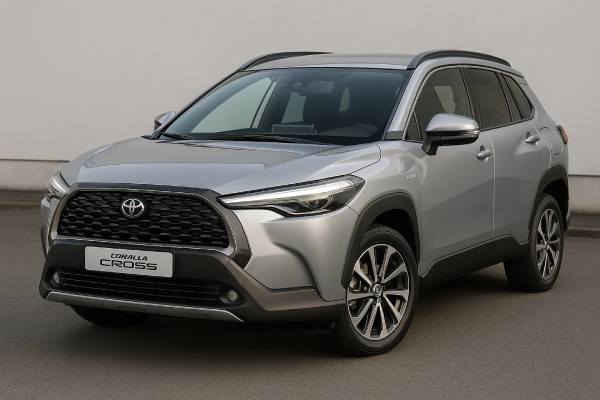
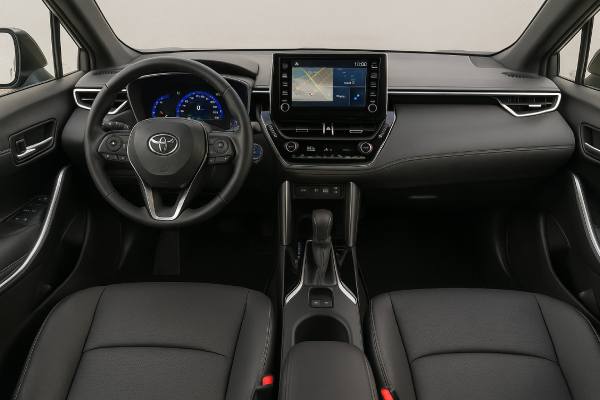
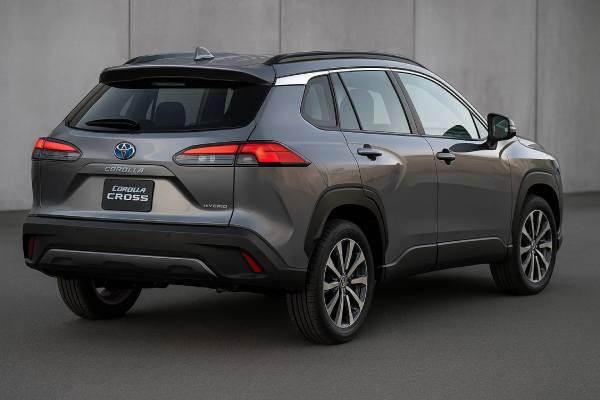
The Corolla Cross 1.8 Hybrid brings Toyota’s proven 2ZR-FXE Atkinson-cycle engine together with the fifth-generation hybrid system in a compact, family-friendly SUV package. It focuses on real-world efficiency, smooth urban drivability, and straightforward ownership. Compared with the 2.0-liter variant, this 1.8 FWD model trades outright pace for slightly better economy and a simpler torsion-beam rear suspension, which helps maximize boot space. Inside, you get Toyota’s latest driver display and infotainment hardware, broad standard safety tech, and sensible ergonomics. For buyers who want a hybrid SUV that is easy to live with, inexpensive to run, and sized for city streets and suburban life, the 1.8 Hybrid FWD hits a sweet spot. This guide covers detailed specifications, maintenance know-how, reliability watch-outs, safety ratings, and a practical buyer’s checklist to help you choose confidently.
Fast Facts
- Calm, efficient hybrid powertrain with smooth eCVT; typical mixed economy in the mid-40s mpg (US) / ~5.0 L/100 km.
- Spacious rear seats and competitive boot (up to ~473 L VDA) thanks to FWD and compact rear suspension.
- Robust Toyota Safety Sense suite standard; easy-use controls and good outward visibility.
- Watch for software updates (brake assist/ADAS) and keep the hybrid cooling system clean.
- Oil and filter: every 10,000 miles / 12 months (15,000 km / 12 months), whichever comes first.
Navigate this guide
- Corolla Cross 1.8 Hybrid explained
- Technical specs: 1.8 Hybrid FWD
- Corolla Cross 1.8: trims and safety
- Reliability, issues and actions
- Maintenance and buyer’s guide
- Driving, performance and economy
- How it compares to rivals
Corolla Cross 1.8 Hybrid explained
Toyota’s 1.8-liter hybrid Corolla Cross (model code ZVG10) packages the brand’s best-selling hybrid hardware in a right-sized crossover. The 2ZR-FXE four-cylinder uses an Atkinson cycle for efficiency, paired with a permanent-magnet traction motor and a compact lithium-ion battery. The result is a combined 140 hp (103 kW), delivered through Toyota’s eCVT (electronic continuously variable transmission) to the front wheels. The powertrain’s emphasis is smoothness and low consumption rather than outright acceleration; most owners value its easy pace, whisper-quiet urban running, and the ability to surf traffic on electric assist.
The chassis keeps things simple: MacPherson struts up front and a torsion-beam rear axle tuned for stability and packaging. While the AWD-i 2.0-liter variant gains a multi-link rear and more power, this FWD 1.8 sticks with a lighter, less complex setup and offers the biggest cargo volume of the range. Dimensions place the Corolla Cross neatly between Toyota’s C-HR and RAV4, making it an easy fit for garages and tight streets but roomy enough for family trips.
Inside, the vehicle brings a 10.5-inch infotainment screen (market/grade dependent) and a 12.3-inch driver display on higher trims, fast-pairing smartphone connectivity, and Toyota Safety Sense with lane-centering, adaptive cruise, and robust AEB. The cabin design favors practicality: clearly marked climate controls, charging points within reach, and seat heights friendly to child-seat loading and seniors alike. Running costs are predictably low—hybrids minimize brake and transmission wear, and Toyota’s service schedule is straightforward. For buyers who prioritize reliability, fuel economy, and space efficiency over sportiness, the 1.8 Hybrid FWD is the sensible choice.
Technical specs: 1.8 Hybrid FWD
Powertrain and Efficiency
| Item | Detail |
|---|---|
| Engine code | 2ZR-FXE (Atkinson-cycle) |
| Layout & valvetrain | Inline-4, DOHC, 4 valves/cyl |
| Bore × stroke | 80.5 × 88.3 mm (3.17 × 3.48 in) |
| Displacement | 1.8 L (1798 cc) |
| Induction / fuel | Naturally aspirated / MPI + DI (market-dependent calibration) |
| Compression ratio | ~13.0:1 |
| Max engine output | 98 hp (73 kW) @ ~5200 rpm |
| Max engine torque | 142 Nm (105 lb-ft) @ ~3600 rpm |
| Traction motor | PMSM, front axle |
| System output | 140 hp (103 kW) |
| High-voltage battery | Lithium-ion, compact under-rear-seat pack |
| Rated economy (combined) | ~4.9–5.0 L/100 km (48–47 mpg US / 58–56 mpg UK) WLTP |
| Real-world highway @ 120 km/h (75 mph) | ~5.5–6.0 L/100 km (43–39 mpg US / 52–47 mpg UK) typical |
| Aerodynamics | Cd not officially published for this variant |
Transmission and Driveline
| Item | Detail |
|---|---|
| Transmission | Toyota eCVT (planetary power-split) |
| Drive type | FWD |
| Final drive / ratios | eCVT has no fixed stepped ratios; effective ratio varies continuously |
| Differential | Open (front) |
| Refuel time | ~2–3 min typical gasoline fill |
Chassis and Dimensions
| Item | Detail |
|---|---|
| Platform | TNGA-C |
| Front / rear suspension | MacPherson strut / torsion-beam axle |
| Steering | Electric power steering |
| Brakes | Front ventilated discs, rear solid discs |
| Wheel / tire packages | 215/60 R17; 225/50 R18 (market/grade dependent) |
| Length / width / height | 4460 / 1825 / 1620 mm (175.6 / 71.9 / 63.8 in) |
| Wheelbase | 2640 mm (103.9 in) |
| Turning circle (curb-to-curb) | ~5.2 m (17.1 ft) |
| Curb weight (typical range) | ~1430–1490 kg (3153–3285 lb) depending on grade |
| Fuel tank | ~43 L (11.4 US gal / 9.5 UK gal) |
| Cargo volume (seats up) | up to ~473 L (16.7 ft³), VDA method |
Performance and Capability
| Item | Detail |
|---|---|
| 0–100 km/h (0–62 mph) | ~9.9–10.0 s |
| Top speed | ~170 km/h (106 mph) |
| Braking 100–0 km/h (estimate) | ~36–38 m (118–125 ft) with quality tires |
| Towing (braked) | Typically not homologated on many grades; verify by VIN/market |
| Roof load | Check cross-bar rating; ~50–75 kg (110–165 lb) common |
Fluids and Service Capacities (verify by VIN and service manual)
| System | Specification / capacity |
|---|---|
| Engine oil | Toyota-approved low-viscosity (e.g., 0W-16 or 0W-20 per climate); ~4.2 L (4.4 US qt) with filter |
| Hybrid transaxle (eCVT) | Toyota ATF WS; ~3.5–4.0 L (3.7–4.2 US qt) on drain/fill |
| Engine/inverter coolant | Toyota Super Long Life Coolant (pink), premixed 50/50; ~7 L (7.4 US qt) combined loops |
| A/C refrigerant | R-1234yf; ~0.45–0.55 kg (16–19 oz) typical |
| A/C compressor oil | ND-Oil 12; ~120 mL (4 fl oz) typical |
| Key torque examples | Oil drain plug ~39 Nm (29 lb-ft); wheel nuts ~103 Nm (76 lb-ft) |
Electrical
| Item | Detail |
|---|---|
| Alternator | None (DC–DC converter from HV system) |
| 12-V battery | AGM, ~45–50 Ah (case LN1/H4; verify by VIN) |
| Spark plugs | Iridium long-life; gap ~0.7–0.8 mm |
Safety and Driver Assistance
| Item | Detail |
|---|---|
| Crash ratings | Euro NCAP: 5 stars; Adult 85%, Child 83%, VRU 87%, Safety Assist 82% |
| Headlights (regional tests) | Performance varies by lamp spec; LED projectors typically Good/Adequate in comparable testing |
| ADAS suite | Toyota Safety Sense (AEB car/ped/cyclist, ACC with stop/go, lane-centring, LTA/LKA, TSR); blind-spot monitoring and rear cross-traffic alert available by grade |
| Airbags and child seats | Front, side, curtain, driver’s knee, and (market-dependent) centre airbag; ISOFIX/LATCH outboard rear with top tethers |
Corolla Cross 1.8: trims and safety
Trims and options
Grade names vary by market, but equipment logic is consistent:
- Entry/Mid grades: 17-inch alloys, LED headlamps, fabric seats, manual tailgate, 8–10.5-inch multimedia with smartphone integration, reversing camera, front/rear parking sensors.
- Upper grades: 18-inch wheels, power driver’s seat with lumbar, heated front seats and wheel, panoramic roof, power tailgate with kick sensor, wireless charging, 12.3-inch driver display, ambient lighting.
- Appearance/handling packs (market-dependent): GR SPORT trim with unique bumpers, badging, suede/leather-like upholstery, sport seats, and 18-inch wheel design.
Mechanical distinctions by trim
- All 1.8 Hybrid FWD grades share the same core powertrain (140 hp system output) and torsion-beam rear axle.
- Wheel/tire packages are the main mechanical variable; 17-inch sets ride softer and are quieter on coarse asphalt, while 18-inch sets respond a touch faster but transmit more impact noise.
Quick identifiers
- VIN/model code ZVG10 for 1.8 HEV FWD.
- Badging: “Hybrid” script on front fenders and tailgate; some markets add “HEV 140” or equivalent in marketing literature.
- Interior tells: on higher grades, look for the 12.3-inch digital cluster and larger 10.5-inch center screen.
Year-to-year notes (2023–2024)
- Launch hardware includes the fifth-generation hybrid system, lithium-ion HV battery, and the newest Toyota Safety Sense generation for this model line.
- Over-the-air or dealer-applied firmware updates address items such as brake assist logic and camera/radar calibrations; ensure the vehicle is current (dealer can verify by VIN).
- Some markets added GR SPORT styling for 2024 and expanded color/trim choices.
Safety ratings
- Euro NCAP tested the Corolla Cross to a 5-star result with strong AEB pedestrian/cyclist performance and effective side-impact protection. The rating applies across variants with standard safety equipment.
- In comparable North American testing for the Corolla Cross line, ratings are generally strong; specifics vary with headlight type and trim, so confirm the exact lamp package when cross-shopping.
Safety systems and ADAS in practice
- AEB (Forward Pre-Collision) detects vehicles, pedestrians, and cyclists; junction assist is included on most markets.
- Adaptive Cruise + Lane Tracing Assist effectively centers the car, though lane edges and worn markings can reduce fidelity—keep hands on the wheel and attention up.
- Blind-spot monitor and Rear Cross-Traffic Alert are widely available; radar calibration is required after rear repairs.
- Child seats: Two ISOFIX/LATCH anchors in the outboard rear positions with top tethers; the rear bench height makes installation straightforward.
Reliability, issues and actions
Toyota’s 1.8 hybrid hardware has a long track record for durability. Most issues are minor and software-related rather than mechanical. Map the following by prevalence and cost:
Common (low–medium cost)
- Brake assist calibration: Some vehicles required a skid-control ECU (brake) software update to ensure consistent brake assist under specific conditions. Symptom: warning lights, reduced assist feel. Remedy: dealer software update; verify by VIN.
- Infotainment quirks: Occasional freezes or Bluetooth misbehavior. Remedy: firmware update; hard reset; ensure latest smartphone OS.
- Wind noise / trim creaks: Most noticeable with 18-inch wheels on coarse surfaces. Remedy: door seal alignment, lube, panel clip seating.
Occasional (medium cost)
- 12-V battery fatigue: Short-trip, high-accessory use can drain the small AGM battery. Symptom: slow booting multimedia, warning messages on start. Remedy: quality replacement battery; check DC-DC charging.
- Hybrid cooling loop contamination: Debris or aged coolant can reduce inverter cooling. Symptom: reduced hybrid power under load, warnings in hot weather. Remedy: coolant exchange with the correct SLLC; ensure radiator fins are clear.
Rare (higher cost)
- Water pump seep (engine or inverter pump) at higher mileage. Symptom: pink residue, low coolant in reservoir. Remedy: pump replacement and bleed.
- Front wheel bearing noise on rough roads. Symptom: speed-dependent humming that changes in turns. Remedy: bearing/hub replacement.
Software and calibrations
- Ensure ADAS camera/radar are calibrated after windscreen replacement or front-end repairs.
- Apply PCM/TCM/eCVT and infotainment software updates as they become available; dealers can see open campaigns or service bulletins linked to your VIN.
Hybrid-specific health
- The lithium-ion HV battery is thermally managed and historically robust. Keep cabin air filters fresh (shared intake paths on some layouts) and avoid blocking rear-seat intakes. A high-quality battery state-of-health check is recommended for high-mileage used cars.
Driveline/chassis
- eCVT is mechanically simple; fluid shear and magnet fuzz accumulate slowly. A preventive ATF WS drain-and-fill around 60,000–90,000 miles (100,000–150,000 km) can help long-term smoothness, even where “lifetime” is stated.
- Suspension bushes and drop links last well under normal use; listen for clunks over speed bumps as mileage climbs.
Recalls, TSBs, extended coverage
- Headline action for this generation includes brake-assist ECU software on certain build ranges. Always run an official VIN recall check and ask for a dealer printout showing completed campaigns and calibration levels.
Pre-purchase requests
- Full service history (annual/15,000-km services).
- Confirmation of recall/software completion, including brake ECU and Safety Sense updates.
- Recent coolant and brake fluid dates; tire age and tread; proof of quality windscreen replacement (if any) with camera calibration certificate.
- Hybrid battery health report where available.
Maintenance and buyer’s guide
Practical maintenance schedule (time/distance = whichever comes first; verify by VIN/market)
- Engine oil and filter: every 10,000 miles / 12 months (15,000 km / 12 months). Use Toyota-approved 0W-16 or 0W-20 (climate dependent).
- Cabin air filter: 12 months / 15,000–20,000 km; more often in dusty or urban stop-and-go use.
- Engine air filter: 24–36 months / 30,000–45,000 km; inspect annually.
- Brake fluid: 24 months regardless of mileage. Hybrids rely on ABS pump modulation; moisture control matters.
- Coolant (engine and inverter loops): 100,000 miles / 10 years first change, then 50,000 miles / 5 years (or local spec).
- Spark plugs (iridium): 120,000 miles / 10 years; inspect at 60,000 miles in harsh conditions.
- Hybrid transaxle ATF WS: No fixed interval required by many manuals; 60,000–90,000 miles preventive drain-and-fill is prudent for longevity.
- Serpentine/aux belt: Inspect 30,000–60,000 miles; replace if cracked/noisy.
- Wheel alignment and tire rotation: Rotate every 10,000 miles / 15,000 km; align annually or after impacts.
- 12-V battery: Test annually after year three; typical replacement window 4–6 years.
- HV system checks: Visuals on orange-cable integrity, battery cooling inlets, and inverter coolant level at each service.
Fluids, capacities, essentials (decision-making snapshot)
- Engine oil: ~4.2 L (4.4 qt) with filter; torque drain plug ~39 Nm (29 lb-ft).
- eCVT ATF WS: ~3.5–4.0 L on drain/fill; fill level set by temperature procedure.
- Coolant: Toyota SLLC (pink) premix; total combined capacity ~7 L (7.4 qt).
- Fuel: Unleaded RON 95 recommended (AKI 91 US); tank ~43 L.
- A/C refrigerant: R-1234yf; charge ~450–550 g; compressor oil ND-Oil 12 ~120 mL.
DIY notes and torque values
- Use the factory jack points; a central front jack point and two rear arm points are typical.
- Wheel nuts ~103 Nm (76 lb-ft); always re-torque after tire service.
- After any windshield/bumper work, ADAS calibration is mandatory (static and/or dynamic).
Buyer’s checklist
- Exterior/body: check panel gaps (especially tailgate), bumper tabs, windshield for calibration marks/date.
- Tires and brakes: avoid mismatched tires (hurts hybrid traction logic); inspect pads/rotors for uneven wear (city hybrids can corrode rotors).
- Cooling: look for pink residue around pumps and hose joints; radiator fins clear.
- Cabin: verify all USB/charging points, camera mirrors (if fitted), and seat heater operation.
- Drive: confirm silent EV take-off, smooth engine start/stop, no shudder on gentle acceleration, straight tracking and tight on-center feel.
- Software: ask dealer to print calibration IDs showing current ECU/ADAS versions.
Which year/trim to target
- 2024 cars often have the broadest software maturity and the widest grade selection (including GR SPORT styling where offered).
- Choose 17-inch wheels for comfort and winter tire availability; 18-inch for sharper response and aesthetics.
- Prioritize cars with full service records and proof of brake ECU and Safety Sense updates.
Durability outlook
- With annual maintenance and periodic fluid refreshes, the 1.8 HEV powertrain is known to exceed 200,000 miles (320,000 km) with minimal degradation. Most long-term costs are wear-and-tear items, not major drivetrain repairs.
Driving, performance and economy
Ride, handling, NVH
The 1.8 Hybrid FWD rides quietly and compliantly on 17-inch tires; impacts are rounded off and cabin boom is low at urban speeds. The torsion-beam rear favors packaging over ultimate cornering grip, but stability is excellent and body motions are well-controlled. Steering is light in town and secure on the motorway, with predictable on-center feel. Brake blending between regeneration and friction is smooth once the ECU is on the latest software; pedal consistency is easy to modulate in stop-start traffic.
Powertrain character
This powertrain excels at calm progress. Tip-in is gentle, and the eCVT keeps engine revs low during steady cruise. Full-throttle sprints produce the familiar hybrid “flare” in rpm, but traction is tidy and noise suppression good. The engine’s Atkinson timing and high compression favor efficiency; electric assist fills torque holes off the line. Drive modes (Normal/Eco/Power) adjust pedal mapping more than absolute output—Eco smooths transitions, Power sharpens response.
Real-world efficiency
- City: ~4.3–5.2 L/100 km (55–45 mpg US / 66–54 mpg UK) depending on temperature, elevation, and traffic density.
- Highway (100–120 km/h / 60–75 mph): ~5.2–6.0 L/100 km (45–39 mpg US / 54–47 mpg UK).
- Mixed: ~4.8–5.4 L/100 km (49–44 mpg US / 59–53 mpg UK).
Cold weather and short trips increase consumption until coolant and battery are warm; installing proper winter tires and using seat heaters instead of high HVAC loads helps preserve mpg.
Key performance metrics
- 0–100 km/h (0–62 mph) in ~9.9–10.0 s on 17-inch tires.
- 50–80 mph (80–120 km/h) passing is adequate when the battery is warm and charged; plan overtakes on single-carriageway roads.
- Braking from 100–0 km/h typically in the mid-30-meter range with quality all-season or summer tires.
Traction and control
- FWD traction is fine for rain and light snow on proper seasonal tires. Hill starts are drama-free thanks to electric torque from standstill. For frequent snow or hill-country towing, consider winter tires or step to the AWD-i 2.0-liter variant.
Loads and towing
- Many 1.8 FWD markets list no braked towing or a very low allowance—verify on the VIN placard and owner literature. Full cabin and boot loads are well-managed; expect a 5–10% economy penalty at motorway speeds when fully loaded.
How it compares to rivals
Versus Honda HR-V e:HEV
The HR-V’s series-parallel hybrid is smooth and frugal, but the Corolla Cross offers more rear-seat space and typically a larger boot in 1.8 FWD form. Toyota’s infotainment and app ecosystem have improved markedly and now rival Honda’s for usability.
Versus Kia Niro Hybrid / Hyundai Kona Hybrid
Niro and Kona lean a bit more toward tech-forward cabins and warranty length, while the Corolla Cross counters with a calmer ride and an efficiency edge in city use. Toyota’s resale strength is a key advantage for long-term cost of ownership.
Versus Nissan Qashqai e-Power
Qashqai’s series hybrid delivers punchy step-off torque and a “single-speed” feel; the Corolla Cross is quieter at cruise and generally more economical in mixed driving. Toyota’s ADAS tuning is less intrusive, especially on lane-keeping.
Versus Mazda CX-30
CX-30 handles better and feels premium, but non-hybrid powertrains can’t match Toyota’s urban economy. If you value low NVH and running costs, the Corolla Cross is the safer bet; if steering feel and dynamics matter most, Mazda leads.
Versus Toyota C-HR Hybrid (internal)
C-HR is more compact with a sportier stance, but its rear space and cargo area are tighter. Families will favor the Corolla Cross 1.8 FWD for room and ease of use; solo commuters may prefer the C-HR’s style and slightly sharper turn-in.
References
- The all-new Corolla Cross 2022 (Press Release)
- COROLLA CROSS 2024 (Brochure/Guide)
- НОВАТА COROLLA CROSS 2024 (Price List/Technical Data)
- Official Toyota Corolla Cross 2022 safety rating 2022 (Safety Rating)
- Toyota Announces U.S. Recall of Select 2024 Corolla Cross and Corolla Cross Hybrid Vehicles 2024 (Recall/Pressroom)
Disclaimer
This article is for informational purposes and is not a substitute for professional diagnosis, repair, or legal compliance. Specifications, torque values, capacities, and service intervals can vary by VIN, market, model year, options, and software level. Always confirm against your official owner’s manual and service documentation, and follow local regulations and safety procedures.
If you found this guide helpful, please consider sharing it with fellow owners on Facebook or X/Twitter to support xcar’s work. Thank you!