
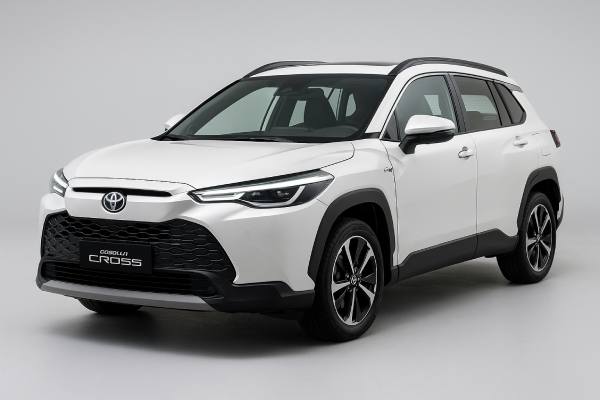
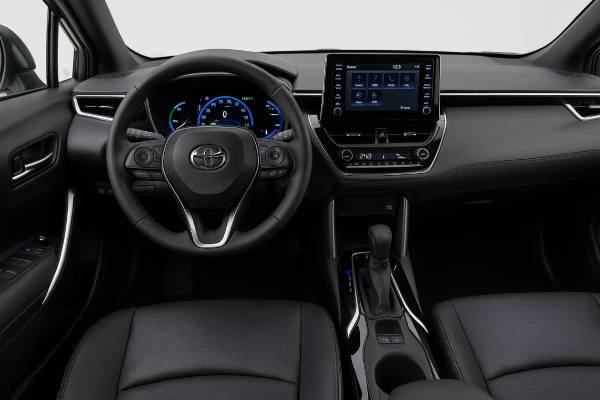
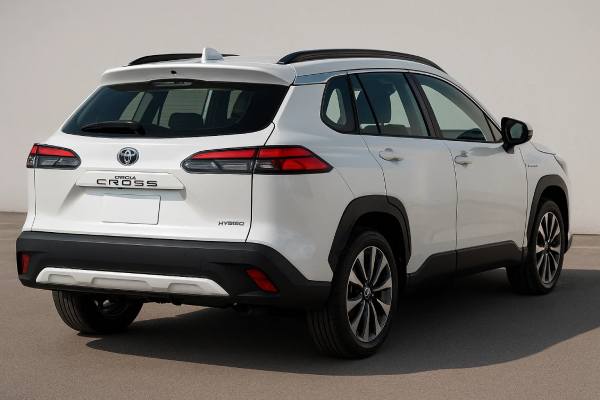
The facelifted 2025–present Toyota Corolla Cross Hybrid FWD (chassis MXGH10) builds on Toyota’s TNGA-C platform with a refined 2.0-liter M20A-FXS Atkinson-cycle engine, fifth-generation hybrid hardware, and updated active-safety software. The appeal is straightforward: efficient real-world economy, easy ownership, and a compact footprint with adult-friendly space. The 2025 refresh focuses on refinement—quieter cabin materials, revised infotainment with faster response and larger screens depending on trim, and incremental ride and NVH tuning. Compared with early model years, charging and energy flow graphics are clearer, lane support calibration is calmer on highways, and the voice assistant responds more naturally. For daily driving, the planetary eCVT’s seamless ratio changes and healthy low-speed torque make the Corolla Cross feel more responsive than the numbers suggest, especially in city traffic. If you prioritize running costs, predictable maintenance, and a crossover body that’s easy to park, this hybrid FWD variant is one of the least stressful ways to commute, road-trip, or run errands.
Fast Facts
- Strong economy for a non-plug-in hybrid; relaxed low-rpm torque suits city use.
- Comfortable ride and tidy footprint; simple controls and excellent visibility.
- Toyota Safety Sense with broad ADAS coverage; good crash-test performance lineage.
- Watch for brake service on salt-belt cars; hybrids can see rotor corrosion with light use.
- Oil and filter: every 10,000 miles / 12 months (16,000 km / 12 months), with inspections at 5,000 miles (8,000 km).
Contents and shortcuts
- Corolla Cross Hybrid FWD overview
- Specs and technical data
- Trims, safety and driver aids
- Reliability and service actions
- Maintenance and buyer’s guide
- Driving impressions and economy
- Corolla Cross versus rivals
Corolla Cross Hybrid FWD overview
This facelifted Corolla Cross Hybrid FWD targets owners who want the classic Toyota hybrid equation—low operating costs and high dependability—packaged as a compact crossover with a slightly taller seat height than a hatchback. The MXGH10 variant uses the M20A-FXS 2.0-liter Atkinson-cycle four-cylinder paired with a traction motor and planetary eCVT. Compared with non-hybrid Corolla Cross models, the hybrid’s step-off response is stronger at low speeds thanks to electric assist, and its city economy advantages become obvious the moment traffic slows. The facelift brings cleaner exterior detailing, a tidier grille treatment, and updated lighting depending on trim. Inside, you’ll find improved graphics, quicker infotainment response, wireless smartphone integration, and a more polished voice assistant. Toyota’s latest driver-assistance tuning reduces ping-ponging in lane centering and tempers unwelcome speed changes in adaptive cruise.
Practicality remains a highlight. Adults fit comfortably in the second row; the cargo bay floor is low and square, and tie-down points are sensibly placed. The rear seatbacks fold nearly flat in a 60/40 split, and the load lip is manageable for groceries, strollers, or camping gear. Ride quality is supple for the class and tire roar is kept in check on typical asphalt. The hybrid system is unobtrusive; at light throttle the engine cycles on and off without drama, while the eCVT avoids droning unless you demand full power up a grade. If you commute year-round, the FWD hybrid’s snow performance will largely depend on tire choice; all-seasons are fine for mild climates, but dedicated winter tires transform cold-weather traction and braking.
Ownership experience is straightforward. There’s no plugging in, service intervals are long, and most consumables are inexpensive. As with any hybrid, plan periodic brake clean-and-lube to prevent rotor rust from the system’s high regenerative-braking bias. Beyond that, keep the 12-volt battery healthy, follow the coolant service schedule, and the Corolla Cross Hybrid FWD will quietly rack up years of duty with minimal fuss.
Specs and technical data
Below are consolidated specifications for the 2025–present Corolla Cross Hybrid FWD (MXGH10). Figures reflect the facelifted model and typical equipment; small variances by trim, market certification, and wheel/tire package are normal.
Powertrain & Efficiency (Hybrid)
| Item | Spec |
|---|---|
| Engine code | M20A-FXS (Atkinson-cycle) |
| Layout & valvetrain | Inline-4, DOHC, 16 valves, VVT-iE (intake) and VVT-i (exhaust) |
| Bore × stroke | 80.5 × 97.6 mm (3.17 × 3.84 in) |
| Displacement | 2.0 L (1,987 cc) |
| Induction | Naturally aspirated |
| Fuel system | D-4S dual injection (direct + port) |
| Compression ratio | ~14.0:1 |
| Traction motor | Permanent-magnet synchronous (front axle) |
| System voltage | ≈ 240–270 V nominal |
| Hybrid battery | Lithium-ion (typical), compact under-seat pack |
| Max system power | 178 hp (133 kW) |
| Max engine torque | ~188 Nm (139 lb-ft) @ 4,400–5,200 rpm (engine only) |
| Timing drive | Chain |
| Emissions standard | Meets current EPA/Euro 6d requirements (market-dependent) |
| Rated economy (combined) | ~5.0–5.5 L/100 km (47–43 mpg US / 56–52 mpg UK), wheel/tire dependent |
| Real-world highway @ 120 km/h (75 mph) | ~5.9–6.5 L/100 km (40–36 mpg US / 48–43 mpg UK), weather/topography dependent |
| Aerodynamics | Cd ≈ 0.33–0.34; frontal area ≈ 2.3 m² (24.8 ft²) |
Notes: Hybrid net output is a system value, not a simple sum of engine + motor. Economy varies with wheel size and ambient temperature; winter sees a modest decrease until the powertrain is fully warmed.
Transmission & Driveline
| Item | Spec |
|---|---|
| Transmission | Planetary eCVT (hybrid power-split) |
| Drive type | Front-wheel drive (FWD) |
| Final drive | ~3.38:1 (hybrid transaxle reduction; overall varies by speed/load) |
| Differential | Open front differential |
| Refuel to full | ~5 minutes at the pump (gasoline) |
Chassis & Dimensions
| Item | Spec |
|---|---|
| Platform | TNGA-C |
| Front/rear suspension | MacPherson strut / multi-link |
| Steering | Electric power assist; ~14.5:1 ratio (typical) |
| Brakes | 4-wheel disc (vented front, solid rear); integrated regen |
| Typical rotor diameters | Front ≈ 295–305 mm (11.6–12.0 in); Rear ≈ 270–281 mm (10.6–11.1 in) |
| Wheel/Tire packages | 215/60R17 or 225/50R18 on 17–18 in alloys |
| Ground clearance | ≈ 200–205 mm (7.9–8.1 in) |
| Length × width × height | ≈ 4,460 × 1,825 × 1,620 mm (175.6 × 71.9 × 63.8 in) |
| Wheelbase | 2,640 mm (103.9 in) |
| Turning circle (curb-to-curb) | ≈ 10.6 m (34.8 ft) |
| Curb weight | ≈ 1,450–1,520 kg (3,197–3,351 lb) |
| GVWR | ≈ 2,000–2,050 kg (4,409–4,519 lb) |
| Fuel tank | ≈ 40 L (10.6 US gal / 8.8 UK gal) |
| Cargo volume (seats up/down) | ≈ 600–1,700 L (21–60 ft³) VDA/SAE method varies by market/trim |
Performance & Capability
| Item | Spec |
|---|---|
| 0–100 km/h (0–62 mph) | ~8.8–9.2 s |
| Top speed | ~180 km/h (112 mph) |
| 100–0 km/h braking | ~36–38 m (118–125 ft), tire-dependent |
| Towing capacity | Up to ~680 kg (1,500 lb) braked (market-dependent) |
| Payload | ~450–520 kg (990–1,150 lb), trim-dependent |
| Roof load | ~70–75 kg (154–165 lb) with approved crossbars |
Fluids & Service Capacities
| System | Specification | Capacity |
|---|---|---|
| Engine oil | Toyota-approved 0W-16 (API SP / ILSAC GF-6B) | ~4.4–4.7 L (4.6–5.0 qt) with filter |
| Engine coolant | Toyota Super Long Life Coolant (pink), premix 50/50 | ~5–7 L (5.3–7.4 qt) engine loop |
| Inverter/e-motor coolant | Toyota SLLC (shared or separate loop by market) | ~1.5–2.0 L (1.6–2.1 qt) |
| eCVT/transaxle | Toyota WS (where drain/fill specified) | ~3–4 L (3.2–4.2 qt) typical drain |
| A/C refrigerant | R-1234yf | ~400–500 g (14–18 oz) |
| A/C compressor oil | ND-Oil 12 | ~60–120 mL (2.0–4.1 fl oz) |
| Key torque (lug nuts) | 103 Nm (76 lb-ft) |
Electrical
| Item | Spec |
|---|---|
| 12-V battery | ~45–50 Ah AGM/flooded (group size varies) |
| Spark plugs | Iridium, long-life (e.g., Denso/NGK equivalent), gap ~0.7–0.8 mm (0.028–0.031 in) |
| Alternator | Not applicable (DC-DC converter from HV battery) |
Safety & Driver Assistance
| Item | Spec |
|---|---|
| Crash-test performance | Strong small-SUV results for the Corolla Cross line in IIHS/Euro NCAP testing; configurations vary by year/equipment. |
| Headlights | LED projectors; performance grade varies by trim/aim |
| Toyota Safety Sense | Pre-collision with pedestrian/cyclist detection, adaptive cruise, lane departure alert with steering assist, lane tracing assist, road sign assist |
| Blind-spot / RCTA | Available/standard by trim |
| Parking aids | Rear camera standard; front/rear sonar and auto-braking by trim |
| Airbags | Front, side, curtain, driver’s knee, front-center (market/trim dependent) |
| Child-seat | ISOFIX/LATCH anchors with clearly marked top tethers |
Safety ratings and equipment levels can vary by trim and year; confirm exact hardware in the vehicle build sheet.
Trims, safety and driver aids
Trims and options. Expect a familiar Toyota grade walk, typically starting with a well-equipped base (LED lights, Toyota Safety Sense, 17-inch wheels, cloth), stepping to mid-grades (power driver seat, dual-zone climate, roof rails, blind-spot monitoring, 18-inch wheels), and capping with a top trim (synthetic leather, larger touchscreen—up to ~10.5 in on certain markets—premium audio, heated front seats/steering wheel, and convenience features like a power liftgate). Wheel/tire packages are the main dynamic swing: 17-inch wheels on higher-profile tires ride softer and are quieter; 18-inch wheels look sharper but add a trace more road texture.
Functional differences by trim. Brake hardware and final drive are common across grades, but upper trims can add features that subtly change use: fully keyless entry on all doors, auto-dimming mirror with HomeLink, and extra USB-C ports for passengers. Some markets offer a panoramic roof; if you carry tall rear passengers or use larger child seats, note that headroom can decrease slightly under the glass.
Infotainment and audio. The facelift ushers in faster processors, a more responsive capacitive screen, wireless Apple CarPlay/Android Auto, and improved voice recognition. Base audio is clear enough for podcasts and talk; the optional branded system (where offered) adds a center channel and more power for denser mixes. Over-the-air updates can refine voice, navigation data, and safety-system behaviors.
Safety ratings. The Corolla Cross line has recorded strong lab results in recent crash programs; headlights and ADAS tuning have seen year-to-year adjustments. For families, pay attention to the specific headlight package on your trim (performance can differ) and verify child-seat fit; Toyota’s rear outboard anchors are easy to access, but bulky rear-facing seats may benefit from a seat-back recline tweak to achieve a perfect install.
ADAS and calibration notes. The pre-collision system with pedestrian and cyclist detection is standard. Lane tracing assist is calmer post-facelift, with less abrupt steering input on gentle bends. After windshield replacement or bodywork affecting bumper radars/cameras, expect an ADAS calibration procedure—budget time and cost accordingly. If you see persistent warnings (lane or pre-collision), check camera alignment, bumper fascia fit, and ensure genuine emblems; some aftermarket grilles interfere with radar performance.
Child-seat and cargo. The cargo bay’s square aperture makes strollers and travel cribs easy to load; the split-fold second row expands space for occasional large hauls. For frequent family road trips, consider roof bars and a box; observe the 70–75 kg roof load limit including bars and box.
Reliability and service actions
Overall picture. Toyota’s fifth-generation hybrid drive in the Corolla Cross is engineered for high duty cycles with low wear. Most owners experience routine consumables only—tires, brake pads (slowly, due to regen), cabin/engine filters, and wiper blades. The M20A-series uses a timing chain (no belt), thermally efficient Atkinson combustion, and durable ignition coils/plugs designed for long intervals.
Common / occasional / rare items (by prevalence and cost):
- Common, low cost:
- Brake rotor corrosion (light-use city cars): Symptoms include pulsation or surface rust banding after long sits. Remedy: Clean-and-lube the caliper slides at tire rotations; perform periodic firm stops to refresh rotor faces; replace rotors/pads when thickness or runout is out of spec.
- Cabin air filter clogging: Reduced HVAC flow, musty odor. Remedy: Replace every 12 months/15,000 miles (24,000 km) in dusty or urban settings.
- Occasional, medium cost:
- 12-V battery aging (3–5+ years): Random warning lights, unstable infotainment reboots. Remedy: Load-test annually after year three; replace with correct spec/venting.
- Wheel-speed sensor wiring exposure in harsh climates: Intermittent ABS/VSC lights. Remedy: Inspect harness routing/clips; replace sensor or pigtail.
- Rare, higher cost:
- Inverter coolant pump noise or reduced flow (high mileage): Overheating faults under heavy load. Remedy: Test pump command/flow; replace pump and bleed hybrid loop properly.
- HV battery module variance (very high mileage or extreme heat): Reduced EV assist and stored codes. Remedy: Confirm state-of-health; under warranty, module or pack replacement per Toyota procedure.
Oil consumption & PCV. The M20A-series is not known for systemic oil use, but any engine can consume oil with extended OCIs or sustained high rpm. Check level monthly; if you see >0.5 L per 5,000 miles (8,000 km), inspect for PCV sticking and verify correct oil grade (0W-16).
Cooling system. Hybrids have engine and inverter/e-motor coolant circuits. Pink Toyota SLLC is long-life but not lifetime; neglect can lead to water pump seepage or electrical component stress. Follow the interval and fully bleed air after service.
Software updates. Toyota periodically refines hybrid ECU, TSS (safety), and multimedia software. These updates can improve throttle mapping, adaptive cruise smoothness, lane tracing centering, camera detection, and infotainment stability. During scheduled service, ask the dealer to check for campaigns or calibrations applicable to your VIN.
Recalls/TSBs. Run any candidate’s VIN through the official recall portal and ask for a dealer service history printout. Prior field actions (for example, sensor-related warnings or calibration updates) should be recorded with completion dates. For used-vehicle purchases, verified documentation is a plus.
Pre-purchase checklist.
- Cold start: listen for rattles, belt chirps, or pump noises; ensure the engine transitions smoothly on/off.
- Hybrid operation: verify EV assist engages quietly; no grinding or whine beyond normal eCVT sounds.
- Brakes: check for vibration and uneven rotor faces; look for pad taper.
- Underside: inspect rear subframe and brake lines for corrosion (salt-belt cars).
- Electronics: confirm all ADAS cameras/sensors report ready; check for windshield replacement (look for OEM glass and properly mounted camera shroud).
- Tires: even wear and recent alignment are good signs; mismatched tires can upset hybrid ABS/traction logic.
Maintenance and buyer’s guide
Practical maintenance schedule (time/distance, whichever comes first):
- Engine oil & filter: 10,000 miles / 12 months (16,000 km / 12 months) using Toyota-approved 0W-16. Severe service (short trips, dusty, extreme cold/hot): 5,000 miles / 6 months (8,000 km / 6 months).
- Engine air filter: Inspect 10,000 miles (16,000 km); replace 30,000–45,000 miles (48,000–72,000 km) or sooner in dusty areas.
- Cabin filter: 12 months or 15,000–20,000 miles (24,000–32,000 km).
- Spark plugs (iridium): 100,000–120,000 miles (160,000–192,000 km).
- Brake fluid: Replace every 3 years regardless of mileage.
- Coolant (engine and inverter loops): First replacement typically around 100,000–120,000 miles (160,000–192,000 km) or 10 years, then every 50,000–60,000 miles (80,000–96,000 km) / 5 years; confirm by market.
- eCVT/transaxle fluid (WS): Many markets list “inspect” only; a preventive drain/fill at 60,000–100,000 miles (96,000–160,000 km) is reasonable for longevity.
- Drive belts/hoses: Inspect at every oil change; replace if cracked, noisy, or glazed.
- Tires: Rotate every 5,000–7,500 miles (8,000–12,000 km). Perform a 4-wheel alignment annually or if you see edge wear/pull.
- Brakes: Clean/lube slide pins at each rotation; hybrids benefit from periodic firm stops to keep rotor faces clean.
- 12-V battery: Test yearly after year three; typical replacement window 4–6 years.
- HV system checks: Visual inspection of cooling inlets/ducting; confirm no debris blocking battery cooling paths. Specialized state-of-health testing is usually not required unless a DTC is set.
Fluid specifications and quick picks:
- Engine oil: 0W-16, API SP / ILSAC GF-6B; aluminum crush washer on drain bolt; torque the plug to ~39 Nm (29 lb-ft).
- Lug nuts: 103 Nm (76 lb-ft).
- Coolant: Toyota SLLC (pink) prediluted.
- Brake fluid: DOT 3 or DOT 4 per cap label (use fresh, sealed containers).
- Transaxle: Toyota WS ATF (only if performing a drain/fill).
Buyer’s guide—what to look for:
- Service records: Oil changes by time even with low mileage; periodic brake service; any coolant/transaxle service noted.
- ADAS calibration proof: If windshield was replaced, documentation of camera calibration is a confidence builder.
- Tires and wheels: Even wear, matching brands/sizes; curb rash suggests parking knocks—inspect suspension and alignment.
- Undercarriage: Salt-belt cars—check subframe seams, brake lines, rear control-arm mounts.
- Interior electronics: Confirm wireless CarPlay/Android Auto connects quickly; verify USB-C ports charge at rated power.
- Spare and tools: Some trims use a repair kit; if you want a compact spare, ensure the car includes one or budget for retrofit.
Durability outlook. With clean fluids, a charged 12-V battery, and preventive brake service, a Corolla Cross Hybrid FWD should deliver 10–15 years of reliable use. Hybrid components are designed for life-of-vehicle service; in high-mileage cars, cooling pumps and wheel bearings are the likeliest major replacements.
Driving impressions and economy
Ride, handling, NVH. The Corolla Cross Hybrid FWD favors comfort over theatrics. The multi-link rear keeps mid-corner bumps tidy, and the electric power steering tracks straight without twitchiness. On 17-inch wheels, impacts are well rounded; 18-inch wheels add a hint more texture without becoming harsh. Wind noise is modest at legal highway speeds, and engine noise is restrained unless you demand full acceleration up a long grade—typical for eCVTs, where the engine settles at an efficient rpm.
Powertrain character. Step-off torque feels stronger than the paper numbers imply because the traction motor does the initial heavy lifting. The eCVT blends engine power gradually, avoiding shift shock and keeping revs low in casual driving. Sport mode sharpens pedal mapping for city gaps and on-ramp bursts; Eco mode softens starts and prioritizes early engine shutoff. Brake-pedal feel is consistent for a hybrid—the top of the pedal harvests energy through the motor; as you press deeper, the system layers in hydraulic braking. Transition tuning post-facelift is smooth, and calibration updates have improved linearity in stop-and-go traffic.
Real-world economy. Around town, expect 4.6–5.3 L/100 km (51–44 mpg US / 61–53 mpg UK) depending on climate and route. On the highway at 100–120 km/h (60–75 mph), anticipate 5.6–6.6 L/100 km (42–36 mpg US / 50–43 mpg UK); headwinds, winter tires, and cold temps raise consumption. Mixed driving commonly lands near the low-5s L/100 km (low- to mid-40s mpg US). In cold climates, preheating the cabin while driving (not idling) and using seat heaters instead of blasting HVAC helps preserve economy.
Key performance notes.
- 0–60 mph / 0–100 km/h: roughly high-8s to low-9s with one driver and ~50% fuel.
- 50–80 mph (80–120 km/h) passing: adequate with a decisive throttle; plan a down-assist stretch or a short following gap on two-lanes.
- Braking consistency: firm, confidence-inspiring; if you sense a soft initial bite after a week of short trips, clean the rotors with a few medium-firm stops from ~60 km/h (40 mph) in a safe area.
- Load and towing: With a 1,500-lb (680-kg) trailer, expect a ~15–25% economy penalty depending on speed and terrain; monitor coolant temps and follow weight-distribution guidance.
Corolla Cross versus rivals
Honda HR-V Hybrid (regional): Where available, the HR-V hybrid emphasizes a more driver-centric feel with a slightly firmer ride. Toyota counters with a friendlier maintenance profile, broader dealer network, and a more mature hybrid lineage. Cargo space and rear-seat room are competitive; Toyota’s infotainment and voice assistant are now on par.
Hyundai Kona Hybrid / Kia Niro: These emphasize tech value and infotainment features. They can match or exceed the Corolla Cross in display size and options, but Toyota’s long-term hybrid track record, parts availability, and resale values remain compelling. Ride comfort is a Corolla Cross strength, especially on 17-inch wheels.
Subaru Crosstrek Hybrid (PHEV, regional): Offers limited EV-only range but is heavier and costlier. The Corolla Cross Hybrid FWD is simpler to own and more efficient for drivers without regular charging access. If you live in a snow-belt and want all-wheel traction, compare the AWD variants directly or budget for winter tires on the FWD hybrid.
Non-hybrid small SUVs (RAV4, CR-V base, Taos, Seltos, Trax): Gas-only models may undercut price, but the hybrid Corolla Cross typically wins TCO over 3–10 years thanks to fuel savings and strong residuals. For short urban hops, the hybrid’s smooth stop-start and low-speed torque make it feel more refined day to day.
References
- What’s New for 2025: Toyota Model Year Guide 2025 (Model Year Overview)
- 2025 Toyota Corolla Cross Hybrid | Toyota 2025 (Model Page)
- Toyota Corolla Cross 2022 2022 (Safety Rating)
- Vehicle Recalls | NHTSA 2025 (Recall Database)
Disclaimer
This guide is for informational purposes only and is not a substitute for professional diagnosis, repair, or official service literature. Specifications, torque values, fluid types, and maintenance intervals vary by VIN, market, trim, and equipment. Always confirm against your vehicle’s owner’s manual and official service documentation before performing any service.
If you found this helpful, please consider sharing it with fellow owners on Facebook, X/Twitter, or your favorite forum—your support helps xcar keep producing detailed, people-first guides.