

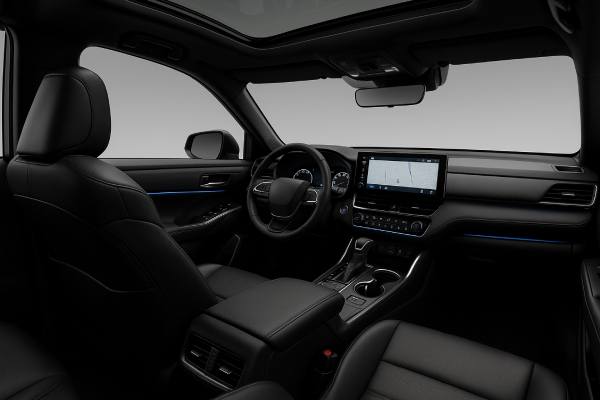
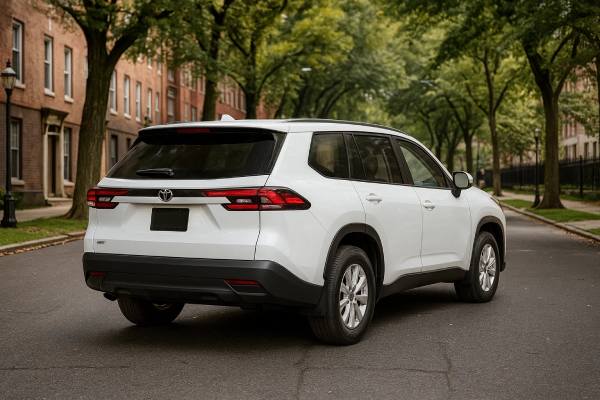
The Toyota Grand Highlander Hybrid with Electronic On-Demand AWD (internal code AASH15) is the family-size Toyota that prioritizes space, calm road manners, and real-world efficiency over drama. Built on Toyota’s TNGA-K architecture, it pairs the Atkinson-cycle 2.5-liter A25A-FXS engine with dual electric motors and an e-axle on the rear for traction when you need it—without the weight and drag of a mechanical driveshaft. It seats seven or eight, tows up to 3,500 lb (1,588 kg), and returns excellent fuel economy for a true three-row SUV. Owners like the low running costs, gentle brake wear from strong regenerative braking, and the long hybrid battery warranty. Technicians appreciate the familiar Toyota hybrid layout and generous service access. If you want the most adult-friendly third row in the segment with minivan-rivaling cargo space and a stress-free ownership experience, this is the pragmatic sweet spot of the Grand Highlander range.
Top Highlights
- Spacious three-row interior and up to 97.5 ft³ (2,763 L) cargo with seats folded; adult-usable third row.
- Electronic On-Demand AWD adds traction via a dedicated rear e-motor with no driveshaft complexity.
- EPA 34 mpg combined (6.9 L/100 km) AWD; low brake wear thanks to strong regen.
- Caveat: headlight rating Acceptable in IIHS testing; winter tyres strongly recommended for snowbelt areas.
- Typical maintenance anchor: engine oil and filter every 10,000 miles / 12 months under normal service.
Explore the sections
- Grand Highlander AASH15 Detailed Overview
- AASH15 Specifications and Technical Data
- Trims, Options, Safety and ADAS
- Reliability, Common Issues and Service Actions
- Maintenance and Buyer’s Guide
- Driving and Performance
- How Grand Highlander Compares to Rivals
Grand Highlander AASH15 Detailed Overview
The Grand Highlander Hybrid Electronic On-Demand AWD (AASH15) is Toyota’s most family-oriented three-row hybrid SUV. Compared with the standard Highlander, the Grand Highlander rides on a 116.1-in (2,950-mm) wheelbase and stretches to 201.4 in (5,116 mm) overall length, unlocking an adult-usable third row and a near-flat load floor when the second and third rows are folded. The cabin emphasizes simple ergonomics—physical controls for core functions, a wide center console with deep storage, and abundant USB-C ports across rows.
Under the hood, the A25A-FXS 2.5-liter inline-four operates on an Atkinson cycle to prioritize thermal efficiency. Up front, it works with a motor-generator unit inside an eCVT (power-split device). A separate rear e-axle engages instantly to add traction and yaw authority on slippery launches or mid-corner corrections; when cruising, the rear motor can rest to reduce energy draw. This “on-demand” strategy is why the AWD hybrid delivers city fuel economy that often rivals smaller crossovers.
System output is 245 hp (183 kW). Toyota does not publish a combined torque figure (due to the way power-split systems sum torque at the axle), but drivability is tuned for smooth step-off, decisive mid-throttle, and relaxed highway merging. Regenerative braking handles most deceleration in daily use, which curbs pad wear and keeps rotors cleaner when exercised periodically. Towing is rated at 3,500 lb (1,588 kg) with the proper hitch and wiring; that easily covers small campers or a pair of ATVs.
In daily life, the AASH15’s advantages show up in the little things: wide-opening rear doors for easy child-seat access; cupholders and charge points for every row; generous third-row footwell height so knees do not ride uncomfortably high; and a cargo bay that swallows seven carry-on rollers with the third row up or a mountain bike with both rear rows folded. The hybrid’s 17–18-gallon tank and strong efficiency produce long stints between fuel stops, and Toyota’s driver-assist suite reduces workload in traffic or on family road trips.
AASH15 Specifications and Technical Data
Figures below reflect the North American hybrid AWD configuration where applicable. Some items vary by year/trim and equipment.
Powertrain & Efficiency
| Item | Specification |
|---|---|
| Code | AASH15 chassis / A25A-FXS engine |
| Engine layout & cylinders | Inline-4, DOHC, 16-valve; VVT-iE intake / VVT-i exhaust |
| Bore × stroke | 87.5 × 103.4 mm (3.44 × 4.07 in) |
| Displacement | 2.5 L (2,487 cc) |
| Induction & fuel | Naturally aspirated; D-4S (direct + port injection) |
| Compression ratio (ICE) | ~14.0:1 (Atkinson cycle) |
| Electric motors | Two PMSM: front traction MG + rear e-axle motor (Electronic On-Demand AWD) |
| System output | 245 hp (183 kW) |
| System voltage | ~650 V class (hybrid transaxle); 12-V auxiliary system standard |
| Traction battery | Hybrid battery pack (chemistry varies by build; Toyota does not consistently publish type for this model line) |
| Rated efficiency (EPA, AWD) | 34 mpg combined (36 city / 32 hwy) = 6.9 L/100 km combined |
| Real-world highway @ 75 mph (120 km/h) | ~31–33 mpg US (7.6–7.1 L/100 km) depending on load, tyres, and temperature |
| Aerodynamics | Cd not officially published |
Transmission & Driveline
| Item | Specification |
|---|---|
| Transmission | eCVT (power-split), motor-generator integrated |
| Final drive | Multiple ratios across transaxle/e-axle; overall geared for low-rpm cruising |
| Drive type | Electronic On-Demand AWD (front hybrid transaxle + independent rear e-axle) |
| Differential(s) | Open differentials; brake-based torque vectoring via stability control |
| AWD logic | Front:Rear torque split varies from 100:0 to ~20:80 based on slip and demand |
| Replenishment / refuel | Regular unleaded; 17.8 gal (67.4 L) typical tank capacity |
Chassis & Dimensions
| Item | Specification |
|---|---|
| Platform | TNGA-K |
| Suspension (f/r) | MacPherson strut / Multi-link |
| Steering | Electric power steering; calm-center tuning |
| Brakes | 4-wheel discs with strong regenerative blending |
| Wheels / tyres | 18–20 in factory options; touring-oriented all-season fitments common |
| Ground clearance | 8.0 in (203 mm) |
| Length / Width / Height | 201.4 / ~78.3 / ~70.1 in (5,116 / ~1,989 / ~1,780 mm)** |
| Wheelbase | 116.1 in (2,950 mm) |
| Turning circle (kerb-to-kerb) | ~39 ft (11.9 m) |
| Curb weight (typ.) | ~4,550–4,700 lb (2,064–2,132 kg) depending on trim |
| GVWR | ~6,000 lb (2,722 kg) |
| Fuel tank | 17.8 gal (67.4 L) |
| Cargo volume (SAE) | 97.5 ft³ (2,763 L) seats folded; generous behind third row for seven carry-ons |
Performance & Capability
| Item | Specification |
|---|---|
| Acceleration | 0–60 mph ~8.0–8.5 s (typical instrumented testing) |
| Top speed | ~115 mph (185 km/h) (governed) |
| Braking distance | Varies by tyre; solid, fade-resistant with regen support |
| Towing capacity | 3,500 lb (1,588 kg) when properly equipped |
| Payload | ~1,400–1,600 lb (635–726 kg) (trim-dependent) |
| Roof load | ~165 lb (75 kg) with factory rails/crossbars |
Fluids & Service Capacities
| System | Specification (typical for A25A-FXS hybrid) |
|---|---|
| Engine oil | Toyota Genuine SAE 0W-8 or 0W-16 (per label/manual year); capacity ~4.5–4.8 qt (4.3–4.5 L) with filter |
| Coolant (ICE/inverter loops) | Toyota Super Long Life Coolant (pink), pre-mix 50/50; capacity varies by loop; replace by time/miles |
| Hybrid transaxle | Toyota ATF WS, inspect for leaks/condition; no routine change specified in normal service |
| Rear e-axle reduction gear | “Lifetime fill” in normal use; inspect for leaks |
| A/C refrigerant | R-1234yf; charge amount varies by optioning (use under-hood label) |
| A/C compressor oil | ND-11 (typical for electric compressors) |
| Key torques (examples) | Wheel lug nuts ~103 Nm (76 lb-ft); oil drain plug ~40 Nm (30 lb-ft) (verify for VIN/year) |
Electrical
| Item | Specification |
|---|---|
| 12-V battery | AGM Group H5/47 form factor (varies); smart-charge management |
| Alternator | Not applicable (DC-DC converter from HV battery) |
| Spark plugs | Long-life iridium; factory gap preset; change ~120k miles (192k km) under normal service |
Safety & Driver Assistance
| Area | Notes |
|---|---|
| Crash ratings (IIHS) | Small-overlap front: Acceptable; Moderate overlap: Good; Side (updated): Good; LATCH ease: Good |
| Headlights (IIHS) | Acceptable overall (LED projectors, high-beam assist, no curve-adaptive) |
| ADAS suite | Toyota Safety Sense 3.0: Pre-Collision with pedestrian detection, Lane Departure Alert with Steering Assist, Lane Tracing Assist, Dynamic Radar Cruise Control, Road Sign Assist, Proactive Driving Assist; Blind Spot Monitor with RCTA widely standard; Rear Automatic Braking on higher trims; Traffic Jam Assist available on top trims (market/grade dependent) |
| Airbags & child seats | Front/side/curtain/knee coverage; full LATCH/ISOFIX positions; third-row tether anchors |
Trims, Options, Safety and ADAS
Grades and key equipment
Across 2024–2026 model years, the hybrid AWD is offered on family-friendly grades that balance value and comfort:
- LE (availability varies by year): cloth seating, 18-inch wheels, Toyota Safety Sense 3.0, 12.3-inch multimedia, wireless Apple CarPlay/Android Auto, eight-person seating standard.
- XLE: SofTex-trimmed seats with heating, available captain’s chairs (7-seat), wireless charger, power liftgate, roof rails; popular wheel/tire upgrade packages appear here.
- Limited: leather-trimmed seats with ventilation, JBL audio, 20-inch wheels, ambient lighting, panoramic camera, extra ADAS (Rear Auto Braking, parking support) and more acoustic treatment.
- Platinum: full ADAS stack with Traffic Jam Assist (where equipped), panoramic roof, head-up display, ventilated second-row seats, and the most comprehensive camera/sensor set.
- Nightshade (select years): blacked-out styling elements, typically based on Hybrid equipment for a sportier look.
Option packages and functional differences
- Seating: 8-seat bench vs. 7-seat captain’s chairs (XLE and above).
- Tow Preparation: factory hitch/wiring supports the 3,500-lb rating; verify tongue weight and cooling package on the Monroney.
- Wheels/Tyres: 18-inch trims ride quieter and handle winter better; 20-inch packages look premium but can add impact harshness and costlier tyre replacements.
Safety ratings and testing notes
- IIHS testing (applies to 2024–2026) reports Good performance in the updated side and moderate-overlap tests, with Acceptable small-overlap results; headlights score Acceptable. Ratings can vary by headlamp package; check the specific VIN build for lens type.
- The model includes a full set of airbags, robust LATCH anchors that scored Good for ease of use, and modern child-presence and rear seat reminder features.
- After windshield or radar service, expect ADAS calibration procedures; budgeting time and a level floor space at the servicing dealer is wise.
Year-to-year changes that matter
- 2025: broader grade spread (including a Nightshade-based hybrid), feature shuffles in audio and active-safety availability.
- 2026: incremental feature updates; the hybrid continues with manufacturer-estimated 34 mpg combined and Electronic On-Demand AWD logic refinements. Always confirm any mid-cycle tweaks to camera/radar hardware when ordering parts or scheduling calibrations.
Reliability, Common Issues and Service Actions
Toyota’s A25A-FXS hybrid powertrain is proven across multiple models, and early Grand Highlander data suggests the expected Toyota hybrid reliability profile: low unscheduled visits, long brake and tyre life when maintained, and strong cooling performance during mountain grades. Still, informed owners and technicians should watch the following:
Common / Low-severity (cost: low)
- Brake judder after long storage: surface rust on rotors from light driving and heavy regen. Remedy: perform a few medium stops from 50–60 mph to scrub rotors; consider occasional manual downshifts (“B” mode) on long descents to keep friction brakes active.
- 12-V battery discharge (infrequent short-trip use): modern connected features and short drives can undercharge the auxiliary battery. Remedy: periodic 30–45-minute drives or a quality smart maintainer if parked for weeks.
- Door and dash buzzes on 20-inch tyres: larger wheels transmit more road texture. Remedy: check tyre pressures (often delivered high); ensure sill and console fasteners are snug per torque spec.
Occasional / Medium-severity
- eCVT whine at high loads: normal gear/motor tonal noise that rises with load; tyre choice and fresh cabin filters reduce perceived harshness. Remedy: verify fluid condition and software calibration; road test vs. exemplar vehicle.
- HV A/C cooling inconsistency (very cold climates): cabin demand vs. heat pump logic on start. Remedy: verify cabin temperature sensor input; ensure software at current calibration; check refrigerant weight against label if performance remains weak.
Rare / High-impact
- Curtain shield airbag recall (2024 build range): airbags may not deploy as intended with windows down in specific crash modes. Remedy: dealer replaces curtain airbags free of charge; confirm campaign completion by VIN.
- ADAS camera/radar misalignment after glass work: lane-keeping or AEB warnings. Remedy: perform full static/dynamic calibrations; verify ride height and alignment specs first.
Software and calibration notes
- Toyota issues ECU/TCU/ADAS updates that address intermittent sensor faults, driveability, and infotainment stability. Dealers can apply these during scheduled service; independents should verify with OE scan tools and TSB access.
Hybrid system health
- The hybrid battery is actively cooled and sized for power buffering (not EV cruising). Expect slow degradation when kept within thermal limits. The hybrid battery warranty is generous (time/mileage varies by market and model year); many owners never see HV battery replacement within the warranty window. Keep vents clear, avoid blocking rear-seat intake grilles, and do occasional longer drives to allow balancing routines.
Pre-purchase checks
- Demand full service history, proof of recall and TSB completion, recent brake fluid and coolant service, and a basic battery state-of-health check (12-V and hybrid, if available). Inspect for hitch wiring quality on tow-equipped units, tyre age/brand matching, and windshield replacement documentation (ADAS calibration).
Maintenance and Buyer’s Guide
At-a-glance maintenance plan (normal service)
- Engine oil & filter: every 10,000 mi / 12 months (or 5,000 mi / 6 months for severe duty: frequent short trips, extreme temps, dusty roads). Use Toyota-approved 0W-8 or 0W-16 per your under-hood sticker/owner’s manual.
- Engine air filter: inspect 15k mi / 24k km, replace as needed (often 30k–45k mi).
- Cabin filter: 12 months / 15k–20k mi; sooner in urban/dusty climates.
- Coolant (ICE & inverter loops): first replacement around 100k–120k mi (160k–192k km) or 10 years, then shorter intervals; always use Toyota SLLC (pink).
- Spark plugs (iridium): 120k mi (192k km) typical.
- Brake fluid: test every 2 years; replace 3–4 years regardless of mileage.
- Hybrid transaxle / rear e-axle: inspect for leaks only; change fluid if contaminated or after heavy towing.
- Tyres & alignment: rotate 5k–7.5k mi; alignment check annually, sooner after pothole impacts.
- 12-V battery: load-test annually starting year 3; replace proactively around 5–6 years in mixed climates.
- HV system: visual checks (connectors, cooling inlets) at every service; scan for pending DTCs; no user-serviceable content.
Fluid quick-reference
- Oil: Toyota-approved 0W-8 or 0W-16; capacity ~4.5–4.8 qt (4.3–4.5 L) with filter.
- Coolant: Toyota SLLC pink, pre-mixed 50/50; use separate loops as equipped.
- Brake fluid: DOT 3 or DOT 4, fresh from sealed container.
- A/C refrigerant: R-1234yf; charge by weight to label spec (varies with options).
- Washer fluid: freeze-protected for your climate.
DIY torque pointers (verify for VIN/year)
- Wheel lugs: ~103 Nm (76 lb-ft); re-check after tyre service.
- Oil drain plug: ~40 Nm (30 lb-ft) with new crush washer.
- Wiper arms / battery clamps: hand-snug plus angle-torque—avoid over-tightening.
Buying used: what to look for
- Corrosion hotspots: rear suspension arms and fasteners in rust-belt areas; inspect subframe seams and exhaust hangers.
- Tyres/brakes: uneven wear hints at alignment issues; glazed rotors from pure-city use will clear after some assertive stops.
- Glass & ADAS: ask for windshield replacement receipts and calibration proof.
- Towing evidence: check hitch wiring quality, rear bumper beam, and transaxle seepage; confirm cooling package.
- Infotainment & cameras: verify all angles and cross-traffic alerts; ensure OTA/nav updates are current.
Recommended configurations
- XLE Hybrid AWD (7- or 8-seat): best value, comfortable ride on 18-inch tyres, and the features most families use.
- Limited Hybrid AWD if you want ventilated seats and the better audio/camera suite.
- Prefer 18-inch wheels for ride, winter performance, and replacement cost; choose 20-inch only if you prize appearance and accept firmer impacts.
Long-term outlook
Expect 200k-mile+ longevity with routine maintenance. Consumables (tyres, pads, cabin filters) dominate costs. The hybrid system is tolerant of mixed use; the biggest determinant of fuel economy is speed and winter tyres (aerodynamic and rolling-resistance effects). Keep software and alignments current to preserve safety-system performance.
Driving and Performance
Ride and handling
The AASH15’s tuning favors calm, predictable responses. The long wheelbase and multi-link rear suspension deliver a settled highway ride and straight-line stability that feels confident even with crosswinds. Body motions are well-controlled over bridge joints and expansion gaps, and cabin boom is low thanks to ample sound-deadening and laminated glass on higher trims. On 18-inch tyres, impacts are rounded and quiet; the 20-inch packages add steering immediacy but transmit more coarse-chip texture into the cabin.
Steering and braking
Steering weight is light in parking and builds naturally with speed. There is modest on-center filtering for relaxed interstates; lane changes are easy to place thanks to good outward visibility. Toyota’s brake-by-wire tuning is among the better applications: regen handles most deceleration, then friction braking phases in smoothly near the stop. Hard mountain descents reveal strong thermal capacity, but as with any hybrid, periodically use friction braking to keep rotors clean if you mostly drive in the city.
Powertrain character
Throttle response is immediate at town speeds thanks to electric assist. The eCVT holds the engine near its efficiency island under heavy throttle, which can sound busier than a geared automatic but propels the three-row confidently. Merging and grades are steady rather than urgent; passing on two-lane highways is predictable with a planned throttle roll. The ICE↔EV transitions are subtle; in moderate weather you’ll glide in EV mode at parking-lot speeds and during light cruising.
Real-world efficiency
Owners commonly see 36–38 mpg US city in mild temps and 31–33 mpg US at 75 mph (120 km/h) highway, with winter dropping results by 10–20% until tyres, fluids, and ambient temps warm. Roof boxes and bike racks can add another 5–10% penalty at speed; likewise, towing and full-load trips raise consumption. Keep tyres at door-jamb pressures (adjust seasonally) and use Eco mode for smoother HVAC and throttle mapping on long hauls.
Traction and control
The Electronic On-Demand AWD rear e-motor engages seamlessly on slick starts and to nudge the chassis through mid-corner corrections, especially on wet leaves, gravel, and light snow. Stability control logic is conservative, prioritizing a clean line and minimal wheelspin. If you live in a snowbelt, true winter tyres transform takeoff and braking performance beyond what any AWD system alone can deliver.
Load and towing
With 3,500 lb (1,588 kg) tow capacity, a small camper or utility trailer is well within the AASH15’s comfort zone. Expect a ~20–30% fuel-economy penalty when towing a boxy trailer at highway speeds; monitor tyre temperatures and maintain conservative following distances. On long grades, downshift with “B” mode to increase engine braking and reduce brake temperatures.
How Grand Highlander Compares to Rivals
Against Kia Telluride and Hyundai Palisade
Those two offer plush cabins and strong V6 performance, but they use more fuel and have tighter third-row footwell height. The Grand Highlander Hybrid counters with far better city economy, lower brake wear, and a cargo hold that rivals minivans when folded. If you tow over 3,500 lb routinely, the V6s regain the advantage; otherwise the Toyota’s operating costs are significantly lower over time.
Against Honda Pilot and Subaru Ascent
Pilot rides nicely and packages its cabin cleverly, while Ascent brings full-time symmetrical AWD confidence. Neither matches the Grand Highlander Hybrid’s combined mpg in the mid-30s or its quiet, torque-assisted urban drivability. If you value road-trip serenity and long range between stops, the Toyota stands out. If you prefer a more engaging steering feel, the Pilot Trailsport’s tyres and damper tune are sportier—at the expense of economy.
Versus Volkswagen Atlas and Ford Explorer
Atlas is capacious and simple to use but is thirstier and has mixed long-term reliability reports. Explorer Hybrid exists but is niche and often less efficient in real-world driving. The Toyota’s hybrid is mainstream across trims, and dealer familiarity translates to smoother service experiences and parts availability.
Within the Toyota family
If you want maximum shove, Hybrid MAX (not covered here) is the performance pick, but it costs more at the pump. If you rarely use three rows, a Highlander Hybrid is trimmer and slightly more efficient. For genuine minivan versatility and sliding doors, the Sienna remains the cargo and kid-access champ, though the Grand Highlander beats it for tow rating and high-speed stability.
References
- Fuel Economy of 2024 Toyota Grand Highlander 2024 (EPA Data)
- 2024 Toyota Grand Highlander 2024 (Safety Rating)
- 2026 Toyota Grand Highlander 2025 (Model Overview)
- Toyota Grand Highlander Adds Hybrid Nightshade Edition and LE Grade for 2025 2024 (Model Update)
- Toyota Recalls Certain 2024 Model Year Toyota Grand Highlander and Lexus TX Vehicles 2024 (Recall Database)
Disclaimer
This guide is for informational purposes only and is not a substitute for professional diagnosis or repair. Specifications, torque values, capacities, and service intervals vary by VIN, model year, market, and equipment. Always verify against your vehicle’s official owner’s manual, service information, and under-hood labels before performing maintenance or repairs.
If you found this helpful, please share it with fellow owners on Facebook, X/Twitter, or your favorite forum to support xcar’s work.