

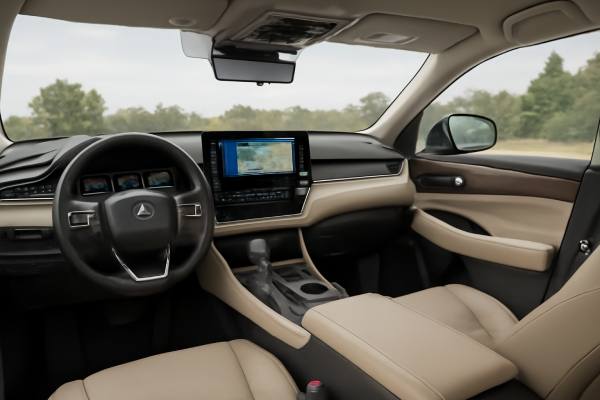
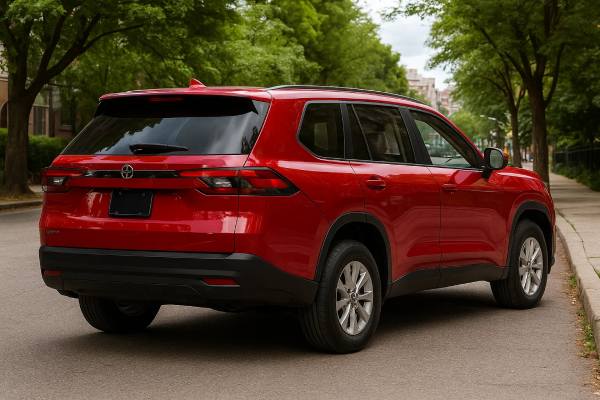
The Toyota Grand Highlander with Dynamic Torque Control AWD pairs a torquey 2.4-litre turbo four (T24A-FTS) with an 8-speed automatic to move a full-size three-row cabin with confidence. Owners value its adult-friendly third row, quiet ride, and the extra stability of an on-demand rear axle that decouples for efficiency and locks in seamlessly when traction drops. Toyota Safety Sense 3.0 is standard across trims, and tow ratings up to 5,000 lb give families real travel flexibility. This guide focuses on the AWD gas model sold in North America from model year 2023 onward and distills what matters for shoppers and owners: the numbers that define daily use, how the AWD hardware works, what to watch for long-term, and a clear maintenance plan you can actually follow. If you are deciding between gas and hybrid versions, this article highlights where the 2.4T AWD stands out—especially for towing, highway merging, and snow-belt peace of mind.
Quick Specs and Notes
- Strong everyday power: 265 hp / 310 lb-ft with broad mid-range torque; confident highway merges.
- Real utility: adult-sized third row, 97.5 ft³ max cargo, and up to 5,000 lb towing with proper equipment.
- All-weather assurance: Dynamic Torque Control AWD engages rear wheels instantly when slip is detected.
- Caveat: driver-side small-overlap crash rating is Acceptable, not Top Safety Pick.
- Typical interval: engine oil and filter every 10,000 miles / 12 months (shorten to 5,000 miles for severe use).
Navigate this guide
- Grand Highlander AWD Deep Dive
- Grand Highlander AWD Specs and Data
- Grand Highlander Trims and Safety
- Reliability and Service Actions
- Maintenance and Buyer Guide
- Driving and Performance
- How It Compares to Rivals
Grand Highlander AWD Deep Dive
The Grand Highlander AWD (chassis code TASA15) is Toyota’s roomier three-row built on the GA-K platform. Compared with the regular Highlander, it stretches out for real third-row adult space and a broader cargo bay, yet it keeps the easygoing manners families want. Under the hood, Toyota’s T24A-FTS 2.4-litre turbocharged inline-four emphasizes low-rpm torque and thermal efficiency rather than peak-rev theatrics. It uses both port and direct injection to balance emissions, intake valve cleanliness, and response, and pairs with an 8-speed conventional automatic tuned for relaxed cruising.
Dynamic Torque Control AWD is the star of this configuration. In normal conditions, the system prioritizes front-wheel drive to cut losses. When wheel slip appears, an electromagnetic coupling ahead of the rear differential engages, sending torque rearward in milliseconds. The system can also bias torque side-to-side at the rear using selective brake application to help the vehicle pivot in low-grip corners. For snowy commutes, wet off-ramps, gravel driveways, and boat-ramp launches, the result is transparent stability without the fuel penalty of permanent AWD.
Cabin practicality is a high point. Adults fit in the third row, and with both rear rows folded, you unlock almost minivan-like cargo volume. Small-item storage is abundant, there are USB-C ports in all three rows, and Toyota’s 12.3-inch multimedia system brings wireless Apple CarPlay and Android Auto on most trims. Ride quality is tuned for comfort first; insulation, laminated glass on upper trims, and compliant springs tame expansion joints. For families that tow, the gas AWD model stands out with its higher tow rating than the standard hybrid and a stable, long-wheelbase stance.
If your priorities are predictable winter traction, road-trip room, and confident towing, the 2.4T AWD hits a sweet spot. Hybrids deliver superior fuel economy and the Hybrid MAX hauls harder, but the gas AWD remains the balanced, widely available choice with simpler hardware and broad dealer familiarity for service.
Grand Highlander AWD Specs and Data
Powertrain and Efficiency
| Item | Specification |
|---|---|
| Code | T24A-FTS (2.4-litre turbo) |
| Engine layout and cylinders | Inline-4, DOHC, 16 valves; Dual VVT-i |
| Bore × stroke | 87.5 × 99.5 mm (3.44 × 3.92 in) |
| Displacement | 2.4 L (2393 cc) |
| Induction | Single turbocharger, intercooler |
| Fuel system | D-4ST (combined direct and port injection) |
| Compression ratio | 10.5:1 |
| Max power | 265 hp (198 kW) @ ~6000 rpm |
| Max torque | 420 Nm (310 lb-ft) @ ~1700–3000 rpm |
| Timing drive | Chain |
| Rated economy (AWD gas) | 23 mpg combined (21 city / 27 hwy); 10.2 L/100 km combined |
| Real-world highway @ 120 km/h (75 mph) | ~10.7–11.2 L/100 km (21–22 mpg US) depending on load, tyres, and temps |
| Emissions / test cycle | EPA fuel-economy certification (North America) |
| Aerodynamics | Cd not published; frontal area not published |
Transmission and Driveline
| Item | Specification |
|---|---|
| Transmission | 8-speed automatic (Direct Shift 8AT) |
| Drive type | Dynamic Torque Control AWD (on-demand; electromagnetic coupling) |
| Final drive ratio | ~3.00:1 (varies by spec; confirm by VIN) |
| Differential | Open diffs with brake-based torque vectoring |
| Drive modes | Normal / Sport / Eco; Multi-Terrain Select on AWD grades |
Chassis and Dimensions
| Item | Specification |
|---|---|
| Platform | TNGA GA-K |
| Suspension (front / rear) | MacPherson strut / multi-link |
| Steering | Electric power rack-and-pinion |
| Brakes | 4-wheel discs (front ventilated) with ABS, EBD |
| Wheels / tyres | 18–20 in alloys; typical fitments 255/65R18 or 255/55R20 |
| Ground clearance | ~203 mm (8.0 in) |
| Length / width / height | ~5116 / 1989 / 1781 mm (201.4 / 78.3 / 70.1 in) |
| Wheelbase | 2950 mm (116.1 in) |
| Turning circle (curb-to-curb) | ~11.6 m (38.1 ft) |
| Curb weight | ~2020–2130 kg (4450–4700 lb) depending on trim |
| GVWR | ~2730–2780 kg (6000–6125 lb) trim-dependent |
| Fuel tank | 67–67.4 L (17.7–17.8 US gal) |
| Cargo volume (SAE) | 583 / 1639 / 2762 L (20.6 / 57.9 / 97.5 ft³) behind 3rd / 2nd / 1st rows |
Performance and Capability
| Item | Specification |
|---|---|
| 0–60 mph (manufacturer / typical tests) | ~7.5–7.8 s (setup-dependent) |
| Top speed (governed) | Not published |
| Towing capacity (braked) | Up to 2268 kg (5,000 lb) with tow equipment |
| Towing capacity (hybrid, for reference) | 1588 kg (3,500 lb) |
| Payload | ~650–715 kg (1430–1575 lb), by trim and options |
| Roof load | Confirm per crossbar kit (commonly ~68 kg / 150 lb) |
Fluids and Service Capacities
| System | Specification / Capacity |
|---|---|
| Engine oil | SAE 0W-8, API SP Resource-Conserving, ILSAC GF-6B; approx. 5.5 L (5.8 qt) with filter |
| Engine coolant | Toyota Super Long Life Coolant (pink), 50/50 premix; capacity varies by VIN (confirm at service time) |
| Automatic transmission | Toyota ATF WS; service fill varies (check by VIN / scan tool temp method) |
| Rear differential | GL-5 gear oil, SAE 75W-85; capacity varies (specify by axle code) |
| A/C refrigerant | R-1234yf; exact charge on under-hood label |
| A/C compressor oil | ND-OIL 12; charge per service label |
| Key torque examples | Wheel lugs 103 Nm (76 lb-ft); oil drain ~40 Nm (30 lb-ft); always confirm by VIN |
Electrical
| Item | Specification |
|---|---|
| 12 V battery | AGM or flooded, group size varies by trim; verify label (load test annually after year 3) |
| Alternator | High-output unit sized for modern loads (rating varies by trim) |
| Spark plugs | Iridium, long-life; gap set from factory—inspect at plug service interval |
Safety and Driver Assistance
| Feature / Rating | Details |
|---|---|
| Crash ratings (IIHS) | Good in passenger-side small overlap, original moderate front, and updated side; Acceptable in driver-side small overlap (precludes award) |
| Headlights | LED projectors; trims typically score Acceptable (aiming varies) |
| Front crash prevention | Vehicle-to-pedestrian day and night: Superior (TSS 3.0) |
| ADAS suite | Toyota Safety Sense 3.0: AEB (car/ped/cyclist), full-speed DRCC, Lane Departure Alert, Lane Tracing Assist, RSA; Blind Spot Monitor with Rear Cross-Traffic Alert standard; Parking assist and Panoramic View Monitor available by trim |
| Child-seat provisions | LATCH anchors in 2nd row; top tethers in all rear seating positions |
Grand Highlander Trims and Safety
Trims at a glance (gas AWD availability): LE, XLE, Limited, Platinum. Each uses the same 2.4-litre turbo/8AT and Dynamic Torque Control AWD when so equipped; differences are in cabin materials, tech, wheels, lighting, and driver-assistance feature content.
- LE (value leader): Fabric seating, 18-inch alloys, 12.3-inch touchscreen, wireless CarPlay/Android Auto, 8-passenger bench standard. Blind Spot Monitor and Rear Cross-Traffic Alert standard. Ideal fleet or budget pick if you plan to upgrade tyres later.
- XLE (sweet spot): SofTex upholstery, available captain’s chairs, heated front seats, power liftgate, roof rails, 18-inch wheels; the trim many families choose for the best balance of features, ride comfort, and price.
- Limited (premium): Leather-trim seats, JBL audio, ventilated fronts, 20-inch wheels, hands-free liftgate, ambient lighting, and additional parking assists.
- Platinum (range topper): Heated 2nd row outboard seats, advanced driver aids (Traffic Jam Assist availability varies), panoramic camera suite, head-up display, and the most complete lighting package.
Functional/Mechanical differences by trim: Brakes, suspension geometry, and powertrain are constant; wheel/tire packages change ride and steering feel. Eighteen-inch tyres ride softer and do better in snow; 20-inch tyres sharpen turn-in but can transmit more impacts and reduce winter bite unless you fit dedicated snow rubber.
Seating and cargo identifiers: Bench vs captain’s chairs in row two changes capacity (8 vs 7). Captain’s chairs ease 3rd-row access and keep kids separated; the bench maximizes people-moving and has a fold-flat center.
Year-to-year notes: For 2024–2025, Toyota added a new LE grade to broaden affordability and rolled out cosmetic packages on hybrids. The gas AWD’s core hardware and ratings remain consistent. Some convenience and infotainment features moved between packages—always decode the window sticker or build sheet to confirm equipment.
Safety ratings and context: IIHS testing shows strong overall structure and crash prevention performance, with the caveat of an Acceptable driver-side small overlap rating (a stringent test) that keeps the vehicle from earning a Top Safety Pick designation. Headlight results depend on trim and aim; expect Acceptable performance with good on-center illumination and decent cutoff. For child seats, the long, wide second row and accessible LATCH anchors simplify three-across solutions with narrow boosters.
Calibration after service: After windshield replacement or front-end collision work, ADAS sensors (camera/radar) require static or dynamic calibration. Many wheel-alignment racks now support calibration plates—budget the time and confirm the shop has the right targets and scan tool routines.
Reliability and Service Actions
Overall outlook: The T24A-FTS/8AT drivetrain has a good early record in large Toyota crossovers. Maintenance quality (oil type/interval, cooling system health, and keeping software current) strongly influences long-term results. The AWD hardware is simple by modern standards and rarely generates issues when fluids are kept clean and tyres are rotated on schedule.
Common to occasional items (owner-reported and shop experience):
- Carbon on intake valves (DI engines): The D-4ST system adds port injection that helps keep valves cleaner than DI-only engines. Still, short-trip use can leave deposits. Symptoms: cold-start stumble, misfire codes. Remedy: top-tier fuel, periodic high-load highway runs; walnut blasting only if misfires persist and deposits are verified by borescope.
- Turbo oil coking risk (severe duty): Repeated short heat cycles can age oil faster. Symptoms: whine or blue smoke after idle; oil seep at feed/return lines. Remedy: stick to 5,000-mile oil changes in severe service; use the specified 0W-8 meeting Toyota’s spec; cool-down not required in normal use but avoid hard shut-off right after towing or steep climbs.
- 8AT shift quality complaints (rare): Usually adaptation or fluid temperature-related. Symptoms: low-speed shudder or busy hunting on grades. Remedy: software update, adaptation reset, verify correct ATF temperature during level check; inspect engine/trans mounts.
- AWD engagement feel (normal characteristic): The rear axle freewheels when not needed; momentary engagement can be felt as a gentle nudge. Remedy: ensure matched tyre sizes/pressures and even tread depths; rotate on schedule.
- Cooling system weeps at hose junctions (occasional on new-to-market models): Symptoms: faint coolant smell, pink crust. Remedy: retorque clamps, replace suspect hoses; use genuine SLLC.
High-voltage system note: Not applicable here—this section covers the gas AWD model. Hybrid-specific concerns (OBC, DC-DC, traction battery health) do not apply.
Service campaigns and recalls to know:
- Curtain shield airbag recall (2024): Certain 2024 Grand Highlander and Lexus TX vehicles were recalled for potential side curtain airbag deployment concerns. Verify by VIN and ensure the fix is completed before purchase or immediately afterward if you already own the vehicle.
- Software updates: Toyota periodically refines engine and transmission control logic to improve drivability and emissions robustness. During regular service, ask the dealer to check for calibration updates using the latest Technical Service Bulletins.
Pre-purchase checklist: Full dealer maintenance history; proof of recall completion; recent brake service measurements; tyre date codes and even wear; cooling system pressure test; no fluid seepage at turbo lines; alignment printout; ADAS calibration proof after any glass or collision work.
Maintenance and Buyer Guide
Service schedule (practical planning):
- Engine oil and filter: Max 10,000 miles / 12 months on normal duty; 5,000 miles / 6 months if mostly short trips, heavy city heat, or frequent towing. Use the specified 0W-8 meeting Toyota’s requirements.
- Engine air filter: Inspect at 15,000 miles / 24,000 km; replace 30,000–45,000 miles depending on dust.
- Cabin filter: Replace every 15,000–20,000 miles; sooner if HVAC flow weakens.
- Coolant (SLLC): First replacement typically at 100,000 miles / 10 years, then 50,000 miles / 5 years; inspect hoses annually.
- Spark plugs (iridium): 120,000 miles (192,000 km) typical inspection window; replace when gap growth, misfire counts, or wear indicates.
- Accessory belt and hoses: Inspect at every service after 60,000 miles; replace on cracks, glazing, or chirp.
- Automatic transmission (ATF WS): “Lifetime” in marketing, but smart preventive service is 60,000–90,000 miles drain-and-fill if towing, hot climates, or frequent mountain driving.
- Rear differential fluid: Replace every 60,000–90,000 miles for long gear life, earlier if frequent AWD slippage events are logged.
- Brake fluid: Replace every 36 months regardless of mileage; monitor copper content and moisture with a brake-fluid tester.
- Brakes: Inspect pads/rotors every 10,000–15,000 miles; lube slide pins yearly in salted regions.
- Alignment and tyres: Rotate every 5,000–7,500 miles; target −1.0° to −1.5° front camber for even wear if you frequently run full loads; check pressures monthly (placard values as baseline).
- 12 V battery: Load-test annually after year 3; expect replacement around years 4–6 depending on climate and load.
- AWD system: No clutch pack service; focus on even tyre wear and matching tyre models; replace tires as a set to protect the coupling.
Fluid quick facts (decision-making):
- Oil: 0W-8 is engineered for efficiency and fast flow; do not substitute thicker oils unless directed by updated service documentation for your VIN.
- Coolant: Use Toyota SLLC (pink). Mixing coolants risks gel formation and water-pump seal wear.
- ATF: Toyota ATF WS only; fill level must be set at specified temperature via scan tool.
- Gear oil: GL-5 75W-85 in the rear differential unless superseded in service information for your axle code.
Buyer’s short list (used or new-to-you):
- VIN inquiry: Print the recall status and TSB history.
- Road test: Look for smooth 1–2 and 2–3 shifts, steady-state cruise without flare, and quiet rear-axle behavior on tight parking-lot circles.
- Towing readiness: Confirm factory tow package content (wiring, hitch, cooling).
- Tires: Even wear across all four; matched brand/model; plenty of tread for AWD longevity.
- Body/corrosion: Check rear subframe mounts, exhaust hangers, and hatch seam sealant in salted regions.
- Electronics: Verify camera views, parking sensors, and steering-assist lane-keeping on a marked highway.
Durability outlook: With conservative tune, robust cooling, and simple on-demand AWD, the gas AWD Grand Highlander should be a 200,000-mile family hauler when serviced on time. Expect consumables (tyres, pads/rotors, shocks) around the usual 50k–100k mile windows depending on driving.
Driving and Performance
Ride, handling, NVH: The long wheelbase and compliant springs give the Grand Highlander a soothing, nearly luxury-leaning ride. Impacts are rounded off even on 20-inch wheels, though the 18-inch package is quieter on coarse asphalt. The steering is light at parking speeds and stabilizes nicely on the highway. Body motions are well-damped for a three-row; mid-corner heaves settle quickly. Cabin noise at 70–75 mph is low for the class, with wind rustle muted and the engine spinning comfortably in the 1,700–2,100 rpm range on level ground.
Powertrain character: The 2.4T builds torque early and sustains it, so two-gear downshifts are rare. The 8-speed favors tall gears but responds promptly to deliberate throttle. Sport mode tightens kickdown logic and holds ratios longer for hills or merging. Because torque peaks low, passing from 50–80 mph is confident even with passengers and luggage.
AWD behavior: The rear axle’s clutch engages unobtrusively as you roll into a slick intersection or ascend a wet ramp. On gravel, selective rear brake nudges help rotate the vehicle without drama. In snow, good winter tyres transform the platform; with all-seasons, the AWD system still adds a clear margin of stability over FWD.
Efficiency reality: Expect 21–22 mpg US (10.7–11.2 L/100 km) at a steady 75 mph in mild temps on 20-inch tyres, better with 18-inch touring tyres and gentle throttle. City consumption varies widely with idle time and grade. Cold snaps and short trips will pull economy down—block heaters and garage parking help in northern climates.
Towing and load: With the tow package, the gas AWD is rated to 5,000 lb (2268 kg). Stability is reassuring thanks to the long wheelbase and a rear suspension that resists squat. Plan for a 20–35% fuel-economy penalty at highway speeds when towing a medium trailer and downshift manually on long grades to keep transmission temperatures in a comfortable range. Use a weight-distribution hitch as indicated by your trailer weight and tongue load.
How It Compares to Rivals
- Honda Pilot (V6, i-VTM4): Smoother V6 and confident torque-vectoring AWD; tow rating typically 5,000 lb as well. The Toyota counters with stronger mid-range turbo torque and a roomier cargo bay behind row three. Pilot ride is a hair firmer; Grand Highlander is quieter at a cruise.
- Hyundai Palisade / Kia Telluride (V6): Plush cabins and abundant features, but naturally aspirated V6s need revs with a full load. Toyota’s turbo delivers easier passing at altitude and better tow confidence without hunting.
- Chevrolet Traverse (2.5T): Big interior and strong driver assists; Toyota’s AWD engagement is subtler and long-term ownership costs typically lower.
- Mazda CX-90 (3.3T mild-hybrid): More engaging steering and rear-biased dynamics; the Toyota wins on third-row adult space, smoother ride, and broader dealer network for maintenance.
- Grand Highlander Hybrid: If fuel economy is top priority and you rarely tow heavy, the hybrid’s real-world savings are compelling. For families who tow regularly or drive mountainous routes, the gas AWD’s stronger grade performance and higher tow rating make it the better fit.
References
- Gas Mileage of 2024 Toyota Grand Highlander 2024 (EPA Data)
- 2024 Toyota Grand Highlander 2024 (Safety Rating)
- Toyota Grand Highlander Adds Hybrid Nightshade Edition and LE Grade for 2025 2024 (Product Information)
- 2024 Grand Highlander – Owners’s Manual 2024 (Owner’s Manual)
Disclaimer
This article is for informational purposes and is not a substitute for professional diagnosis or repair. Specifications, torque values, capacities, and maintenance intervals can vary by VIN, model year, trim, and market equipment. Always verify details in your official Toyota service documentation and follow the latest Technical Service Bulletins.
If you found this guide useful, please consider sharing it with friends or on your social channels (Facebook, X/Twitter, etc.) to support xcar’s work.