
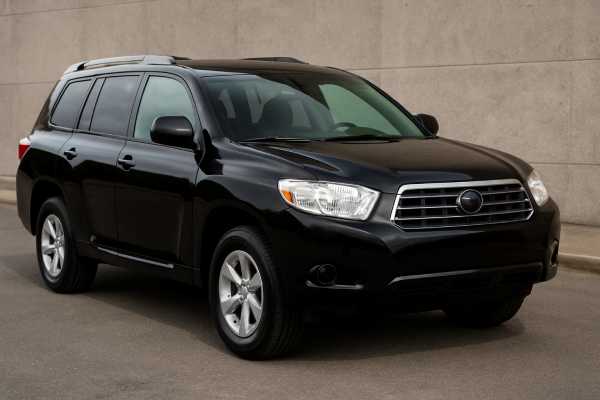
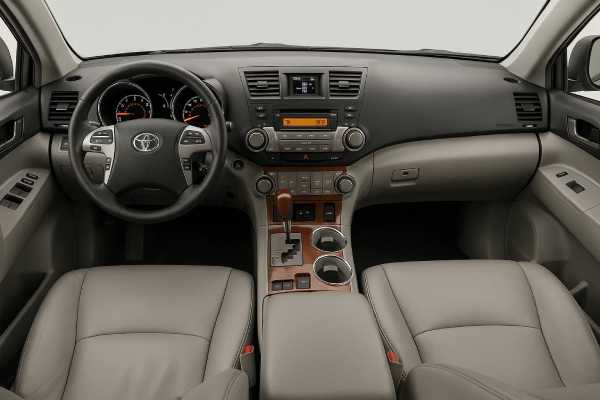
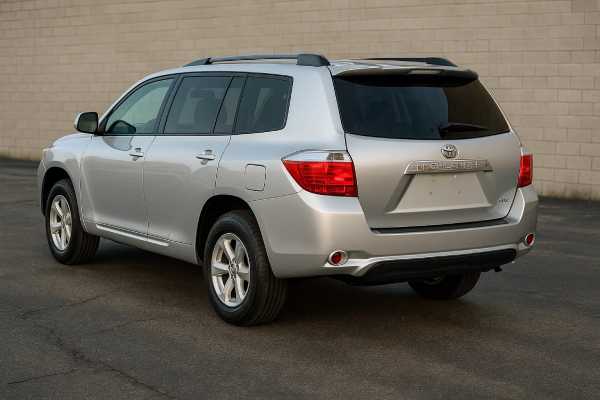
The 2008–2010 Toyota Highlander 4WD (GSU45) pairs a robust 2GR-FE 3.5-liter V6 with a full-time, on-demand four-wheel-drive system and family-friendly packaging. Owners value its long-lived powertrain, secure road manners, and low running costs relative to many midsize three-row SUVs. While the U151F 5-speed automatic predates today’s multispeed units, it delivers smooth shifts and straightforward service. Inside, the sliding second row and fold-flat third row make it easy to juggle school runs, sports gear, and weekend trips. The chassis emphasizes comfort over cornering drama; with the Tow Prep package, it’s also capable of 5,000 lb (2,268 kg) towing when properly equipped. As a used buy, the GSU45 is attractive for its reliability record and parts availability, but like any 15-year-old SUV it benefits from diligent fluid maintenance and a handful of specific checks noted below. If you want quiet confidence more than flash, this Highlander fits.
At a Glance
- Proven 2GR-FE V6 (270 hp / 201 kW) with timing chain; strong mid-range and low service demands.
- Full-time 4WD with Active Torque Control adds winter traction without owner intervention.
- Spacious, flexible cabin (up to 94.1 ft³ / 2,662 L cargo with seats folded) and calm highway ride.
- Watch for VVT-i oil line update and weeping water pumps around 90–120k mi (145–195k km).
- Typical oil change every 5,000 mi / 6 months (severe use) using API-approved oil.
Guide contents
- Highlander GSU45 overview
- Highlander 4WD specs and data
- Highlander trims, options, safety
- Reliability and service actions
- Maintenance and buyer’s guide
- Driving and performance
- Rivals and alternatives
Highlander GSU45 overview
Toyota’s second-generation Highlander (code XU40; GSU45 denotes V6 4WD) arrived for 2008 with a clear brief: deliver car-like manners, better space, and simpler ownership than truck-based SUVs. The result is a unibody crossover with seating for seven, a quiet ride, and a dependable 3.5-liter V6 (2GR-FE) driving the front wheels most of the time and the rear axle as needed. The 4WD system uses an electronically controlled coupling to send torque rearward proactively during take-off or reactively when slip is detected. Unlike part-time systems, there is no driver-selectable low range; instead, hill-start assist (HAC) and downhill assist control (DAC) help on grades.
Packaging stands out. The second row slides fore/aft and features Toyota’s “Center Stow” seat that converts from a bench to captain’s chairs or tucks away for an armrest/console. The third row is sized for kids or short trips but folds flat to reveal a long, level floor. Road and wind noise are well controlled, and the suspension filters out broken pavement better than many rivals of the era. The steering is light and accurate; body roll is present but predictable, prioritizing stability over sport.
In day-to-day use, the Highlander’s strengths are consistency and low drama. The V6 is smooth, with enough torque at 2,000–3,000 rpm to make easy work of urban driving and highway merges even when fully loaded. The 5-speed automatic shifts early and unobtrusively, keeping revs low for refinement. With the factory Tow Prep package (auxiliary cooler, heavy-duty alternator/radiator, and pre-wiring), the vehicle is rated to tow up to 5,000 lb (2,268 kg), provided the trailer has its own brakes and correct tongue weight.
From an ownership perspective, the big wins are parts commonality and durability. The 2GR-FE is widespread across Toyota/Lexus products, so routine items (belts, plugs, pumps, sensors) are easy to source. The timing chain eliminates scheduled belt replacements, and Toyota’s Super Long Life Coolant (SLLC) extends service intervals. Known watch-points are few and well understood, which simplifies pre-purchase inspections and budgeting. If you’re seeking a three-row crossover that focuses on comfort, reliability, and usable space—rather than the latest gadgets—the 2008–2010 Highlander 4WD remains a very sensible choice.
Highlander 4WD specs and data
Engine and Performance (2GR-FE V6)
| Item | Spec |
|---|---|
| Code | 2GR-FE |
| Layout & valvetrain | 60° V6, DOHC, 24 valves, dual VVT-i |
| Bore × stroke | 94.0 × 83.0 mm (3.70 × 3.27 in) |
| Displacement | 3.5 L (3,456 cc) |
| Induction / fuel | Naturally aspirated / sequential multi-port EFI |
| Compression ratio | 10.8:1 |
| Max power | 270 hp (201 kW) @ 6,200 rpm |
| Max torque | 336 Nm (248 lb-ft) @ 4,700 rpm |
| Timing drive | Chain (no scheduled replacement) |
| Rated economy (EPA) | 19 mpg combined / 17 city / 23 highway (12.4 / 13.8 / 10.2 L/100 km) |
| Real-world highway @ 75 mph | ~20–22 mpg (11.8–10.7 L/100 km), wind/grade dependent |
| Aerodynamics | Cd ~0.34 (approximate for body style) |
Transmission and Driveline
| Item | Spec |
|---|---|
| Transmission | U151F 5-speed automatic with manual mode |
| Gear ratios (1st→5th / R) | 4.24 / 2.36 / 1.52 / 1.05 / 0.76 / 3.38 |
| Final drive ratio | 3.48:1 (rear differential matched) |
| Drive type | Full-time on-demand 4WD (Active Torque Control) |
| Differential | Open fronts; electronically controlled center coupling; open rear |
| Traction aids | VSC stability control, TRAC, HAC, DAC |
| Refuel to full | ~5 min typical pump time |
Chassis and Dimensions
| Item | Spec |
|---|---|
| Front / rear suspension | MacPherson strut / MacPherson strut |
| Steering | Power-assisted rack-and-pinion; approx. 3.1 turns lock-to-lock |
| Brakes | Ventilated discs: ~328 mm (12.9 in) front; ~310 mm (12.2 in) rear; ABS/EBD/BA |
| Wheels / tires | 17×7.5 or 19×7.5 in; typical 245/65R17 or 245/55R19 |
| Ground clearance | ~206 mm (8.1 in) |
| Length × width × height | 4,785 × 1,910 × 1,730 mm (188.4 × 75.2 × 68.1 in)* |
| Wheelbase | 2,790 mm (109.8 in) |
| Turning circle | 11.9 m (39.0 ft) |
| Curb weight | ~1,955–2,015 kg (4,310–4,445 lb) depending on trim/options |
| GVWR | ~2,695–2,721 kg (5,940–6,000 lb) |
| Fuel tank | 73 L (19.2 US gal / 16.0 UK gal) |
| Cargo volume (SAE) | 0.29 / 1.20 / 2.66 m³ (10.3 / 42.3 / 94.1 ft³) — behind 3rd / 2nd / 1st row |
*Height varies slightly with roof rails and tire package.
Performance and Capability
| Metric | Value |
|---|---|
| 0–100 km/h (0–62 mph) | ~7.6–7.9 s (typical test range) |
| Top speed (governed) | ~180–190 km/h (~112–118 mph) |
| Braking 100–0 km/h (62–0 mph) | ~38–43 m (125–140 ft), tire-dependent |
| Towing capacity (braked) | 2,268 kg (5,000 lb) with Tow Prep package |
| Payload (typical) | ~540–600 kg (1,190–1,320 lb) |
| Roof load | ~68–75 kg (150–165 lb) with OEM rails/crossbars |
Fluids and Service Capacities
| System | Specification | Capacity |
|---|---|---|
| Engine oil | API/ILSAC; 5W-20 or 5W-30 (see towing note) | 6.1 L (6.4 US qt) w/ filter |
| Coolant | Toyota SLLC (pink), premixed 50/50 | 8.8–11.0 L (9.3–11.6 US qt) depending on rear A/C |
| Automatic transaxle (U151F) | Toyota ATF WS | ~8.1–9.5 L (8.6–10.0 US qt) dry; ~3.6–3.8 L (3.8–4.0 US qt) drain-fill |
| Power transfer unit | API GL-5 75W-90 gear oil | ~0.9 L (0.95 US qt) |
| Rear differential | API GL-5 75W-90 gear oil | ~0.9 L (0.95 US qt) |
| A/C refrigerant | R-134a; charge varies by trim | ~550–650 g (19–23 oz) typical |
| A/C compressor oil | ND-Oil 8 (PAG) | As specified by label (~120–140 mL typical) |
| Essential torques | Wheel lug 103 Nm (76 lb-ft); drain plug ~39 Nm (29 lb-ft); spark plugs ~18–22 Nm (13–16 lb-ft) |
Electrical
| Item | Spec |
|---|---|
| Alternator | ~130 A output (package-dependent) |
| 12V battery | Group 24F (typical), ~55–65 Ah; 550–710 CCA |
| Spark plugs | Iridium long-life (e.g., FK20HR11/SK20R11); gap 1.1 mm (0.043 in) |
Safety and Driver Assistance
| Category | Detail |
|---|---|
| Crash ratings (IIHS) | Good (G) in moderate front, side, roof; 2008 Top Safety Pick (with ESC) |
| Headlight rating | Not evaluated for these years |
| Passive safety | Dual-stage front airbags, front seat-mounted side airbags, driver’s knee airbag, roll-sensing curtain airbags for all three rows, active head restraints (front) |
| Active safety | ABS/EBD/BA, VSC stability control, TRAC, HAC, DAC |
| ADAS | Pre-AEB era: no AEB/ACC/LKA/BSM; rear camera available with navigation |
Highlander trims, options, safety
Trims (2008–2010, North America): Base, Sport (’08–’09), and Limited. All were available with the V6; 4WD (GSU45) could be selected across trims. The Sport adds firmer suspension tuning (’08–’09), 19-inch wheels, and unique interior/exterior accents. Limited brings leather, heated power seats, upgraded audio (JBL on many builds), tri-zone climate, power liftgate, and more sound insulation. Third-row seating is common; some Base models were built without the third row—check the VIN/options sheet.
Mechanical/functional differences:
- Wheels/tires: Base usually 17-inch; Sport/Limited often 19-inch. The 19s sharpen steering response but add a bit of impact harshness and can lengthen wet-braking distances if fitted with harder touring compounds.
- Suspension tuning: Sport’s firmer shocks/anti-roll bar calibration yields slightly tighter control on undulating highways. Limited returns to a more comfort-oriented tune.
- Tow Prep package: Adds heavy-duty cooling and wiring; required for 5,000-lb rating. If you plan to tow regularly, favor vehicles with this package from new.
- Audio/infotainment: Navigation and a backup camera were optional; Bluetooth was available (standard on some Limited builds).
- Seating: Cloth on Base/Sport; leather on many Limiteds. The “Center Stow” second-row seat/console is standard on most, but confirm presence/condition.
Identifiers and build clues:
- Door-jamb VIN label includes model code GSU45.
- Wheel style/size quickly differentiates Base (17″) from Sport/Limited (19″).
- Limited typically shows chrome door handles, puddle lamps, and leather with wood-tone trim.
- Underhood placards identify coolant type (SLLC) and refrigerant charge.
Year-to-year changes:
- 2008: Launch year with Base, Sport, Limited.
- 2009: Minor feature reshuffling; Sport continues.
- 2010: Trim content shuffles; in some markets Sport transitions toward SE-style packaging; core powertrain unchanged.
Safety ratings: The Highlander earned Good ratings in key IIHS tests and qualified as a Top Safety Pick in 2008 when equipped with ESC (standard here). NHTSA provides VIN-specific recall data; use the official lookup to verify any outstanding campaigns. Headlight performance was not graded by IIHS for these model years.
Safety systems and child-seat notes: Seven airbags including a driver’s knee airbag enhance frontal restraint synergy with the seatbelt pretensioners. LATCH anchors are fitted in the second row; the third row is best reserved for booster-seat-aged children due to space and belt geometry. ESC and traction control are standard; HAC and DAC assist on steep ramps or slippery descents. After collision repairs involving airbag or sensor replacement, follow OEM calibration procedures; scan-tool verification is mandatory before return to service.
Reliability and service actions
The GSU45 platform is well regarded for durability. Most issues are age-and-mileage-related rather than design-level flaws, and many have known remedies.
Common (low–medium severity):
- Water pump seep/leak (90–120k mi / 145–195k km): Pink crust at weep hole, belt spray, faint coolant smell. Remedy: Replace pump, gasket, and coolant; consider belt/idler inspection at the same time.
- Front brake rotors/pads wear (urban use): Steering shimmy under light braking. Remedy: Quality rotors/pads, proper torque and hub cleaning; consider 19″ tire effects.
- Liftgate struts weakening (age): Liftgate drops in cold weather. Remedy: Replace struts as a pair.
Occasional (medium severity):
- VVT-i oil supply hose (early 2GR-FE): Original rubber-section hose can leak. Symptoms: Sudden oil loss around alternator/front block, oil on driveway. Remedy: Replace with updated all-metal line; verify via service records or physical inspection.
- U151F shift feel (software): Occasional flare or harsh 2–3 shifts. Remedy: ECM/TCM software update; fluid drain-and-fill with WS can help.
- Steering intermediate shaft clunk: Low-speed knock over bumps or when turning. Remedy: Lubrication or shaft replacement; verify column U-joints.
Rare (higher severity):
- Rear AWD coupling / bearing noise (high mileage, neglected fluid): Drumming or groaning from rear under load. Remedy: Flush diff/PTU with GL-5 75W-90 and verify coupler. Replace as needed.
- Evaporative emissions (charcoal canister/valves): EVAP codes, difficult fueling. Remedy: Smoke-test system; repair/replace components.
Recalls, TSBs, extended coverage (high-level):
- Floor-mat/pedal interference campaigns (2009–2010 era): Inspected pedal shape, updated floor-mat retention. Confirm completion via official VIN check.
- Airbag/seat sensor updates (various campaigns over the years): Verify by VIN; successful closure appears in dealer history.
Always run both the official recall lookup and the national safety database by VIN; print results for records.
Pre-purchase checklist:
- Complete fluid history (engine oil, WS ATF drain/fill, PTU/diff gear oil, SLLC coolant).
- Evidence of VVT-i oil hose update and any ECM/TCM calibrations.
- Cooling system pressure-test; inspect water pump and radiator end tanks.
- Brake condition and rotor thickness; look for seized slide pins.
- AWD function test (tight-circle test on wet surface) and listen for rear-end noise.
- Underside corrosion at subframe mounts and fuel/brake lines (salt regions).
- Electronics: verify operation of backup camera, power liftgate, HVAC blend doors, and all windows/locks.
Maintenance and buyer’s guide
Core maintenance schedule (practical, owner-friendly):
- Engine oil & filter: Every 5,000 mi / 6 months (severe) or 7,500 mi / 12 months (moderate). Use API/ILSAC oil; 5W-20 was original guidance, 5W-30 is common for towing/hot climates. Capacity 6.4 qt / 6.1 L.
- Engine air filter: Inspect at 15,000 mi / 24,000 km; replace by 30,000–45,000 mi depending on dust exposure.
- Cabin filter: Replace 15,000–20,000 mi / annually; more often in dusty or urban areas.
- Spark plugs (iridium): 120,000 mi / 10 years; gap check when replacing (1.1 mm / 0.043 in).
- Coolant (SLLC pink): First change 100,000 mi / 10 years, then 50,000 mi / 5 years thereafter; bleed carefully if equipped with rear A/C.
- Automatic transaxle (U151F) WS: Toyota lists “no scheduled service,” but for longevity do a drain-and-fill every 60,000–90,000 mi (100,000–145,000 km), especially if towing. Avoid power flushes; use WS fluid only.
- Power transfer unit & rear differential: Every 60,000 mi / 96,000 km with GL-5 75W-90; capacity ~0.9 L each.
- Brake fluid: Replace every 2–3 years; inspect pads/rotors at each tire rotation.
- Serpentine belt & pulleys: Inspect 60,000 mi; replace 90,000–120,000 mi or if noisy/cracked.
- Fuel filter: In-tank; no scheduled replacement unless symptoms.
- Alignment & rotation: Rotate tires every 5,000 mi with oil service; check alignment annually or after impacts.
- 12V battery: Load-test before winter after 4–5 years; replace proactively if marginal.
- HVAC & A/C: Replace cabin filter routinely; verify condenser cleanliness; follow label for R-134a charge and ND-Oil 8 top-up after component replacement.
Fluids and capacities (quick reference):
- Oil: 6.1 L (6.4 qt) w/ filter; drain plug ≈ 39 Nm / 29 lb-ft.
- Coolant: 8.8–11.0 L depending on rear A/C.
- ATF WS: ~3.6–3.8 L (drain-fill).
- PTU / Rear diff: ~0.9 L each, GL-5 75W-90.
- Wheel lugs: 103 Nm / 76 lb-ft.
Buyer’s tips (what to look for):
- Tow Prep package: Desirable for cooling robustness and resale; check for hitch wiring and the auxiliary cooler behind the grille.
- Brake feel and rotor health: Pulsation points to warped/unevenly torqued rotors; budget for quality parts.
- Leaks: Water pump weep, valve cover gaskets, and the historic VVT-i hose area.
- AWD noises: Humming/growling that changes with speed/loads can signal diff bearings or cupped tires.
- Interior wear: Second-row slide mechanisms and the “Center Stow” seat/console latches.
- Electrics: Power liftgate smoothness, HVAC blend door operation, and backup camera function.
Durability outlook: With routine maintenance and fluid stewardship, 200–250k mi (320–400k km) is very realistic. The chain-driven 2GR-FE and simple 4WD hardware age gracefully, provided fluids are kept fresh and cooling components are attended to before they escalate.
Driving and performance
On the road, the Highlander’s mission is comfort and predictability. Around town, the 2GR-FE produces a relaxed surge from 1,800–3,500 rpm, and the 5-speed auto shifts early to keep noise low. Throttle mapping is progressive rather than jumpy; the transmission avoids busy hunting unless you’re on long rolling grades. Kickdown from 5th to 3rd is decisive for passing, and the manual gate is useful when holding gears on hills.
Ride, handling, NVH: The suspension softens sharp edges and maintains composure over broken pavement and expansion joints. Body roll is present in quicker transitions, but it’s gradual and well damped; steering remains consistent through the arc. Wind noise is modest at highway speeds; road roar depends on tire selection (19-inch touring tires tend to transmit more coarse-chip noise than 17s). Brake feel is firm with a clear initial bite; repeated heavy stops benefit from high-quality pads and ensuring the caliper slide pins are clean and lubricated.
Traction and control: The Active Torque Control 4WD system favors FWD for efficiency and brings the rear axle online smoothly as needed. On slick intersections or snowy on-ramps, the rear engages quickly enough to reduce front wheelspin. Hill-start assist prevents roll-back, and downhill assist can hold a slow pace on loose descents. There’s no low-range gearing—this is a road-biased system—but winter tires plus the 4WD logic make for a confident all-weather family vehicle.
Measured and observed performance (typical setups):
- 0–60 mph / 0–100 km/h: ~7.2–7.5 s / ~7.6–7.9 s.
- 50–80 mph (80–129 km/h) passing: ~5.5–6.0 s when pre-selected to 4th.
- Braking 60–0 mph (97–0 km/h): ~125–140 ft (38–43 m) depending on tires.
- Turning circle: 39.0 ft (11.9 m) kerb-to-kerb.
Efficiency in the real world: Expect 19 mpg (12.4 L/100 km) combined in mixed suburban use, 20–23 mpg (11.8–10.2 L/100 km) on steady highway cruises at 65–75 mph (105–120 km/h), and 16–18 mpg (14.7–13.1 L/100 km) in stop-and-go urban traffic. Cold weather, short trips, roof boxes, and 19-inch tires can each trim 1–2 mpg. Towing a 3,000-lb (1,360-kg) camper typically reduces highway economy by 25–35%; watch trans temps on long grades and use S4 to limit hunting.
Load and towing: With the Tow Prep package, the Highlander pulls confidently within its 5,000-lb (2,268-kg) rating. Stability is good if the trailer is correctly loaded (10–12% tongue weight), the brake controller is dialed in, and tires are at max sidewall pressure. On long descents, downshift early and let the engine assist braking; avoid riding the brakes to prevent heat fade. For cargo, the long flat floor (second and third rows folded) makes Home Depot runs easy; just mind the 150–165 lb (68–75 kg) roof load limit if adding a box or kayaks.
Rivals and alternatives
Honda Pilot (2009–2010): Roomy and durable with a similarly smooth V6 and strong resale. The Pilot’s boxier body offers a bit more third-row space; its VTM-4 system can lock the rear clutch at low speeds, aiding deep snow starts. The Highlander counters with a quieter ride and more flexible second row. Fuel economy is broadly similar; Toyota’s 2GR-FE tends to have fewer timing-component complaints thanks to its chain.
Mazda CX-9 (2008–2010): The driver’s choice—sharper steering and flatter cornering, helped by a lower-slung stance. The 3.7-liter V6 pulls well but can be thirstier, and some owners report transmission and water-pump concerns. Highlander gives up a bit of agility but wins on long-term upkeep and parts availability.
Ford Flex (2009–2010): Huge space and a wagon-like driving position; the EcoBoost variant tows well and accelerates strongly. However, long-term maintenance can be higher, and some early build electronics issues are noted. Highlander’s simpler powertrain and higher residuals appeal to budget-minded buyers.
Chevrolet Traverse / GMC Acadia (2009–2010): Big cabins and competitive towing on paper. The 3.6-liter V6 and 6-speed auto deliver decent performance, but corrosion in salt belts and timing-chain stretch on neglected engines are watch-points. The Toyota typically requires fewer major repairs over 10+ years.
Nissan Pathfinder (2008–2010, R51): Body-on-frame with genuine off-road chops and available V8, but rides more firmly and can be costlier to keep happy as it ages. Unless you need low-range and regular trail work, the Highlander’s comfort and economy make more sense.
Bottom line: If you prioritize a calm ride, versatile seating, and minimal surprises at service time, the Highlander 4WD remains one of the safest used bets in this segment. Rivals may steer or hustle better, but few match this Toyota’s blend of practicality and long-term value.
References
- Gas Mileage of 2008 Toyota Highlander 2025 (EPA Fuel Economy)
- 2008 Toyota Highlander 2025 (Safety Rating)
- 2008 Top Safety Picks 2025 (Safety Award)
- Check for Recalls: Vehicle, Car Seat, Tire, Equipment | NHTSA 2025 (Recall Database)
- 08_HL_Eng_V2_LR 2008 (Manufacturer Specifications)
Disclaimer
This article is for informational purposes only and is not a substitute for professional diagnosis or repair. Specifications, torque values, and service intervals vary by VIN, market, options, and production date. Always verify data, procedures, and safety campaigns against your vehicle’s official service information and recall records before performing maintenance or repairs.
If you found this guide useful, please consider sharing it on Facebook or X/Twitter to support xcar’s work. Thank you!