
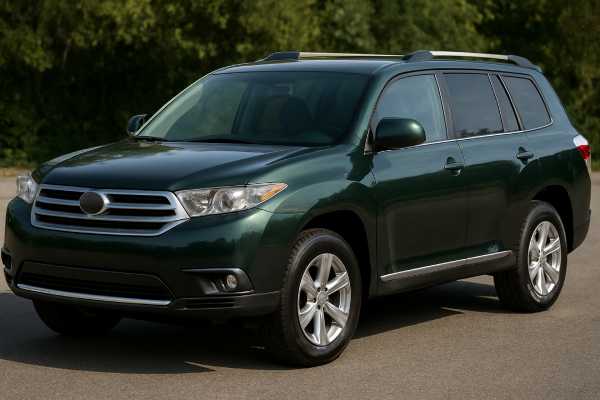
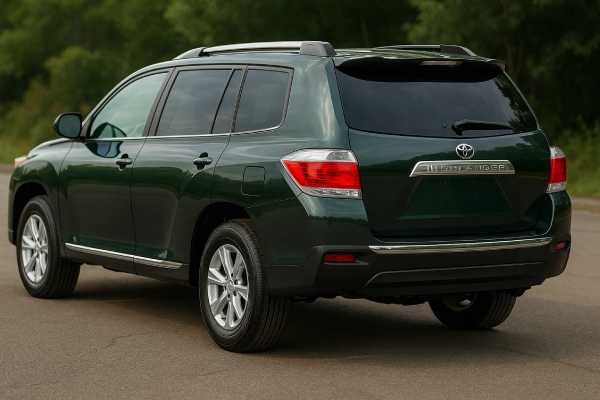
The 2011–2013 Toyota Highlander 4WD (GSU45) sits in a sweet spot for families who want a car-like ride with genuine all-weather traction and long-term durability. The mid-cycle facelift sharpened the look, updated cabin ergonomics, and refined noise isolation while keeping the proven 2GR-FE 3.5-litre V6 and 5-speed automatic. Active Torque Control 4WD brings confidence on wet, snowy, or gravel roads without the weight or complexity of a truck-based system. Inside, the three-row layout remains one of the easiest to live with thanks to a configurable second row, usable third row for short trips, and ample cargo space with the seats folded. What owners value most is how quietly it handles everyday tasks: school runs, highway trips, and light towing—often for well over a decade—with predictable costs. This guide walks you through specs, dimensions, performance, reliability, safety, maintenance planning, and how the Highlander compares to its rivals so you can buy, maintain, or sell with clarity.
At a Glance
- Smooth, durable V6 (270 hp) with relaxed highway gearing; responsive without being thirsty.
- Comfortable ride, low wind/road noise, and straightforward controls; family-friendly three-row packaging.
- Proven on-demand 4WD with Hill-Start and Downhill Assist on gasoline 4WD models.
- Watch for water pump seep, front strut mounts, and aged rubber bushings around 90–120k miles (145–190k km).
- Engine oil and filter every 5,000–10,000 miles (8,000–16,000 km) or 12 months, based on use and oil type.
Navigate this guide
- Highlander GSU45 overview
- GSU45 V6 specs and data
- Trims, packages and safety systems
- Reliability and known issues
- Maintenance plan and buyer guide
- On-road performance and economy
- Rivals and market context
Highlander GSU45 overview
The facelifted second-generation Highlander (2011–2013) refined a successful formula rather than reinventing it. The key ingredients remained: unibody construction for car-like handling, a quiet cabin, and practical three-row seating. For buyers in snow-belt states and provinces, the GSU45 4WD variant adds an electronically controlled, on-demand rear drive coupling that can proactively send torque rearward when the front wheels slip or when the system predicts slip from sensor data. Unlike truck-based 4×4 with a low range, this system is designed for paved roads, rain, packed snow, and mild trails—exactly where most crossovers live.
Under the hood, Toyota’s 2GR-FE 3.5-litre V6 carries over with dual VVT-i and a broad powerband. It’s matched to a 5-speed automatic (with a manual gate) chosen for smoothness and simplicity. The result is easy drivability in traffic and low-rpm cruising on the highway. For the 2011 refresh Toyota also improved NVH isolation and adjusted suspension bushings and damper tuning, which owners notice as less thump over broken pavement and better body control in sweepers.
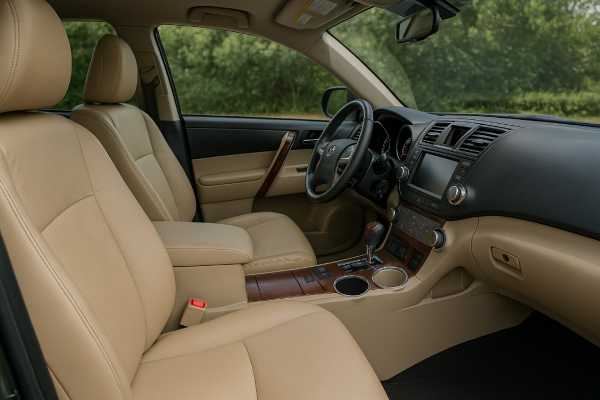
Inside, the Highlander’s second row can function as captain’s chairs or a bench with a removable centre section that stows in the console—one of the most family-friendly touches of this generation. The third row is best for occasional adult use or kids; folding both rows unlocks a long, flat cargo area. Standard equipment evolved through the facelift to include more airbags, stability and traction control integration, and convenience features such as Bluetooth and a back-up camera on more trims.
Towing capability is a differentiator: V6 models with the tow prep (standard on V6 in later years) are rated up to 5,000 lb (2,268 kg), which covers pop-up campers and small boats. The 4WD’s extra mass and parasitic losses trim economy slightly versus FWD, but the confidence in foul weather and on gravel is worth it for many owners. Overall, the GSU45 Highlander is a pragmatic, low-drama family tool that ages gracefully—with maintenance.
GSU45 V6 specs and data
Below are focused, scannable specifications for the 2011–2013 Highlander 4WD V6 (gasoline). Figures reflect typical North American models.
Engine and Performance (ICE)
| Item | Detail |
|---|---|
| Code | 2GR-FE |
| Layout & cylinders | 60° V6, DOHC, 24 valves (4 per cyl), dual VVT-i |
| Bore × stroke | 94.0 × 83.0 mm (3.70 × 3.27 in) |
| Displacement | 3.5 L (3,456 cc) |
| Induction | Naturally aspirated |
| Fuel system | Sequential multi-port EFI |
| Compression ratio | ~10.8 : 1 |
| Max power | 270 hp (201 kW) @ ~6,200 rpm |
| Max torque | 336 Nm (248 lb-ft) @ ~4,700 rpm |
| Timing drive | Chain |
| Rated efficiency (EPA) | City 13.8 L/100 km (17 mpg US / 20.4 mpg UK); Hwy 10.7 L/100 km (22 mpg US / 26.4 mpg UK); Combined 12.4 L/100 km (19 mpg US / 22.8 mpg UK) |
| Real-world highway @ 120 km/h (75 mph) | ~11–12 L/100 km (19–21 mpg US) with roof rack off, proper tire pressure |
Transmission and Driveline
| Item | Detail |
|---|---|
| Transmission | 5-speed automatic with manual gate (ECT-i; U151F) |
| Drive type | On-demand 4WD (Active Torque Control) with electronically controlled rear coupling |
| Differential(s) | Open front/rear; brake-based torque management via VSC/TRAC |
| 4WD features | Hill-Start Assist (HAC); Downhill Assist Control (DAC) on gasoline 4WD models |
| Refuel to full | ~5 min typical (19.2 US gal tank) |
Chassis and Dimensions
| Item | Detail |
|---|---|
| Platform | Unibody crossover (XU40 series) |
| Suspension (front/rear) | MacPherson strut / MacPherson strut with trailing links |
| Steering | Hydraulic rack-and-pinion, speed-sensing assist |
| Brakes | 4-wheel discs with ABS, EBD, Brake Assist |
| Wheels/Tires (typical) | 245/65R17 (17-in); 245/55R19 (19-in on Limited) |
| Ground clearance | ~203 mm (8.0 in) |
| Length / Width / Height | 4,785 × 1,910 × 1,730 mm (188.4 × 75.2 × 68.1 in) |
| Wheelbase | 2,790 mm (109.8 in) |
| Turning circle (curb-to-curb) | ~11.8 m (38.7 ft) |
| Curb weight (range) | ~1,930–2,025 kg (4,255–4,465 lb) depending on trim/options |
| GVWR (typical) | ~2,540–2,720 kg (5,600–6,000 lb) |
| Fuel tank | ~72.6 L (19.2 US gal / 16.0 UK gal) |
| Cargo volume | ~292 / 2,700 L (10.3 / 95.4 ft³) seats up / down (SAE) |
Performance and Capability
| Item | Detail |
|---|---|
| 0–60 mph / 0–100 km/h | ~7.5–7.8 s (typical road test range) |
| Top speed (governed) | ~180–190 km/h (112–118 mph) |
| Braking 100–0 km/h | ~38–41 m (125–135 ft) on all-season tires, good pads |
| Towing capacity (braked) | Up to 2,268 kg (5,000 lb) with V6 tow prep |
| Payload (typical) | ~620–700 kg (1,350–1,540 lb) depending on trim |
| Roof load | ~75–100 kg (165–220 lb), check crossbar rating |
Fluids and Service Capacities (high-value items)
| System | Specification / Notes |
|---|---|
| Engine oil | API-rated synthetic; viscosity commonly 0W-20 or 5W-30 per climate and manual; change interval based on service (see Maintenance section) |
| Coolant | Toyota Super Long Life (pink); premix 50/50 typical |
| Automatic transmission | Toyota WS (World Standard) fluid; drain-and-fill service recommended by usage |
| PTU / Rear differential (4WD) | GL-5 gear oil; follow inspection/service by use and climate |
| A/C refrigerant | R-134a (service by weight) |
| Key torque examples | Wheel nuts ~103 Nm (76 lb-ft); always verify by VIN and service manual before tightening |
Electrical
| Item | Detail |
|---|---|
| Alternator output | ~130–150 A depending on trim/equipment |
| 12V battery | Group 24F (common fit); 550–700 CCA typical |
| Spark plugs | Iridium long-life; factory gap ~1.0–1.1 mm (0.039–0.043 in) |
Safety and Driver Assistance
| Item | Detail |
|---|---|
| Crash ratings | Strong performance in moderate overlap and side impacts; roof strength and head restraints good for the class in this era |
| Headlights (period) | Conventional reflector/projector; no formal headlight score under later IIHS protocol for these years |
| Airbags | 7 total: dual-stage front, front side, driver knee, full-length curtain (all three rows) |
| Active safety | VSC, TRAC, ABS/EBD/BA; integration via VDIM; HAC standard; DAC standard on gasoline 4WD models |
| Child-seat provisions | Lower anchors and tether anchors across 2nd row; 3rd row top tether anchors |
Trims, packages and safety systems
Trim walk (2011–2013, 4WD V6 focus). The typical lineup includes Base, SE, and Limited (names vary slightly by year and market packaging). All V6 trims share the 270-hp 2GR-FE and on-demand 4WD; the differences revolve around wheels/tires, interior features, seat configurations, and convenience tech.
- Base / Plus-type packages: 17-inch wheels, cloth seats, three-zone climate, 50/50 split third row, manual driver seat, keyless entry, and an audio system with Bluetooth in later years. Rear-view camera availability expanded after the facelift.
- SE: Adds a sportier suspension tune (still comfort-biased), power driver seat with lumbar, heated front seats, power liftgate, roof rails, and sometimes 19-inch alloys. Leather-trimmed seating usually standard here.
- Limited: 19-inch wheels, leather throughout, upgraded audio (JBL on certain builds), tri-zone automatic climate, power passenger seat, Smart Key with push-button start (later adoption), fog lamps, and additional trim accents.
Option packages and identifiers.
- Tow prep: Heavy-duty alternator and cooling, pre-wiring, and Class III/IV hitch hardware; later years made the V6 tow package standard equipment. Look for a receiver hitch, 7-pin connector, and under-tray cooler lines.
- Seating: Captain’s chairs vs bench in row two. The removable centre seat/console stows in the front console on many trims—handy for quickly converting between 7- and 8-passenger use.
- Wheels/tires: 17-inch packages deliver the most compliant ride and best winter tire options; 19-inch improve steering response slightly but ride more firmly and tires cost more.
- VIN/build clues: Trim coding appears on the door jamb and window sticker; key differentiators include wheel size, presence of Smart Key buttons, JBL badging on door grilles, and the tow receiver.
Year-to-year changes (highlights).
- 2011 facelift: New front/rear styling, revised lighting, quieter cabin with extra insulation, and expanded standard equipment. Backup camera availability improves.
- 2012: Equipment reshuffling; safety integration messaging (VDIM) emphasized, DAC standard on gasoline 4WD models.
- 2013: Final year of this body style; tow package standard on all V6 models in many configurations; trim content consolidated ahead of the 2014 redesign.
Safety systems and ADAS. In this era, the Highlander offers a complete passive safety suite (7 airbags with full-length curtains) and comprehensive active stability control. Advanced driver assistance (AEB, ACC, lane keeping) had not yet become common in the class, so your realistic expectations are ABS, stability/traction control with brake-based torque vectoring, a back-up camera on most units, and tire pressure monitoring. Families will appreciate the wide-opening rear doors, ISOFIX/LATCH anchors with accessible top tethers, and the flat cargo floor when rows are folded.
Reliability and known issues
The 2011–2013 Highlander 4WD V6 is widely regarded as one of the most dependable three-row crossovers of its time. Most examples age predictably when serviced on time. Still, every used vehicle accumulates wear; here’s what to expect, prioritized by prevalence and impact.
Common and low-to-medium cost
- Water pump seep/leak (V6): Look for pink crust around the pump weep hole or dried coolant tracks under the timing cover. Symptoms include sweet coolant smell and low reservoir level. Remedy: replace pump and associated gaskets; inspect belt and idlers while you’re there.
- Front strut mounts/top hats: Clunking over sharp bumps at low speeds or a “memory steer” feel. Remedy: replace strut mounts; many owners refresh struts and mounts together around 90–120k miles.
- Stabilizer bar links/bushings: Rattles on broken pavement. Low-cost parts; quick fix.
- Hatch struts: Weak lift supports cause the tailgate to drift down in cold weather. Replace in pairs.
Occasional, medium cost
- Alternator wear on tow-equipped vehicles: Heavy electrical loads (trailer wiring, heated seats, rear HVAC) can accelerate wear. Watch for battery light flicker and low system voltage; replace alternator with quality reman or new OE.
- Rear wheel bearings: Growling noise increasing with speed; check for play. Replace hub assemblies as needed.
- Steering intermediate shaft lash: Light clunk felt in the wheel when turning at parking speeds. Lubrication can be a temporary fix; replacement is the long-term solution.
Rare but higher impact
- Oil cooler hose (early rubber sections): Earlier V6 Toyotas used rubber oil cooler lines that could degrade; many were superseded by metal or improved hoses. Confirm updated parts during inspection; replace pre-emptively if in doubt.
- 4WD coupling/prop-shaft noises: Binding sensations during tight turns on dry pavement or humming from the rear can point to worn fluid or a failing coupling. Start with fresh GL-5 fluid and proper tires all around; mismatched tires can stress the system.
Electrics and software
- TPMS sensors: As the vehicles age, original sensors reach the end of battery life (~8–12 years). Plan to replace when mounting new tires.
- ECU/TCU updates: Dealers may have calibration updates addressing shift refinement, idle quality, or diagnostic logic. Ask for the latest calibrations to be applied when you buy or service.
Rust and corrosion hotspots
- Exhaust flanges and fasteners: Particularly in salt belts; budget for hardware refresh when doing exhaust work.
- Rear subframe and suspension arms: Generally hold up well but deserve an annual rinse and inspection.
- Hatch and door bottoms: Check weatherstripping and drain holes for blockage.
Recalls/TSBs and how to verify
- Always run an official VIN check and review dealer service records. Focus on pedal/trim recalls from the early 2010s, airbag campaigns if applicable by VIN, and any campaign notes around accessory installations. Proof of completion is as simple as a dealer printout tied to the VIN.
Pre-purchase checklist
- Complete maintenance history (dates, mileages, fluids).
- Proof of tow-prep if you plan to tow (receiver, cooler lines, wiring).
- Fresh brake fluid and coolant within the last 3–5 years.
- Smooth, quiet operation of the 4WD system; no binding on tight circles in a parking lot.
- Even tire wear (mismatched rolling circumference is a 4WD stressor).
- HVAC blend doors, rear AC/heater fan operation, and a clean cabin filter housing (leaves and debris can cause odors).
Maintenance plan and buyer guide
Practical maintenance schedule (distance/time = whichever comes first; adjust for heavy use, short trips, extreme temps, or dusty/salty environments):
- Engine oil and filter: Every 5,000 miles/8,000 km (severe) or up to 10,000 miles/16,000 km (normal) using the specified synthetic oil; annually at minimum. Inspect for seepage around the oil cooler, timing cover, and valve covers.
- Engine air filter: Inspect at 15,000 miles/24,000 km; replace ~30,000–45,000 miles/48,000–72,000 km or sooner in dusty areas.
- Cabin filter: Replace annually or 15,000 miles/24,000 km; more frequently if you use the rear HVAC often or drive in pollen/dust.
- Coolant: Toyota Super Long Life typically lasts ~10 years/100,000 miles (160,000 km) initial, then ~5 years/50,000 miles (80,000 km) thereafter; test pH and freeze point during service.
- Spark plugs (iridium): 120,000 miles/192,000 km typical; inspect at 90k for gap and electrode wear if misfire history exists.
- Serpentine/aux belt and pulleys: Inspect every 30,000 miles/48,000 km; replace when cracked or noisy; tensioner bearings commonly age around 120k.
- ATF (Toyota WS): While many guides call it “lifetime,” prudent ownership is a drain-and-fill every 60,000–90,000 miles (96,000–145,000 km) depending on towing/heat.
- PTU (front output)/Rear differential gear oil (GL-5): Inspect for condition at 60,000 miles/96,000 km; replace 60k–90k if towing or frequent 4WD use.
- Brake fluid: Replace every 3 years regardless of mileage; moisture raises pedal travel and corrodes ABS components.
- Brake pads/rotors: Inspect at every tire rotation; front pads often last 35–55k miles, rears can last longer, but salt and city driving shorten life.
- Power steering fluid: Most units are hydraulic; inspect annually; exchange if dark or contaminated.
- Tires and alignment: Rotate every 5,000–7,500 miles (8,000–12,000 km). Keep pressures set cold and matched across axles for 4WD health. Align annually if you hit potholes or see uneven wear.
- 12-volt battery: Load test annually after 4–5 years; replace proactively before winter in cold climates.
- Body and undercarriage: Rinse salt, especially rear subframe and brake lines; lubricate hinges and latches at oil services.
Fluid quick reference (decision-ready):
- Engine oil: Synthetic, viscosity per manual (commonly 0W-20 in this era; some climates allow 5W-30).
- ATF: Toyota WS only.
- Coolant: Toyota SLLC (pink).
- 4WD gear oil: GL-5 gear oil; confirm viscosity by manual/temperature (75W-85/90 are common).
- Brake fluid: DOT 3 or DOT 4 per cap/manual.
Essential torque values to know (verify by VIN before tightening):
- Wheel nuts: ~103 Nm (76 lb-ft).
- Caliper bracket bolts: Often 101–118 Nm (75–87 lb-ft) front; check manual.
- Spark plugs: ~18–21 Nm (13–15 lb-ft) on clean threads with crush washers seated.
Buyer’s guide tips
- Best value: Clean 2012–2013 SE or Limited with documented fluid services and recent tires/brakes.
- If you tow: Confirm tow prep (receiver, wiring, cooler) and look for transmission service history.
- Avoid: Neglected examples with mismatched tires (uneven diameters stress the 4WD coupling), persistent coolant smell (water pump) or clunks over bumps (strut mounts).
- Test drive: Start cold, listen for belt/tensioner noise; do several full-lock circles on dry pavement to check for binding; verify HVAC, power tailgate, and camera operation.
- Durability outlook: With routine maintenance and gentle warm-ups in cold weather, 200k–300k miles (320k–480k km) is realistic before major engine/transmission work.
On-road performance and economy
Ride and handling. The Highlander’s unibody platform and strut-strut suspension make it feel more like a large car than an SUV. The 17-inch wheel/tire package rides best, rounding off sharp edges and settling quickly after dips. With 19-inch wheels, initial steering response is a touch crisper but you’ll notice more impact feel over frost heaves. Body roll is present but well-controlled; stability control intervenes gently and predictably if you enter a turn too hot on cold all-seasons.
Steering and braking. Steering is lightly weighted with decent on-center stability—ideal for long highway stints. The pedal is firm and consistent with short stopping distances on quality tires. Refreshing brake fluid every three years maintains bite and ABS performance.
Powertrain character. The 2GR-FE is a highlight: quiet at idle, eager past 3,000 rpm, and happy to cruise below 2,000 rpm at highway speeds. The 5-speed automatic prioritizes smoothness over aggressiveness. Downshifts are prompt with a decisive throttle input; the manual gate helps on grades and when towing. There’s no turbo lag to manage—just linear response.
Noise, vibration, harshness (NVH). One reason families love this generation is how calm it feels at 70–75 mph (113–121 km/h). Wind noise is low for the class, tire thrum depends mainly on tread pattern and wheel size, and the V6 fades to the background at cruise.
Real-world economy. Expect about 17 mpg US city / 22 mpg US highway / 19 mpg US combined (13.8 / 10.7 / 12.4 L/100 km). Cold weather, short trips, roof racks, and winter tires can drop highway economy by 1–2 mpg (0.5–1.0 L/100 km). Keeping the roof basket off when not needed, maintaining 35–36 psi cold tire pressure, and using 17-inch tires help economy and ride quality.
Towing and load behavior. With the tow package, the Highlander confidently handles up to 5,000 lb (2,268 kg) when you respect tongue weight and brake controller setup. On long grades, select a lower gear early to keep transmission temps in check; the V6 prefers revs to lugging. Braking remains stable with properly adjusted trailer brakes. Plan on a 25–40% fuel-economy penalty while towing a mid-weight camper due to aero drag more than mass.
Winter and rough-surface confidence. The on-demand 4WD reacts quickly, and the system’s brake-based torque management helps pull the vehicle straight when one side is on glare ice. Pair it with quality winter tires for a meaningful leap in control. Downhill Assist makes steep, slippery descents less stressful by modulating braking at very low speeds.
Rivals and market context
The Highlander 4WD V6 competed directly with Honda Pilot, Ford Explorer, Chevrolet Traverse/GMC Acadia, and Nissan Pathfinder (which moved to a car-based platform for 2013). Here’s how it stacks up for 2011–2013 shoppers:
- Honda Pilot (2009–2015): Roomier third row and cargo bay with seats up, slightly boxier ride/handling feel. Pilot’s V6/5-speed is reliable but not as smooth as the 2GR-FE, and typical highway economy is a tick lower. Many Pilots tow 4,500 lb vs Highlander’s 5,000 lb (with tow prep).
- Ford Explorer (2011–2015): Modern cabin and available advanced features for the time (MyFord Touch, adaptive tech on higher trims). The 3.5-litre V6 is strong; ride is polished. Long-term reliability is more variable, and some years feel heavier on consumables (brakes/tires).
- Chevrolet Traverse/GMC Acadia (2009–2013): Biggest interior and cargo space; comfortable road-tripper. Heavier curb weight blunts efficiency, and transmission service is more critical as miles add up.
- Nissan Pathfinder (2013): The 2013 redesign prioritized comfort and economy with a CVT; roomy and efficient, but early CVT concerns make service history essential.
- Hyundai Santa Fe XL / Kia Sorento (3-row variants): Value-packed and nice interiors; V6s are adequate, but ride isolation and long-term parts costs can vary by year.
Highlander’s edge: powertrain refinement, consistent reliability, towing headroom, and everyday quietness. Trade-offs: less advanced driver assistance for this era and a third row that’s tighter than the GM triplets. For most families who want stress-free ownership, the GSU45 remains a benchmark for durability and ease of use.
References
- 2013 Toyota Highlander Product Information 2014 (Product Information)
- Gas Mileage of 2013 Toyota Highlander 2013 (EPA Database)
- 2011 Toyota Highlander 2011 (Safety Rating)
- Vehicle Detail Search – 2011 TOYOTA HIGHLANDER SUV AWD | NHTSA 2011 (Recall Database)
- 2013 Toyota Highlander and Highlander Hybrid Add New Safety Features and Awards 2012 (Newsroom)
Disclaimer
This guide is for informational purposes and is not a substitute for professional diagnosis or repair. Specifications, torque values, fluid types, and service intervals vary by VIN, market, equipment, and build date. Always confirm procedures and numbers against your official owner’s manual and service documentation before performing work.
If you found this useful, please share it with other owners and shoppers on Facebook or X/Twitter to support xcar’s work. Thank you!