
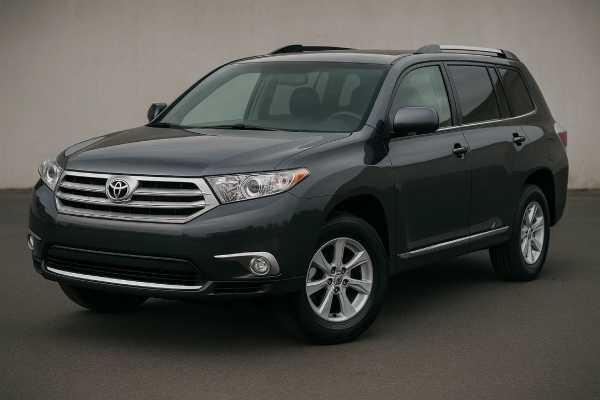
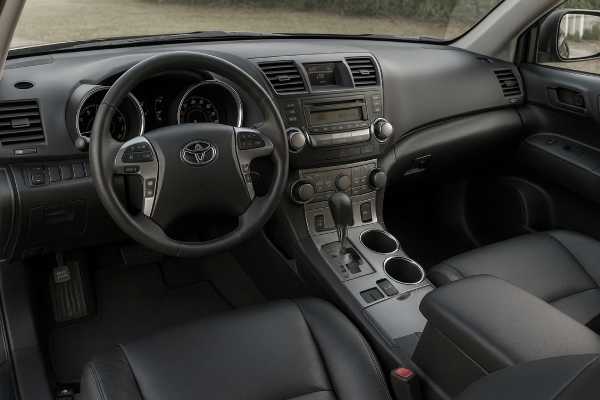
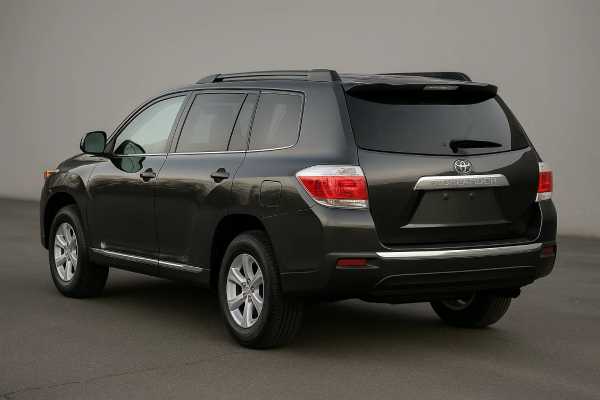
The facelifted 2011–2013 Toyota Highlander FWD with the 1AR-FE 2.7-litre four-cylinder is the most efficient way into the second-generation Highlander. It pairs a sturdy, chain-driven DOHC engine with a smooth 6-speed automatic and the seven-seat space families want. While the V6 is quicker and tows more, the 2.7 keeps operating costs down without giving up the calm ride, straightforward controls, and long-term durability that made this generation popular in the first place. The facelift improved cabin materials and convenience tech, and smart packaging still allows a usable third row when needed. If your daily mix is school runs and highway cruising without heavy towing, the four-cylinder Highlander is a sensible, low-stress choice. This guide focuses on mechanical detail, service planning, reliability patterns, safety notes, and where the four-cylinder shines—so you can decide if it fits your needs and purchase with confidence.
Fast Facts
- Roomy three-row cabin, compliant ride, and quiet highway manners.
- Proven 1AR-FE with timing chain; uses 0W-20 oil and prefers regular fuel.
- Lowest running costs in the lineup; EPA-rated up to 22 mpg combined (≈10.7 L/100 km).
- Caveat: 1,500 lb (680 kg) tow rating—choose V6 if you tow frequently.
- Typical oil and filter interval: 10,000 miles / 12 months (or 5,000 miles in severe use).
Guide contents
- Detailed Overview
- Specifications and Technical Data
- Trims and Options, Safety and Driver Assistance
- Reliability, Common Issues and Service Actions
- Maintenance and Buyer’s Guide
- Driving and Performance
- How it Compares to Rivals
Detailed Overview
The facelifted second-gen Highlander (ASU40, 2011–2013) brought a cleaner front and rear design, improved cabin trim, and updated audio options while keeping the airy, family-friendly layout. The 1AR-FE 2.7-litre inline-four produces 187 hp (≈139 kW) and 186 lb-ft (≈252 Nm). It uses a durable timing chain, dual VVT-i on intake and exhaust, and port fuel injection for consistent drivability and low maintenance. In front-wheel-drive form it’s lighter than V6 models, so the ride feels a touch more buoyant and front-end weight is reduced.
A six-speed automatic (electronically controlled) keeps revs modest at highway speeds and helps the four-cylinder feel responsive in city traffic. Expect calm steering, easy visibility, and predictable brake feel. The third row suits occasional use; cargo flexibility is the Highlander’s strong suit, with a flat load floor and wide hatch opening. Owners who don’t need to tow more than 1,500 lb (680 kg) will appreciate the four-cylinder’s fuel savings and simpler service needs. If you regularly carry seven adults, climb long grades, or tow at the limit, the 3.5-litre V6 is the better match; otherwise, this FWD four-cyl strikes an attractive balance of space, cost, and everyday comfort.
Specifications and Technical Data
Engine and Performance (ICE)
| Item | Detail |
|---|---|
| Code | 1AR-FE |
| Layout & cylinders | Inline-4, DOHC, Dual VVT-i, 16 valves |
| Bore × stroke | 90.0 × 98.0 mm (3.54 × 3.86 in) |
| Displacement | 2.7 L (2,672 cc) |
| Induction | Naturally aspirated |
| Fuel system | Multi-point fuel injection (PFI) |
| Compression ratio | ~10.0:1 |
| Max power | 187 hp (≈139 kW) @ ~5,800 rpm |
| Max torque | 252 Nm (186 lb-ft) @ ~4,100 rpm |
| Timing drive | Chain |
| Emissions / certification | ULEV-II (typical for MY2011–2013) |
| EPA-rated economy | City 20 mpg / Hwy 25 mpg / Comb 22 mpg (≈11.8 / 9.4 / 10.7 L/100 km; ≈24 / 30 / 26 mpg UK) |
| Real-world highway @ 120 km/h | ~9.8–10.5 L/100 km (24–22 mpg US), temperature and wind dependent |
Transmission and Driveline
| Item | Detail |
|---|---|
| Transmission | 6-speed automatic (U760E) |
| Drive type | FWD |
| Gear ratios (typical U760E) | 1st 3.300 • 2nd 1.900 • 3rd 1.420 • 4th 1.000 • 5th 0.713 • 6th 0.608 • Rev 4.148 |
| Final drive ratio | ~3.63:1 (calibration-dependent) |
| Differential | Open front differential |
| Refuel to full | ≈5 min (pump-dependent) |
Chassis and Dimensions
| Item | Detail |
|---|---|
| Platform code | ASU40 (FWD) |
| Suspension (front/rear) | MacPherson strut / Dual-link MacPherson strut with trailing arms |
| Steering | Electric-assist rack-and-pinion; ~2.8–3.1 turns lock-to-lock |
| Brakes | 4-wheel disc (vented front, solid rear), ABS with EBD and Brake Assist |
| Wheels & tyres (tires) | 245/65 R17 (std) • 245/55 R19 (avail) |
| Ground clearance | ~203 mm (8.0 in) |
| Length / Width / Height | ~4,785–4,790 mm (188.4–188.6 in) / ~1,910 mm (75.2 in) / ~1,760 mm (69.3 in) |
| Wheelbase | 2,790 mm (109.8 in) |
| Turning circle (kerb-to-kerb) | ~11.4 m (37.4 ft) |
| Curb weight | ≈1,780–1,840 kg (≈3,920–4,055 lb), equipment-dependent |
| GVWR | ≈2,540–2,610 kg (≈5,600–5,750 lb), trim-dependent |
| Fuel tank | ~72 L (19.2 US gal / 16.0 UK gal) |
| Cargo volume (SAE) | ~292 L (10.3 ft³) behind 3rd; ~1,197 L (42.3 ft³) behind 2nd; ~2,700 L (95.4 ft³) max |
Performance and Capability
| Item | Detail |
|---|---|
| 0–60 mph / 0–100 km/h | ~9.5–9.9 s (typical road test range) |
| Top speed | ~185 km/h (115 mph), speed-limited |
| Braking 100–0 km/h | ~38–41 m (125–135 ft) with healthy pads/tyres |
| Towing capacity | 680 kg (1,500 lb) braked; light trailer only |
| Payload | ~550–680 kg (1,200–1,500 lb), VIN/label specific |
| Roof load | ~68 kg (150 lb) with OEM crossbars |
Fluids and Service Capacities
| System | Specification | Capacity (approx.) |
|---|---|---|
| Engine oil | SAE 0W-20, API SN (or later) | ~4.4 L (4.6 US qt) with filter |
| Coolant | Toyota Super Long Life Coolant (pink), premix 50/50 | ~8–9.5 L (8.5–10.0 US qt), system-dependent |
| Automatic transmission | Toyota ATF WS | ~6.5–7.5 L (6.9–7.9 US qt) service fill |
| Power steering | Electric assist (no fluid service) | — |
| Brake fluid | DOT 3 | Fill to MAX; flush interval-based |
| A/C refrigerant | R-134a | ~500–550 g (18–19 oz), VIN-specific |
| A/C compressor oil | ND-OIL 8 (PAG) | As specified (typically ~120 mL / 4.1 fl oz) |
| Spark plugs | Iridium, long-life; gap 1.1 mm (0.043–0.044 in) | — |
| Key torque (examples) | Wheel lug nuts 103 Nm (76 lb-ft); drain plug 39 Nm (29 lb-ft) | — |
Notes: Capacities vary by VIN, options (towing prep, rear HVAC), and production updates. Always confirm on the under-hood labels and service manual for your vehicle.
Electrical
| Item | Detail |
|---|---|
| Alternator | ~100–130 A, equipment-dependent |
| 12V battery | Group 24F (typical), ~550–700 CCA |
| Spark plug service | 120,000 miles (192,000 km) typical long-life interval |
Safety and Driver Assistance
| Item | Detail |
|---|---|
| Crash testing | IIHS tested; strong results in moderate overlap, side, roof, and head restraints; 2013 earned Top Safety Pick |
| Headlights | Halogen reflector; performance depends on aim and lens clarity |
| Restraints | Dual-stage front, front seat-mounted side, full-length side curtain airbags; LATCH in 2nd row outboard |
| Stability & braking | VSC stability control, TRAC, ABS, EBD, Brake Assist, Downhill Assist Control (some trims) |
| ADAS | Pre-advanced-driver-assist era: no AEB/ACC/LKA; rear camera availability increased post-facelift |
Trims and Options, Safety and Driver Assistance
Trims and key equipment (FWD four-cylinder, 2011–2013):
- Base: 17-in alloys, cloth interior, manual front seats, three-zone HVAC (front/rear), third-row seating, basic audio. The 2.7L was most commonly sold in this grade.
- SE (availability varies by year for 2.7L): 19-in wheels, sport-tuned styling cues, power driver seat, power liftgate, upgraded audio, moonroof. Many SEs were V6; verify engine on VIN plate.
- Limited (primarily V6): Leather, heated front seats, Smart Key, JBL audio, tri-zone automatic climate, 19-in wheels, more sound insulation.
Option packages and identifiers:
- Towing prep on four-cylinder is limited; factory tow ratings remain 1,500 lb. Aftermarket Class II hitches are common; wiring harnesses differ by trim—confirm connector presence behind rear trim.
- Wheels/tyres: 17-in setup rides softer and is cheaper to replace; 19-in improves response but transmits more road texture.
- Audio/infotainment: The facelift era introduced a 6.1-in Display Audio head unit on many 2013 models with Bluetooth streaming; check for USB port placement in the lower stack.
- Quick tells: The under-hood emissions label lists engine family and displacement; 2.7-litre intake plenum is visibly different from the 3.5 V6. VIN engine digit helps confirm (consult decoding chart).
Safety ratings (high level, 2011–2013):
- IIHS: This generation achieved Good ratings in the core tests through 2013, with the 2013 Highlander named a Top Safety Pick when equipped as tested. Small-overlap testing launched after this generation; results are not applicable to 2011–2013 for that test.
- NHTSA: Star ratings vary by year/equipment with the 2011 methodology change; most four-cylinder FWD models scored well in frontal and side. Verify for your specific VIN on the official database.
Safety systems and child-seat provisions:
- Front, side, and curtain airbags covering all rows; active front head restraints; LATCH anchors and top tether points in the 2nd row.
- Stability control and traction control standard; hill-start assist common.
- Rearview camera availability improved across the run; confirm display type (mirror vs head unit).
- After service (windshield replacement, front crash repair), confirm proper airbag sensor mounting and camera/mirror functionality; no camera-based calibration on these years, but alignment and sensor DTC checks are prudent.
Reliability, Common Issues and Service Actions
The 1AR-FE Highlander is generally a low-drama ownership experience. Typical age-related items and a few model-specific points are worth planning for:
Engine and ancillaries
- Water pump seepage (occasional, medium cost): Look for pink residue at the pump weep hole or crust on the timing cover. Remedy is pump replacement and fresh SLLC coolant.
- Thermostat/ECT sensor faults (occasional, low/medium): Erratic warm-up or P012x codes. Replace thermostat and/or sensor; bleed cooling system.
- Oil leaks at timing cover (occasional, medium): Minor misting is common with age. If leakage reaches the belt area or drips, reseal during other front-end service.
- PCV valve and valve-cover gasket (occasional, low): Elevated idle consumption or smell; simple replacement.
Fuel/ignition
- Coil-on-plug misfire (occasional, low/medium): Heat and age can weaken coils. Replace affected coil and plugs as a set if mileage is high; use correct iridium spec and 1.1 mm gap.
Transmission/driveline (U760E FWD)
- Harsh downshift or delayed engagement (occasional, low/medium): Often improved by fluid exchange with Toyota ATF WS and reset/adaptation; software updates exist for some calibrations.
- Axle seal seepage (occasional, low): Inspect CV seals; replace seal and top up ATF WS if wet.
Chassis and body
- Front lower control arm rear bushings (common, medium): Cracks cause clunks and vague steering. Replace bushings or complete arms; align after.
- Wheel bearings (occasional, medium): Growl proportional to speed; replace hub assembly.
- Strut mounts/top hats (occasional, medium): Popping over speed bumps; replace mounts and consider strut refresh at ~90–120k miles (145–190k km).
- Liftgate struts (common, low): Slow lift in cold temps; replace pair.
HVAC and electrical
- Blower motor resistor (occasional, low): Fan only works on certain speeds; replace resistor and check cabin filter.
- Evaporative emissions (EVAP) leak codes (occasional, low): Loose cap or canister vent valve. Smoke test to confirm.
Corrosion watchpoints
- Rear subframe seams, exhaust flanges, and fasteners in rust-belt areas. Underbody wash and periodic rustproofing help longevity.
Recalls, TSBs, extended coverage (headline view)
- Pedal/floor-mat interference campaigns on earlier years were widely addressed across the generation; verify completion via official VIN check.
- Airbag and seat-heating element campaigns may appear on specific trims/options; again, confirm by VIN.
- Software updates for transmission shift quality and HVAC control exist; ask for TSB history printouts during pre-purchase.
Pre-purchase checklist
- Full maintenance history (oil intervals, coolant, ATF).
- No coolant staining around water pump or radiator end tanks.
- Smooth transmission engagement and clean, pink ATF WS.
- Even tyre wear, straight braking, and quiet wheel bearings.
- Third-row latching and rear HVAC operation (if equipped).
- VIN recall/TSB status verified.
Maintenance and Buyer’s Guide
Practical maintenance schedule (time/distance, whichever comes first)
- Engine oil & filter: 10,000 miles / 12 months on 0W-20; 5,000 miles / 6 months if mainly short trips, extreme temps, or heavy idling.
- Engine air filter: Inspect 15,000 miles; replace 30,000 miles (sooner in dusty regions).
- Cabin filter: 15,000–20,000 miles; more often with pets/pollen.
- Coolant (SLLC pink): First at 100,000 miles / 10 years, then every 50,000 miles / 5 years.
- Spark plugs (iridium): 120,000 miles (192,000 km).
- Accessory/serpentine belt: Inspect 60,000 miles; replace by condition (~90,000–120,000 miles).
- ATF WS (service fill): Inspect at 60,000 miles; drain-and-fill every 60,000–90,000 miles if keeping long-term.
- Brake fluid: Flush every 3 years regardless of mileage.
- Brake pads/rotors: Inspect at every tire rotation; typical service 30,000–70,000 miles depending on use.
- Tyre rotation & alignment: Rotate every 5,000–7,500 miles; align annually or with tyre replacement.
- 12 V battery test: Annually after year three; expect 4–6 year life in temperate climates.
- Valve clearances: Non-adjustable by routine; listen for abnormal top-end noise—diagnose if present.
Fluid specifications & quick notes
- Oil: SAE 0W-20 full synthetic meeting API SN+/SP; capacity ≈4.6 qt with filter.
- Coolant: Toyota SLLC (premix, pink).
- ATF: Toyota WS only; check level at service temperature.
- Brake fluid: DOT 3; DOT 4 acceptable if flushing fully—do not mix types.
- Torque highlights: Wheel nuts 103 Nm (76 lb-ft); oil drain 39 Nm (29 lb-ft); spark plugs 18–22 Nm (13–16 lb-ft) on clean, dry threads.
Buyer’s Guide—what to look for
- Road test: Cold start, listen for belt chirps; smooth 1–2 and 2–3 upshifts; no shudder in light throttle.
- Cooling system: Any pink crust around pump or radiator = negotiation leverage.
- Suspension: Clunks over sharp bumps point to strut mounts or LCA rear bushings.
- Brakes: Straight stops without steering wheel shimmy; rusty backing plates common in salt states.
- Interior/electrics: Functioning rear HVAC, fold/slide 2nd row tracks, and working rear camera.
- Body: Even panel gaps, intact under-engine splash shield, and no subframe rust scale.
Recommended configurations
- Daily family use, lowest cost: Base 2.7 FWD on 17-in wheels; ride comfort and tyre prices are best.
- If you sometimes tow or carry full loads: Consider the V6; otherwise accept the four-cylinder’s 1,500-lb limit.
- Avoid: Neglected fluids, mismatched tyres, or any truck with unresolved coolant or transmission complaints.
Durability outlook
With routine fluids and wear items, the 1AR-FE/6AT combo commonly runs beyond 200,000 miles (320,000 km). Age-related suspension and cooling service are predictable and manageable. The absence of early-generation advanced driver aids translates into fewer high-ticket sensor issues in old age.
Driving and Performance
Ride, handling, and NVH
The four-cylinder FWD Highlander aims for comfort first. Spring and damper tuning favour a settled ride on broken pavement, with gentle initial compliance and decent secondary control. Road and wind noise are modest for the class; the boxy shape helps outward visibility. The steering is light at parking speeds and stable on-centre at 65–75 mph (105–120 km/h). Body roll appears in quick transitions, but grip from 17-inch tyres is predictable and the stability control remains unobtrusive in normal driving.
Powertrain character
Around town, the 1AR-FE moves the Highlander smartly off the line, with useful midrange torque and smooth revs to the low-6,000s. The six-speed keeps the engine relaxed at cruise; kickdown is prompt enough for passing, and manual selection helps on long grades. Compared to the V6, wide-open throttle feels modest, but drivability in everyday traffic is satisfying.
Real-world efficiency
In mixed suburban/highway use, owners commonly see 22–24 mpg US (10.7–9.8 L/100 km) in mild weather on 17-inch tyres. Cold winters, short trips, and roof racks can drop results into the high teens (US mpg). At a steady 75 mph (120 km/h), expect roughly 22–23 mpg US (10.7–10.2 L/100 km) depending on wind and elevation.
Load and towing
With a 1,500 lb (680 kg) tow ceiling, the four-cylinder suits utility trailers, small boats, and lawn equipment. The transmission is happier when you lock out 6th on grades and watch temperatures in desert heat; an auxiliary cooler is a smart upgrade if you tow frequently, even within rating. With seven aboard and luggage, plan passing distance—downshifts are smooth but the engine will spend more time above 4,000 rpm.
How it Compares to Rivals
- Honda Pilot (2009–2015): Standard V6 and 4,500 lb tow rating deliver stronger acceleration and tow confidence. The Highlander’s ride isolation and interior materials feel more refined, and fuel economy is better for the Toyota four-cylinder.
- Ford Explorer (2011–2015): Broad engine choice and tech, but higher complexity and repair costs as these age. Highlander is simpler to own and generally quieter in daily use.
- Chevrolet Traverse (2009–2013): Massive cabin and cargo space but thirstier V6 and bulkier feel. The Toyota’s packaging is handier in tight parking and reliability record steadier.
- Mazda CX-9 (2010–2015): Best steering/handling in the segment; thirstier and with tighter third-row access. The Highlander rides softer and runs cheaper.
- Nissan Pathfinder (2013): CVT smoothness versus Toyota’s conventional 6-speed. Pathfinder offers efficiency but mixed CVT longevity reports; Highlander four-cyl favours long-term peace of mind.
References
- 2013 Toyota Highlander 2013 (EPA Ratings)
- 2013 Toyota Highlander 2013 (Safety Rating)
- 2013 Toyota Highlander Quick Reference Guide 2013 (Owner’s Guide)
Disclaimer
This article is for informational purposes and does not replace professional diagnosis or repair. Specifications, fluid capacities, torque values, service intervals, and procedures vary by VIN, model year, market, and equipment. Always verify details against your vehicle’s official service information and under-hood labels.
If you found this guide helpful, please consider sharing it with fellow owners on Facebook or X/Twitter to support xcar’s work.