
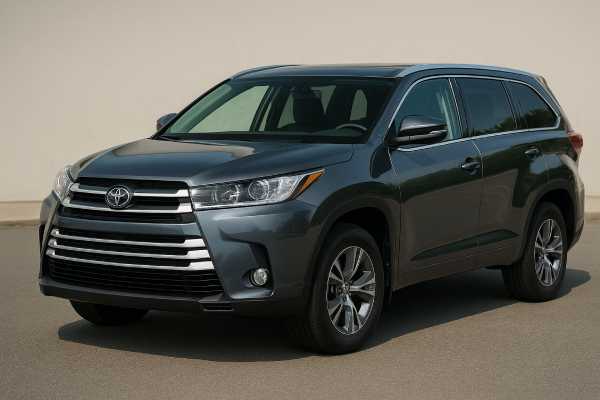
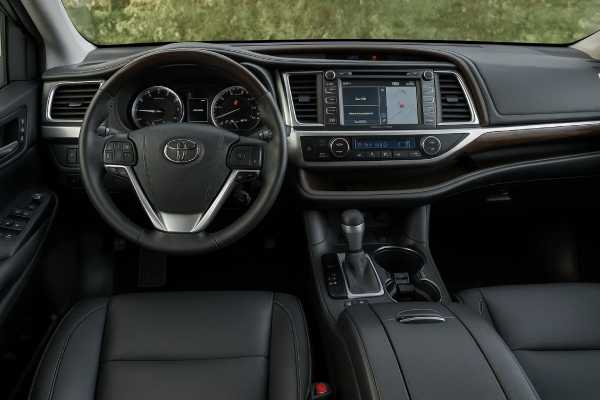
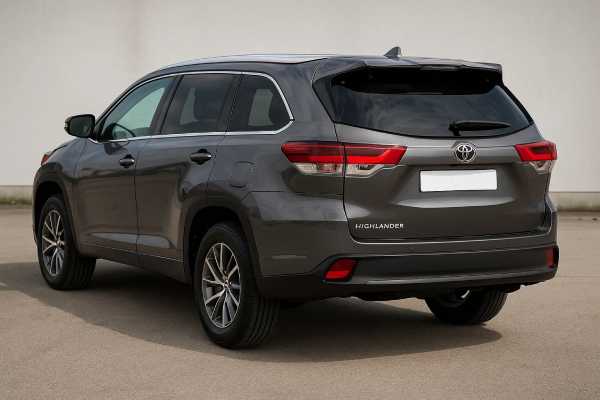
The 2017–2019 Toyota Highlander FWD (GSU50) pairs Toyota’s revised 2GR-FKS 3.5-liter V6 with an 8-speed automatic, a quieter cabin, and standard active safety. This facelift cycle (within the third-generation XU50) is the sweet spot for buyers who want a proven naturally aspirated V6, family-friendly packaging, and long-term durability without the tech bloat of later generations. It seats up to eight, tows confidently when equipped, and returns respectable real-world economy for a three-row SUV. Owners value the calm ride and easy manners; technicians appreciate the straightforward serviceability of a non-turbo V6, the dual-injection fuel system’s cleanliness, and Toyota’s conservative calibrations. If you need AWD there’s a separate code, but many shoppers in temperate climates will prefer the lighter, simpler FWD model for lower running costs and better mileage. This guide focuses on U.S./Canada-market configurations and the FWD V6, with concise notes where choices or ratings differ.
Fast Facts
- Strong V6/8-speed combo: smooth, predictable power; cruises at low rpm with light throttle.
- Quiet, stable ride and simple controls: effortless on long highway trips; family-friendly cargo layout.
- Standard active safety suite with solid crash results; child-seat access is straightforward.
- Watch for 8-speed software updates (shift quality) and routine cooling/drive-belt inspections by 100k mi (160k km).
- Typical oil change interval: 10,000 mi / 12 months with 0W-20 (shorten to 5,000 mi / 6 months for heavy stop-and-go or towing).
Explore the sections
- Highlander FWD 2017–2019 Overview
- Highlander FWD 3.5 V6 Specs
- Highlander FWD Trims and Safety
- Reliability and Known Issues
- Maintenance and Buyer’s Guide
- Driving Feel and Real Economy
- Highlander vs Key Rivals
Highlander FWD 2017–2019 Overview
The 2017 refresh brought the biggest hardware leap of this generation: Toyota’s 2GR-FKS 3.5-liter V6 with D-4S dual injection (port plus direct) and an 8-speed automatic (“Direct-Shift 8AT”). Output rose to 295 hp (220 kW) and 263 lb-ft (357 Nm). Beyond the numbers, the new gearbox spreads ratios widely to keep rpm low in cruise yet deliver instant response when you dip into the throttle. The facelift also standardized an active safety suite across the lineup and tidied the styling with a bolder grille and LED tail lamps.
For families, the Highlander’s appeal rests on ease: wide-opening doors, a low step-in height, an airy second row, and a third row that suits kids or short hops. The dash puts hard keys where you want them and keeps climate controls separate from infotainment, which means muscle memory works even when you are wearing gloves. Cargo flexibility is simple—flat load floor with the third row folded, broad opening, and useful under-floor storage for straps, a hitch plug, or an emergency kit.
Towing is a strong suit when properly equipped, thanks to the stout V6, tall cooling capacity, and stable chassis. Most V6 examples are wired for a 7-pin trailer connector and include the necessary programming for trailer-sway control. Front-wheel drive models are lighter and slightly thriftier than AWD, and with good all-season tires they suit year-round use in milder climates. Finally, long-term ownership favors this facelift: the V6 avoids turbo complexity, the dual-injection helps keep valves cleaner than early direct-injection designs, and routine parts (pads, rotors, filters, belts) are widely available and reasonably priced.
Highlander FWD 3.5 V6 Specs
Engine and Performance (ICE)
| Item | Detail |
|---|---|
| Code | 2GR-FKS |
| Layout & cylinders | Transverse V6, DOHC, 24 valves, Dual VVT-i |
| Displacement | 3.5 L (3,456 cc) |
| Induction | Naturally aspirated |
| Fuel system | D-4S dual injection (port + direct) |
| Compression ratio | 11.8:1 (nominal) |
| Max power | 295 hp (220 kW) @ ~6,600 rpm |
| Max torque | 357 Nm (263 lb-ft) @ ~4,700 rpm |
| Timing drive | Chain |
| Emissions/efficiency standard | EPA certification class (U.S.) |
| Rated economy (FWD V6, EPA) | ~21 mpg city / 27 mpg highway / 23 mpg combined (11.2 / 8.7 / 10.2 L/100 km) |
| Real-world highway @ 75 mph | Typically 24–26 mpg (9.4–9.0 L/100 km), load/temps dependent |
| Aerodynamics | Cd approx. low-to-mid-0.3s; large frontal area typical of class |
Notes: rpm points vary slightly by dataset and trim calibration; real-world consumption depends on temperature, tire package, and roof crossbars.
Transmission and Driveline
| Item | Detail |
|---|---|
| Transmission | 8-speed automatic (electronically controlled), torque converter |
| Drive type | Front-wheel drive (FWD) |
| Final drive ratio | ~3.00–3.00:1 range (varies slightly by trim/equipment) |
| Differential | Open |
| Replenishment time | Refuel to full ~5 min at pump |
Chassis and Dimensions
| Item | Detail |
|---|---|
| Front / rear suspension | MacPherson strut / double-wishbone (coil spring) |
| Steering | Electric power assist; ratio tuned for calm highway tracking |
| Brakes | 4-wheel discs; ventilated fronts; ABS with EBD and brake assist |
| Wheels / tires (typical) | 245/60R18 or 245/55R19 (18″ standard on most, 19″ on SE/Limited) |
| Ground clearance | ~203 mm (8.0 in) |
| Length / width / height | ~4,890 / 1,925 / 1,730 mm (192.5 / 75.8 / 68.1 in) |
| Wheelbase | 2,790 mm (109.8 in) |
| Turning circle (curb-to-curb) | ~11.8 m (38.7 ft) |
| Curb weight (FWD V6) | ~1,880–1,935 kg (4,145–4,265 lb), by trim |
| GVWR | ~2,670–2,720 kg (5,890–6,000 lb), by trim |
| Fuel tank | ~72 L (19.0 US gal / 15.8 UK gal) |
| Cargo volume (SAE) | ~391 / 1,198 / 2,371 L (13.8 / 42.3 / 83.7 ft³) — 3rd row up / 3rd row down / 2nd & 3rd rows down |
Performance and Capability
| Metric | Result |
|---|---|
| 0–60 mph / 0–100 km/h | ~7.3–7.8 s (FWD, typical instrumented tests) |
| Top speed | ~185 km/h (115 mph), governed |
| 100–0 km/h (62–0 mph) braking | ~37–40 m (121–131 ft), tire-dependent |
| Towing capacity (braked) | Up to 2,268 kg (5,000 lb) when equipped |
| Payload (typical) | ~650–800 lb (295–365 kg), by trim |
| Roof load | ~75–75 kg (165 lb) crossbar-rated (check accessory spec) |
Fluids and Service Capacities (essentials)
| System | Specification | Capacity (approx.) |
|---|---|---|
| Engine oil | SAE 0W-20 (API/ILSAC), full synthetic; new drain-plug washer recommended | ~5.7–5.8 qt (5.4–5.5 L) with filter |
| Coolant | Toyota Super Long Life (pink), premix | See service manual; refill volume varies with procedure |
| Automatic transmission | Toyota WS ATF | Service fill varies; drain-and-fill ≈ 3–4 qt typical |
| A/C refrigerant | R-134a or R-1234yf (by build/year); verify under-hood label | Charge amount per label |
| A/C compressor oil | PAG (type per label) | Per label |
| Key torque values (common) | Wheel lug nuts ≈ 103–108 Nm (76–80 lb-ft); oil drain plug ≈ 39–41 Nm (29–30 lb-ft) | — |
Always confirm exact fluid capacities and torque values by VIN and service literature; some figures vary with trim, cooling package, or running changes.
Electrical
| Item | Detail |
|---|---|
| Alternator | Denso unit; rating varies by equipment (typ. ~150–180 A) |
| 12V battery | Group 24F (common fit), ~600–650 CCA typical; AGM optional |
| Spark plugs | Long-life iridium; service interval up to 60k–120k mi depending on usage; gap ~0.7–0.8 mm (0.028–0.031 in) |
Safety and Driver Assistance
| Item | Detail |
|---|---|
| Crash ratings (IIHS) | Strong overall results for 2017–2019 with a Top Safety Pick+ for certain headlight/ADAS combinations; passenger-side small-overlap was Acceptable on many 2017–2019 test vehicles |
| Headlights (IIHS) | Ratings varied by trim/headlamp; halogen projectors commonly scored Adequate |
| NHTSA overall (FWD) | Robust star ratings; verify by exact year/trim |
| ADAS suite | Pre-Collision System with Pedestrian Detection, Lane Departure Alert with Steering Assist, Dynamic Radar Cruise Control, Automatic High Beams standard; Blind-Spot Monitor and Rear Cross-Traffic Alert commonly standard from XLE upward; surround-view on Limited Platinum |
Highlander FWD Trims and Safety
Trims at a glance (gas V6, FWD available): LE, LE Plus, XLE, SE, Limited, Limited Platinum. All share the 295-hp V6 and 8-speed automatic in this period; AWD was optional but isn’t covered here.
- LE (FWD): 18-inch wheels, 6.1-inch audio screen, fabric seating (bench second row), backup camera, five USBs, tri-zone climate, roof rails, privacy glass. Many V6 LE vehicles include a tow prep, but the physical hitch/7-pin harness depends on the package—verify at the bumper.
- LE Plus: Adds 8-inch display audio, power liftgate, fog lamps, SofTex-trimmed seats, leather-wrapped wheel/shift knob, and additional storage touches. Ride/handling remain comfort-oriented.
- XLE: Leather, heated front seats, moonroof, navigation with app suite, Smart Key, Driver Easy Speak, integrated second-row sunshades. Blind-Spot Monitor and Rear Cross-Traffic Alert typically become standard here.
- SE: Cosmetic blackout details, 19-inch wheels, and a slightly firmer “sport-tuned” suspension. Steering remains light; think of it as a styling package with a touch more body control over large undulations.
- Limited: 19-inch Chromtec wheels, JBL audio, ambient lighting, ventilated fronts, memory driver’s seat/mirrors, extra chrome trim. Seats often configured for seven (captain’s chairs), but an eight-seat bench was available.
- Limited Platinum: Panoramic moonroof, rain-sensing wipers, heated second row (or outboard seats on bench), Bird’s Eye View Monitor, and additional trim.
Year-to-year highlights (FWD V6):
- 2017: New V6/8-speed powertrain; Toyota Safety Sense P standard; SE grade introduced.
- 2018: Packaging tweaks and feature reshuffles; headlight and ADAS availability broaden slightly depending on trim; software refinements for shift logic begin to filter into service campaigns.
- 2019: Feature mix adjusted; Entune interface remains (no factory Apple CarPlay/Android Auto in this generation), but content and finishes improved in upper trims.
Safety ratings and systems (practical summary):
- Crashworthiness: Structure and restraint performance are consistently strong, with particularly good results in driver-side small-overlap and moderate-overlap tests. Passenger-side small-overlap scores improved with spec nuances; headlight performance depends heavily on trim/headlamp spec.
- ADAS: The standard suite includes forward collision mitigation with pedestrian detection, lane departure with steering assist, adaptive cruise, and auto high beams. After windshield replacement or front-end repairs, camera/radar calibration is mandatory for proper function. Blind-Spot Monitor and RCTA arrive by XLE; the Limited Platinum’s surround-view can require precise calibration after mirror/camera service.
Quick identifiers/VIN hints:
- Model code: GSU50 = FWD V6; GSU55 = AWD V6.
- SE tells: Blacked-out grille/headlamp accents and unique 19″ wheels.
- Tow prep clues: 7-pin outlet near hitch, transmission cooler lines, and specific under-tray ducting.
Reliability and Known Issues
The facelifted Highlander FWD is generally low-drama. Most owners report only routine wear items through the first 100,000 miles (160,000 km). Still, informed buyers and DIY owners should monitor the following:
Common to occasional issues
- 8-speed shift quality (calibration): Early software for the 8AT could feel busy in rolling suburbs (frequent up/downshifts, slight hesitations). Updated TCM calibrations smooth low-speed behavior and lockup logic. If your test drive shows hunting or odd part-throttle shifts, have a dealer check for the latest programming.
- Water pump seepage (V6 accessory drive): A known Toyota V6 story across years. Watch for pink crust at the pump weep hole or sporadic coolant smell after shutdown. Replace pump/belt together and pressure-test the system; plan a coolant refresh.
- Front brake wear and judder: Heavy city use and larger 19″ packages can accelerate pad wear or induce rotor thickness variation. Quality pads/rotors and proper wheel-nut torque often cure recurring judder.
- Battery aging and accessory load: Short-trip families with many door cycles and powered doors/liftgates may see early 12V fatigue. Proactively test annually after year three, especially before winter trips.
Less frequent but worth noting
- Intake deposits: The D-4S dual-injection strategy greatly reduces intake-valve buildup versus early DI-only engines. It’s rarely severe here. A good highway run and fresh, high-detergent fuel help keep the system clean.
- A/C condenser or line stone damage: The front condenser sits low; rock strikes can cause slow leaks. A mesh lower grille insert (tasteful, not restrictive) helps.
- Interior creaks/rattles: Third-row seatbacks and cargo-floor panels can squeak. Adjust latches and add felt tape if needed.
Recalls/Service actions (overview)
- Fuel pump (supplier campaign, select VINs): Certain Toyota models within this era were covered for low-pressure fuel pump impeller concerns. Verify by VIN and ensure remedy parts are installed.
- Airbag/sensor and software updates: As with most modern vehicles, various module flashes and sensor updates appear over time (SRS, audio/nav, ADAS cameras). A dealer can pull the campaign record.
Severity/cost snapshot (rough, U.S. independent-shop context)
- Low: Battery ($), brake pads/rotors ($–$$), cabin fan resistors, liftgate struts.
- Medium: Water pump/belt ($$), wheel bearings ($$), alignment/bushing sets ($$).
- High (rare): Transmission internal repairs; usually avoidable with proper fluid care and updated software.
Pre-purchase checklist
- Full service history (oil intervals, coolants, ATF services).
- VIN recall check and proof of completion.
- Smooth 8-speed behavior when warm (suburban loop).
- Even tire wear and no brake shimmy at freeway speeds.
- No coolant odor or residue; dry pump area.
- Interior electronics: all USB ports, liftgate, camera views, parking sensors.
- Hitch harness integrity (if towing): clean pins, no hack splices.
Maintenance and Buyer’s Guide
Practical maintenance schedule (typical conditions)
- Engine oil & filter: 10,000 mi / 12 months with 0W-20; shorten to 5,000 mi / 6 months for heavy stop-and-go, short-trip use, desert heat, or frequent towing.
- Engine air filter: Inspect 10,000 mi (16,000 km); replace 30,000–45,000 mi (48,000–72,000 km) or sooner in dusty regions.
- Cabin filter: 15,000–20,000 mi (24,000–32,000 km); more often with pets or urban pollen.
- Coolant (SLLC pink): Long-life; first service ~100,000 mi (160,000 km) / 10 years, then ~50,000 mi (80,000 km) / 5 years thereafter, or when components are replaced.
- Spark plugs (iridium): Up to 60,000–120,000 mi depending on duty cycle/fouling; inspect earlier if misfire counts climb.
- Fuel filter: In-tank, lifetime service in normal use; replace only when diagnosing.
- Serpentine/aux belt & hoses: Inspect every 30,000 mi (48,000 km); replace at cracks/glazing/noise or 90,000–120,000 mi (145,000–193,000 km).
- Automatic transmission (WS ATF): Many manuals list “lifetime fill,” but preventive drain-and-fills every 60,000–90,000 mi (96,000–145,000 km) keep shifts crisp—especially if you tow. Use the correct temp-check procedure.
- Brake fluid: Replace every 3 years regardless of mileage.
- Brake pads/rotors: Inspect at each tire rotation; rust belts in snowbelt climates can shorten rotor life.
- Alignment & tire rotation: Rotate every 5,000–7,500 mi; align annually or when replacing tires/steering parts.
- Steering/suspension: Inspect links/bushings at 60,000 mi, then annually.
- 12V battery: Test annually after 3 years; many go 4–6 years.
- HVAC & A/C: Visual check each spring; refrigerant type/charge must match the under-hood label—don’t mix R-134a and R-1234yf systems.
- Timing components: Chain-driven; no scheduled replacement. Inspect for timing-correlation faults or chain noise only if symptoms arise.
Fluid specs (at a glance)
- Engine oil: SAE 0W-20 full synthetic, API/ILSAC compliant. Approx. 5.7–5.8 qt (5.4–5.5 L) with filter.
- Coolant: Toyota Super Long Life Coolant (pink), premix.
- ATF: Toyota WS.
- Brake fluid: DOT 3 or DOT 4 high-quality; avoid mixing types without full flush.
- Power steering: Electric assist (no fluid service).
- A/C: R-134a or R-1234yf per label; use correct PAG oil type/quantity.
Essential torques (for DIYers)
- Wheel lugs: ~103–108 Nm (76–80 lb-ft).
- Oil drain plug: ~39–41 Nm (29–30 lb-ft).
Verify torque by VIN/manual; values may vary slightly.
Buyer’s guide: what to seek
- Trims: XLE is the smart buy (heated leather, BSM/RCTA, moonroof, 8″ screen). SE if you like the look and a touch firmer ride. Limited/Limited Platinum add luxury and surround-view.
- Packages: If you plan to tow, prioritize vehicles with factory tow prep/hitch and 7-pin wiring.
- Years: 2018–2019 examples benefit from rolling software refinements; a clean 2017 with updated TCM flash is equally compelling.
- Avoid: Heavily modified lighting/wiring, neglected fluids (“lifetime” marketing), or uneven tire wear suggesting alignment issues.
Durability outlook
- With normal use and the schedule above, 200,000+ miles (320,000+ km) is realistic for the drivetrain. The engine’s dual-injection keeps valves cleaner; the 8-speed thrives on fresh fluid and current software. Body/chassis corrosion is modest outside the harshest salt belts; treat exposed seams if you live in those areas.
Driving Feel and Real Economy
Ride, handling, and NVH: The Highlander’s set-and-forget demeanor is its calling card. Spring and damper tuning favor a supple primary ride that calms broken pavement without float. Highway stability is excellent; once centered, it tracks straight with few corrections, and crosswinds have a muted effect. Body motions are well-checked for a three-row, and even the 19″ wheels don’t turn expansion joints into a chore. Road and wind noise are low for the class—one reason families routinely choose the Highlander for road trips.
Steering and braking: Steering is light and consistent, with a relaxed on-center feel. It doesn’t chase road crown, and assist ramps naturally in parking lots. Pedal bite is linear; repeated hard stops may reveal the usual crossover fade, so stick with quality pads/rotors and mind wheel-torque uniformity to fend off judder.
Powertrain character: The 2GR-FKS starts quietly, idles glass-smooth, and pulls cleanly from low rpm. The 8-speed prefers low-rpm cruising; kickdown is decisive when you need a pass. In early software, the box could hunt on rolling terrain; the latest flash maps settle that behavior. There’s no turbo surge to manage—just a predictable, naturally aspirated ramp to redline.
Observed efficiency: Expect city in the high-teens to low-20s mpg (13–11 L/100 km) and highway near mid-20s (≈9–10 L/100 km) at 65–75 mph (105–120 km/h), depending on passengers, tires, temperature, and whether you run crossbars or a cargo box. Mixed driving commonly lands around the EPA combined figure. Winter short trips can push city numbers down; summer freeway cruises with gentle throttle can exceed the window-sticker highway value.
Towing and load behavior: With a proper hitch and brake controller, a 3,000–4,000 lb (1,360–1,815 kg) camper is within the comfort zone. Stability is good; the longer wheelbase helps, and transmission temps remain reasonable when you respect grade and speed. Plan a 20–35% fuel-economy penalty while towing or packed with eight people and luggage, and increase following distance—the brakes are capable but you’re moving real mass.
Highlander vs Key Rivals
Honda Pilot (3.5 V6): The Pilot offers a roomier third row and sometimes softer ride tuning, with a cabin that feels airier in back. Highlander counters with simpler controls, often quieter highway manners, and (for many owners) fewer squeaks/rattles as mileage builds. The Highlander’s V6/8-speed pairing feels more cohesive than some early 9-speed Pilots.
Mazda CX-9 (2.5T): The Mazda drives with more verve—tighter steering, less roll, and a premium-leaning finish. Its turbo-four offers strong low-rpm torque but prefers premium fuel for best performance. The Highlander’s naturally aspirated V6 is simpler to maintain long-term and is less sensitive to fuel quality. Cabin space and child-seat logistics favor Toyota for larger families.
Ford Explorer (2.3T/3.5/others): Explorers deliver powertrain variety and, in some years, tech density. Toyota gives away cutting-edge toys but often wins on powertrain durability/total cost of ownership. Packaging and upfit (hitch wiring, camera calibrations) tend to be more predictable on Highlanders.
Chevrolet Traverse / Buick Enclave: GM’s big three-rows feel larger inside, with easier third-row access and abundant cargo room. However, they occupy more road and garage space, and ownership costs can run higher. If you don’t need the extra cubic feet, Highlander is easier to park and typically quieter over time.
Subaru Ascent: Standard AWD and a punchy turbo-four attract cold-climate buyers. The Highlander FWD is thriftier and simpler if you don’t need AWD; Toyota’s cabin hush at 70–75 mph is still a benchmark.
Volkswagen Atlas: Superb space and upright seating; ride/handling tuning is pleasant. Toyota’s V6 is stronger and usually more reliable long-term; interior materials and switchgear feel more robust in daily abuse.
References
- 2018 Toyota Highlander Product Info 2017 (Manufacturer Publication)
- 2017 Highlander with More Power, More Safety and More Model Choices Adds up to More Value Pricing 2017 (Manufacturer Publication)
- Fuel Economy of 2019 Toyota Highlander 2019 (EPA Data)
- 2017 Toyota Highlander 2017 (Safety Rating)
- Vehicle Detail Search – 2019 TOYOTA HIGHLANDER SUV FWD | NHTSA 2019 (Recall Database/Safety Ratings)
Disclaimer
This guide is for informational purposes and is not a substitute for professional diagnosis, repair procedures, or official service information. Specifications, torque values, fluid types/capacities, ratings, and maintenance intervals can vary by VIN, market, trim, and running changes. Always verify details against your vehicle’s owner’s manual, under-hood labels, and the official service manual or technical bulletins before performing work. If you found this helpful, feel free to share it on Facebook or X/Twitter to support xcar’s work.