
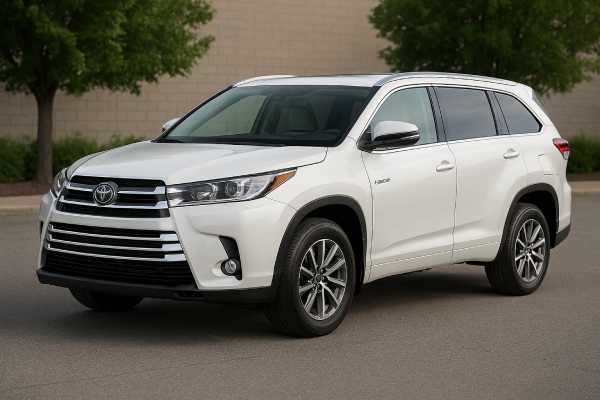
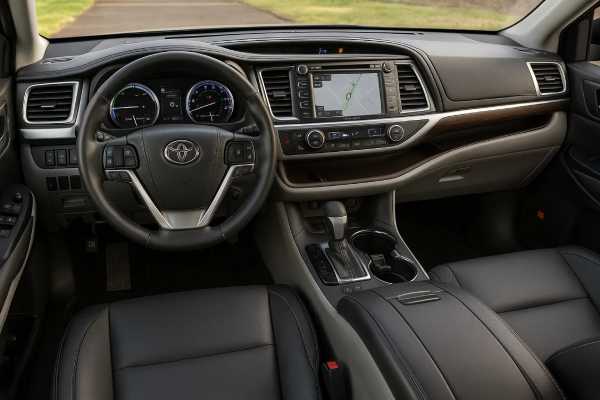
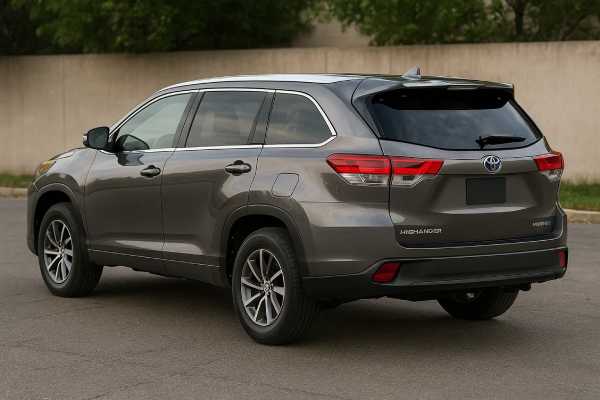
The 2017–2019 Toyota Highlander Hybrid (AVU55) pairs a proven 3.5-liter Atkinson-cycle V6 (2GR-FXS) with Toyota’s Hybrid Synergy Drive and an Electronic On-Demand AWD system. Post-facelift updates brought stronger performance, broader trim coverage (LE through Limited Platinum), and standard active safety. The hybrid’s 306-hp net system output moves a full three-row cabin with confidence, yet it returns standout mileage for a midsize SUV. Owners like the quiet ride, low running costs, and Toyota’s reputation for durability. Technically, the eAWD-i layout is simple and robust: a power-split eCVT up front and an independent rear electric motor that engages when traction is needed—no driveshaft or transfer case to service. Maintenance is straightforward: no timing belt, no conventional alternator, long-life fluids, and 10,000-mile oil changes. If you want family-friendly space with fewer fuel stops—and winter-friendly traction without the weight and wear of a mechanical AWD system—the 2017–2019 Highlander Hybrid belongs on your shortlist.
Essential Insights
- Strong value mix: 306 hp, quiet cabin, smooth eCVT, and real-world 28 mpg US (≈8.4 L/100 km).
- eAWD-i adds traction with few extra parts; no driveshaft/transfer case to maintain.
- Standard active safety (AEB, adaptive cruise, lane assist) across all trims.
- Caveat: inverter/engine cooling and brake-by-wire need correct service procedures.
- Typical service cadence: engine oil and filter every 10,000 miles / 12 months (16,000 km / 12 months) with 0W-20.
Navigate this guide
- Highlander Hybrid 2017–2019 Overview
- Highlander AVU55 Specs and Data
- Trims, Options, and Safety
- Reliability and Service Actions
- Maintenance and Buyer’s Guide
- Driving and Real-World Economy
- Highlander Hybrid versus Rivals
Highlander Hybrid 2017–2019 Overview
The facelifted third-generation Highlander Hybrid (model years 2017–2019) aims squarely at families who want three rows and confidence in four seasons without giving up fuel economy. Under the hood, Toyota’s 2GR-FXS 3.5-liter V6 runs the Atkinson cycle for efficiency and pairs with front and rear electric motors for a combined 306 hp. A power-split eCVT coordinates the gasoline engine and the traction motors, delivering smooth, linear acceleration with no shift shock. Because the rear axle is driven electrically, there is no center differential or driveshaft, reducing parasitic losses and service complexity while still giving the “push” you want on snow or gravel.
The refresh rolled in meaningful updates. The V6 gained direct plus port injection (D-4S) for cleaner combustion and better thermal efficiency, and Toyota Safety Sense became standard, bundling automatic emergency braking, adaptive cruise control, lane departure alert with steering assist, and automatic high beams. Trims expanded to make the hybrid more accessible: base LE and XLE trims joined Limited and Limited Platinum, so you could spec cloth seats and 18-inch wheels for value or go full luxury with 19-inch alloys, ventilated leather, panoramic moonroof, and bird’s-eye camera.
Practicality remains a Highlander hallmark. Seating is 7 or 8 depending on second-row configuration (captain’s chairs or bench). The flat cargo floor and wide liftgate opening make strollers, sports gear, and DIY runs easy. With a 3,500-lb (1,588-kg) tow rating—including an integrated sway control function—the hybrid can pull a pair of jet skis or a small pop-up camper without drama. Owners also appreciate “invisible” hybrid behavior: EV creep in parking lots, quick ICE restarts, and consistent brake blending that preserves pads in city use. Add Toyota’s reliability track record and you get a long-running family hauler whose total cost of ownership is genuinely low.
Highlander AVU55 Specs and Data
Below are scannable, market-relevant specifications for the 2017–2019 Highlander Hybrid (Electronic On-Demand AWD, AVU55). Values may vary slightly by trim and year; verify by VIN when ordering parts or fluids.
Powertrain & Efficiency
| Item | Spec |
|---|---|
| Code | 2GR-FXS + Hybrid Synergy Drive (front MG1/MG2, rear motor) |
| Engine layout & cylinders | 60° V6, DOHC, 24 valves (4 per cyl), chain drive |
| Bore × stroke | 94.0 × 83.0 mm (3.70 × 3.27 in) |
| Displacement | 3.5 L (3,456 cc) |
| Induction | Naturally aspirated (Atkinson cycle) |
| Fuel system | D-4S (direct + port fuel injection) |
| Compression ratio (ICE) | 13.0:1 |
| Max system power | 306 hp (228 kW) |
| Max system torque | Not rated (hybrid system net) |
| Timing drive | Chain (no belt) |
| Emissions / Efficiency | EPA ratings (typical): 29 city / 27 highway / 28 combined mpg US (8.1 / 8.7 / 8.4 L/100 km) |
| Real-world highway @ 120 km/h (75 mph) | ~27 mpg US (8.7 L/100 km) typical on all-season tires |
| Hybrid battery | Nickel-Metal Hydride (NiMH), ~288 V nominal |
| Traction motors | PMSM (permanent-magnet synchronous): front MG2 traction + rear e-motor (on-demand) |
Transmission & Driveline
| Item | Spec |
|---|---|
| Transmission | eCVT (planetary power-split) |
| Gear ratios | eCVT (continuously variable) |
| Final drive | ~3.54–3.70 (varies; eCVT/hybrid reduction) |
| Drive type | Electronic On-Demand AWD (eAWD-i) |
| Differential(s) | Front open; rear independent e-axle (no prop shaft) |
| Replenishment time | Refuel to full ≈ 5 min (no external charging) |
Chassis & Dimensions
| Item | Spec |
|---|---|
| Suspension (front/rear) | MacPherson strut / Double-wishbone |
| Steering | Electric power steering (rack-and-pinion) |
| Brakes | 4-wheel disc; front ventilated; regen-blended braking |
| Wheels/Tires | 245/60 R18 (LE/XLE); 245/55 R19 (Limited/Platinum) |
| Ground clearance | ≈203 mm (8.0 in) |
| Length / Width / Height | ≈4,887 / 1,925 / 1,730 mm (192.5 / 75.8 / 68.1 in) |
| Wheelbase | 2,790 mm (109.8 in) |
| Turning circle (curb-to-curb) | ≈11.8 m (38.7 ft) |
| Curb weight | ≈2,190–2,255 kg (4,825–4,970 lb) |
| GVWR | ≈2,720–2,770 kg (6,000–6,105 lb) |
| Fuel tank | ≈65 L (17.2 US gal / 14.3 UK gal) |
| Cargo volume (SAE) | 391 / 1,198 / 2,370 L (13.8 / 42.3 / 83.7 ft³) — 3rd row up / 3rd row folded / 2nd & 3rd rows folded |
Performance & Capability
| Metric | Value |
|---|---|
| 0–100 km/h (0–62 mph) | ~7.6–7.8 s (trim/tires) |
| Top speed | ~180 km/h (112 mph) governed |
| Braking 100–0 km/h (62–0 mph) | ~36–38 m (118–125 ft) typical on all-season tires |
| Towing capacity | 1,588 kg (3,500 lb) braked |
| Payload | ~550–650 kg (1,210–1,430 lb) depending on trim |
| Roof load | Up to 75 kg (165 lb) with factory rails/crossbars |
Fluids & Service Capacities
| System | Spec / Capacity |
|---|---|
| Engine oil | 0W-20 full-synthetic, API/ILSAC SN/SN Plus or newer; ≈5.4 L (5.7 US qt) with filter |
| Engine coolant | Toyota Super Long Life Coolant (SLLC, pink), premixed 50/50; engine loop ≈9–10 L (≈9.5–10.5 qt) |
| Hybrid inverter/PCU coolant | Toyota SLLC; ≈3–4 L (≈3.2–4.2 qt) |
| Transaxle (hybrid eCVT) | Toyota WS ATF; drain/fill ≈3.5–4.0 L (3.7–4.2 US qt) |
| Rear e-axle reduction gear | API GL-5 75W-85/90; ≈0.6–0.8 L (0.6–0.8 US qt) |
| A/C refrigerant | R-134a or R-1234yf (by build); verify under-hood label |
| A/C compressor oil | ND-OIL 8 or equivalent (system-specific) |
| Key torque (lug nuts) | 103 Nm (76 lb-ft) |
Capacities vary by year/trim and service method (drain vs. overhaul). Always verify by VIN and follow the factory fill procedure (air-bleed steps are critical for the hybrid cooling loops).
Electrical
| Item | Spec |
|---|---|
| Alternator | Not applicable (DC-DC converter supplies 12 V) |
| 12 V battery | Group size ~24F; ~55–70 Ah typical (AGM or flooded per build) |
| Spark plugs | Iridium, long-life; gap ≈0.8 mm (0.031 in) |
Safety & Driver Assistance
| Item | Spec |
|---|---|
| Crash ratings | IIHS: strong crashworthiness; available Top Safety Pick/TSP+ depending on headlight trim/year; NHTSA: 5-Star Overall typical |
| Headlight rating (IIHS) | Varies by trim and headlamp (from Poor to Good) |
| ADAS suite | AEB (vehicle/pedestrian), Adaptive Cruise (DRCC), Lane Departure Alert with Steering Assist, Auto High Beams; Blind Spot + Rear Cross-Traffic on XLE+; surround view and parking sonar on Limited Platinum |
Trims, Options, and Safety
Trims and key identifiers (2017–2019):
- LE — Cloth seating (8-pass bench), 18-inch alloys, power liftgate (availability varies), 6.1–8-inch audio with Bluetooth, tri-zone climate, Toyota Safety Sense standard. Basic cluster and matte interior trim. Hybrid badging on fenders and tailgate.
- XLE — Leather (heated front), power moonroof, SofTex door trims, 8-inch Display Audio with navigation capability, Smart Key with push-button start, auto-dimming mirror with Homelink. Roof rails. 7-pass or 8-pass configuration.
- Limited — 19-inch alloys, ventilated front seats (select years), JBL premium audio, driver memory, chrome exterior accents, ambient lighting, Blind Spot Monitor with Rear Cross-Traffic Alert standard, second-row captain’s chairs common (7-pass).
- Limited Platinum — Panoramic moonroof, Bird’s-Eye View Camera, heated steering wheel, rain-sensing wipers, heated second row, front/rear parking sonar, unique 19-inch wheels.
Functional/mechanical differences by trim or package:
- All hybrids in this generation are eAWD-i and share the 3,500-lb (1,588-kg) tow rating. The LE often keeps an 8-pass bench and 18-inch tires (better ride and winter traction). Limited/Platinum step to 19-inch tires (slightly crisper steering, minor winter penalty).
- JBL audio adds an external amp and more speakers; post-repair audio calibration may be required after head unit replacement.
- Bird’s-Eye View uses multiple cameras; bumper/grille removal must be followed by calibration per factory procedures.
Safety ratings (high level):
- IIHS: The 2017–2019 Highlander family performs well in crash tests, with small-overlap improvements versus earlier years and headlight ratings varying by trim (LED and projector upgrades score better than base halogens). When equipped with higher-rated headlights, models earn Top Safety Pick or TSP+.
- NHTSA: Typical 5-Star Overall rating for AWD hybrid configurations, with solid side-impact performance and a 4-Star rollover assessment common to the segment.
ADAS content and shop notes:
- Toyota Safety Sense is standard on all trims: Pre-Collision System with Pedestrian Detection (camera + millimeter-wave radar), Dynamic Radar Cruise Control, Lane Departure Alert with Steering Assist, and Automatic High Beams.
- Blind Spot Monitor / Rear Cross-Traffic Alert are standard from XLE and above on most years.
- Calibration after service: If you remove the front emblem (radar) or windshield (camera), plan on radar/camera aiming using the specified target boards and distances. A four-wheel alignment and correct tire size/pressures help the systems track properly.
Reliability and Service Actions
Toyota’s hybrid systems have an excellent track record in this era, and the AVU55 is no exception. The engine (2GR-FXS) uses a timing chain, not a belt, and the hybrid hardware eliminates wear items like a conventional alternator or starter. That said, long-life does not mean zero issues. Here’s a prioritized, shop-friendly view:
Common (low–medium cost)
- Water pump seep/leak (engine loop): Sweet smell, pink crust at weep hole, slow coolant loss. Remedy: Replace pump and gasket; use new SLLC and bleed with vacuum tool to avoid air pockets that can upset hybrid loop temperature.
- 12-V battery aging: Random warning messages, intermittent “Ready” refusal after short trips. Remedy: Load-test; replace with correct group size; verify DC-DC converter output ~14 V with high loads on.
- Brake-by-wire feel/noise: Occasional clunk/whir at stop/start is normal accumulator cycling. If pedal feel is inconsistent, scan for ABS/VSC codes and perform linear solenoid offset calibration.
Occasional (medium cost)
- Inverter or engine cooling service errors: Air trapped after coolant changes can cause overheating or inverter protection events. Remedy: Follow hybrid bleed steps exactly; ensure both engine and inverter loops are bled; verify pump operation with Techstream or equivalent.
- Front strut top-mount or sway-link noise: Knock over sharp bumps. Remedy: Inspect mounts/links; torque to spec on the ground.
Rare (higher cost)
- Rear e-motor/reduction-gear noise: Whine that scales with speed, independent of engine rpm. Remedy: Confirm tire noise first; if persistent, inspect reduction gear oil for metallic sheen; replace bearings/assembly as needed.
- Hybrid battery cell imbalance (high mileage/harsh heat): Reduced EV assist, frequent engine cycling. Remedy: Verify cooling fan cleanliness and intake path; perform battery diagnostics; module-level repair is not a factory path—assembly replacement is standard.
Software/Calibrations
- Hybrids frequently receive ECM/TCM/ABS updates that refine engine start/stop smoothness, idle control, or sensor plausibility checks. If drivability symptoms appear after a 12-V loss or repair, check for calibration updates and perform zero-point calibrations (yaw/accel/steering).
Recalls/TSBs and verification
- Perform an official VIN recall check before purchase or after moving across states. Keep dealer records of airbag, seatbelt anchor, or brake system remedies. Some campaigns are year- or build-plant-specific.
Pre-purchase checks
- Full service history with coolant and brake fluid changes, recent hybrid coolant service done correctly, proof of recall completion, and a 12-V battery test. Scan for hybrid codes and confirm engine and inverter pump operation. Inspect underbody for rust at subframe mounts and exhaust flanges in salted regions.
Maintenance and Buyer’s Guide
Practical maintenance schedule (time/distance, whichever comes first):
- Engine oil & filter: Every 10,000 miles / 12 months (16,000 km / 12 months) with 0W-20. Short-trip, cold-weather, or heavy towing: consider 5,000-mile (8,000-km) intervals.
- Engine air filter: Inspect 15,000 miles (24,000 km); replace 30,000–45,000 miles (48,000–72,000 km) depending on dust.
- Cabin filter: Inspect 12 months; replace 15,000–20,000 miles (24,000–32,000 km), sooner if HVAC output drops or odors appear.
- Coolants: Engine and inverter/PCU coolant typically 10 years/100,000 miles (160,000 km) initial, then 5 years/50,000 miles (80,000 km). Follow the hybrid bleed procedure.
- Spark plugs (iridium): ~120,000 miles (192,000 km); inspect sooner if misfire counters increment.
- ATF (hybrid transaxle, Toyota WS): Service is “lifetime” in many schedules; preventive drain/fill every 60,000–90,000 miles (96,000–145,000 km) is sensible for long-term ownership or towing.
- Rear e-axle oil: Inspect level/condition at 60,000 miles; replace 60,000–90,000 miles if towing or hilly use.
- Brake fluid: Test for moisture; replace every 3 years. Hybrids see less pad wear, but annual pad/rotor inspections are wise because light use can foster corrosion.
- Serpentine/aux belt: Hybrid drives accessories electrically—fewer belts to service; inspect any remaining belt(s) at each oil change.
- 12-V battery: Load-test annually after year 4; typical replacement 5–7 years depending on climate.
- Tyres and alignment: Rotate 5,000–7,500 miles (8,000–12,000 km). Keep pressures up for mileage and even wear.
- Hybrid battery & cooling path: Inspect intake and fan for dust/debris at each cabin filter change; keep rear-seat area tidy to maintain airflow.
Fluids quick sheet (decision-making):
- Oil: 0W-20 full synthetic, ~5.7 qt (5.4 L) with filter.
- Coolants: Toyota SLLC (pink) for both engine and inverter circuits.
- eCVT: Toyota WS ATF.
- Rear e-axle: API GL-5 75W-85/90.
- A/C: R-134a or R-1234yf (by build), ND-OIL 8.
Buyer’s Guide checklist (used market):
- Road test for silent EV creep, smooth engine restarts, consistent brake feel, and no rear-axle whine.
- Cooling system health: From cold, verify both radiator fans and electric coolant pumps cycle correctly; watch for steady temperature.
- Hybrid-aware scan: Pull freeze-frames and HV battery block voltages; ensure no pending inverter/ISG codes.
- Undercar inspection: Check subframes, rear control arm mounts, brake lines, and exhaust flanges for rust.
- Tires/wheels: Mixed brands or uneven wear can point to alignment or suspension bushings.
- ADAS gear: Confirm radar cruise engages, lane assist tracks, and camera views are clean; ask about windshield replacements and calibration receipts.
What to seek/avoid:
- Seek: 2018–2019 XLE/Limited with full service records; 18-inch wheels if you prioritize ride and winter traction; JBL only if you want premium audio (repairs are pricier).
- Avoid: Neglected coolant services, persistent ABS/Brake warnings, or vehicles with cheap aftermarket windshields lacking calibration proof.
Durability outlook: With correct fluids and cooling-system care, AVU55 hybrids routinely exceed 200,000 miles (320,000 km) on original major components. Brake pads often last 70–100k thanks to regeneration. Expect typical wear items—struts, links, mounts—toward the 100–150k-mile window.
Driving and Real-World Economy
Ride, handling, NVH: The Highlander Hybrid is tuned for isolation, not theatrics. The body is tight over big bumps, and the double-wishbone rear keeps the third row from bobbing. Steering effort is light in parking and settles on the highway; straight-line stability is calm even in crosswinds. Cabin noise stays low—hybrid EV creep masks neighborhood departures, and the V6 is muted at cruise, surfacing mainly during long grades when the eCVT holds revs steady.
Powertrain character: Around town, the hybrid behaves like a quiet EV at low speeds, then blends in the V6 seamlessly. Throttle response is immediate from a stop because the motors fill torque instantly. Passing at highway speeds is strong for a three-row: the eCVT coordinates motor assist and engine torque without downshift delays. Drive modes subtly tailor response; Eco dulls tip-in for efficiency, Normal fits daily duty, and Sport sharpens pedal mapping.
Efficiency: In mixed suburban use, owners often see 28–30 mpg US (8.4–7.8 L/100 km). Highway results depend on speed and weather: at 65 mph (105 km/h), mid-to-high 20s are typical; at 75 mph (120 km/h), expect about 27 mpg US (8.7 L/100 km). Winter cold and snow tires can trim 10–20%, while summer low-rolling-resistance tires and gentle speeds can add a couple mpg. Stop-and-go favors the hybrid; long high-speed slogs narrow the gap with the non-hybrid V6.
Traction and control: eAWD-i is transparent, shuffling torque rearward instantly when slip is detected or when you accelerate from a stop on slick pavement. Because the rear axle is electric, there’s no binding in tight parking maneuvers and no serviceable transfer case. Snow mode softens throttle and favors gentle launches. On graded mountain highways, thermal management is excellent—engine coolant and inverter loops share the load, and the eCVT holds revs to sustain speed without hunting.
Load and towing: With 3,500 lb (1,588 kg) rated capacity, the hybrid tows small campers, PWC trailers, or utility trailers comfortably. Factor in a 15–25% fuel-economy penalty when towing or with a full cabin/roof box. Downhill, regen captures energy first, then friction brakes take over; selecting a lower “virtual ratio” via the shifter adds engine braking to keep speeds in check.
Key metrics that shape the verdict: Real-world 0–60 mph in the high-7-second range; 28 mpg US combined; confident snow performance without traditional AWD maintenance. For families prioritizing running costs and calm road manners, these numbers matter more than ultimate skidpad grip or braking heroics.
Highlander Hybrid versus Rivals
Honda Pilot (2017–2019): No hybrid option in this window. The Pilot’s V6 and 9-speed automatic are quick but less efficient (usually low-20s mpg US combined). AWD is conventional with more hardware to service. If you demand a hybrid, Highlander wins by default.
Mazda CX-9 (2017–2019): Turbo four delivers strong midrange torque and sporty steering, but requires premium fuel for best performance and trails the Highlander Hybrid by 6–8 mpg US in city use. Cabin design is lovely; third-row space favors the Toyota.
Ford Explorer (2017–2019): Turbo V6/inline-four power is available, but the Explorer Hybrid arrives later (2020 model year). Earlier stealth-police ride quality and infotainment age show through; Highlander Hybrid is quieter and thriftier.
Nissan Pathfinder (2017–2019): Smooth V6 and tow ratings are competitive, yet mileage is mid-pack and CVT behavior can drone. Interior materials and long-term CVT concerns steer many shoppers to Toyota.
Acura MDX Sport Hybrid (2017–2019): A premium alternative with SH-AWD and ~27 mpg US combined. It’s sharper to drive, pricier to buy, and more complex to service. If luxury and handling are priorities, MDX Hybrid is compelling; if simplicity and ownership cost matter most, Highlander Hybrid holds the edge.
Bottom line: In these years, the Highlander Hybrid is the most complete “family first” efficiency play among mainstream three-row SUVs: strong standard safety, high resale, low running costs, and winter-ready traction without extra maintenance overhead.
References
- 2017 Toyota Highlander Hybrid – 2017 Press Kit 2016 (Product Information)
- 2018 Toyota Highlander Hybrid Product Info 2017 (Product Information)
- Fuel Economy of the 2019 Toyota Highlander Hybrid AWD 2019 (EPA Ratings)
- 2017 Toyota Highlander 4-door SUV 2017 (Safety Rating)
- Vehicle Detail Search – 2019 TOYOTA HIGHLANDER HYBRID SUV AWD | NHTSA 2019 (Recall Database)
Disclaimer
This guide is for informational purposes and is not a substitute for professional diagnosis or repair. Specifications, torque values, service capacities, and maintenance intervals can vary by VIN, market, year, and equipment. Always confirm against the official service manual, owner’s manual, and under-hood labels before performing work.
If this article helped, please consider sharing it on Facebook or X/Twitter to support xcar’s work. Thank you!