
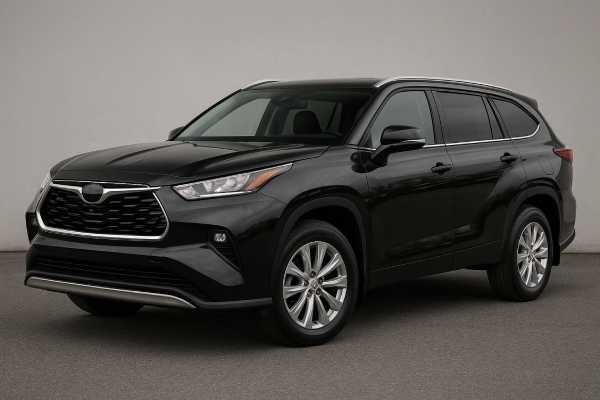
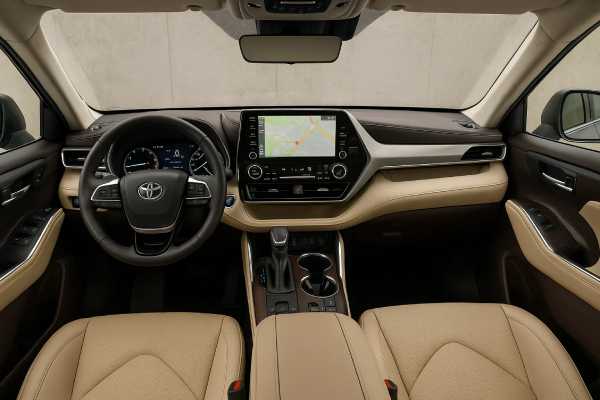
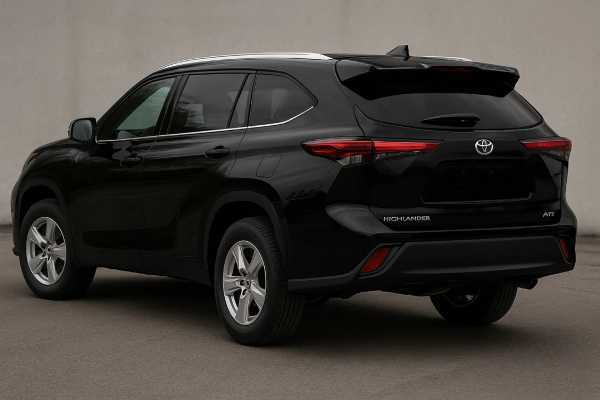
The 2020–2022 Toyota Highlander AWD (chassis code GSU75) represents the fourth generation of Toyota’s three-row crossover, moved onto the TNGA-K architecture with a stronger, lighter body and a more refined ride. Power comes from the 2GR-FKS 3.5-liter V6 with D-4S dual injection, paired to an 8-speed automatic and a choice of two AWD systems (including an upmarket torque-vectoring unit with rear driveline disconnect). Inside, the cabin is quieter and more versatile than before, with family-friendly storage and a third row that works for short trips. Owners value its long-term durability, predictable operating costs, and towing confidence up to 5,000 lb when properly equipped. Safety technology is a highlight, with a standard advanced driver-assist suite and strong crash-test results. If you want a set-and-forget family SUV that still feels composed on a winding road or a snowy commute, the 2020–2022 Highlander AWD is an easy model to recommend.
Fast Facts
- Confident V6 power (295 hp) with smooth 8-speed; two AWD systems, including torque-vectoring on upper trims.
- Quiet, comfortable TNGA-K chassis with useful cargo space (up to ~84.3 ft³ seats folded).
- Strong active-safety tech and high crash ratings; multi-terrain modes aid winter traction.
- Watch for brake service on heavier tow use; inspect rear bumper-cover retention per recall.
- Oil service: 10,000 miles / 12 months (0W-20), or 5,000 miles if severe use.
Guide contents
- Highlander AWD 2020–2022 Overview
- Highlander AWD Specs and Data
- Trims, Options and Safety — Highlander AWD
- Reliability and Service Actions
- Maintenance and Buyer’s Guide
- Driving and Performance
- How Highlander Compares to Rivals
Highlander AWD 2020–2022 Overview
Toyota redesigned the Highlander for model year 2020 and, with it, the AWD V6 line gained meaningful capability and refinement. The 2GR-FKS V6 (295 hp, 263 lb-ft) is well known for durability and, in this generation, benefits from D-4S dual-injection (direct and port), Variable Valve Timing with VVT-iW on the intake, and a broad torque curve that suits family hauling and highway merging. It is paired to Toyota’s 8-speed “Direct-Shift” automatic with closely stacked lower gears for step-off and tall top gears to keep revs low on the freeway.
Two AWD flavors appeared. Most grades use Dynamic Torque Control AWD that sits front-biased and sends power rearward as needed. Upper trims offer Dynamic Torque Vectoring AWD with a rear driveline disconnect and independent left/right torque control for more precise cornering and improved efficiency when cruising. Multi-Terrain Select adds Snow, Mud and Sand modes to tune throttle and traction control. Together with the TNGA-K platform’s stiffer structure and wider track, the Highlander feels both more planted and quieter than the prior generation.
Practicality remains the mission. The cabin carries up to eight with a second-row bench (or seven with captain’s chairs), and the load floor is wide and flat with the third row folded. Toyota paid attention to small-item storage, child-seat access, and easy-clean materials, which matter in real life. Towing capacity reaches 5,000 lb (2,268 kg) with the tow package, enough for a pair of ATVs or a small boat. The Highlander’s ownership story—predictable servicing, robust resale, plentiful parts—bolsters its family-first appeal. For shoppers comparing midsize three-row SUVs, the 2020–2022 AWD Highlander lands squarely in the “buy and keep” category: calm to drive, winter-ready, and built for the long run.
Highlander AWD Specs and Data
Engine and Performance (ICE)
| Item | Detail |
|---|---|
| Code | 2GR-FKS (V6, D-4S dual injection) |
| Layout & Cylinders | 60° V6, DOHC, 4 valves/cyl, Dual VVT-i (VVT-iW intake) |
| Displacement | 3.5 L (3,456 cc) |
| Bore × Stroke | 94.0 mm × 83.0 mm (3.70 in × 3.27 in) |
| Compression Ratio | ~11.8:1 |
| Induction | Naturally aspirated |
| Max Power | 295 hp (220 kW) @ ~6,600 rpm |
| Max Torque | 356 Nm (263 lb-ft) @ ~4,700 rpm |
| Timing Drive | Chain |
| Fuel System | Combined direct + port injection (D-4S) |
| Rated Economy (AWD, EPA) | 11.8 / 8.7 / 10.2 L/100 km (20 / 27 / 23 mpg US) city/hwy/combined |
| Real-world hwy @ 120 km/h (75 mph) | ~9.4–10.7 L/100 km (22–25 mpg US / 26–30 mpg UK), weather and tires dependent |
| Aerodynamics | Cd ~0.33 (typical for body style) |
Transmission and Driveline
| Item | Detail |
|---|---|
| Transmission | 8-speed Direct-Shift automatic (console-shifter) |
| Drive Type | AWD (front-biased with on-demand rear engagement) |
| AWD Systems | Dynamic Torque Control AWD (most trims); Dynamic Torque Vectoring AWD with rear driveline disconnect (upper trims) |
| Differential(s) | Open; electronic torque distribution; vectoring clutches (if equipped) |
| Final Drive | ~3.00:1 (varies by grade) |
| Drive Modes | Normal, Eco, Sport; Multi-Terrain Select (Snow/Mud/Sand on AWD) |
| Refuel to Full (typical) | ~5 minutes at pump |
Chassis and Dimensions
| Item | Detail |
|---|---|
| Platform | TNGA-K unibody |
| Suspension (F/R) | MacPherson strut / Multi-link |
| Steering | Electric power rack-and-pinion |
| Brakes | 4-wheel disc; EPB with Auto-Hold |
| Wheels/Tires (typical) | 235/65R18 (LE/XLE), up to 235/55R20 (Limited/Platinum/XSE) |
| Ground Clearance | ~203 mm (8.0 in) |
| Angles (approach/departure) | ~18° / ~23° (varies by trim) |
| Length / Width / Height | ~4,950 / 1,930 / 1,730 mm (194.9 / 76.0 / 68.1 in) |
| Wheelbase | 2,850 mm (112.2 in) |
| Turning Circle (diameter) | ~11.4 m (37.4 ft) |
| Curb Weight (AWD V6) | ~1,980–2,000 kg (4,365–4,410 lb) by trim |
| GVWR | ~2,675–2,690 kg (5,905–5,930 lb) |
| Fuel Tank | ~68 L (17.9 US gal / 14.9 UK gal) |
| Cargo Volume (SAE) | ~453 L (16.0 ft³) behind 3rd; ~1,370 L (48.4 ft³) behind 2nd; up to ~2,387 L (84.3 ft³) max |
Performance and Capability
| Metric | Figure |
|---|---|
| 0–60 mph / 0–100 km/h | ~7.1–7.5 s (AWD, street tires) |
| Top Speed | ~185 km/h (115 mph) electronically managed |
| 100–0 km/h (62–0 mph) | ~37–39 m (121–128 ft) on quality all-seasons |
| Towing Capacity (braked) | 2,268 kg (5,000 lb) with tow package |
| Payload | ~650–710 kg (1,430–1,565 lb) depending on trim |
| Roof Load | ~75–75+ kg (165–176 lb) with OEM rails/crossbars |
Fluids and Service Capacities
| System | Spec and Capacity |
|---|---|
| Engine Oil | SAE 0W-20 (API SN Plus / SP); ~5.5 L (5.8 US qt) incl. filter |
| Coolant | Toyota Super Long Life Coolant (pink), 50/50 premix; capacity ~8–10 L (varies by HVAC) |
| ATF | Toyota ATF WS; drain-and-fill typically ~3–4 L (3.2–4.2 US qt) |
| Rear Diff / PTU | GL-5 75W-85 or 75W-90; typical service ~0.9–1.1 L each (inspect level) |
| A/C Refrigerant | R-134a; charge typically ~650–700 g (23–25 oz) |
| A/C Compressor Oil | ND-OIL 8; ~120–150 mL (4–5 fl oz) |
| Key Torque (select) | Wheel nuts 103 Nm (76 lb-ft); oil drain plug 39 Nm (29 lb-ft); spark plugs 18 Nm (13 lb-ft) |
Electrical
| Item | Detail |
|---|---|
| Alternator Output | ~150 A |
| 12 V Battery | Group size 24F (typ. 55–65 Ah; 550–650 CCA) |
| Spark Plug | Iridium, gap ~1.1 mm (0.043 in), long-life (up to 120,000 mi) |
Safety and Driver Assistance
| Area | Details |
|---|---|
| Crash Ratings (IIHS) | Strong results; qualifies for high awards depending on year/trim and headlights |
| Headlights (IIHS) | Ratings vary by trim; upgraded units rate better |
| ADAS Suite | Toyota Safety Sense 2.0 (2020) → 2.5+ (2021–2022): AEB (vehicle/pedestrian; cyclist on newer), Full-Speed DRCC, LTA/LKA, AHB; BSM/RCTA available; Parking sensors and surround view on upper trims |
| Child Seats | LATCH in 2nd row; top tethers in 3rd row outboard; wide door openings |
Trims, Options and Safety — Highlander AWD
Trims and Options (AWD V6, 2020–2022). The gas AWD lineup broadly spans LE, XLE, Limited, Platinum, with the sport-tuned XSE added for 2021. LE/XLE carry 18-in wheels and cloth or SofTex seating; Limited/Platinum step to 20-in wheels, leather, JBL audio, panoramic moonroof, and more advanced lighting. XSE is the driver’s spec: firmer suspension tuning, unique fascia, and interior trim with available 20-in wheels, trading a touch of ride plushness for sharper responses. Seven-seat (captain’s chairs) or eight-seat (bench) configurations are offered depending on grade; upper trims commonly default to captain’s chairs. The tow package unlocks the full 5,000-lb rating with a heavy-duty radiator, supplemental engine oil cooler (packaged within the front module), and wiring.
AWD hardware differences. Most AWD grades use Dynamic Torque Control AWD that sends torque rearward on slip or during acceleration. Limited and Platinum (and commonly XSE) offer Dynamic Torque Vectoring AWD. This adds an electro-mechanical coupling that can overdrive the outside rear wheel in a corner while disconnecting the rear driveline during steady cruising to reduce drag. Multi-Terrain Select modes tailor throttle and traction logic for Snow, Mud, and Sand. On winter tires, owners report the Highlander behaves predictably and resists understeer better than the previous generation.
Year-to-year changes. 2020 launched the new body and cabin with Toyota Safety Sense 2.0 and a standard 8-in touchscreen (12.3-in on some upper trims). For 2021, Toyota added the XSE grade and upgraded active-safety to Toyota Safety Sense 2.5+, improving pedestrian/cyclist detection and lane-centering logic. 2022 brought minor feature shuffles, wheel/tire options, and expanded availability of tech packages on mid-trims. The hybrid “Bronze Edition” arrives in 2022 but applies to the hybrid powertrain, not the V6 AWD covered here.
Safety Ratings at a glance. The redesigned 2020 Highlander tested well with the IIHS, earning strong crashworthiness grades. In 2021, select trims achieved Top Safety Pick+ thanks to improved headlight coverage and performance; availability depends on the exact grade and equipment. Headlight performance is the key differentiator—upper trims with advanced LED projectors typically rate better than base units. Automatic emergency braking with pedestrian detection, lane-tracing assist, and adaptive cruise are standard across this span; blind-spot monitoring with rear cross-traffic alert is common from XLE upward, and surround-view monitoring is available on Platinum.
Calibration implications after service. Replacements of the windshield (camera), front grille emblem (radar), or rear bumper (BSM radar) can require ADAS recalibration. After collision repair or bumper cover replacement, ensure radar brackets and targets are installed to spec and perform a static/dynamic calibration with a capable scan tool. Alignment work on vehicles with lane-trace should include steering angle zero-point calibration.
Reliability and Service Actions
The 2GR family is one of Toyota’s most proven V6 designs. In the 2020–2022 Highlander AWD, it remains a low-drama powerplant when maintained on time with the correct 0W-20 oil. Below is what owners and technicians most often see, organized by prevalence and cost impact.
Common (low to medium cost).
- Brake wear under towing or mountain use. Symptoms: pulsing or longer stops. Cause: heat glazing or rotor runout. Remedy: quality pads/rotors; consider high-temp pads if towing frequently; refresh brake fluid if dark.
- All-season tire cupping/noise by 25–35k miles. Cause: heavy curb weight and under-rotation intervals. Remedy: rotate at 5,000–7,500 miles; keep alignment in spec and tire pressures checked cold.
- Windshield chips/cracks. Large, upright glass is stone-prone. Remedy: use OEM glass for best camera calibration results; recalibrate TSS after replacement.
Occasional (medium cost).
- EPB pad drag after parking on grades. Symptom: hot smell, rear rotor heat spots. Cause: sticky caliper slides or uneven pad wear. Remedy: service sliders at brake jobs; follow proper EPB service mode.
- HVAC blend-door actuator noise. Symptom: clicking under dash. Remedy: actuator replacement; low parts cost, moderate labor.
- AWD fluid seep at PTU/rear diff plug or axle seal. Symptom: damp casing on inspection. Remedy: reseal/replace seal; verify correct GL-5 fill.
Rare (higher cost).
- Torque-converter shudder (high load/low speed). Symptom: low-speed vibration under light throttle. Remedy: ATF WS exchange and adaptive relearn often resolves; software update where applicable.
- Water pump seep (higher mileage). Symptom: pink crust at pump weep hole. Remedy: pump replacement with coolant exchange.
Recalls, TSBs, and campaigns to note.
- Rear bumper-cover retention (2020–2023 select SUVs). Condition: a minor rear impact may loosen/detach the corner cover. Remedy: inspection and improved brackets/fasteners; confirm completion by VIN.
- Service bulletins (examples). Updates exist for infotainment behavior, brake noise under specific conditions, and lane-tracing sensitivity. A dealer can check your VIN for applicable calibrations.
Pre-purchase checklist (used).
- VIN recall/TSB printout; proof of regular oil and coolant service.
- Brake life measurement and rotor thickness; ask about towing use.
- AWD fluid change history (rear diff/PTU) if mileage >60k.
- Tire age, even wear, and alignment records.
- Body/underbody inspection for curb strikes (20-in wheels) and hitch wiring quality if tow-equipped.
- ADAS function test: verify lane-centering, adaptive cruise, AEB warnings, and headlight aim.
Maintenance and Buyer’s Guide
Practical maintenance schedule (normal use).
- Engine oil & filter: 10,000 miles / 12 months with 0W-20; choose 5,000 miles if mostly short trips, idling, or towing.
- Tire rotation & inspection: every 5,000–7,500 miles; re-torque wheel nuts to 103 Nm (76 lb-ft).
- Cabin air filter: inspect 10,000–15,000 miles; replace ~15,000–20,000 miles or annually.
- Engine air filter: inspect 15,000 miles; replace ~30,000 miles (sooner in dusty regions).
- Brake fluid: test annually; refresh every 3 years for consistent pedal feel.
- Coolant (SLLC pink): first replacement ~100,000 miles/10 years, then every 50,000 miles/5 years.
- Spark plugs (iridium): ~120,000 miles/12 years.
- ATF WS: “lifetime” under light use; for best longevity, consider drain-and-fill at 60,000–90,000 miles (more often if towing).
- Rear differential & PTU gear oil: inspect level/condition at 30,000 miles; replace by ~60,000–90,000 miles depending on use.
- Serpentine belt & hoses: inspect 60,000 miles; replace on condition.
- 12 V battery: test annually after year 3; typical replacement window 4–6 years.
- Alignment: check yearly or after impacts/tire replacement.
- Rust/corrosion checks: seams, rear subframe, exhaust hangers; treat early.
Fluids quick reference.
- Oil: SAE 0W-20, API SN Plus/SP. Capacity ~5.5 L (5.8 qt).
- Coolant: Toyota SLLC pink, premixed 50/50.
- ATF: Toyota ATF WS (sealed unit, level-check procedure requires temp monitoring).
- Gear oils: GL-5 75W-85/75W-90.
- Brake fluid: DOT 3 or DOT 4 high quality.
- A/C: R-134a; ND-OIL 8.
Buyer’s guide (what to seek).
- Grades: XLE offers the best value blend of equipment and ride (18-in tires). Limited/Platinum bring premium lighting and audio; XSE adds steering response and body control.
- Packages: Tow package if you’ll ever tow—adds capacity and cooling. Driver assistance with better headlights improves night safety.
- What to avoid: Oversized aftermarket wheels or aggressive tires can add NVH and braking distance. A neglected AWD fluid history on a high-mileage example is a bargaining point.
- Durability outlook: With fluids kept fresh and brakes/tires matched to use, the AWD V6 Highlander commonly delivers a 200,000-mile+ service life with few major surprises. The TNGA-K chassis, robust cooling, and simple NA V6 contribute to longevity.
Driving and Performance
Ride, handling, and NVH. The TNGA-K platform makes the Highlander feel more tied-down than earlier models. Body motions are well controlled, and the cabin stays impressively quiet at 70–75 mph thanks to improved sealing and under-floor tuning. On 18-in wheels it’s supple over broken pavement; 20-in wheels sharpen turn-in but transmit impacts more readily. Brake feel is consistent with a firm top-of-pedal bite; fade resistance is good in daily driving but can degrade after long mountain descents if towing—downshift early with the 8-speed’s manual gate to help.
Powertrain character. The 2GR-FKS is smooth and tractable, with responsive midrange pull. The 8-speed is unobtrusive; it upshifts early in Normal/Eco and holds gears longer in Sport. Kickdown for passing is prompt, and the gearbox avoids hunting on grades if you pre-select a lower gear. In stop-and-go, the calibration is clean with gentle creep. The torque-vectoring AWD adds neutrality in medium-speed corners and helps rotate the chassis when you feed in throttle, something you’ll notice most on winding two-lanes.
Real-world efficiency. Owners typically see ~20–22 mpg US mixed (11.8–10.7 L/100 km), ~25–27 mpg US highway on the EPA cycle (9.4–8.7 L/100 km), and high-teens in short-trip winter use with remote starts and snow tires. Cold temps, roof boxes, and crosswinds will add a 2–4 mpg penalty on long trips. Use Snow mode and gentle throttle mapping for slick starts; it softens tip-in and reduces wheelspin.
Traction and control. With proper all-seasons, the base AWD is secure; add winter tires and the Highlander feels genuinely confident on packed snow. Multi-Terrain Select’s Mud/Sand logic allows a bit more wheelspin to clear treads. Stability control is conservative but predictable—it rarely surprises with abrupt interventions. Ground clearance is respectable for rutted trailheads, but approach angle will still check your enthusiasm on tall berms.
Load and towing. A properly equipped Highlander AWD tows 5,000 lb. Stay within tongue-weight limits and use a brake controller for heavier trailers. Expect ~20–35% fuel economy penalty under moderate tow depending on terrain and speed. Transmission temperatures remain stable if you downshift proactively on climbs and descents.
How Highlander Compares to Rivals
Honda Pilot (V6). Pilot rides softly and offers a very roomy third row. Its 9-speed shifts more often than Toyota’s 8-speed and early units were fussier. Highlander counters with higher perceived cabin quality, stronger active-safety tuning, and available torque-vectoring AWD for better corner exit traction.
Kia Telluride / Hyundai Palisade. These twins excel in interior packaging, seat comfort, and feature value. Ride quality is plush. Toyota fights back with proven long-term reliability, higher resale, and wider dealer coverage. If you prioritize cabin volume and lounge-like seating, the Kia/Hyundai pair wins; if you value trouble-free years and winter traction polish, Highlander’s AWD tuning and V6 smoothness are compelling.
Ford Explorer (2.3T/3.0T). Explorer offers punchy turbo power and RWD-based dynamics, useful for higher tow stability. Ownership costs and long-term reliability are less consistent than Toyota’s record. Highlander trades a bit of outright pace for lower fuel and maintenance anxiety.
Subaru Ascent. Standard AWD and strong safety tech, with a comfortable ride and good steering feel. The turbo flat-four is torquey but can sound coarse under load. Highlander brings V6 smoothness and typically better resale; Ascent counters with slightly more third-row space.
Chevrolet Traverse. Huge cabin and cargo room, decent ride. Interior finish and long-term durability are not class-leading. Highlander is smaller inside but feels more premium in touchpoints and offers more advanced AWD behavior.
References
- 2020 Toyota Highlander: Bold New Design, Sophisticated New Chassis and All-New Technology 2019 (Press Release)
- 2021 Toyota Highlander 2021 (Safety Rating)
- 2020 Toyota Highlander 2020 (Safety Rating)
- 2020 Toyota Highlander 2020 (Fuel Economy)
- 2020 WARRANTY & MAINTENANCE GUIDE 2020 (Owner’s Maintenance)
- 2022 Toyota Highlander 2022 (Brochure Specifications)
Disclaimer
This article is for informational purposes and is not a substitute for professional diagnosis or repair. Specifications, torque values, fluid capacities, and service intervals can vary by VIN, market, and equipment level. Always verify procedures and numbers against your vehicle’s official service documentation and current technical bulletins. If you found this helpful, please consider sharing it on Facebook or X/Twitter to support xcar’s work.