
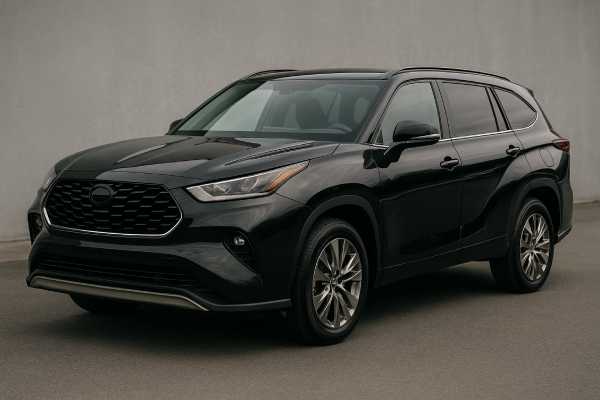

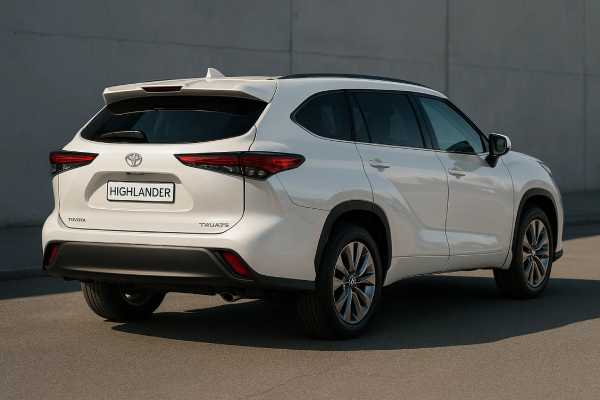
The fourth-generation Toyota Highlander with the turbocharged 2.4-liter (T24A-FTS) engine replaced the prior V6 for 2023, bringing higher low-rpm torque, improved drivability, and modern driver assistance while keeping the family-friendly packaging buyers expect. In AWD (TXUA75), it pairs the eight-speed automatic with an electronically controlled rear driveline that can decouple for efficiency or send torque rearward when conditions demand it. Owners choose it for its balanced ride, quiet cabin, and long-term value; technicians appreciate straightforward service access, durable cooling hardware, and Toyota’s conservative calibration of the new turbo four. If you need three rows, real towing capacity, and all-weather traction without luxury-brand maintenance costs, this configuration hits a sweet spot. Below you will find focused, year-appropriate data on specs, equipment, safety, reliability patterns, and practical upkeep—written to help you decide whether the 2.4T AWD Highlander fits your use case and how to keep it running like new.
Fast Facts
- Strong low-rpm pull: 265 hp and 310 lb-ft give confident passing and grade climbing, especially with passengers or a light trailer.
- Family-first packaging: adult-friendly second row, usable third row for kids, and 84.3 ft³ max cargo with seats folded.
- All-weather ability: available torque-vectoring AWD and Multi-Terrain Select add sure-footedness on snow, gravel, and wet roads.
- Caveat: the turbo four prefers high-quality fuel and timely oil service; keep an eye on intake/PCV hoses for seepage as miles accrue.
- Typical interval: engine oil and filter every 10,000 miles / 12 months (5,000 miles if mainly short-trips/towing/cold climate).
What’s inside
- AWD Highlander 2.4T overview
- Highlander AWD specs and data
- Highlander trims and safety
- Reliability and service actions
- Maintenance and buyer’s guide
- Driving and real-world performance
- Highlander vs rivals
AWD Highlander 2.4T overview
Toyota’s switch from the 3.5-liter V6 to the 2.4-liter turbo four was strategic: real-world torque where families use it most, cleaner emissions, and steady highway economy. The T24A-FTS engine combines a twin-scroll turbocharger with Toyota’s D-4ST dual-injection (port + direct), variable valve timing on both cams, and an intercooler sized for sustained grades. Peak torque arrives early and sticks around, so the eight-speed automatic does less gear hunting than the old V6 when merging, climbing, or towing.
The AWD hardware in TXUA75 builds on an electronically controlled coupling at the rear differential. Lower trims get Dynamic Torque Control AWD that varies front-rear split; Limited and Platinum offer Dynamic Torque Vectoring AWD, which can overdrive one rear wheel relative to the other to nudge the nose into a corner on slick pavement and stabilize the vehicle over mid-corner bumps. Both systems can disconnect the rear driveline during steady cruising to reduce drag. Multi-Terrain Select (Normal/Mud & Sand/Rock & Dirt/Snow; names vary by trim) reshapes throttle and torque delivery for low-traction surfaces.
Cabin execution remains a strong suit. Seat height, door openings, and step-in are friendly for kids and older passengers. Second-row captain’s chairs (or an available bench) slide far enough to balance legroom and third-row access. Storage bins and door pockets are abundant, and the cargo floor is wide and square—handy for strollers or flat-packed furniture. Ride tuning favors calm body control over float; the standard 18-inch wheels provide the best noise isolation, while 20-inch packages look sharp but add a bit more impact feel on broken pavement.
For families who value predictability, Toyota’s driver-assist suite (AEB with pedestrian/cyclist detection, adaptive cruise with lane centering, lane departure alert with steering assist, road-sign assist) became more consistent and smoother in the 2023 refresh. Head-up display, a 12.3-inch infotainment screen with cloud-based navigation, and a digital cluster appear as you climb trims. Importantly, Toyota retains physical knobs and hard keys for high-use functions—useful with gloves in winter.
Highlander AWD specs and data
Engine and Performance (ICE-only)
| Item | Detail |
|---|---|
| Code | T24A-FTS |
| Layout & cylinders | Inline-4, DOHC, 16-valve, twin-scroll turbo |
| Displacement | 2.4 L (2,393 cc) |
| Induction | Turbocharged, intercooler |
| Fuel system | D-4ST (combined port + direct injection) |
| Compression ratio | ~10.5:1 |
| Max power | 265 hp (198 kW) @ ~6,000 rpm |
| Max torque | 420 Nm (310 lb-ft) @ ~1,700–3,600 rpm |
| Timing drive | Chain |
| Rated efficiency (AWD) | ~9.8 L/100 km combined (24 mpg US / 29 mpg UK) |
| City / Highway (AWD) | ~11.2 / 8.4 L/100 km (21 / 28 mpg US) |
| Real-world highway @ 120 km/h | ~8.9–9.4 L/100 km (25–26.5 mpg US / 30–32 mpg UK), weather & load dependent |
Transmission and Driveline
| Item | Detail |
|---|---|
| Transmission | 8-speed automatic (Direct Shift) |
| Drive type | AWD with electronic rear coupling |
| AWD variants | Dynamic Torque Control AWD (LE/XLE/XSE); Dynamic Torque Vectoring AWD (Limited/Platinum) |
| Modes | Eco/Normal/Sport; Multi-Terrain Select on AWD trims |
| Final drive | Multiple ratios by trim/tow package (electronically managed coupling) |
Chassis and Dimensions
| Item | Detail |
|---|---|
| Platform | TNGA-K |
| Suspension (front/rear) | MacPherson strut / multi-link |
| Steering | Electric power steering |
| Brakes | 4-wheel disc, ABS, EBD, Brake Assist |
| Wheels/Tires | 18-inch (235/65R18) or 20-inch packages |
| Ground clearance | ~203 mm (8.0 in) |
| Length / Width / Height | 4,959 / 1,930 / 1,729 mm (194.9 / 76.0 / 68.1 in) |
| Wheelbase | 2,850 mm (112.2 in) |
| Turning circle | ~11.4 m (37.4 ft) |
| Curb weight (AWD) | ~1,975–2,060 kg (4,355–4,540 lb), by trim |
| Fuel tank | 68 L (17.9 US gal / 14.9 UK gal) |
| Cargo volume (SAE) | 453 / 1,370 / 2,387 L (16.0 / 48.4 / 84.3 ft³) — 3rd up / 3rd down / all down |
Performance and Capability
| Metric | Value |
|---|---|
| 0–60 mph (0–97 km/h) | ~7.5–7.8 s (tire and weather sensitive) |
| 0–100 km/h | ~7.7–8.0 s |
| Top speed (governed) | ~190 km/h (118 mph) |
| Towing (properly equipped) | 2,268 kg (5,000 lb) |
| Roof load | ~75 kg (165 lb) with factory rails/crossbars |
Fluids and Service Capacities (selection)
| System | Specification / Notes |
|---|---|
| Engine oil | API SP, ILSAC low-viscosity; grade per oil-cap/owner’s manual for T24A-FTS; change 10,000 mi/12 mo (5,000 mi severe) |
| Coolant | Toyota Super Long Life Coolant (pink), premixed; long-life interval (see schedule below) |
| ATF | Toyota WS; no routine change under normal service (severe-duty interval recommended) |
| AWD rear unit & PTU | GL-5 gear oil; inspect for level/condition per schedule if towing or off-road often |
| A/C refrigerant | R-1234yf; charge quantity by label in engine bay |
| Torque examples | Wheel lugs 103 Nm (76 lb-ft); oil drain plug ~40 Nm (30 lb-ft) |
Safety and Driver Assistance
| Item | Detail |
|---|---|
| Airbags | Front, side, curtain (all rows), driver knee, front passenger seat-cushion |
| ADAS suite | Pre-collision with pedestrian/cyclist detection, adaptive cruise (full-speed), lane departure alert with steering assist, lane tracing assist, road sign assist; blind spot monitor with rear cross-traffic alert on most trims |
| Headlights | LED projectors; performance varies by trim/wheel package |
| Child-seat anchors | Lower anchors and tethers (LATCH) on outboard second-row; top tethers third-row |
Highlander trims and safety
Trims and key options (2023–present)
- LE: cloth seating, 8-inch touchscreen, wireless Apple CarPlay/Android Auto, 18-inch wheels, power liftgate. AWD adds Multi-Terrain Select.
- XLE: SofTex-trimmed seats with heat, power moonroof, roof rails, wireless charging, optional second-row captain’s chairs.
- XSE: sport-tuned suspension, 20-inch wheels, unique fascia/exhaust, interior accents; still family-friendly ride.
- Limited: leather, ventilated front seats, JBL audio, hands-free liftgate, panoramic cameras. Availability of Dynamic Torque Vectoring AWD.
- Platinum: panoramic moonroof, head-up display, digital rear-view mirror, heated second row, larger screens, rain-sensing wipers; DTV-AWD availability.
Functional differences buyers feel
- AWD technology: Lower trims use Dynamic Torque Control (front-rear torque split). Limited/Platinum can add Dynamic Torque Vectoring, which actively biases torque side-to-side at the rear axle to sharpen turn-in on slick surfaces.
- Wheel/tire packages: 18-inch setups ride quieter and shrug off potholes; 20-inch wheels add steering immediacy but transmit more impact noise.
- Tow package: Receiver hitch, wiring, extra cooling—required to achieve the full 5,000-lb rating.
- Seating: 8-passenger bench standard on many grades; 7-passenger with captain’s chairs improves third-row access.
Safety ratings—in brief
The Highlander earns strong crashworthiness and crash-avoidance marks, with award status varying by headlight package and model year under evolving test criteria. Look for trims with the best-rated headlights and the full ADAS stack if IIHS trophy status matters to you. Regardless of award labels, structural performance, airbag coverage, and active safety remain competitive in the three-row class.
Calibration notes after service
Front radar and camera recalibration is required after windshield replacement or bumper repairs; alignment and static/dynamic procedures depend on the year and equipment. If you tow frequently, ask the shop to check rear ride-height sensors to keep headlight aim and camera angles within spec.
Reliability and service actions
What has proven solid
- Bottom-end and cooling: The T24A-FTS uses a robust lower block with integrated water passages and a generous intercooler—good for long grades and summer heat.
- Dual injection: Port injectors keep intake valves cleaner than DI-only designs, reducing the risk of heavy carbon accumulation.
- Eight-speed automatic: Conservative shift logic prioritizes smoothness and temperature management; fluid temps stay moderate in daily use.
Common (low–medium severity) items
- Oil seep at PCV or charge-pipe joints: May show as light oil misting near hose clamps; usually resolved by clamp re-seat or updated hose.
- Brake judder at 15–30k miles: Often pad imprinting/uneven rotor deposits from repeated short trips. Resurface or replace with proper bedding; torque wheels accurately.
- Infotainment quirks: Occasional wireless CarPlay/Android Auto dropouts—typically improved by head-unit software updates and quality cables for wired fallback.
- Windshield camera faults after glass work: If the car pulls lanes or throws lane-assist errors, verify camera calibration and ensure OE-spec glass was used.
Occasional (medium severity) items
- Rear driveline noise (AWD with heavy loads): A light thrum on certain pavements can be tire-related. Rotate tires, check rear coupling fluid, and verify torque specs at the prop shaft and rear unit.
- Turbo wastegate actuation complaints: Rare, but a sticky feel can trigger a low-boost code. A software update or actuator service has resolved cases.
Rare but worth noting
- Front bumper cover retention recall: Certain vehicles may have bumper covers that could detach if lower under-covers are improperly attached or damaged. Verify recall completion by VIN and inspect clip integrity after any curb or snow-bank contact.
- Airbag or seat-belt reminders after seat service: Ensure seat-side connectors are fully latched and routed.
Service actions—how to verify
- Run an official VIN recall check before purchase or after bodywork.
- Ask for a dealer printout of completed campaigns and any warranty extensions.
- After software updates (engine/ADAS/infotainment), request the calibration ID on the work order so you know exactly what was flashed.
Maintenance and buyer’s guide
Practical maintenance schedule (time/distance = whichever comes first)
- Engine oil & filter: 10,000 miles / 12 months (5,000 miles severe: frequent short trips, extremes of heat/cold, dusty roads, or heavy towing).
- Engine air filter: Inspect 15,000 miles; replace 30,000 miles (sooner in dusty climates).
- Cabin air filter: 12 months / 15,000 miles.
- Spark plugs (iridium): 120,000 miles (192,000 km).
- Coolant (SLLC): First change at 100,000 miles / 10 years; then every 50,000 miles / 5 years.
- Brake fluid: Replace every 2–3 years regardless of mileage.
- Automatic transmission (Toyota WS): No routine change under normal use; for lifetime smoothness, consider drain-and-fill at 60,000–100,000 miles if towing or in hot urban service.
- AWD PTU & rear unit: Inspect at 30,000-mile intervals; change gear oil at 60,000–90,000 miles if towing/off-road.
- Belts/hoses: Inspect every service; replace serpentine belt typically at 90,000–120,000 miles or when cracked/noisy.
- Tires: Rotate every 5,000–7,500 miles; maintain even wear to preserve AWD behavior.
- 12-V battery: Test annually after year 3; typical replacement window 4–6 years.
- Alignment: Check yearly or if tire shoulder wear appears; AWD benefits from precise alignment to keep driveline calm.
Fluids quick reference
- Engine oil: API SP, ILSAC low-viscosity grade as printed on the oil cap/owner’s manual for T24A-FTS.
- Coolant: Toyota Super Long Life Coolant (pink).
- ATF: Toyota WS.
- AWD units: GL-5 gear oil (viscosity per manual).
- A/C: R-1234yf.
- Brake fluid: DOT 3 or DOT 4 (do not mix types without full flush).
Essential torque values (commonly used)
- Wheel lugs: 103 Nm (76 lb-ft).
- Oil drain plug: ~40 Nm (30 lb-ft).
- Caliper bracket bolts (typical front): ~127–137 Nm (94–101 lb-ft) — verify by VIN/spec.
Buyer’s inspection checklist
- Front bumper/under-cover: Look for missing clips or scuffs; confirm recall/campaign completion.
- AWD driveline: Check for weeping at the rear coupling and PTU; listen for low-speed moan on tight turns (could be tire or fluid age).
- Brakes: Feel for pulsation; inspect rotor thickness variation.
- Cooling & charge air: Inspect intercooler hoses/clamps for oil misting; check coolant level/condition cold.
- Electronics: Test all cameras, sensors, and the 12.3-inch system; verify phone pairing and over-the-air update history.
- Tires & alignment: Uneven wear on 20-inch packages hints at toe/camber drift—budget for alignment.
Recommended years/trims to target
- 2023–2025 Limited or Platinum with DTV-AWD: Best blend of traction and touring refinement; headlights and ADAS tuning are strongest here.
- XLE (18-inch wheels): Quietest ride and best bump absorption for rough winters.
- Avoid? Not a year per se, but skip examples with unknown fluid history, robot-polished “fixed” brake shudder, or evidence of repeated front-bumper repairs without OEM clips.
Durability outlook
With basic care—good oil, fresh coolant, clean filters, periodic brake service—the 2.4T AWD Highlander is engineered to run well past 200,000 miles. Dual injection helps keep valves cleaner; AWD units are stout when serviced on schedule; and Toyota’s conservative thermal management limits heat-related wear under family use and moderate towing.
Driving and real-world performance
Ride, handling, NVH
On 18-inch wheels, the Highlander glides over patchwork pavement and expansion joints with minimal secondary motion. Body control is tidy—little float, restrained roll—and straight-line tracking on crowned highways is excellent. 20-inch packages add steering bite but transmit more sharp-edge impacts. Wind and road noise remain low at 70–75 mph; the cabin stays calm enough for third-row conversation.
Powertrain character
The T24A-FTS trades the V6’s top-end rush for a richer midrange. Light throttle brings early boost and brisk step-off; passing at 50–80 mph is where the torque advantage shows. The eight-speed generally keeps revs subdued and locks the converter promptly; Sport mode quickens downshifts for ramps and two-lane passes. In cold starts you may hear a moment of direct-injection tick—normal for this engine family.
AWD traction and control
In rain or packed snow, the default torque split remains front-biased for efficiency, then pushes torque to the rear when slip appears. With DTV-AWD, rear-axle torque vectoring subtly pivots the vehicle mid-corner on slick roads, reducing steering corrections. Multi-Terrain modes adjust throttle and transmission mapping for loose surfaces; Snow mode softens tip-in to prevent wheelspin when pulling away from a stop.
Efficiency and range
Owners commonly see 24 mpg US combined (≈9.8 L/100 km) with AWD in mixed suburban use; steady-state highway at 120 km/h returns ~25–26.5 mpg US (8.9–9.4 L/100 km) depending on temperature, roof gear, and crosswinds. Winter blends, remote starts, and short hops can cut city results by 10–20 percent. Towing a 3,000-lb camper typically reduces economy by 25–35 percent; plan fuel stops accordingly.
Towing and loads
With the factory tow package, the Highlander maintains coolant and ATF temps well on moderate grades. The rear suspension keeps a level stance with properly set tongue weight (10–12% of trailer mass). Braking confidence is good; use trailer brakes above 1,000–1,500 lb as local law and safety dictate. In headwinds or long ascents, the transmission will hold lower gears—normal behavior to protect temperatures.
Highlander vs rivals
Honda Pilot (V6, 10-speed)
Pilot rides a touch softer and offers clever cargo/stow solutions; its V6 revs sweetly but lacks the Highlander’s low-rpm torque swell. Fuel economy is similar or slightly lower in mixed driving. Pilot’s TrailSport trim is more off-road-ready; Highlander counters with torque-vectoring AWD and a calmer highway cabin.
Kia Telluride / Hyundai Palisade (V6)
Both are roomy and plush, with wide third rows and strong value packaging. Their non-turbo V6s are smooth but feel flatter at altitude or with a full cabin. Highlander’s ADAS behavior is more consistent in poor weather, and Toyota’s long-term resale advantage narrows the gap in total cost of ownership.
Subaru Ascent (2.4T, CVT)
Closest powertrain peer. Ascent’s standard AWD and winter traction are excellent; its CVT keeps the engine on boost but can sound busy under load. Highlander is quieter at speed and offers a conventional automatic many buyers prefer for towing feel.
Chevrolet Traverse (latest 2.5T, 8-speed)
Bigger inside and tuned for long-haul comfort; the new turbo four is competitive on paper. Highlander’s interior materials and perceived quality are stronger; Toyota’s reliability reputation and dealer footprint weigh in its favor for long-term buyers.
Nissan Pathfinder (V6, 9-speed)
Comfortable and capable, with decent towing manners. Highlander responds more cleanly to throttle in the 30–60 mph range and serves up smoother ADAS. Pathfinder’s ProPILOT Assist is highway-friendly; Highlander’s lane tracing feels more natural on two-lane roads.
References
- New Toyota Highlander Turbocharged Engine Offers More Torque and Fewer Emissions 2022 (Pressroom)
- Gas Mileage of 2023 Toyota Highlander 2023 (EPA Database)
- 2024 TOP SAFETY PICK winners 2024 (Safety Rating)
- IMPORTANT SAFETY RECALL 2023 (Recall Notice)
- 2023 Highlander Owner’s Manual 2023 (Owner’s Manual)
Disclaimer
This article is for informational purposes and is not a substitute for professional diagnosis or repair. Specifications, torque values, fluid types, and service intervals can vary by VIN, model year, trim, market, and installed options. Always confirm procedures and numbers against your vehicle’s official owner’s manual and service documentation.
If you found this guide useful, please consider sharing it with other owners on Facebook, X/Twitter, or your favorite forum to support xcar’s work.