
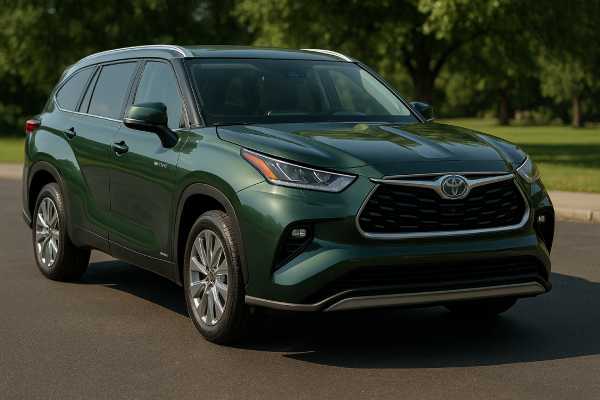
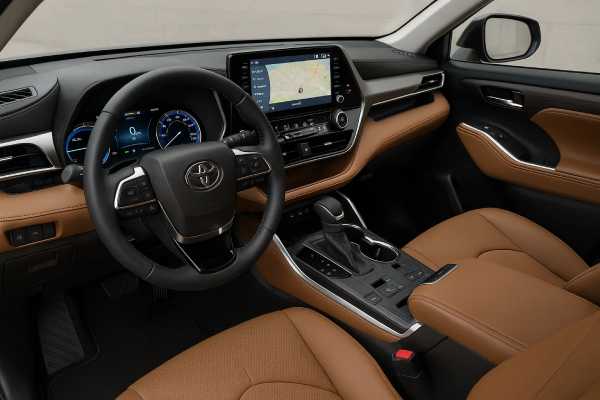
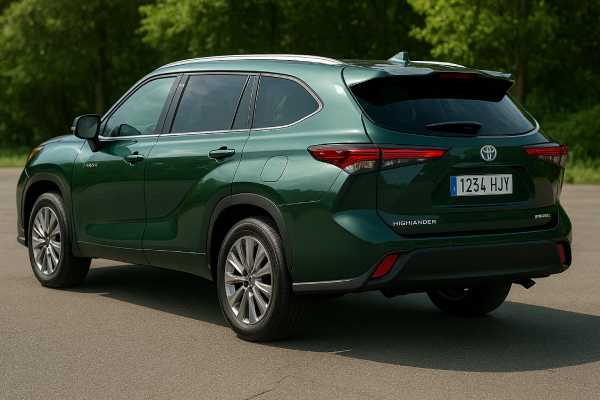
The fourth-generation Toyota Highlander Hybrid AWD balances family duty with long-haul efficiency. Built on Toyota’s TNGA-K platform, it pairs the A25A-FXS 2.5-liter Atkinson-cycle engine with a dual-motor hybrid transaxle and an independent rear electric drive unit that provides Electronic On-Demand AWD without a driveshaft. Owners value the real-world 30+ mpg capability in a true three-row SUV, the quiet ride, and Toyota’s low-drama ownership experience. For 2020–2022 it arrived as a standout for fuel economy in its class; through 2023–2025 it gained larger screens and updated Toyota Safety Sense while the hybrid powertrain remained consistent at a combined 243 hp. The AWD system engages seamlessly on wet or snowy roads, and towing up to 3,500 lb covers pop-up campers or small boats. If you want a three-row that sips fuel, fits child seats easily, and holds value, the Highlander Hybrid AWD is still the benchmark—provided you keep up with basic fluids, tires, and software updates.
Fast Facts
- Efficient three-row: typical 32–36 mpg (US) mixed; calm highway manners.
- Seamless Electronic On-Demand AWD adds traction with minimal efficiency penalty.
- Cabin packaging: easy third-row access, generous cargo floor with seats folded.
- Watch item: eCVT and rear e-axle are “lifetime fill,” but fluid inspections are wise after 100,000 mi (160,000 km).
- Routine: engine oil 0W-16 every 10,000 mi/12 months; rotate tires every 5,000 mi (8,000 km).
Explore the sections
- Highlander Hybrid AWD overview
- Highlander Hybrid AWD specs
- Trims, options, and safety tech
- Reliability and common issues
- Maintenance and buyer’s guide
- Driving and performance
- How it compares to rivals
Highlander Hybrid AWD overview
The current Highlander Hybrid AWD (chassis code AXUH78) uses Toyota’s proven hybrid architecture to deliver family-friendly comfort with compact-car fuel use. The heart is the A25A-FXS 2.5-liter Dynamic Force inline-four, tuned for the Atkinson cycle to maximize thermal efficiency. It works with a hybrid transaxle (planetary eCVT) and a dedicated rear electric motor (“MGR”) that powers the rear wheels on demand. Because there is no mechanical driveshaft or transfer case, the system is lighter than conventional AWD and avoids parasitic losses in daily driving. Combined system output is 243 hp (181 kW). That number sounds modest on paper, yet the immediate electric torque lets the Highlander step away smartly in town and merge confidently at highway speeds.
Inside, three rows seat up to eight (bench) or seven (captain’s chairs). The second row slides enough to balance legroom with the third row, and the flat cargo floor makes bulky items simple. With the third row folded, it swallows strollers, travel crates, or camping gear; with both rear rows down it becomes a mini-van alternative for moving days. Noise, vibration, and harshness are impressively controlled: the body structure is stiff, suspension tuning is supple, and the eCVT keeps revs low under light loads.
The AWD system is transparent until traction drops. Then, the rear motor contributes proactively at launch and reactively if the fronts slip. Snow and gravel roads show the value: the hybrid AWD keeps momentum without wheelspin drama, while Trail/Snow modes refine throttle and braking logic. Towing capacity is 3,500 lb (1,588 kg), enough for light trailers; a transmission cooler is not required because the front unit is an eCVT, but you should monitor temperatures on prolonged grades.
Through 2023–2025, Toyota’s updates focused on interface and safety. Newer models added larger 12.3-inch displays, improved voice recognition, wireless smartphone integration, and refined Toyota Safety Sense with better lane-centering and detection logic. The hybrid powertrain itself stayed steady—good news for parts availability and long-term reliability. If your priority is a stress-free, economical three-row with all-weather assurance, the Highlander Hybrid AWD belongs on your short list.
Highlander Hybrid AWD specs
Below are focused technical tables for the 2020–present Highlander Hybrid Electronic On-Demand AWD (AXUH78) in North America. Figures vary slightly by model year and trim; ranges reflect common factory specs.
Powertrain and efficiency
| Item | Detail |
|---|---|
| Code | A25A-FXS (Dynamic Force) + hybrid transaxle + rear e-motor (MGR) |
| Engine layout & cylinders | Inline-4, DOHC, 4 valves/cyl, Dual VVT-i (VVT-iE intake) |
| Bore × stroke | 87.5 mm × 103.4 mm (3.44 in × 4.07 in) |
| Displacement | 2.5 L (2,487 cc) |
| Induction | Naturally aspirated (Atkinson cycle) |
| Fuel system | D-4S (combined direct + port injection) |
| Compression ratio | ~14.0:1 |
| Max engine power (approx) | ~176 hp (131 kW) @ ~5,700 rpm |
| Max engine torque (approx) | ~221 Nm (163 lb-ft) @ ~3,600–5,200 rpm |
| System net power | 243 hp (181 kW) |
| Timing drive | Chain |
| Emissions standard | LEV-III / SULEV (region dependent) |
| Rated economy (AWD) | ~35 mpg (US) combined; ~6.7 L/100 km; ~42 mpg (UK) |
| Real-world highway @ 120 km/h (75 mph) | ~7.4–8.1 L/100 km (29–32 mpg US / 35–38 mpg UK) |
| Aerodynamics | Cd ≈ 0.33; frontal area ~2.8 m² (30.1 ft²) |
Transmission and driveline
| Item | Detail |
|---|---|
| Transmission | Planetary eCVT hybrid transaxle (electronically controlled) |
| Gear ratios | Planetary split — fixed; no conventional stepped ratios |
| Final drive ratio | Hybrid reduction gearing; electronically blended |
| Drive type | Electronic On-Demand AWD (front hybrid transaxle + independent rear e-motor) |
| Differential(s) | Front open; rear reduction gear integrated with e-motor |
| Refuel to full | ~5 min (standard gasoline nozzle) |
Chassis and dimensions
| Item | Detail |
|---|---|
| Platform | TNGA-K (unibody) |
| Suspension (front/rear) | MacPherson strut / Multi-link |
| Steering | Electric rack-and-pinion (EPS) |
| Brakes | 4-wheel discs with regenerative blending; front/rear ventilated |
| Wheels/Tires | 18-inch or 20-inch; common sizes 235/65R18 or 235/55R20 |
| Ground clearance | ~203 mm (8.0 in) |
| Length / Width / Height | ~4,966 / 1,930 / 1,730 mm (195.5 / 76.0 / 68.1 in) |
| Wheelbase | 2,850 mm (112.2 in) |
| Turning circle (curb-to-curb) | ~11.4 m (37.4 ft) |
| Curb weight (AWD hybrid) | ~2,000–2,055 kg (4,410–4,530 lb) |
| GVWR | ~2,760–2,795 kg (6,085–6,160 lb) |
| Fuel tank | ~64.7 L (17.1 US gal / 14.2 UK gal) |
| Cargo volume (SAE) | ~453 L (16.0 ft³) behind 3rd; ~1,370 L (48.4 ft³) behind 2nd; ~2,385 L (84.3 ft³) max |
Performance and capability
| Item | Detail |
|---|---|
| 0–100 km/h (0–62 mph) | ~7.5–8.0 s (typical instrumented results) |
| Top speed | ~180 km/h (112 mph, speed limited) |
| Braking 100–0 km/h (62–0 mph) | ~36–40 m (118–131 ft) on all-season tires (typical) |
| Towing capacity (braked) | 1,588 kg (3,500 lb) |
| Payload | ~675–780 kg (1,485–1,720 lb) |
| Roof load | ~75 kg (165 lb) with factory crossbars |
Fluids and service capacities
| System | Specification | Capacity (typical) |
|---|---|---|
| Engine oil | SAE 0W-16, ILSAC GF-6B (Toyota Genuine 0W-16) | ~4.5 L (4.8 US qt) w/ filter |
| Engine coolant | Toyota Super Long Life Coolant (pink), 50/50 premix | ~7–8 L total engine loop |
| Hybrid inverter/e-motor coolant | Toyota SLLC (pink), 50/50 premix | ~2–3 L (model-year dependent) |
| Hybrid transaxle fluid | Toyota ATF WS (world standard); “no routine service” under normal use | ~4–6 L (drain/fill quantities vary) |
| Rear e-axle gear oil | Hypoid gear oil, service only if leaking/noisy | ~0.7–1.0 L (estimate) |
| A/C refrigerant | R-1234yf | ~600–800 g (21–28 oz), label-specific |
| A/C compressor oil | ND-11 (POE) | Per service procedure (small quantity) |
| Key torques | Wheel lug nuts 103 Nm (76 lb-ft); drain plug ≈ 40 Nm (30 lb-ft); oil filter cap ≈ 18–25 Nm (13–18 lb-ft) |
Note: Capacities can vary by year/trim and build; always confirm against the under-hood label or official service documentation for your VIN.
Electrical
| Item | Detail |
|---|---|
| 12-V power | DC-DC converter from HV battery (no belt alternator) |
| DC-DC output | ~100–150 A peak (typical for Toyota hybrids) |
| 12-V battery | AGM type; ~45–60 Ah; common group size H5/LN2 (verify by VIN) |
| Spark plugs | Iridium; gap ~0.8 mm (0.031 in) |
Safety and driver assistance
| Item | Detail |
|---|---|
| Crash ratings | Strong results in IIHS tests; Top Safety Pick/Top Safety Pick+ depending on headlight/trims and year |
| Headlights | Ratings vary by trim/wheel/LED projector generation (better with premium headlights) |
| ADAS suite | Toyota Safety Sense (TSS) 2.0 for 2020–2022; TSS 2.5+ for 2023–present: automatic emergency braking with pedestrian detection (and often cyclist), adaptive cruise, lane departure alert with steering assist, lane tracing assist, road sign assist; blind spot monitoring and rear cross-traffic alert commonly standard from mid-trims |
Trims, options, and safety tech
Trims and key equipment (2020–present):
- LE Hybrid AWD: Cloth, 8-inch touchscreen (later 8 or 12.3 in), Toyota Safety Sense, LED headlights, 18-inch wheels, bench seat standard. Blind spot monitoring and rear cross-traffic alert typically included.
- XLE Hybrid AWD: SofTex-trimmed seats with heat, power driver seat, wireless charging (later years), roof rails, power liftgate, optional captain’s chairs, auto-dimming mirror.
- Limited Hybrid AWD: Leather trim, ventilated front seats, JBL audio, front/rear parking sensors, 20-inch wheels, hands-free liftgate, larger driver display.
- Platinum Hybrid AWD: Panoramic moonroof, bird’s-eye view camera, head-up display, adaptive headlights, rain-sensing wipers, 12.3-inch central display (later) and digital gauge cluster.
- Hybrid Bronze Edition (2022): Style-focused variant (unique wheels/badging, two-tone bronze accents, floor/cargo mats, puddle lamps), offered with AWD and select colors.
Mechanical differences by trim: All hybrid AWD trims share the same 243-hp system, eCVT, suspension geometry, and 3,500-lb tow rating. Wheels/tires change the ride/handling balance (18-inch for compliance; 20-inch for sharper response but more impact harshness). Premium headlights and surround-view cameras on upper trims can influence safety-test outcomes and day-to-day ease of use.
Infotainment tiers: Base systems start with an 8-inch screen and six speakers; higher trims add 11–12 speakers via JBL and, from 2023 onward, Toyota’s new multimedia interface with faster responses, cloud-based navigation, wireless Apple CarPlay/Android Auto, and an available 12.3-inch display plus a 12.3-inch digital instrument panel.
Seating and cargo: LE can be eight-passenger (bench) with optional captain’s chairs on XLE+; Limited/Platinum commonly pair captain’s chairs with a large center aisle. All versions have a 60/40 split third row that folds flat; a power liftgate is widely available or standard above base.
Year-to-year highlights:
- 2020: Launch year for the fourth-gen platform; hybrid AWD available across most trims with class-leading economy.
- 2021: Minor feature shuffles; additional standard driver-assist content trickled down trims.
- 2022: Bronze Edition introduced for the hybrid; incremental tech and color updates.
- 2023: Major infotainment refresh (new multimedia system), larger available screens, improved voice assistant; Toyota Safety Sense upgraded to 2.5+. Gas-only Highlander switched to 2.4-liter turbo, but hybrid retained the 2.5 + eCVT.
- 2024–2025: Ongoing interface and package refinements; hybrid AWD powertrain unchanged.
Safety and driver assistance details:
- Airbags and structure: Comprehensive airbag suite including dual-stage front, side, curtain, and driver’s knee (plus front passenger seat-cushion on many trims). TNGA-K structure emphasizes high-strength steels, multi-load paths, and robust occupant cell.
- Child-seat fitment: Two LATCH anchors in the second row, one in the third (varies by seat/backrest). The second-row’s long slide travel helps clear bulky rear-facing seats; check captain’s chairs vs bench for your family needs.
- Calibration notes: After windshield or front-radar service, forward-looking sensors require calibration. If any bumper or grille work is done, verify radar alignment and run a scan-tool check for TSS readiness. Surround-view and parking sonar also need guided recalibration after collision or component replacement.
Reliability and common issues
Toyota’s hybrid hardware is among the most durable in the segment. Owners commonly report long life from the hybrid transaxle, electric motors, and power electronics when basic maintenance is respected. Still, no vehicle is faultless. The list below summarizes field experience and service actions by prevalence and cost, with the typical mileage or conditions where they appear.
Common or notable (low–medium cost in most cases):
- 12-V battery aging (3–6 years): Symptoms include slow cranking sounds (though hybrids do not “crank” traditionally), repeated accessory power loss, and warning messages. Root cause is natural capacity fade; AGM batteries dislike repeated deep discharges. Remedy: test and replace with a correct AGM group size; clean grounds.
- Brake feel variation at low speed: The transition between regenerative and friction braking can feel inconsistent on uneven surfaces. This is a characteristic of blended braking, more noticeable on worn all-season tires. A software update or brake-pad service can improve feel.
- Windshield chips/cracks: Tall, raked windshields on many modern SUVs are chip-prone. Replace with a Toyota-approved part and recalibrate ADAS cameras afterward.
Occasional (medium cost):
- Water pump seep or noise (engine loop): The mechanical pump on the A25A-series sometimes seeps after high mileage. Symptoms are sweet smell or pink residue near the pump. Remedy: replace pump and inspect belt/idler (hybrid accessory drives are minimal).
- Front hub/bearing growl (high mileage/rough roads): Audible above 40 mph; confirm with a stethoscope on the knuckle. Replace the affected hub assembly; recheck wheel alignment.
Rare (higher cost):
- Rear e-axle gear noise: Presents as a faint whir/groan rising with road speed, independent of engine rpm. Check fluid level and condition; replace oil if contaminated. Persistent noise may require e-axle service.
- Hybrid transaxle whine under heavy load: Usually tire or road-surface related; true transaxle concerns are rare. Confirm with chassis ears before condemning the unit.
Software and calibration updates:
- Toyota periodically issues updates for the hybrid ECU, brake ECU, and ADAS modules to refine drivability, expand detection logic, or address DTCs set by edge-case events. After a dealer software campaign, owners often report smoother brake blending and cleaner lane-centering behavior. Always scan for outstanding campaigns by VIN.
Recalls and service campaigns:
- There have been safety recalls and service communications affecting certain 2020–2021 Highlander Hybrid vehicles (and related Toyota models) regarding control-module software and other components. Always verify completion via the official VIN tool and dealer records before purchase or after ownership changes.
Pre-purchase checklist (used examples):
- Review full service history (oil, coolant, brake fluid, tire rotations).
- Run a VIN recall/campaign check and keep the printout.
- Scan for hybrid system DTCs and check freeze-frame data.
- Inspect rear e-axle for leaks/noise; listen during a 60–70 mph test drive.
- Check windshield camera view and confirm TSS features operate without warnings.
- Evaluate tires (even wear) and brake pads/rotors; hybrids can rust rotors if driven gently.
- Confirm cargo floor/seat mechanisms operate smoothly; test the power liftgate.
Maintenance and buyer’s guide
Practical maintenance schedule (typical North American guidance; confirm by VIN):
- Engine oil and filter: Every 10,000 mi (12 months) with 0W-16 GF-6B; halve the interval for frequent short trips, extreme cold, dusty use, or heavy towing.
- Tire rotation and inspection: Every 5,000 mi (6 months); keep pressures at placard, especially before highway trips or towing.
- Cabin air filter: Inspect at 15,000 mi; replace 15,000–30,000 mi depending on environment.
- Engine air filter: Inspect 15,000 mi; replace 30,000–45,000 mi (sooner in dusty regions).
- Brake fluid: Replace every 3 years regardless of miles; hybrids store water in fluid like any vehicle.
- Coolant (engine and inverter loops): First replacement typically at 100,000 mi / 10 years, then every 50,000 mi / 5 years thereafter.
- Spark plugs (iridium): 120,000 mi (192,000 km); check torque and coil boots.
- Hybrid transaxle fluid: No routine interval is specified; a drain/fill at 100,000–150,000 mi is a prudent preventative measure if you plan long-term ownership. Use Toyota ATF WS only.
- Rear e-axle gear oil: Not on the standard schedule; inspect for leaks at every service and consider replacement around 100,000–150,000 mi.
- 12-V battery: Test annually after year 3; expect 4–6 years life.
- Alignment check: Annually or after pothole impacts/tire replacement.
- Washer fluid, wipers, bulbs, and HVAC performance: Inspect seasonally, especially before winter.
Fluids recap (decision-grade):
- Oil: SAE 0W-16 GF-6B (Toyota Genuine 0W-16).
- Coolant: Toyota Super Long Life Coolant (pink).
- ATF: Toyota ATF WS (hybrid transaxle).
- A/C refrigerant and oil: R-1234yf with ND-11 oil only.
- Brake fluid: DOT 3 or DOT 4 (as specified on reservoir cap/owner’s materials).
Essential torques (verify by VIN):
- Wheel lug nuts: 103 Nm (76 lb-ft).
- Oil drain plug: ~40 Nm (30 lb-ft).
- Oil filter cap: ~18–25 Nm (13–18 lb-ft).
- Spark plugs: ~18–20 Nm (13–15 lb-ft) on clean, dry threads (no anti-seize unless specified).
Buyer’s guide—what to seek/avoid:
- Best all-rounders: XLE and Limited balance equipment, ride comfort (18-inch wheels), and resale.
- For tech and safety: Platinum brings the best headlights and camera systems, which also enhance test-track performance in safety ratings and everyday confidence.
- Bronze Edition shoppers: It’s primarily an appearance package; choose it if you like the look, not for mechanical differences.
- Avoid: Poorly maintained examples with irregular oil changes, weak 12-V batteries, or overdue brake fluid. Beware of mismatched tires (hybrids with AWD prefer four identical tires to keep stability systems happy).
Durability outlook:
Expect long life from the engine, hybrid transaxle, and power electronics. Fluids age slowly due to the hybrid’s operating strategy, but time still matters. With annual inspections, quality tires, and attention to software campaigns, the Highlander Hybrid AWD is a 200,000-mile (320,000-km) candidate with little drama—one reason it retains value better than many peers.
Driving and performance
On the road, the Highlander Hybrid AWD prioritizes calm progress. Around town, the electric motors handle the first few feet of motion, so launches are smooth and quiet. The gasoline engine joins unobtrusively under light throttle and holds a relaxed note thanks to the eCVT’s ability to keep revs near the efficiency sweet spot. Push harder up an on-ramp and the revs climb; Toyota has tuned the cabin for low boom and the eCVT for simulated shift logic in Sport mode to reduce the “rubber-band” sensation.
Steering is light at parking speeds and gains appropriate heft on the highway. The long wheelbase and multi-link rear suspension give a settled, planted feel at 70–80 mph (110–130 km/h). With 18-inch wheels and taller sidewalls, the suspension soaks up broken pavement better than many rivals; the optional 20-inch tires sharpen turn-in but add impact feel over potholes. Brake blending is among the smoother calibrations in class: regeneration handles most moderate stops; friction brakes step in seamlessly as speeds fall or on rough patches.
Real-world economy is the headline. In mixed suburban use, seeing 32–36 mpg (US) is normal with attentive driving and properly inflated tires; in cold climates, expect a winter drop to the high 20s or low 30s as the engine runs more for heating and the battery is less receptive to charge. On long, fast highway runs (120 km/h / 75 mph), 29–32 mpg (US) is typical, which still beats many four-cylinder non-hybrid crossovers.
Performance metrics are sufficient for family use. Expect 0–60 mph in the mid-7-second range, confident 50–80 mph passing with a decisive kickdown, and stable emergency-braking distances with quality all-season tires. Under load, the hybrid system manages heat well; the eCVT and electric motors avoid the heat buildup that can trouble some torque-converter automatics on mountain grades. When towing up to 3,500 lb, plan for longer stopping distances and a 15–25% fuel-economy penalty depending on terrain and speed; use Tow mode where equipped and keep speeds modest to limit aero drag.
In snow, the Electronic On-Demand AWD is impressively predictive. Launches feel secure as the system biases torque rearward, then fades to front drive to save fuel. Stability-control logic is conservative, trimming power early to keep the nose on line; dedicated Snow or Trail modes soften throttle mapping and allow a touch more wheel slip to maintain momentum on loose surfaces. Fit quality winter tires if you regularly face deep snow—no AWD system can fully compensate for inadequate rubber.
How it compares to rivals
Kia Sorento Hybrid AWD: Smaller overall, with a shorter third row and less cargo space. The 1.6-liter turbo-hybrid offers good city mileage and a conventional 6-speed automatic feel, but real-world highway economy typically trails the Highlander Hybrid. Tow ratings are lower, and long-term hybrid track record is shorter simply due to time in market.
Hyundai Santa Fe Hybrid AWD (two-row) / Santa Fe PHEV: The hybrid is a strong two-row alternative if you do not need seven seats. The PHEV adds real EV commuting range, but pricing is higher and third-row space is absent. For three-row duties, Highlander Hybrid remains the stronger fit.
Ford Explorer Hybrid AWD: Notable for higher system output and towing on paper, but it usually returns mid-20s mpg in mixed driving, which undercuts the Highlander Hybrid’s key advantage. Packaging is also less space-efficient behind the third row.
Honda Pilot (non-hybrid through 2022; newer hybrid options emerging in the broader market): The Pilot is spacious and comfortable with strong V6 performance, but fuel economy trails by a wide margin. If you drive mostly highway miles and prioritize efficiency, the Highlander Hybrid wins; if you need maximum third-row room, a careful test fit is worthwhile.
Toyota Grand Highlander Hybrid: If you love the Highlander’s hybrid formula but want more third-row and cargo space, the Grand Highlander—especially in Hybrid MAX form—answers the call. It is larger outside and in, with different driving character and price.
Bottom line: Among three-row family SUVs, the Highlander Hybrid AWD remains the most balanced “no-surprises” choice for owners who value low running costs, all-weather ability, and straightforward reliability over outright acceleration or maximum tow.
References
- 2020 Toyota Highlander 4-door SUV 2020 (Safety Rating)
- Fuel Economy of 2020 Toyota Highlander Hybrid 2020 (EPA Data)
- IMPORTANT UPDATE 2023 (Recall Communication)
Disclaimer
This article is for informational purposes and is not a substitute for professional diagnosis or repair. Specifications, torque values, fluid types and capacities, maintenance intervals, and procedures can vary by VIN, market, model year, options, and software level. Always verify details against your vehicle’s official owner’s manual, service manual, under-hood labels, and technical service bulletins before performing any work.
If you found this guide useful, please share it with fellow owners on Facebook, X/Twitter, or your favorite forum to support xcar’s work. Thank you!