
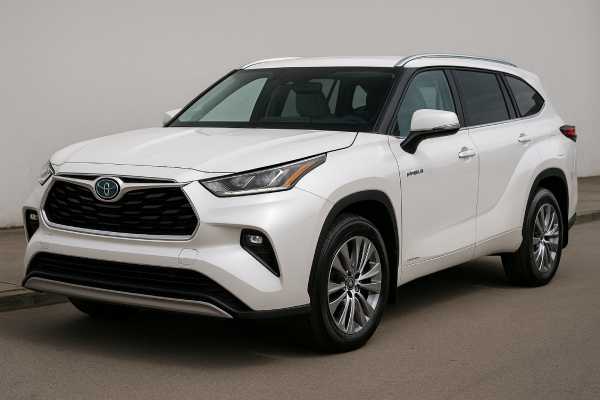
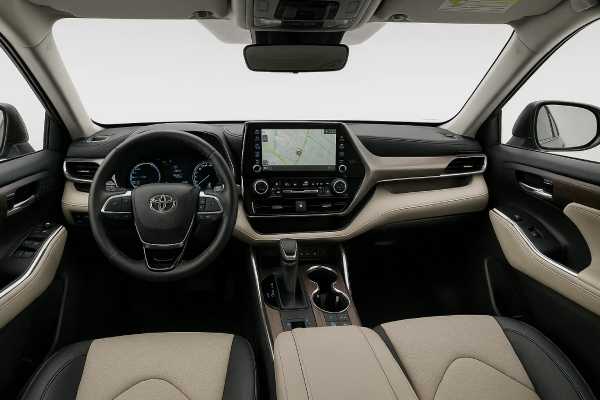
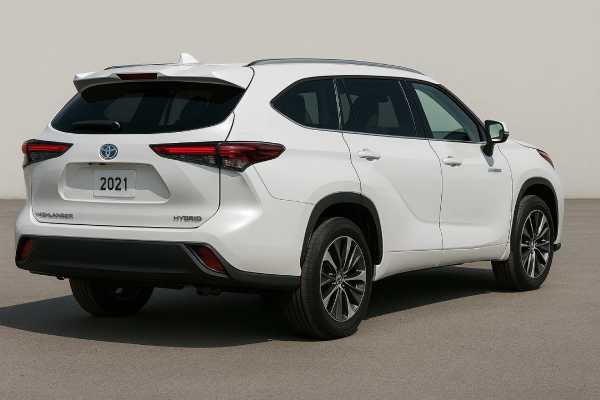
The fourth-generation Toyota Highlander Hybrid pairs a thrifty 2.5-liter Atkinson-cycle four-cylinder with Toyota’s multi-motor eCVT and Electronic On-Demand AWD. It is built on the TNGA-K platform, sharing fundamentals with the RAV4 and Camry but tuned for three-row duty. Owners choose it for family-first packaging, unflappable road manners, and class-leading fuel economy for a midsize SUV. The hybrid system’s net output is rated differently by region: North America lists 243 hp (SAE net), while Europe quotes 248 hp (DIN). Either way, the Highlander Hybrid emphasizes torque-rich response at city speeds, quiet cruising, and predictable traction in rain or snow thanks to its rear electric motor that engages on demand. Practical details—flat cargo floor, flexible second row, and available tow rating—make it easy to live with. This guide distills the specs, service pointers, reliability patterns, and what to look for when buying or maintaining one.
Fast Facts
- Outstanding efficiency for a three-row SUV: up to 35 mpg combined (≈ 6.7 L/100 km).
- Smooth, quiet eCVT with instant low-speed torque and confident on-demand AWD.
- Spacious, family-friendly cabin with thoughtful storage and flexible seating (7 or 8).
- Keep hybrid cooling loops clean: replace cabin and engine air filters on schedule.
- Typical tire rotation interval: every 5,000 mi / 8,000 km (also a good time for inspections).
Navigate this guide
- Highlander Hybrid AWD in detail
- Highlander Hybrid AWD specs and data
- Trims, options and safety
- Reliability and service actions
- Maintenance and buyer’s guide
- Driving and real-world performance
- How it compares to rivals
Highlander Hybrid AWD in detail
The Highlander Hybrid (AXUH78 for AWD) blends Toyota’s A25A-FXS 2.5-liter Atkinson-cycle engine with a front transaxle housing two motor-generators and a dedicated rear e-motor. There’s no mechanical driveshaft to the rear; the system sends torque aft instantly when slip is detected or when the driver requests it via throttle. That “Electronic On-Demand AWD” keeps weight down and packaging tidy while improving traction and stability on slick pavement, gravel, and light snow.
Output is measured differently depending on where it’s sold. In North America, Toyota quotes 243 hp (SAE net). In Europe, the figure is 248 hp (DIN). The hardware is fundamentally the same; the delta reflects test standards and rounding, not a different tune. What matters most in daily driving is the hybrid’s strong low-rpm pull and seamless eCVT logic, which prioritize efficiency and smoothness at city speeds yet provide steady acceleration onto highways.
Built on TNGA-K, the Highlander’s structure is stiff, and the suspension tuning aims for quiet, settled ride quality with confident body control. Electric power steering is light at parking speeds and stable on the interstate. Brake feel is a consistent strong point for a hybrid this size; Toyota’s blended regen/friction system is well calibrated, yielding predictable stops and modest pad wear. Inside, the three-row cabin can be configured for 7 or 8 passengers, with generous small-item storage and an easy-fold third row. The hybrid’s battery is packaged under the rear seats, so cargo space is effectively preserved, and the flat load floor is family-friendly. Typical Highlander Hybrid buyers value the “no-plugin, always-ready” efficiency, low scheduled maintenance demands, and strong resale.
Highlander Hybrid AWD specs and data
Engine and Performance (hybrid system)
| Item | Specification |
|---|---|
| Code | A25A-FXS (Dynamic Force, Atkinson cycle) |
| Engine layout & cylinders | Inline-4, DOHC, 16 valves, VVT-iE (intake) / VVT-i (exhaust) |
| Bore × stroke | 87.5 × 103.4 mm (3.44 × 4.07 in) |
| Displacement | 2.5 L (2,487 cc) |
| Induction | Naturally aspirated |
| Fuel system | D-4S (combined direct + port injection) |
| Compression ratio | ~14.0:1 |
| ICE max power (engine only) | ~186 hp (139 kW) @ ~6,000 rpm |
| ICE max torque | ~237 Nm (175 lb-ft) @ ~4,400 rpm |
| Motor-generators (front) | 2 × PMSM in transaxle (MG1/MG2) |
| Rear drive motor | 1 × PMSM (on-demand e-axle) |
| System net output | 243 hp SAE (North America) / 248 hp DIN (Europe) |
| Timing drive | Chain |
| Emissions / efficiency standard | EPA (U.S.) / WLTP (EU) |
| Rated efficiency (EPA AWD) | ~35 mpg combined (35/35 city/hwy); ≈ 6.7 L/100 km |
| Real-world highway @ 120 km/h (75 mph) | ~7.0–7.4 L/100 km (33–30 mpg US), load and weather dependent |
Note: System net output reflects how hybrid peak power is measured; motor and engine peaks do not simply add arithmetically.
Transmission and Driveline
| Item | Specification |
|---|---|
| Transmission | eCVT (planetary power-split), P7xx family |
| Drive type | Electronic On-Demand AWD (rear e-motor engages as needed) |
| Final drive | Multiple ratios used; varies by trim/wheel |
| Differential(s) | Open; traction via motor control and brake-based torque vectoring |
| Refuel time | ~5 min (gasoline) |
Chassis and Dimensions
| Item | Specification |
|---|---|
| Platform | TNGA-K |
| Suspension (front/rear) | MacPherson strut / multi-link |
| Steering | Electric power steering; ~14–15:1 effective ratio |
| Brakes | 4-wheel disc with blended regen; ventilated fronts |
| Wheels/Tires | 18-in (235/65R18) or 20-in (235/55R20) |
| Ground clearance | ~203 mm (8.0 in) |
| Length / Width / Height | ~4,950 mm / ~1,930 mm / ~1,730 mm (194.9 / 76.0 / 68.1 in) |
| Wheelbase | ~2,850 mm (112.2 in) |
| Turning circle | ~11.4 m (37.4 ft) |
| Curb weight (range) | ~1,980–2,085 kg (4,365–4,595 lb), by trim |
| Fuel tank | ~65 L (17.1 US gal / 14.2 UK gal) |
| Cargo volume (SAE, approx.) | 453 L / 1,371 L / 2,386 L (16.0 / 48.4 / 84.3 ft³) — 3rd up / 2nd up / max |
Performance and Capability
| Item | Specification |
|---|---|
| 0–60 mph / 0–100 km/h | ~7.3–7.6 s (typical test range) |
| Top speed | ~185 km/h (115 mph) |
| Towing capacity | 1,588 kg (3,500 lb) when properly equipped |
| Roof load | Up to ~75 kg (165 lb) with OEM rails/crossbars (check label) |
Fluids and Service Capacities (essentials)
| System | Specification / Capacity (typical) |
|---|---|
| Engine oil | Toyota Genuine 0W-16 (API/ILSAC GF-6B); ~4.5 L (4.8 US qt) with filter |
| Coolant | Toyota Super Long Life Coolant (pink), pre-mix 50/50; separate engine/inverter loops (capacity varies by VIN) |
| Hybrid transaxle (eCVT) | Toyota ATF WS; typical drain-fill ~3.5–4.2 L (3.7–4.4 qt) |
| Rear e-axle gear oil | Toyota gear oil (check spec in service manual); ~0.7–1.0 L typical |
| A/C refrigerant | R-1234yf; ~600–700 g (21–25 oz) typical; compressor oil ND-11 |
| Key torque specs | Wheel lug nuts ~103 Nm (76 lb-ft); oil drain plug ~40 Nm (30 lb-ft) |
Always confirm capacities on your vehicle’s under-hood labels and official service documentation.
Safety and Driver Assistance
| Area | Details |
|---|---|
| Crash ratings | Strong results with awards in recent years (Top Safety Pick/TSP+ depending on year/trim and headlight). |
| Headlights | LED projectors; rating depends on trim and year; best results on higher-spec LED units. |
| ADAS suite | Toyota Safety Sense (TSS 2.5/2.5+): Pre-Collision with Pedestrian/Cyclist detection, Full-Speed DRCC (adaptive cruise), Lane Departure Alert with Steering Assist, Lane Tracing Assist, Road Sign Assist. Blind Spot Monitor and Rear Cross-Traffic Alert commonly fitted. |
Trims, options and safety
Trims and equipment (typical North America pattern): Hybrid LE, XLE, Bronze Edition (select years), Limited, and Platinum. All trims can be had with Electronic On-Demand AWD (AXUH78); seating is 8-passenger with a second-row bench on LE/XLE and 7-passenger with captain’s chairs available or standard on upper trims. Wheel/tire packages scale from 18-inch (comfort-focused) to 20-inch (styling-forward). Infotainment grew during the run: larger touchscreens and a fully digital cluster arrived on upper trims mid-cycle, along with additional USB-C ports and wireless phone integration.
Mechanical or functional differences by trim:
- Brakes/Suspension: Calibrations vary slightly with wheel size and tire, but the basic hardware is shared.
- Towing: Hybrid tow rating is typically 3,500 lb across trims when equipped with the OEM hitch and wiring.
- AWD behavior: Identical logic across grades; Limited/Platinum may add a Multi-Terrain selector for tailored traction mapping.
- Interior configurations: Bench vs. captain’s chairs change the usable cargo length with the third row folded and can impact child-seat placement flexibility.
Year-to-year highlights:
- 2021: Expanded availability after the 2020 model-year debut, incremental infotainment and driver-assist refinements.
- 2022: Bronze Edition special trim with unique wheels, interior accents, and equipment bundles.
- 2023–2025: Interface upgrades on higher trims (larger screens, improved voice controls), additional USB-C power, and refinement of TSS functionality.
Safety ratings: The Highlander line has earned high crash-test scores, including Top Safety Pick/Top Safety Pick+ awards in recent years when equipped with the best-performing LED headlights. Ratings can vary by trim and headlight package; check the exact year/trim you are considering. LATCH anchors are accessible in the second row, and there are clear routing paths for top tethers in both second and third rows.
Safety systems and ADAS: Toyota Safety Sense (TSS 2.5/2.5+) includes automatic emergency braking with pedestrian and cyclist detection, lane-keeping with lane-centering (Lane Tracing Assist), and adaptive cruise with stop-and-go. Blind spot monitoring and rear cross-traffic alert are common, with parking sonar and automated braking on higher trims. After windshield or radar service, calibration is required; budget both time and cost for this procedure.
Reliability and service actions
Overall pattern: Highlander Hybrid owners report low powertrain failure rates and modest wear on friction components thanks to regenerative braking. The A25A-FXS engine and eCVT are well-proven across Toyota’s lineup. Most workshop visits are routine—filters, brake service, and tires.
Common to occasional issues (by prevalence and typical mileage):
- 12 V battery aging (3–6 years): Intermittent no-start or random warnings. Remedy: Load-test and replace with an AGM unit when capacity drops.
- Brake squeak after rain (any age): Surface corrosion on rotors; common on vehicles driven short distances. Remedy: Longer, firm stops to clean rotors; replace pads/rotors if pitted.
- Windshield/ADAS calibration after glass work (any age): Lane/camera faults after replacement. Remedy: Perform static/dynamic recalibration per Toyota procedure.
- Rear e-axle bearing noise (rare, higher mileage): Whine that changes with road speed. Remedy: Inspect hub/bearing and e-axle; replace faulty components.
- Coolant service neglect (varies): Heat-soak odors or poor HVAC/drive efficiency if hybrid/inverter loop maintenance is skipped. Remedy: Use Toyota SLLC and bleed per service manual.
Software and calibrations: Periodic ECU/TCU updates address driveability refinements, infotainment stability, and ADAS false positives. A reflash is the official remedy when noted in service bulletins; dealers can check your VIN for applicable updates.
Recalls/field actions (examples to verify by VIN):
- Front lower bumper cover retention: On certain vehicles, bumper cover tabs could detach after minor contacts; dealers install additional retainers or revise components.
- Seat belt or airbag wiring inspections: Campaigns vary by year/trim; confirm completion history.
- Camera/radar software updates: Improve object detection and reduce false alerts in specific scenarios.
Pre-purchase checks:
- Full maintenance records (oil changes at the correct interval, tire rotations every 5,000 mi/8,000 km).
- Proof of recall completion and any ADAS calibrations after glass work.
- Hybrid cooling health (no leaks; clean condenser/radiator fins).
- Brake condition (inner-pad wear on front calipers; rotor rust from low-use).
- Tires (even wear—AWD vehicles dislike mismatched circumferences).
- Function test for all driver-assist features and parking sensors.
Maintenance and buyer’s guide
Practical maintenance schedule (typical):
- Engine oil and filter: Every 10,000 mi / 12 months with 0W-16, or 5,000 mi / 6 months for severe use.
- Tire rotation, pressure, alignment check: Every 5,000 mi / 8,000 km.
- Cabin air filter: Inspect 10,000–15,000 mi; replace 15,000–20,000 mi (more often in dusty/allergy seasons).
- Engine air filter: Inspect 15,000 mi; replace ~30,000 mi (sooner in dusty use).
- Brake fluid: Replace every 2–3 years as best practice.
- Hybrid transaxle (ATF WS): “Lifetime” under normal service; many owners elect a drain-and-fill every 60,000–100,000 mi for longevity.
- Rear e-axle gear oil: Inspect for leaks; replace fluid at ~100,000 mi if towing or in harsh climates.
- Coolant (engine/inverter): First replacement around 100,000 mi / 10 years, then ~50,000 mi / 5 years thereafter.
- Spark plugs (iridium): ~120,000 mi / 12 years.
- Drive belts and hoses: Inspect every 30,000 mi; replace on condition.
- 12 V battery: Test annually after year 3; expect 4–6-year life.
Fluid specs and essentials:
- Oil: Toyota Genuine 0W-16 (GF-6B) with a high-quality filter.
- Coolant: Toyota Super Long Life Coolant (pink).
- Transaxle: Toyota ATF WS.
- A/C: R-1234yf refrigerant, ND-11 compressor oil.
- Torque touchpoints: Wheel nuts ~103 Nm (76 lb-ft); oil drain plug ~40 Nm (30 lb-ft). Always verify for your VIN.
Buyer’s guide (what to look for):
- Rust and underbody: Check rear subframe mounts and exhaust hangers in road-salt areas.
- Tires and brakes: Uneven tire wear or lip on rotors suggests skipped rotations or short-trip use.
- ADAS and glass: Ask about windshield replacements and proof of camera/radar recalibration.
- Infotainment: Ensure the latest software is loaded; test wireless CarPlay/Android Auto on 2023+ vehicles.
- Options to favor: XLE (value sweet spot), Limited/Platinum (best headlights, audio, and comfort). Bronze Edition (style and features) for a special-trim hybrid.
- Tow needs: All hybrids are 3,500 lb max; if you need 5,000 lb, consider a non-hybrid or the turbo model with tow package.
Long-term outlook: The Highlander Hybrid’s power-split architecture, simple service needs, and gentle brake wear pattern bode well. Battery placement preserves cargo and keeps the pack thermally stable. With routine maintenance, many examples exceed 200,000 mi (320,000 km) with original major components.
Driving and real-world performance
Ride, handling, and NVH: The TNGA-K chassis gives the Highlander Hybrid a mature, settled ride. Impacts are rounded over, wind noise is modest, and the cabin stays composed on broken pavement. On 18-inch tires it’s comfortably supple; 20-inch packages sharpen steering response at the cost of a touch more impact feel. Straight-line stability is excellent, and the steering builds effort naturally from parking-lot speeds to highway.
Powertrain character: Off-the-line torque from the front motor makes the SUV feel stronger than its net horsepower suggests in town. The eCVT keeps the engine in an efficient band and quickly blends engine/motor power under heavier throttle. Under full load, the Atkinson four is audible but not coarse, and it settles quickly once at cruise. In rolling terrain, the system’s logic anticipates small grade changes and adds a whisper of electric assist to maintain speed without hunting.
AWD traction and control: The rear motor engages pre-emptively in slippery conditions, improving launch on wet or snowy surfaces and adding yaw control mid-corner. Multi-Terrain Select (where fitted) tweaks pedal mapping and traction control on dirt or sand. All-season tires are fine for most climates; dedicated winter tires transform snow performance.
Efficiency in the real world: Expect ~35 mpg (≈ 6.7 L/100 km) combined in mixed use. At 60–70 mph (100–115 km/h) cruising, many owners see low-to-mid-30s mpg (≈ 7.0–7.8 L/100 km), with winter temperatures and short trips reducing results. A gentle right foot, tire pressures at spec, clean filters, and using ECO mode around town preserve the Highlander’s advantage.
Key metrics (typical tests): 0–60 mph in the low-to-mid-7s; 50–80 mph passing in ~5.5–6.0 s when the battery is in its normal SOC window. Braking remains consistent thanks to good regen blending; expect moderate pedal travel followed by firm bite from the friction brakes when you ask for it.
Load and towing: With 3,500 lb (1,588 kg) max tow capacity, the Highlander Hybrid comfortably handles small campers and boats. Keep speeds in check on long grades, use S mode to add engine braking, and allow longer stopping distances. Fuel economy typically dips 20–35% while towing and 10–20% with a full cabin and cargo.
How it compares to rivals
- Kia Sorento Hybrid (AWD): Smaller cabin and third row than the Highlander but lively response and strong feature value. Highlander is quieter and more efficient at highway speeds, with an easier third-row fold and more cargo with seats down.
- Hyundai Santa Fe Hybrid: Two-row packaging excels for couples or small families. Highlander offers the extra row and larger cargo volume; both are refined, but Toyota’s eCVT is smoother under steady throttle.
- Ford Explorer Hybrid: Higher tow rating and rear-drive dynamics, but it’s thirstier and pricier like-for-like. Highlander counters with better everyday economy and a quieter cabin.
- Grand Highlander Hybrid MAX (related): Bigger and stronger, aimed at long-distance families who need space and quick passing. The standard Highlander Hybrid remains the efficiency champ and is easier to park.
- Honda Pilot (non-hybrid): A well-sorted benchmark for space and handling; Toyota wins on fuel economy and in-town smoothness, while Pilot offers a conventional V6/turbo-V6 feel.
References
- 2024 Toyota Highlander Product Info 2024 (Manufacturer Specifications)
- Toyota Highlander – Technical Specifications 2021 (Technical Specifications)
- IIHS announces 2022 TOP SAFETY PICK awards 2022 (Safety Rating)
- Fuel Economy of the 2022 Toyota Highlander Hybrid AWD 2022 (Official EPA Data)
Disclaimer
This guide is for informational purposes and is not a substitute for professional diagnosis or repair. Specifications, torque values, capacities, intervals, and procedures can vary by VIN, market, model year, and equipment. Always verify details against your vehicle’s owner’s manual and official service information, and follow local regulations and safety practices.
If you found this useful, please consider sharing it with friends or on your social channels to support xcar’s work. Thank you!