
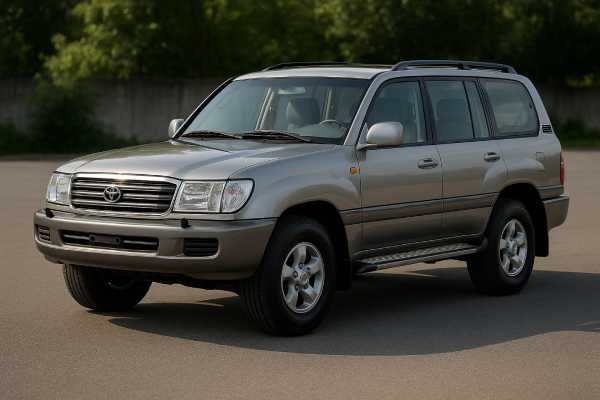
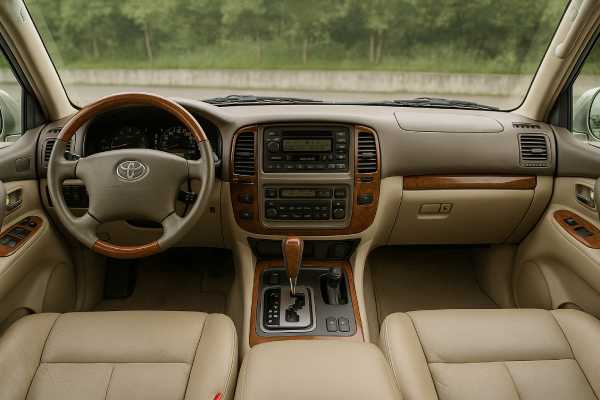
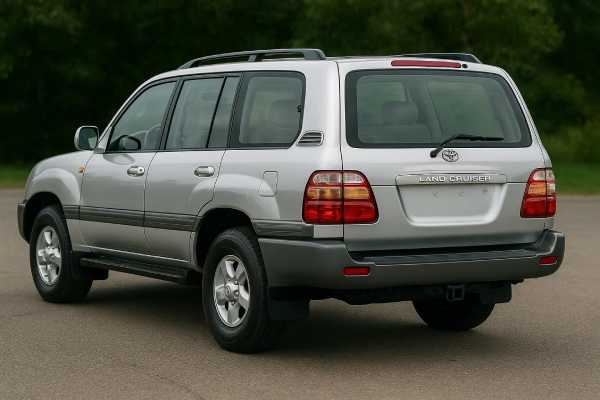
The HDJ100 Land Cruiser, sold across Europe from 1998 to 2002 with Toyota’s electronically controlled 1HD-FTE 4.2-litre turbo-diesel, blends old-school durability with meaningful everyday refinement. It introduced independent front suspension to the big Land Cruiser wagon and paired it with a remarkably broad torque plateau—430 Nm from low revs—making towing and long-distance travel effortless. Owners prize the model for its body-on-frame toughness, long-lived driveline, and huge parts ecosystem. Compared with earlier 80-series trucks, the HDJ100 is quieter, rides better, and offers more cabin tech, while retaining genuine 4×4 hardware: a 2-speed transfer case and lockable centre differential (with an available rear locker). The trade-offs are predictable: considerable mass, thirsty real-world economy versus smaller diesels, and age-related maintenance that now demands a methodical, preventive approach. If you want a large, dependable diesel 4×4 that still feels special, the HDJ100 remains a benchmark.
Fast Facts
- Immense low-rpm torque (430 Nm / 317 lb-ft) gives easy towing and relaxed cruising.
- Robust body-on-frame with proven 4×4 hardware and optional rear diff lock.
- Optional AHC/TEMS delivers self-levelling and improved ride with heavy loads.
- Watchpoints: timing belt age, AHC leaks, front suspension wear, cooling system.
- Typical timing belt interval: 150,000 km (≈93,000 miles) or ~9 years, whichever comes first.
Explore the sections
- HDJ100 Land Cruiser overview
- HDJ100 specs and technical data
- HDJ100 trims, safety and ADAS
- Reliability, issues and service actions
- Maintenance schedule and buyer’s guide
- Driving impressions and performance
- How it compares to rivals
HDJ100 Land Cruiser overview
The HDJ100 is the 100-series Land Cruiser powered by Toyota’s 1HD-FTE, a 4.2-litre, 24-valve, electronically controlled, turbo-diesel inline-six. In European tune for 1998–2002 it’s rated at 150 kW (201 hp) at 3,400 rpm and a broad 430 Nm (317 lb-ft) from roughly 1,400–3,200 rpm. Those numbers tell the ownership story: it’s a long-range, load-lugging SUV that feels unbothered by gradients, trailers, or full cabins.
Compared with the 80-series, the 100 adopted an independent front suspension (IFS) with double wishbones and torsion bars (the heavy-duty 105-series retained a solid front axle but wasn’t the 1HD-FTE flagship in Europe). The 100-series chassis kept the ladder frame, coil-sprung live rear axle, and a full-time 4×4 system with a lockable centre differential and a low-range transfer case (H4/L4). A rear differential lock was available or standard depending on market/trim.
The HDJ100’s cabin reflects its dual mission. You’ll find a commanding driving position, excellent outward visibility, and quietness that was a major step forward at the time. Many examples were specified with features rare among late-1990s off-roaders: multi-zone climate control, leather upholstery, premium audio, and the AHC/TEMS system (Active Height Control with Toyota Electronic Modulated Suspension). AHC provides self-levelling and driver-selectable height; TEMS varies damping with speed and body motion—useful when carrying seven passengers or towing up to heavy European limits.
Ownership appeal centres on longevity. The 1HD-FTE’s iron block, conservative specific output, and low-stress mapping contribute to very long service lives when maintained on schedule. The trade-offs are size, weight, and component complexity compared with simpler 70-/80-series trucks. As these vehicles age, suspension wear (front arms/bushings and steering components), cooling system upkeep, and AHC maintenance become the priorities. With documented care, however, the HDJ100 remains one of the most confidence-inspiring diesel SUVs to own and drive.
HDJ100 specs and technical data
Below are Europe-baseline specifications for the 1998–2002 1HD-FTE Land Cruiser (HDJ100). Figures can vary by trim, options, and fitment.
Engine & Performance
| Item | Spec |
|---|---|
| Code | 1HD-FTE |
| Layout & cylinders | Inline-6, DOHC, 24-valve |
| Bore × stroke | 94.0 × 100.0 mm (3.70 × 3.94 in) |
| Displacement | 4.164 L (4,164 cc) |
| Induction | Turbocharged, intercooler (air-to-air) |
| Fuel system | Electronic direct injection (distributor-type pump) |
| Compression ratio | 18.5:1 |
| Max power | 201 hp (150 kW) @ 3,400 rpm |
| Max torque | 430 Nm (317 lb-ft) @ ~1,400–3,200 rpm |
| Timing drive | Belt (timing belt, external drive) |
| Emissions era | Euro 2/EEC-98 timeframe |
| Rated efficiency (combined)* | Manual ≈ 11.1 L/100 km (21.2 mpg US / 25.4 mpg UK); Auto ≈ 12.6 L/100 km (18.7 mpg US / 22.4 mpg UK) |
| Real-world highway @ 120 km/h | ~11.5–13.5 L/100 km (20.6–17.4 mpg US / 24.7–21.0 mpg UK), load/tyres dependent |
- Manufacturer-published period figures; real-world consumption varies with tyres, lift/roof gear, and towing.
Transmission & Driveline
| Item | Spec |
|---|---|
| Transmissions | 5-spd manual (H151F); 4-spd automatic (A442F) |
| Gear ratios (H151F) | 1st 4.081, 2nd 2.294, 3rd 1.490, 4th 1.000, 5th 0.881, Rev 4.313 |
| Gear ratios (A442F) | 1st 2.950, 2nd 1.530, 3rd 1.000, 4th 0.765 (OD), Rev 2.678 |
| Final drive ratio | Typical: 3.909 (manual) or 4.300 (auto), market-dependent |
| Transfer case | Full-time 4×4; HF2A, H4/L4 = 1.000/2.488; lockable centre diff |
| Differentials | Open front; Torsen/lockable centre; rear open or locking diff (option/by trim) |
Chassis & Dimensions
| Item | Spec |
|---|---|
| Suspension (front/rear) | IFS double-wishbone, torsion bars / 4-link live axle, coils |
| AHC/TEMS | Available; self-levelling + adaptive damping |
| Steering | Power-assisted rack-and-pinion (speed-sensitive assist) |
| Brakes | 4-wheel ventilated discs; parking brake internal drum (rear hat). Diameter varies by package; front thickness ~32 mm; rear rotor ~18 mm |
| Wheels/Tyres | Typical 275/70 R16 (16×8 in); some later EU cars on 17-in packages |
| Length/Width/Height | ~4,890 mm / 1,940 mm / 1,860–1,890 mm (192.5 / 76.4 / 73.2–74.4 in) |
| Wheelbase | 2,850 mm (112.2 in) |
| Turning circle (kerb-to-kerb) | ≈ 11.8 m (38.7 ft) |
| Kerb (curb) weight | ~2,445–2,640 kg (5,390–5,820 lb), spec-dependent |
| GVWR | Typically 3,260 kg (7,187 lb) |
| Fuel tank | 96 L (25.4 US gal / 21.1 UK gal); some EU builds with 96+45 L twin tanks |
Performance & Capability
| Metric | Value |
|---|---|
| 0–100 km/h (0–62 mph) | ~12–14 s (manual slightly quicker when unladen) |
| Top speed | ~170–180 km/h (105–112 mph) |
| Braking 100–0 km/h | Period test spread ~40–45 m; tyre-dependent |
| Towing capacity (braked) | Commonly 3,500 kg (7,716 lb) where permitted |
| Payload | Typically 600–800 kg (1,323–1,764 lb), trim-dependent |
| Roof load | ~100 kg (220 lb) typical OEM rating (cross-bars/rails spec dependent) |
Fluids & Service Capacities
| System | Specification | Capacity |
|---|---|---|
| Engine oil (1HD-FTE) | ACEA B3/B4 diesel; API CF/CF-4; 5W-40/10W-40 common | ≈ 11.4 L (12.0 US qt) with filter |
| Coolant | Ethylene-glycol OAT/HOAT per Toyota spec | ≈ 12.8–14.2 L (13.5–15.0 US qt) |
| Manual transmission (H151F) | 75W-90 GL-4/GL-5 | ≈ 2.7 L (2.9 US qt) |
| Automatic (A442F) | ATF Dexron II/III (pre-2004) | ≈ 6.0 L service fill (full dry ~13–14 L) |
| Transfer case | 75W-90 GL-4/GL-5 | ≈ 1.3 L (1.4 US qt) |
| Front diff | 80W-90 GL-5 | ≈ 1.6 L (1.7 US qt) |
| Rear diff (std/LSD) | 80W-90 GL-5 (LSD-approved for LSD) | ≈ 3.3 L (3.5 US qt) |
| A/C refrigerant | R134a; PAG oil | Charge varies by system; typical ~0.95–1.05 kg |
| Key torque | Wheel lug nuts ≈ 131 Nm (97 lb-ft) |
Electrical
| Item | Spec |
|---|---|
| Alternator | Up to ~1,440 W (≈120 A @ 12 V) depending on build |
| 12 V batteries | Dual 12 V; common 55–64 Ah each (5-hour rate) |
| Glow system | Quick-heat glow plugs with ECU control |
Safety & Driver Assistance (period equipment)
- Front airbags standard; side/curtain airbags arrived with late-2002 update on some EU trims.
- ABS standard; traction/stability features varied by engine/trim (VSC on certain builds nearer 2003).
- ISOFIX was not yet universal; many cars rely on belt-anchored child seats.
- Euro NCAP did not publish a rating for this generation; in Australia, ANCAP’s 2002 test of the LC100 wagon yielded 24.9/37 with a full 16/16 side-impact score (period protocols).
HDJ100 trims, safety and ADAS
Trims and options (Europe, 1998–2002). Naming and content vary by country; the following describes common patterns:
- GX/Standard (market-dependent): Cloth, 16-in wheels, manual A/C, part wood-trim, no AHC; centre diff lock; rear diff lock often optional.
- VX/Executive: Leather, alloy wheels, auto climate, heated seats (cold-climate packs), optional AHC/TEMS; often adds headlamp washers, power memory driver’s seat, premium audio.
- “Amazon” (UK branding): High-spec single grade; diesel offered as manual or optional auto. Late 2002 update added cosmetic changes and available side/curtain airbags; petrol variants gained a 5-speed auto (diesel kept 4-speed through 2002).
Mechanical distinctions by trim/options.
- Suspension: AHC/TEMS equipped cars self-level under load and can raise/lower ride height; non-AHC cars use conventional dampers and torsion bar adjustment for front ride height.
- Differentials: Rear diff lock factory option on many markets; some high-spec cars substituted an electronic traction aid, but the centre diff lock remained.
- Brakes and wheels: 16-in tyres (275/70 R16) most common through 2002; later EU updates introduced 17-in wheels. Brake hardware is broadly shared but pad compound and rotor spec vary by wheel and tow packages.
Year-to-year highlights.
- 1998–1999: Launch spec; dual front airbags, ABS; rear diff lock widely available; AHC/TEMS optional on upper trims.
- 2000–2001: Progressive infotainment and trim updates; running changes to AHC calibration and NVH.
- Late 2002 (for MY2003 in some markets): Cosmetic refresh, expanded airbag coverage on high-spec models, and broader availability of luxury features. Diesel power/torque figures remained the same; petrol variants gained a 5-speed auto (diesel retained 4-speed in this window).
Safety ratings (snapshot).
- Euro NCAP: No published 100-series rating in the 1998–2002 window.
- ANCAP (Australia, 2002 protocol): LC100 wagon assessed at 24.9/37 overall with 16/16 side-impact; ESC not standard across the range at that time.
ADAS and driver aids. These predate modern suites. Typical equipment includes ABS, some traction control availability near the update, and—for certain petrol models—stability control around 2002–2003. Lane-keeping, AEB, blind-spot monitoring, and adaptive cruise were not fitted on 1998–2002 trucks. After collision or windshield work, there’s no camera/radar to calibrate; alignment of steering angle sensors (for stability-equipped later cars) and ABS wheel speed sensor integrity are the main checks.
Child-seat and restraints. ISOFIX/LATCH appeared later; most HDJ100s rely on three-point belts and top-tether anchor provisions vary by seat configuration. Always confirm tether points and belt geometry before installation.
Reliability, issues and service actions
How the HDJ100 ages. The 1HD-FTE and A442F/H151F drivetrains are robust, and many vehicles exceed 400,000 km with careful service. Age, mileage, climate, and usage pattern (short trips vs. touring/towing) define the maintenance curve.
Common (routine) — low to medium severity.
- Timing belt age/overdue: Symptoms are rare before failure; inspect belt condition, idlers, and tensioner by time as well as distance. Replace belt, tensioner, and idlers together; renew front crank seal if seeping.
- Front suspension wear (IFS trucks): Lower/upper arm bushings and ball joints wear with heavy tyres or off-road work. Symptoms: clunks over bumps, wandering, uneven tyre wear. Remedy: replace arms/joints; align and re-index torsion bars if ride height has sagged.
- AHC/TEMS seepage or height faults (if fitted): Slow droop, nose-high/low stance, or harsh ride. Causes: leaking AHC cylinders/hoses, tired accumulators (nitrogen balls), contaminated fluid. Remedy: pressure test accumulators, flush with correct AHC fluid, replace leaking components; recalibrate height.
- Cooling system age: Radiators and viscous fans lose performance; hoses and heater “T”s harden. Watch for rising temps on grades/towing. Replace radiator proactively, renew coolant with correct spec, and verify fan clutch engagement.
- Brake rotors/pads and caliper pins: Heavy mass accelerates wear; seized guide pins cause taper wear. Service pins/boots, use quality pads, and bed-in properly after replacement.
Occasional — medium severity.
- A442F shift flare or harsh 1–2 when hot: Often fluid age/level, worn accumulators, or solenoid performance. Start with a full ATF service (correct Dexron II/III), adaptions reset (if applicable), and check throttle sensor and line pressure. Rebuilds are less common when serviced on time.
- Driveline vibrations under load: Prop-shaft U-joints or out-of-phase shafts after prior maintenance. Grease the slip joints, check phasing, and balance where needed.
- Rear diff lock inoperative: Corroded actuator or seized mechanism from lack of use. Exercise the locker regularly on loose surfaces; refurbish actuator and seals if stuck.
Rare but high-impact.
- Steering mechanism recall (UK/EU press notice, 2002–2006 build window): A snap-ring bracket within the steering mechanism could detach after severe impact; affected vehicles were recalled for replacement parts. Verify by VIN.
- Head gasket/cylinder head issues: Infrequent on stock tune; more likely on poorly tuned/chipped engines. Symptoms: coolant loss, pressurised hoses, white smoke cold. Remedy: pressure test, combustion-gas test, proper head inspection and resurfacing if required.
Electronic/ECU notes (1HD-FTE). Occasional EGR control valves and boost control solenoids age out; MAF and MAP sensors can drift or clog with oil mist/soot. Symptoms include limp-home, surging, or smoke. Clean/replace sensors as needed and verify vacuum hose integrity before condemning actuators. ECU reflashes were limited in this era; most driveability fixes are mechanical/service-based rather than software updates.
Corrosion hotspots. Rear sills and arches, tailgate lower seam, front cross-member, and body mounts. In salted climates, inspect brake/fuel lines along the frame, AHC lines (if fitted), and the spare-wheel hoist.
Pre-purchase checks to request.
- Evidence of timing belt kit replacement (date and km), valve-cover leaks addressed, and cooling system refresh.
- Record of AHC fluid service/accumulator replacement (if fitted).
- Transmission fluid change history (AT) or clutch condition (MT).
- Diff/transfer oils replaced in the last 60,000–100,000 km.
- VIN recall/TSB completion printout; look for steering-related campaign closure where applicable.
- Suspension/steering inspection results and alignment sheet; tyre wear pattern.
- Rust assessment with photos of frame rails, body seams, and rear floor.
Maintenance schedule and buyer’s guide
Below is a practical schedule aligned to typical European intervals and HDJ100 realities. Always adapt to severe duty (towing, short trips, high dust, extreme cold/hot) and verify by VIN.
Core intervals (distance or time, whichever comes first).
- Engine oil & filter (diesel-rated 5W-40/10W-40): 10,000–15,000 km / 12 months. Heavy towing or many short trips: 10,000 km.
- Fuel filter: 20,000–30,000 km / 24 months; earlier if power loss under load or water-in-fuel event.
- Engine air filter: Inspect every 10,000 km; replace 20,000–30,000 km; sooner in dust.
- Cabin filter (if fitted): 15,000–20,000 km / 12 months.
- Timing belt (1HD-FTE): 150,000 km or ~9 years; replace belt, idlers, tensioner; inspect water pump while accessible.
- Serpentine/aux belts & hoses: Inspect each oil service; replace 90,000–120,000 km or at first cracking/noise.
- Coolant: 5 years / 100,000–150,000 km; replace with Toyota-approved long-life coolant and bleed carefully.
- Manual gearbox (H151F): 60,000–80,000 km; 75W-90 GL-4/5.
- Automatic (A442F): 40,000–60,000 km service fill with Dexron II/III; include filter/screen and pan cleaning where applicable.
- Transfer case & differentials: 60,000–80,000 km; correct GL-5; LSD-approved oil for LSD.
- Brake fluid: 2 years; flush completely.
- Brake pads/rotors: Inspect each service; replace when below spec or with judder/taper wear. Clean/lube caliper slide pins.
- AHC fluid (if fitted): 2–3 years; flush and recalibrate ride height. Inspect spheres for charge, lines for leaks.
- Tyre rotation, balance, and alignment: 10,000–12,000 km; monitor wear on heavy all-terrain tyres.
- Valve clearances: Hydraulic lash not applicable; check only if noise/symptoms.
- 12 V batteries: Load-test annually after year five; dual replacements in pairs are best practice.
- Glow plugs & relays: Test in cold-start season; replace on fault.
Fluid specifications/capacities (decision-critical).
- Oil: 1HD-FTE ≈ 11.4 L with filter; ACEA B3/B4 or API CF/CF-4 diesel oil.
- Coolant: ≈ 12.8–14.2 L total; Toyota red/pink long-life.
- A442F ATF: Dexron II/III (pre-2004); service fill ≈ 6.0 L; full dry ≈ 13–14 L.
- H151F manual: ≈ 2.7 L, 75W-90 GL-4/5.
- Transfer: ≈ 1.3 L, 75W-90 GL-4/5.
- Front/Rear diffs: ≈ 1.6 L / 3.3 L, GL-5 (use LSD oil if equipped).
- A/C: R134a; charge typically ~0.95–1.05 kg; PAG oil per compressor spec.
Buyer’s checklist.
- Chassis: Look for AHC leaks, uneven ride height, and clunks over speed bumps (front ball joints/arm bushes).
- Driveline: Smooth automatic kickdown, no flare 2–3; manual clutch take-up even; verify centre diff lock engagement; test rear locker on gravel.
- Thermal: Insist on a full-temp test drive up a long grade—watch coolant temps and trans behaviour.
- Electrics: Confirm both batteries are healthy; cold-start glow system works; all HVAC modes operable.
- Corrosion: Frame rails, rear body seams, tailgate lower edge, brake/fuel lines, and spare-wheel hoist.
- Paperwork: Timing belt proof by date and km; recent coolant and ATF service; diff/transfer oils in the last 60–100k; recall/TSB completion by VIN.
Durability outlook. With documented maintenance, stock tune, and sensible tyres (LT load rating, correct pressures), the HDJ100 is one of the longest-lived diesel SUVs. Budget for age-related suspension and AHC refreshes and you’ll enjoy the strengths that made this model an overland staple.
Driving impressions and performance
Ride and NVH. The IFS front end and long wheelbase deliver calm, settled ride quality on secondary roads; the rear live axle remains composed with passengers and luggage. On rough urban surfaces, non-AHC trucks can thump over sharp edges; AHC/TEMS versions feel slightly more tied-down with load. Wind noise is modest for a big body-on-frame SUV; tyre roar depends heavily on tread choice.
Steering and braking. Steering effort is light at parking speeds and stable at motorway pace. The rack offers limited road feel (typical of the genre) but tracks straight. The brakes are strong if maintained—fresh pads, clean slider pins, and true rotors matter. Expect longer stopping distances than modern crossovers due to mass and tyre type.
Powertrain character. The 1HD-FTE pulls from idle with minimal turbo lag, and its broad plateau means relaxed progress at 1,800–2,400 rpm. The A442F 4-speed auto is smooth when serviced, keeps revs low on the motorway, and tolerates towing well; a kickdown summons the meat of the torque quickly. The H151F manual feels mechanical and direct; fifth is comfortably tall for continental cruising.
Real-world economy. With stock ride height and 16-inch tyres, expect 11.5–13.5 L/100 km at 120 km/h (≈ 20.6–17.4 mpg US / 24.7–21.0 mpg UK). City consumption ranges 13–16 L/100 km depending on trip length and idling. Winter blend fuel, roof racks, lifts, and A/T tyres all add 5–20 percent.
Load and towing. The HDJ100 tows with confidence up to common European braked limits (often 3,500 kg where permitted). Temperature stability is good if the cooling pack and viscous fan are healthy. Plan for a +20–40% consumption penalty when towing boxy caravans or heavy equipment. AHC shines under tongue weight by maintaining rake and headlight aim.
Off-road traction. Factory geometry is conservative but effective; the centre diff lock and low range handle most trail work, and the optional rear locker is powerful on cross-axle terrain. AHC “High” can add clearance briefly, but watch sump/radiator protection and do not rely on height alone in ruts. Tyre choice remains the single biggest variable.
How it compares to rivals
Land Rover Range Rover (P38A, BMW-era V8 diesel options varied by market). The P38A delivers plush ride and cabin ambience but is far more complex electrically and less consistent for long-term reliability. Air-suspension issues are more frequent than AHC-specific concerns on the Toyota. Off-road traction is excellent in both; Toyota’s driveline generally outlasts with fewer surprises in high-mileage use.
Land Rover Discovery II Td5. Lighter and more agile in town, the Td5 offers good torque and a strong enthusiast community. However, head gasket and oil-pump bolt concerns, plus rear chassis rust in salted markets, often tip total cost of ownership in Toyota’s favour. The HDJ100 is quieter at speed and tows with less effort.
Mitsubishi Pajero/Shogun 3.2 Di-D. The unit-body Mitsubishi is lighter and more efficient, with Super-Select 4WD that’s excellent on mixed surfaces. Long-term, the Toyota’s frame, diffs, and 1HD-FTE are the safer bet for repeated heavy towing or overlanding. The Pajero’s on-road manners are tidier; the Toyota rides more serenely when loaded.
Nissan Patrol Y61 3.0 Di / 4.2 TD. The Patrol’s live-axle articulation is superb off-road. However, the early 3.0 Di has well-documented issues; the 4.2 TD is stout but less refined and often rarer in Europe. The HDJ100 balances reliability, torque delivery, and cabin civility better for mixed family/touring use.
Verdict. If you prioritise longevity, towing confidence, and cross-continent comfort, the HDJ100 remains an outstanding diesel 4×4. Rivals may be cheaper to buy, more agile in town, or marginally more efficient, but few match the Toyota’s blend of mechanical integrity and long-distance ease.
References
- MAJOR TECHNICAL SPECIFICATIONS 2002 (New Car Features)
- automatic transmission description 1995 (A442F Repair Manual Supplement)
- Toyota-Club.Net – Fluids & capacities – Land Cruiser 100 (1998-2007) eu 2018 (Fluids & Capacities)
- Toyota Announces Precautionary Safety Recall Campaign in the UK for Previous Generation Land Cruiser Amazon 2010 (Recall Press Release)
- Toyota Landcruiser | Safety Rating & Report | ANCAP 2002 (Safety Rating)
Disclaimer
This article is for informational purposes and is not a substitute for professional diagnosis or repair. Specifications, torque values, service intervals, and procedures vary by VIN, market, build date, and equipment. Always verify against your official Toyota service documentation and local regulations before performing maintenance or repairs.
If you found this guide useful, please share it with fellow enthusiasts on Facebook or X/Twitter—your support helps keep xcar’s deep-dive guides alive.