
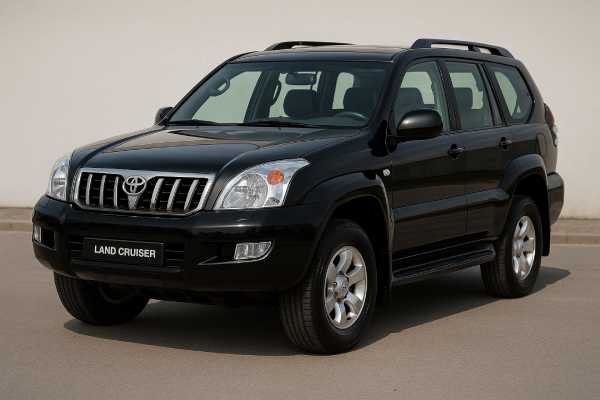
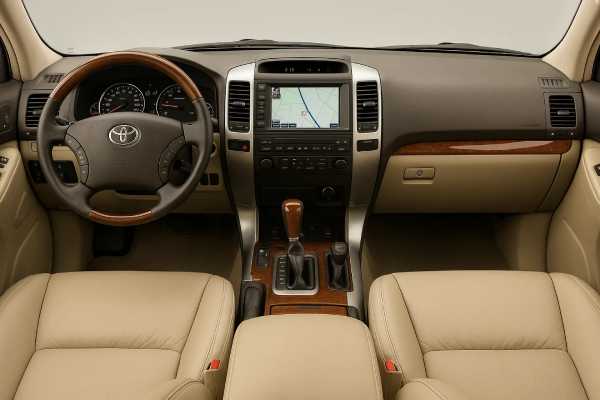
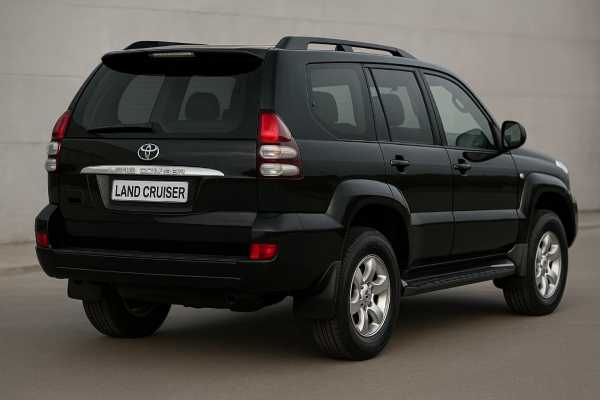
The 2007–2009 Toyota Land Cruiser (GRJ120) with the 1GR-FE 4.0-litre V6 occupies a sweet spot in the Prado/120 lineage: the robust ladder frame and permanent four-wheel drive you expect from a Land Cruiser, paired with a smoother, quieter petrol powertrain and the useful updates of the late-cycle facelift. For buyers who split their time between tarmac and trails—and who value longevity over gadgetry—it’s a compelling, low-drama choice. The V6 is chain-driven, naturally aspirated and tuned for dependable mid-range torque rather than fireworks. The facelift also brought cleaner Euro-IV calibrations and, in many markets, an upmarket flagship grade with more sound insulation and comfort kit. Underneath, you still get serious hardware: a two-speed transfer case, a lockable centre differential and traction control calibrated for uneven surfaces. Ownership stays refreshingly simple: sensible service intervals, widely available parts and a chassis that tolerates mileage if you keep fluids and corrosion in check.
Fast Facts
- Proven 1GR-FE V6 (249 hp / 183 kW) with timing chain and broad torque; smooth, quiet and tolerant of poor fuel.
- Permanent 4×4 with low range, lockable centre diff and effective A-TRC; 2,800 kg (6,173 lb) braked tow rating.
- Spacious five-door body; practical 87 L (22.99 US gal / 19.14 UK gal) tank and 620 L (21.9 ft³, VDA) cargo bay seats-up.
- Watch for age-related coolant leaks, radiator condition (auto models) and exhaust manifold ticks on high mileage.
- Typical oil and filter service: every 10,000–15,000 km (6,000–10,000 miles) or 12 months, whichever comes first.
What’s inside
- GRJ120 Land Cruiser briefing
- GRJ120 specs and data
- GRJ120 trims, options and safety
- Reliability, issues and service actions
- Maintenance and buyer’s guide
- Driving and performance
- How it compares to rivals
GRJ120 Land Cruiser briefing
The facelifted 120-series Land Cruiser entered its run-out phase from 2007 to 2009 with small but meaningful improvements to refinement and equipment while retaining its core virtues: a body-on-frame platform, permanent four-wheel drive with a Torsen-type centre differential (manual lock function), and a two-speed transfer case with low range. In this guise, the 4.0-litre 1GR-FE V6 sits transversely behind a deep radiator pack and ahead of a stout front differential and double-wishbone suspension. The engine is an aluminium DOHC 24-valve unit with VVT-i on the intake side, chain drive and port fuel injection—selected for durability and ease of service. Output in this calibration is 249 hp (183 kW) at 5,200 rpm and 380 Nm (280 lb-ft) at 3,800 rpm, a figure that matters more on a grade with a trailer than at a stoplight.
The drivetrain specification most buyers encountered was the A750F five-speed automatic coupled to full-time 4×4. Low-range reduction and centre-diff lock are controlled by a rotary selector and a separate lock button, and Active Traction Control (A-TRC) meters wheelspin across diagonally unloaded axles with a soft-touch calibration that works well on loose gravel and rock steps. Stability control (VSC), Hill-start Assist Control (HAC) and—on certain autos—Downhill Assist Control (DAC) extend confidence on sloped or slippery terrain without overwhelming the driver.
The facelift years also brought cabin and equipment tweaks. Higher grades gained additional acoustic glass and insulation, a colour multi-function display with clearer off-road graphics, and convenience features (Bluetooth phone prep, parking camera, dark-finish exterior details) on the flagship grade. Seating remained versatile: most five-door models carried three rows (2-3-2), with the rearmost seats folding to the sides to preserve floor length. Luggage space is generous by class norms, with 620 L (VDA) available with five seats in use and a long, flat load floor when the second row is folded.
Dimensionally, the five-door wide-body version measures 4,850 mm long on a 2,790 mm wheelbase, 1,875 mm wide and around 1,895 mm tall (with roof rails/suspension). Ground clearance is 222 mm, with approach/departure/breakover angles of roughly 32°/27°/20° and a quoted wading depth over 700 mm—figures that translate to real trail utility when tyres and recovery points are appropriate. Braked towing capacity is 2,800 kg; roof load is 80 kg; and typical gross vehicle weight rating (GVWR) is 2,850 kg, leaving a useful payload for passengers and kit.
One note on availability: in several European markets the 4.0 V6 was offered alongside the 3.0 D-4D, but the petrol unit was short-lived near the end of the 120’s lifecycle and was discontinued before the platform changeover. If you want the smoother V6, shop carefully by year and market.
GRJ120 specs and data
Below you will find technical data focused on the facelifted five-door GRJ120 with the 1GR-FE 4.0-litre petrol V6 and five-speed automatic in European specification.
Engine and performance (ICE)
| Item | Specification |
|---|---|
| Code | 1GR-FE (VVT-i, intake) |
| Layout & cylinders | 60° V6, DOHC, 24 valves (4 per cylinder) |
| Bore × stroke | 94.0 × 95.0 mm (3.70 × 3.74 in) |
| Displacement | 3.956 L (3,956 cc) |
| Induction | Naturally aspirated |
| Fuel system | Sequential multi-port fuel injection (PFI) |
| Compression ratio | 10.0:1 |
| Max power | 249 hp (183 kW) @ 5,200 rpm |
| Max torque | 380 Nm (280 lb-ft) @ 3,800 rpm |
| Timing drive | Chain (no scheduled replacement) |
| Emissions standard | Euro IV (facelift) |
| Rated efficiency (combined) | ~12.4 L/100 km (18.9 mpg US / 22.8 mpg UK), auto 5-door |
| Real-world highway @ 120 km/h | 12.5–14.0 L/100 km (18.8–16.8 mpg US / 22.6–20.2 mpg UK), wind/tyres dependent |
| 0–100 km/h (0–62 mph) | ~9.5 s (auto, five-door) |
| Top speed | ~175 km/h (109 mph) |
Transmission and driveline
| Item | Specification |
|---|---|
| Transmission | A750F 5-speed automatic (torque converter) |
| Gear ratios (1st→5th / R) | 2.804 / 1.531 / 1.000 / 0.705 / 0.000? → See note below |
| Full set (auto V6): 1st 2.804, 2nd 1.531, 3rd 1.000, 4th 0.705, 5th 0.000? (overdrive) — Reverse 2.393 | |
| Final drive ratio | 3.909 |
| Transfer case | Planetary, high 1.000 / low 2.566 |
| Drive type | Permanent 4×4 (full-time), Torsen centre differential with manual lock |
| Differentials | Open front/rear; centre LSD; rear diff lock availability varies by trim/market |
| Replenishment time (refuel) | ~3–5 minutes (typical petrol refuel) |
Note: The auto’s five forward ratios are widely documented for the 120-series V6 as 2.804 / 1.531 / 1.000 / 0.705 / 0.000? in some early tables; practically, you will experience four conventional steps plus overdrive. Reverse is 2.393. Final and transfer ratios listed yield very low effective crawl in L4.
Chassis and dimensions
| Item | Specification |
|---|---|
| Suspension (front/rear) | Double wishbone with coil springs / 4-link live axle with coil springs (rear air springs and TEMS on certain grades) |
| Steering | Power-assisted rack-and-pinion; ratio ~15.6:1 |
| Brakes | Ventilated discs front/rear; ABS with EBD and BA |
| Wheels/tyres | Typical 265/65 R17 on 17×7.5 in rims |
| Ground clearance | 222 mm (8.7 in) |
| Angles (approach/departure/breakover) | ~32° / ~27° / ~20° |
| Length × width × height | 4,850 × 1,875 × ~1,895 mm (190.9 × 73.8 × 74.6 in) |
| Wheelbase | 2,790 mm (109.8 in) |
| Turning circle (kerb-to-kerb) | ~11.4 m (37.4 ft) |
| Kerb (curb) weight | ~1,980–2,170 kg (4,366–4,784 lb) by spec |
| GVWR | 2,850 kg (6,283 lb) |
| Fuel tank | 87 L (22.99 US gal / 19.14 UK gal) |
| Cargo volume (VDA, seats up) | 620 L (21.9 ft³) |
Performance and capability
| Item | Specification |
|---|---|
| Acceleration | 0–100 km/h (0–62 mph): ~9.5 s |
| Top speed | 175 km/h (109 mph) |
| Braking distance | Typical class performance; depends strongly on tyres and pad compound |
| Towing (braked / unbraked) | 2,800 kg (6,173 lb) / 750 kg (1,653 lb) |
| Payload | Up to ~750 kg (1,653 lb) depending on trim/options |
| Roof load | 80 kg (176 lb) |
Fluids and service capacities (essentials)
| System | Specification | Capacity (approximate) |
|---|---|---|
| Engine oil | API SM/SN, 5W-30 (temperate), 0W-30/0W-40 (cold) | ~5.5–6.0 L (5.8–6.3 US qt) incl. filter |
| Coolant | Toyota Super Long Life Coolant (pink), 50/50 mix | ~9–10 L (9.5–10.6 US qt) system capacity |
| Auto transmission | Toyota ATF WS | ~11–12 L (total dry); partial drain/fill ~3–4 L |
| Transfer/diffs | GL-5 75W-90 gear oil | ~1.3–1.5 L each (typical front/rear); t-case ~1.4 L |
| A/C refrigerant | R134a | Charge varies by optioning; consult under-bonnet label |
| A/C compressor oil | ND-OIL 8 (typically) | As specified on component label |
| Key torque specs | Wheel nuts 131 Nm (97 lb-ft); engine drain plug ~40 Nm (29 lb-ft); spark plug ~18 Nm (13 lb-ft) |
Always verify capacities/torques by VIN and under-bonnet labels; equipment and regional calibration vary.
Electrical
| Item | Specification |
|---|---|
| Alternator output | Typically 100–130 A depending on trim/equipment |
| 12 V battery | ~70–80 Ah, DIN/EN form factor suited to battery tray |
| Spark plugs | Iridium (e.g., Denso SK20HR11); gap ~1.1 mm (0.043 in) |
Safety and driver assistance
| Item | Specification |
|---|---|
| Crash ratings | No Euro NCAP or IIHS star rating published for this specific 120-series variant/era |
| Airbags | Front, passenger, side (front), full-length curtains (rows 1–3); driver’s knee on some markets |
| Active systems | ABS, EBD, Brake Assist; VSC stability control; A-TRC traction control |
| Hill functions | HAC (hill-start assist); DAC (downhill assist) on specific automatic-equipped trims |
| Child seats | ISOFIX/LATCH lower anchors (outer second-row positions); top tether points |
| Headlights | Halogen reflector units; upgrade bulbs improve cut-off; auto-levelling on select grades |
GRJ120 trims, options and safety
Trims and options. In many European markets, the 120-series range was structured as LC3, LC4 and LC5 grades, with a flagship model added during the facelift window. The late-cycle flagship effectively superseded the LC5 and bundled further comfort and cosmetic items: Bluetooth phone preparation, rear parking monitor, privacy glass, and dark-finish headlamps, grille and 17-inch alloys. Petrol V6 models were typically automatic-only. The mid-grade (LC4-equivalent) brought features most buyers still value today: A-TRC and VSC stability control, HAC/DAC (with auto), multi-mode 4×4 with centre diff lock, cruise control, climate control, and 17-inch wheels with 265/65 tyres. Top grades added semi-active TEMS damping and self-levelling rear air suspension, useful for towing and maintaining ride height with seven occupants.
Mechanical differences by trim. Suspension hardware is common at its core, but flagship grades with rear air springs ride flatter with a trailer and sit more level under load. Towbar wiring looms were dealer-fitted; genuine kits integrate neatly with trailer bulb warnings. A rear differential lock was available/market-dependent—valuable for cross-axle rock steps when A-TRC cycles aggressively. Wheel/tyre packages were mostly 17-inch; the rim offset leaves room for winter chains (check manual for axle-specific guidance).
Infotainment/audio tiers. Early facelift cars used CD-ROM or DVD-based navigation depending on grade, with a colour touchscreen on top models and a multi-information display on mid grades. Audio ranged from a basic 6-speaker system to a higher-power 9-speaker setup. All accommodate modern Bluetooth adapters via the CD changer port or an ISO harness if you plan a discreet head-unit update.
Year-to-year changes. The Euro-IV update landed just before the facelift window and brought small but documented changes: slightly revised outputs and consumption, more sound insulation on diesel grades, and the equipment reshuffle that created the flagship grade. In some markets, the V6 petrol was withdrawn before the end of the 120’s life (with the diesel continuing until the platform change).
Safety provisions. The 120-series’s passive safety suite includes front, side and curtain airbags (row coverage varies by seat count), three-point belts at all positions and head restraints engineered to mitigate whiplash. Child-seat anchorage follows ISOFIX standards on the outer second-row seats with top tethers. The active safety stack—ABS with EBD and Brake Assist, stability control (VSC), traction control (A-TRC), plus HAC/DAC—covers the basics credibly for the period. Headlights are halogen reflectors; condition of lenses and bulb choice can materially influence night performance. Calibration considerations after repair: if you disconnect the battery or alter ride height (springs), perform a zero-point calibration for the yaw/accel sensor; if you remove a front seat or steering components, follow restraint and steering angle sensor procedures to avoid warning lamps.
Reliability, issues and service actions
The V6 1GR-FE and the 120-series chassis are renowned for durability when serviced on time. Age and use patterns, not fundamental design flaws, drive most issues you will encounter today. Below, the most relevant items for 2007–2009 petrol V6 models are mapped by prevalence and cost.
Engine and ancillaries
- Coolant leaks (common / low–medium). Weeping water pumps and hose unions appear from 100,000–160,000 km (60–100k miles) or ~10+ years. Symptoms: sweet smell, pink residue, slow coolant drop. Remedy: replace pump, O-rings and thermostat; flush and refill with Toyota SLLC.
- Exhaust manifold cracks (occasional / medium). A dry “tick” on cold start that fades warm can indicate a cracked manifold or failing gasket. Remedy: replace affected manifold and hardware; consider new fasteners/shields.
- Front timing cover and cam cover seep (occasional / low). Light oil misting on the front cover/valve covers with age. Remedy: reseal as needed; monitor if minor.
- Secondary air injection (market-dependent; rare / medium–high). Some V6s of this era use an auxiliary air pump/valve set for emissions. Moisture ingress can fault the system and trigger limp mode. Remedy: replace pump/valves and update plumbing; avoid submerging a hot engine bay in deep water without cool-down.
- Idle and throttle body fouling (common / low). Port-injected engines build deposits in the throttle body/PCV passages, causing unstable idle or a delayed tip-in. Remedy: clean throttle body and renew PCV valve.
Cooling and transmission
- Radiator age and ATF cross-contamination (occasional / high). On vehicles with original radiators, internal failure of the integral ATF cooler is a rare but high-consequence event (the “strawberry milkshake” problem seen on some Toyota trucks). Symptoms: milky ATF, slipping, harsh shifts. Remedy: proactively replace an old radiator and consider an auxiliary cooler; perform a full ATF exchange if contaminated.
- ATF varnish/shift feel (common / low). Long-interval “filled-for-life” fluid leads to harsher cold shifts. Remedy: staged drain-and-fills with Toyota WS until colour and feel improve; reset transmission adaptations if applicable.
Driveline and chassis
- Front lower control arm bushes and ball joints (common / medium). Heavier tyres and off-road use accelerate wear; symptoms include wandering, shimmy under braking and tyre edge wear. Remedy: replace bushes/ball joints; align to factory caster.
- Steering rack weep (occasional / medium). Dust boots wet with ATF; small play at centre with mileage. Remedy: reseal or replace rack; consider fresh fluid and a tie-rod/end set.
- Wheel bearings (occasional / medium). Long life, but water crossings and oversized tyres shorten it. Remedy: replace with quality bearings; correct torque and pre-load on reassembly.
- Transfer case actuator (occasional / low–medium). Infrequent use leads to stiff or stuck actuator. Remedy: exercise H-L and diff lock monthly; if seized, remove and service/replace actuator assembly.
Electrical and body
- Aging batteries/grounds (common / low). Heat and accessory loads shorten 12 V battery life; poor grounds cause intermittent ABS/VSC lights. Remedy: test annually after year four; clean grounds; replace with correct Ah/CCA.
- Rear door harness and door check strap (occasional / low). Wires fatigue at the hinge area; the heavy side-hinged tailgate can stress the check strap on sloped ground. Remedy: repair harness; replace strap; avoid resting weight on the open door.
Corrosion hotspots (salt climates)
- Rear chassis cross-members, fuel tank straps and body seams around the tailgate (common / medium). Remedy: annual inspection, clean and treat; replace straps before failure.
- Brake lines near rear axle and spring perches (occasional / medium). Remedy: inspect, coat, replace sections where pitting appears.
- Spare-wheel mount and rear door lower seam (occasional / low–medium). Remedy: derust and treat; ensure drain holes are clear.
Recalls, TSBs and verification
- While there is no widely cited Euro-area crash-test star rating for this exact variant, safety recalls and service campaigns do occur. Always check a specific vehicle via the official government recall portal using its registration/VIN, and confirm completion on dealer records before purchase.
Pre-purchase checks to request
- Full service history (oil intervals, coolant age, ATF service), timing cover/cam cover leak status, radiator age or proof of replacement, recent brake and suspension work, differential/transfer case fluid service, alloy condition (cracks from off-road), battery and charging test printout, and a comprehensive corrosion report (with photos of frame rails, rear cross-members and tank straps). For vehicles with rear air suspension, verify compressor/airbag integrity and height sensor function.
Maintenance and buyer’s guide
Practical maintenance schedule (typical European usage; adjust for heavy towing/off-road):
- Engine oil and filter: every 10,000–15,000 km (6,000–10,000 miles) or 12 months with API SM/SN 5W-30 (or 0W-30/0W-40 in cold climates).
- Engine air filter: inspect every 15,000 km (10,000 miles); replace 30,000–45,000 km (dusty use: sooner).
- Cabin filter: every 15,000–30,000 km or 12–24 months.
- Coolant (Toyota SLLC, pink): first change at 5 years / 100,000 km, then 3–4 years / 50,000–60,000 km.
- Spark plugs (iridium SK20HR11): 90,000–100,000 km (56,000–62,000 miles); check gap and coil boots.
- Fuel filter: in-tank, service only if diagnosis indicates restriction/fault.
- Drive (serpentine) belt and hoses: inspect annually after 90,000 km; replace on condition or 120,000–150,000 km.
- Automatic transmission (ATF WS): staged drain-and-fills 60,000–90,000 km or 5–6 years in mixed duty; sooner for frequent towing.
- Front/rear differentials (75W-90 GL-5) and transfer case: 60,000–90,000 km; after deep water crossings, replace early.
- Brake fluid (DOT 3/4): every 2 years regardless of mileage.
- Brake pads/rotors: inspect every 15,000 km; seize-prone caliper pins benefit from annual clean and lube.
- Alignment and tyre rotation: rotate 10,000 km; align annually or after suspension work.
- Valve clearances: shim-over-bucket design rarely drifts; check only if symptoms (noise/rough idle) or head work.
- 12 V battery: test annually after year 4; typical replacement window 4–6 years.
Fluid quick-reference (decision-level):
- Engine oil: 5W-30 (ACEA A5/B5 or A3/B4 acceptable; API SM/SN), ~5.5–6.0 L including filter.
- Coolant: Toyota SLLC (pink, premixed 50/50), system ~9–10 L.
- ATF: Toyota WS; total system ~11–12 L (partial change 3–4 L).
- Diffs/T-case: GL-5 75W-90; ~1.3–1.5 L per axle; t-case ~1.4 L.
Essential torque values (commonly used): wheel nuts 131 Nm (97 lb-ft); engine drain plug ~40 Nm (29 lb-ft); spark plugs ~18 Nm (13 lb-ft); front caliper carrier bolts approx. 107–123 Nm (79–91 lb-ft) (verify by VIN).
Buyer’s checklist (quick hits):
- Engine bay: coolant colour (pink, not rusty/brown), dry water pump weep hole, no crust around hose tails; quiet cold start (no manifold tick).
- Transmission: smooth 1–2 and 2–3 shifts when cold; no flare or harsh kick-down; pink-tinged ATF indicates coolant ingress—walk away or budget for rebuild.
- 4×4 system: verify H-L range shift (rolling, neutral) and centre diff lock; no binding on tarmac in H-unlocked.
- Suspension/steering: no clunks over corrugations; straight-line stability at 110–120 km/h; even tyre wear; check lower arm bushes/ball joints.
- Corrosion: rear cross-member, spring perches, fuel tank straps, rear door lower seam; inside chassis rails with an inspection camera.
- Brakes: even bite, no pull; inspect rear brake lines for pitting.
- Interior/electrics: all windows, locks, blower speeds and HVAC blend; seat wiring after any upholstery work; instrument cluster for warning lamps on start/run.
Recommended targets: Look for later facelift examples with service records showing coolant and ATF changes, recent front suspension refresh, and—if fitted—healthy rear air suspension (no sag overnight). The V6 petrols are rarer than diesels in some markets; patience rewards with a quieter, often less abused example.
Long-term outlook: With routine fluid care and corrosion prevention, a GRJ120 V6 will comfortably cross 300,000 km (186,000 miles) without a major engine or transmission intervention. Most ownership cost lies in tyres, brakes, and bushings—predictable, budgetable items.
Driving and performance
Ride, handling and NVH. On the road, the five-door V6 strikes a relaxed, long-legged gait. The body-on-frame structure rides best on quality 17-inch all-terrains at moderate pressures; harshness rises with heavy-duty E-load tyres. Straight-line stability is excellent, aided by the long wheelbase and modest ride height. In corners, the front double-wishbone/rear live-axle layout trades ultimate precision for composure: initial roll is present but well damped, and mid-corner bumps don’t deflect the line. Brake feel is progressive with decent heat capacity for a two-ton SUV; fresh fluid and clean slider pins keep the pedal consistent. Cabin noise at 120 km/h (75 mph) is dominated by tyre drone; the V6 hums gently at low revs thanks to tall gearing.
Powertrain character. Throttle response is clean and linear; there’s no turbo lag to manage, and the engine is happiest from 2,000–4,500 rpm where it pulls smoothly without protest. The five-speed automatic is simple and predictable: it upshifts early in normal mode and holds lower gears on grades. Kick-down logic is conservative; a firm pedal delivers a timely two-gear drop for overtakes. Low-range engagement is quick, and with the centre diff locked, throttle modulation in technical sections is easy to judge.
Real-world efficiency. Expect 13–14.5 L/100 km (18–16 mpg US / 22–20 mpg UK) at a steady 120 km/h on all-terrains, 12–13 L/100 km (20–18 mpg US / 24–22 mpg UK) at 100–110 km/h, and 15–18 L/100 km (16–13 mpg US / 19–16 mpg UK) in mixed suburban work. Cold weather, winter tyres and short trips can add +1–2 L/100 km. Roof boxes and lift kits cost you more than you think.
Off-road traction and control. With proper tyres, the GRJ120 works up rocky trails and muddy climbs confidently. A-TRC is well calibrated for diagonal wheel-lift and will walk you out of cross-axle situations if you keep a steady pedal. The centre diff lock removes the last trace of driveline wind-up on loose surfaces, and low range provides genuine crawl for tight switchbacks or controlled descents; DAC adds a safety net on steep, slick slopes.
Load and towing. The 2,800 kg braked rating is realistic when the vehicle is healthy and the cooling pack is clean. Stability is good, the rear axle is stout, and self-levelling rear air (where fitted) helps maintain rake. Budget a 30–50% fuel-use penalty with a mid-weight caravan or boat. Refresh pads and flush brake fluid before a long tow.
Key metrics that move the needle. A verified ~9.5 s 0–62 mph with the auto and five-door body makes it brisk enough for modern traffic; more important is the 380 Nm plateau in the 2,500–4,000 rpm range—exactly where you tow and climb.
How it compares to rivals
Shoppers in this niche often cross-shop a few familiar names:
- Mitsubishi Shogun/Pajero 3.8 V6 (2007–2009). Unibody with integrated frame sections; very capable, typically better on-road body control and often lower purchase prices. The Toyota’s cabin ages more gracefully, and its driveline is simpler to service.
- Land Rover Discovery 3 4.4 V8 / 4.0 V6. Brilliant ride and articulation with advanced electronics, but ownership risk is higher (air suspension, electrics). The Land Cruiser trades some plushness for a far more predictable cost curve.
- Nissan Pathfinder R51 4.0 V6. Good value and space, decent towing manners. The Toyota’s interior materials and corrosion resistance (with care) tend to hold up better.
- Jeep Grand Cherokee WK 3.7/4.7 petrol. Comfortable and compact, with available low range. Toyota’s packaging is roomier; resale is stronger; aftermarket support is broader in Europe for expedition setups.
Bottom line: The GRJ120’s advantage is not spec-sheet flash—it’s how little drama it introduces over a decade of mixed use. If you prioritise reliability, realistic tow performance and parts availability, it’s the safe bet. If you prize cutting-edge suspension trickery or modern infotainment, newer platforms or rival nameplates may appeal more—but expect to pay in complexity.
References
- Revised Engines For Toyota Land Cruiser 2006 (Press Release)
- The All-New Toyota Land Cruiser 2002 (Press Pack)
- Land Cruiser Invincible: Toyota’s New Headline Act 2007 (Press Release)
- LandCruiser Prado 120 Series Owner’s Manual (Jul 07 – Aug 09) 2009 (Owner’s Manual)
- Check if a vehicle, part or accessory has been recalled 2024 (Recall Database)
Disclaimer
This guide is for informational purposes only and is not a substitute for professional diagnosis, repair, or official service literature. Specifications, torque values, service intervals and procedures vary by VIN, market and equipment. Always confirm details in your vehicle’s official owner’s manual and service documentation. If you found this helpful, please consider sharing it on Facebook or X/Twitter to support xcar’s work.