
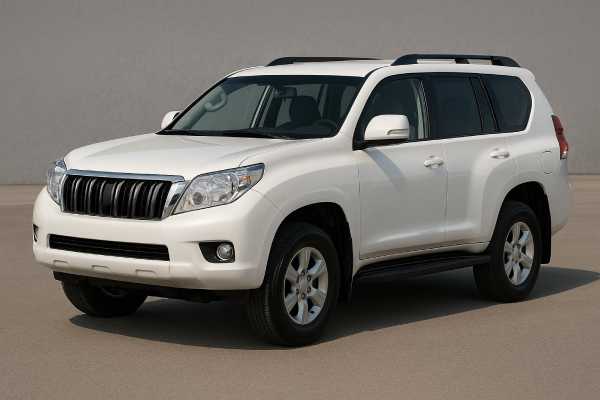
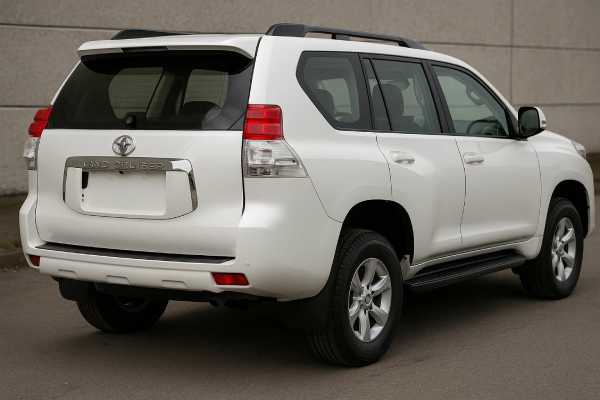
The 2009–2015 Toyota Land Cruiser (KDJ150), widely known in Europe as Land Cruiser 150/Prado, blends body-on-frame toughness with a comfortable, insulated cabin and one of the most proven diesel powertrains Toyota built in the last two decades: the 1KD-FTV 3.0-litre D-4D. In this era the SUV gained better noise isolation, improved suspension tuning, and modern conveniences without compromising its low-range transfer case, locking centre differential, generous ground clearance, and ladder chassis. Owners value its long-distance refinement, dignified ride, and robust underpinnings that tolerate gravel roads, towing, and harsh winters. The 173 hp calibration is the workhorse tune in many European markets; it delivers broad, real-world torque and dependable cooling when loaded or climbing. If you want a seven-seat diesel 4×4 that still feels mechanical and over-engineered, the KDJ150 remains a safe, rational choice. This guide distils what shoppers and owners need to know: exact specifications, year-to-year equipment, reliability patterns, service capacities, and how it stacks up against rivals.
Fast Facts
- Proven 1KD-FTV 3.0 D-4D with broad torque (410–420 Nm) and relaxed long-leg cruising.
- Full-time 4×4 with Torsen-type centre differential, lockable centre, low range, and strong tow ratings.
- Cabin durability is excellent; corrosion protection is solid with routine underbody care.
- Watch for injector seat sealing/soot build-up and DPF/EGR maintenance on short-trip usage.
- Timing belt replacement at ~150,000 km (≈93,000 miles) or time-based interval; inspect idlers/tensioner together.
Explore the sections
- KDJ150 Land Cruiser overview
- KDJ150 specifications and technical data
- KDJ150 trims and safety
- Reliability issues and actions
- Maintenance and buyer’s guide
- Driving and performance
- How it compares to rivals
KDJ150 Land Cruiser overview
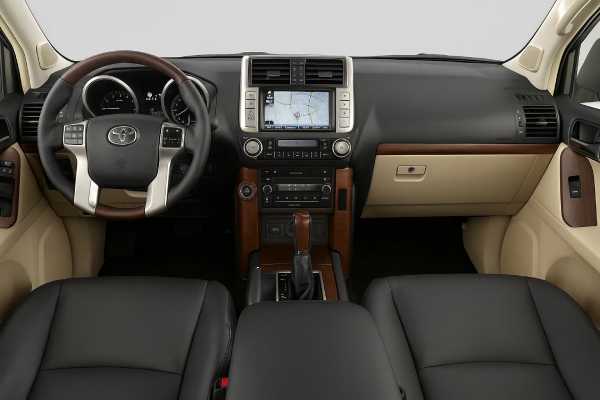
Toyota introduced the 150-series Land Cruiser in late 2009 as the successor to the 120-series. The KDJ150 designation identifies the four-cylinder, 3.0-litre common-rail diesel (engine code 1KD-FTV) with full-time four-wheel drive. In five-door form it offers five or seven seats and a versatile cargo bay with a flat load floor when the second row is folded. The cabin uses hard-wearing materials with tactile switchgear, and the driving position places major off-road controls—centre diff lock, low-range selector—within easy reach. Compared with its predecessor, the 150 improved structural stiffness, suspension compliance, and noise isolation. That shows on broken tarmac: the Land Cruiser feels composed, with fewer secondary vibrations than many body-on-frame SUVs of the period.
The 173 hp calibration of the 1KD-FTV is deliberately conservative, prioritising thermal headroom and longevity. Maximum torque arrives low and stays broad, so the vehicle pulls confidently with passengers and luggage. A five-speed automatic suits touring and towing; a five-speed manual exists in some markets for buyers who want more direct control in snow and on steep descents. Full-time 4×4 uses a Torsen-type centre differential for smooth, transparent torque distribution on pavement. Engage the centre lock and low range, and the KDJ150 behaves like the serious off-roader it is: crawl control and multi-terrain traction logic were added during the cycle, and its ground clearance and approach/departure angles remain competitive even today.
In day-to-day use, owners praise the Land Cruiser’s calm, predictable steering and a ride that softens sharp impacts without losing body control. Sound insulation is effective; diesel clatter is muted once warm. Interior ergonomics are simple and robust—the climate control, seat heaters, and four-wheel-drive switches work as expected after a decade—and the third row (when fitted) is viable for short trips. On the maintenance side, the model responds well to timely fluid services. Two concerns deserve proactive attention: injector seat sealing (if neglected, it can cause combustion blow-by and soot in the oil) and particulate filter maintenance for short-trip vehicles.
Overall, the KDJ150 is the rare SUV that can commute all week, tow confidently, and cross a mountain pass on Saturday without drama. It’s not flashy. It’s engineered to endure, which is exactly why it remains in demand on the used market.
KDJ150 specifications and technical data
Engine and Performance (ICE)
| Item | Detail |
|---|---|
| Code | 1KD-FTV (D-4D) |
| Layout & cylinders | I-4, DOHC, 4 valves/cyl |
| Bore × stroke | 96.0 × 103.0 mm (3.78 × 4.06 in) |
| Displacement | 3.0 L (2,982 cc) |
| Induction | Variable-geometry turbocharger, intercooler |
| Fuel system | Common-rail direct injection |
| Compression ratio | ~17.9:1 |
| Max power | 173 hp (127 kW) @ ~3,400 rpm |
| Max torque | 410–420 Nm (302–310 lb-ft) @ ~1,600–2,800 rpm (transmission-dependent) |
| Timing drive | Belt (to be renewed at the scheduled interval) |
| Emissions standard | Euro 4 early production; Euro 5 with DPF on later updates |
| Rated efficiency (combined) | ~8.1–8.8 L/100 km (29–32 mpg UK / 24–27 mpg US), variant-dependent |
| Real-world highway @ 120 km/h (75 mph) | ~8.5–10.0 L/100 km (28–23 mpg UK / 24–19 mpg US), tyre/load/terrain dependent |
| Aerodynamics (approx.) | Cd ~0.36; frontal area ~2.8 m² (30.1 ft²) |
Transmission and Driveline
| Item | Detail |
|---|---|
| Transmission (manual) | 5-speed R151F |
| Manual ratios | 1st 4.313; 2nd 2.330; 3rd 1.436; 4th 1.000; 5th 0.838; Rev 4.220 |
| Transmission (auto) | 5-speed Aisin A750F |
| Auto ratios | 1st 3.520; 2nd 2.042; 3rd 1.400; 4th 1.000; 5th 0.716; Rev 3.224 |
| Final drive ratio (typ.) | ~3.909 (varies by axle/package) |
| Drive type | Full-time 4×4 with Torsen-type centre differential |
| Differentials | Lockable centre; rear diff lock availability by trim/option |
| Transfer case | HF2A dual-range; low ratio ~2.566 |
| Refuel to full (typ.) | ~5 minutes at standard pump flow (87 L tank) |
Chassis and Dimensions
| Item | Detail |
|---|---|
| Suspension (front/rear) | Double-wishbone / Four-link solid axle with lateral rod |
| Steering | Rack-and-pinion, hydraulic assist |
| Brakes | Vented discs all round (typ. ~338 mm front / ~312 mm rear) |
| Wheels/Tyres | 265/65 R17 or 265/60 R18 (market/trim) |
| Ground clearance | ~215 mm (8.5 in) |
| Angles (5-door) | Approach ~31° / Departure ~25° / Breakover ~22° |
| Length / Width / Height | ~4,840 / 1,885 / 1,845 mm (190.6 / 74.2 / 72.6 in) |
| Wheelbase | 2,790 mm (109.8 in) |
| Turning circle (kerb-to-kerb) | ~11.6 m (38.1 ft) |
| Kerb (curb) weight | ~2,170–2,400 kg (4,784–5,291 lb) |
| GVWR | ~2,990–3,000 kg (6,592–6,614 lb) |
| Fuel tank (diesel) | 87 L (23.0 US gal / 19.1 UK gal) |
| Cargo volume (5-door) | ~640 L seats up / ~1,833 L seats down (VDA); ~22.6 / 64.7 ft³ |
Performance and Capability
| Item | Detail |
|---|---|
| 0–100 km/h (0–62 mph) | ~11.5–12.0 s (setup-dependent) |
| Top speed | ~175 km/h (109 mph) |
| Braking 100–0 km/h | ~40–42 m (131–138 ft), tyre-dependent |
| Towing capacity (braked/unbraked) | up to ~3,000 / 750 kg (6,614 / 1,653 lb), market-dependent |
| Payload | ~650–700 kg (1,433–1,543 lb), seating/equipment dependent |
| Roof load | ~80 kg (176 lb) with approved crossbars |
Fluids and Service Capacities
| System | Specification | Capacity |
|---|---|---|
| Engine oil | Low-SAPS ACEA C2 5W-30 (Toyota spec for DPF-equipped diesels) | ~7.9 L (8.3 US qt) w/ filter |
| Coolant | Toyota Super Long Life Coolant (SLLC), premixed 50/50 | ~10.5 L (11.1 US qt) |
| Auto transmission | Toyota ATF WS | ~10.6 L (11.2 US qt) total fill; ~3.5–4.0 L drain/fill |
| Manual transmission | 75W-90 GL-4/GL-5 (verify spec by VIN) | ~2.3 L (2.4 US qt) |
| Transfer case | Toyota Transfer Gear Oil LF 75W (or 75W-85 GL-5) | ~1.5 L (1.6 US qt) |
| Front differential | 75W-85 GL-5 | ~1.5 L (1.6 US qt) |
| Rear differential | 75W-85/90 GL-5 (LSD-compatible if fitted) | ~3.0 L (3.2 US qt) |
| A/C refrigerant | R134a | ~0.70 kg (24.7 oz), confirm label |
| A/C compressor oil | ND-Oil 8 (PAG-type) | ~120 mL (4.1 fl oz) |
| Key torque specs | Wheel nuts ~131 Nm (97 lb-ft); diff/transfer drain/fill ~49–63 Nm (36–47 lb-ft); oil filter cap ~25 Nm (18 lb-ft) |
Note: Capacities vary with VIN, cooling pack, and presence of rear heater/air. Verify on the under-bonnet label and official service data before filling.
Electrical
| Item | Detail |
|---|---|
| Alternator output | ~130 A (varies by equipment) |
| 12V battery | ~90–95 Ah (≈740–800 CCA), DIN form factor varies by market |
| Spark plug | Not applicable (diesel); engine uses glow plugs |
Safety and Driver Assistance
| Area | Detail |
|---|---|
| Crash ratings | Not widely published by Euro NCAP for this generation/variant; not evaluated by IIHS (not sold in the U.S.). |
| Passive safety | 7 airbags typical (front/side/curtain/driver’s knee); ISOFIX/LATCH outer second-row seats. |
| Active safety | VSC stability control, A-TRC traction control, ABS/EBD/BA; hill-start assist; downhill assist (by trim). |
| Driver aids (selected trims) | Crawl Control and Multi-Terrain Select (later years, upper trims); parking sensors/camera; optional rear diff lock in some markets. |
| Headlights | Halogen or HID (market/trim); headlight performance varies with lamp/aim/tyre choice. |
KDJ150 trims and safety
Trims and options. In European markets during 2009–2013 you’ll typically find LC3, LC4, and LC5 grades (names vary by country). LC3 was the capable base: cloth upholstery, 17-inch wheels, full-time 4×4 with centre diff lock, dual-zone climate, and the fundamentals owners prize—robust seat frames, practical plastics, and well-sealed electrics. LC4 added leather, heated seats, navigation, power features, and often seven seats. LC5 topped the line with features such as KDSS (Kinetic Dynamic Suspension System) in selected markets, adaptive damping/air rear springing, HID headlamps, keyless entry, premium audio, and advanced off-road aids. From the 2013/2014 facelift forward, some markets adopted Active / Icon / Invincible naming while retaining a similar feature walk. Three-door bodies exist but are rarer; five-door dominates and suits family use. Wheel/tyre packages were 17- or 18-inch; the 17s ride better and accept taller, winter-friendly profiles.
Mechanical distinctions. Across grades, the 173 hp 1KD remained the core engine; most five-door vehicles use the five-speed automatic. Selected trims offer a rear locking differential; others rely on the centre lock plus brake-based traction control. Towing packs added heavy-duty cooling and wiring. KDSS and rear air suspension, when fitted, improve roll control and stability with loads but add service complexity—plan for bushing/line inspections and height sensor care on older, high-mileage examples.
Year-to-year changes. Early models start with Euro 4 emissions hardware; later examples incorporate Euro 5 with a diesel particulate filter (DPF), revised EGR cooling, and minor refinements to interior tech (infotainment and camera systems). A running-change facelift sharpened the exterior (grille, lamps, bumpers) and added Crawl Control/Multi-Terrain Select on upper trims, plus updated audio/navigation. Some markets saw an alternative diesel output tune introduced later; this guide focuses on the 173 hp variant noted in the title.
Safety ratings (context). A formal Euro NCAP publication covering this exact variant and period is not broadly available. Nevertheless, the Land Cruiser’s structure, seven airbags, and stability/traction systems provide a robust safety basis when tyres and brakes are in good order. Child-seat friendliness is strong: ISOFIX points are well-placed on the second-row outboard seats, and top-tethers are typically available; do verify seat-base geometry for your chosen child seats. Head restraints are height-adjustable; for taller occupants, set them above the ear line. Lighting varies—halogen housings need correct bulbs and careful aim to perform their best; HID (where fitted) offers a cleaner cut-off.
Calibration implications after service. After windscreen, radar/ultrasonic sensor or camera replacement, or ride-height sensor work on vehicles with KDSS/air rear, basic calibrations may be required for parking sensors, camera alignment, and headlamp levelling. Wheel alignment should be done with correct ballast and KDSS neutralisation procedures when applicable; otherwise, you may chase a steering pull or crooked wheel.
Quick identifiers.
- Build plate codes: KDJ150/KDJ155 for 3.0 D-4D diesel.
- Centre console: low-range selector and diff-lock button grouped ahead of the shifter; Crawl/MTS dials (later/upper trims).
- VIN conventions and option codes differ by market; the rear axle tag indicates diff type (open/LSD/locker) and ratio.
Reliability issues and actions
The KDJ150’s reputation for durability is earned, but no machine is perfect. The map below ranks issues by prevalence (common/occasional/rare) and severity/cost (low/medium/high), then summarises symptoms → likely cause → remedy. Mileage/age bands are typical patterns—use them to plan inspections rather than as guarantees.
Engine and emissions (1KD-FTV, diesel)
- Common • Medium — Diesel injector seat leakage (“black death” soot around injector wells).
Symptoms: Chuffing sound on cold start, whiff of exhaust in cabin at idle, tar-like deposits under the cover, rising ash/soot in oil analyses.
Cause: Copper injector washer loses seal; combustion blow-by cokes oil.
Remedy: Remove injectors, clean seats with the correct reamer, fit updated washers/bolts to spec, code injectors, change oil and filters early after repair. - Occasional • Medium — DPF loading on short-trip usage.
Symptoms: Frequent regens, DPF warning, reduced power; fuel dilution in oil on repeated aborts.
Cause: Stop-start driving prevents complete regeneration; underlying EGR soot or weak injector spray can accelerate.
Remedy: Long, steady drive to complete regen; correct low-SAPs oil; diagnose for EGR clogging or injector correction values; forced regen only after root causes are addressed. - Occasional • Low/Medium — Suction Control Valve (SCV) wear on Denso HP pump.
Symptoms: Hesitation/hunting at light throttle, occasional stalling; codes for rail pressure control.
Cause: SCV wear/stiction.
Remedy: Replace SCV with revised part; confirm fuel filter condition; clear adaptations. - Occasional • Medium — EGR cooler/valve soot accumulation.
Symptoms: Rough idle when cold, smoke on tip-in, low-rpm flat spot.
Cause: Soot/oil build-up from short cycles.
Remedy: Clean EGR valve/cooler and associated pipework; check MAP/MAF contamination; ensure correct PCV function. - Rare • High — Turbo control faults.
Symptoms: Limp mode with under/over-boost codes, or persistent whistle.
Cause: VGT vane mechanism sticking; actuator wear; boost leaks.
Remedy: Free/check vane ring; repair leaks; replace turbo/actuator if shaft or control system is worn.
Cooling and belt drive
- Occasional • Medium — Water pump seepage and timing-belt age.
Symptoms: Pink coolant traces around pump, belt contamination, mild overheating on grades.
Remedy: Replace pump proactively around one belt cycle; always renew the timing belt at the published distance/time interval and replace tensioner/idlers together.
Driveline and chassis
- Common • Low/Medium — Front lower arm rear bushes and rear trailing arm bushes wear.
Symptoms: Vague steering, clunks over speed bumps, inner-edge tyre wear.
Remedy: Replace bushes/arms; perform a proper alignment with correct KDSS procedure if fitted. - Occasional • Medium — Rear wheel bearing play/noise on high-mileage, heavy-towing vehicles.
Symptoms: Growl increasing with speed, slight play on the hub.
Remedy: Replace bearing/hub assemblies and seals; recheck axle nut torque. - Occasional • Medium — Transfer case or prop-shaft vibration after tyre/ride-height changes.
Symptoms: Light vibration at 90–110 km/h under load.
Remedy: Inspect U-joints, prop-shaft phasing, tyre uniformity; ensure ride height is within spec before chasing transfer case angles.
Body and electrical
- Occasional • Low — Door lock actuators slow/weak; window regulators tiring.
Remedy: Replace actuators/regulators; verify current draw and door harness condition. - Occasional • Low — A/C condenser stone damage on motorway cars.
Remedy: Inspect annually; protect with appropriate mesh guard if driving on gravel; replace condenser and evacuate/charge correctly when performance fades.
Recalls, TSBs, and extended coverage (Europe context)
- Official recall and service-campaign coverage varies by VIN and market. Before purchase and during ownership, run an official VIN recall check and keep printed proof of completion. Dealer records can confirm ECU reflashes done for drivability or emissions management. When you replace windscreens or sensors, confirm any required calibrations were performed and recorded.
Pre-purchase requests
- Full service history (oil type/intervals, fuel filter dates, coolant/ATF/diff fluids).
- Proof of timing belt service (date, km, parts list including tensioner/idlers/pump).
- Injector compensation values report or evidence of injector/washer replacement on higher-mileage vehicles.
- VIN recall/campaign printout.
- Underside inspection: brake pipes, chassis rails, rear crossmember, body seams, and mounting points; look for off-road strikes and inappropriate tow-bar wiring.
Maintenance and buyer’s guide
Practical maintenance schedule (distance/time: whichever comes first). This is a planning baseline; always confirm exact intervals/capacities for your VIN, equipment, and local regulations.
- Engine oil & filter: Every 10,000–15,000 km or 12 months with ACEA C2 5W-30 low-SAPS (DPF-friendly). Severe short-trip use: favour the shorter distance and sample for fuel dilution if regens are frequent.
- Fuel filter (diesel): Inspect every 20,000–30,000 km, replace every 30,000–40,000 km or if water contamination is detected.
- Engine air filter: Inspect every 15,000 km, replace ~30,000–45,000 km; sooner in dusty climates.
- Cabin filter: Every 15,000–20,000 km or annually.
- Timing belt & tensioner/idlers: Replace at ~150,000 km or time-based interval (whichever comes first). Replace water pump preventively at the same time; reset the belt reminder.
- Accessory drive belt & hoses: Inspect each service; replace 60,000–90,000 km or any time cracking/noise appears.
- Coolant (SLLC): First at ~160,000 km / 10 years then ~80,000 km / 5 years thereafter, accounting for rear-heater circuit if fitted.
- Manual gearbox oil: 60,000–90,000 km, correct spec and quantity.
- Automatic gearbox (Aisin A750F): Drain-and-fill every 60,000–80,000 km (WS fluid); pan service/strainer inspection as needed; adapt learning drive after work.
- Transfer case & differentials: 60,000 km (earlier with heavy towing or water crossings); use correct GL-5 and limited-slip compatible fluids when applicable.
- Brake fluid: 24 months; test moisture at annual service.
- Brakes: Inspect pads/rotors at each service; clean and lubricate slide pins annually (salted roads accelerate corrosion).
- Steering/suspension: Inspect arms, ball joints, KDSS lines/links (if fitted), and rear air springs/height sensors during tyre rotations.
- Tyres: Rotate 10,000–15,000 km; align after any suspension work or tyre wear irregularity; set pressures for load and towing.
- 12 V battery: Test annually from year 4; anticipate replacement around 5–7 years depending on climate/use.
- A/C system: Performance check annually; replace desiccant and cabin filter regularly; mind condenser fin health.
Essential fluid specs and quick capacities (planning):
- Oil: ACEA C2 5W-30; ~7.9 L with filter.
- Coolant: Toyota SLLC 50/50; ~10.5 L system total (rear heater adds volume).
- ATF WS (auto): ~10.6 L total fill; ~3.5–4.0 L typical drain/fill.
- Transfer/diffs: see capacities above; use GL-5 with the correct viscosity; LSD-safe oils where applicable.
- A/C R134a: ~0.70 kg (verify under-bonnet label).
- Wheel nuts: ~131 Nm torque.
Buyer’s checklist.
- Start cold: listen for injector tick vs. chuffing; check for soot around injector wells. 2) Drive hot: ensure smooth kickdown (auto), no hunting at steady throttle, and calm idle after regen. 3) Brakes/steering: straight tracking, no pull, no clunk over speed bumps. 4) 4×4 functions: engage centre diff lock/low range on gravel to verify operation. 5) Underside: inspect chassis rails, rear crossmember, diff housings, and fuel/brake lines; look for impact scrapes and corrosion. 6) Cooling: scan for historical overheat codes; look for pink crust by the water pump weep hole. 7) Suspension: check KDSS lines (if fitted) and rear air springs for leaks/height asymmetry. 8) Electrics: mirrors, locks, heaters, camera, parking sensors, headlamps levelling. 9) Tow usage: ask about trailer weights; inspect transmission fluid colour/smell and rear wheel bearings. 10) Paperwork: timing belt invoice, fluid receipts, VIN recall status, and injector coding printout.
Recommended configurations.
- Use case: mixed family/touring — Five-door, 7-seat, 17-inch wheels, automatic, with rear diff lock if you live in snow or launch boats.
- Use case: daily urban + occasional trails — Five-door, 17-inch wheels, avoid aggressive AT tyres; prioritise fresh dampers/arms for ride quality.
- Use case: long-distance towing — Automatic with cooling pack, confirmed transmission service history, brake controller professionally installed, and genuine tow electrics.
Durability outlook. Properly serviced KDJ150s are 300,000 km candidates without major engine or drivetrain work. Long-term comfort depends on bushing refreshes and keeping corrosion at bay. Preventive injector seat service and sensible DPF management protect both wallet and engine.
Driving and performance
Ride, handling, and NVH. The 150-series calms rough surfaces without floating. On the motorway the body settles quickly after long undulations, and crosswinds are well-controlled thanks to the full-time 4×4 system’s straight-line stability. Steering is light at parking speeds and gains reassuring weight as speed rises. Cabin noise at 120 km/h (75 mph) is subdued for a ladder-frame 4×4, with tyre pattern and mirror wind noise being the dominant contributors; choosing the quieter of the OEM tyre sizes helps on concrete motorways.
Powertrain character. The 1KD-FTV in 173 hp tune feels unhurried yet muscular. Throttle response is progressive, and the broad plateau of torque eliminates the need for frequent downshifts on hills. The five-speed automatic prefers early upshifts in gentle driving and holds gears faithfully on climbs; kickdown is decisive with a firm throttle. The manual is tractable off-road and provides precise control on steep descents, though most buyers will prefer the automatic’s convenience when towing.
Efficiency in the real world. Expect roughly 8.5–10.0 L/100 km (28–23 mpg UK / 24–19 mpg US) in steady motorway running at European speeds with stock tyres and no roof load. City use and short trips push economy into the low-teens L/100 km; mixed commuting often lands near 9.5–10.5 L/100 km (30–27 mpg UK / 25–22 mpg US). Cold weather and repeated short runs will increase DPF regens and fuel dilution—shorten oil intervals if your usage is mostly <10 km trips.
Key performance metrics. With the 173 hp tune and five-speed auto, 0–100 km/h is typically in the 11.5–12.0 seconds range on 17-inch tyres; the 50–80 mph (80–120 km/h) pass is more about torque and gearing than headline numbers, and the vehicle maintains motorway speed with a trailer confidently. Braking consistency depends on pad compound and rotor condition; fresh fluid and well-lubricated slide pins keep the pedal firm over long descents.
Traction and control. The full-time 4×4 with Torsen centre diff is transparent on wet roundabouts and winter back roads. Lock the centre and select low range for tight, technical sections; brake-based A-TRC mimics axle locks well on cross-axle obstacles, and a rear diff lock (where fitted) provides the last step of traction for deep snow, mud ruts, or rocky steps. Later models with Crawl Control and Multi-Terrain Select simplify throttle/brake modulation in loose material; use them judiciously to avoid digging holes on wet grass.
Load and towing. Stability with a braked trailer up to ~3,000 kg is a core strength: the long wheelbase, calm steering, and strong cooling keep temperatures in check on sustained grades. Factor a 15–25% fuel-use penalty when towing a caravan at motorway speeds, more if you’re into headwinds or mountain routes. Use genuine tow electrics and confirm brake-controller installation torque if fitted.
How it compares to rivals
Mitsubishi Pajero/Shogun (2007–2015). The Pajero’s monocoque with integrated ladder chassis is lighter and can feel nimbler in town. Its 3.2-litre diesel is simpler but less hushed, and ride quality on broken surfaces is busier. Off-road, the Land Cruiser’s low-range behaviour and axle articulation give it an edge in deep ruts and slow climbs. Long-term, Toyota’s interior and switchgear tend to age better; Pajero parts are often cheaper.
Land Rover Discovery 4 (2009–2016). The Discovery is the on-road benchmark for isolation and ride sophistication. Its 3.0 V6 diesel is strong, and its air suspension/glasshouse driving position are a pleasure on long trips. Running costs and reliability patterns—engine, air-suspension components, and electronics—can challenge owners past middle age. The Toyota is simpler to run over a 10-year horizon, particularly out of warranty.
Jeep Grand Cherokee WK2 (2011–2015 diesel). The WK2’s interior polish and highway manners rival the Land Cruiser, and the VM Motori V6 diesel pulls hard. Air suspension and electronic systems can add complexity with age, and real-world underbody protection is lighter than Toyota’s. The Jeep is a fine road car; the Toyota is the safer bet if you frequently tow on rough surfaces or drive far from dealers.
Nissan Pathfinder R51 (2005–2012) and R52 (EU). The R51’s seven-seat utility and 2.5 dCi are appealing on paper, but corrosion and timing-chain issues weigh on the older platform. The later R52 (where sold) moved to a soft-roader orientation with less low-range emphasis. For traditional 4×4 users, the Land Cruiser remains the more faithful tool.
Bottom line. If you prioritise reliability, towing confidence, and genuine off-road capability with family-friendly practicality, the KDJ150 sits at the top of the class. Rivals offer sharper dynamics or plushness, but few match the Land Cruiser’s whole-life ease of ownership.
References
- LandCruiser Prado 150 Series Owner’s Manual (Oct 12 – Aug 13) 2013 (Owner’s Manual)
- Owner’s Manual 2025 (Owner’s Manual Portal)
- Toyota Launches The All-New Land Cruiser 2009 (Press Pack Access)
- Check if a car has a safety recall 2017 (Recall Database)
Disclaimer
This guide is for informational purposes only and is not a substitute for professional diagnosis, inspection, or repair. Specifications, torque values, fluid types/capacities, and service intervals vary by VIN, model year, market, and equipment. Always confirm against your vehicle’s official owner’s manual and service documentation before performing maintenance or repairs. If you found this helpful, please consider sharing it on Facebook, X/Twitter, or with an owner’s group to support xcar’s work.