

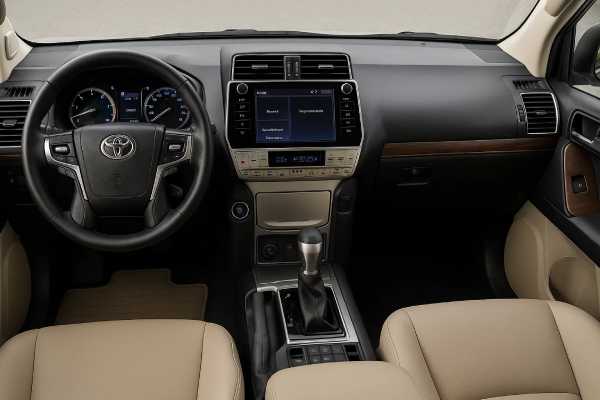
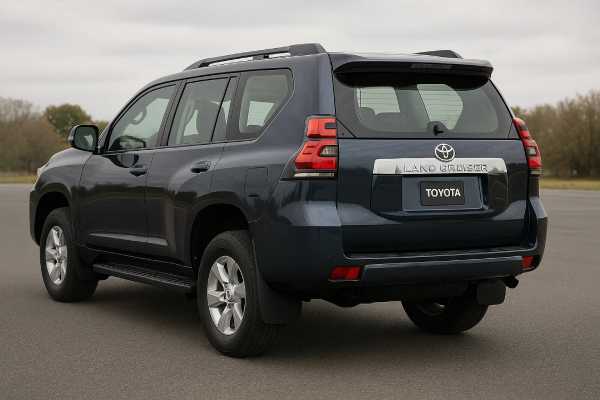
The GDJ155 Land Cruiser pairs Toyota’s newest-generation 1GD-FTV 2.8-litre D-4D diesel with the proven J150 ladder frame, low-range 4×4, and serious chassis hardware. In this 2015–2019 facelift window, it’s the short-wheelbase companion to the five-door GDJ150, sharing powertrain, driveline, and most equipment but packaged for tighter trails and easier urban parking. Owners value its combination of tractable low-rpm torque, robust cooling, and accessories support—plus real off-road geometry straight from the factory. Inside, the facelift brought quieter road manners, better infotainment, and optional active safety. If you need a compact body-on-frame SUV that will tow, commute, and green-lane with equal confidence, this 3-door Land Cruiser is one of the few European-market vehicles that still does it all without aftermarket re-engineering. This guide focuses on the 2.8 D-4D (177 hp) diesel with six-speed manual or automatic transmissions offered across European trims during model years 2015–2019.
At a Glance
- Short-wheelbase agility with true low-range 4×4, lockable centre diff, and optional rear locker; excellent approach/breakover angles.
- Durable 1GD-FTV chain-driven diesel with broad torque (best between ~1,600–2,400 rpm); proven cooling and filtration for towing.
- Cabin updates (2017–2018) improved NVH, ergonomics, and available active safety without losing the “hose-out” practicality.
- Watch for urban short-trip use that can stress the DPF; ensure software updates and complete service history.
- Typical engine-oil interval: 15,000 km / 12 months (severe duty: 10,000 km / 6–12 months).
Navigate this guide
- GDJ155 detailed overview
- Land Cruiser GDJ155 specs
- Trims, options, and safety
- Reliability and service actions
- Maintenance and buyer’s guide
- Driving and performance
- Land Cruiser vs rivals
GDJ155 detailed overview
Toyota’s GDJ155 is the short-wheelbase (3-door) member of the Land Cruiser 150-series family. It carries the 1GD-FTV 2.8-litre common-rail turbodiesel (D-4D), a chain-driven DOHC inline-four using a variable-geometry turbocharger, cooled EGR, and a diesel particulate filter (DPF). Peak output in this facelift period is 177 hp (130 kW) with high, low-rpm torque suited to towing and off-road crawling. Buyers could choose a six-speed manual (with intelligent rev-matching on some trims) or a six-speed Aisin automatic; both are mated to a full-time four-wheel-drive transfer case with a lockable centre differential and 2-speed low range. Many European markets offered an optional locking rear differential, Multi-Terrain Select, and Crawl Control on higher grades.
The facelift sharpened the exterior (revised nose, lamps, and bonnet with better forward visibility), upgraded the dash layout and sound insulation, and expanded available driver-assistance features. Underneath, it remains classic Land Cruiser: a boxed ladder frame; double-wishbone front suspension; a solid rear axle with coils; and generous suspension travel. That hardware, combined with the short wheelbase, gives the GDJ155 outstanding approach and breakover figures and a notably tight turning circle for a frame-based SUV. Despite the compact body, the cabin is upright and practical, with split-fold rear seating and simple, glove-friendly switchgear. The trade-off versus the five-door is cargo length and rear-seat access, but the 3-door’s lighter mass and shorter overhangs make it the more playful and nimble of the pair on broken terrain and tight European backroads.
Land Cruiser GDJ155 specs
Engine and Performance (1GD-FTV 2.8 D-4D)
| Item | Value |
|---|---|
| Code | 1GD-FTV (D-4D common-rail) |
| Layout & cylinders | Inline-4, DOHC, 16-valve; chain-driven cams |
| Bore × stroke | 92.0 × 103.6 mm (3.62 × 4.08 in) |
| Displacement | 2.755 L (2,755 cc) |
| Induction | Variable-geometry turbocharger; intercooler |
| Fuel system | High-pressure common-rail direct injection |
| Compression ratio | ~15.6:1 |
| Max power | 177 hp (130 kW) @ ~3,400 rpm |
| Max torque | up to 450 Nm (332 lb-ft) @ ~1,600–2,400 rpm (varies by gearbox/software) |
| Emissions equipment | Cooled EGR, oxidation catalyst, DPF |
| Rated efficiency (combined) | Typical NEDC: ~7.4–7.9 L/100 km (31.8–29.8 mpg US / 38.2–35.6 mpg UK), model/trim dependent |
| Real-world highway @ 120 km/h | ~9–10 L/100 km (26–23.5 mpg US / 31–28 mpg UK), unladen, LWB roof-rack absent |
| Timing drive | Chain |
Transmission and Driveline
| Item | Manual (6MT) | Automatic (6AT) |
|---|---|---|
| Transmission | 6-speed manual (iMT on some trims) | 6-speed Aisin automatic (AC60F family) |
| 1st | 4.313 | 3.600 |
| 2nd | 2.330 | 2.090 |
| 3rd | 1.436 | 1.488 |
| 4th | 1.000 | 1.000 |
| 5th | 0.793 | 0.687 |
| 6th | 0.659 | 0.580 |
| Reverse | 4.220 | 3.732 |
| Final drive ratio | ~3.909 (typical) | ~3.909 (typical) |
| Transfer case | Full-time 4×4, lockable centre diff; low-range ~2.566:1 | |
| Differentials | Centre Torsen-type with manual lock; rear locking diff optional (by trim/pack) | |
| Refuel to full | ~5 minutes (87 L tank) |
Chassis and Dimensions
| Item | 3-door SWB (GDJ155) | 5-door LWB (GDJ150, for reference) |
|---|---|---|
| Frame/suspension | Ladder frame; double-wishbone front; 4-link solid rear; coils (KDSS optional) | Same layout |
| Steering | Hydraulic rack-and-pinion; tight-turn geometry | Hydraulic rack-and-pinion |
| Brakes | Ventilated discs (front/rear) | Ventilated discs (front/rear) |
| Wheels/Tyres | 17–19 in; typical 265/65 R17 to 265/55 R19 | 17–19 in |
| Ground clearance | ~215 mm (8.5 in) | ~215 mm (8.5 in) |
| Approach/Departure/Breakover | ~32° / ~25° / ~25° | ~31° / ~25° / ~22° |
| Length × width × height | ~4,395 × ~1,885 × ~1,845 mm (173.0 × 74.2 × 72.6 in) | ~4,840 × ~1,885 × ~1,845 mm (190.6 × 74.2 × 72.6 in) |
| Wheelbase | 2,450 mm (96.5 in) | 2,790 mm (109.8 in) |
| Turning circle (kerb-to-kerb) | ~10.4 m (34.1 ft) | ~11.6 m (38.1 ft) |
| Curb weight | ~1,995–2,115 kg (4,398–4,663 lb) | ~2,150–2,315 kg (4,740–5,104 lb) |
| GVWR | ~2,990–3,100 kg (6,592–6,834 lb) | Similar |
| Fuel tank | 87 L (23.0 US gal / 19.1 UK gal) | 87 L (some non-EU markets add a sub-tank) |
| Cargo volume (VDA) | Seats up: compact SWB bay; seats folded: generous flat load floor | Seats up: ~620 L (21.9 ft³) / seats folded: ~1,900 L (67 ft³), trim-dependent |
Performance and Capability
| Metric | 3-door SWB | Notes |
|---|---|---|
| 0–100 km/h (0–62 mph) | ~9.8–12.5 s (spec/gearbox dependent) | Manual generally quickest |
| Top speed | ~175 km/h (109 mph) | Tyres and gearing limited |
| 100–0 km/h braking | ~40 m (131 ft) typical | On road tyres, unladen |
| Towing capacity (braked/unbraked) | up to 3,000 kg / 750 kg (6,614 / 1,653 lb) | Check VIN/market homologation |
| Payload | ~600–750 kg (1,323–1,653 lb) | By trim/options |
| Roof load | ~100 kg (220 lb) | Cross-bars spread properly |
Fluids and Service Capacities
| System | Spec | Capacity |
|---|---|---|
| Engine oil | ACEA C2 low-SAPS, typical 0W-30; Toyota FE or equivalent | ~7.5 L (7.9 US qt) with filter |
| Coolant | Toyota Super Long Life Coolant (SLLC), ~50/50 | ~11 L (11.6 US qt) total system (approx.) |
| ATF (6AT) | Toyota ATF WS | ~10 L (10.6 US qt) dry; ~4 L (4.2 US qt) drain/refill |
| Manual gearbox | 75W-90 GL-4/5 per service data | ~2.3 L (2.4 US qt) |
| Front diff | 75W-85/90 GL-5 | ~1.5 L (1.6 US qt) |
| Rear diff | 75W-85/90 GL-5 (LSD compatible if equipped) | ~3.0 L (3.2 US qt) |
| Transfer case | 75W-90 GL-4/5 | ~1.5 L (1.6 US qt) |
| A/C refrigerant | R134a; compressor oil ND-OIL 8 | ~550–600 g (19–21 oz); ~120 mL (4.1 fl oz) oil |
Key torque values (selected): wheel nuts ~131 Nm (97 lb-ft); engine oil drain plug ~39 Nm (29 lb-ft); spin-on filter/canister cap ~25 Nm (18 lb-ft).
Electrical
| Item | Value |
|---|---|
| Alternator | ~130 A |
| 12 V battery | ~80 Ah (≈ 700–760 CCA), DIN form factor |
| Glow plugs | Ceramic tip, ECU-controlled after-glow (diesel; no spark plugs) |
Safety and Driver Assistance
| Topic | Detail |
|---|---|
| Crash ratings | No widely published Euro NCAP test for the 2015–2019 Prado/LC150 facelift in Europe; ratings vary by body and year elsewhere. |
| Headlights | Halogen or LED by trim; automatic levelling on higher grades; off-road lighting logic via Multi-Terrain Monitor where fitted. |
| Airbags/structure | Front, side, curtain, and driver knee airbag typical; boxed ladder frame with impact-energy paths and high-strength steel sections. |
| ADAS availability | Toyota Safety Sense availability expanded during this period: Pre-Collision System (AEB car/pedestrian), Lane Departure Alert, Adaptive Cruise Control, Road Sign Assist; Blind Spot Monitor and Rear Cross-Traffic Alert often optional with higher trims. Camera-based systems may require calibration after glass/bumper work. |
Trims, options, and safety
European trims varied by market. Using a common UK-style spread for orientation:
- Utility (workhorse): vinyl-trimmed, steel wheels, 3-door or 5-door; 6MT standard; full-time 4×4 with centre diff lock and low-range; manual A/C; basic audio; rear diff lock often optional.
- Active: cloth, alloy wheels, cruise control, rear parking sensors, enhanced sound insulation, optional automatic; roof rails; optional rear locking diff and off-road packs; some markets offered KDSS.
- Icon (mid-lux): 5-door in many markets, but availability varies; leather or premium cloth; heated seats; nav; KDSS and Multi-Terrain Select/Crawl Control available; LED headlamps in late-facelift models; optional 360° camera.
- Invincible (flagship): widest ADAS availability; premium audio; 19-inch wheels; sunroof; heated rear seats; rear locker often standard; Multi-Terrain Monitor; front/rear diff breathers extended and skid protection packages on off-road packs.
Mechanical/functional differences by trim or option packs
- Suspension: KDSS (Kinetic Dynamic Suspension System) disconnects stabilizer bars hydraulically at low speeds for articulation, then re-couples on road. It notably flattens cornering without harming off-road flex.
- Differentials: Base centre diff is Torsen-type with lock; a rear locker was optional and is worth seeking for serious trails.
- Brakes: All use ventilated discs; heavier-spec trims with 19-inch wheels gain larger pad footprints but the same fundamental hardware.
- Towing: Factory tow-prep harness and higher cooling package often bundled with auto gearbox and off-road pack; check the VIN plate for braked capacity (many EU builds rate to 3,000 kg).
Year-to-year highlights (2015–2019)
- 2015 (launch of 2.8 D-4D in EU): New 1GD-FTV replaces 3.0 D-4D; improved NVH, torque plateau, and thermal management.
- 2017: Facelift styling, revised dash and switchgear; infotainment and camera systems improved; interior quietness improved with extra seals and insulation.
- 2018: Wider availability of Toyota Safety Sense (AEB, LDA, ACC, RSA) and LED lamps; calibration procedures for radar/camera introduced in workshop routines.
- Note: A later power update to ~204 hp appears after this article’s scope; the 2015–2019 focus remains 177 hp.
Child-seat and load safety
- ISOFIX/LATCH points on outboard rear seats; top tether anchors; door-aperture geometry suits bulky seats in a 3-door but mind the belt path and base length.
- Roof-load rating ~100 kg with approved cross-bars; use spreader bars and low-profile gear to preserve stability and range.
Reliability and service actions
Below is a practical map of what owners and technicians most often encounter on 2015–2019 GDJ155s. Severity and frequency depend on use (short-trip urban vs long-haul, towing, off-road exposure, salt).
Engine/aftertreatment (diesel-specific)
- DPF loading or frequent regens — Symptom: rising oil level, fan running post-shutoff, soot/NOx history, limp mode in severe cases. Cause: short-trip use, interrupted active regens, or older calibration. Remedy: confirm latest ECU software (regeneration strategy updates), complete forced regen as needed, verify EGT/DPF pressure sensors, check for intake/EGR leaks and injector correction factors; advise usage changes (periodic 20–30 minutes at 60–70 mph / 100–110 km/h).
- EGR cooler/intake soot — Symptom: rough cold idle, incremental power loss, smoke under load. Cause: normal soot/oil mist accumulation accelerated by urban use. Remedy: clean EGR valve/cooler and intake runners; fit new gaskets; reset adaptives; verify crankcase ventilation is within spec.
- Water pump seep (occasional around 60–120k km) — Symptom: pink crust at weep hole, low coolant. Remedy: replace pump, coolant refill/bleed; inspect idlers/belt condition.
- Diesel knock at idle after injector ageing — Symptom: harsher idle when warm. Cause: injector pilot deviation. Remedy: perform injector compensation learn; replace out-of-spec injectors; check for fuel contamination.
Driveline and chassis
- Transfer case actuator hesitation — Symptom: delayed 4H lock engagement or 4L selection. Cause: dried grease or infrequent cycling. Remedy: cycle the actuator monthly; service actuator if codes persist; fresh gear oil may help.
- KDSS seep/leak (rare) — Symptom: oily KDSS cylinder/accumulator, uneven bar pre-load. Remedy: inspect lines and cylinders; Toyota procedure for de-pressurizing and re-balancing; replace leaking components.
- Front lower control arm bushes/ball joints wear — accelerated by heavy tyres and off-road washboard. Remedy: OEM or uprated bushes; re-set alignment (caster is important for straight-line stability).
- Wheel-bearing noise after water crossings with hot hubs — Remedy: inspect, repack/replace as needed; check seals and breathers.
Electrical and infotainment
- Camera/parking sensor faults after minor bumps or bumper work — ensure correct radar/camera aiming targets and calibration.
- Battery aging — many diesels ship with large AGM or high-CCA flooded batteries; plan replacement in the 5–7-year window, sooner if many short trips.
Corrosion touch-points
- Rear axle housing, lower control arm mounts, and rear cross-member edges; door bottoms and tailgate seam in salty climates; KDSS hardlines on older vehicles. Annual washdown and cavity wax on exposed seams helps.
Recalls/TSBs (high level)
- DPF strategy updates for early 1GD vehicles (market-specific program codes).
- Airbag inflators for certain VIN ranges depending on build location and installed module.
Always run an official VIN check and ask for dealer printouts showing completed campaigns and software levels.
Maintenance and buyer’s guide
Practical maintenance schedule (EU-style)
(Always adjust to your VIN’s official schedule and duty cycle.)
- Engine oil and filter: Every 15,000 km / 12 months (severe: 10,000 km). Low-SAPS ACEA C2 0W-30 (Toyota FE) recommended.
- Fuel filter: Inspect water trap each service; replace 60,000 km / 4 years, sooner with suspect fuel.
- Engine air filter: Inspect 15,000 km / 12 months; replace 30,000–45,000 km (dusty use: sooner).
- Cabin filter: 12 months (more often in city use).
- Coolant (SLLC): First change 160,000 km or 10 years, then 80,000 km / 5 years.
- Brake fluid: 24 months regardless of mileage.
- Manual gearbox oil: 90,000–120,000 km normal; 60,000 km heavy towing.
- Automatic ATF WS: Inspect for heat load; many “lifetime” labels exist, but a drain/refill at 90,000–120,000 km is prudent if towing/urban.
- Front/rear diff and transfer oils: 90,000 km normal; 60,000 km severe/off-road/water crossings.
- Aux/serpentine belt: Inspect every service; replace at 90,000–120,000 km or on condition.
- Timing chain: No fixed interval; monitor for noise/timing correlation codes; replace components only if out of spec.
- A/C service: Performance check 24–36 months; R134a charge typically ~550–600 g.
- 12 V battery: Test annually after year 3; typical replacement 5–7 years.
Essential fluid specs and torques
- Engine oil: ACEA C2 (low-SAPS), 0W-30 preferred; ~7.5 L with filter.
- Coolant: Toyota SLLC; ~11 L.
- Wheel nuts: ~131 Nm.
- Oil drain plug: ~39 Nm.
- Diff/transfer oils: GL-5 75W-85/90 as per parts data; capacities above.
Buyer’s checklist (used GDJ155)
- Confirm DPF/ECU updates, and that the vehicle regularly completes regeneration (ask about usage pattern).
- Inspect EGR/intake cleanliness on higher-mileage urban vehicles.
- Test 4×4 system: centre-diff lock, low range, and (if fitted) rear locker; listen for actuator strain.
- Check KDSS cylinders/lines for seepage and uneven stance; drive over speed humps to feel bar control.
- Look for underbody corrosion at rear axle housing and cross-members; verify tow electrics quality.
- Inspect front suspension bushes and ball joints; ensure caster is within spec post-lift or tyre upsizing.
- Verify ADAS functions (if fitted) after any glass or bumper replacement; look for calibration records.
- Prefer examples with complete service history and the 6-speed automatic if you tow frequently; choose rear locker + KDSS if you off-road.
Durability outlook
With correct fluids and regular highway drives to keep the DPF healthy, the 1GD-FTV routinely covers high mileages with minimal internal wear. Chassis and driveline components are stout; most spend is on consumables, tyres, and occasional bushings or bearings. The short-wheelbase body is kinder to tyres and brakes than heavier seven-seat SUVs, and parts commonality with the five-door keeps availability strong.
Driving and performance
Ride, handling, and NVH
The GDJ155 rides firmly but predictably. The short wheelbase gives it a natural agility on tight roads and a willingness to pivot on narrow tracks. Body control is better than you’d expect from a body-on-frame truck, especially with KDSS fitted, which allows plainer cornering without removing off-road articulation. Road noise is modest thanks to facelift insulation upgrades, though aggressive all-terrain tyres will add hum. Straight-line stability is excellent when caster is set correctly; a quality alignment and correct tyre pressures transform motorway manners.
Powertrain character
The 1GD-FTV’s usable torque arrives early, making town work and low-range crawling easy. The six-speed manual feels mechanical and deliberate; the automatic shifts cleanly and quickly settles into tall gears, with a responsive manual mode for descents. There’s no “turbo-lag drama”—just a progressive swell of torque from about 1,600 rpm. Engine braking is strong in low range. Throttle mapping in late-facelift calibrations is smoother and quieter at idle, and the power delivery remains consistent even at higher coolant and transmission temperatures, a benefit of the diesel’s cooling margins.
Real-world efficiency
Expect ~9–10 L/100 km (26–23.5 mpg US / 31–28 mpg UK) at 120 km/h with road tyres and no roof gear. Mixed rural use typically lands in the 8–9 L/100 km bracket (29–26 mpg US). Heavy city, roof racks, MT tyres, or frequent short trips can push into 11–12 L/100 km (21–19.6 mpg US). Cold weather increases regen frequency; plan longer continuous drives in winter.
Off-road traction and control
Full-time 4×4 with a lockable centre diff gives secure traction on variable surfaces; low range, Multi-Terrain Select, and Crawl Control (if fitted) make steep, loose climbs repeatable and gentle on driveline parts. The short wheelbase and breakover angle are the real heroes on ruts and crests. A rear locker is the best factory option for clay, rock steps, and deep cross-axle holes. Hill-descent control is well tuned and easier to modulate than brakes alone on wet rock.
Towing and load
At up to 3,000 kg braked (VIN and market dependent), the GDJ155 tows with confidence. The automatic gearbox, factory tow-prep cooling, and load-levelling rear springs (if optioned) maintain temperature control on long grades. Allow +2–4 L/100 km to consumption at motorway speeds with a 2,000-kg trailer and high frontal area. Fit extended mirrors and keep tongue weight within spec to preserve steering feel.
Land Cruiser vs rivals
- Land Rover Discovery (L319/L462, 2.0/3.0 diesels): More sophisticated on-road ride and plush cabin, but air-suspension and electronics add ownership complexity outside warranty. The Toyota’s simpler steel-spring chassis is sturdier for remote travel and easier to service; the SWB body also gives better breakover.
- Jeep Grand Cherokee WK2 (3.0 V6 diesel): Strong highway performance and comfortable interior; Quadra-Drive II with ELSD is excellent off-road. However, it lacks the Prado’s ladder-frame durability and low-range crawl smoothness, and parts pricing can be higher.
- Mitsubishi Pajero/Shogun (3.2 DI-D): Another ladder-frame legend; straightforward and capable with a super-select 4×4 system. Age and on-road refinement trail the Land Cruiser, and the Mitsubishi’s cabin and safety tech feel a generation older by 2018.
- Volkswagen Touareg (3.0 V6 TDI with off-road pack): Great on-road dynamics and economy, but it’s a monocoque with less articulation and a less protective underbody when the going gets truly rough. The Toyota is the safer bet for repeat trail use.
If you want the smallest footprint that still gives true low-range, diff locks, and Toyota’s parts network, the GDJ155 sits in a niche of one in Europe during these years. Choose the rear locker and KDSS, keep the DPF happy with regular long runs, and it will handle daily life and expedition weekends with equal ease.
References
- Toyota details advances for new GD and GD series clean diesel engines 2015 (Technical Overview)
- LAND CRUISER 2018 (Technical Specifications)
- LAND CRUISER 2022 (Dimensions and Geometry)
- LC_31-48.pdf 2019 (Owner’s Manual – Off-road Functions)
- OM60M52R.pdf 2018 (Owner’s Manual)
Disclaimer
This article is for informational purposes and is not a substitute for professional diagnosis or repair. Specifications, torque values, service intervals, and procedures can vary by VIN, market, trim, and equipment. Always verify against your vehicle’s official service and owner documentation, and follow the latest manufacturer bulletins and safety instructions.
If you found this guide useful, please consider sharing it with fellow owners and enthusiasts on Facebook or X/Twitter to support xcar’s work.