
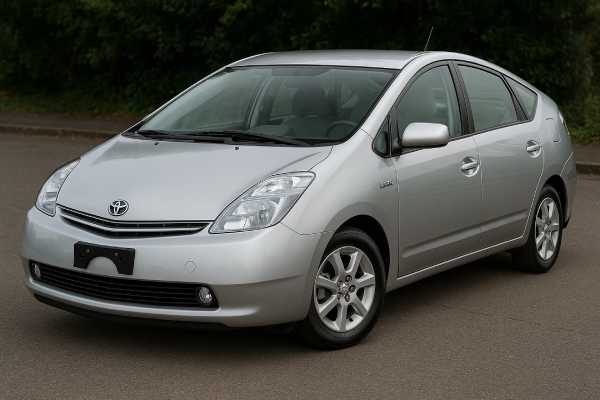
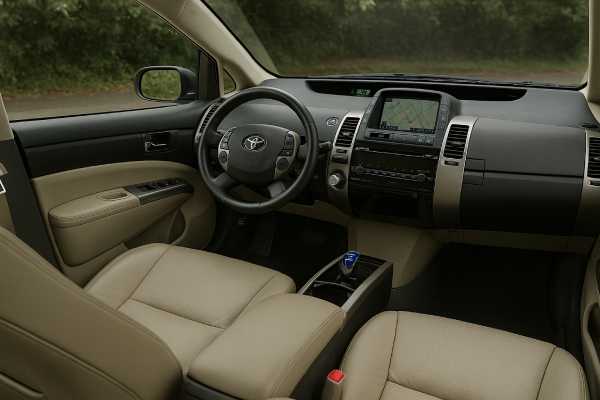
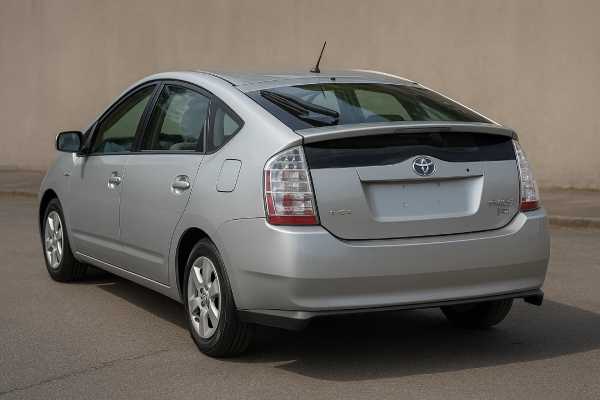
The third-generation Toyota Prius (ZVW30) moves the formula forward with a larger 1.8-liter 2ZR-FXE engine, stronger electric drive, and a smarter eCVT transaxle, but it still focuses on what owners value most: exceptionally low running costs and robust durability. The hybrid system delivers a combined 134 hp (100 kW) and real-world economy that regularly tops 45–50 mpg (US), while cabin space and cargo flexibility make it usable family transport. At the same time, Toyota added available high-end features—LED headlamps, head-up display, Dynamic Radar Cruise Control, Lane Keep Assist, and a Pre-Collision System—rare in small cars of the period. The 2010 software update improved brake feel, and later inverter software actions addressed rare shutdown faults. If you are shopping 2009–2011 cars, service history matters: fluid changes, recall completion, and hybrid battery health define a good example. This guide compiles the essential specs, reliability patterns, maintenance rules, and buyer tips for the facelift-era ZVW30.
At a Glance
- Strong economy: 51/48/50 mpg (city/highway/combined) with the 15-inch setup; low running costs and long brake life.
- Roomy hatch practicality: 21.6 ft³ (612 L) cargo with seats up; 60/40 split folding for large items.
- Available tech rare for its time: DRCC, PCS, LKA, LED low beams, solar ventilation, and head-up display.
- Watch for EGR clogging and brake booster/actuator wear on high-mileage cars; verify inverter/ABS software updates.
- Typical oil change interval: 10,000 miles (12 months) with 0W-20.
Navigate this guide
- ZVW30 Prius Detailed Overview
- ZVW30 Prius Specs and Data
- Prius ZVW30 Trims and Safety
- Reliability and Service Actions
- Maintenance and Buyer’s Guide
- Driving and Performance
- Prius vs Rival Hybrids
ZVW30 Prius Detailed Overview
The third-generation Prius, chassis code ZVW30, arrived for 2010 in North America (late-2009 sale date) and ran through the 2011 model years before a light refresh. Its headline change is the 2ZR-FXE 1.8-liter Atkinson-cycle four-cylinder paired with a new P410 eCVT transaxle. The larger engine runs lower rpm at highway speeds to cut pumping losses; combined system output rises modestly to 134 hp (100 kW), but drivability improves everywhere, especially from 40–70 mph. Toyota also refined Hybrid Synergy Drive hardware: a more compact inverter/converter, higher-output motor-generator, electric engine water pump (eliminating the accessory belt), and an optimized exhaust heat-recovery system to warm coolant faster for winter economy.
Packaging remains a strength. Despite its aerodynamic Kammback profile (Cd ≈ 0.25), the Prius offers adult-friendly rear legroom and a flat, low cargo floor. With the rear seats up, you get 21.6 ft³ (≈612 L) of storage; fold them for bulky loads. The Five grade (later “Prius Five”) introduced 17-inch alloys and available LED low-beam headlamps; the Advanced Technology Package added big-car driver aids—Dynamic Radar Cruise Control, Pre-Collision System, and Lane Keep Assist—plus Intelligent Parking Assist. A Solar Roof option (on select grades) powered a ventilation fan to purge cabin heat when parked and bundled a moonroof—useful in hot climates.
Safety fundamentals were upgraded versus the previous NHW20: more high-strength steel in critical load paths, redesigned airbags (including a driver knee airbag), active front head restraints, and standard stability control. Early in 2010, Toyota flashed the ABS ECU to address inconsistent brake feel over rough surfaces; later, inverter control updates mitigated a rare high-load shutdown risk. With regular maintenance, most cars deliver six-figure trouble-free miles. The recurring ownership themes are simple: keep fluids fresh, clean the EGR circuit around the 100–150k mile mark, monitor the 12-volt auxiliary battery condition, and confirm recall/TSB work in the records.
ZVW30 Prius Specs and Data
Powertrain and Efficiency
| Item | Detail |
|---|---|
| Code | 2ZR-FXE + Hybrid Synergy Drive |
| Engine layout & cylinders | Inline-4, DOHC, 16 valves, 4 valves/cyl |
| Bore × stroke | 80.5 × 88.3 mm (3.17 × 3.48 in) |
| Displacement | 1.8 L (1,798 cc) |
| Induction | Naturally aspirated (Atkinson cycle) |
| Fuel system | Multi-point EFI (PFI) |
| Compression ratio | ~13.0:1 |
| Max engine power | 98 hp (73 kW) @ ~5,200 rpm |
| Max engine torque | 142 Nm (105 lb-ft) @ ~4,000 rpm |
| Electric motor (drive) | Permanent-magnet synchronous (front, single) |
| Motor output / torque | ≈60 kW (80 hp) / ≈207 Nm (153 lb-ft) |
| Battery | NiMH, ~1.3 kWh, 201.6 V nominal (28 modules) |
| System output | 134 hp (100 kW) combined |
| Timing drive | Chain |
| Rated economy (EPA) | 51 / 48 / 50 mpg (city/hwy/comb) = 4.6 / 4.9 / 4.7 L/100 km |
| Real-world @ 120 km/h (75 mph) | ~5.2 L/100 km (≈45 mpg US / 54 mpg UK) |
| Aerodynamics | Cd ≈ 0.25 |
Transmission and Driveline
| Item | Detail |
|---|---|
| Transmission | eCVT planetary (P410 transaxle) |
| Final drive | ~3.27 |
| Drive type | FWD |
| Differential | Open |
| Refuel to full | ~3–5 min (11.9 US gal tank) |
Chassis and Dimensions
| Item | Detail |
|---|---|
| Suspension (front/rear) | MacPherson strut / Torsion beam |
| Steering | Electric rack-assist (EPS) |
| Brakes | Front ventilated discs ≈276 mm (10.9 in); rear solid discs ≈260 mm (10.2 in) |
| Wheels/Tires | 195/65 R15 (std); 215/45 R17 (opt, Five) |
| Ground clearance | ≈145 mm (5.7 in) |
| Length/Width/Height | ≈4,460 / 1,745 / 1,490 mm (175.6 / 68.7 / 58.7 in) |
| Wheelbase | 2,700 mm (106.3 in) |
| Turning circle (curb-to-curb) | ≈10.4 m (34.2 ft) |
| Curb weight (typical) | ≈1,380–1,425 kg (≈3,040–3,140 lb) |
| Fuel tank | 45 L (11.9 US gal / 9.9 UK gal) |
| Cargo volume | 612 L / 21.6 ft³ seats up (SAE); ~1,120 L / 39.6 ft³ seats down |
Performance and Capability
| Metric | Value |
|---|---|
| 0–100 km/h (0–62 mph) | ~10.4–10.8 s |
| Top speed | ~180 km/h (112 mph) |
| Braking 100–0 km/h | ~36–38 m (118–125 ft) |
| Towing | Not rated in baseline market |
| Roof load | ~45 kg (99 lb) with appropriate crossbars (check equipment limits) |
Fluids and Service Capacities
| System | Spec / Capacity |
|---|---|
| Engine oil | ILSAC GF-5 (or later) 0W-20; ≈4.2 L (4.4 US qt) with filter |
| Engine/inverter coolant | Toyota Super Long Life Coolant (pink), premixed 50/50; engine loop ≈6–7 L (6–7.4 US qt); inverter loop ≈3–4 L (3.2–4.2 US qt) |
| Transaxle fluid | Toyota ATF WS; drain/fill ≈3.5–4.0 L (3.7–4.2 US qt) |
| A/C refrigerant | R-134a; ≈450–550 g (16–19 oz) |
| A/C compressor oil | ND-OIL 11; ≈120 mL (4.1 fl oz) |
| Key torques | Wheel nuts 103 Nm (76 lb-ft); spark plugs ≈18–20 Nm (13–15 lb-ft); engine drain plug ≈39 Nm (29 lb-ft) |
Electrical
| Item | Detail |
|---|---|
| Alternator | Not fitted (DC-DC converter charges 12 V system) |
| 12 V battery | AGM, ~45 Ah (S46B24R form factor), rear cargo area |
| Spark plugs | Iridium (e.g., Denso SC16HR11); gap ≈1.0 mm (0.039 in) |
Safety and Driver Assistance
| Area | Summary |
|---|---|
| Crash ratings (IIHS) | Strong results in moderate overlap, side, rear; available stability control; period Top Safety Pick when equipped/qualified |
| Headlight rating (IIHS) | Not applicable under later headlamp test protocol |
| ADAS availability | Standard: ABS, EBD, Brake Assist, TRAC, VSC. Optional (Advanced Technology Pkg): Dynamic Radar Cruise Control, Pre-Collision System, Lane Keep Assist, Intelligent Parking Assist; rear camera with navigation on select trims. |
Prius ZVW30 Trims and Safety
Trims and options (baseline market)
For 2010, trims were named I (fleet), II, III, IV, and V; for 2011, names shifted to Two, Three, Four, and Five with similar content. Mechanical hardware is shared across the line—no powertrain differences—so your selection mostly affects wheels/tires, lighting, seating, audio, and advanced tech.
- II / Two: 15-inch wheels, Smart Key (driver door), fabric seats, single-CD audio.
- III / Three: Adds JBL audio with Bluetooth/USB; navigation optional.
- IV / Four: Heated front seats; available Solar Roof package (moonroof + solar ventilation + upgraded audio/nav).
- V / Five: 17-inch alloys with larger tires and a quicker steering feel; LED low-beam headlamps and fog lights available. The Advanced Technology Package (V/Five) added Dynamic Radar Cruise Control (DRCC), Pre-Collision System (PCS), Lane Keep Assist (LKA), Intelligent Parking Assist (IPA), navigation with HDD and Head-Up Display (HUD) depending on build year/options.
Quick identifiers: 17-inch wheels and LED low beams signal a Five; look for the steering-wheel radar distance buttons (DRCC), camera module behind the mirror (LKA/HUD), and a “Parking” hard key (IPA) near the shifter on equipped cars. VIN build codes on the door jamb and option stickers under the hatch floor can confirm package content.
Year-to-year changes (highlights)
- 2010 launch: software update for ABS brake feel released soon after start of sales; optional solar roof and Advanced Technology Package debuted.
- 2011 naming aligned to Two/Three/Four/Five; minor feature shuffles (e.g., additional USB/Bluetooth integration).
Safety ratings and equipment
The ZVW30 structure, airbag count (dual front, front side, full-length curtains, and driver knee), and stability control helped it earn strong crash results for the era. Small-overlap testing had not been introduced yet, but the Prius performed well in moderate overlap, side, and rear evaluations, and vehicles with the optional LED headlamps improved nighttime forward visibility. LATCH anchors are accessible for two outboard child seats, with a middle top tether; verify seat fitment by model year. On cars with DRCC/PCS/LKA, any windshield replacement or front bumper work can require calibration; after service, confirm there are no persistent millimeter-wave radar or lane camera DTCs and that steering-angle and yaw-rate sensors are zero-point calibrated.
Reliability and Service Actions
What ages, and when
- Common / low-to-medium cost
- EGR circuit clogging (≈100k–180k miles): Symptoms include cold-start rattle, rough idle, P030x misfires, and rising long-term fuel trims. Cause is carbon buildup in the EGR valve, pipe, and cooler. Remedy: remove and clean the valve, cooler, EGR passages, and throttle body; clear DTCs and re-learn idle. Proactive cleaning every ~100k miles stabilizes combustion and helps protect the head gasket.
- 12-volt AGM battery (4–7 years): Weak cranking/boot-up, intermittent warning lights, or odd hybrid system messages. Replace with an AGM of the correct vented form factor; register voltage in health logs if you track maintenance.
- Occasional / medium cost
- Brake booster/actuator and accumulator wear (high mileage): Audible pump cycling, long pedal travel, stored C13xx codes, or inconsistent assist. Remedy: replace the affected hydraulic unit(s) and bleed with a scan tool; verify ABS/VSC initializations.
- HV battery module imbalance (age + heat): Elevated fan speeds, P0A80/P301x codes, or sudden SOC swings. Remedy starts with health test via Techstream or equivalent; targeted module replacement can buy time, but a new or Toyota-reman pack is the durable fix. Keep the battery fan clean to prolong life.
- Rare / high impact
- Inverter intelligent power module stress failures: Under high load, the inverter may set warnings and enter limp or, in rare cases, shut down. Factory software updates reduce stress; some cars also received component replacements under campaign or extended support. Always verify inverter software status during pre-purchase.
- Head gasket seep (very high mileage, often after prolonged EGR blockage): Persistent cold-start knocking, coolant loss with no external leak, or combustion gases in coolant. Confirm via block test or borescope; repair requires head removal and machine-shop work.
Recalls, TSBs, and extended coverage (headline items)
- ABS ECU reprogramming (2010 campaign): Addressed inconsistent brake feel over rough/slick surfaces by revising ABS logic; completion sticker should be in the driver door jamb or documented in dealer records.
- Hybrid inverter software update (2014 campaign): Updated Motor Generator and Power Management ECU software to reduce transistor stress and prevent shutdown; completion essential on any 2010–2011 car.
- Region accessory label actions (SET/GST): Non-content-related tire/label campaigns affected some distributor-sold vehicles; check VIN history.
Pre-purchase checklist
- VIN recall/field action status from official tools; insist on proof of completion.
- Service history documenting 10k-mile oil changes with 0W-20, coolant and transaxle fluid changes, and brake service.
- Hybrid battery state-of-health printout and evidence the battery fan has been cleaned (especially for rideshare/urban use).
- EGR/throttle body cleaning history; cold-start smoothness during a long test drive.
- ADAS calibration proof after any windshield or front bumper repair on DRCC/PCS/LKA-equipped cars.
- Brake booster soundness (listen for frequent pump runs), and a clean scan with no pending chassis or hybrid codes.
Maintenance and Buyer’s Guide
Practical service schedule (distance/time, whichever comes first)
- Engine oil & filter: Every 10,000 miles / 12 months with 0W-20; 5,000-mile checks are prudent for severe use (short trips, extreme cold/heat).
- Engine air filter: Inspect 15,000 miles / 12 months; replace 30,000 miles / 3 years (sooner in dusty areas).
- Cabin filter: 15,000 miles / 12 months; more often in urban/ride-share duty.
- Coolant (engine & inverter loops): First replacement at ~100,000 miles / 10 years, then every 50,000 miles / 5 years. Confirm freeze protection and pH.
- Spark plugs (iridium): 120,000 miles / 10 years; torque carefully and replace coil boots if brittle.
- Transaxle ATF WS: Not always listed as a maintenance item, but a drain/fill at 60,000–90,000 miles helps longevity; use only Toyota WS.
- Brake fluid: 3 years regardless of mileage; hybrid brake actuators benefit from low moisture content.
- Brake pads/rotors: Inspect annually; regen means pads often last 100k+ miles, but slide pins need cleaning.
- Serpentine/aux belts: None on the engine; inspect accessory drive components only if aftermarket equipment was added.
- Tyre rotation & alignment: Rotate 5,000–7,500 miles; check alignment annually (17-inch setups are more sensitive).
- 12-V battery: Test annually after year 4; replace at the first signs of weakness.
- Hybrid system checks: At major services, scan for DTCs, review battery block voltages, and inspect the HV battery cooling fan and duct for debris.
- EGR/throttle body/PCV: Clean ~100,000 miles; earlier if cold-start rattle appears.
Fluids and torques (quick decisions)
- Oil: 0W-20, ≈4.2 L (4.4 qt); drain plug ≈39 Nm (29 lb-ft).
- Transaxle: ATF WS, ≈3.7–4.0 L; fill until it dribbles level; don’t over-torque plugs.
- Coolant: Toyota SLLC (pink), premix only; burp heater core and inverter loop via service mode.
- Wheel nuts: 103 Nm (76 lb-ft).
- Spark plugs: ≈18–20 Nm (13–15 lb-ft), 1.0 mm gap.
Buyer’s checklist
- Body & corrosion: Check rear subframe mounts, hatch seam sealer, windshield cowl drains (leaves can clog), and the spare-well for moisture.
- Hybrid battery & cooling: Inspect the right-rear quarter intake grille for lint/pet hair; noisy battery fan points to clogging.
- Brakes: Confirm quiet booster operation and firm pedal; test ABS on a rough surface (post-update cars feel natural).
- Engine health: Smooth cold start, steady idle, no coolant loss, no combustion gas in the surge tank.
- Tires & alignment: 17-inch tires (Prius Five) sharpen steering but trim 2–3 mpg compared with 15-inch LRR tires.
Years/trims to seek
- 2011 Three/Four with records and completed campaigns are sweet spots: mature running changes, good equipment, and the option of Solar Roof without the mpg penalty of 17-inch wheels.
- 2010 Five (Advanced Tech) is great if you want DRCC/PCS/LKA—just verify inverter/ABS software and budget for potential brake actuator replacement at higher mileage.
Long-term outlook
A well-maintained ZVW30 readily covers 200k–300k miles. The big variables are hybrid battery age/temperature exposure and whether the EGR system is kept clean. Address those, and the car’s core mechanicals—engine, transaxle, and suspension—are stout and inexpensive to maintain.
Driving and Performance
On the road, the ZVW30 feels more relaxed than its predecessor. The 1.8-liter 2ZR-FXE spins fewer revs at cruise, so highway noise is lower, and the car is less sensitive to small grades or headwinds. Around town, instant electric torque covers the first step off the line; the eCVT blends engine power smoothly once load rises. The tuning emphasizes efficiency: Eco mode softens throttle and prioritizes electric assist, Power mode sharpens response for hills or quick merges, and EV mode keeps the engine off at low speed when battery SOC and temperature allow. The engine-to-EV transitions are usually seamless; if you hear a coarse thrum on cold starts, it often points to an EGR/throttle cleanliness issue rather than a mechanical fault.
Ride quality is supple on the standard 15-inch low-rolling-resistance tires, with a hint of float on big freeway undulations. The optional 17-inch package tightens turn-in and reduces roll but passes more impact texture and typically costs 2–3 mpg in mixed use. Straight-line stability is solid, aided by the long wheelbase (2,700 mm) and careful aero management. The steering is precise if light; with the 17-inch setup it feels notably more direct off-center. Brake feel on updated cars is consistent: regen handles gentle stops, handing off to the hydraulic system cleanly as speed drops; on rough pavement you may sense some pedal modulation as ABS and regen blend, which is normal.
Real-world economy depends on temperature, tire choice, and trip length. In temperate weather on 15-inch LRR tires, many owners report 4.7–5.2 L/100 km (50–45 mpg US / 60–54 mpg UK) in mixed driving. High speeds (120–130 km/h / 75–80 mph), winter blends, and short trips raise consumption; expect ~10–20% worse in deep winter without a block heater. With cargo loaded, the Prius remains composed, though long grades can heat-soak the battery and temporarily reduce assist; the system manages itself to protect components. Toyota does not rate this generation for towing in the baseline market; if you must carry bikes or cargo boxes, use approved roof bars and mind the ~45 kg (99 lb) dynamic roof load and the mpg penalty from aero drag.
Key metrics that shape the verdict
- 0–60 mph: roughly 9.8–10.5 seconds depending on tires and test method—adequate for modern traffic.
- 50–80 mph passing: steady but not urgent; anticipate and use Power mode.
- 100–0 km/h braking: roughly mid-30-meter stops with healthy tires and pads; regen meaningfully extends pad life.
- Turning circle: about 10.4 m (34.2 ft); easy in tight parking.
Overall, the ZVW30 prioritizes calm, efficient progress. If you value silent city running, predictable control responses, and low ownership stress over outright pace, it delivers exactly that.
Prius vs Rival Hybrids
Honda Insight (2010–2011)
Honda’s second-gen Insight undercuts the Prius on price and can approach mid-40s mpg (US) in gentle use, but its Integrated Motor Assist relies on a smaller motor sandwiched with a conventional CVT—regeneration and EV creep are weaker, and engine-off operation is less frequent. Cabin noise and ride quality trail the Prius, and cargo space is tighter. If you commute mostly on secondary roads and price is critical, the Insight is a credible alternative, but the Prius is quieter, roomier, and more efficient at highway speeds.
Ford Fusion Hybrid (2010–2011)
As a midsize sedan, the Fusion Hybrid offers a more traditional three-box shape, stronger acceleration, and a comfortable highway ride. Its hybrid system and brake blending are well sorted, and long-distance road manners are excellent. However, city fuel economy is lower than the Prius and the trunk is smaller due to battery packaging of the era. Choose the Fusion if you need sedan refinement and faster passing; choose the Prius if fuel spend and cargo flexibility dominate your calculus.
Volkswagen Jetta TDI (2009–2011, diesel)
A torque-rich diesel compact with long-range cruising prowess, the Jetta TDI can rival Prius highway economy in gentle conditions. But diesel emissions systems of this era add maintenance complexity, and short-trip city use is not their forte. The Prius is simpler to live with in urban duty cycles and typically carries lower total ownership cost.
Civic Hybrid (2009–2011)
Similar trade-offs to Insight—good reliability reputation and compact-sedan dimensions—but again, Prius wins on hatchback practicality and blended city/highway efficiency, especially at 65–75 mph. Toyota’s widespread parts network and the Prius’s huge production scale also tilt long-term costs in its favor.
Bottom line
Among small to midsize hybrids of 2009–2011, the ZVW30 Prius offers the most efficient all-round package: largest cargo hold, most mature hybrid hardware, and the broadest availability of advanced driver aids for the time. If you want a no-drama 45–50 mpg daily driver that can still swallow a family’s weekend gear, it remains the benchmark.
References
- Gas Mileage of 2010 Toyota Prius 2010 (EPA Fuel Economy)
- 2010 Toyota Prius 2010 (Safety Rating)
- All-New Third Generation Toyota Prius Raises the Bar for Hybrid Vehicles Again 2009 (Manufacturer Newsroom)
- RCONL-10V039-7126.pdf 2010 (Recall Database)
- RCONL-14V053-0123.pdf 2014 (Recall Database)
Disclaimer
This guide is for informational purposes only and is not a substitute for professional diagnosis or repair. Specifications, torque values, intervals, and procedures can vary by VIN, market, and equipment. Always confirm against the official service manual, owner’s manual, and technical bulletins for your specific vehicle.
If this article helped you, please consider sharing it with fellow owners on Facebook or X/Twitter—it supports the work that goes into these in-depth guides.