
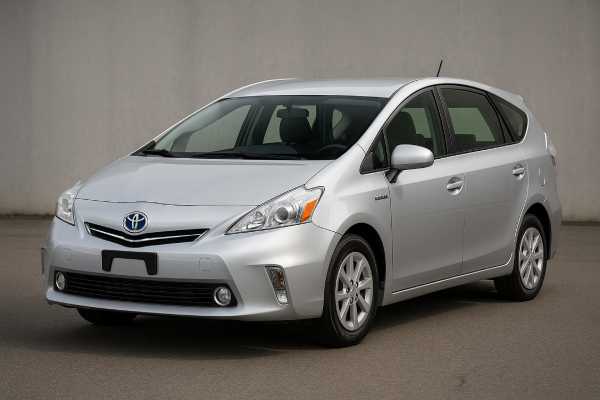
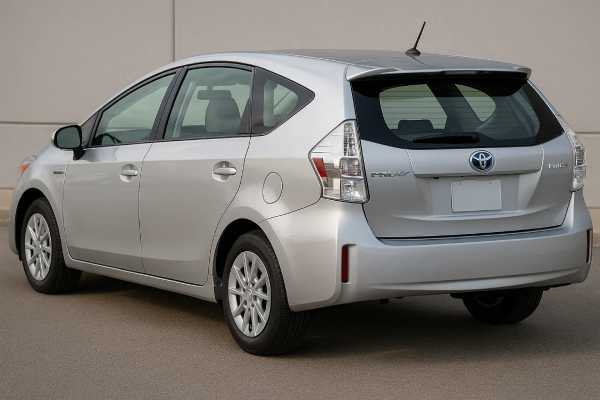
The Toyota Prius v (ZVW41) takes the proven third-generation hybrid system and stretches it into a more versatile, seven-seat package for families and high-mileage users. It pairs Toyota’s 1.8-liter 2ZR-FXE Atkinson-cycle four-cylinder with an electric drive and a compact lithium-ion battery (for the seven-seat variant), delivering smooth, low-effort performance and excellent economy. Compared with a standard Prius hatchback, the Prius v rides on a longer body with a more upright cabin, extra cargo configurations, and suspension tuned for load carrying. Owners value its durability, low running costs, and the way the eCVT keeps the powertrain quiet in city work. This guide focuses on 2012–2014 ZVW41 cars—as sold primarily in Europe as Prius+ (seven seats)—covering specs, dimensions, real-world performance, reliability patterns, routine maintenance, and how it stacks up against rivals. If you’re shopping for a practical hybrid that can carry more people with less fuel, this is the concise, technical overview you need.
Fast Facts
- Roomy seven-seat hybrid with flexible cargo floor; refined low-speed EV glide for city driving.
- Proven 2ZR-FXE engine and eCVT hybrid transaxle; typically low wear items and long brake life.
- Lithium-ion traction battery (seven-seat) packaged to preserve luggage space; designed for long service life.
- Watch for inverter ECU software recall completion and high-mileage suspension bush wear.
- Practical interval to remember: engine oil and filter every 15,000 km / 12 months (or sooner under severe use).
Section overview
- Prius v (ZVW41) in detail
- Prius v ZVW41 specifications
- Trims, options, and safety
- Reliability and common issues
- Maintenance and buyer’s guide
- Driving and performance
- How Prius v compares
Prius v (ZVW41) in detail
Toyota engineered the ZVW41 to solve a simple problem: Prius economy, but with seats for up to seven and a cabin that works like a small MPV. The solution was a longer, taller body on familiar Prius (XW30-era) architecture, a lithium-ion battery laid out to keep luggage space, and model-specific calibration for the hybrid system and suspension. The 2ZR-FXE 1.8-liter engine runs an Atkinson cycle for efficiency, supported by Motor-Generator 2 (MG2) to fill torque at low speed and recapture braking energy. System output is a modest 134 hp (100 kW), yet around town the electric torque makes the car feel more responsive than the headline figure suggests.
Compared with the standard Prius hatch, the ZVW41’s body sides are more vertical, the roof stretches rearward, and the cargo floor is longer. The extra glass area improves outward visibility and makes the cabin feel airy. Seven-seat versions (the focus here) carry a lithium-ion battery pack (201.6 V, 56 cells) to save space and mass versus the nickel-metal hydride pack used in some five-seat markets. A carefully shaped front fascia, under-trays, and an extended roof spoiler help the Prius v maintain an aerodynamic drag coefficient around Cd 0.28 despite its larger profile.
On the road, the eCVT (Toyota’s hybrid transaxle with a planetary power split) blends engine and motor seamlessly; there are no stepped shifts. Toyota tuned spring and damper rates for load carrying, and the rear uses a torsion-beam layout that packages well beneath the low cargo floor. Brakes are by-wire with strong regeneration above walking pace, handing off to friction braking smoothly once calibrated correctly and using appropriate pads. Steering is electric power assist, light at parking speeds, and accurate enough on a highway cruise.
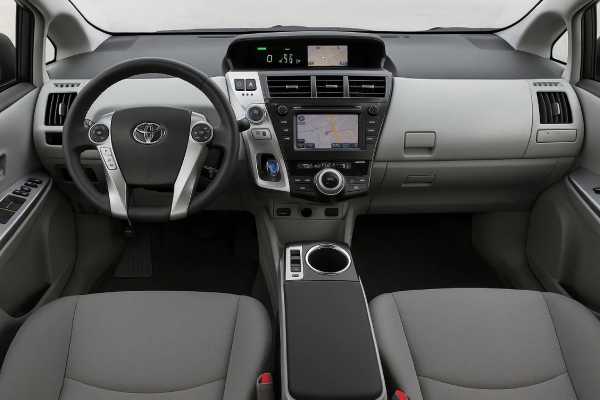
Cabin packaging is the Prius v’s party trick. The second row slides and reclines, the third row is sized for kids or short hops, and there are dozens of small storage cubbies. With all seven seats in place you can still manage a grocery run, but the real utility comes with rows folded: a mostly flat, long load bay that swallows bikes or flat-pack furniture. Infotainment and ADAS are of their time (early-2010s), but Bluetooth, navigation, a useful energy monitor, and a rear camera were widely available. The overall experience is quiet, predictable, and low-stress—the kind of car that makes daily logistics easier while keeping fuel bills low.
Prius v ZVW41 specifications
Powertrain and Efficiency
| Item | Specification |
|---|---|
| Engine code | 2ZR-FXE (Atkinson-cycle) |
| Layout & cylinders | Inline-4, DOHC, 16-valve |
| Bore × stroke | 80.5 × 88.3 mm (3.17 × 3.48 in) |
| Displacement | 1.8 L (1798 cc) |
| Induction / fuel | Naturally aspirated / MPFI |
| Compression ratio | ~13.0:1 |
| Electric motor (MG2) | Permanent-magnet synchronous, ~60 kW; 207 Nm (153 lb-ft) |
| System voltage | ~201.6 V |
| Traction battery (7-seat) | Lithium-ion, 56 cells, ≈1.0 kWh nominal |
| System output | 134 hp (100 kW) |
| Rated combined economy* | ≈ 4.1–4.5 L/100 km (57–52 mpg US / 68–63 mpg UK) |
| Real-world highway @120 km/h | ≈ 5.5–6.0 L/100 km (43–39 mpg US / 52–47 mpg UK) |
| Aerodynamics | Cd ≈ 0.28; frontal area ~2.3 m² (24.8 ft²) |
- Figures reflect European test procedures of the era; actual consumption varies with load, tyre package, temperature, and route.
Transmission and Driveline
| Item | Specification |
|---|---|
| Transmission | Hybrid transaxle eCVT (planetary power-split) |
| MG2 reduction ratio | ~2.63:1 |
| Final drive | ~3.27:1 |
| Drive type | Front-wheel drive |
| Differential | Open (with traction/stability control) |
Chassis and Dimensions
| Item | Specification |
|---|---|
| Front / rear suspension | MacPherson strut / Torsion beam |
| Steering | Electric power assist; ratio ~17.6:1 |
| Brakes (front/rear) | Ventilated discs ~273 mm / Solid discs ~259 mm (10.7 / 10.2 in) |
| Wheels / tyres | 16 in (205/60 R16 96V) or 17 in (215/50 R17 95W) |
| Ground clearance | ~145 mm (5.7 in) |
| Length × width × height | ~4615 × 1775 × 1575 mm (181.7 × 69.9 × 62.0 in) |
| Wheelbase | ~2780 mm (109.4 in) |
| Turning circle (kerb-to-kerb) | ~10.8 m (35.4 ft) |
| Curb weight (typical) | 1490–1560 kg (3285–3439 lb) depending on spec |
| GVWR | ~2000 kg (4409 lb), variant-dependent |
| Fuel tank | 45 L (11.9 US gal / 9.9 UK gal) |
| Cargo volume (7-seat) | ~232 L (8.2 ft³) all seats up / ~784 L (27.7 ft³) with third row folded; up to ~1750 L (61.8 ft³) seats folded (VDA) |
Performance and Capability
| Metric | Value |
|---|---|
| 0–100 km/h (0–62 mph) | ≈ 11.3 s |
| Top speed | ≈ 165 km/h (103 mph) |
| Braking 100–0 km/h | Typical 38–42 m (varies with tyre/pads) |
| Towing capacity | Not rated in many markets; observe local rules |
| Payload / roof load | Variant-dependent; typical roof load ≈ 75 kg (165 lb) with approved bars |
Fluids and Service Capacities
(Always verify by VIN and under-bonnet labels.)
| System | Specification / Capacity |
|---|---|
| Engine oil | 0W-20 (ACEA/API spec as applicable); ~4.2 L (4.4 US qt) with filter |
| Engine coolant | Toyota Super Long Life Coolant (pink, pre-mix); ~6–7 L (6.3–7.4 US qt) total circuit |
| Inverter/e-motor coolant | Same as above; ~3–4 L (3.2–4.2 US qt) |
| Hybrid transaxle (ATF) | Toyota ATF WS; drain-and-fill ~3.5–4.0 L (3.7–4.2 US qt) |
| A/C refrigerant | R134a; typical charge ~0.47–0.55 kg (16.6–19.4 oz); compressor oil ND-Oil 11 |
| Key torque examples | Wheel nuts ~103 Nm (76 lb-ft); engine drain plug ~39 Nm (29 lb-ft) |
Electrical
| Item | Specification |
|---|---|
| Alternator | Not fitted (DC–DC converter from HV system) |
| 12 V auxiliary battery | AGM type, JIS form factor (e.g., S46B24R), ~35–45 Ah |
| Spark plugs | Long-life iridium; gap ~0.7–0.8 mm (0.028–0.031 in) |
Safety and Driver Assistance
| Feature | Notes |
|---|---|
| Airbags | Front, side, curtain, and driver’s knee (market/trim dependent) |
| ABS, EBD, BA, VSC/TRC | Standard on most trims |
| ADAS availability | Rear camera common; parking sensors and navigation widely available; AEB/LKA uncommon on early builds |
| Headlights | Halogen or HID per trim; aim and lens clarity critical to performance |
Trims, options, and safety
Trims and equipment (Europe, 2012–2014)
Lineups varied by country, but the pattern was consistent: an entry grade with 16-inch wheels and fabric, a mid grade adding navigation, parking sensors, and privacy glass, and a high grade bringing 17-inch wheels, leather or leather-trimmed seats, keyless entry, and sometimes HID headlights. Seven seats were the defining feature of the ZVW41; five-seat configurations were generally paired with a nickel-metal hydride battery (ZVW40) and are covered separately. Quick identifiers include the extended rear quarter glass, a longer roof, and split third-row seatbacks. Inside, look for energy-flow pages in the central display, a dedicated EV mode button, and sliding second-row seats with a long fore-aft range.
Mechanical and functional differences
All ZVW41 versions share the 2ZR-FXE engine and eCVT, but 17-inch wheel packages slightly reduce efficiency and lengthen stopping distances on all-seasons versus 16-inch low-rolling-resistance tyres. Suspension valving was tuned for the heavier seven-seat configuration; expect somewhat firmer low-speed ride than a standard Prius hatch. Brakes are larger than on early Prius generations and stand up well to long descents when hybrid cooling is in order and pads are correctly bedded.
Safety ratings context
Euro NCAP did not publish a standalone rating for Prius+ in the launch years; comparable Prius hatch results indicated strong occupant protection for the platform generation. In North America, IIHS tested the related Prius v (wagon): it earned “Good” in most legacy tests but “Poor” in the early small overlap frontal evaluation on 2012–2014 cars before design changes were introduced on later models. If you’re importing or cross-shopping, use that as a practical comparison when evaluating structure, restraint performance, and headlight effectiveness.
Child seats and practicality
Second-row ISOFIX/LATCH anchors and top tethers are widely fitted; the third row is generally not rated for ISOFIX. The sliding middle row makes rear-facing installations easier. For daily family life, the flat load floor (with the third row folded) and the low sill are genuinely useful. Just note that with all seven seats up, luggage space is minimal—plan for a roof box or a compact trailer (where permitted) if you frequently travel full.
Reliability and common issues
Overall picture
The Prius v (ZVW41) has a strong reputation for reliability provided recalls and software updates are completed. The hybrid transaxle, 2ZR-FXE engine, and battery system are proven, especially when serviced on time and driven regularly so the battery cycles and stays balanced. Most problems are age- and mileage-related wear or deferred maintenance rather than inherent design faults.
Common (low–medium severity)
- Inverter/IPM stress → limp mode or stall (software-related): Early calibration could allow high current spikes that overheat the inverter’s power module during repeated heavy acceleration or steep climbs. Remedy: confirm the hybrid control ECU and motor/generator ECU software update/recall is completed; reflash resolves conditions and reduces thermal load.
- Front suspension bushings and drop links → clunks, looseness: Added vehicle mass and urban speed humps accelerate wear. Remedy: replace lower arm rear bushes and stabilizer links; realign.
- Brake booster/accumulator noise and longer pedal travel: Aging boosters may cycle more often; some markets saw extended coverage. Remedy: diagnose accumulator/booster pump; replace with updated part when fault codes or abnormal cycling present.
- 12 V auxiliary battery weakness → hybrid system no-ready, spurious warnings: Short-trip use and age deplete AGM batteries. Remedy: test under load; replace with correct JIS AGM; perform system reset.
Occasional (medium severity)
- Water pump seep (engine) → pink crust, gradual coolant loss: Usually age-related. Remedy: replace pump and belt; bleed coolant circuit properly (engine and inverter loops).
- HV battery cooling path restriction → fan noise, reduced battery performance: Dust or pet hair can clog the intake and fan ducting near the rear seats. Remedy: clean fan and duct; check battery temperature sensors and control logic.
- EGR and intake deposit (high-mileage): Less pronounced on Atkinson engines than on direct-injection units, but can occur over long intervals. Remedy: clean EGR valve/cooler and intake runners if drivability codes or roughness appear; keep oil changes on time.
Rare (higher cost)
- Inverter module failure (post-update cases uncommon): Overheated or previously stressed modules can fail outright. Remedy: inverter assembly replacement; verify cooling and software status.
- Transaxle bearing noise (very high mileage or contaminated ATF): Faint whine that follows road speed. Remedy: inspect fluid; abnormal debris or noise warrants specialist rebuild or replacement.
Recalls, TSBs, and field actions (2012–2014 context)
- Hybrid system ECU/motor-generator ECU reflash (inverter protection): Ensures thermal limits and current are managed under load. Verify by VIN and service records.
- Steering intermediate shaft inspection/replacement (select VIN ranges): Addresses potential wear or play at the universal joint.
- Brake booster/accumulator support programs: Market-specific extended coverage in some regions; check eligibility by VIN.
Pre-purchase checks
- Proof of software recall completion; full service history with 15,000 km/12-month oil changes.
- Brake booster operation (listen for frequent pump cycling with the car at rest).
- HV battery fan and duct cleanliness; scan hybrid data (state-of-charge balance, temperature spread).
- Suspension wear items (bushes, drop links, rear beam bushings); even tyre wear and recent alignment.
- Cooling systems (engine and inverter) bled correctly; look for coolant crust around pumps and hose joints.
Maintenance and buyer’s guide
Practical service schedule (typical European intervals)
- Engine oil and filter: every 15,000 km or 12 months; use 0W-20. Severe service (short trips, extreme cold/heat): 10,000 km.
- Engine air filter / cabin filter: inspect 15,000 km; replace 30,000–45,000 km or sooner in dusty areas.
- Spark plugs (iridium): 120,000–150,000 km or 10 years, then 60,000–90,000 km thereafter.
- Engine coolant: first at 160,000 km or 10 years, then every 80,000 km or 5 years.
- Inverter/e-motor coolant: same timing as engine coolant.
- Hybrid transaxle ATF (WS): not always listed as periodic; many owners choose drain-and-fill every 60,000–90,000 km to reduce wear metals.
- Brake fluid: every 2 years; perform hybrid brake bleed procedure.
- Brakes (pads/rotors): inspect every 15,000 km; hybrids can rust rotors—occasional firm stops from speed help keep them clean.
- Aux belts and hoses: inspect annually from year 5; replace at first signs of cracking or noise.
- Tyre rotation and alignment: rotate 10,000–15,000 km; align annually or after impacts.
- 12 V battery: test annually after year 4; typical life 5–7 years.
- HV battery health: visual/scan check at major services; keep fan duct clean.
Fluid specifications and helpful torque values
- Oil: 0W-20 meeting the latest manufacturer specification; drain plug ≈ 39 Nm (29 lb-ft).
- Coolant: Toyota Super Long Life (pink). Use proper bleeding sequence for both loops.
- ATF: Toyota WS only; fill to level at temperature window.
- A/C: R134a; verify charge mass on the under-hood label for your VIN. Use ND-Oil 11.
- Wheel nuts: ≈ 103 Nm (76 lb-ft).
Buyer’s inspection checklist
- Body and underbody: look for corrosion at rear beam mounts, exhaust hangers, and jacking points; check tailgate for seal leaks.
- Suspension: listen for clunks over sharp bumps; inspect front wishbone rear bushes and rear beam bushes.
- Brakes: ensure smooth blend from regen to friction; no pull, no pedal groan.
- Hybrid system: quick warm start to “Ready,” no warning lights; inverter coolant pump audible at initial power-on; scan for pending hybrid DTCs.
- Cooling: stable temperatures in both loops; no air bubbles in reservoir; heater performance normal.
- Interior: third-row mechanism folds smoothly; second row slides without binding; seatbelts retract briskly.
- Tyres: even wear; correct load index; LRR patterns help economy.
- Documentation: explicit proof of recall/software actions and brake booster policy (where applicable).
What to seek/avoid
- Seek: cars with documented dealer updates, frequent long trips (healthy HV battery cycling), 16-inch wheels for comfort and efficiency.
- Caution: neglected brake fluid, noisy boosters, heavy Uber/taxi use without HV battery fan service, or persistent inverter cooling DTCs.
- Longevity outlook: With routine fluids and recall compliance, 300,000+ km is commonplace; the powertrain is tolerant of mileage if cooling and lubrication are maintained.
Driving and performance
On the move, the Prius v prioritizes smoothness and economy over outright speed, yet feels cooperative in daily traffic. Throttle response is gentle at the first centimeter of pedal to encourage EV creep and low losses; press further and MG2 provides an instant torque push until the 2ZR-FXE wakes to share the load. Engine start-stop events are usually subdued, with a brief shiver at cold start and almost no vibration once warm. Because the eCVT continuously blends power sources, there’s no gear hunting in stop-and-go or on shallow grades—one reason Prius taxis do so well in cities.
Ride quality is controlled and slightly firm at low speed due to load-carrying springs; it settles on the open road. Straight-line stability is good up to typical motorway speeds; crosswinds move the tall body a touch, but corrections are small. Steering is light at parking speeds and weights up enough to give clear on-center feel. Braking is progressive when the pads are bedded and the software learns pedal behavior; you’ll mostly notice strong regeneration from 50 km/h down to 10–15 km/h, then the friction brakes complete the stop.
Real-world consumption depends on tyre choice, ambient temperature, and how often you can glide in traffic. Expect roughly 4.7–5.5 L/100 km (50–43 mpg US / 60–52 mpg UK) in mixed commuting with a sensible right foot and 16-inch low-rolling-resistance tyres, edging closer to 6.0 L/100 km (39 mpg US) on winter motorway runs with 17-inch tyres and a full load. Cold weather and short trips raise consumption because the engine must warm the catalytic converter and cabin. Pre-heating the interior while plugged into a garage supply isn’t typical on this non-plug-in, so consider a simple routine: combine errands, keep tyres at the upper end of the manufacturer’s pressure window, and anticipate traffic to maximize coasting.
Key metrics that shape impressions: 0–100 km/h in about 11.3 s is adequate for on-ramps, and 103 mph (165 km/h) top speed is academic but indicates relaxed motorway cruising at legal limits. Passing from 80–120 km/h is more about planning than punch—drop a little speed before the move, keep the motor in its efficient band, and the car responds smoothly. Under full load (seven people and cargo), braking distances grow; fresh pads and quality tyres make a noticeable difference. Noise levels are calm in town; at highway speeds you’ll hear tyre and wind noise more than engine sound thanks to the eCVT’s tendency to let revs fall once up to pace.
How Prius v compares
When this car was new, practical full-hybrids with seven seats were rare in Europe. Today, buyers might also shop the Ford C-Max/Grand C-Max (including the hybrid in some markets), Volkswagen Touran/Tiguan mild-hybrids, or newer compact SUVs with 48-V systems. Against them, the Prius v (ZVW41) still stands out for real fuel savings in urban duty, low brake and tyre wear, and the calm eCVT drive. It can’t match turbo-diesel torque under heavy motorway loads, and its small-overlap crash performance (based on related North-American Prius v testing) reminds us that structural progress in later designs is real. But the Toyota’s strengths—proven hybrid hardware, predictable maintenance, and people-friendly packaging—often outweigh its modest acceleration and the lack of contemporary ADAS.
If you’re deciding between ZVW41 and a standard third-gen Prius hatchback, ask how often you truly need seven seats or a longer load floor. The hatchback is more efficient and a bit quieter on coarse tarmac, but the v’s second-row slide, third-row flexibility, and easier child-seat fit are game-changers for many families. Compared with diesel MPVs of the period, the Prius v trades long-range towing strength for city serenity and lower emissions equipment complexity (no DPF/AdBlue). For many urban and suburban households, that trade is worth it—especially as these cars age and you factor total cost of ownership, not just purchase price.
References
- TOYOTA PRIUS+ TECHNICAL SPECIFICATIONS 2020 (Technical Specifications)
- TOYOTA PRIUS+: EQUIPMENT LIST 2020 (Equipment List)
- 2012 Toyota Prius v 4-door wagon 2012 (Safety Rating)
- Toyota Prius (2014) — Press Kit 2014 (Press Kit)
Disclaimer
This article is for informational purposes and does not replace professional diagnosis or repair. Specifications, torque values, service capacities, and maintenance intervals can vary by VIN, market, model year, and equipment package. Always verify figures and procedures against your official service documentation and the labels on your vehicle.
If you found this guide useful, please share it with fellow owners and buyers on Facebook or X to support xcar’s work.