
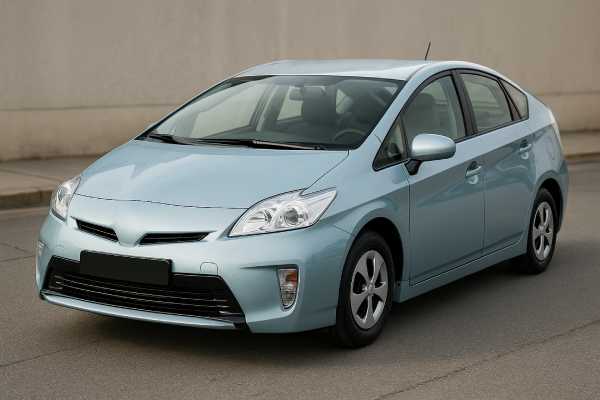
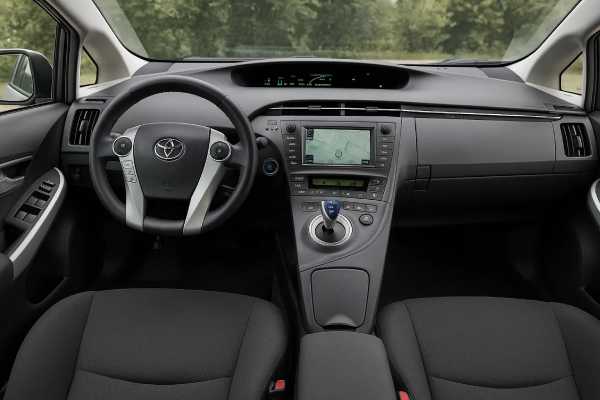
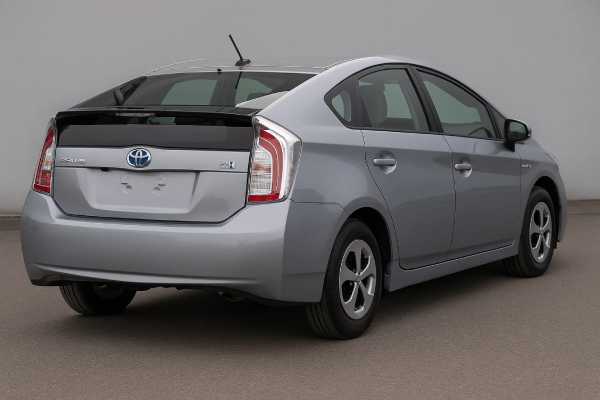
The 2012–2015 facelifted Toyota Prius (ZVW30) is the sweet spot of third-generation Prius ownership: mature Hybrid Synergy Drive hardware, outstanding real-world efficiency, and broad parts availability. With its 2ZR-FXE 1.8-liter Atkinson-cycle four paired to a permanent-magnet traction motor, the system delivers a rated 134 hp combined while prioritizing thermal efficiency and low emissions. Owners appreciate the generous hatchback packaging, low operating costs, and the way the eCVT powertrain shrugs off urban duty cycles. Compared with the 2010–2011 pre-facelift, these years benefit from incremental refinements to infotainment, available tech packages, and minor NVH improvements. As a used buy today, the facelift Prius rewards careful maintenance—especially around the EGR and brake hydraulic system—and it remains a top pick for commuters, ride-hail duty, and high-mileage drivers seeking predictable costs.
At a Glance
- Frugal even at highway speeds: many owners see mid-40s to ~50 mpg US (4.7–5.6 L/100 km) with routine driving.
- Packaging win: adult-friendly rear seat and a flat cargo floor with 21.6 ft³ (SAE) space.
- Proven hybrid hardware: chain-driven 2ZR-FXE, robust eCVT, readily available parts.
- Watchlist: EGR/coolant-side carbon build-up and brake booster/accumulator issues as mileage climbs.
- Typical service rhythm: engine oil and filter every 10,000 miles / 12 months with 0W-20; rotate tires every 5,000 miles.
Explore the sections
- Prius ZVW30 Facelift Overview
- Toyota Prius ZVW30 Specs
- Prius Trims, Options and Safety
- Reliability, Issues and Service Actions
- Maintenance and Buyer’s Guide
- Driving and Performance
- Prius vs Hybrid Rivals
Prius ZVW30 Facelift Overview
The 2012–2015 Prius represents the second half of the Gen-3 lifecycle. It keeps the ZVW30 chassis and the 2ZR-FXE 1.8-liter inline-four but benefits from detail tweaks in aerodynamics, interior materials, infotainment, and option structure. The hybrid powertrain centers on Toyota’s Hybrid Synergy Drive: an Atkinson-cycle ICE optimized for efficiency, a high-voltage NiMH battery pack (nominal 201.6 V), and a permanent-magnet synchronous traction motor integrated with a planetary eCVT transaxle driving the front wheels. The facelift retains the liftback body that made Prius a practical daily—think compact-footprint exterior with midsize-car interior volume—and a low coefficient of drag around 0.25.
In day-to-day use, what stands out is how well the drivetrain manages energy flows. Warmed up and driven smoothly, the car spends meaningful time in EV-assist at urban speeds, while the ICE runs in efficient load bands under acceleration. Brake blending is transparent once you adapt your pedal, and the hybrid battery (NiMH chemistry) is remarkably tolerant of temperature and cycling when the cooling fan stays clean. Fuel economy is the headline: trims on 15-inch wheels carry the well-known 50 mpg US combined rating, while the 17-inch wheel package trades a touch of economy for sharper turn-in.
Safety performance in these years is solid for the class. Structurally, Gen-3 Prius earned strong ratings in the core crashworthiness tests of its time, and the facelift years supported an available driver-assist suite on top trims that brought radar cruise, lane keep assist, and a pre-collision system (mitigation-focused for this era). For buyers today, the value proposition is compelling: low scheduled maintenance, inexpensive consumables, and a huge ecosystem of parts and specialists. The main ownership caveats center on age-related items (EGR, brake hydraulics, 12-V battery) rather than systemic design flaws.
Toyota Prius ZVW30 Specs
Below are scannable, model-specific tables for the 2012–2015 facelift Prius liftback sold in North America. Figures are baseline-region official numbers where available; real-world notes are included where they help shoppers make decisions.
Powertrain & Efficiency
| Item | Detail |
|---|---|
| Code | 2ZR-FXE (hybrid system w/ permanent-magnet front traction motor) |
| Engine layout & cylinders | Inline-4, DOHC, 16-valve; Atkinson cycle |
| Bore × stroke | 80.5 × 88.3 mm (3.17 × 3.48 in) |
| Displacement | 1.8 L (1798 cc) |
| Induction | Naturally aspirated |
| Fuel system | Sequential multi-port EFI |
| Compression ratio | ~13.0:1 |
| Max power (engine) | 98 hp (73 kW) @ ~5200 rpm |
| Max torque (engine) | 142 Nm (105 lb-ft) @ ~4000 rpm |
| Max power (traction motor) | ~80 hp (60 kW) |
| Battery | NiMH, ~1.3 kWh nominal, ~201.6 V, 28 modules |
| System net output | 134 hp (100 kW) |
| Rated fuel economy (15-in wheels) | ~50 mpg US combined (4.7 L/100 km) |
| Rated fuel economy (17-in wheels) | ~48 mpg US combined (4.9 L/100 km) |
| Aerodynamics | Cd ≈ 0.25 |
Real-world highway at 75 mph (120 km/h): many owners report mid-40s mpg US (≈5.6 L/100 km) with stock tires and proper alignment.
Transmission & Driveline
| Item | Detail |
|---|---|
| Transmission | eCVT (planetary gearset with dual motor-generators) |
| Drive type | Front-wheel drive |
| Differential | Open; stability/traction control via braking/torque management |
Chassis & Dimensions
| Item | Detail |
|---|---|
| Suspension (front/rear) | MacPherson strut / torsion beam |
| Steering | Electric power steering (rack-assist) |
| Brakes | 4-wheel discs with regenerative blending; ABS, EBD, BA |
| Wheels/Tires | 195/65R15 (std) or 215/45R17 (Five) |
| Ground clearance | ~135 mm (5.3 in) |
| Length / Width / Height | ~4480 mm / 1745 mm / 1490 mm (176.4 / 68.7 / 58.7 in) |
| Wheelbase | 2700 mm (106.3 in) |
| Curb weight | ~3042 lb (varies by trim/wheels) |
| Fuel tank | 45 L (11.9 US gal) |
| Cargo volume (seats up) | 611 L (21.6 ft³) SAE |
Performance & Capability
| Metric | Result |
|---|---|
| 0–100 km/h (0–62 mph) | ~10–11 s (typical instrumented tests vary by tire/wheel/fuel load) |
| Top speed | ~180 km/h (112 mph), electronically limited |
| Towing capacity | Not rated (U.S./Canada); use a hitch only for light cargo carriers |
| Roof load | Consult crossbar rating; keep within accessory system limits |
Fluids & Service Capacities (decision-making essentials)
| System | Specification | Capacity (typical) |
|---|---|---|
| Engine oil | 0W-20 (ILSAC); API SN/SN Plus or later | ~4.2 L (4.4 qt) with filter |
| Engine coolant | Toyota Super Long Life Coolant (SLLC, pink) | ~6.5 L system fill (approx.) |
| Inverter/e-motor coolant | Toyota SLLC (separate loop) | Service per official procedure (approx. 3–4 L) |
| Transaxle (eCVT) | Toyota ATF WS | Drain-and-fill typically ~3.5–4.0 L |
| A/C refrigerant | R-134a; compressor oil ND-11 | Charge amount varies by spec label under hood |
| Key torque examples | Wheel lug nuts ≈ 103 Nm (76 lb-ft); verify by VIN/service manual |
Notes: Capacities vary slightly by equipment and service method (dry fill vs. drain-and-fill). Always confirm on the under-hood labels and the official service documentation for your exact VIN.
Electrical
| Item | Detail |
|---|---|
| Alternator | Not fitted (DC-DC converter charges 12-V system from HV pack) |
| 12-V battery | AGM, trunk-mounted; compact form factor |
| Spark plugs | Iridium, long-life; gap ~0.7–0.8 mm; typical replacement ~120,000 miles |
Safety & Driver Assistance
| Area | Summary (facelift 2012–2015) |
|---|---|
| Crash ratings | Strong overall performance for the era in major tests; see section 3 for year notes |
| Headlight ratings | Pre-2016 models not rated in later headlight protocols |
| ADAS availability | On higher trims: radar cruise control, lane keep assist, pre-collision system (mitigation); blind-spot not common in this era |
Prius Trims, Options and Safety
Trims and options (North America): The standard liftback range typically comprised Prius Two, Three, Four, and Five (names can vary slightly by year). Mechanical hardware is fundamentally the same across trims—2ZR-FXE power unit, FWD, eCVT—while wheels/tires, interior materials, audio/navigation, and available driver-assist tech scale with trim.
- Wheels and tires: Most trims ship with 195/65R15 low-rolling-resistance tires on 15-inch alloys with aero covers. The Prius Five upgrades to 215/45R17 on 17-inch alloys; expect slightly firmer ride and a small fuel-economy penalty versus 15-inch fitment.
- Audio/infotainment tiers: Base units deliver Bluetooth and integrated backup camera (year-dependent), while higher trims add JBL-branded systems and navigation.
- Key option packages: On upper trims—especially Prius Five with Advanced Technology Package—you’ll find Dynamic Radar Cruise Control (DRCC), Lane Keep Assist (LKA), Pre-Collision System (PCS) (mitigation-oriented for this era), Head-Up Display (HUD), and Intelligent Parking Assist (IPA). These are the cars with the richest driver-assist suite in the 2012–2015 window.
Quick identifiers:
- 17-inch wheel cars (Five) are easy to spot visually and by the tire size on the door jamb.
- HUD projects speed and hybrid system info; look for the small projector slot atop the instrument panel.
- DRCC cars have a radar sensor integrated behind the front emblem; the steering wheel will have distance-setting buttons.
- Build labels under the hood and the options sticker (if present) help confirm package content.
Year-to-year highlights (facelift years):
- 2012: Facelift styling, interior and infotainment updates, expanded tech options.
- 2013–2015: Incremental updates to audio systems and telematics; package content shuffled slightly by model year and region.
Safety ratings summary:
- IIHS: The facelift Prius earned strong ratings in the primary crash tests of its time and achieved a Top Safety Pick in the early 2010s under then-current criteria. Small-overlap testing appeared mid-cycle and results varied by model year and test update, so shoppers should review the specific year pages and notes when comparing.
- NHTSA: Government 5-Star Safety Ratings for these years are competitive for compact/midsize hatchbacks; pay attention to how frontal, side, and rollover sub-scores differ by wheel/tire package and year.
Safety systems and restraints:
- Airbags: Front, side, side-curtain, and driver knee airbags were standard.
- Brakes and stability: ABS with Electronic Brake-force Distribution, Brake Assist, and Vehicle Stability Control are standard.
- Child seats: Lower anchors (LATCH) and top tether anchors are provided in the outboard rear seats; the Prius cabin packaging makes rear-facing installation easier than many compact sedans.
- ADAS notes and service implications: The PCS/DRCC/LKA suite on upper trims requires correct radar/camera aiming after collision repair, windshield replacement, front bumper cover replacement, or suspension geometry changes. Use factory alignment specs and follow calibration procedures to avoid warning lights or degraded performance.
Reliability, Issues and Service Actions
Overall reliability: The 2012–2015 Prius is widely regarded as durable when serviced on schedule. High-mileage examples (200k+ miles) are common. Age and accumulated heat cycles—rather than hybrid system complexity—drive most issues. Below is an owner-oriented map of the pattern faults, with prevalence and cost guidance.
Common to occasional issues (and what to do):
- EGR system carbon build-up (common; medium cost):
Symptoms: Rough cold starts, misfires, elevated combustion temps over time.
Root cause: Soot/oil mist accumulation in the EGR cooler, EGR valve, and intake manifold passages.
Remedy: Remove and clean the EGR cooler, valve, pipe, and manifold runners; replace gaskets; consider PCV update and catch-can if emissions rules allow. Cleaning typically restores drivability and reduces head-gasket stress in the long run. - Brake booster/accumulator internal leakage (common with age; high cost if out of coverage):
Symptoms: Extended pump run time, “whoosh/hiss,” multiple ABS/VSC/Brake warning lights, variable pedal feel.
Root cause: Internal accumulator leak or actuator fault leading to pressure loss.
Remedy: Replace the brake booster/actuator assembly and perform bleeding with a capable scan tool. Toyota has issued customer support programs and service bulletins over the years; verify coverage and prior replacement on your VIN. - Hybrid inverter intelligent power module (IPM) software/hardware concerns (occasional; variable cost):
Symptoms: Master warning, reduced power or stall, inverter DTCs.
Root cause: Software logic under certain stress conditions could overtax IPM transistors; in some cases hardware failure.
Remedy: Ensure all hybrid ECU/inverter software updates and applicable recall remedies have been performed; dealers will update and, when required by campaign, repair the inverter. - Engine coolant pump seepage/failure (occasional; medium cost):
Symptoms: Coolant crust around pump, slow coolant loss, noise.
Remedy: Replace pump and belt; bleed the cooling loop. Catch early to avoid overheating. - Oil consumption at higher mileage (occasional; low-to-medium):
Symptoms: Dipstick drop between services, tailpipe deposits.
Root cause: Ring coking and wear patterns typical of long OCI and heavy urban duty.
Remedy: Shorten OCIs, use high-detergency 0W-20 meeting the latest ILSAC spec, consider ring-soak procedures; monitor closely. - HV battery age and cooling (occasional with age; medium):
Symptoms: SOC swings, reduced EV assist, pack temperature codes.
Root cause: Module imbalance and thermal stress; cooling fan clogged by dust/pet hair.
Remedy: Clean the battery cooling fan and ducting; evaluate state-of-health with a capable scan tool. Replacement options include new OEM packs. - Water leaks at hatch and tail lamp seals (rare; low):
Symptoms: Trunk dampness, musty odor.
Remedy: Reseal or replace gaskets; check body seams.
Software and calibrations that matter:
- Hybrid control/inverter campaigns updated logic to better protect the IPM under stress and, where necessary, provided hardware remedies. Ensure your vehicle has the latest calibration; it’s both a reliability and a safety matter.
- Brake ECU updates accompany hydraulic component replacements; follow the post-repair calibration/bleed routine.
Recalls, TSBs, extended coverage—owner checklist:
- Confirm completion of hybrid ECU/inverter software update campaigns for your exact model year.
- Check dealer records for brake booster/actuator replacement history; some vehicles qualified for extended support.
- Verify general recalls and field service actions using the official VIN lookup and keep printed proof with your records.
- Inspect and document EGR service (cleaning or replacement) on higher-mileage examples.
Pre-purchase asks: full service history, proof of recall completion, recent brake hydraulic health check, EGR/PCV and coolant service, and a 12-V battery test. For any hybrid, request a battery state-of-health printout.
Maintenance and Buyer’s Guide
Practical maintenance schedule (distance/time):
- Engine oil & filter: Every 10,000 miles / 12 months with 0W-20 (shorten to 5–7.5k under heavy city, dusty, or short-trip use).
- Tire rotation & inspections: Every 5,000 miles / 6 months; check tread wear pattern (the Prius is alignment-sensitive for mpg and noise).
- Engine air filter: Inspect at 15–30k miles; replace when dirty (shorter in dusty regions).
- Cabin filter: Inspect 15k–20k miles; replace annually in dusty or urban use.
- Spark plugs (iridium): Typically ~120,000 miles; replace as a matched set.
- Coolant (engine and inverter loops): Follow the official interval—first long interval, then shorter subsequent intervals are typical for Toyota SLLC; replace coolant with the correct pink SLLC only and bleed both loops properly.
- Brake fluid: Replace ~3 years as best practice; hybrid brake systems are sensitive to moisture and require proper scan-tool bleeding.
- Transaxle (eCVT) fluid: Toyota does not list a routine replacement interval; many owners elect a drain-and-fill around 60–100k miles for peace of mind using Toyota ATF WS.
- 12-V AGM battery: Test annually after year 4; typical replacement window 4–7 years.
- HV battery and cooling fan: Inspect/clean the cooling fan and ducting periodically (earlier and more often if transporting pets).
- Belts/hoses: Inspect at each service; replace on condition.
- Alignment: Check annually or with new tires; a small toe error can erode mpg and tire life.
Fluid specs and essentials (quick reference):
- Engine oil: 0W-20 meeting current ILSAC/API spec; capacity ~4.4 qt with filter.
- Coolant: Toyota Super Long Life Coolant (pink) for both engine and inverter loops.
- Transaxle: Toyota ATF WS, drain-and-fill volume typically ~3.5–4.0 L.
- A/C: R-134a refrigerant; ND-11 (non-conductive) compressor oil—do not substitute.
- Torque pointers: Wheel lug nuts typically around 103 Nm (76 lb-ft); verify per VIN/service data. Oil drain plug torque is modest—do not over-tighten.
Buyer’s checklist (used market):
- Underhood and underside:
- Look for pink crust around water pump, hose junctions, and radiator caps (coolant seep).
- Check EGR cooler/pipe service history; a squeaky clean throttle body with a clogged EGR is a red flag.
- Inspect PCV valve and intake manifold for oil film.
- Brakes and hydraulics:
- Listen for long booster pump cycles or abnormal hiss; scan for related DTCs and check accumulator duty cycle with a capable tool.
- Confirm bleed procedures were done correctly after any brake work.
- Hybrid systems:
- Review recall completion (hybrid ECU/inverter).
- Check HV battery cooling fan for lint/pet hair; a quick peek behind the right rear interior panel helps.
- Drive the car to temperature and watch SOC behavior; wild swings can indicate battery imbalance or sensor issues.
- Body & interior:
- Inspect hatch area for water ingress around tail lamps and upper seams.
- Confirm seat adjusters, HUD (if equipped), and steering-wheel controls all work.
Recommended targets:
- Trim: A well-maintained Prius Three or Four offers the best mix of features and 15-inch efficiency; the Five adds nicer wheels/steering feel at a small mpg cost.
- Years: Any 2013–2015 with strong records and completed campaigns is a low-risk buy.
- Avoid: Cars with unresolved brake booster faults, persistent coolant loss, or obvious EGR neglect—unless priced accordingly and you plan the work.
Durability outlook: With routine maintenance and attention to the EGR/brake items, these cars routinely cross 200k–300k miles with original hybrid hardware. Consumables (tires, pads/rotors, 12-V battery) are inexpensive, and insurance costs are modest.
Driving and Performance
Ride, handling, and NVH: The facelift Prius is tuned for stability and efficiency. On 15-inch tires, ride quality is supple over broken pavement, with modest body roll that’s easy to manage. The 17-inch package sharpens initial turn-in and steering response at the expense of a bit more impact feel and a couple mpg. Straight-line tracking is calm in crosswinds thanks to the slippery body and careful underfloor aero, while cabin noise at 65–75 mph is primarily tire- and wind-generated; choosing quiet-tread tires and maintaining alignment helps.
Powertrain character: The 2ZR-FXE + eCVT combo prioritizes efficiency, not thrust. Throttle response is linear, and the system will spin the engine up during brisk merges; that “rubber-band” sound is the eCVT holding the engine in an efficient zone. Low-rpm torque from the traction motor makes urban starts feel adequate, and the ICE↔EV transitions are smooth once coolant and catalyst are up to temp. There’s no step-shift behavior; think steady, seamless thrust. In Eco mode, pedal mapping is gentler and the A/C load is trimmed; Power mode calls up quicker pedal response without changing peak output.
Brakes and pedal feel: Regenerative braking blends with friction braking; in normal use, it’s transparent. Hard, repeated stops will transition more quickly to friction, and you may feel a change in pedal effort as the control system optimizes energy recovery. Consistent pedal feel depends on a healthy brake booster/accumulator—any warning lights or prolonged pump cycling merit attention.
Real-world efficiency:
- City: With warmed-up fluids and careful driving, 50+ mpg US (≤4.7 L/100 km) is achievable on 15-inch tires. Short trips in cold weather will lower results; block heaters and garage parking help.
- Highway (60–75 mph / 100–120 km/h): Expect mid-40s mpg US (≈5.6 L/100 km) at U.S. freeway speeds with stock tires.
- Mixed: Many owners report high-40s to ~50 mpg US (5.0–4.7 L/100 km).
Cold weather, snow tires, and roof racks can reduce numbers 10–20%; conversely, summer tires at correct pressures and smooth traffic can bump them up.
Selective performance metrics (context, not a mission brief):
- 0–60 mph / 0–100 km/h: roughly ~10–11 seconds, depending on wheel/tire, fuel, and test method.
- Passing 50–70 mph: adequate but not brisk; plan merges and passes with space.
- Braking 60–0 mph: solid and consistent in single stops; performance depends on tire compound more than rotor size in this class.
- Handling balance: Prefers smooth inputs; the stability system intervenes early on aggressive maneuvers, which is appropriate for the mission.
Loads and grades: With five aboard and luggage, the Prius remains stable but will run higher revs on long grades; coolant and inverter temps are well-managed when everything is clean and bled. There’s no U.S. tow rating; if you fit an accessory hitch for a light cargo tray or bike rack, respect tongue weight limits and inspect the rear suspension bushings routinely. Expect a noticeable mpg penalty when fully loaded or with external racks.
Prius vs Hybrid Rivals
Shopping this era of hybrids means cross-shopping the Ford C-Max Hybrid, Honda Insight (2nd gen), and Honda Civic Hybrid, plus later entrants like the Hyundai Sonata Hybrid (midsize sedan). Here’s how the 2012–2015 Prius stacks up for real owners.
- Versus Ford C-Max Hybrid (2013–2018): The C-Max feels quicker, more “European” in chassis tuning, and has a taller wagon-like cabin. However, long-term battery and transmission reputation is more mixed than Prius, and parts/pricing can be less predictable. The Prius wins on total cost of ownership and highway mpg consistency.
- Versus Honda Insight (2010–2014): The Insight’s simple IMA hybrid is light and can be frugal in the city, but the Prius offers a quieter cabin, more space, better highway economy, and a more sophisticated hybrid system with EV-assist capability at a wider range of speeds.
- Versus Honda Civic Hybrid (2012–2015): Comfortable and efficient, but pack longevity and rare parts pricing can complicate used ownership. Prius enjoys a deeper parts ecosystem and more specialist support.
- Versus midsize hybrids (e.g., Sonata Hybrid): Those sedans give more rear-seat width and highway passing power, but the Prius’s hatchback utility, city efficiency, and proven resale values keep it competitive unless you truly need the larger footprint.
- Within the Prius family: The Prius v (wagon) trades a few mpg for cargo space; the Prius c is smaller and simpler but noisier on the highway. For most commuters, the liftback hits the best balance.
Bottom line: If you value ultra-low running costs, robust reliability at high mileage, and hatchback flexibility, the 2012–2015 facelift Prius remains the benchmark. Choose a car with verifiable maintenance and completed hybrid/brake campaigns, and it will do exactly what it says on the tin.
References
- 2015 Prius – manuals & warranties 2015 (Owner’s Manual & Warranty/ Maintenance Guides)
- Fuel Economy of the 2015 Toyota Prius 2015 (EPA Data)
- 2012 Toyota Prius 4-door hatchback 2012 (Safety Rating)
- 2014 Prius Product Information 2014 (Specifications)
- hybrid system software update – certain 2013 – 2015 prius 2020 (Recall / Repair Instruction)
Disclaimer
This article is for informational purposes only and is not a substitute for professional diagnosis or repair. Specifications, torque values, capacities, and maintenance intervals vary by VIN, market, options, and production changes. Always verify against your official Toyota service documentation, under-hood specification labels, and current technical bulletins before performing service.
If you found this helpful, consider sharing it with fellow owners on Facebook or X/Twitter to support xcar’s work. Thank you!