
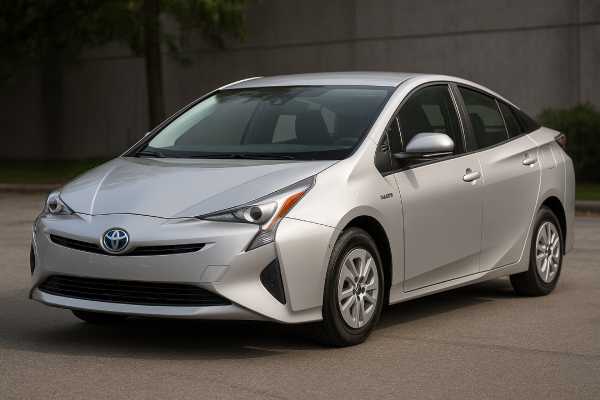
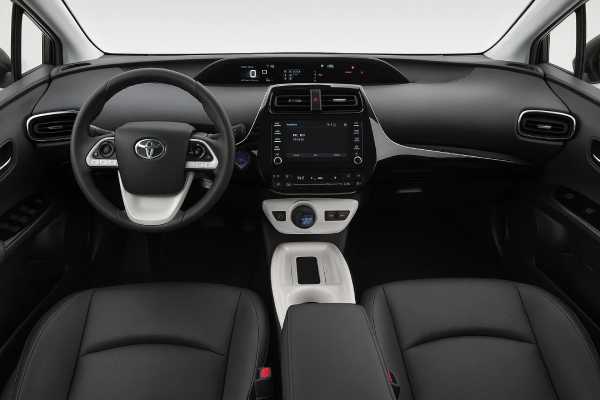
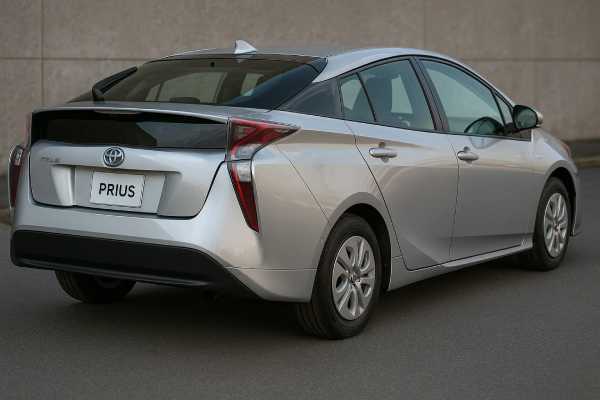
The fourth-generation Toyota Prius (ZVW50) brought Toyota’s TNGA platform, a more efficient 2ZR-FXE 1.8-liter engine, and a thoroughly redesigned hybrid transaxle. For daily drivers, that means quieter cruising, better ride and handling, and real-world fuel economy that consistently meets or beats the label. It also moved the high-voltage battery beneath the rear seat and adopted either nickel-metal hydride (NiMH) or lithium-ion packs by trim, improving cargo space and weight distribution. The combined system output is a modest 121 hp (90 kW), but the Prius trades outright speed for efficiency, refinement, and low running costs. Common ownership questions center on safety tech (Toyota Safety Sense), the durability of the hybrid battery and eCVT (P610 transaxle), and simple, low-cost maintenance intervals. This guide focuses on the 2015–2018 production window (North American market years 2016–2018), consolidating specifications, capability, upkeep, and buying tips into one practical reference.
Key Takeaways
- Excellent real-world economy: ~4.3–4.9 L/100 km (48–55 mpg US) mixed with gentle driving.
- TNGA chassis delivers calmer ride, tighter body control, and better cabin quiet.
- Active safety suite (TSS-P) available in 2016 and standard from 2017, with strong crash results.
- Watch for open recalls (engine-wire harness 2016–2018) and keep the hybrid battery fan clean.
- Basic service rhythm: engine oil 12 months/10,000 mi (16,000 km); cabin filter every 15,000–20,000 mi (24,000–32,000 km).
Guide contents
- Prius ZVW50 detailed overview
- Toyota Prius ZVW50 specs
- Prius ZVW50 trims and safety
- Reliability and known issues
- Maintenance and buyer’s guide
- Driving and performance
- Prius vs rivals
Prius ZVW50 detailed overview
The fourth-gen Prius ushered in Toyota’s TNGA (Toyota New Global Architecture) platform and a sweeping rethink of the hybrid powertrain. The 2ZR-FXE 1.8-liter Atkinson-cycle four-cylinder benefits from extensive friction reduction and thermal-efficiency improvements, paired to a lighter, more compact hybrid transaxle (P610) that uses parallel gears for the motor reduction instead of the earlier chain drive. The combined output of the gasoline engine and main traction motor (MG2) is 121 hp (90 kW), but the way the Prius deploys that power—electric torque at low speed, seamless eCVT response, and efficient cruising—makes it feel capable in city traffic and relaxed on highways.
A major packaging change relocated the high-voltage battery beneath the rear seat. Depending on trim, the car uses either a NiMH pack (nominal ~201.6 V, 28 modules, ~1.31 kWh) or a lithium-ion pack (nominal ~207 V, smaller capacity but higher energy density). This move cleans up cargo space and improves the car’s center of gravity. Aerodynamics were also sharpened: the body slips through the air with a very low drag coefficient (Cd) and manages airflow underbody and around the rear to reduce turbulence and wind noise.
Chassis dynamics are a standout improvement. The multi-link (double-wishbone) rear suspension replaces the old torsion beam, bringing better compliance over sharp impacts and more consistent grip mid-corner. Steering assist tuning and body rigidity improvements translate to a calmer highway lane change and a more precise on-center feel than earlier Priuses. Ride quality depends somewhat on wheels: trims with 15-inch tires prioritize comfort and low rolling resistance, while “Touring” 17-inch packages add bite and a firmer, more controlled feel with a small fuel-economy trade-off.
Active safety advanced significantly in this generation. The Toyota Safety Sense P (TSS-P) suite—which includes forward collision warning with automatic emergency braking and pedestrian detection, adaptive cruise control, lane departure alert with steering assist, and automatic high beams—was widely available in 2016 and made standard across trims starting in 2017. Structural crash performance tested very well, contributing to a strong safety reputation among compact hybrids.
Finally, maintenance remains straightforward and inexpensive for a hybrid: annual oil service with 0W-20 synthetic, periodic engine and cabin air filters, long-life coolant, iridium plugs at long intervals, and simple brake service thanks to regenerative braking. The hybrid system itself is largely “no-touch” outside recalls or rare component issues; most owners report years of low-cost operation with routine care.
Toyota Prius ZVW50 specs
Below are scannable, North America-focused specifications for the 2015–2018 ZVW50 Prius (model years 2016–2018).
Powertrain & Efficiency
| Item | Specification |
|---|---|
| Code | 2ZR-FXE (engine) + P610 hybrid transaxle |
| Engine layout & cylinders | Inline-4, DOHC, 16 valves; Atkinson cycle |
| Bore × stroke | 80.5 × 88.3 mm (3.17 × 3.48 in) |
| Displacement | 1.8 L (1,798 cc) |
| Induction | Naturally aspirated |
| Fuel system | Port fuel injection (sequential, with cooled EGR) |
| Compression ratio | 13.0:1 |
| Max engine power | ~96 hp (71 kW) @ ~5,200 rpm |
| Max engine torque | ~142 Nm (105 lb-ft) @ ~3,600 rpm |
| Traction motor (MG2) | Permanent-magnet synchronous (PMSM), ~53 kW (71 hp), 163 Nm (120 lb-ft) |
| System output | 121 hp (90 kW) combined |
| System voltage | ~201.6 V (NiMH) or ~207 V (Li-ion) |
| Battery chemistry / location | NiMH or Li-ion / under rear seat |
| Rated efficiency (EPA) | Most trims ~52 mpg US combined (4.5 L/100 km); Eco trim up to ~56 mpg US combined (4.2 L/100 km) |
| Real-world highway @ 75 mph | ~4.7–5.2 L/100 km (45–50 mpg US) depending on tires, temp, and load |
| Aerodynamics | Cd ~0.24; carefully managed underbody/roof trailing edges |
Transmission & Driveline
| Item | Specification |
|---|---|
| Transmission | eCVT (planetary power-split), P610 |
| Gear ratios | Not applicable (fixed planetary; no stepped gears) |
| Final drive | ~3.5:1 (varies slightly by application) |
| Drive type | Front-wheel drive |
| Differential | Open (with electronic brake-based torque control) |
| Refuel to full | ~5–10 minutes (gasoline) |
Chassis & Dimensions
| Item | Specification |
|---|---|
| Suspension (front/rear) | MacPherson strut / double-wishbone multi-link |
| Steering | Electric power rack-and-pinion; ~2.8 turns lock-to-lock |
| Brakes | Front ventilated discs / rear solid discs with regenerative blending |
| Wheels/Tires | 195/65 R15 or 215/45 R17 (Touring) |
| Ground clearance | ~136–140 mm (5.4–5.5 in) |
| Length / Width / Height | ~4,540 mm × 1,760 mm × 1,470 mm (178.7 × 69.3 × 57.9 in) |
| Wheelbase | ~2,700 mm (106.3 in) |
| Turning circle (curb-to-curb) | ~10.2–10.6 m (33.5–34.8 ft) |
| Curb weight | ~1,325–1,380 kg (2,920–3,040 lb) by trim |
| GVWR | ~1,800–1,850 kg (3,970–4,075 lb) |
| Fuel tank | ~43 L (11.4 US gal / 9.5 UK gal) |
| Cargo volume (seats up) | ~775 L (27.4 ft³) depending on spare/battery type |
Performance & Capability
| Item | Specification |
|---|---|
| 0–100 km/h (0–62 mph) | ~10.5–10.8 s (typical instrumented tests) |
| Top speed | ~180 km/h (112 mph) |
| Braking 100–0 km/h | ~38–42 m (125–138 ft), tire-dependent |
| Towing capacity | Not rated (North America) |
| Payload | ~385–430 kg (850–950 lb), build-dependent |
| Roof load | Up to ~75 kg (165 lb) with approved crossbars (check manual) |
Fluids & Service Capacities (typical values; verify by VIN)
| System | Specification / Capacity |
|---|---|
| Engine oil | 0W-20 (API/ILSAC SN+/SP); ~4.0–4.2 L (4.2–4.4 US qt) with filter |
| Engine coolant | Toyota Super Long Life Coolant (pink, premix 50/50); ~6–7 L (6.3–7.4 US qt) total engine loop |
| Inverter/e-motor coolant | Same coolant (separate loop); ~3–4 L (3.2–4.2 US qt) |
| Transaxle fluid | Toyota ATF WS; service fill ~3.5–4.0 L (3.7–4.2 US qt) |
| A/C refrigerant | R-134a; typical charge ~450–550 g (16–19 oz) |
| A/C compressor oil | ND-OIL 11; ~60–90 mL (2–3 fl oz) as specified |
| Key torque specs | Wheel nuts ~103 Nm (76 lb-ft); drain plug ~39 Nm (29 lb-ft); spark plugs ~18 Nm (13 lb-ft) |
Electrical
| Item | Specification |
|---|---|
| Alternator | None (DC-DC converter from HV battery) |
| DC-DC converter | Up to ~100 A output (typical) |
| 12V battery | ~45–50 Ah; group size H4 / 140R / LN1 (under hood) |
| Spark plugs | Iridium (e.g., Denso FC16HR-C9); gap ~0.7–0.8 mm (0.028–0.031 in) |
Safety & Driver Assistance
| Item | Specification |
|---|---|
| Crash ratings (IIHS) | Strong crash performance with top ratings in core tests; headlight ratings vary by trim/year |
| Headlight rating (IIHS) | Ranges Poor–Acceptable depending on headlamp package/year |
| Active safety (TSS-P) | Pre-collision with pedestrian detection, adaptive cruise, lane departure alert with steering assist, auto high beams; optional widely in 2016, standard 2017+ |
| Passive safety | Front, side, curtain, driver knee airbags; LATCH child-seat anchors (outboard rear) |
Prius ZVW50 trims and safety
Trims and options (North America, 2016–2018). The lineup centers on Two, Two Eco, Three, Three Touring, Four, and Four Touring. All use the 1.8-liter 2ZR-FXE and front-wheel drive; AWD did not arrive in this market until the 2019 refresh. The big functional variables are tires and wheels (195/65 R15 low-rolling-resistance versus 215/45 R17 on “Touring”), battery chemistry (NiMH in several grades, Li-ion in higher trims or the Eco variant), and the availability of Toyota Safety Sense P (TSS-P) plus premium convenience features.
- Prius Two: 15-inch wheels, cloth, keyless entry, straightforward audio. Typically NiMH battery.
- Prius Two Eco: Weight-saving measures, tire/aero tweaks, lithium-ion battery on most builds, no spare tire. Best EPA numbers of the range.
- Prius Three / Three Touring: Adds navigation-capable head unit, enhanced connectivity, optional TSS-P package in 2016, and 17-inch wheels/suspension tuning for Touring.
- Prius Four / Four Touring: Softex-trimmed heated seats, available JBL audio, blind-spot monitoring with rear cross-traffic alert, power driver seat, and additional convenience features. Touring again brings 17-inch fitment and firmer tuning.
Mechanical and functional differences by trim. Touring models’ 17-inch tires increase lateral grip and steering immediacy but may cost ~1–2 mpg US (0.1–0.2 L/100 km) in steady-state highway economy. The Two Eco’s low-mass spec and low-rolling-resistance tire quickly show in city numbers. Brakes, engine, and transaxle are shared across trims; no factory limited-slip or tow package was offered.
Infotainment and interior markers. Higher trims show larger head-unit functionality, more speakers (JBL on top models), Qi wireless charging (on some packages), and a multi-information display with richer hybrid coaching graphics. Touring badges and the 17-inch alloys with lower-profile rubber are easy exterior tells. VIN decoding will confirm grade and build options; window-sticker archives are helpful when shopping used.
Safety ratings and ADAS evolution. This generation’s structure tests very well in the small-overlap and moderate-overlap frontal and side impacts; roof strength and head restraints are also rated highly. In 2016, automatic emergency braking with pedestrian detection and adaptive cruise were widely optional; from 2017 onward, TSS-P became standard across the range, bringing forward collision mitigation, lane-departure alert with steering assist, and automatic high beams to every Prius. Headlight ratings vary by lamp type and model year—some 2016 combinations ranked poorly, while later configurations improved. Blind-spot monitoring and rear cross-traffic alert appear on upper trims and are valuable additions for urban use.
Child-seat provisions and service notes. Outboard rear positions include LATCH anchors with good access. After windshield or front camera replacement on TSS-equipped cars, forward-facing camera calibration is required; similarly, radar sensor service behind the emblem may require alignment. If the front bumper or grille area has been repaired, ensure radar bracketry is undistorted and correctly aimed.
Year-to-year changes. The biggest shift in this window is safety content: 2017 standardizes TSS-P. Minor infotainment updates and package reshuffles appear in 2018. Driveline and powertrain hardware remain largely constant through the pre-2019 AWD-e refresh.
Reliability and known issues
The ZVW50 Prius has a strong reputation for dependability when serviced at the recommended intervals and driven regularly. Most problems are infrequent, inexpensive, or addressed by campaign. Mapping issues by likelihood and impact:
Common / low–medium cost
- 12-volt battery aging: Short-trip or infrequent use can drain or sulfate the small H4/140R battery, triggering warning lights and odd behavior. Symptom → intermittent “low power” messages, slow start sequence. Remedy → battery test and replacement; consider an AGM option if the car sits often.
- Cabin A/C odor: Evaporator core biofilm can cause musty smells. Remedy → HVAC cleaning foam, fresh cabin filter, and periodic use of A/C to dry the core before shutdown.
- Interior rattles / hatch squeaks: Common on lightweight hatchbacks. Remedy → adjust latch, add felt at contact points, verify cargo floor fit after battery service.
Occasional / medium cost
- Wheel-bearing noise (higher mileage): A low growl rising with speed points to a hub unit. Remedy → replace affected hub assembly; verify alignment and tire condition.
- Stabilizer links/bushings: Clunks over sharp bumps. Remedy → replace links/bushings; re-torque with suspension loaded.
- Infotainment head unit quirks: Freezes or Bluetooth drops. Remedy → software update or head-unit replacement; verify good 12-V supply.
Rare / higher consequence
- Engine wire-harness chafe at the power control unit (PCU) – recall: Certain 2016–2018 vehicles were recalled to inspect and protect or replace the engine wire harness due to possible contact and shorting that could overheat and increase fire risk. Remedy → dealer inspection; add protective tape or replace harness with revised part as required (campaign details by VIN).
- Hybrid cooling loop leaks (isolated): Look for pink crust near hoses/connections. Remedy → repair leak, bleed both engine and inverter loops correctly.
- Brake booster/actuator faults: Much less common here than on the prior generation, but any persistent brake warning lights deserve prompt diagnostics.
Software and calibrations. Dealers may apply hybrid ECU, engine ECU, or ADAS updates to improve drivability, emissions performance, or sensor robustness. After windshield replacement, calibrate the forward-facing camera; after radar service, perform millimeter-wave radar beam axis adjustment.
High-voltage (HV) battery health. Both NiMH and Li-ion packs in this generation age gracefully under normal use. Heat, long storage at low state-of-charge, and clogged cooling intakes accelerate wear. Preventive tips: keep the rear-seat battery-cooling fan intake clean, avoid baking the car in sealed heat for long periods, and drive the vehicle regularly to keep SOC in a healthy band. When buying used, review any battery state-of-health (SOH) report from a qualified hybrid specialist.
Pre-purchase checks to request
- Complete service history with dates/mileage.
- Recall proof (especially the wire-harness campaign) confirmed via official VIN check.
- Recent fluids (engine oil, brake fluid) and clean filters.
- 12-V battery test and, if available, HV battery SOH snapshot.
- Undercarriage corrosion at subframes, brake lines, and exhaust joints in road-salt regions.
When maintained, the Prius ZVW50 commonly runs well past 200,000 miles (320,000 km) on original hybrid hardware. Most owners’ costs resemble a conventional compact car—with fewer brake jobs thanks to regeneration and long-interval spark plugs.
Maintenance and buyer’s guide
Practical maintenance schedule (distance/time; adjust for climate and usage)
- Engine oil and filter: Every 10,000 miles / 12 months (16,000 km / 12 months) with 0W-20 synthetic; halve interval for severe short-trip use.
- Engine air filter: Inspect 15,000 miles (24,000 km); replace 30,000–45,000 miles (48,000–72,000 km) or sooner in dusty areas.
- Cabin air filter: 15,000–20,000 miles (24,000–32,000 km).
- Coolant (engine and inverter loops): First change ~100,000 miles (160,000 km) / 10 years; then every 50,000 miles (80,000 km) / 5 years.
- Spark plugs (iridium): ~120,000 miles (192,000 km).
- Transaxle ATF WS: Toyota lists no regular interval; many hybrid specialists recommend drain-and-fill at 60,000–100,000 miles (96,000–160,000 km) if the vehicle tows light loads, sees high heat, or for preventive maintenance.
- Brake fluid: Test every 2–3 years; replace around 3 years or when moisture content is high.
- Brake pads/rotors: Inspect at each tire rotation; regen reduces wear, but caliper guide lubrication prevents uneven wear.
- Serpentine/aux belts and hoses: Visual inspection every service; replace on condition.
- 12-V battery: Load-test annually after year 3; many last 4–6 years.
- Tyre rotation and alignment: Rotate every 5,000–7,500 miles (8,000–12,000 km); check alignment annually or after impacts.
- Hybrid system checks: Keep the rear-seat battery-fan intake free of lint; listen for unusual transaxle noises; verify proper coolant levels in both loops.
- Corrosion checks (salt regions): Annually inspect subframes, brake lines, rear suspension arms, and exhaust flanges.
Fluid specs and quick-reference capacities (decision-making)
- Engine oil: 0W-20 API/ILSAC; capacity ~4.0–4.2 L with filter.
- Engine/inverter coolant: Toyota Super Long Life (pink premix); separate loops; total ~9–11 L combined.
- Transaxle: Toyota ATF WS; service fill ~3.5–4.0 L.
- A/C refrigerant: R-134a; typical ~450–550 g.
- Torque essentials: Wheels ~103 Nm (76 lb-ft); oil drain ~39 Nm (29 lb-ft); spark plugs ~18 Nm (13 lb-ft).
Buyer’s checklist (used ZVW50)
- Recall status: Confirm the PCU engine-wire harness campaign is complete.
- Tires and wheels: Uneven wear suggests alignment issues; 17-inch Touring sets ride firmer and can be pricier to replace.
- Hybrid cooling: Inspect coolant reservoirs; look for leaks and ensure radiator fans operate properly.
- Interior electronics: Test all TSS-P functions (adaptive cruise following distance, lane assist nudge, auto high beams), head unit Bluetooth, camera clarity.
- Brake feel: Should be progressive; any grabbiness or spongy feel warrants fluid service and caliper guide lube.
- Underbody: Check for damage to aero panels and the front radar emblem area on TSS-equipped cars.
Recommended years/trims to seek
- 2017–2018: Standard TSS-P and incremental refinements.
- Two Eco: Highest efficiency if you value every mpg.
- Three/Four Touring: If you want firmer steering feel, 17-inch grip, and more features.
Durability outlook
With routine care and clean cooling paths, the HV battery and P610 transaxle typically deliver long service life. Expect low brake wear, very infrequent plug replacement, and minimal fluid costs relative to other powertrains.
Driving and performance
Ride and handling. The TNGA chassis is the quiet hero here. Vertical motions are well-controlled over broken pavement, and the multi-link rear keeps the back end settled through mid-corner bumps that unsettled earlier Priuses. Steering is light at parking speeds and gains reassuring weight on the move; on-center stability is improved, making long highway runs less tiring. Touring trims with 17-inch tires feel more planted and resist roll a bit better, though they transmit more road texture and will slightly dent economy.
Powertrain character. The Atkinson-cycle 1.8-liter engine and MG2 traction motor blend power smoothly. Around town, the Prius eases off the line on electric torque, then brings the engine in with minimal shudder once load demands rise. The eCVT’s fixed-ratio planetary set means no stepped shifts; the trade-off is a steady engine note under hard acceleration. Drive modes (Eco/Normal/Power) adjust pedal mapping and climate control aggressiveness more than absolute output, but Power mode’s sharper tip-in is helpful when merging or passing.
Braking feel. Regenerative braking does much of the routine slowing, preserving pads and rotors. The handoff to friction brakes is well-tuned; only abrupt stops on cold mornings may reveal a momentary change in pedal feel. The car tracks straight and confidently, with consistent deceleration and good stability control logic on slick surfaces.
Real-world efficiency and range. In mixed suburban use with mild temps, many owners report 48–55 mpg US (4.3–5.0 L/100 km) without hypermiling. Highway at 60–70 mph (100–115 km/h) can land in the low-50s mpg (4.7–5.3 L/100 km); sustained 75 mph (120 km/h) typically settles near the high-40s. Cold weather, snow tires, and short trips can cut economy by 10–25%; preheating the cabin while plugged into a block heater (where fitted) and keeping tires at the recommended pressures helps. Touring 17-inch tires typically trim 1–2 mpg US compared to 15-inch LRR sets.
Performance metrics. Expect 0–60 mph in ~10.5 seconds with a driver aboard and ~112 mph top speed. Passing from 50–80 mph is adequate, not brisk; plan merges, and use Power mode for sharper response. Braking from 60–0 mph in the 125–135 ft (38–41 m) range is normal with healthy tires and pads. The tight ~34-ft turning circle aids parking-lot maneuvering, and visibility is better than numbers suggest once you acclimate to the split rear glass.
Load and long-grade behavior. With four adults and luggage, the Prius maintains highway pace on moderate grades without overheating, but you will hear the engine hold a steady rpm as the hybrid system supplies sustained power. Expect a 5–15% consumption penalty at full load or in persistent crosswinds. While some markets rate limited towing, North American cars are not tow-rated; use roof or hitch-mounted cargo with care and stay within roof-load limits.
Prius vs rivals
Hyundai Ioniq Hybrid (2017–2022). The Ioniq arrived as a direct Prius challenger with excellent efficiency—particularly in “Blue” trim that rivals or tops the Prius Eco in EPA ratings. It has a more conventional dual-clutch transmission feel but can be less smooth at very low speeds, especially in stop-and-go traffic. Ride quality is firmer; cabin materials are competitive. If your mix is long highway commutes at moderate speeds, the Ioniq’s steady-state economy is outstanding. The Prius counters with a broader efficiency envelope in urban driving, a cushier ride on 15-inch tires, and a long dependability track record.
Ford C-Max Hybrid (2013–2018). The C-Max emphasizes space and a taller seating point with minivan-lite vibes. It accelerates a bit more strongly at low speeds, but real-world fuel economy trails the Prius by a meaningful margin, especially in winter. The Ford’s interior packaging is versatile, though, and deals can be compelling on the used market. Prius wins on efficiency, maintenance simplicity, and long-term hybrid system reputation.
Honda Insight (2019–2022) as a cross-shop. Although newer, used Insights often overlap the 2017–2018 Prius on price. The Insight’s sedan form factor trades hatchback utility for a quieter cabin and cohesive Honda road feel. Efficiency is excellent, though Prius still tends to edge it in city cycles; the hatch cargo flexibility and proven Prius longevity make the Toyota the safer pick for buyers prioritizing utility and long-term operating cost.
Compact crossovers (RAV4 Hybrid, Niro). If you’re considering a small hybrid CUV instead, remember the Prius sits lower and slices air more efficiently; its highway consumption is typically better than taller rivals. That said, snowbelt drivers may value the AWD and ride height of a crossover; from 2019 onward, AWD-e Priuses exist, but within 2015–2018 the Prius is FWD only.
Bottom line. If your priorities are low total cost of ownership, consistent real-world efficiency across city and highway, and smooth, low-drama daily driving, the ZVW50 Prius remains a benchmark. Rivals can out-style or out-feature it, but few match its broad efficiency, safety tech coverage (especially from 2017), and reliability record at the same price point.
References
- 2016 Toyota Prius Product Information – Toyota USA Newsroom 2015 (Product Information)
- Gas Mileage of 2016 Toyota Prius 2016 (Official EPA Data)
- 2016 Toyota Prius 2016 (Safety Rating)
- Under the Hood of the All-new Toyota Prius | Toyota Motor Corporation Official Global Website 2015 (Technical Overview)
- Part 573 Safety Recall Report 18V-579 2018 (Recall Report)
Disclaimer
This article is for informational purposes and is not a substitute for professional diagnosis or repair. Specifications, torque values, fluid capacities, and service intervals can vary by VIN, model year, market, and equipment. Always verify details against your vehicle’s official owner’s manual, service manual, and current manufacturer publications.
If you found this guide useful, please consider sharing it with friends or on your social channels (Facebook, X/Twitter, etc.) to support xcar’s work.