
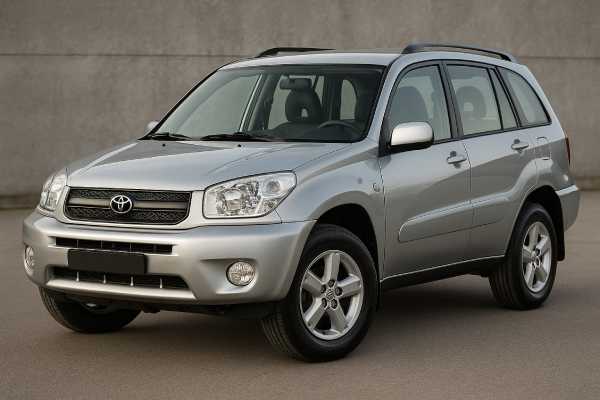
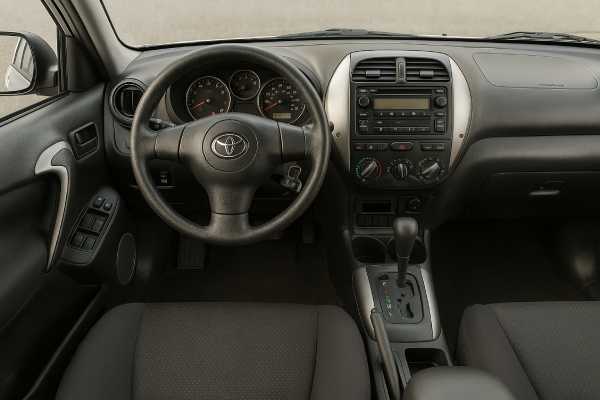
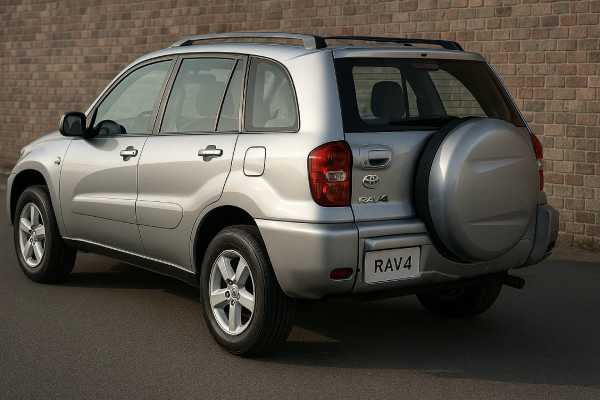
The facelifted 2003–2005 Toyota RAV4 (XA20) with the 1CD-FTV 2.0-litre D-4D diesel is remembered as a practical, easy-to-own compact SUV. It pairs compact exterior dimensions with an upright driving position, good visibility, and a tractable diesel that delivers useful torque where daily driving happens—low to mid revs. The facelift brought meaningful updates: revised front and rear styling, additional airbags, and wider availability of stability control on upper trims. While most diesel RAV4s in the UK were sold with all-wheel drive, some European markets offered a lighter front-wheel-drive (FWD) variant that owners value for lower running costs and simpler upkeep. Expect durable mechanicals if serviced on time; the big watch-outs are age-related diesel hardware wear (EGR/SCV/DMF) and timing-belt scheduling. If you want a compact SUV that is straightforward, economical, and still feels solid today, this generation fits the brief.
Fast Facts
- Strong low-rpm pull from the 2.0 D-4D (250 Nm) makes city and mixed driving easy; light FWD layout helps economy.
- Compact size (4265 mm) with a useful, square cargo bay (410–970 L) keeps it practical in tight European streets.
- Facelift added side and curtain airbags; stability control available on higher trims for extra reassurance.
- Caveat: ageing diesel ancillaries—EGR deposits, suction control valve (SCV), and dual-mass flywheel—may need attention.
- Typical service interval: every 10,000 miles / 12 months (oil/filter), with timing belt at ~60,000 miles / 5 years.
Explore the sections
- RAV4 D-4D 2003–2005 Guide
- RAV4 D-4D Specs and Data
- RAV4 D-4D Trims and Safety
- Reliability and Known Issues
- Maintenance and Buying Advice
- On-Road Performance
- How It Compares
RAV4 D-4D 2003–2005 Guide
The facelifted second-generation RAV4 arrived with subtle but useful improvements that matter in daily use: a quieter cabin, revised steering and suspension tuning, and more standard safety equipment. Diesel models use Toyota’s 1CD-FTV common-rail unit rated at 116 hp (85 kW) and 250 Nm (184 lb-ft), with a broad torque band that suits urban and mixed driving. In many European countries you could buy a FWD diesel; in the UK, diesels were generally paired to all-wheel drive—so if you’re shopping in Britain today, most diesel examples will be AWD. The FWD car discussed here is otherwise the same package: five-door body, manual gearbox, and the practical split-fold rear bench that made the RAV4 a family favorite.
What changed with the facelift? Externally, new bumpers, grille, lamps and wheel designs nudged it closer to contemporary rivals. Inside, darker trim, metallic accents and improved sound-deadening lift perceived quality. Critically, front side airbags and curtain airbags became standard across grades in many markets; upper trims also gained Vehicle Stability Control (VSC), Traction Control (TRC) and Brake Assist (BA). Owners appreciate the square luggage area (410 L seats up; up to 970 L with seats removed) and a 57 L tank that suits long runs without constant fuel stops.
Where the RAV4 still wins is simplicity. The hydraulic power steering is light but consistent, the manual shift is positive, and the diesel’s useful torque keeps revs down on motorways. You won’t buy it for speed—the official 0–62 mph (0–100 km/h) figure is in the low 12-second range—but stability, efficiency and ease of use are the point here. If you find a verifiable-history FWD diesel with clean emissions hardware, it’s a sensible, frugal compact SUV that remains easy to service and to live with.
RAV4 D-4D Specs and Data
Figures below apply to the facelifted 2003–2005 XA20 RAV4 with the 1CD-FTV 2.0 D-4D and 5-speed manual. Some values are ranges due to trim/wheel differences. Where the manufacturer quoted data reflects AWD, note is given.
Engine & Performance
| Item | Value |
|---|---|
| Code | 1CD-FTV |
| Engine layout & cylinders | Inline-4, DOHC, 16 valves; 4 cyl; 4 valves/cyl |
| Bore × stroke | 82.2 × 94.0 mm (3.24 × 3.70 in) |
| Displacement | 2.0 L (1995 cc) |
| Induction | Turbocharged, intercooler |
| Fuel system | Common-rail direct injection (D-4D) |
| Compression ratio (ICE) | 18.6:1 |
| Max power | 116 hp (85 kW) @ 4000 rpm |
| Max torque | 250 Nm (184 lb-ft) @ 1800–3000 rpm |
| Timing drive | Timing belt |
| Emissions/efficiency std | Euro 3 era (market dependent) |
| Rated efficiency (combined) | ~7.10 L/100 km (33.1 mpg US / 39.8 mpg UK) |
| Real-world highway @ 120 km/h (75 mph) | ~7.5–8.5 L/100 km (27.7–31.4 mpg US / 33.2–37.7 mpg UK), load and tyres sensitive |
| Aerodynamics | Cd ≈ 0.35 |
Note: Manufacturer 0–62 mph 12.1 s and 106 mph top speed are quoted for D-4D manual; figures typically reflect an AWD example. FWD cars may be marginally lighter.
Transmission & Driveline
| Item | Value |
|---|---|
| Transmission | 5-speed manual |
| Gear ratios (1st → 5th / R) | 3.833 / 2.045 / 1.333 / 1.028 / 0.820 / 3.583 |
| Final drive ratio | 4.562 |
| Drive type | FWD (front-wheel drive) |
| Differential | Open front differential |
| Replenishment time (refuel) | ~5–10 min (tank 57 L) |
Chassis & Dimensions
| Item | Value |
|---|---|
| Suspension (front/rear) | MacPherson struts with L-arms / Double wishbone with trailing arms |
| Steering | Hydraulic rack-and-pinion; ratio 16.0:1; 2.9 turns L-to-L |
| Brakes (front/rear) | Ventilated disc 302 mm (11.89 in) / Solid disc 298 mm (11.73 in) |
| Wheels/Tyres (typical) | 215/70 R16 (XT2); 235/60 R16 (XT3/XT4) |
| Ground clearance | Typical compact-SUV class; verify by VIN/trim |
| Length / Width / Height | 4265 mm / 1735–1785 mm / 1705–1715 mm (167.9 / 68.3–70.3 / 67.1–67.5 in) |
| Wheelbase | 2490 mm (98.0 in) |
| Turning circle (kerb-to-kerb) | 10.6 m (34.8 ft) |
| Kerb (curb) weight (5-door D-4D) | ~1370–1485 kg (3020–3274 lb) |
| GVWR (5-door D-4D) | ~1925 kg (4244 lb) |
| Fuel tank (ICE) | 57 L (15.1 US gal / 12.5 UK gal) |
| Cargo volume (5-door, VDA) | 410 L seats up (14.5 ft³) / 520 L seats folded (18.4 ft³) / 970 L seats removed (34.3 ft³) |
Performance & Capability
| Metric | Value |
|---|---|
| 0–100 km/h (0–62 mph) | ~12.0–12.2 s (manufacturer quote 12.1 s, D-4D manual) |
| Top speed | ~171 km/h (106 mph) |
| Braking distance 100–0 km/h | Varies with tyres/brake condition; measure on test if critical |
| Towing capacity | 1500 kg braked (3307 lb) / 640 kg unbraked (1411 lb) |
| Payload | Typically ~400–450 kg (880–992 lb), trim dependent |
Fluids & Service Capacities
| System | Spec / Capacity |
|---|---|
| Engine oil | ACEA B4 (or C3 where DPF fitted in certain markets), 5W-30 preferred; capacity ~5.8–6.0 L (6.1–6.3 US qt) incl. filter |
| Coolant | Toyota LLC/SLLC (red/pink); capacity ~6–7 L (6.3–7.4 US qt), mix 50/50 where LLC is used |
| Manual transmission oil | API GL-4/GL-5 75W-90; capacity ~2.0–2.3 L (2.1–2.4 US qt) |
| A/C refrigerant | R134a; typical charge ~500 ± 25 g (17.6 ± 0.9 oz) |
| A/C compressor oil | ND-OIL 8 (or equivalent PAG for Denso); ~120 mL (4.1 fl oz) |
| Key torque specs | Wheel nuts: 103 Nm (76 lb-ft); Oil drain plug: ~39–40 Nm (29–30 lb-ft) |
Capacities vary by VIN/equipment; verify with the exact service manual for your car.
Electrical
| Item | Value |
|---|---|
| Alternator output (typical) | ~90–100 A (varies with trim/equipment) |
| 12 V battery | 60–70 Ah, DIN/H6-size (verify exact code by VIN) |
| Glow plugs (diesel) | 4-unit system; follow OE spec for brand/heat range |
Safety & Driver Assistance
- Crash ratings: contemporary independent tests of this generation achieved a solid mid-pack result for the era, with strong side-impact scores; head-protecting curtain airbags and stability control were influential features on better-equipped trims.
- ADAS: No AEB or lane keeping on this era; ABS/EBD standard; VSC/TRC/BA fitted to upper trims in many markets after the facelift.
- Child-seat provisions: ISOFIX mounts with top tether points; check for trim-level fitment and plastic anchor guides.
RAV4 D-4D Trims and Safety
Trims and options (Europe, facelift years): Toyota simplified the range to XT2, XT3 and XT4 grades (with later special editions in some regions). All diesel models share the same 2.0 D-4D engine and 5-speed manual, with gearing common across the range. The biggest differences are equipment, wheels/tyres, and availability of stability systems.
- XT2 (entry): 16-inch wheels, roof rails, front electric windows; side and curtain airbags became standard after the facelift; 215/70R16 tyres; manual air-conditioning. This is the lightest-equipped variant and often the most economical to run.
- XT3 (mid): Adds 16-inch alloys (often with 235/60R16 tyres), fog lamps, rear electric windows (5-door), steering-wheel audio controls, and some interior trim upgrades.
- XT4 (top): Gains VSC, TRC, BA, automatic climate control, leather trim, and (market dependent) sunroof. This is the trim to target if you want the most safety tech from this era.
Quick identifiers: Facelift cars have new bumper/grille designs and updated lamp clusters. Inside, look for steering-wheel audio buttons on XT3/XT4, and climate-control dials (XT4). VIN/build plate codes confirm engine (1CD-FTV) and production dates; wheel-tyre fitments (215/70R16 vs 235/60R16) often mirror trim.
Year-to-year changes:
- 2003 (facelift): Exterior refresh; side and curtain airbags rolled into the range; steering and suspension calibration revised; VSC/TRC/BA introduced on higher trims.
- 2004: Equipment rationalisation under the XT grade structure across more markets; special editions (e.g., Granite, XT-R in select regions) packaged appearance and convenience features.
- 2005: Final facelift-era tweaks before the next-generation XA30 arrived for MY2006.
Safety ratings: Independent assessments of this model generation (build dates overlapping the facelift) show strong side-impact performance and an overall rating typical of early-2000s compact SUVs. Models fitted with the optional head-protecting curtain airbags and stability control scored better; base cars lacked modern driver-assistance features common today. Headlight performance and pedestrian protection were period-average.
Airbags and restraint systems: Dual front airbags are standard; front side airbags and curtain airbags were added during the facelift rollout. Front belts have pretensioners and load limiters; ISOFIX points and a three-point centre rear belt (5-door) are provided. If you are shopping used, confirm airbag recall campaign status by VIN (see References) and inspect seatbelt anchorage condition on any car used in coastal/cold regions.
Reliability and Known Issues
The 1CD-FTV diesel is robust when maintained, but age, mileage and driving profile shape outcomes. Below is a practical mapping by prevalence and severity/cost tier (Low/Medium/High), plus when problems typically appear.
Common (Medium):
- EGR and intake soot build-up → sluggish performance, smoke, and higher consumption after short-trip use. Remedy: remove/clean EGR valve and intake tract; update gaskets; reset adaptations if applicable. Prevent with regular motorway runs and quality fuel.
- Suction Control Valve (SCV) wear on the supply pump → hard starting, hesitation, limp-home under load. Remedy: replace SCV pair with the updated kit; clear DTCs and perform rail-pressure learn.
- Dual-mass flywheel (DMF) wear (high-mileage, city use, a lot of clutch slipping) → clatter at idle, shudder on take-off. Remedy: replace DMF and clutch as a set; inspect rear main seal. Cost escalates if ignored.
- Timing belt due/overdue → rising risk of catastrophic valvetrain damage if belt breaks. Remedy: belt kit and water pump at interval; tension with the correct procedure and torque.
Occasional (Medium):
- Injector leak-back / nozzle wear → long crank hot or cold, diesel knock, smoke. Remedy: leak-off test; refurbish or replace injectors; code the new injectors.
- Turbo VNT mechanism sticking after long low-load use → overboost/underboost faults. Remedy: clean or recondition turbo; verify vacuum hoses and control solenoid.
- MAF sensor contamination → flat spots, poor fuel economy. Remedy: replace with OE-quality sensor; avoid oiled filters.
Rare (Low to Medium):
- Cooling system seepage at aged hoses or water pump weep hole. Remedy: proactive pump replacement with belt service; renew coolant and clamps.
- Rear brake caliper slider seizure in salted climates. Remedy: strip, clean and lubricate slides; replace rubber boots.
- Body/subframe corrosion hotspots at rear suspension mounts and seams in harsh climates. Remedy: inspect thoroughly; treat or avoid rust-compromised shells.
Software & calibrations: This era predates widespread ECU updates for driveability on every service, but pump learn/adaptation resets after SCV replacement and proper idle calibration procedures do matter. Where stability control is fitted, wheel-speed sensor faults can trigger warning clusters; proper code-scan and yaw-rate zero-point calibration after alignment or sensor replacement is essential.
Recalls, TSBs, extended coverage:
- Airbag inflator campaigns (Takata): Certain 2004–2005 RAV4 vehicles were covered by urgent airbag-inflator recalls in various regions; always run a VIN check and address immediately if open.
- Window master switch moisture/overheat (select Toyota models, overlapping years in some markets): check VIN for applicability.
- Always verify campaign completion via the official recall checker and dealer records (see References).
Pre-purchase checks to request: full service history (oil every 12 months/10k miles), proof of timing-belt and water-pump replacement within the last 5–7 years, recent fuel/air/cabin filter services, diesel leak-off/injector health notes if available, and corrosion evaluation including brake lines and rear subframe points. Bring a cold engine to the inspection to assess glow/starting and early smoke.
Maintenance and Buying Advice
Baseline schedule (typical European guidance):
- Engine oil & filter: every 10,000 miles / 12 months (whichever first). Use a high-quality ACEA B4 (or C3 where a DPF is fitted in specific markets) 5W-30 meeting Toyota’s specification.
- Engine air filter / Cabin filter: inspect 12 months / replace 20,000 miles / 24 months (sooner in dusty or urban stop-and-go use).
- Fuel filter: replace 30,000–40,000 miles / 3–4 years, or sooner if you observe rough running or water contamination alerts.
- Timing belt: service ~60,000 miles / 5 years (belt, tensioner/idlers) and replace water pump preventively. Re-torque and bleed cooling system correctly.
- Aux/serpentine belt & hoses: inspect annually; replace if cracked or noisy; idler/tensioner bearings age with mileage.
- Coolant: Toyota SLLC (pink) systems typically go ~10 years/100,000 miles (first) then 5 years/50,000 miles; earlier LLC (red) systems are commonly ~2–3 years/30,000–40,000 miles. Check your cap color and manual.
- Manual transmission oil: refresh 60,000–80,000 miles; GL-4/GL-5 75W-90.
- Brake fluid: 24 months regardless of mileage.
- Brake pads/rotors & slider pins: inspect at every service; clean/lube pins annually in salted climates.
- Tyres/Alignment: rotate every 10,000–12,000 miles; check rear-toe stability after any bushing work.
- 12 V battery: test annually from year 5; common replacement window 5–7 years.
- Glow plugs & pre-heat system: test if starting deteriorates; replace plugs in sets with care to avoid thread seizure.
- EGR/intake cleaning: plan on 60,000–80,000 miles depending on use pattern (earlier if short-trip or city duty).
Fluid specs & helpful torques:
- Engine oil: ACEA B4/C3 5W-30; ~5.8–6.0 L with filter.
- Coolant: Toyota LLC/SLLC; mix as specified; ~6–7 L.
- Manual gearbox: ~2.0–2.3 L 75W-90.
- Wheel nuts: 103 Nm (76 lb-ft).
- Oil drain plug: ~39–40 Nm (29–30 lb-ft).
Buyer’s checklist (what to look for):
- Cold start and idle quality: watch for long crank or surging—possible SCV/injector issues.
- Clutch/DMF behavior: rattles at idle, judder on take-off, or shudder in higher gears at low rpm indicate upcoming clutch/DMF work.
- Boost control: steady pull without spikes or limp mode; scan for historic overboost/underboost codes.
- Cooling system health: pink SLLC usually points to later coolant type; any crusting around pump or hose joints needs attention.
- Brakes & tyres: even pad wear and free-moving slider pins; avoid mismatched tyres that can upset stability electronics.
- Rust points: rear subframe mounts, inner arches, brake lines; lift cover panels and check seams.
- Safety equipment: confirm curtain airbags present and VIN recall status closed (airbag campaigns, if applicable).
Durability outlook: With timely oil, belt, and filter service, plus periodic EGR/SCV attention, a well-maintained 1CD-FTV RAV4 routinely covers 200–300k km (125–185k miles) on original major hardware. Expect a clutch/DMF once in that span and injectors in late life depending on fuel quality and use.
On-Road Performance
Ride and handling, NVH: The XA20’s chassis tuning favors compliance over sharpness. At city speeds, the suspension filters potholes well; on the motorway it settles into a calm lope with modest wind noise from the upright mirrors and roof rails. The hydraulic steering is light at parking speeds, firming modestly on the move. Straight-line stability is good for its size, helped by a relatively short wheelbase and sensible tyre choices (215/70 or 235/60 R16). Cabin noise is period-typical for a compact diesel—noticeable at idle but acceptably quiet once cruising.
Powertrain character: The 2.0 D-4D’s useful 250 Nm plateau from roughly 1800 rpm means you shift less in town. There’s a small step in boost just off idle; keep the engine between 1800 and 3000 rpm for best response. The 5-speed manual is geared for relaxed cruising; 5th is an overdrive (0.82), so 120 km/h (75 mph) sits below the droney part of the rev band. Throttle mapping is progressive; the car delivers more in-gear flexibility than its 116 hp headline suggests.
Real-world economy: Expect ~6.5–7.5 L/100 km (36–31 mpg US / 43–38 mpg UK) in mixed use for a healthy FWD example on 215-section tyres. At a steady 120 km/h (75 mph), ~7.5–8.5 L/100 km (31–28 mpg US / 38–33 mpg UK) is typical depending on wind, temperature and load. Short urban hops with a cold engine can push consumption into the high-7s to 9 L/100 km range (31–26 mpg US).
Braking and control: Pedal feel is linear, with the rear solid discs keeping maintenance simple. In emergency stops, the ABS/EBD system intervenes predictably. Cars equipped with VSC/TRC/BA give a clearer safety margin on wet or gravel surfaces; on basic trims, conservative tyre selection is your best friend.
Load and towing: With 1500 kg braked capacity, the RAV4 can tow a small caravan or trailer. Expect a tangible economy penalty when towing—often +2–4 L/100 km versus solo—and build in longer stopping distances. Keep an eye on coolant temps on long grades and service the rear brakes proactively if you tow regularly.
How It Compares
Honda CR-V 2.2 i-CTDi (late XA20 era overlap): The Honda diesel arrived late in this RAV4’s lifecycle and is smoother and punchier on paper. The RAV4 counters with simpler, more modular trim levels and often lower parts prices. CR-V cargo space is larger; RAV4 is tidier to park.
Nissan X-Trail 2.2 dCi: Bigger inside, a touch more off-road-flavored, and commonly AWD. The Toyota wins for cabin build and long-term interior wear; the Nissan’s diesel of this era can be fussier about EGR/turbo hardware.
Hyundai Tucson 2.0 CRDi (first gen): Often better value second-hand and decently equipped. The RAV4 drives more cohesively, with stronger residuals and broader parts availability.
Land Rover Freelander TD4: Excellent ride and seat comfort, but ownership can be costlier as mileage climbs. The Toyota’s simpler systems and parts prices typically deliver a calmer long-term ownership experience.
Bottom line: If you want a frugal, compact SUV with honest road manners and strong everyday dependability, the facelifted XA20 RAV4 2.0 D-4D—especially in lighter FWD guise—remains a smart choice. Target cars with documented belt service, clean diesel hardware, and, where available, VSC and curtain airbags.
References
- 2004 Model Year Toyota RAV4 Gets The ‘X’ Factor – Toyota Media Site 2003 (Press Release)
- Toyota RAV4 | Safety Rating & Report | ANCAP 2002 (Safety Rating)
- Toyota RAV4 service intervals: all models covered – Toyota UK Magazine 2022 (Service Guidance)
- Recalls | Owners 2025 (Recall Checker)
- Toyota Issues DO NOT DRIVE Advisory for Certain 2003-2005 Models with Recalled Takata Airbags 2024 (Recall Advisory)
Disclaimer
This article is for informational purposes and does not replace professional diagnosis, repair, or official service procedures. Specifications, torque values, capacities, and maintenance intervals vary by VIN, market, and equipment. Always confirm against your vehicle’s official owner’s manual and service documentation, and follow local regulations and safety guidance. If this guide helped you, feel free to share it with fellow owners on Facebook or X/Twitter to support xcar’s work.