
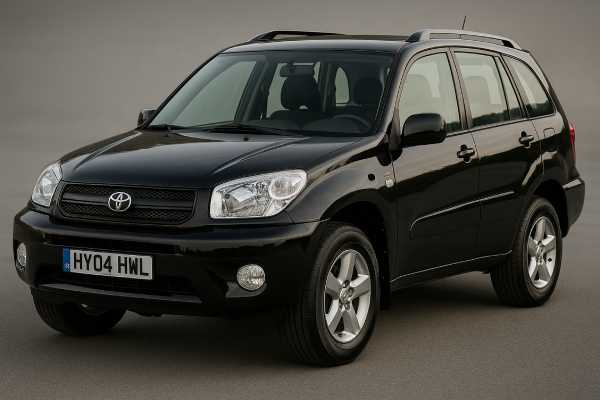
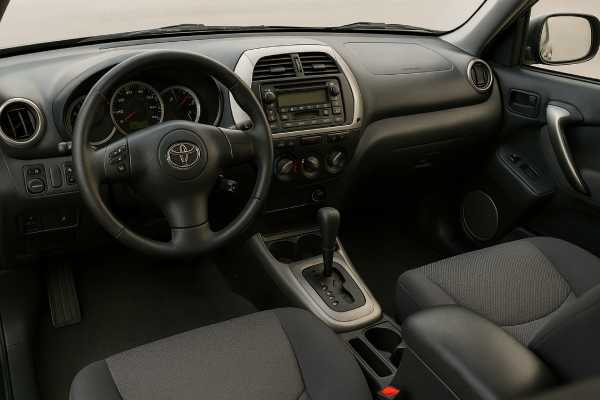
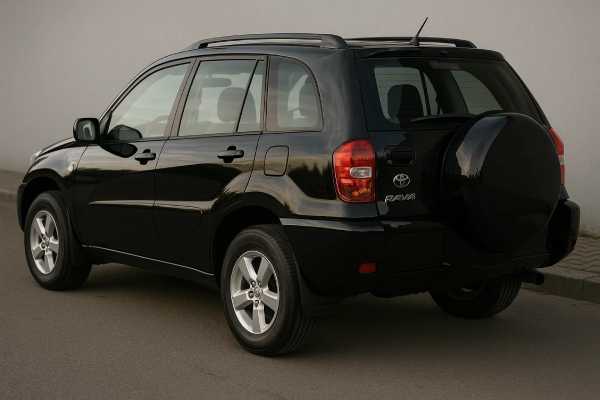
The facelifted 2004–2005 Toyota RAV4 (XA20) with the 2AZ-FE 2.4-liter engine is a compact SUV that blends day-to-day ease with long-term dependability. The update brought a stronger four-cylinder, revised steering and suspension tuning, and the practicality that made the second-generation RAV4 a favorite. Owners value its upright seating position, excellent outward visibility, full-time four-wheel drive availability, and the flexible rear seat that slides, reclines, and tumbles forward to open up a flat load space. The cabin is simple and robust, and parts interchange widely across Toyota’s 2AZ-FE lineup, keeping maintenance straightforward. While the powertrain is tuned for smoothness over speed, it delivers predictable response and reasonable economy for the era. This guide distills the essentials—specs, dimensions, maintenance points, reliability patterns, and how it stacks up to rivals—so you can judge whether a late-XA20 RAV4 fits your use case, and what to check before buying or preparing one for a long second life.
Fast Facts
- Proven 2AZ-FE four-cylinder (timing chain) with broad parts support and straightforward servicing.
- Configurable cargo area: sliding/tumbling 50/50 rear seat yields a long, flat load floor.
- Full-time 4WD availability improves traction in mixed weather with no driver input.
- Watch for age-related suspension bushings and rear brake hardware; budget replacements around 160,000–200,000 km (100,000–125,000 miles).
- Typical oil service: 8,000 km / 5,000 miles or 6 months (severe), 12,000 km / 7,500 miles or 12 months (normal), using 5W-30 meeting ILSAC.
Explore the sections
- RAV4 2.4 Detailed Overview
- RAV4 2.4 Technical Data
- RAV4 Trims, Options and Safety
- Reliability and Common Issues
- Maintenance and Buyer’s Guide
- Driving and Performance
- RAV4 Versus Competitors
RAV4 2.4 Detailed Overview
The 2004–2005 facelift refined the XA20 RAV4’s mission: easy to park, simple to own, and competent in poor weather. The big news was the adoption of Toyota’s 2AZ-FE 2.4-liter DOHC four-cylinder with VVT-i. Rated at 161 hp (120 kW) and 165 lb-ft (224 Nm), it replaced the earlier 2.0 and brought a welcome boost in mid-range torque without penalizing fuel economy. Crucially, the 2AZ-FE uses a timing chain rather than a belt, reducing scheduled replacement costs and keeping valve timing consistent over high mileage when serviced on time.
The drivetrain lineup remained pragmatic: a 5-speed manual for drivers who value control and simplicity, and a smooth 4-speed electronically controlled automatic (overdrive with lockup) for city use. The full-time 4WD system is the set-and-forget choice for snow-belt buyers: power routes through a center coupling to the rear axle automatically as traction varies, so there’s no lever to pull or mode to select. The calibration emphasizes security over playfulness, which suits the RAV4’s target audience.
Ride and packaging were the XA20’s trump cards. MacPherson struts up front and a compact double-wishbone rear keep the body tied down without beating up occupants on broken pavement. The rear seat is unusually versatile for the class: each side slides, reclines, and then tumbles forward to form a long, flat cargo floor—handy for bikes, flat-pack furniture, or a week’s camping kit. Folding is genuinely one-handed once you learn the motion, and the seat cushions are removable for a deep clean.
Braking confidence is solid for the era, with ventilated front discs and rear drums that are inexpensive to service; ABS with Electronic Brake-force Distribution appears on many packaged vehicles. Steering is light but accurate in town, with a tight turning circle that makes U-turns and garage maneuvers easy. The side-hinged tailgate with exterior spare simplifies tire changes and frees up floor space, though it opens curb-side for right-hand traffic; leave extra room behind when parallel-parked.
Refinement is typical Toyota circa mid-2000s: durable fabrics, simple controls, and minimal gimmicks. You’ll find large rotary HVAC dials, clear analog gauges, and logical switchgear. The cabin is narrow by modern standards, but five adults can ride for short trips, and four fit comfortably for long ones. Sound levels are low at suburban speeds; on coarse highway surfaces, tire roar is more noticeable, a trait mitigated with fresh door seals and quality all-season tires.
For buyers today, the appeal is clear: a compact footprint, dependable hardware, and a huge owner community. The checklist focus is age-related wear rather than design flaws—think bushings, shocks, exhaust hangers, and ancillaries. Kept on schedule with fresh fluids and filters, the 2AZ-FE powertrain regularly clears 320,000 km (200,000 miles) without drama.
RAV4 2.4 Technical Data
Engine and Performance (ICE)
| Item | Specification |
|---|---|
| Code | 2AZ-FE (inline-4, DOHC, VVT-i) |
| Displacement | 2.4 L (2,362 cc) |
| Valvetrain | DOHC, 16 valves; chain-driven cams |
| Induction | Naturally aspirated |
| Fuel system | Sequential multi-port fuel injection |
| Compression ratio | 9.6:1 |
| Max power | 161 hp (120 kW) @ 5,700 rpm |
| Max torque | 165 lb-ft (224 Nm) @ 4,000 rpm |
| Emissions/Efficiency | EPA gasoline; regular 87 AKI |
| Rated economy (EPA, 2005) | 22 mpg combined (20/24 city/hwy) AWD auto; 23 mpg (21/27) 2WD auto |
| Real-world highway @ 120 km/h (75 mph) | Typically mid-20s mpg US (≈ 9.5–10.5 L/100 km), depending on wind, grades, and tires |
| Aerodynamics | Compact SUV profile; roof rack affects drag and highway economy slightly |
Transmission and Driveline
| Item | Specification |
|---|---|
| Transmissions | 5-speed manual; 4-speed automatic (electronically controlled OD with lock-up) |
| Drive type | Full-time 4WD available; front-engine layout |
| Center coupling | Automatically transfers torque rearward on slip (no driver input) |
| Differential | Open diffs front/rear; electronic brake intervention aids traction |
| Final drive | Model-specific; AWD calibrated for brisk starts and moderate highway rpm |
| Refuel to full | Approx. 5–7 minutes at pump (typical) |
Chassis and Dimensions
| Item | Specification |
|---|---|
| Platform | XA20 (second-generation RAV4) |
| Suspension (front/rear) | MacPherson struts / Independent double-wishbone with trailing arms |
| Steering | Rack-and-pinion with variable assist |
| Brakes | Ventilated front discs; rear drums; ABS with EBD widely fitted via packages |
| Wheels/Tires | 16-inch; 215/70R16 standard, 235/60R16 available |
| Ground clearance | 6.7 in (170 mm) |
| Turning circle (curb-to-curb) | 35.4 ft (10.7 m) |
| Length / Width / Height | 165.2 in / 68.3 in / 66.1 in (4,195 / 1,735 / 1,680 mm) |
| Wheelbase | 98.0 in (2,490 mm) |
| Curb weight | ~3,000–3,066 lb (1,361–1,391 kg), trim and gearbox dependent |
| GVWR | 4,087 lb (1,854 kg) |
| Fuel tank | 56 L (14.8 US gal / 12.3 UK gal) |
| Cargo volume (SAE) | 23.9 ft³ behind rear seats; 67.4 ft³ seats tumbled (678 / 1,909 L) |
Performance and Capability
| Metric | Value |
|---|---|
| Acceleration | In period, independent tests typically around 0–60 mph in the low-10s (setup-dependent) |
| Top speed | Governor-limited; class-typical for era |
| Braking distance | Condition-dependent; prioritize fresh tires and quality pads/shoes |
| Towing capacity | 1,500 lb (680 kg) |
| Payload (indicative) | ~1,000–1,050 lb (GVWR minus curb, trim-dependent) |
| Roof load | Typical compact-SUV rack loads; check crossbar rating before cargo boxes/bikes |
Fluids and Service Capacities
| System | Specification and Capacity |
|---|---|
| Engine oil | ILSAC-approved 5W-30; approx. 4.4–4.5 L (4.6–4.7 US qt) with filter |
| Engine coolant | Toyota Super Long Life Coolant; approx. 6.2 L (6.6 US qt) total capacity (varies with 4WD/AT) |
| Automatic transmission (4-spd) | Toyota ATF Type T-IV; service refill ~3.0–3.5 L (3.2–3.7 US qt) |
| Manual transmission (5-spd) | API GL-4/GL-5 gear oil as specified; capacity varies by transaxle |
| Rear differential (AWD) | API GL-5 gear oil; change on severe duty intervals |
| A/C refrigerant | R-134a; charge amount per under-hood label |
| A/C compressor oil | ND-Oil 8 (PAG); by weight as per service label |
| Key torque values | Wheel lug nuts ~103 Nm (76 lb-ft); oil drain plug ~39–40 Nm (29–30 lb-ft) |
Electrical
| Item | Specification |
|---|---|
| Alternator | High-80s to ~100 A class, trim-dependent (typical for era) |
| 12V battery | Group-size appropriate flooded/AGM; CCA per climate; test annually from year 5 |
| Spark plugs | Iridium type (e.g., DENSO SK20R11/NGK IFR6A11); gap ≈ 1.1 mm (0.043 in) |
Safety and Driver Assistance
| Area | Details |
|---|---|
| Crash ratings (IIHS) | Good in moderate overlap; Good in side test when equipped with optional side airbags; head restraints/seat ratings vary by seat design |
| Headlight rating (IIHS) | Not rated for this era |
| Airbags | Dual-stage front; seat-mounted side and side-curtain airbags available on many packaged vehicles |
| ABS/EBD | Common in option packages; standard on certain trims |
| Stability/Traction | Availability varies by package and market; braking-based traction aids assist pulling away on slippery surfaces |
| Child-seat provisions | LATCH anchors; child-safety rear door locks |
RAV4 Trims, Options and Safety
Model mixes varied slightly by market and year, but a simple three-tier pattern covers most late-XA20 vehicles:
- Base: Cloth seating, manual HVAC, steel wheels with 215/70R16 tires, keyless entry, split/tumble rear seat, full-size spare on the tailgate. ABS/EBD and side airbags may be bundled via packages rather than standard—confirm via the option codes.
- Sport/“Plus” packages: 16-inch alloys (often with 235/60R16 tires), fog lamps, color-keyed exterior trim, roof rails, upgraded audio, and cosmetic touches like a hood scoop and privacy glass. Handling feel tightens slightly due to tire spec, but ride remains compliant.
- Limited-style packages: Leather seating, heated front seats, leather-wrapped wheel/shift knob, moonroof, security/immobilizer, and “Limited” badging where applicable.
Mechanical differences by trim are modest: same 2.4-liter engine, same gearboxes, and identical suspension architecture. The most consequential option decisions are active safety and tires. ABS/EBD greatly improves stability under panic stops, especially on mixed-grip surfaces. If you routinely see snow, prioritize all-weather 3PMSF tires over cosmetic wheel upgrades; they do more for real-world safety than any badge.
Quick identifiers:
- Packages: Look for fog lamps, color-keyed flares, and alloy wheel size to tell Base from Sport-type packages at a glance.
- Airbag equipment: Pillar labels and headliner seams often reveal side-curtain fitment; verify via VIN equipment printout.
- Build plates: Under-hood and B-pillar labels show axle/trans codes and paint/trim codes—useful when ordering parts.
Year-to-year changes within this facelift window were incremental: audio and package combinations shuffled, and features like tire-pressure monitoring and ABS/EBD appeared with certain packages. In all cases, confirm whether a specific vehicle carries side airbags and ABS/EBD; these two items materially change crash-test outcomes on side impacts and slippery-road braking.
Child safety and restraints: The RAV4 uses LATCH anchors on the outboard rear positions, and the 50/50 seat’s slide/recline allows better fit for rear-facing seats when adjusted fully back. Always test-fit your seat; the narrow cabin means some wider convertible seats may sit better on one side with the opposite half tumbled or removed.
ADAS expectations: This era predates widespread forward collision warning or lane-keeping assistance. Don’t expect adaptive cruise or blind-spot monitoring. What you do get is a predictable, well-tuned base with good outward visibility, large mirrors, and a compact footprint—passive safety through avoidance and line-of-sight.
Reliability and Common Issues
The late-XA20 RAV4’s reputation for longevity is deserved. Most problems you’ll encounter today reflect age, mileage, and environment, not chronic defects. Use the grid below to triage what’s common, what it costs, and when it tends to appear.
Engine and fueling (2AZ-FE)
- Oil seepage (common, low–medium) → Symptoms: damp valve cover perimeter, minor burning smell after shutdown. Cause: aged valve cover gasket. Remedy: replace gasket; inspect PCV valve.
- PCV and breather hoses (common, low) → Symptoms: oily hoses, idle instability. Cause: hardened rubber. Remedy: renew PCV and hoses with clamps.
- Cooling plastics (occasional, medium) → Symptoms: slow coolant loss, pink crust near radiator end tanks. Cause: aged plastic end tank seam. Remedy: radiator replacement; pressure test before condemning.
- Engine mount wear (occasional, medium) → Symptoms: thunk on tip-in, idle vibration in gear. Cause: collapsed right/passenger mount. Remedy: replace mount(s); alignment check after subframe service.
Ignition and emissions
- Coil-on-plug age-out (occasional, medium) → Symptoms: misfire under load, MIL codes for a cylinder. Cause: insulation breakdown after heat cycling. Remedy: swap test to isolate; replace with quality OE or equivalent; keep an iridium plug interval of ~160,000 km (100,000 miles).
- Oxygen/A/F sensors (occasional, medium) → Symptoms: poor economy, blackened tailpipe, P013x codes. Cause: sensor aging. Remedy: replace with OE-spec; clear trims; check for exhaust leaks.
Driveline and transmission
- 4-speed automatic maintenance neglect (occasional, medium) → Symptoms: harsh 1–2 shift when cold; flare on light throttle. Cause: aged ATF. Remedy: drain-and-fill (not flush) with Toyota T-IV; repeat after 800–1,000 km to refresh.
- Manual trans/clutch (rare to occasional, medium) → Symptoms: chatter on take-up in reverse, high bite point. Cause: worn disc/pressure plate. Remedy: clutch kit; inspect rear main seal while open.
Suspension, steering, brakes
- Front lower control arm rear bushings (common, medium) → Symptoms: braking shimmy, tramlining, clunk on speed bumps. Remedy: press-in bushings or complete arm assemblies; align afterward.
- Stabilizer links/bushings (common, low) → Symptoms: rattles over small bumps. Remedy: replace links/bushings in pairs; quick driveway job.
- Rear drum hardware (common, low) → Symptoms: parking brake weak, uneven shoe wear. Remedy: spring/hardware kit and shoe set; adjust per spec.
- Wheel bearings (occasional, medium) → Symptoms: growl increasing with speed, changes with steering load. Remedy: press-in hub/bearing assemblies.
Body and electrical
- Exhaust hangers and flanges (common, low) in salty climates. Treat early with stainless hardware where possible.
- Door seals and hatch check strap (occasional, low) → wind noise or creak; replace seals/strap.
- HVAC blend door actuator (occasional, low) → ticking behind dash on temperature change; replace small stepper motor.
Recalls and service actions
- Airbag inflator campaigns (driver/passenger) affect many vehicles in this era. Verify via the official VIN recall site and complete any open campaigns before use.
- ECU and emissions software updates may be applicable; a dealer can check the VIN against the latest calibration IDs.
Pre-purchase checklist
- Full maintenance history (oil, coolant, ATF/gear oils), and proof of recall completion.
- Cold-start test for misfires; hot-idle for mount vibration.
- Brake pull/hard stops; confirm ABS activation and straight-line stability.
- Underbody corrosion at subframe mounts, fuel/brake lines, and rear suspension arms.
- Inspect rear drums and parking brake function; check tire age (DOT code), not only tread.
Maintenance and Buyer’s Guide
Baseline schedule (typical use)
- Engine oil and filter: 8,000–12,000 km (5,000–7,500 miles) or 6–12 months based on duty cycle; ILSAC 5W-30.
- Engine air filter: Inspect 12 months/20,000 km (12,000 miles); replace 40,000–50,000 km (25,000–30,000 miles) or sooner in dusty regions.
- Cabin air filter: 12 months/20,000 km, more often if you scent mustiness.
- Coolant: Toyota Super Long Life—typically 160,000 km (100,000 miles) initial, then 80,000 km (50,000 miles) subsequent; inspect annually.
- Spark plugs (iridium): ~160,000 km (100,000 miles); replace sooner if misfire history.
- Fuel filter: In-tank strainer; inspect/replace only if pressure drop or contamination is confirmed.
- Serpentine/aux belt: Inspect every oil change; replace on cracks/noise or at 100,000–160,000 km (60,000–100,000 miles).
- ATF (4-speed auto): Drain-and-fill every 50,000–80,000 km (30,000–50,000 miles) if urban/severe duty; consider cooler line service if towing.
- Manual trans and rear diff (AWD): Gear oil 60,000–100,000 km (40,000–60,000 miles) depending on use.
- Brake fluid: Replace every 2–3 years; bleed at caliper/wheel cylinder.
- Brake pads/shoes and rotors/drums: Inspect each tire rotation; typical front pad life 40,000–80,000 km (25,000–50,000 miles).
- Alignment and tire rotation: Rotate 8,000–10,000 km (5,000–6,000 miles); align yearly or on any steering pull/uneven wear.
- Valve clearances: Hydraulic lash not fitted; shim-under-bucket design typically does not require adjustment unless noisy/misfire—inspect if symptoms.
- 12V battery: Load-test yearly from year five; expect replacement window 5–7 years.
Fluid quick notes
- Engine oil: ILSAC GF-5/6 5W-30 (or 0W-30 in very cold climates).
- ATF: Toyota ATF Type T-IV only for the 4-speed; do not mix with WS.
- Gear oils: API GL-5 for rear differential; check manual for viscosity per climate.
- Coolant: Toyota Super Long Life (pink, HOAT); avoid mixing green universal types.
Essential torques
- Wheel lug nuts: ~103 Nm (76 lb-ft).
- Caliper slider bolts: Typical Toyota small-bolt spec—tighten to manual spec with thread-safe lubricant where specified.
- Drain plugs: Engine oil ~39–40 Nm (29–30 lb-ft); differential plugs per manual.
Buyer’s checklist
- Rust survey: Subframes, rear control arms, exhaust flanges, and fuel line clips.
- Suspension feel: Over speed humps, listen for knocks (sway links) and thuds (rear shocks/control arm bushings).
- Driveline: Full-lock circles in a lot—listen for wheel bearing growl; check for CV boot grease slinging.
- Brakes: Firm pedal? Straight stops? Parking brake hold on a hill?
- HVAC: Blend from full cold to full hot quietly? A/C cycles steadily?
- Electrics: Window speeds, rear defroster, wiper timing, back-door lock actuator.
- Tires: Even wear and recent date codes; many ride/noise complaints vanish with a new, quiet all-season set.
Durability outlook
With routine fluids and timely rubber/consumable refreshes, a 2004–2005 RAV4 commonly reaches 320,000–400,000 km (200,000–250,000 miles). The key is preventive fluid service and chassis upkeep; the engine and transaxles are happiest with fresh lubricants and filters on time.
Driving and Performance
Ride and handling, NVH
The XA20’s mission is confidence, not corner carving. Spring and damper tuning take the edge off broken patches without allowing float, and the rear double-wishbone layout keeps the back end planted over mid-corner bumps. Steering is light at parking speeds and naturally weights up off-center; there’s no artificial heaviness. Straight-line stability is calm at 100–115 km/h (60–70 mph); crosswinds nudge but don’t unsettle the body. Cabin noise is modest in town; on coarse highways, the biggest contributor is tire tread. Owners report the cabin quiets significantly with fresh door seals and a quality touring tire at the correct load index.
Powertrain character
The 2AZ-FE is tuned for smoothness. Off the line, there’s usable torque from 1,800 rpm; it pulls cleanly to about 5,500 rpm without harshness. The 4-speed automatic’s calibration favors early upshifts in light throttle to save fuel, with a decisive kickdown; manual control of overdrive helps on grades and when towing. The 5-speed manual is light and friendly, with a clear gate and modest clutch effort. Neither setup feels fast by modern standards, but both are predictable, which inspires confidence in snow and rain.
Real-world efficiency
EPA figures for the era place 4WD automatics around 22 mpg combined (≈ 10.7 L/100 km), with 2WD automatics at 23 mpg combined. On steady-state freeway runs at 110–120 km/h (70–75 mph), many owners observe mid-20s mpg US (≈ 9.5–10.5 L/100 km) in mild weather. Winter blends, roof racks, aggressive tires, and crosswinds meaningfully shift results; plan for a 10–20% swing depending on those factors.
Traction and control
Full-time 4WD engagement is smooth and transparent. On wet leaves, dusted snow, or gravel, the system routes torque rearward before obvious front spin. There’s no low range; think “confidence and extraction” rather than “rock crawling.” Electronic brake intervention mimics a limited-slip: a gently applied throttle helps it work. The best upgrade you can make for winter is a proper set of 3PMSF all-weather or winter tires; they transform braking distances and corner exit confidence.
Load and towing
With 1,500 lb (680 kg) rated tow capacity and an upright shape, the RAV4 is ideal for small utility trailers, light pop-ups, or a pair of kayaks on the roof. Expect a modest economy penalty—typically 10–25% depending on frontal area and speed. The 4-speed automatic appreciates conservative throttle and the overdrive lockout on long grades; keep ATF fresh if you tow regularly. Braking feel remains consistent as long as the rear drums are adjusted and shoes are healthy.
RAV4 Versus Competitors
Honda CR-V (2004–2005)
Honda’s K24 engine is a touch smoother at the top end and pairs with a 5-speed automatic, but cargo flexibility is less clever than the RAV4’s sliding/tumbling seat. CR-V’s on-demand AWD is efficient yet front-biased; Toyota’s full-time 4WD feels more planted on constantly slick roads. Parts availability is excellent for both; Toyota’s interior trim tends to wear better.
Subaru Forester (2004–2005)
The Forester’s boxer engine and symmetrical AWD deliver balanced handling and a more wagon-like stance with better forward visibility over long hoods. However, head-gasket chatter follows older EJ engines into the classifieds; budget proactively if shopping one. The RAV4 counters with simpler service access, a friendlier rear seat for tall passengers, and a lower cost to refresh chassis consumables.
Hyundai Tucson/Kia Sportage (first gen)
These offered value pricing and generous warranties when new. Today, the RAV4’s long-term track record, parts ecosystem, and resale strength usually outweigh the lower initial purchase price of period Korean rivals. If you prioritize features over lifetime cost, a well-kept Tucson might tempt; if you want predictable ownership into high mileage, the Toyota makes a safer bet.
Verdict
The facelifted XA20 RAV4’s competitive edge is consistency: predictable dynamics in bad weather, practical packaging, and a durable powertrain you can keep in top shape with basic tools and quality fluids. It’s not the flashiest choice, but as a compact, go-anywhere daily that still feels tight at 200,000 miles, it’s hard to beat.
References
- 05 RAV4_Bro_E_V3 2005 (Specifications)
- 04_RV4_Bro-E-V4 (Page 3) 2004 (Specifications)
- Gas Mileage of 2005 Toyota RAV4 2005 (EPA Ratings)
- 2004 Toyota RAV4 4-door SUV 2004 (Safety Rating)
- Recall and Investigation Results | NHTSA 2025 (Recall Database)
Disclaimer
This article is for informational purposes only and is not a substitute for professional diagnosis or repair. Specifications, torque values, fluid types/capacities, and service intervals can vary by VIN, market, equipment, and updates. Always verify against your vehicle’s official service documentation and under-hood labels before performing maintenance or repairs. If you found this guide useful, please consider sharing it on Facebook or X/Twitter to support xcar’s work.