
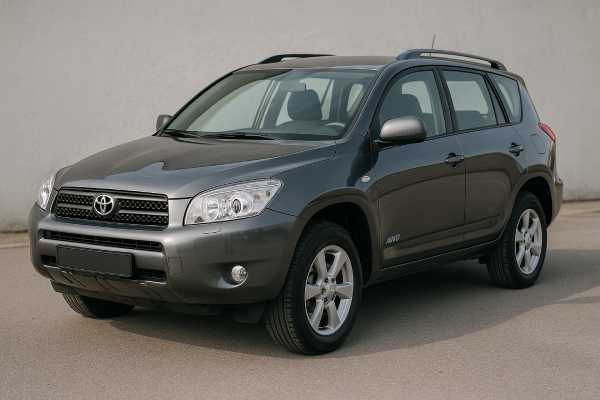
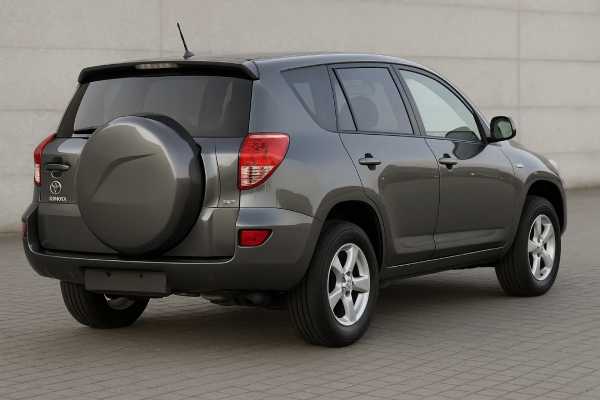
The third-generation Toyota RAV4 (XA30) arrived with a larger body, a more mature chassis, and stronger safety equipment. In select European markets, a front-wheel-drive configuration paired with Toyota’s 2.0-litre D-4D four-cylinder diesel targeted buyers who wanted the RAV4’s practicality and refinement with lower running costs and simpler driveline hardware. This guide focuses on that front-drive diesel configuration for model years 2005–2006, explaining what to expect in terms of technical specification, reliability patterns, ownership costs, and how it stacks up against rivals of the day. You will find the key numbers you need—dimensions, capacities, performance—and the everyday advice that matters more, from timing-belt strategy to the best fluid specs to use. If you are considering a used example, the section on buyer checks and service actions highlights the crucial inspections that separate a solid car from a project.
Fast Facts
- Strong real-world economy for a family SUV: typically 6.0–7.0 L/100 km (39–47 mpg US) when driven sensibly.
- Comfortable long-distance ride with stable, predictable handling; generous cabin and cargo space for the class.
- Simpler FWD layout means fewer driveline parts to service and lower tyre and fuel costs than AWD.
- Watch for EGR/INTAKE soot build-up and dual-mass flywheel wear on higher-mileage cars.
- Timing belt service typically due around 90,000–100,000 km (or ~6 years), including water pump inspection.
Guide contents
- RAV4 2.0 D-4D FWD overview
- RAV4 2.0 D-4D specs
- Trims, options, safety
- Reliability issues and actions
- Maintenance and buyer’s guide
- Driving and efficiency
- RAV4 diesel vs rivals
RAV4 2.0 D-4D FWD overview
The third-generation RAV4 moved the nameplate into a more grown-up space: better noise suppression, a longer wheelbase, and a roomier, more family-friendly cabin—all while retaining car-like manners that made the original such a success. In the 2005–2006 period covered here, the front-wheel-drive diesel configuration combined the XA30 body and chassis with Toyota’s 2.0-litre common-rail D-4D four-cylinder, known internally by the 1CD-FTV family code. For shoppers, the appeal was straightforward: the space and comfort of a compact SUV without the running-cost penalty of permanent all-wheel drive.
The FWD layout is relevant to both performance and upkeep. With only a single driven axle, there are fewer rotating components (no rear differential, no prop shaft), which typically reduces tyre wear, parasitic losses, and long-term service complexity. In everyday driving you feel the difference most in the way the car pulls away smoothly and quietly in town, and in the modest highway revs (thanks to a long fifth/sixth gear, depending on market specification). On slippery surfaces an appropriate set of tyres still matters more than anything else; traction control and stability control were already part of the RAV4’s standard safety net in most European specifications of the time.
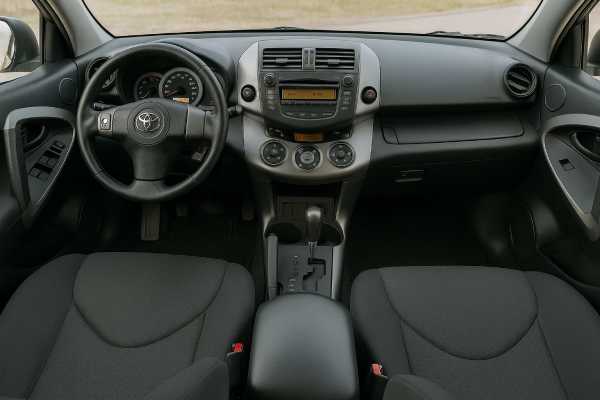
Inside, the XA30 platform brought one of the biggest step-changes in the RAV4’s history: a wider cabin, supportive seats, and the clever “Easy Flat” rear bench that folds into a flat load floor without removing the seat cushions. Cargo volume—one of the reasons families buy a RAV4—was notably generous for the class, and the side-hinged tailgate, while not everyone’s favourite in tight city parking, makes loading tall items convenient once you account for the swing-out arc.
Road manners are confident rather than sporty. The RAV4’s front MacPherson struts and independent rear suspension keep it composed over broken surfaces; body control is tidy and ride quality is supple on 16- or 17-inch wheels. Cabin noise levels are civilised at a steady cruise. The diesel’s torque plateau means easy progress with light throttle, and the long-legged gearing keeps the engine relaxed on motorways. If you value year-round security in deep snow or mud, the AWD versions exist—but for most commuting and touring, this front-drive diesel delivers the efficiency and simplicity many buyers prefer.
RAV4 2.0 D-4D specs
Below are scannable technical tables aligned to the 2.0-litre D-4D front-wheel-drive configuration (European baseline) for 2005–2006. Figures can vary slightly by trim, market homologation, and equipment.
Engine and Performance (ICE)
| Item | Detail |
|---|---|
| Code | 1CD-FTV (2.0 D-4D) |
| Engine layout & cylinders | Inline-4, DOHC, 16 valves, common-rail direct injection |
| Displacement | 2.0 L (1,995 cc) |
| Induction | Turbocharged with intercooler (variable nozzle) |
| Fuel system | Common-rail direct injection |
| Compression ratio | ~18.6:1 |
| Max power | 126 hp (93 kW) @ ~4,000 rpm* |
| Max torque | 250–300 Nm (184–221 lb-ft) @ ~1,800–3,000 rpm (by tune) |
| Timing drive | Belt-driven camshaft (inspect/replace per schedule) |
| Emissions / efficiency standard | Euro EU3/EU4 (by market/year) |
| Rated economy (combined) | ~6.1–6.9 L/100 km (41–34 mpg US / 49–41 mpg UK), tyre/wheel dependent |
| Real-world highway @ 120 km/h | ~6.5–7.2 L/100 km (36–33 mpg US / 43–40 mpg UK), unloaded |
| Aerodynamics | Approx. Cd 0.31–0.33 (trim and wheel arch cladding dependent) |
*Output and torque bands vary with calibration; some early market figures list ~85 kW (116 hp) with identical displacement and hardware. Always confirm by VIN.
Transmission and Driveline
| Item | Detail |
|---|---|
| Transmission | Manual, 5- or 6-speed (market dependent) |
| Drive type | Front-wheel drive (FWD) |
| Final drive ratio | ~3.7–3.9 (varies by gearbox code) |
| Differential | Open front diff with electronic traction and stability aids |
| Replenishment time | Refuel to full: ~3–5 minutes |
(Detailed gear ratios vary by market and gearbox code; confirm on the VIN plate or service literature.)
Chassis and Dimensions
| Item | Detail |
|---|---|
| Platform | XA30 (3rd-gen RAV4) |
| Suspension (front/rear) | MacPherson strut / Double-wishbone independent |
| Steering | Rack-and-pinion, electric power assist |
| Brakes | Front ventilated discs; rear solid discs; ABS with EBD and Brake Assist |
| Wheels/Tyres (common) | 215/70 R16 or 225/65 R17 (steel/alloy by trim) |
| Ground clearance | ~180–190 mm (7.1–7.5 in) |
| Length / Width / Height | ~4,395 mm / 1,815 mm / 1,685 mm (173.0 / 71.5 / 66.3 in) |
| Wheelbase | ~2,560 mm (100.8 in) |
| Turning circle (kerb-to-kerb) | ~10.6–11.0 m (34.8–36.1 ft) |
| Kerb (curb) weight | ~1,500–1,560 kg (3,307–3,439 lb), equipment dependent |
| GVWR | ~2,050–2,100 kg (4,519–4,630 lb) |
| Fuel tank | 60 L (15.9 US gal / 13.2 UK gal) |
| Cargo volume (VDA) | ~586 L (20.7 ft³) seats up / ~1,469 L (51.9 ft³) seats folded |
Performance and Capability
| Item | Detail |
|---|---|
| 0–100 km/h (0–62 mph) | ~11.5–12.3 s (by tune, load and gearbox) |
| Top speed | ~175–180 km/h (109–112 mph) |
| Braking 100–0 km/h | ~38–40 m (125–131 ft) on fresh tyres and pads |
| Towing capacity (braked/unbraked) | ~1,500 kg (3,307 lb) / 750 kg (1,653 lb) |
| Payload | ~450–520 kg (992–1,146 lb) |
| Roof load | ~75 kg (165 lb) with approved bars |
Fluids and Service Capacities
| System | Specification | Capacity |
|---|---|---|
| Engine oil | ACEA B4 5W-30 (or ACEA C2 low-SAPS where DPF fitted); API CF/CF-4 or better | ~5.9 L (6.2 US qt) incl. filter |
| Coolant | Toyota Super Long Life Coolant (red/pink), premixed 50:50 | ~6–7 L (6.3–7.4 US qt) system total |
| Manual transmission oil | API GL-4 75W-90 (Toyota MTF spec) | ~2.1–2.5 L (2.2–2.6 US qt) by gearbox |
| Power steering | Electric assist (no ATF reservoir) | — |
| Brake fluid | DOT 4 | Fill to MAX; replace per schedule |
| A/C refrigerant | R134a | ~500 g (17.6 oz) ± tolerance |
| A/C compressor oil | PAG 46 (Toyota ND-OIL 8 equivalent) | ~120 mL (4.1 fl oz) service fill |
| Key torque specs | Wheel nuts: 103 Nm (76 lb-ft) • Oil drain plug: ~39 Nm (29 lb-ft) • Front caliper carrier bolts: ~98 Nm (72 lb-ft) |
(Capacities and torques vary slightly by VIN and component supplier; verify in official service data.)
Electrical
| Item | Detail |
|---|---|
| Alternator output | ~100–110 A |
| 12V battery | ~70 Ah (≈ 600–620 CCA), DIN H5/H6 form factors common |
| Glow plugs | 11 V ceramic; control via ECU pre/post-heat (gap not applicable) |
Safety and Driver Assistance
| Item | Detail |
|---|---|
| Crash ratings | Euro NCAP tested the 2006 RAV4 with strong adult occupant protection and robust structure for the class. |
| Head restraints/whiplash | Front seats employ Toyota’s Whiplash Injury Lessening (WIL) concept (market dependent). |
| Airbags | Typically 7: dual front, side thorax (front), full-length curtains, driver’s knee. |
| Active safety | ABS with EBD, Brake Assist, Vehicle Stability Control (VSC), Traction Control (TRC) standard or widely available. |
| Child-seat | ISOFIX/LATCH lower anchors with top tether points on outboard rear seats. |
| ADAS | Pre-AEB era; adaptive cruise and lane assist not fitted. Halogen headlamps common; auto-levelling by trim/market. |
Trims, options, safety
Trims and options. European line-ups varied by country, but the XA30 range typically included a value-oriented grade, a mid-spec comfort grade, and an upper trim with leather, larger wheels, and more convenience features. In some markets, equipment naming mirrored well-known patterns (e.g., “Sol/Executive” or “Active/Sol/Luna”-style badges), while the UK used XT3/XT4/XT5 with a high-spec halo trim. The front-drive diesel was positioned for buyers who wanted the generous equipment of those grades without the cost and complexity of AWD. Expect:
- Wheels and tyres: 16-inch steel/alloy standard; 17-inch alloys optional on higher trims.
- Interior and convenience: Manual air-conditioning or automatic climate control; steering-wheel audio controls; cruise control by trim; optional seat heaters and leather upholstery on higher grades.
- Infotainment: CD audio with MP3/WMA support as standard; factory navigation optional on upper trims in certain markets.
- Seating: Five seats in FWD configuration; the optional third-row was generally tied to specific petrol/AWD setups and is rare on early FWD diesels.
Mechanical differences by trim. Brakes and core suspension hardware are broadly shared; higher trims may add larger wheel/tyre packages and rear privacy glass. FWD models omit the rear differential, prop shaft, and AWD clutch pack entirely. Tow ratings vary by trim homologation and cooling package, so verify on the VIN plate.
Year-to-year changes (2005–2006). The focus period covers the early XA30 rollout. The diesel’s manual gearbox and stability systems were part of the story from launch in Europe. Minor running changes included infotainment updates, upholstery choices, and option bundling. Later model years broadened diesel engine options in the range, but those are beyond this article’s scope.
Safety ratings summary. The 2006 RAV4 earned strong European crash-test scores for adult occupant protection with a sound passenger cell and effective restraint systems. Side and pole performance reflected the benefit of side airbags and curtain coverage. Pedestrian protection was class-typical for the era. Fitment of ESC, brake assist, and ISOFIX anchorage points made the RAV4 family-friendly well before modern ADAS became mainstream.
Safety systems and child-seat notes. Early XA30s commonly include seven airbags (including a driver knee airbag in many markets), height-adjustable front seatbelts with pre-tensioners, and ISOFIX with top tethers on the outer rear seats. After body repairs or windshield replacement, confirm that any seat occupancy, curtain airbag, or rain/light sensors are re-calibrated as per service procedures. Alignment of headlamp aim is critical if the car was upgraded to larger wheels; verify headlamp levelling and beam cut-off during inspection.
Reliability issues and actions
The 2.0-litre D-4D four-cylinder is fundamentally robust, but, like most early-2000s common-rail diesels, it has characteristic maintenance themes. Mapping them by prevalence and cost helps you plan.
Engine and fueling (ICE-specific).
- EGR/Intake soot build-up — common / low-to-medium cost.
Symptoms: Rough idle, hesitant mid-range, elevated fuel use, occasional smoke under load.
Root cause: Exhaust gas recirculation and blow-by vapours gradually clog the EGR valve and intake runners with carbon/oil deposits.
Remedy: Remove and clean EGR valve and intake tract; consider updated EGR gaskets or valve if sticking persists. Pair with fresh air filter and high-quality low-ash oil if a DPF is present in your market. - Suction Control Valve (SCV) wear on the high-pressure pump — occasional / medium cost.
Symptoms: Hard starting when hot, unstable idle, intermittent limp-home.
Root cause: Wear and contamination on the SCV cause rail pressure control deviations.
Remedy: Replace SCV(s) and fuel filter; check injector return rates and rail pressure sensor; clear adaptations. - Turbocharger VNT vane sticking — occasional / medium cost.
Symptoms: Flat performance, late boost, or over-boost limp on long highway grades.
Root cause: Soot accumulation on variable nozzle ring; infrequent sustained hot runs.
Remedy: Mechanical cleaning or CHRA service; ensure vacuum lines/actuator are intact; periodic brisk highway runs help keep vanes free. - Dual-mass flywheel (DMF) wear — occasional / medium-to-high cost.
Symptoms: Rattling at idle, shudder during take-up, harshness when lugging in high gear.
Root cause: Shock loads and thermal cycling on high-mileage clutches.
Remedy: Replace DMF and clutch kit together; check rear main seal and gearbox input seal while the gearbox is out. - Timing belt and water pump — inevitable / planned cost.
Symptoms: Belt age/mileage reached, coolant weep from pump, chirp noise cold.
Root cause: Normal wear; coolant pump often ages with the belt interval.
Remedy: Replace timing belt, idlers, tensioner, and inspect/replace water pump at the same service.
Cooling and sensors.
- Thermostat drift or coolant temp sensor aging — occasional / low cost.
Leads to slow warm-up and poor heater output; replace thermostat and verify correct bleed of SLLC coolant.
Chassis and body.
- Front lower control arm rear bush wear — common / low-to-medium cost.
Manifests as brake-shimmy or vague turn-in; replace bushes or arms; align to factory specs. - Rear suspension links and alignment bolts seize — occasional / medium cost.
Cars that lived in salted climates may need new alignment hardware to achieve proper toe/camber; budget for replacements during tyre changes. - Corrosion hotspots — occasional / inspection-dependent cost.
Check rear subframe welds, fuel-filler neck, tailgate lower seam, and front floorpan seam sealer edges. Preventive treatment pays off.
Electrical and HVAC.
- Blower motor resistor or motor wear — occasional / low cost.
Fan speeds intermittently fail; resistor pack and harness inspection solves most cases.
Software and calibrations.
- Early diesel ECUs may receive updates that refine idle stability and smoke control. After EGR or SCV work, a proper adaptation reset and fault-free road test are essential.
Recalls, TSBs, and extended coverage.
- The XA30 RAV4 range has had a variety of campaign and service actions over its life. Use the official recall checker (by VIN or registration) and keep dealer records with the car. For used cars, insist on proof that open campaigns are completed.
Pre-purchase checks (ask for these).
- Full service history with invoices, not just stamps.
- Timing-belt replacement proof (parts list + mileage/date), plus any water-pump work.
- Fuel-filter replacement intervals respected; check for SCV or injector work.
- Brake fluid replaced within 2 years; evidence of recent brake slider maintenance.
- Tyres matched by axle (or all four), with recent alignment printout.
- Cooling system condition: pink Toyota SLLC, no oil sheen, no crusted leaks.
- Check for smoke at hot restart and on boost; listen for DMF rattle at idle.
- Underside inspection for corrosion, especially rear subframe and fasteners.
Maintenance and buyer’s guide
Baseline service schedule (distance/time). Use this as a practical planning guide and verify by VIN. Intervals below reflect common European schedules for the period and the diesel engine’s needs.
- Engine oil + filter: Every 15,000 km / 12 months (10,000 miles / 12 months in some schedules). Short-trip use or heavy city duty: 10,000–12,000 km.
- Engine air filter: Inspect every 15,000 km; replace ~30,000 km or sooner in dusty regions.
- Cabin filter: 15,000–20,000 km / 12 months.
- Fuel filter: 30,000–45,000 km / 2–3 years (earlier if water contamination noted).
- Coolant (Toyota SLLC): First replacement at ~160,000 km (100,000 miles) / 10 years, then every 80,000 km (50,000 miles) / 5 years.
- Timing belt, idlers, tensioner: Typically 90,000–100,000 km or 6 years (whichever first). Replace water pump and inspect cam/crank seals concurrently.
- Aux/serpentine belt: Inspect every service; replace ~90,000–120,000 km or on cracks/noise.
- Manual transmission oil: 90,000–120,000 km; earlier if towing or city duty predominates.
- Brake fluid: Replace every 2 years regardless of mileage.
- Brakes (pads/discs): Inspect every 15,000 km; clean/lube sliders yearly to prevent taper wear.
- Alignment & tyres: Rotate every 10,000–12,000 km; align annually or after pothole impacts.
- 12 V battery test: Annually after year 4; typical replacement window 5–7 years.
- A/C service: Performance check every 2 years; cabin filter fresh ensures evaporator stays clean.
Fluid specifications and quick picks.
- Engine oil: ACEA B4 5W-30 (or ACEA C2 if a DPF is fitted in your market); quality synthetic with robust TBN for diesel soot load.
- Gear oil: API GL-4 75W-90 matching Toyota MTF; avoid GL-5 in synchro-sensitive boxes unless explicitly approved.
- Coolant: Toyota SLLC premix only; do not mix colours/chemistries.
- Brake fluid: DOT 4 from a fresh, sealed container.
Essential torque values for common DIY tasks.
- Wheel nuts: 103 Nm (76 lb-ft).
- Oil drain plug: ~39 Nm (29 lb-ft) with new crush washer.
- Front caliper guide pins: ~25–35 Nm (check variant).
- Caliper carrier bolts: ~98–105 Nm (check variant).
Always consult official data by VIN before final tightening.
Buyer’s checklist.
- Powertrain: Cold start from overnight—should crank quickly with minimal smoke. After warm-up, a brief hard acceleration should produce no excessive soot or limp-home behaviour.
- Clutch/DMF: From low rpm in a high gear, apply throttle; listen for chatter or vibration. Pedal take-up should be smooth and mid-travel.
- Cooling: Cabin heater should warm promptly; temperature gauge should stabilise. Any diesel smell in the cabin warrants injector seal inspection.
- Steering and suspension: Straight-line stability at 100–120 km/h should be calm; any tramlining often traces to worn bushes or mismatched tyres.
- Brakes: Look for even rotor colour and pad wear; a pulling sensation under braking suggests seized slider pins or uneven tyre pressures.
- Body and corrosion: Inspect the rear subframe, tailgate lower seam, and wheel-arch lips.
- Electrics: Test every window, lock, mirror, rear wiper, heater fan speeds, and A/C at idle.
- History: Prefer cars with documented timing-belt/water-pump service and regular fuel-filter changes.
Durability outlook. With timely belt services, clean intake/EGR, healthy SCVs/injectors, and fresh fluids, the 2.0 D-4D can deliver very high mileages with steady economy. The FWD layout reduces long-term wear on driveline hardware and tyres, helping total cost of ownership.
Driving and efficiency
Ride, handling, NVH. The XA30’s structure is notably stiffer than its predecessor, and you feel it immediately on poor surfaces: fewer jolts, less booming, and a calm, well-damped ride. On 16-inch tyres the RAV4 is compliant yet controlled; 17-inch packages add steering crispness at the expense of a bit more impact feel. Straight-line stability is excellent—this platform tracks cleanly at motorway speeds, and wind sensitivity is modest for a tall body. Cabin noise is low for the class: the diesel is muted at cruise, with only a subdued thrum under heavy acceleration.
Powertrain character. The 2.0-litre D-4D’s strengths are mid-range torque and relaxed gearing. Throttle response is linear once the variable-nozzle turbo is spooled, making short overtakes painless without a downshift on open roads. In town, you can short-shift and ride the torque curve, keeping consumption in check. The manual box is light and positive when the clutch and linkage bushings are healthy. If you sense reluctance to rev or surging under steady throttle, suspect EGR or SCV issues before condemning the turbo.
Real-world economy. In mixed use, expect 6.0–7.0 L/100 km (39–47 mpg US / 47–56 mpg UK) from an unmodified, well-maintained car on 16-inch tyres. City-heavy runs trend to 7.5–8.5 L/100 km (31–37 mpg US), while steady 100–120 km/h cruising often sits in the 5.8–6.5 L/100 km band (36–41 mpg US) depending on winds and load. Winter diesel, short trips, and underinflated tyres easily add 0.5–1.0 L/100 km to those numbers.
Performance metrics that matter.
- 0–100 km/h: roughly 11.5–12.3 s (calibration and conditions).
- 80–120 km/h in 4th/5th: brisk thanks to the torque plateau; plan ~9–11 s for a confident pass without a downshift frenzy.
- 100–0 km/h braking: around 38–40 m with fresh pads/tyres; keep caliper sliders greased annually for consistency.
Traction and control. As a front-driver, the RAV4 depends on tyres and the stability/traction control logic rather than a torque-on-demand rear axle. On wet cobblestones or snowy starts, smooth throttle makes all the difference; winter tyres transform take-off and braking. Hill-start assist (where fitted) helps prevent rollback on steeper ramps. For light gravel roads and trailhead access, ground clearance is adequate, but the front overhang and road-biased tyres limit enthusiasm—drive to conditions.
Load and towing. With an appropriate cooling package, the front-drive diesel is rated to tow ~1,500 kg braked. Expect a +20–35% consumption penalty when towing a medium trailer at 90–100 km/h and allow longer distances for passing. Good trailer brakes and a fresh brake-fluid flush every two years are essential.
RAV4 diesel vs rivals
The compact-SUV class matured quickly in 2005–2006, and the RAV4’s competitive set was strong.
- Honda CR-V 2.2 i-CTDi (2005–2006): Honda’s aluminium diesel is smooth and punchy (140 hp) with an excellent manual shift quality. The CR-V’s cabin packaging is clever, but some cars show rear subframe corrosion in salted climates. Toyota counters with an even quieter ride and simpler FWD maintenance.
- Nissan X-Trail 2.2 dCi (T30/T31 overlap): Boxier and more overtly SUV-styled, with good space and a slightly more utilitarian cabin. Diesels are torquey but can be fussier about EGR and turbo control hardware as they age. The RAV4 rides better and feels more refined day-to-day.
- Hyundai Tucson / Kia Sportage 2.0 CRDi: Strong value, straightforward mechanicals, and plentiful used supply. Interior fit/finish and long-term NVH trail the Toyota.
- Volkswagen Tiguan (launched slightly later): Not strictly a 2005–2006 rival, but worth noting: sharp chassis and strong TDI economy. Running costs can be higher when emissions hardware needs attention. The RAV4’s simplicity and parts pricing are advantages.
Why pick the FWD diesel RAV4? If you mostly drive paved roads, value calm ride quality and a roomy cabin, and want a diesel that rewards timely maintenance with long life, the front-drive RAV4 is a sweet spot. You avoid the fuel and service overhead of AWD while keeping the space, comfort, and safety features that made XA30 a hit.
References
- THE NEW TOYOTA RAV4 2006 (Press Pack)
- Toyota RAV4 (2006) 2006 (Safety Rating)
- Check if a vehicle, part or accessory has been recalled 2025 (Recall Database)
- Recalls | Owners 2025 (Recall Checker)
Disclaimer
This guide is for informational purposes and is not a substitute for professional diagnosis, repair, or official service literature. Specifications, torque values, capacities, and maintenance intervals vary by VIN, market, equipment, and production changes. Always confirm details against your vehicle’s official workshop manual, owner’s manual, and manufacturer bulletins before performing service.
If you found this helpful, please share it with fellow owners and buyers on Facebook or X/Twitter to support xcar’s work.