
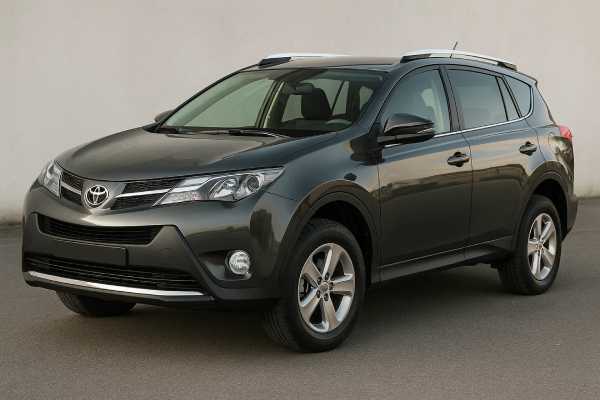
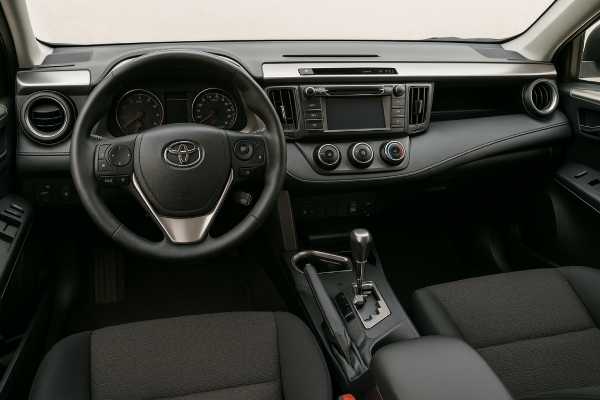
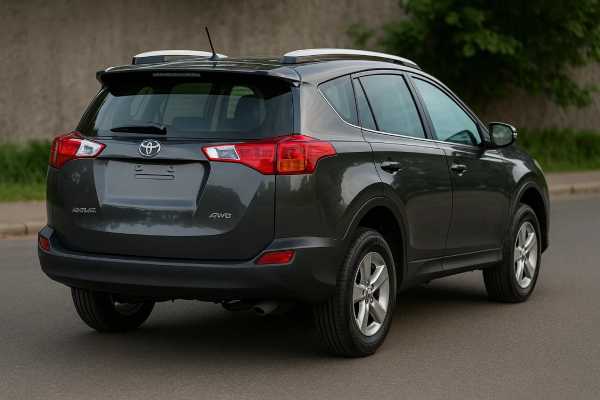
The 2013–2015 Toyota RAV4 (XA40) with the 2.0-litre 3ZR-FAE Valvematic engine and on-demand all-wheel drive is the quiet achiever of the range. It trades turbo punch for smooth, linear response and a timing-chain design that keeps upkeep predictable. Dynamic Torque Control AWD adds confidence on wet roads and light trails without the weight and complexity of a full-time system. Inside, packaging is a standout: a flat floor, wide tailgate opening, and a square cargo bay make family life and DIY runs simple. On the road, the chassis favours comfort yet stays composed in quick manoeuvres. The CVT is tuned for low-rpm cruising; with fresh fluid it feels clean and unobtrusive. While it will tow modestly and handle winter trips without drama, the RAV4’s superpower is low-stress ownership. If you want a compact SUV that just works—reliably, quietly, and for a very long time—this spec deserves a close look.
Key Takeaways
- Spacious, useful cargo area (about 547 L VDA seats up) with easy fold-flat rear bench.
- Proven 3ZR-FAE Valvematic: chain-driven DOHC, smooth delivery, dependable long-term.
- Dynamic Torque Control AWD adds wet-weather traction with minimal efficiency penalty.
- Watchlist: CVT fluid aging when towing or driving long mountain grades; verify service history.
- Typical oil service: 15,000 km or 12 months with high-quality 0W-20.
Guide contents
- RAV4 2.0 AWD overview
- RAV4 2.0 AWD specs and data
- RAV4 trims options and safety
- Reliability issues and service actions
- Maintenance and buyer’s guide
- Driving and performance
- RAV4 vs rivals 2013–2015
RAV4 2.0 AWD overview
Toyota used the fourth-generation RAV4 to shift the model decisively towards road refinement while preserving the light-duty versatility buyers expect. In the configuration covered here—3ZR-FAE 2.0 Valvematic petrol with on-demand AWD—the brief is “calm, efficient, and capable enough for typical weather and travel.” The 3ZR-FAE’s Valvematic system (continuously variable valve lift) and Dual VVT-i (intake and exhaust cam phasing) broaden the useful torque band without resorting to turbocharging. A timing chain keeps scheduled maintenance straightforward, and real-world consumption stays consistent provided tyres are correctly inflated and the CVT fluid is in good condition.
Dynamic Torque Control AWD is the other pillar. In normal cruising, the RAV4 runs primarily as a front-driver to reduce drag and fuel use. When slip is detected—or based on predictive cues like steering angle and throttle position—the electromagnetic coupling can engage the rear axle proactively, shuffling torque rearward before the front tyres are overwhelmed. An AWD Lock function forces a near 50:50 front-rear split at low speeds (below roughly 40 km/h / 25 mph) to pull through snowed-in driveways or muddy campground tracks. It is not a rock-crawler; instead, it is the traction safety net that keeps family trips simple when the weather turns.
Packaging is a core strength. The cargo bay is wide and flat with a low lift-over height, and the rear seat folds nearly level to accommodate long items. Adults fit comfortably in both rows thanks to a wheelbase of 2,660 mm (104.7 in) and a gently reclined second row. Cabin materials resist wear and clean up easily; switchgear and infotainment are intuitive even if screen graphics are of their era.
Road manners emphasise quiet assurance. The MacPherson-strut front and double-wishbone rear suspension filter out sharp edges and keep body motions tidy. Electric power steering is light in town, yet the on-centre feel is stable on motorways. Brakes are sized for repeated daily stops and the occasional mountain descent, with ventilated front discs for heat control. The CVT calibration is deliberately calm: it keeps revs low at a cruise and simulates stepped ratios under firmer throttle so the engine note rises and falls in a way that feels familiar to drivers used to conventional automatics.
Ownership considerations favour conservative engineering. The engine’s tolerance for short-trip use is good, provided oil is changed annually. The CVT lasts when fluid temperature is managed—use the “B” range for long descents, avoid prolonged stall against steep trail obstacles, and refresh the fluid periodically if the car tows. Consumables (filters, pads, discs, plugs) are widely available at fair prices, and access under the bonnet is straightforward. In short, the AWD 2.0 RAV4 is engineered to be the reliable background player in busy family life: serene, capable in poor weather, and rarely needy.
RAV4 2.0 AWD specs and data
Engine and Performance (ICE)
| Item | Value |
|---|---|
| Code | 3ZR-FAE |
| Layout and valvetrain | Inline-4, DOHC, chain drive, 16 valves; Valvematic + Dual VVT-i |
| Bore × stroke | 80.5 × 97.6 mm (3.17 × 3.84 in) |
| Displacement | 1,987 cc (2.0 L) |
| Induction | Naturally aspirated |
| Fuel system | Electronic multi-point fuel injection |
| Compression ratio | ~10.0 : 1 |
| Max power | 151 hp (112 kW) @ ~6,200 rpm |
| Max torque | 195 Nm (144 lb-ft) @ ~4,400 rpm |
| Timing drive | Chain |
| Emissions class (typical) | Euro 5 (late builds approach Euro 6) |
| Rated efficiency (combined, typical NEDC) | ~6.9–7.4 L/100 km (34.1–31.8 mpg US / 40.9–38.2 mpg UK) |
| Real-world highway @ 120 km/h | ~7.8–9.0 L/100 km (30.2–26.1 mpg US / 36.3–31.3 mpg UK) |
| Aerodynamics | Cd ~0.34–0.36 |
Transmission and Driveline
| Item | Value |
|---|---|
| Transmission | Multidrive S CVT (simulated 7-step manual mode) |
| Effective ratio span | Approx. 6.0:1 (CVT variator range) |
| Final drive ratio | Calibration varies by market/tyre; typical mid-3s |
| Drive type | On-demand AWD (electromagnetic rear coupling) |
| Differential | Open front and rear; brake-based torque management |
| AWD Lock | Low-speed lock (up to ~40 km/h / 25 mph) |
| Refuel to full | ~60 L tank; ~3–5 min at pump |
Chassis and Dimensions
| Item | Value |
|---|---|
| Suspension (front/rear) | MacPherson strut / Double wishbone |
| Steering | Electric power steering; ratio ~14.5:1; ~2.8 turns lock-to-lock |
| Brakes (front/rear) | Ventilated discs ≈296 × 28 mm / Solid discs ≈281 × 12 mm |
| Wheels/Tyres | 225/65 R17 or 235/55 R18 |
| Ground clearance | ~185–190 mm (7.3–7.5 in) |
| Length / Width / Height | ~4,570–4,605 / 1,845 / 1,660–1,675 mm (179.9–181.3 / 72.6 / 65.4–65.9 in) |
| Wheelbase | 2,660 mm (104.7 in) |
| Turning circle (kerb-to-kerb) | ~10.6–11.4 m (34.8–37.4 ft) |
| Kerb (curb) weight | ~1,530–1,610 kg (3,373–3,549 lb) |
| GVWR | ~2,100–2,150 kg (4,630–4,740 lb) |
| Fuel tank (ICE) | 60 L (15.9 US gal / 13.2 UK gal) |
| Cargo volume | 547 L seats up / up to ~1,735 L seats folded (VDA, to roof) |
Performance and Capability
| Item | Value |
|---|---|
| 0–100 km/h (0–62 mph) | Typically ~10.5–11.0 s (AWD CVT) |
| Top speed | ~180–185 km/h (112–115 mph) |
| Braking 100–0 km/h | ~36–39 m (118–128 ft) with quality tyres |
| Towing capacity, braked/unbraked | Up to ~1,800 kg / 750 kg (confirm by VIN/market) |
| Payload | ~460–570 kg (trim-dependent) |
| Roof load | Typically up to 100 kg with approved crossbars |
Fluids and Service Capacities
| System | Specification | Capacity (typical) |
|---|---|---|
| Engine oil | 0W-20 high-quality synthetic per manufacturer spec | ~4.2–4.5 L (4.4–4.8 qt) incl. filter |
| Engine coolant | Toyota Super Long Life Coolant (pink), 50/50 mix | ~6–7 L (6.3–7.4 qt) |
| Transmission (CVT) | Toyota CVT Fluid FE (per parts catalog) | ~7–8 L (7.4–8.5 qt) total; drain-fill less |
| Rear differential | Correct GL-5 hypoid gear oil | ~0.9–1.1 L (~1.0–1.2 qt) |
| Power transfer unit (front) | Correct GL-5 gear oil | ~0.6–0.8 L (~0.6–0.8 qt) |
| A/C refrigerant | HFC-134a (R134a) | ~450–550 g (15.9–19.4 oz) |
| A/C compressor oil | PAG (per compressor spec) | ~120–150 mL (4.1–5.1 fl oz) |
| Key torque specs | Wheel nuts 103 Nm (76 lb-ft); spark plugs ~18–22 Nm (13–16 lb-ft) |
Always verify capacities and torque values against your exact VIN and official service literature.
Electrical
| Item | Value |
|---|---|
| Alternator | ~100–120 A (equipment-dependent) |
| 12 V battery | ~60 Ah class; common DIN/JIS sizes used |
| Spark plugs | Long-life iridium (e.g., SC20HR11-type); gap ~1.0–1.1 mm (0.039–0.043 in) |
Safety and Driver Assistance
| Item | Value |
|---|---|
| Euro NCAP (2013) | 5 stars — Adult 89% / Child 82% / VRU 66% / Safety Assist 66% |
| Headlights | Halogen or HID by trim; automatic lights common |
| ADAS content (pre-facelift) | ESC/traction/ABS/EBD/Brake Assist standard; Blind-Spot Monitor and Rear Cross-Traffic Alert available on upper trims; full AEB/Lane Departure arrived with broader Safety Sense rollout post-facelift |
| Child-seat provisions | ISOFIX/LATCH outboard rear + top tethers; accessible anchors |
RAV4 trims options and safety
Trim structure and equipment. Markets in Europe offered a familiar ladder of trims. Base cars focused on essentials: cloth seats, manual or single-zone automatic climate control, 17-inch alloys, cruise control, Bluetooth audio, and a reversing camera on many examples. Mid-grade cars added dual-zone climate control, privacy glass, roof rails, smart entry and start, and power fold mirrors. Upper grades brought leather (or leather-ette) upholstery, heated front seats, power driver’s seat with lumbar, front and rear parking sensors, panoramic roof on certain packages, factory navigation, and sometimes HID headlights with washers.
Mechanical distinctions. The AWD 2.0 Valvematic most commonly paired with the Multidrive S CVT. A six-speed manual appeared in select countries, typically with a simpler equipment mix. Across trims, spring/damper rates are calibrated for comfort, but larger wheel options (235/55 R18) firm up impacts and can shorten braking distances slightly with grippier tyres. Brake hardware is largely shared; the towing rating depends on equipment and cooling pack, so always confirm by VIN and towbar type approval.
Quick identifiers. Under the bonnet, “Valvematic” branding on the engine cover signals the 3ZR-FAE. The rear badge may denote AWD in markets that also sold FWD variants. Cabin tells include the CVT gate with a “B” engine-braking position and, on AWD cars, an AWD Lock button near the shifter. Cars with BSM/RCTA have radar modules behind the rear bumper corners; look for an icon in the mirror glass.
Year-to-year highlights (2013–2015). Launch-year cars introduced the XA40 body with a stiffer structure and better NVH isolation versus the prior generation. Minor running changes improved multimedia responsiveness and cabin trim fit. Towards the end of the period, some markets transitioned to Euro 6 calibrations and broadened availability of driver aids as part of option packs. The more comprehensive Toyota Safety Sense suite (with lane departure alert and autonomous emergency braking) became widespread with the facelift beyond 2015.
Safety ratings and child-seat use. The RAV4 achieved a 5-star Euro NCAP score with strong adult and child protection and competitive pedestrian outcomes for the time. Side-impact performance was a highlight, while the safety-assist score reflected the pre-AEB spec. In daily use, ISOFIX anchors are easy to access and the rear bench geometry suits a wide range of child seats; many owners appreciate the wide rear door opening for loading toddlers into rear-facing capsules.
ADAS notes and calibration. Where fitted, Blind-Spot Monitor and Rear Cross-Traffic Alert rely on radar units that require alignment after rear-end body repairs. Camera-based features introduced later (lane departure, AEB) need target-board calibration if a windscreen is replaced. Keep radar trim covers clean in winter and avoid metallic films that interfere with sensor operation.
Security and convenience. Smart entry/start with proximity key, available on upper trims, is convenient but depends on a healthy 12 V battery and clean antenna grounds. The factory alarm/immobiliser integrates with the body ECU; any aftermarket installations should use data-bus friendly kits to avoid spurious warnings.
Reliability issues and service actions
Overall reliability profile. The 3ZR-FAE and Toyota’s Dynamic Torque Control AWD system have a strong record when serviced on time. Most age-related problems are predictable wear items—bushings, bearings, pumps—and not systemic design flaws. The CVT is robust for the output level provided the fluid remains clean and within temperature limits.
Common / medium severity
- Water pump seepage. Symptoms: sweet coolant smell, pink crust at weep hole, slow coolant loss. Cause: mechanical seal wear. Fix: replace pump and gasket, refit with fresh SLLC and bleed cooling system.
- Front lower control-arm rear bush wear. Symptoms: thump over sharp bumps, vague initial steering. Cause: rubber deterioration. Fix: press new bushings or fit complete arms; align afterwards.
- Rear wheel-bearing hum. Symptoms: low-pitch growl that scales with speed and road load. Cause: hub/bearing wear. Fix: replace hub assembly; torque axle nut to spec.
Occasional / medium severity
- CVT shudder or flare under load. Symptoms: vibration on steep grades or aggressive throttle; rpm “flaring.” Causes: aged CVT fluid, thermal stress, early belt/pulley wear. Fix: staged drain-and-fills with the specified fluid, verify cooler flow, reset adaptations; deeper service if persistent.
- MAF/throttle body deposits. Symptoms: hesitant tip-in, unstable idle, lean codes. Cause: vapour film on hot wire/throttle plate. Fix: clean MAF with approved cleaner; clean throttle body; check for intake leaks and PCV function.
Rare / low severity
- Exhaust heat-shield buzz. Symptoms: metallic buzz near 2,000 rpm. Cause: fatigued clips or spot-welds. Fix: renew fasteners/shields; add approved clamps.
AWD-specific notes.
- Rear coupling chatter (rare). Symptoms: binding sensation during tight parking manoeuvres. Cause: contaminated differential or PTU oil, tyre circumference mismatch. Fix: refresh both PTU and rear-diff oils; ensure four matching tyres with similar tread depth; recalibrate yaw/steering angle if DTCs stored.
- AWD Lock misuse. Symptoms: driveline shudder when forced locked on dry pavement. Cause: wind-up in tight turns. Fix: use Lock only on loose or slippery surfaces at low speed.
Electrics and ancillaries.
- 12 V battery aging. Symptoms: slow crank, spurious warning lamps after short trips. Fix: test and replace battery; clean grounds; perform battery registration if applicable.
Software and calibrations. Engine ECU updates addressed cold-start smoothness and throttle progression; TCU updates refined CVT step-logic to reduce drone on moderate grades. If the car hunts between simulated ratios at a steady 100–120 km/h, check for the latest calibration.
Recalls and field actions (verify by VIN).
- Power Window Master Switch (PWMS). A campaign replaced or treated switches to prevent overheating risk from inconsistent lubricant. Confirm completion.
- Airbag/SRS campaigns (market-dependent). Some vehicles were included in SRS service actions. Confirm via the official VIN check and request dealer records.
Pre-purchase checklist (ask the seller).
- Documented annual oil changes with correct 0W-20; no unexplained top-ups between services.
- Cooling system history (fresh SLLC, pump status); zero crust around hose joints.
- CVT service evidence if the car towed or lived in mountainous/hot regions.
- Proof of axle, PTU, and differential oil refresh by 120,000 km if used for towing.
- Even braking and straight stops; no vibration from cupped tyres.
- Confirmation of recall completion and any ECU/TCU updates.
Maintenance and buyer’s guide
Service schedule (typical European guidance—verify for your VIN).
- Engine oil and filter: 15,000 km or 12 months (severe use: 10,000 km). Use high-quality 0W-20 meeting the specified standard.
- Engine air filter: Inspect 15,000 km; replace 30,000–45,000 km (earlier in dusty areas).
- Cabin filter: Replace 12 months; consider a charcoal/HEPA element if you suffer from pollen.
- Spark plugs (iridium): Typically 90,000–120,000 km; inspect at 60,000 km for short-trip use.
- Coolant (SLLC pink): First change 160,000 km or 10 years; then 80,000 km or 5 years.
- CVT fluid (Multidrive S): Many guides list “no routine replacement,” but a prudent 60,000–90,000 km drain-and-fill is recommended for cars that tow, climb long grades, or live in hot climates. Always follow the temperature-based fill procedure.
- Power Transfer Unit and rear differential oils: Inspect by 90,000–120,000 km; refresh if towing, frequent AWD Lock use, or contamination present.
- Brake fluid: Replace every 2 years; check caliper slide pins and hoses at each pad change.
- Brake pads/discs: Inspect every service; typical pad life 30,000–60,000 km; discs as needed.
- Serpentine belt and hoses: Inspect every service; replace at first signs of cracking, glazing, or seep.
- Tyres: Rotate 10,000–15,000 km; keep four matching tyres on AWD to protect the coupling. Align annually or with any uneven wear.
- 12 V battery: Test annually after 4 years; expect 5–7 years of life.
Fluids and parts to specify.
- Oil: 0W-20 synthetic; carry a new drain-plug gasket for each change.
- Coolant: Toyota SLLC (pink); do not mix with other colours without full flush.
- CVT fluid: Only the specified Toyota CVT fluid; do not substitute universal ATF.
- Axle/transfer oils: GL-5 hypoid gear oils at the viscosity in your service manual.
Essential torque references (decision-making).
- Wheel nuts: 103 Nm (76 lb-ft).
- Spark plugs: ~18–22 Nm (13–16 lb-ft) on clean threads (check the plug maker’s spec).
- Front caliper bracket bolts: commonly 80–110 Nm (confirm by VIN).
Buyer’s guide: what to inspect.
- Powertrain health. Cold start from ambient; listen for rattles beyond a brief chain tensioner fill. Drive from city to motorway: the CVT should step down crisply without prolonged flare. Use a scan tool to check for historic over-temp codes.
- AWD function. In a safe, low-grip area, verify rear-axle engagement (no single-wheel spin at moderate throttle). Try AWD Lock briefly on loose ground; disengage before turning on high-grip surfaces.
- Chassis. Over a speed hump, note any front-end thumps (bushings) or rear axle groans (bearings). Inspect shocks for weep.
- Tyres and wheels. Match brand, model, and tread depth across all four. Mis-matched diameters can strain the coupling.
- Brakes. Straight, vibration-free stops; inspect disc lips and pad thickness. Confirm parking brake holds on a hill.
- Body and corrosion. Check subframes, rear floor seams, exhaust flanges, and the tailgate lower lip. Look for moisture in the spare-wheel well.
- Electrics. Verify all windows, mirrors, lighting, HVAC modes, and camera/radar features where fitted. Confirm recall completion.
Recommended configurations.
- All-round family use: AWD 2.0 with Multidrive S and 17-inch wheels for ride comfort, snow-tyre availability, and longer tyre life.
- Occasional towing or mountain trips: Same spec with a fresh CVT service and documented axle/transfer oil replacement; fit quality all-weather or winter tyres if appropriate.
Durability outlook. With routine care, these powertrains routinely exceed 200,000 km without major internal work. Expect normal ageing—water pump, bushings, bearings, radiators—and budget accordingly. The AWD hardware is durable when tyres are matched and fluids are fresh.
Driving and performance
Ride and handling. The RAV4 prioritises comfort, and it shows. On 17-inch tyres, broken pavement is rounded off and the cabin stays settled. The body takes a set progressively in fast sweepers, and mid-corner bumps don’t knock it off line. Steering is light in town with a stable on-centre on the motorway; the ratio is quick enough for tidy lane changes. Noise levels are low for the class—engine and wind remain in the background at 120 km/h and the CVT keeps revs modest.
Powertrain character. The 3ZR-FAE is about smoothness rather than fireworks. It pulls cleanly from low revs and wakes up above 3,000 rpm. The CVT’s “7-step” manual mode is useful in hilly country, letting you hold a ratio for engine braking or to keep the engine in the sweet spot for an overtake. There is no turbo lag to manage, and throttle mapping is predictable. The six-speed manual (where available) has a light clutch and longish throws, prioritising ease over speed.
Key metrics.
- 0–100 km/h (0–62 mph): typically ~10.5–11.0 s for AWD CVT.
- 80–120 km/h (50–75 mph): plan on ~7–8 s with a decisive step-down.
- 100–0 km/h braking: ~36–39 m (118–128 ft) on quality all-season tyres.
- Turning circle: ~10.6–11.4 m (34.8–37.4 ft) depending on tyre/wheel.
AWD behaviour. In daily driving you seldom notice the system working; grip simply appears at the rear when conditions demand it. On wet roundabouts or snowy car-parks, the RAV4 puts power down without fuss. AWD Lock is best reserved for low-speed, low-grip starts; disengage for tight, dry turns to avoid driveline wind-up. Stability-control tuning is conservative but transparent, nibbling away wheelspin on greasy surfaces without abrupt cut-outs.
Efficiency in the real world. Expect 7.2–8.8 L/100 km (32.7–26.7 mpg US / 39.3–32.1 mpg UK) in mixed use. At a steady 120 km/h (75 mph), many owners see ~7.8–9.0 L/100 km, depending on load, wind, and tyre choice. Winter short-trip work raises consumption, while long motorway journeys at moderate speeds yield the best results. Good tyres, correct pressures, and gentle warm-up habits help.
Towing and loads. The AWD hardware improves start-off traction with a small trailer or loaded boot. In markets rating this powertrain up to ~1,800 kg braked, stability is acceptable with a well-balanced trailer below ~1,500 kg and a quality hitch. Expect a +20–35% consumption penalty when towing in rolling terrain; monitor CVT temperatures on long, hot grades, use the “B” range for descents, and service the CVT and axle/transfer oils more frequently.
RAV4 vs rivals 2013–2015
Honda CR-V 2.0 i-VTEC AWD. Honda’s naturally aspirated rival is similarly smooth, with an airy cabin and soft ride. The CR-V’s manual is sweeter and steering a touch lighter; the RAV4 counters with a lower cargo floor, calmer CVT tuning at a cruise, and slightly better isolation over sharp edges. Running costs are a near draw, with Toyota consumables often pricing a little lower.
Mazda CX-5 2.0 Skyactiv-G AWD. The CX-5 is the driver’s pick: sharper steering and tighter body control make it feel lighter on its feet. Noise levels on coarse tarmac can be higher, and ride quality firmer on 19-inch wheels. The RAV4’s cabin is calmer at speed and its AWD calibration is more transparent in mixed weather. Efficiency is close; Mazda’s manual gearbox is a delight, while Toyota’s CVT is the long-journey relaxer.
Volkswagen Tiguan 1.4/2.0 TSI 4Motion. Turbo torque and DSG gearing give the Tiguan brisker mid-range and stronger motorway punch. Complexity is higher and long-term costs can climb with turbo/DSG maintenance. The RAV4 wins for rear-seat room and boot usability, and for the odds of a decade of uneventful ownership.
Subaru Forester 2.0i AWD. Subaru’s full-time symmetrical AWD and generous ground clearance are confidence-inspiring on bad roads. The cabin is practical but plainer, and fuel economy is typically worse at motorway speeds. If you value trail ability first, the Forester edges it; if you prioritise quiet, easy family miles, the RAV4 is the steadier companion.
Bottom line. If you want a compact SUV that majors on space, quiet, and reliability—and only occasionally needs extra traction—the RAV4 2.0 AWD is a smart, low-risk choice. Drivers seeking a more engaging chassis might lean CX-5; maximum mid-range shove points to turbo rivals; but for the largest group of owners, the Toyota’s balanced brief simply fits.
References
- New Toyota RAV4: New C-SUV reveals its appeal 2012 (Press Information)
- Toyota RAV4 | Euro NCAP 2013 (Safety Rating)
- 180511M RAV4 Technical Specifications 2018 (Technical Specifications)
- Toyota Canada Inc. announces safety recall of select vehicles involving the power window master switch 2015 (Recall)
Disclaimer
This article is for informational purposes only and is not a substitute for professional diagnosis or repair. Specifications, capacities, torque values, and maintenance intervals vary by VIN, market, model year, and equipment. Always confirm details against your vehicle’s official owner’s manual and service documentation before purchasing parts or performing work.
If you found this guide useful, please consider sharing it with other owners on Facebook or X/Twitter to support xcar’s work. Thank you!