
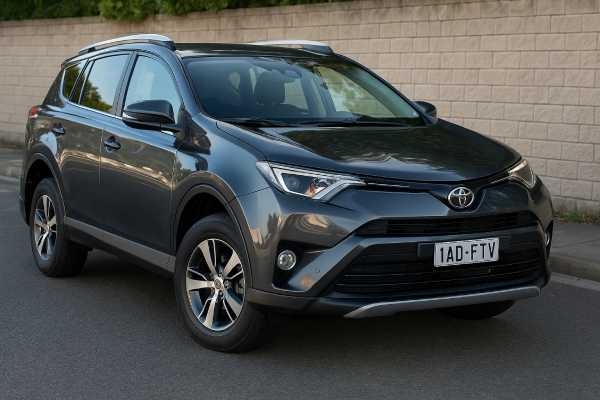
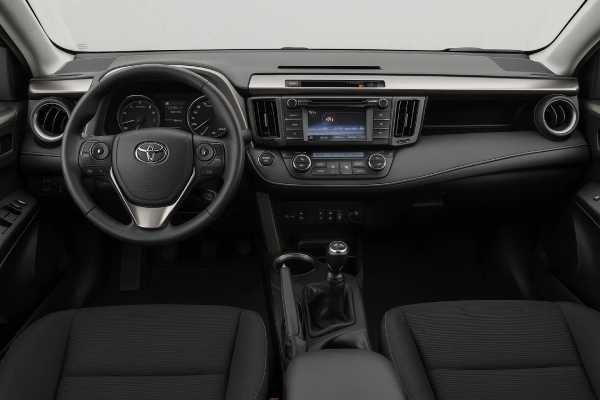
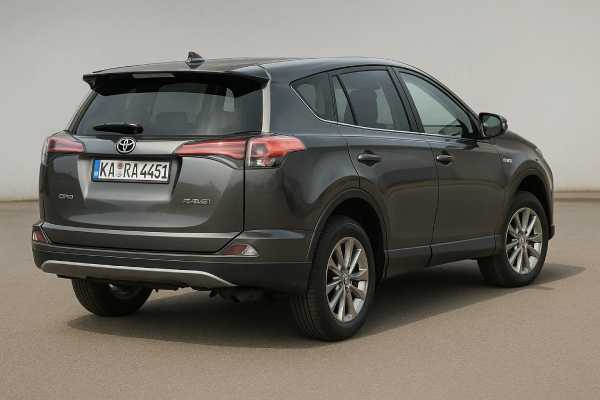
The facelifted fourth-generation Toyota RAV4 (2015–2018) with the 2.0-litre 1AD-FTV diesel is the European-market answer for buyers who value dependable low-rpm torque, long range on a tank, and straightforward serviceability. Paired with a six-speed manual and front-wheel drive, this D-4D variant delivers 124 hp and a broad 310 Nm band from 1,600 to 2,400 rpm. Post-2015 updates improved cabin hush, added more active-safety availability, and refined suspension isolation. It remains a sensible everyday SUV: tall seating, excellent visibility, a flat load floor, and an honest 547-litre boot (VDA). You will not buy it for headline acceleration, yet its mid-gear pull is confident and its economy is easy to keep in the high-40s mpg (US mid-30s). Ownership is uncomplicated: timing chain, port for fuel-filter changes, and robust braking hardware. With matched tyres and regular fluid refreshes, the diesel RAV4 FWD earns its reputation as a durable family workhorse that makes long commutes and weekend trips feel effortless.
Fast Facts
- Strong mid-range: 310 Nm from 1,600–2,400 rpm aids effortless overtakes and hill climbs.
- Real-world economy: expect ~5.3–5.8 L/100 km (44–49 mpg US / 53–59 mpg UK) mixed, steady drivers do better.
- Big-use practicality: 547 L boot, flat load bay, and relaxed motorway gearing keep fatigue low.
- Watch item: DPF and EGR cleanliness on short-trip cars; insist on complete service records.
- Service rhythm: oil and filter every 12 months or ~10,000 miles (16,000 km), whichever comes first.
Navigate this guide
- RAV4 2.0D FWD in detail
- RAV4 2.0D specs and data
- RAV4 2.0D trims and safety
- Reliability, issues, and actions
- Maintenance plan and buying tips
- Road manners and economy
- RAV4 diesel vs rivals
RAV4 2.0D FWD in detail
Toyota’s 1AD-FTV D-4D engine gives the facelifted XA40 RAV4 a calm, torque-rich character that suits long journeys and mixed-weather commuting. It is an all-aluminium 2.0-litre four-cylinder with a variable-geometry turbocharger, intercooling, common-rail injection, and a timing chain. Output is a modest 124 hp, but the point is the sustained 310 Nm plateau across everyday revs; the car feels eager between 1,700 and 3,000 rpm where most driving happens. Mated to a six-speed manual and front-wheel drive, the package is simpler than the AWD alternatives and lighter over the nose, which helps steering response and tyre wear.
The 2015–2018 facelift sharpened refinement: thicker dash insulation, retuned struts and bushings, and better door sealing. On the road, the FWD diesel tracks straight at motorway pace and feels unbothered by crosswinds. Clutch and shift effort are light, with a long but predictable pedal that holds up well in traffic. The gearing is relaxed: sixth keeps revs low at 120 km/h (75 mph), cutting cabin noise and fuel burn.
Cabin packaging is a known RAV4 strength. The rear bench folds nearly flat, the load lip is low, and the opening is square—useful for prams or flat-pack furniture. Driver ergonomics are simple: clear dials, large controls, and good sight lines. The 60-litre tank and typical mid-40s mpg US mean long legs between fills. Safety tech stepped up through this era; many cars carry Toyota Safety Sense features such as pre-collision braking and lane alerts. If you find a later-year example with LED lamps, night visibility improves further.
This variant suits owners who value predictable costs, easy DIY checks, and efficient cruising over turbo-big torque theatrics. With clean driving habits and timely maintenance, it will quietly accumulate mileage with little drama.
RAV4 2.0D specs and data
Engine and performance (ICE)
| Item | Detail |
|---|---|
| Code | 1AD-FTV (D-4D, chain-driven DOHC) |
| Layout & valvetrain | Inline-4, 16-valve, common-rail with VGT turbo and intercooler |
| Bore × stroke | 86.0 × 86.0 mm (3.39 × 3.39 in) |
| Displacement | 1,998 cc (2.0 L) |
| Induction / fuel | Turbocharged / Common-rail direct injection |
| Compression ratio | ≈15.8:1 (Euro 5 update) |
| Max power | 124 hp (91 kW) @ 3,600 rpm |
| Max torque | 310 Nm (229 lb-ft) @ 1,600–2,400 rpm |
| Timing drive | Chain |
| Emissions benchmark | Euro 5/Euro 6 (varies by market/year; verify by VIN) |
| Rated combined economy (NEDC) | ≈4.9–5.0 L/100 km (48–47 mpg US / 57–59 mpg UK) |
| Real-world highway @ 120 km/h | ≈6.0–6.7 L/100 km (39–35 mpg US / 47–42 mpg UK) |
| Aerodynamics | Cd ~0.34–0.36 (wheel/trim dependent) |
Transmission and driveline
| Item | Detail |
|---|---|
| Transmission | 6-speed manual (cable-shift; dual-mass flywheel) |
| Drive type | FWD |
| Final drive ratio | Model-specific; confirm by VIN/build label |
| Differential | Open (front) with brake-based traction control |
| Hill aids | Hill-start Assist (market/trim dependent) |
| Refuel to full (indicative) | ~2–3 min (standard filler; diesel) |
Chassis and dimensions
| Item | Detail |
|---|---|
| Front/rear suspension | MacPherson strut / Double wishbone |
| Steering | Electric power steering; ~14.5:1 ratio; ~2.8 turns L–L |
| Brakes (front/rear) | 296 × 28 mm vented discs / 281 × 12 mm solid discs |
| Wheels/tyres | 225/65 R17 on 17 × 7J; 235/55 R18 on 18 × 7.5J (trim-dependent) |
| Ground clearance | ~165–190 mm (6.5–7.5 in) |
| Length × width × height | 4,605 × 1,845 × 1,675 mm (181.3 × 72.6 × 65.9 in) |
| Wheelbase | 2,660 mm (104.7 in) |
| Turning circle (kerb-to-kerb) | ~10.6–11.2 m (34.8–36.7 ft) |
| Curb weight | ~1,540–1,570 kg (3,395–3,461 lb) by equipment |
| GVWR | ~2,060–2,100 kg (4,542–4,630 lb) |
| Fuel tank | 60 L (15.9 US gal / 13.2 UK gal) |
| Cargo volume | 547 L seats up; up to 1,735 L seats down (VDA, to roof) |
Performance and capability
| Metric | Figure |
|---|---|
| 0–100 km/h (0–62 mph) | ~10.5 s |
| Top speed | ~180–182 km/h (112–113 mph) |
| Braked towing | 1,500 kg (3,307 lb) typical for this spec |
| Unbraked towing | 750 kg (1,653 lb) |
| Payload | ~480–520 kg (1,058–1,146 lb) by trim |
| Roof load | ~75–80 kg (165–176 lb) with approved bars |
Fluids and service capacities (decision-grade)
| System | Specification / capacity |
|---|---|
| Engine oil | Low-SAPs ACEA C2 0W-30 (Toyota approved); capacity ~6.0–6.3 L (6.3–6.7 qt US) incl. filter |
| Coolant | Toyota Super Long Life Coolant (pink); factory fill pre-mix; capacity ~7–8 L (7.4–8.5 qt US) |
| Manual gearbox | High-quality GL-4 75W-90 (or Toyota M/T LV where specified); ~2.2–2.5 L (2.3–2.6 qt US) |
| Clutch hydraulics | DOT 3/4 brake fluid (shared reservoir; replace on brake-fluid interval) |
| A/C refrigerant | R-134a; charge mass varies by build/options (see under-bonnet label) |
| Key torque refs | Wheel nuts ~103 Nm (76 lb-ft); oil drain plug ~40 Nm (30 lb-ft) (verify by VIN) |
Electrical
| Item | Detail |
|---|---|
| Alternator output | ~100–120 A typical (equipment dependent) |
| 12V battery | ~70 Ah AGM/lead-acid (form factor per market); hold-down must meet updated clamp spec |
| Glow plugs | Ceramic-sheathed; ECU-controlled pre-heat and after-glow |
Safety and driver assistance
| Item | Summary |
|---|---|
| Crash rating (Euro NCAP) | 5 stars under 2013 protocol; Adult 89%, Child 82%, VRU 66% |
| Headlight performance | Halogen units average; LED (where fitted) improve cut-off and spread |
| Airbags & structure | Front, side, curtain, driver’s knee; ISOFIX/LATCH rear outboard |
| ADAS suite | Toyota Safety Sense availability by trim/year: Pre-Collision Braking, Lane Departure Alert, Automatic High Beam; Blind Spot Monitor and Rear Cross-Traffic Alert on upper grades (calibration required after glass/front repairs) |
RAV4 2.0D trims and safety
European grade landscape (facelift era). The diesel FWD appeared across practical, company-car-friendly trims. Early facelift years centred on Active and Icon/Excel, with Business Edition and later Icon Tech slotting in as equipment-rich, value-led choices. Diesel FWD was the entry powertrain for Active and often the default on Business Edition fleet orders; Excel prioritised upholstery, LEDs, and convenience options. Wheel packages scaled from 17-inch (comfort-oriented) to 18-inch (sharper turn-in, modest NVH trade-off). Identification is straightforward: VIN/build codes for diesel FWD, six-speed manual, and the tailgate badge without AWD badging.
Options and useful packs. Parking sensors and a reversing camera are common; navigation is bundled into Touch 2 with Go on Business Edition/Tech. Heated seats and power tailgate arrive higher in the range. Factory tow prep with harness and module is worth seeking if you plan to pull up to 1,500 kg. Fleet buyers often specified 17-inch wheels for tyre longevity and winter-tyre availability.
Safety content evolution. Toyota Safety Sense became widely available during this cycle, adding pre-collision braking, lane departure alerts, and automatic high beam. Blind Spot Monitor and Rear Cross-Traffic Alert are most frequent on upper trims after 2016. If you drive at night frequently, shortlist cars with LED headlamps; they bring a noticeable step up in cutoff clarity over halogens.
Crash-test summary. Under Euro NCAP’s 2013 procedure (still covering these years), the RAV4 scored five stars with high adult and child protection percentages. North American IIHS results for comparable body structures show Good crashworthiness in most categories; headlights vary by unit. For shopping, prioritise late-cycle cars with fuller Safety Sense and LED lighting, then tyres and brakes in good shape.
Year-to-year highlights.
- 2015 launch of facelift: cosmetic and NVH enhancements; grade reshuffle; diesel FWD positioned for fleets.
- 2016–2017: broader standardisation of Toyota Safety Sense; infotainment and camera updates; appearance tweaks (wheels, grilles).
- 2018 run-out: minor pack changes; best chance to find LED and ADAS bundles on diesel FWD stock.
Reliability, issues, and actions
The 1AD-FTV diesel and six-speed manual in the XA40 have a solid reputation when maintained on schedule. Map your expectations by prevalence and cost:
Engine, fuel, and emissions
- Common, low–medium cost — EGR/DPF cleanliness: Short-trip or urban cars can accumulate soot in the EGR valve/cooler and DPF. Symptoms: rough idle, reduced power, frequent regens, rising oil level. Remedy: professional cleaning or replacement of EGR components; confirm DPF differential-pressure sensor and hoses are clear; perform a monitored forced regen only when criteria are met; adjust driving profile (longer hot runs) thereafter.
- Occasional, medium cost — Intake manifold deposits: Long intervals and city duty can lead to carbon build-up. Symptoms: hesitation, uneven idle. Remedy: off-car cleaning and new gaskets; pair with fresh air filter and EGR service.
- Occasional, medium cost — Injector sealing/copper washer wear: Symptoms: chuffing noise, exhaust smell in cabin, black staining around injector bases. Remedy: new washers/bolts; check injector correction values and relearn after refit.
- Rare, medium cost — Turbo actuator or VGT vane sticking: Symptoms: limp mode under load, over/under-boost codes. Remedy: diagnose for soot-bound vanes vs actuator fault; repair or replace; reset adaptations.
Lubrication and cooling
- Common, low cost — Oil spec adherence: This engine needs ACEA C2 low-SAPs 0W-30; high-ash oils accelerate DPF ash loading. Remedy: correct oil only; shorten intervals for heavy city use.
- Occasional, low–medium cost — Coolant weep at radiator end tanks or thermostat housing on high-milers: Remedy: pressure test and replace affected parts; refill with Toyota SLLC pink and bleed correctly.
Clutch, gearbox, and driveline
- Common wear — Clutch/DMF: Stop-start urban use can glaze friction material or wear the dual-mass flywheel. Symptoms: shudder on take-up, rattle at idle in neutral. Remedy: clutch and DMF replacement as a set; inspect release bearing and fork.
- Occasional — Shift cable stretch/bushing wear: Symptoms: vague selects into 2nd/3rd. Remedy: adjust or replace bushings/cables; verify gearbox mount condition.
- Tyre rotation neglect on FWD: Inside-edge wear on rear tyres appears when alignment is off and rotations are skipped. Keep pressures correct and rotate at 10–12k km.
Chassis and brakes
- Common wear — Front drop links/ARB bushes and strut top mounts by 80–120k km on rough roads.
- Occasional — Caliper slider pin corrosion in salted climates; service pins with high-temp lube each brake job to prevent uneven pad wear.
- Wheel bearings: Not a chronic weak point; hums appear mainly on poor roads at high mileage.
Electrical and body
- Battery clamp safety recall (2013–2018 RAV4): Affected vehicles receive an updated hold-down clamp, tray, and positive-terminal cover to mitigate short-circuit risk with certain aftermarket batteries. Action: verify recall completion by VIN before purchase.
- Rear-door and tailgate trim squeaks/rattles: Minor NVH; felt tape and clip replacements cure it.
Software/calibration
- Powertrain and ADAS modules occasionally receive updates that refine driveability and reduce false alerts. Ask for a dealer printout of ECU and ADAS calibration status with the service history.
Pre-purchase checklist
- Full service history (annual/16,000-km oil, fuel-filter replacements at proper intervals).
- DPF history (any forced regens, replacement pressure sensors, or exhaust leaks upstream).
- Smooth clutch take-up and quiet DMF; no crunch into 2nd/3rd when hot.
- Cooling system pressure test and condenser/radiator fin condition.
- Confirmation of recall completion and windscreen/ADAS calibrations if glass was replaced.
Maintenance plan and buying tips
Practical schedule (distance/time = whichever comes first).
- Engine oil & filter: Every 12 months or ~10,000 miles (16,000 km); use ACEA C2 0W-30 to protect the DPF.
- Fuel filter: Every 2 years or 30,000–40,000 miles (48–64,000 km); sooner for poor-fuel regions.
- Engine air filter: Inspect annually; replace 30,000–40,000 miles (48–64,000 km).
- Cabin filter: Replace annually or sooner if air volume drops.
- Coolant (SLLC pink): Long initial life, then ~5 years/50,000 miles (80,000 km) per subsequent changes; verify by VIN.
- Serpentine/aux belt & hoses: Inspect at each service; typically replaced 90–120,000 km or as condition dictates.
- Manual gearbox oil: 100–120,000 km refresh advisable for shift feel and bearing longevity.
- Brake fluid: Replace every 2 years.
- Brakes: Inspect pads/rotors each service; clean/lube sliders.
- Tyres: Rotate 10,000–12,000 km; maintain even wear; check alignment yearly.
- 12-V battery: Load-test before winter after year 4; replacement window 5–6 years.
- DPF health: Schedule a hot-drive (30–40 minutes at steady speed) weekly if your usage is all short trips; scan for regen history during major services.
- Glow plugs: Test at 100,000–120,000 km; avoid forced removal on seized plugs—use proper heat cycles and torque.
Fluids, capacities, and key torques (verify by VIN/build code).
- Oil: ACEA C2 0W-30; capacity ~6.0–6.3 L incl. filter; use a new crush washer; drain plug ~40 Nm.
- Coolant: Toyota SLLC (pink), pre-mix; observe bleed procedure; capacity ~7–8 L.
- Gearbox: GL-4 75W-90 (or Toyota M/T LV where specified); ~2.2–2.5 L; fill to level.
- Wheel-nut torque: ~103 Nm (76 lb-ft).
- A/C: R-134a; charge mass on the under-bonnet label (varies by options).
Buyer’s guide: what to look for
- Usage fit: If the car saw exclusively short urban runs, budget time for an EGR/DPF health check.
- Drive test: Warm car thoroughly; confirm clean pull from 1,500–3,000 rpm without limp mode; ensure clutch bite is smooth and DMF quiet.
- Underside: Inspect rear subframe, brake lines, and suspension arms for corrosion; condenser fins for stone damage.
- Paperwork: Full service history, recall completion, proof of fuel-filter changes, any injector or DPF work, and ADAS calibration receipts if the windscreen was replaced.
- Spec picks: Later-cycle cars with Icon Tech/Excel-level equipment often have fuller Safety Sense and LED lamps; 17-inch wheels give the best ride and winter-tyre choice.
Long-term durability outlook. With correct oil, timely fuel-filter and DPF care, and occasional gearbox-oil refreshes, this RAV4 diesel routinely surpasses 300,000 km (186,000+ miles) without major engine or transmission work. Consumables (links, bushes, wheel bearings) are straightforward and affordable.
Road manners and economy
Ride and handling. On 17-inch tyres the diesel FWD is supple, with the facelift’s extra isolation keeping coarse-chip roar in check. The double-wishbone rear suspension manages mid-corner bumps without throwing the body off line. Steering is light in town and reassuringly centred at speed; the rack ratio and electric assist are tuned for ease rather than sport. Brake feel is progressive and confidence-inspiring in emergency stops, provided the sliders are clean and fluid is fresh.
Powertrain character. The 1AD-FTV’s best trait is its mid-range shove. From 1,600 rpm, torque arrives smoothly and holds, so you short-shift and ride the wave. There’s little benefit revving beyond 3,500 rpm. The six-speed manual’s ratios keep the engine in its sweet spot; on hills you can drop to fifth for stronger pull without a big noise penalty. In town, the clutch take-up is gentle; on the motorway, sixth gear calms the cabin.
Measured impressions (typical figures, 2.0D FWD, 6MT):
- 0–100 km/h (0–62 mph): ~10.5 s on 17-inch tyres.
- 50–80 km/h (31–50 mph) in 4th: brisk, minimal delay; plan overtakes off the torque band.
- 100–0 km/h braking: stable, short stops with good pads/fluid; ABS/ESC tuning is unobtrusive.
- Turning circle: tight enough for city car parks; one clean sweep into most spaces.
Efficiency you can expect.
- City: 6.2–7.0 L/100 km (38–34 mpg US) in gentle hands; more in heavy traffic with frequent cold starts.
- Highway (100–120 km/h): 5.3–6.0 L/100 km (44–39 mpg US) depending on wind, tyres, and load.
- Mixed: 5.3–5.8 L/100 km (44–49 mpg US).
Cold weather, short trips, winter diesel, and roof boxes can raise consumption by 10–20%. A light camping trailer typically adds 15–25% to fuel use; keep speed steady and exploit the engine’s low-rpm torque.
Noise and vibration. Warmed up, the diesel is quiet at cruise with a muted thrum under load. The facelift’s extra insulation and improved engine mounts reduce idle tremor and boom. Expect higher cabin voice levels on 18-inch tyres over coarse tarmac.
RAV4 diesel vs rivals
Honda CR-V 1.6 i-DTEC (120/160): The smaller-displacement Honda is lighter and can be thriftier on fuel, especially in 120-hp FWD form. Toyota counters with a simpler after-treatment layout and a flatter cargo floor. The CR-V’s cabin is airy; the RAV4’s seat height and visibility make long drives effortless.
Mazda CX-5 2.2 Skyactiv-D (150): The Mazda feels sportier—more steering bite and body control—but tyre roar can be louder on harsh surfaces. Its diesel is punchier but has a more complex emissions system. Toyota’s dealership reach and conservative calibration favour long-term ease of ownership.
Nissan X-Trail 1.6 dCi (130) / Qashqai+: Spacious and often priced keenly used, but the Toyota’s interior durability and residual values are stronger. The RAV4’s shifter and clutch feel more substantial; infotainment is simpler but reliable.
Volkswagen Tiguan 2.0 TDI (150): The VW offers upscale trim and hushed cruising with DSG options. The RAV4’s manual is less complex to service, and parts prices trend lower. If you prize ADAS and LED lighting, a late-cycle RAV4 diesel with Icon Tech/Excel spec narrows the gap.
Bottom line: Choose the RAV4 2.0D FWD if you want predictable costs, broad mid-range torque, and big-boot practicality. It isn’t the keenest to drive, yet it’s one of the lowest-drama ownership experiences in its class.
References
- Prices and Specifications Announced for the New Toyota RAV4 2015 (Press Information)
- 180511M – RAV4 full release 2018 (Press Pack)
- Official Toyota RAV4 2013 safety rating results 2013 (Safety Rating)
- Part 573 Safety Recall Report 23V-734 2023 (Recall Report)
- Toyota Presents the New Avensis: Built in Britain 2008 (Engine Technical Data, 1AD-FTV)
Disclaimer
This article is for informational purposes and is not a substitute for professional diagnosis, repair, or factory procedures. Specifications, torque values, fluid types/volumes, emissions compliance, and maintenance intervals vary by VIN, market, model year, and equipment. Always confirm details with your official owner’s manual, service literature, technical bulletins, and local regulations before performing work.
If you found this guide useful, please consider sharing it with fellow owners on Facebook or X/Twitter—your support helps xcar keep producing detailed, independent resources.