
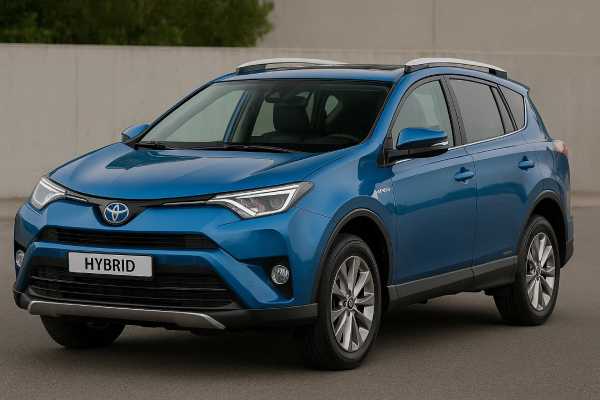
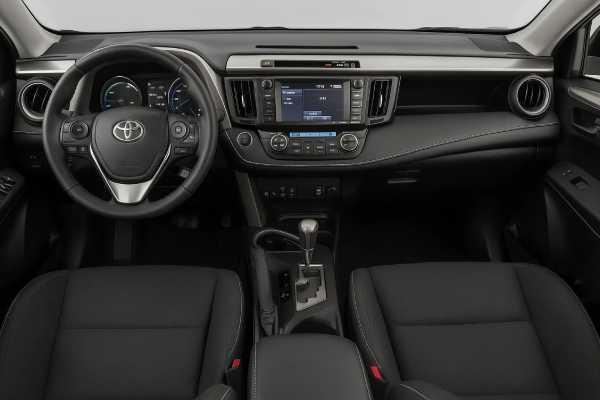
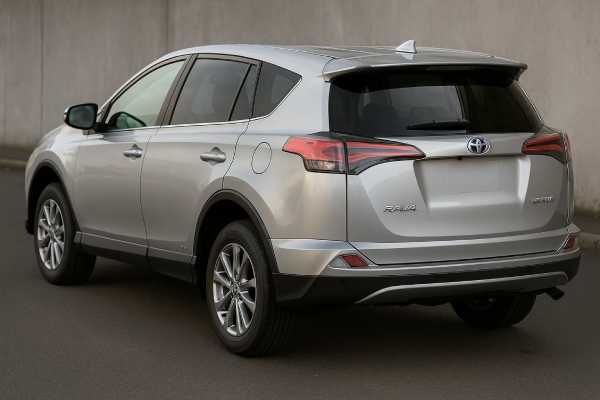
Toyota’s facelifted fourth-generation RAV4 Hybrid (2016–2018) pairs the 2.5-litre Atkinson-cycle 2AR-FXE with dual electric motors and an electronic rear axle (AWD-i). The result is a compact SUV that’s calm at highway speeds, thrifty in traffic, and confident on wet or snowy roads—without the weight or upkeep of a traditional transfer case. A power-split eCVT manages ratio and flow between the engine and motors, while a robust nickel-metal hydride (NiMH) battery lives low in the body, preserving cargo space and stability. The 2016 refresh improved sound insulation, ride isolation, and the availability of Toyota Safety Sense features, bringing adaptive assistance into the mainstream of this generation. Owners tend to value the predictable running costs (timing chain, long-life coolant, minimal scheduled replacements) and the ease of living with an EV-assisted SUV that never needs to be plugged in. If you want reliable traction and city-grade economy in a simple, durable package, the late-cycle XA40 Hybrid AWD-i remains a standout.
Fast Facts
- Electric AWD-i rear axle adds instant traction with minimal weight; seamless, low-maintenance setup.
- Real-world mixed economy typically 5.7–6.7 L/100 km (41–35 mpg US / 49–42 mpg UK).
- Durable hardware: chain-driven 2AR-FXE, power-split eCVT, long-life NiMH battery.
- Watch item: keep the hybrid battery cooling intake clean; service engine and inverter coolant on time.
- Typical service: engine oil and filter every 12 months or ~10,000 miles (16,000 km).
What’s inside
- RAV4 Hybrid AWD-i overview
- Specifications and technical data
- RAV4 Hybrid trims and safety
- Reliability and service actions
- Maintenance and buyer’s guide
- Driving performance and economy
- How RAV4 Hybrid compares
RAV4 Hybrid AWD-i overview
The facelifted XA40 RAV4 Hybrid combines an Atkinson-cycle 2.5-litre four-cylinder (2AR-FXE) with a front traction motor and a separate rear motor that engages on demand. Because the rear axle is driven electrically—no prop shaft or transfer case—the system responds to slip very quickly and adds little mechanical complexity. In everyday driving the car runs primarily as a front-drive hybrid, switching the rear motor in to stabilize launches on slick surfaces, pull the nose straight when you’re turning out of a junction in the rain, or add torque when accelerating out of a bend.
The power-split eCVT uses a robust planetary gearset (no belts or clutches) to blend engine and motor effort. At low speeds you’ll often creep away in EV mode, with the engine joining quietly as load rises. On the highway the eCVT holds revs in the efficient band; passing power is delivered smoothly because the motors fill low-rpm torque.
Ride and cabin refinement improved with the 2016 refresh thanks to added firewall and floor insulation and retuned suspension mounts. Inside, upright seating, wide rear doors, and a low, flat load floor make the car easy to live with. The hybrid battery sits low and central, so cargo space remains competitive and the centre of gravity is favourable versus many non-hybrid rivals. Toyota Safety Sense rolled into wider availability through this period, bringing pre-collision braking and lane departure alert to more trims.
In short: the AWD-i RAV4 Hybrid is designed for foul-weather confidence and predictable ownership costs rather than off-road heroics. It’s the “no-drama” solution for families who split time between city errands and motorway runs.
Specifications and technical data
Powertrain and efficiency (Hybrid HEV)
| Item | Detail |
|---|---|
| ICE code | 2AR-FXE (Atkinson cycle, chain-driven DOHC, Dual VVT-i) |
| Layout & valvetrain | Inline-4, 16-valve; 4 valves/cyl; cooled EGR |
| Bore × stroke | 90.0 × 98.0 mm (3.54 × 3.86 in) |
| Displacement | 2,494 cc (2.5 L) |
| Compression ratio | ≈12.5:1 |
| ICE output | ≈150 hp (112 kW) @ ~5,700 rpm; ≈206 Nm (152 lb-ft) @ ~4,400 rpm |
| Front traction motor (MG2) | Permanent-magnet synchronous; peak ≈105 kW, ≈270 Nm |
| Generator (MG1) | Engine start; power-split management |
| Rear motor (MGR, AWD-i) | Permanent-magnet synchronous; peak ≈50 kW class; on-demand |
| System voltage | ~244.8 V NiMH, ~6.5 Ah class |
| Combined system output | ≈194 hp (145 kW) (≈197 PS commonly quoted) |
| Fuel system | Port injection; returnless |
| Rated economy (combined) | ≈7.1–7.4 L/100 km (33–32 mpg US / 40–38 mpg UK), wheel/trim dependent |
| Real-world @ 120 km/h (75 mph) | ≈6.6–7.7 L/100 km (36–31 mpg US / 43–37 mpg UK) |
| Aerodynamics | Cd ≈0.33–0.35 (by wheel/tire package) |
Why two power figures? North American combined output is typically stated as 194 hp (145 kW), while European publications often list 197 PS (metric horsepower). The latter equals about 194 hp.
Transmission and driveline
| Item | Detail |
|---|---|
| Transmission | Power-split eCVT (planetary gearset) |
| Drive type | AWD-i (electric rear axle; no prop shaft) |
| Rear-axle engagement | Predictive (throttle/steer input) and slip-based control |
| Differentials | Front open diff with brake-based torque control |
| Drive modes | Eco / Normal / Sport; short-range EV mode |
| Hill aids | Hill-start Assist; available brake-hold |
Chassis and dimensions
| Item | Detail |
|---|---|
| Platform | XA40 (MacPherson strut front / Double-wishbone rear) |
| Steering | Electric power steering; ratio ~14.5:1; ~2.8 turns lock-to-lock |
| Brakes | Front 296 × 28 mm vented discs; rear 281 × 12 mm solid discs; blended regen |
| Wheels/tyres (tires) | 225/65 R17 (17 × 7J) or 235/55 R18 (18 × 7.5J) |
| Ground clearance | ~160–180 mm (6.3–7.1 in) by market/trim |
| Length × width × height | ≈4,605 × 1,845 × 1,675 mm (181.3 × 72.6 × 65.9 in) |
| Wheelbase | 2,660 mm (104.7 in) |
| Turning circle (kerb-to-kerb) | ~10.6–11.2 m (34.8–36.7 ft) |
| Curb (kerb) weight | ~1,725–1,765 kg (3,803–3,891 lb) |
| GVWR | ~2,170–2,220 kg (4,784–4,894 lb) |
| Fuel tank | ~56 L (14.8 US gal / 12.3 UK gal) |
| Cargo volume | ~1,005–1,085 L seats up (35.5–38.3 ft³); ~1,990 L seats down (~70 ft³), method by market (VDA/SAE) |
Performance and capability
| Metric | Figure |
|---|---|
| 0–100 km/h (0–62 mph) | ≈8.3–8.5 s |
| Top speed | ≈180 km/h (112 mph) |
| Towing (braked)** | Market/pack dependent; up to ~1,650 kg (3,637 lb) in Europe; ~1,500–1,750 lb typical in North America |
| Unbraked | ~750 kg (1,653 lb) |
| Payload | ~450–520 kg (992–1,146 lb) |
| Roof load | ~75–80 kg (165–176 lb) with approved bars |
Towing varies by VIN, cooling package, and homologation. Confirm the figure for your build code.
Fluids and service capacities (planning values; verify by VIN)
| System | Specification / capacity |
|---|---|
| Engine oil | 0W-20 (Toyota spec); ~4.6–4.8 L (4.9–5.1 qt US) incl. filter |
| Engine coolant | Toyota Super Long Life Coolant (pink); ~7–8 L (7.4–8.5 qt US) |
| Inverter/e-motor coolant | Toyota SLLC (pink); ~3–4 L (3.2–4.2 qt US) |
| Hybrid transaxle | Toyota ATF WS; drain-and-fill ~3–4 L (3.2–4.2 qt US) (if serviced) |
| A/C refrigerant | R-134a; charge per under-bonnet label |
| Key torque refs | Wheel nuts ~103 Nm (76 lb-ft); oil drain plug ~40 Nm (30 lb-ft) (confirm for your VIN) |
Electrical
| Item | Detail |
|---|---|
| 12-V system | DC-DC converter from HV pack (no belt alternator) |
| 12-V battery | ~45–60 Ah (form factor by market; AGM common in cold-weather packages) |
| Spark plugs | Long-life iridium; gap ~0.7–0.8 mm (0.028–0.031 in) |
Safety and driver assistance
| Item | Summary |
|---|---|
| Crash ratings | Strong occupant protection in Euro NCAP (2013 protocol applicable) and Good IIHS crashworthiness categories |
| Headlights (IIHS) | Ratings vary by unit: LED projectors score higher; halogen reflectors trend lower |
| Airbags & child seats | Front, side, curtain, driver’s knee; ISOFIX/LATCH rear outboard |
| ADAS suite | Toyota Safety Sense with Pre-Collision Braking, Lane Departure Alert, Automatic High Beam; Blind Spot Monitor/Rear Cross-Traffic Alert on higher trims; radar/camera calibration required after glass/front repairs |
RAV4 Hybrid trims and safety
North America (2016–2018): The Hybrid arrived as XLE and Limited for 2016, with the SE grade added for 2017. All hybrids in this window were AWD-i as standard. Badging, a power meter in lieu of a tachometer, and an eCVT joystick-style shifter are quick identifiers. The NiMH battery sits beneath/behind the rear seat, preserving most of the non-hybrid cargo packaging.
Trim highlights and options
- XLE Hybrid: 17-inch wheels, dual-zone climate, fabric seats, power tailgate on many builds, and Toyota Safety Sense availability; halogen headlights are common.
- SE Hybrid: Firmer chassis tune, 18-inch wheels, sport seats/wheel, unique fascia details; desirable if you enjoy a tauter feel.
- Limited Hybrid: SofTex/leatherette or leather, memory driver’s seat, JBL audio and navigation bundles, and typically LED headlamps—worth seeking for improved night visibility.
Mechanical/functional differences
- Wheel/tire packages: 17-inch gives the best ride and slightly quieter cabin; 18-inch sharpens response at the cost of some compliance.
- Lighting: LED projector units are markedly better and often coincide with higher IIHS headlight scores.
- Tow/cargo: Factory tow wiring/module and Toyota-approved roof bars are useful adds; some markets allow higher braked tow ratings with specific coolers.
Safety ratings and context
- IIHS: This generation scored Good in most crash categories; headlight ratings vary the most by trim/units. Shortlist cars with LED projectors if night driving is frequent.
- Euro NCAP: The RAV4 earned five stars under the period protocol; note that scoring protocols changed over time, so do not directly compare numbers to much newer tests.
- Child seats: ISOFIX/LATCH points are easy to access; booster geometry is favourable; the wide rear door aperture helps with buckling.
ADAS evolution and service notes
- Toyota Safety Sense became widely available from 2016 onward. After windscreen replacement or front-end repairs, insist on calibration proof for the camera/radar. If the steering feels “nudgy,” your shop can adjust lane alert sensitivity within the system’s permitted range.
Reliability and service actions
The 2AR-FXE + eCVT + AWD-i hybrid package has a strong reliability record when serviced on time. Most issues relate to age, environment, or deferred maintenance rather than inherent design flaws. Below, problems are grouped by prevalence and impact/cost.
Hybrid system and cooling
- Common, low impact — Battery-fan/duct clogging. Pet hair and dust load the rear intake over time. Symptoms: fan whoosh, reduced EV assist in heat. Remedy: clean intake grille and fan; replace cabin filter more often with pets.
- Occasional, low–medium — Inverter/e-motor coolant aged out. Long-life coolant still has a calendar limit. Symptoms: none until corrosion protection wanes; in neglect, pump noise/DTCs. Remedy: refresh both coolant loops on time; bleed per hybrid procedure.
- Rare, medium — DC-DC converter/contactors faults. Usually high-mileage, water-ingress, or corrosion related. Symptoms: READY won’t engage; warning lamps. Remedy: guided diagnosis; repair/replace affected module; inspect harness/connectors.
Engine (2AR-FXE)
- Common, low — Water-pump seep. Pink crust at pump weep hole. Remedy: replace pump; refill/bleed SLLC.
- Occasional, low–medium — PCV/throttle body deposits. Short-trip emulsions and EGR soot. Symptoms: rough idle on cold starts. Remedy: new PCV valve; clean throttle body/MAF; stick to yearly oil.
- Rare — Elevated oil consumption. Monitor at services; use correct 0W-20 and genuine-quality filter.
eCVT and AWD-i
- Preventive — “Lifetime” ATF left forever in severe duty. Even when not mandated, a drain-and-fill with ATF WS every 60–90k km (towing, mountains, high heat) is cheap insurance.
- Occasional — Rear-axle boot cracking with age. Remedy: reboot early to preserve joints.
Brakes and steering
- Wear items by 80–120k km: front drop-links/ARB bushes, strut mounts—especially on rough roads.
- Blended brake feel “step.” Most often sticky caliper slider pins or aged brake fluid, not an actuator fault. Remedy: clean/lube sliders; replace fluid every 2 years; perform linear-valve offset if applicable.
- Wheel bearings: Listen for a front hum on high-milers.
Body/NVH and electrics
- Tailgate trim rattles: felt tape and revised clips silence these.
- 12-V battery age-out: Many last 5–6 years; declining reserve leads to odd warning lights at start. Load-test in autumn.
Software and calibrations
- Periodic engine/PCS/camera updates smooth transitions, refine pre-collision logic, and reduce false positives. Request a scan for available updates during dealer visits.
Recalls, TSBs, extended coverage
- Campaigns vary by VIN and market (for example, 12-V battery clamp, electronic module updates, or sensor harness concerns). Perform an official VIN check and keep dealer paperwork with dates/mileage.
Pre-purchase checklist
- Full service history, especially time-based coolant and 2-year brake-fluid changes.
- Hybrid fan/duct cleanliness; quiet transitions into/out of EV.
- Road test: linear brake pedal, no front-end clunks, straight tracking at motorway speed.
- ADAS: ask for calibration proof after windscreen/front repairs.
- Tyres: even wear; matched brand/size; winter tyres for snowy regions.
Maintenance and buyer’s guide
A simple, calendar-led plan keeps the XA40 Hybrid healthy. Use the shorter end of each range for severe service (short trips, urban heat/cold, dust, towing, mountain grades).
Service schedule (distance/time = whichever comes first)
- Engine oil & filter: 12 months or ~10,000 miles (16,000 km); 0W-20 to Toyota spec.
- Engine air filter: Inspect yearly; replace 30–40,000 miles (48–64,000 km).
- Cabin filter: Replace annually; more often with pets/dust.
- Coolant (engine + inverter): Toyota SLLC; initial long interval, then ~5 years/50,000 miles (80,000 km) cadence—confirm by VIN.
- Spark plugs (iridium): Inspect at 60,000 miles; replace by 100–120,000 miles (160–192,000 km).
- Hybrid transaxle (ATF WS): Preventive drain-and-fill every 60–90,000 km in severe duty; otherwise inspect.
- Brake fluid: Every 2 years; critical for smooth blended braking.
- Brakes: Inspect pads/rotors every service; clean and lube caliper sliders.
- Tyres: Rotate 10–12,000 km; check alignment yearly; maintain door-jamb pressures.
- 12-V battery: Load-test before winter after year 4; plan replacement 5–6 years.
- HV battery path: Inspect and clean intake/fan at major services; monitor temp/fan duty when scanning.
- Windscreen/radar camera: Calibrate after glass or front-end repairs; keep camera area clean.
Fluids, capacities, and torques (decision guide; verify by VIN)
- Oil: 0W-20; ~4.6–4.8 L incl. filter; drain plug ~40 Nm (30 lb-ft) with new washer.
- Coolant: Toyota SLLC; engine ~7–8 L, inverter ~3–4 L; bleed per hybrid procedure.
- ATF WS: ~3–4 L for a drain-and-fill; set level at temperature.
- Wheel nuts: ~103 Nm (76 lb-ft).
- A/C: R-134a; charge mass from the under-bonnet decal.
DIY tips that pay off
- Brake slider pins love annual cleaning/lube—cheap, big impact on pedal feel.
- Tyre pressures and winter tyres matter more than AWD for snow performance; AWD-i amplifies good tyres.
- Hybrid battery intake: check for pet hair and dust; a vacuum and cotton swab can restore quiet fan operation.
Buyer’s guide highlights
- Best picks: Late-build Limited with LED headlamps and full Safety Sense; or SE if you prefer a tauter ride and 18-inch wheels.
- Test-drive tells: Look for quiet EV step-off, seamless engine engagement, and a steady, linear brake pedal.
- Avoidable costs: Oversized wheels/ultra-performance tyres add noise/consumption without real-world gains; mismatched tyres can upset AWD-i logic.
- Durability outlook: With basic care, many examples exceed 300,000 km (186,000+ miles) on original major hybrid components.
Driving performance and economy
Ride and NVH. The facelift added insulation and retuned bushings, so motorway hum is modest even on coarse asphalt. On 17-inch tyres the ride is notably supple; 18-inch packages add crisp response with a small trade in low-speed compliance. Doors shut with a solid thud, and the dash stays quiet over rough patches.
Steering and handling. The RAV4 tracks straight and resists crosswinds well. Steering weight is light in town and confidence-building at speed. Mild understeer appears if you push, but the rear motor’s instant assist helps the car pull cleanly out of wet corners without traction-control theatrics.
Braking. With clean sliders and fresh fluid, the blend between regenerative and friction braking is smooth and predictable. Pedal feel is consistent; repeated stops remain stable with quality tyres.
Powertrain character. The hybrid often moves off in EV, then starts the engine almost imperceptibly. The eCVT keeps revs in the 2AR-FXE’s efficient band; there’s no gear-hunting, and part-throttle performance feels stronger than the peak ~194 hp number suggests because motor torque arrives immediately. Sport mode sharpens pedal response; Eco makes EV glide easier.
Indicative real-world metrics (AWD-i, 17–18 in wheels)
- 0–60 mph (0–97 km/h): low 8-second range.
- 50–75 mph (80–120 km/h) passing: confident, with no downshift lag.
- 100–0 km/h braking: short, repeatable stops when tyres and pads are healthy.
- Turning circle: ~10.6–11.2 m—easy in tight car parks.
Economy you can expect
- City: 5.5–6.3 L/100 km (43–37 mpg US / 52–45 mpg UK) with smooth driving and correct pressures.
- Highway (100–120 km/h): 6.6–7.7 L/100 km (36–31 mpg US / 43–37 mpg UK), influenced by temperature, wind, and tyres.
- Mixed: 5.7–6.7 L/100 km (41–35 mpg US / 49–42 mpg UK).
Cold weather, short trips, and winter tyres add 10–25% to consumption; roof boxes and full loads can add 15–25%. Anticipation and gentle pedal inputs pay the biggest dividends.
AWD-i on poor surfaces. On snow or gravel the rear motor engages instantly; stability control trims slip without abrupt power cuts. Good winter tyres remain the foundation of traction—AWD-i maximizes the grip you give it.
Towing and loads. Early torque from the motors helps with low-speed manoeuvres and ramps. Stay within your VIN’s braked rating, reduce speeds on long grades, and consider preventive ATF WS drain-and-fills if you tow regularly in heat.
How RAV4 Hybrid compares
Honda CR-V (2016–2018 petrol; hybrids later). Spacious and smooth, but petrol CR-Vs in this window use more fuel in stop-go. The RAV4 Hybrid is quieter at a cruise and far thriftier in town. Honda counters with slightly more rear-seat room and lighter steering.
Mazda CX-5 2.0/2.5 petrol. The Mazda steers more sharply and feels sportier, yet its urban economy trails the Toyota by a clear margin. DI/turbo variants bring more maintenance variables long-term than the Toyota’s port-injected Atkinson four.
Nissan Rogue/X-Trail (2.5 petrol). Often attractively priced, with soft-riding manners. However, CVT behaviour and urban consumption lag the Toyota; the RAV4’s power-split transaxle proves calmer and generally lower-risk.
Volkswagen Tiguan 1.4 TSI/2.0 TDI. Premium-leaning and hushed at high speed, but DSG/DI/turbo complexity adds potential service cost. The RAV4 avoids clutches and mechatronics entirely with its e-axle AWD and power-split drive.
Take-home. If you value winter-road confidence, urban thrift, and low ownership stress, the 2016–2018 RAV4 Hybrid AWD-i sits near the top of its class.
References
- 180511M RAV4 Technical Specifications 2018 (Technical Specifications)
- 2018 Toyota RAV4 Hybrid AWD 2018 (Fuel Economy)
- Toyota RAV4 4-door SUV 2016 (Safety Rating)
- Toyota RAV4 2013 2013 (Safety Rating)
- 2018 RAV4 Owner’s Manual 2018 (Owner’s Manual)
Disclaimer
This guide is for informational purposes only and is not a substitute for professional diagnosis, repair, or factory procedures. Specifications, torque values, safety-system content, and maintenance intervals vary by VIN, model year, market, and equipment. Always verify details with your official owner’s manual, service literature, technical bulletins, and local regulations before performing work.
If this was helpful, please share it with fellow owners on Facebook or X/Twitter—your support helps xcar produce more in-depth, independent guides.