

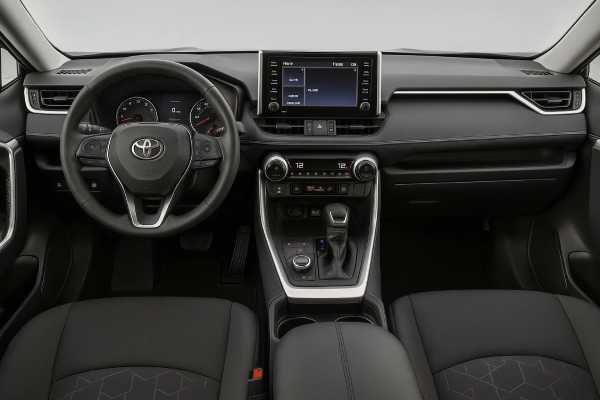

The fifth-generation Toyota RAV4 Hybrid pairs Toyota’s A25A-FXS 2.5-liter Atkinson-cycle four-cylinder with a compact hybrid system and an electric rear axle (AWD-i). Between 2019 and 2021 it became a benchmark for efficient, fuss-free family transport: brisk enough for daily use, exceptionally economical on fuel, and backed by a mature safety and driver-assist suite. Owners value the roomy cabin, low running costs, and Toyota’s long hybrid track record. Engineers will appreciate the robust thermal management, simple eCVT with planetary gearing, and the way the rear motor delivers transparent, predictive all-wheel traction without heavy mechanical hardware. This guide distills the details most shoppers and DIY owners look for—powertrain data, dimensions, performance, maintenance items, reliability patterns, safety outcomes, and how it stacks up against key rivals—using North American spec and terminology for clarity.
Fast Facts
- Strong efficiency for its class: ~40 mpg combined (5.9 L/100 km) with real-world 35–42 mpg depending on speed and weather.
- Predictive traction: electric rear axle (AWD-i) engages seamlessly on launch, in rain, and on light snow.
- Cabin practicality: flat load floor, ~37.5 ft³ seats up and ~69.8 ft³ seats down (SAE).
- Watch item: tire/alignment care matters—rotations every 5,000–7,500 mi (8,000–12,000 km) keeps it quiet and efficient.
- Basic oil service interval: 10,000 mi / 12 months (0W-16), with 5,000-mi checks recommended.
Explore the sections
- Detailed look: RAV4 Hybrid AWD-i
- Specifications: RAV4 Hybrid AWD-i
- Trims, options and safety tech
- Reliability and common issues
- Maintenance and buyer’s guide
- Driving and performance
- RAV4 Hybrid vs rivals
Detailed look: RAV4 Hybrid AWD-i
The XA50-series RAV4 Hybrid (2019–2021) combines the A25A-FXS 2.5-liter Atkinson-cycle inline-four with two motor-generators integrated in the front transaxle and a separate rear motor for Toyota’s electronic on-demand all-wheel drive (AWD-i). The hybrid system’s net output is rated at 219 hp (163 kW). The eCVT uses a planetary gearset to blend engine and electric power with no stepped ratios to feel; the calibration prioritizes efficiency at light loads but will hold revs for sustained climbs and passing.
AWD-i adds stability when pulling away on wet surfaces and confidence on unplowed side streets without the mass and drag of a mechanical propshaft. Because the rear axle is electric, packaging is neat: the cargo floor stays low and space is generous. Ride quality is settled, with multi-link rear suspension delivering better lateral control than earlier generations, and cabin noise is modest for the class. The hybrid’s brake-by-wire blends regeneration with friction smoothly once tires are rotated on schedule and pads are bedded in.
Toyota Safety Sense (TSS 2.0 during these years) brings automatic emergency braking with pedestrian detection, lane keeping with lane centering on the highway, and adaptive cruise control. Headlight performance varies by trim and options; higher trims with better lighting score higher in objective tests. Feature content scales from cloth-trimmed LE to well-equipped Limited, with the XSE’s sport-tuned suspension and two-tone look as the enthusiast pick.
For owners, the everyday advantages are clear: oil changes are annual for most drivers, there is no conventional alternator or starter to service, and the traction battery is covered by long hybrid warranties. When maintained with fresh 0W-16 oil, a clean intake and PCV system, and regular tire rotations, these hybrids are known to deliver long, uneventful service lives.
Specifications: RAV4 Hybrid AWD-i
Engine and Performance (ICE-Hybrid)
| Item | Specification |
|---|---|
| Code | A25A-FXS (Dynamic Force) |
| Layout & cylinders | Inline-4, DOHC, 4 valves/cyl |
| Bore × stroke | 87.5 × 103.4 mm (3.44 × 4.07 in) |
| Displacement | 2.5 L (2,487 cc) |
| Induction | Naturally aspirated (Atkinson-cycle) |
| Fuel system | Toyota D-4S (direct + port injection) |
| Compression ratio | ~14.0:1 |
| Max engine power* | ~176 hp (131 kW) @ ~5,700 rpm |
| Max engine torque* | ~221 Nm (163 lb-ft) @ ~3,600–5,200 rpm |
| Hybrid system net | 219 hp (163 kW) |
| Timing drive | Chain |
| Emissions/efficiency std. | EPA (North America) |
| EPA economy (AWD-i)** | 41/38/40 mpg US (city/hwy/comb) ≈ 5.7/6.2/5.9 L/100 km |
| Real-world highway (75 mph/120 km/h) | ~6.7–7.4 L/100 km (35–31 mpg US) depending on temp/tires |
| Aerodynamics | Cd ≈ 0.31–0.32 (typical for trim) |
- Engine-only output; hybrid system net is not a simple sum.
** Figures vary slightly by model year/trim and wheel/tire package.
Transmission and Driveline
| Item | Specification |
|---|---|
| Transmission | eCVT (planetary, electronic control) |
| Drive type | AWD-i (front hybrid transaxle + independent rear e-motor) |
| Rear differential | Single-speed reduction gear (electric motor drive) |
| Launch behavior | Predictive rear-axle assist on take-off and slip |
Note: Hybrid eCVT has no stepped gear ratios; “final drive” varies by operating mode via MG set.
Chassis and Dimensions
| Item | Specification |
|---|---|
| Front suspension | MacPherson strut, coil spring, stabilizer |
| Rear suspension | Multi-link, coil spring, stabilizer |
| Steering | Electric power steering; ~14–15:1 rack (model-dependent) |
| Brakes | 4-wheel discs; ~305 mm (12.0 in) front, ~281 mm (11.1 in) rear |
| Wheel/tire packages | 225/65 R17; 225/60 R18; 235/55 R19 (trim-dependent) |
| Ground clearance | ~205 mm (8.1 in) |
| Length/Width/Height | ~4,600/1,855/1,700 mm (181.5/73.0/66.9 in) |
| Wheelbase | 2,690 mm (105.9 in) |
| Turning circle (curb-to-curb) | ~11.4 m (37.4 ft) |
| Curb weight | ~1,680–1,740 kg (3,700–3,840 lb) |
| GVWR | ~2,100–2,160 kg (4,630–4,760 lb) |
| Fuel tank | ~55 L (14.5 US gal / 12.1 UK gal) |
| Cargo volume (SAE) | ~1,062 L (37.5 ft³) seats up / ~1,978 L (69.8 ft³) seats folded |
Performance and Capability
| Metric | Value |
|---|---|
| 0–60 mph (0–97 km/h) | ~7.5–7.8 s (trim/tires/load) |
| 0–100 km/h (0–62 mph) | ~8.0–8.3 s |
| Top speed | ~180 km/h (112 mph) |
| Braking 100–0 km/h (62–0 mph) | Class-typical; tire-dependent (summer < all-season) |
| Towing capacity | ~795 kg (1,750 lb) (North America) |
| Payload | ~410–520 kg (900–1,150 lb) |
| Roof load | ~75–80 kg (165–176 lb) with crossbars, check trim rating |
Fluids and Service Capacities (selected)
| System | Spec / Capacity | Notes |
|---|---|---|
| Engine oil | Toyota 0W-16; ~4.5 L (4.8 qt) w/ filter | API SN+/SP; change 10,000 mi/12 mo under normal service |
| Engine coolant | Toyota Super Long Life Coolant (pink), premix; capacity varies | Replace by time/VIN-based schedule |
| Hybrid transaxle | Toyota ATF WS; ~3.5–4.0 L | Drain/fill only if contaminated or heavy use; otherwise inspect |
| Rear e-axle (reduction) | Toyota gear oil (per manual); ~0.6–0.8 L | Inspect for leaks; change if submerged/contaminated |
| A/C refrigerant | R-1234yf; ~500–600 g (17.6–21.2 oz) | Model/trim dependent |
| A/C compressor oil | ND-OIL 12; small charge | Use correct oil with R-1234yf service equipment |
| Key torque (lug nuts) | ~103 Nm (76 lb-ft) | Verify by VIN; re-torque after wheel service |
Electrical (12 V and ignition)
| Item | Specification |
|---|---|
| Alternator | Not fitted (DC-DC converter from HV battery) |
| 12 V battery | ~45–51 Ah AGM; group size varies by trim |
| Spark plugs | Long-life iridium; gap ~0.8 mm (0.031 in) |
Safety and Driver Assistance
| Item | Details |
|---|---|
| Crash ratings (IIHS) | Strong overall structure; award status varies by headlight package |
| Headlights (IIHS) | Ratings vary: higher trims/LED often Adequate/Good; base can be Marginal/Poor |
| ADAS suite | Toyota Safety Sense 2.0: AEB (day/night ped.), lane departure + steering assist, lane tracing assist, full-range ACC, road sign assist (market-dependent), blind-spot and rear cross-traffic (available/standard by trim) |
| Child-seat provisions | LATCH anchors, top tethers; wide, accessible lower anchors |
Trims, options and safety tech
Trim walk (North America, 2019–2021): LE, XLE, XLE Premium (added early), XSE, Limited.
- LE (base efficiency play): 17-inch wheels, cloth seats, TSS 2.0 standard, Apple CarPlay/Android Auto depending on MY. Steel-spring ride, modest tire widths keep rolling resistance low. Headlights on early builds may test lower—note for shoppers who prioritize rural night driving.
- XLE: Adds dual-zone climate, keyless entry, additional USBs, optional sunroof and blind-spot monitoring/rear cross-traffic. A good value sweet spot if you want convenience without the cost of larger wheels.
- XLE Premium: 19-inch wheels, power liftgate, SofTex-trimmed seats, leather-wrapped steering wheel. Watch that bigger wheel/tire packages can nudge highway economy and ride noise.
- XSE (sport accent): Stiffer shock tuning and unique two-tone paint. Often paired with the better headlight units and larger wheels; steering feels a touch more immediate around center.
- Limited (feature leader): JBL audio, larger infotainment, memory driver seat, available pano camera and parking sensors, and the most complete lighting options.
Key packages/options that change function:
- Headlights: Trims with upgraded LED projectors generally score better objectively and subjectively; a worthwhile feature for night commuters.
- Wheels/tires: 17s ride quieter and return the best fuel economy. 19s improve response but can add harshness on broken pavement.
- Roof rails/towing prep: Verify roof-load rating and hitch compatibility by VIN if carrying bikes/boxes or planning light towing.
Safety ratings snapshot: Structure/airbag performance is consistently strong; award status with independent testers hinges on the headlight package and available active-safety calibrations. The hybrid’s mass helps in small-overlap stability, and the seating/mount geometry suits both rear-facing and forward-facing seats with easy LATCH access.
ADAS and calibration notes (service):
- Front radar/camera: After windshield replacement, bumper cover repair, or ride-height changes, a calibration procedure is required.
- Blind-spot/rear cross-traffic: Radar modules sit behind rear quarter; avoid metallic tint in those zones.
- Tire size/alignment: Lane tracing and ACC tracking work best with correct tire size and a fresh alignment.
Year-to-year highlights (2019–2021):
- 2019 launch: New TNGA-K platform; TSS 2.0 standard; hybrid available in multiple trims from launch.
- 2020: Android Auto added, some infotainment updates, minor feature reshuffles.
- 2021: Additional USBs and small equipment updates; consult the build sheet for headlight and audio combinations.
Quick identifiers: XA50 VIN sequence, hybrid badging with blue accents, blue-ring Toyota emblems. XSE two-tone paint and black roof rails are visual tells. Wheel designs vary by trim and help identify spec at a glance.
Reliability and common issues
Overall picture: The XA50 RAV4 Hybrid AWD-i is known for low incident rates when serviced on time. Most issues owners encounter are minor fit-and-finish items, tire wear/alignment, or noise/vibration concerns that trace back to wheels/tires or brake pad glazing rather than systemic powertrain faults.
Common (low severity/low cost):
- Brake feel at low speed: Occasional “step change” as the system transitions from regen to friction, more noticeable with glazed pads or mismatched tires. Remedy: bed pads, ensure correct tire pressures, perform brake clean/adjust as needed.
- Tire cupping/edge wear: Hybrids are sensitive to rotation cadence. Remedy: rotate every 5,000–7,500 mi, verify toe/camber, choose tires with low rolling resistance and appropriate load index.
- Wind/roof-rail noise: Crossbars or aftermarket racks can whistle at 50–70 mph. Remedy: reposition or fit fairing; verify torque.
Occasional (medium severity/cost):
- 12 V battery aging: AGM batteries can show weakness around 3–5 years depending on climate and drive cycle. Symptoms: slow wake-up, erratic infotainment. Remedy: test yearly; replace with correct AGM type.
- HV cooling fan dust load: Pet hair or dust can reduce airflow. Symptoms: fan noise under rear seat area. Remedy: clean intake path; inspect filter screens where fitted.
Rare (higher cost):
- Water intrusion at tailgate seals or roof accessories: Usually build-specific or after accessory install. Remedy: reseal and verify drain paths.
- DC-DC converter or inverter faults: Very uncommon; typically flagged early and handled under hybrid warranty.
Software and calibration updates:
- Periodic ECM/TCM/ADAS updates address driveability refinements (idle/stop-start smoothness, lane centering pathing) and false-positive warnings. After windshield, bumper, or radar service, complete the official calibration and confirm no DTCs remain.
Recalls/TSBs (2019–2021 highlights):
- Campaigns across the RAV4 line during these years addressed specific components (suspension pieces, fuel emissions hardware, or control units) in defined VIN ranges. Always verify by VIN through the official recall portal and keep dealer records with dates/mileage.
Pre-purchase checks (used):
- Full service history, especially 10,000-mi oil changes with 0W-16 and regular tire rotations.
- VIN recall/TSB completion printout.
- Brake rotor condition (look for grooves from long pad life), parking brake operation (electronic), and quiet operation of the hybrid fan intake.
- Evidence of windshield replacement followed by a proper camera/radar calibration.
- Even tire wear and a recent four-wheel alignment.
Maintenance and buyer’s guide
Practical schedule (typical, time/distance):
- Engine oil/filter: 0W-16, every 10,000 mi / 12 months; severe service or frequent short trips: 5,000 mi / 6 months.
- Engine air filter: Inspect 10,000 mi; replace 30,000–45,000 mi (dusty climates sooner).
- Cabin filter: 12 months or 15,000–20,000 mi; more often in urban/pollen seasons.
- Coolant (engine/inverter loops): Long-life; replace by time/mileage per manual; inspect hose condition yearly.
- Spark plugs (iridium): ~120,000 mi (192,000 km); verify by VIN.
- Fuel filter: In-tank; normally service-free unless contaminated.
- Hybrid transaxle fluid (ATF WS): Inspect; change only under heavy towing, contamination, or by choice around 100,000–150,000 mi.
- Rear e-axle oil: Inspect for leaks; replace if submerged or contaminated.
- Brake fluid: 3 years, then every 2–3 years; hybrid regen means low pad wear but fluid ages with time.
- Pads/rotors: Inspect every 10,000 mi; lube slide pins to prevent uneven wear.
- Serpentine/aux belts and hoses: Inspect 60,000 mi; replace on condition.
- 12 V battery: Test annually after year three; plan replacement around 4–6 years.
- Tires/rotation: 5,000–7,500 mi; check alignment yearly or with any steering pull/edge wear.
- HV battery health: System is self-monitoring; check for cooling blockage and ensure software is current. No routine capacity test required unless symptoms.
Fluid specifications (decision-critical):
- Oil: 0W-16, API SP/ILSAC GF-6B, Toyota Genuine recommended.
- ATF: Toyota ATF WS only.
- Coolant: Toyota Super Long Life (pink, premixed).
- A/C: R-1234yf with ND-OIL 12.
- Brake fluid: DOT 3 or DOT 4 per cap/manual (use fresh fluid).
Essential torques (verify by VIN):
- Wheel lug nuts: ~103 Nm (76 lb-ft).
- Oil drain plug: ~39–40 Nm (29–30 lb-ft).
- Caliper slide pins: ~25–35 Nm (18–26 lb-ft) typical; confirm spec.
Buyer’s checklist (used):
- Cold start, HVAC, and hybrid transitions smooth?
- Even tire wear and correct brand/size across all four corners?
- Windshield OEM or high-quality replacement with documented camera calibration?
- No warning lights after a full drive cycle?
- Trunk/tailgate seals dry; no damp under spare-tire well?
- Underbody free of impact scrapes near hybrid lines and the rear e-axle?
Recommended years/trims:
- XLE for value and comfort, XSE for tighter damping and better lighting packages where fitted, Limited if you want top headlights and features. Choose 17- or 18-inch wheels for best efficiency/ride.
Durability outlook: With routine fluids, clean filters, and timely tires/brakes, the 2019–2021 RAV4 Hybrid AWD-i typically delivers long service life with minimal unscheduled repairs. Hybrids often retain higher resale value due to fuel economy and perceived reliability.
Driving and performance
Ride, handling, NVH: The TNGA-K platform feels solid over broken pavement. Body motions are well controlled and the multi-link rear end keeps mid-corner bumps tidy. Steering is accurate if light; highway tracking is stable. Tire choice sets the tone: low-rolling-resistance all-seasons ride quietly and help economy; wider or performance-leaning all-seasons add grip at the cost of some thrum on coarse asphalt. Cabin noise is competitive for the class; the engine’s Atkinson-cycle note appears mainly under heavy throttle.
Powertrain character: Around town the hybrid glides on electric assist, with the engine joining unobtrusively. Throttle mapping is progressive; in Eco it softens tip-in for smoothness, while Sport holds revs longer for climbing or passing. The eCVT’s fixed ratio set gives linear thrust rather than shift steps; learn to use part-throttle with a brief squeeze for efficient passing. At highway merge, the system delivers its 219-hp net cleanly; once at speed, it settles at low load with the engine cycling for efficiency.
Efficiency (real world):
- City: Many owners see mid-40s mpg US (≈5.0 L/100 km) with gentle driving and warmed-up fluids.
- Highway 60–70 mph (100–113 km/h): Mid- to high-30s mpg US (6.7–6.2 L/100 km) depending on temperature, crosswinds, and roof gear.
- 75 mph (120 km/h): Low- to mid-30s mpg US (7.4–6.9 L/100 km).
Cold weather, snow tires, and roof boxes can trim 10–25% from summer numbers; pre-heating and proper tire pressures help.
Traction and control: AWD-i engages the rear motor proactively on launch and when front slip is predicted. On gravel or light snow the system feels transparent and confidence-inspiring. Because there’s no mechanical coupling, sustained high-load off-road is not its mission, but hill starts and slick parking ramps are a non-issue. Snow modes moderate throttle and adjust torque split logic.
Towing and load behavior: Within the modest 1,750-lb (≈795-kg) towing rating, cooling and braking remain composed. Expect a ~15–25% fuel-economy penalty with a small trailer or full family/cargo load at highway speeds. A weight-distributing hitch is not necessary at these loads; keep tongue weight inside guidance and re-torque the hitch fasteners.
Key metrics call-outs:
- 0–60 mph: ~7.5–7.8 s on 17–19-inch all-seasons.
- 50–80 mph passing: Respectable thanks to instant electric assist; plan one-gear-equivalent surge rather than multi-downshifts.
- Braking feel: Best after pad bedding; hybrids keep rotors cooler in town, so occasional firm stops help prevent light corrosion film.
RAV4 Hybrid vs rivals
Honda CR-V Hybrid: Smooth and efficient with similar cargo space; some years trail the Toyota on combined economy and long-term hybrid track record. Honda’s chassis tuning leans slightly more toward comfort; AWD logic differs but capability in light snow is similar.
Ford Escape Hybrid: Strong EPA numbers and lively acceleration. Cabin packaging is efficient, but long-term hybrid reputation is still building versus Toyota. Some trims ride softer; head-unit UX is a matter of taste.
Subaru Forester (non-hybrid in NA during these years): Symmetrical AWD excels in snow and on unpaved roads. Fuel economy lags the RAV4 Hybrid by a clear margin, and acceleration is slower. If you live at a ski resort, Subaru’s ground clearance is a plus; otherwise, the Toyota’s mpg advantage dominates.
Hyundai Tucson Hybrid (early MY overlap): Competitive power and features with a value pitch. Real-world mpg can be strong, though long-term data was thinner in early model years. Toyota counters with deeper dealer familiarity with hybrids and resale strength.
Why the RAV4 Hybrid AWD-i still stands out: Class-leading real-world efficiency without sacrificing space, a broad dealer network fluent in hybrid service, and straightforward maintenance. If you prioritize night driving, target trims with the stronger headlight package; if you prioritize comfort and economy, 17- or 18-inch wheels are the sweet spot.
References
- 2019 Toyota RAV4 4-door SUV 2019 (Safety Rating)
- Official Toyota Rav4 2019 safety rating 2019 (Safety Rating)
- Fuel Economy of the 2021 Toyota RAV4 Hybrid AWD 2021
- 2021 WARRANTY & MAINTENANCE GUIDE 2021 (Warranty and Maintenance)
- 2019 Toyota RAV4 Hybrid Product Information – Toyota USA Newsroom 2019 (Product Information)
Disclaimer
This article is for informational purposes only and is not a substitute for professional diagnosis or repair. Specifications, torque values, service intervals, and procedures can vary by VIN, market, model year, and equipment. Always verify against the official service documentation and the maintenance guide supplied with your vehicle. If you found this guide useful, please consider sharing it on Facebook or X/Twitter to support xcar’s work.