
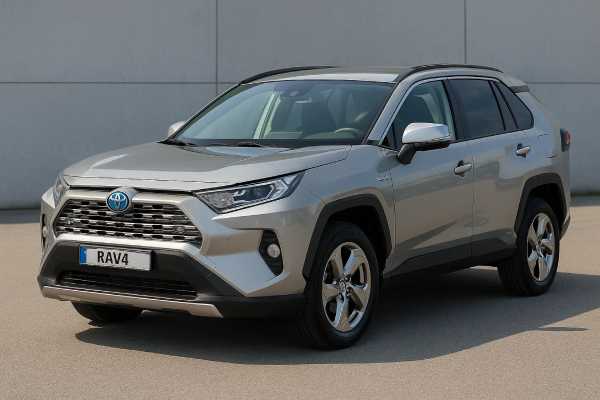

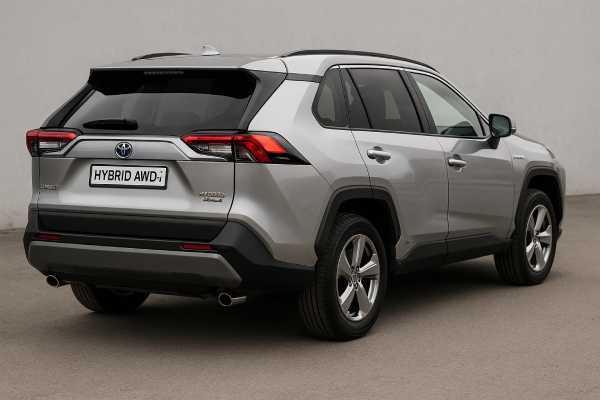
The fifth-generation Toyota RAV4 Hybrid with AWD-i combines Toyota’s A25A-FXS 2.5-liter Atkinson-cycle engine with a dual-motor hybrid transaxle in front and a separate electric motor on the rear axle. The hybrid system’s net output varies slightly by market—commonly listed at 219 hp in North America and 222 hp in Europe—yet the drive experience is consistent: quick step-off, quiet cruising, and excellent economy. Built on the TNGA-K platform, it delivers better body control and crash performance than the prior generation, while maintaining the cargo space and family-friendly ergonomics that made the RAV4 a best-seller. Owners value the long hybrid warranty coverage, straightforward annual service, and strong resale. This guide concentrates on the technical details shoppers and DIY owners want most—verified dimensions, performance, fluids and torques, maintenance timing, common fixes, safety ratings, and how the RAV4 Hybrid AWD-i stacks up to the segment’s strongest rivals.
Core Points
- Real-world thrift: typically 38–42 mpg US mixed (6.2–5.6 L/100 km) without sacrificing pace.
- Confident traction: electric rear axle engages seamlessly on launch, rain, and light snow; no driveshaft weight or drag.
- Cabin utility: low cargo floor and square opening; seats-down space suits bikes or flat-pack furniture.
- Watch item: tire rotation every 5,000–7,500 mi (8,000–12,000 km) prevents cupping and preserves quiet ride.
- Routine oil service: 0W-16, every 10,000 mi / 12 months (earlier under severe use).
What’s inside
- RAV4 Hybrid AWD-i overview
- RAV4 Hybrid AWD-i specs
- RAV4 Hybrid trims and safety
- Reliability and common issues
- Maintenance and buyer’s guide
- Driving and performance
- Rivals and comparisons
RAV4 Hybrid AWD-i overview
The XA50 RAV4 Hybrid (2019–2021) pairs Toyota’s 2.5-liter A25A-FXS Dynamic Force engine with two motor-generators in the front eCVT and a compact electric motor driving the rear axle. This “AWD-i” layout delivers instant rear-axle assist without a mechanical propshaft or transfer case, reducing weight and parasitic loss. The hybrid system’s calibration prioritizes electric assist at low speeds, engine efficiency once cruising, and transparent blending between the two. Acceleration is brisk for the class, especially in city traffic where the motors’ immediate torque masks the engine’s Atkinson-cycle bias toward efficiency.
Inside, the TNGA-K platform yields a flat load floor, wide cargo aperture, and generous rear legroom. Noise, vibration, and harshness are well controlled; tire choice largely sets cabin hush at highway speed. The multi-link rear suspension improves mid-corner stability and small-bump compliance over the previous generation. Toyota Safety Sense (TSS 2.0 in these years) is standard, with adaptive cruise, lane tracing (centering) assist, and automatic emergency braking. Headlight performance varies by trim and option package; shoppers who value night driving should target trims with the upgraded LED projectors.
Wheel and tire packages shape both feel and efficiency: the 17-inch setup rides quietly and returns the best mpg, while 18- and 19-inch options add steering immediacy and visual punch at the cost of some thrum on coarse asphalt. Towing is modest but useful for a small utility trailer or pair of bikes. Maintenance is simple—annual oil service, periodic filters, brake fluid by time—and there’s no conventional alternator or starter to service because the hybrid system handles those functions. With routine care and up-to-date calibrations, the AWD-i hybrid driveline has proven durable in mixed climates and driving patterns.
RAV4 Hybrid AWD-i specs
Engine and Performance (Hybrid ICE)
| Item | Specification |
|---|---|
| Engine code | A25A-FXS (Dynamic Force) |
| Configuration | Inline-4, DOHC, 16-valve; Atkinson cycle |
| Bore × stroke | 87.5 × 103.4 mm (3.44 × 4.07 in) |
| Displacement | 2.5 L (2,487 cc) |
| Induction | Naturally aspirated |
| Fuel system | D-4S (direct + port injection) |
| Compression ratio | ~14.0:1 |
| Max engine power* | ~176 hp (131 kW) @ ~5,700 rpm |
| Max engine torque* | ~221 Nm (163 lb-ft) @ ~3,600–5,200 rpm |
| Hybrid system net | 219–222 hp (163–165 kW), market-dependent |
| Timing drive | Chain |
| EPA economy (AWD-i)** | ~41/38/40 mpg US city/hwy/comb (5.7/6.2/5.9 L/100 km) |
| Real-world highway (120 km/h / 75 mph) | ~6.9–7.6 L/100 km (34–31 mpg US) |
| Aerodynamics | Cd ~0.31–0.32 (trim-dependent) |
- Engine-only output; system net is not a sum.
** Wheel/tire and headlight packages can shift figures slightly across years.
Transmission and Driveline
| Item | Specification |
|---|---|
| Transmission | eCVT (planetary power-split) |
| Drive type | AWD-i (front hybrid transaxle + independent rear e-motor) |
| Rear drive unit | Single-speed reduction gear; on-demand torque |
| Traction logic | Predictive rear assist on launch and slip; Snow mode available |
The eCVT has no stepped ratios; effective gearing varies continuously by motor/engine blend.
Chassis and Dimensions
| Item | Specification |
|---|---|
| Platform | TNGA-K |
| Front suspension | MacPherson strut, coil spring, stabilizer |
| Rear suspension | Multi-link, coil spring, stabilizer |
| Steering | Electric power steering; ~14–15:1 rack (trim-dependent) |
| Brakes | 4-wheel discs; ~305 mm (12.0 in) front, ~281 mm (11.1 in) rear |
| Wheels/tires | 225/65 R17; 225/60 R18; 235/55 R19 |
| Ground clearance | ~205 mm (8.1 in) |
| Length/Width/Height | ~4,600/1,855/1,700 mm (181.5/73.0/66.9 in) |
| Wheelbase | 2,690 mm (105.9 in) |
| Turning circle | ~11.4 m (37.4 ft) curb-to-curb |
| Curb weight | ~1,680–1,740 kg (3,700–3,840 lb) |
| GVWR | ~2,100–2,160 kg (4,630–4,760 lb) |
| Fuel tank | ~55 L (14.5 US gal / 12.1 UK gal) |
| Cargo volume (SAE) | ~1,062 L (37.5 ft³) seats up / ~1,978 L (69.8 ft³) seats folded |
Performance and Capability
| Metric | Value |
|---|---|
| 0–60 mph (0–97 km/h) | ~7.5–7.8 s (tire/trim/load) |
| 0–100 km/h (0–62 mph) | ~8.0–8.3 s |
| Top speed | ~180 km/h (112 mph) |
| Braking 100–0 km/h | Tire-dependent; class-typical distances |
| Towing capacity | ~795 kg (1,750 lb) |
| Payload | ~410–520 kg (900–1,150 lb) |
| Roof load | ~75–80 kg (165–176 lb) with approved crossbars |
Fluids and Service Capacities (selected)
| System | Spec / Capacity | Notes |
|---|---|---|
| Engine oil | 0W-16 API SP/ILSAC GF-6B; ~4.5 L (4.8 qt) w/filter | 10,000 mi / 12 mo normal; 5,000 mi severe |
| Engine coolant | Toyota Super Long Life (pink), premix | Replace by time/mileage; bleed per manual |
| Hybrid transaxle | Toyota ATF WS; ~3.5–4.0 L | Inspect; service on contamination/heavy duty |
| Rear e-axle | Toyota gear oil; ~0.6–0.8 L | Inspect for leaks; change if submerged |
| A/C refrigerant | R-1234yf; ~500–600 g (17.6–21.2 oz) | Use ND-OIL 12 |
| Brake fluid | DOT 3/4 as specified | Replace every ~3 years |
| Wheel lug nuts | ~103 Nm (76 lb-ft) | Re-torque after wheel service |
| Oil drain plug | ~39–40 Nm (29–30 lb-ft) | Use fresh crush washer |
Electrical (12 V & ignition)
| Item | Specification |
|---|---|
| Alternator | Not fitted (DC-DC converter supplies 12 V) |
| 12 V battery | ~45–51 Ah AGM; group size varies |
| Spark plugs | Long-life iridium; gap ~0.8 mm (0.031 in) |
Safety and Driver Assistance
| Item | Details |
|---|---|
| Structure/crashworthiness | Strong small-overlap and side outcomes on tested trims |
| Headlights | Ratings vary; upgraded LED projectors perform best |
| ADAS (TSS 2.0) | AEB (pedestrian day/night), lane departure alert with steering assist, lane tracing assist, full-range ACC, road sign assist (market-dependent), BSM/RCTA availability |
| Child-seat | LATCH anchors well located; wide rear seat accommodates two child seats easily |
RAV4 Hybrid trims and safety
Trim overview (2019–2021): LE, XLE, XLE Premium, XSE, Limited.
- LE: Value leader with TSS 2.0, 17-inch wheels, cloth upholstery, and the best ride/efficiency combo. Early builds may have simpler headlight units—verify if night driving matters.
- XLE: Adds dual-zone climate, push-button start, additional USB ports, and available blind-spot monitoring with rear cross-traffic alert.
- XLE Premium: Power liftgate, SofTex upholstery, larger wheels/tires, and more convenience features. Expect a small hit to ride quietness and highway mpg versus 17-inch fitment.
- XSE: Sport-tuned dampers, distinctive two-tone paint, black exterior accents, and commonly the stronger headlight package. Steering feels a touch more immediate.
- Limited: Feature maximum with premium audio, larger infotainment display, parking sensors, surround-view camera, and the most comprehensive lighting options.
Option notes that change function:
- Headlights: Upgraded LED projectors significantly improve down-road reach and often enable top safety awards. Prioritize these if you commute in dark, rural conditions.
- Wheels/tires: 17-inch all-seasons for comfort and economy; 18/19-inch for response and appearance. Snow-belt owners should consider dedicated winter tires; AWD-i benefits greatly from good rubber.
- Roof rails/hitch: Check roof-load and tongue-weight limits by VIN before mounting boxes or fitting a hitch; re-torque hardware after 100–200 miles.
Safety ratings (2019–2021 highlights): Independent testers rate structure and airbags strongly; award tiers hinge on headlight package and crash-prevention performance. The hybrid’s mass and TNGA-K structural design contribute to stable small-overlap behavior. Child-seat installation is straightforward, and outward visibility is good for the class.
ADAS evolution & service implications:
- Camera/radar calibration: Required after windshield replacement, bumper repairs, or ride-height changes. Ensure a static/dynamic calibration is performed and documented.
- Blind-spot/rear cross-traffic: Radar modules behind rear quarter panels can be affected by metallic tints or body repairs; verify aiming if panels were replaced.
- Tire size/alignment: Correct sizing and a fresh alignment keep lane tracing smooth and steering-angle sensors happy.
Year-to-year changes:
- 2019: Launch year for XA50; TSS 2.0 standard; Android Auto availability began rolling out.
- 2020: Wider smartphone integration, small UX upgrades, option package reshuffles.
- 2021: Additional USB ports and minor content updates; confirm headlight spec by trim.
Reliability and common issues
The XA50 RAV4 Hybrid AWD-i has a strong reliability reputation when serviced on schedule. Most owner-reported annoyances relate to tires, brake feel at crawling speeds, or minor fit/finish—rather than core powertrain faults.
Common (low cost):
- Low-speed brake transition feel: A slight step as the system blends regen to friction, more noticeable with glazed pads or mismatched tires. Fix: bed pads properly, verify tire pressures, and keep rotors clean with periodic firm stops.
- Tire cupping/edge wear: Hybrids are sensitive to rotation cadence. Fix: rotate every 5,000–7,500 mi and keep alignment in spec; consider LRR (low-rolling-resistance) tires with correct load index.
- Roof-rack wind noise: Crossbar placement can whistle between 50–70 mph. Fix: reposition per manual or add a fairing.
Occasional (moderate cost):
- 12 V AGM battery aging: Around 3–5 years depending on climate and drive cycle. Symptoms: slow wake-up, infotainment resets. Fix: annual battery test after year three; replace with correct AGM spec.
- HV cooling fan intake dust/pet hair: Symptoms: fan runs audibly under the rear seat. Fix: clean intake path and check screens/ducting where fitted.
Rare (higher cost):
- Inverter or DC-DC converter faults: Uncommon; typically present early and are handled under hybrid warranty.
- Water intrusion at tailgate/roof accessories: Usually due to accessory install or seal damage. Fix: reseal, verify drains.
Software/calibration updates: Periodic ECM/eCVT and ADAS updates refine idle behavior, engine stop/start transitions, and lane-centering pathing. After glass or radar service, insist on documented calibration with no stored DTCs.
Recalls/TSBs (2019–2021 themes): Campaigns across RAV4 lines in these years targeted specific components (e.g., suspension hardware, emissions control parts, control-unit updates) within defined VIN ranges. Always run an official VIN recall check and retain the dealer’s completion paperwork in the service file.
Pre-purchase checks (used):
- Documented 10,000-mi oil changes with 0W-16; tire rotations at 5,000–7,500 mi.
- Even tire wear and matching brand/size on all four corners.
- Windshield replacement? Verify forward-camera calibration report.
- Dry cargo well and roof-rack mounting points; no musty odors.
- Brake rotors free of heavy corrosion ridges; quiet hybrid cooling fan.
Maintenance and buyer’s guide
Practical service schedule (time/distance):
- Engine oil & filter: 0W-16, every 10,000 mi / 12 mo (5,000/6 mo if many short trips, extreme cold, or towing).
- Engine air filter: Inspect 10,000 mi; replace 30,000–45,000 mi (earlier in dusty regions).
- Cabin filter: Replace every 12 mo or 15,000–20,000 mi.
- Coolant (engine & inverter loops): Long-life; replace by time/mileage per guide; inspect annually for hose condition and seepage.
- Spark plugs (iridium): ~120,000 mi (192,000 km); verify exact interval by VIN.
- Fuel filter: In-tank; normally lifetime service unless contamination occurs.
- Hybrid transaxle fluid (ATF WS): Inspect; optional drain/fill around 100,000–150,000 mi for peace of mind if towing or severe duty.
- Rear e-axle oil: Inspect for leaks; change only if contaminated/submerged.
- Brake fluid: Replace every 3 years regardless of mileage.
- Pads/rotors: Inspect every 10,000 mi; clean/lube slide pins to prevent uneven wear (hybrids can glaze pads with light use).
- Belts/hoses: Inspect from 60,000 mi; replace on condition.
- 12 V battery: Test yearly after year three; typical life 4–6 years.
- Tires: Rotate every 5,000–7,500 mi; align annually or with any pull/edge wear.
- HV system: No periodic capacity test required; keep cooling inlets clear and software current.
Fluid specs to know:
- Oil: 0W-16 API SP/ILSAC GF-6B (Toyota Genuine recommended).
- ATF: Toyota ATF WS only.
- Coolant: Toyota Super Long Life (pink, premixed).
- A/C: R-1234yf with ND-OIL 12.
- Brake fluid: DOT 3 or DOT 4 as specified on reservoir cap/manual.
Essential torque values (verify by VIN):
- Wheel lug nuts: ~103 Nm (76 lb-ft).
- Oil drain plug: ~39–40 Nm (29–30 lb-ft).
- Front caliper slide pins: ~25–35 Nm (18–26 lb-ft) typical.
Buyer’s checklist (used):
- Road test: Smooth EV↔ICE transitions? Stable lane-tracing behavior? No shakes at 100–120 km/h (60–75 mph).
- Tires/alignment: Even tread, correct load index/speed rating, no inner-edge scalloping.
- Brakes: Firm pedal with consistent low-speed blend; no grinding from rusty rotor lips.
- ADAS: ACC, lane tracing, and road sign assist operate normally; no dashboard alerts after a full drive cycle.
- Body/waterchecks: Tailgate seals, roof-rail mounts, and spare-well dry.
- VIN report: Recall/TSB completion proof; warranty and maintenance guide stamped.
Trims to target:
- XLE for value and comfort;
- XSE for tighter damping and commonly better headlights;
- Limited if you want the fullest feature set and lighting. Choose 17- or 18-inch wheels for the best blend of mpg and ride.
Durability outlook: With fresh fluids by time, regular tire care, and occasional pad bedding, these hybrids typically post high mileage with minimal unscheduled work. Resale remains strong thanks to economy, brand reputation, and broad dealer familiarity with Toyota hybrids.
Driving and performance
Ride and handling: The TNGA-K chassis feels planted, with quick steering around center and predictable body roll. Over broken city pavement, the suspension smothers sharp edges without float. On the highway the RAV4 tracks straight and resists crosswinds well; small steering inputs keep it settled. Cabin noise is tire-driven: low-rolling-resistance all-seasons are quiet on smooth asphalt, while aggressive all-seasons on 19-inch rims add a low thrum on coarse surfaces.
Powertrain character: Around town, the hybrid favors electric torque for the first car-length; the engine joins quietly unless you demand full power. The eCVT holds revs under sustained climbs but otherwise keeps rpm low. Eco mode softens tip-in and optimizes A/C load; Normal suits everyday use; Sport sharpens response for passing and on-ramp merges. Because electric assist fills in midrange, the RAV4 Hybrid often feels stronger than the spec sheet implies.
Efficiency in practice:
- City: Mid-40s mpg US (≈5.0 L/100 km) is achievable with gentle driving and warm temps.
- Highway 60–70 mph (100–113 km/h): Mid- to high-30s mpg US (6.7–6.2 L/100 km) depending on winds and roof gear.
- 75 mph (120 km/h): Low- to mid-30s mpg US (7.4–6.9 L/100 km).
Cold weather, winter tires, and roof boxes can trim 10–25%; pre-conditioning and correct tire pressures help recover some of that loss.
Traction and control: AWD-i engages the rear motor proactively on take-off and when the front predicts slip, aiding slushy starts and wet roundabouts. On gravel or light snow, the system is confident and unobtrusive. It is not intended for sustained high-load off-roading, but for commuting through shoulder-season storms it works impressively well.
Braking and feel: Blended regen/friction braking preserves pads and rotors in town; occasional firm stops keep rotors clean. Pedal feel is more linear after pad bedding and with evenly worn tires.
Towing and load: Within the ~1,750-lb (≈795-kg) limit, the hybrid keeps temperatures and braking in check, though expect a 15–25% economy penalty with a small trailer or full family/cargo load at speed. Observe tongue weight, re-torque hitch bolts after the first trip, and keep trailer tires at rated pressure.
Rivals and comparisons
Honda CR-V Hybrid: Smooth and efficient, with generous rear seat space. Some years undercut the Toyota on combined mpg and long-term hybrid track record. Ride comfort is excellent; AWD logic differs but light-snow capability is comparable.
Ford Escape Hybrid: Perky acceleration and strong EPA numbers. Cabin packaging is efficient, though long-term hybrid durability data was still maturing for early years. Toyota counters with deeper dealer hybrid expertise and historically higher resale.
Subaru Forester (non-hybrid in NA for these years): Superb visibility and snow-belt credibility with standard AWD. Fuel economy and acceleration lag the RAV4 Hybrid; if you live on unpaved roads, Subaru’s ground clearance is compelling.
Hyundai Tucson Hybrid (early overlap): Competitive power and equipment with an attractive value story. Real-world mpg can be strong; Toyota’s edge is dealer familiarity and a longer hybrid service legacy in North America.
Bottom line: The RAV4 Hybrid AWD-i remains the balanced choice for families who value economy without losing space or everyday traction. Focus on trims with the stronger headlight package if you drive unlit roads, and stick with 17- or 18-inch wheels for the best long-haul refinement.
References
- 2021 WARRANTY & MAINTENANCE GUIDE 2021 (Warranty and Maintenance)
- Fuel Economy of the 2021 Toyota RAV4 Hybrid AWD 2021
- 2019 Toyota RAV4 4-door SUV 2019 (Safety Rating)
- Official Toyota Rav4 2019 safety rating 2019 (Safety Rating)
- 2019 Toyota RAV4 Hybrid Product Information – Toyota USA Newsroom 2019 (Product Information)
Disclaimer
This article is for informational purposes only and is not a substitute for professional diagnosis or repair. Specifications, torque values, intervals, and procedures can vary by VIN, market, model year, and equipment. Always verify details against your official service documentation and the maintenance guide supplied with your vehicle. If this guide helped you, please share it on Facebook or X/Twitter to support xcar’s work.