
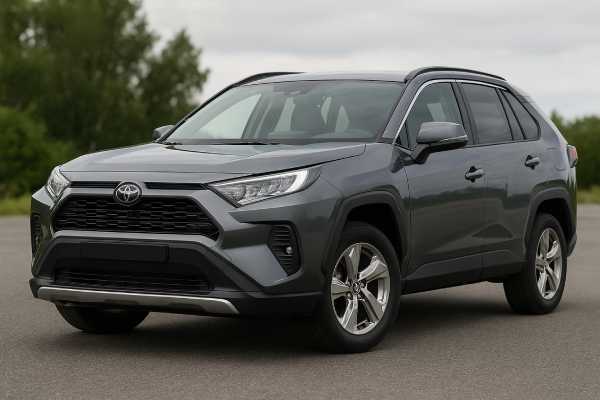
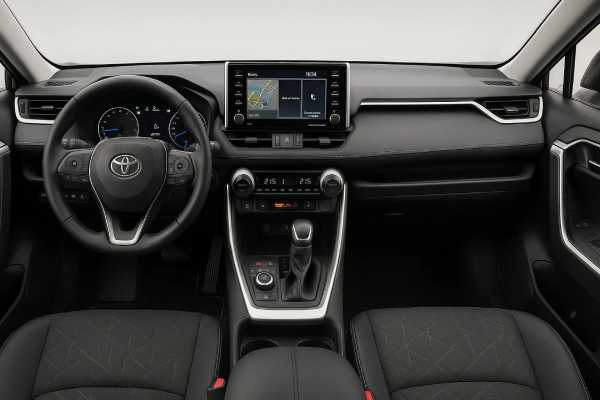
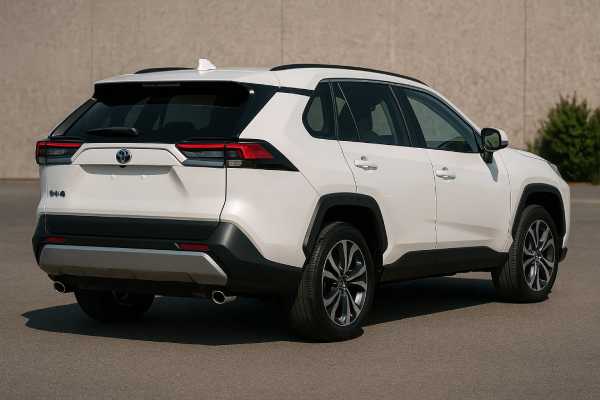
The facelifted RAV4 AWD (XA50, 2022–present) doubles down on what buyers value: a proven 2.5-litre Dynamic Force engine (A25A-FKS), a conventional eight-speed automatic, and all-wheel drive tuned for real-world weather and trail use. The update brought crisper lighting, better screens, and—on newer years—Toyota’s next-gen driver-assist logic. If you like a straightforward gas SUV with no turbo or hybrid complexity, this is the one. It accelerates honestly, cruises quietly, and carries a family plus gear without drama. Fuel economy remains competitive thanks to a front-to-rear driveline disconnect and efficient gearing. Most trims support light towing, while Adventure and TRD Off-Road add torque-vectoring AWD and higher tow ratings. Inside, the cabin favors visibility, durability, and easy-clean surfaces; cargo space is boxy and genuinely useful. Ownership is simple: timing chain, long-life spark plugs, and widely available fluids. This guide distills the specs that matter and adds practical maintenance, reliability patterns, and trim advice to help you buy and live with the AWD gas RAV4 confidently.
Top Highlights
- Confident winter traction and trail poise: available torque-vectoring AWD with rear disconnect; Multi-Terrain Select modes.
- Honest efficiency for a non-turbo AWD: typically ~27/33/29 mpg (8.7/7.1/8.1 L/100 km) depending on trim and tires.
- Strong utility: square cargo bay (~37.5/69.8 ft³ seats up/down), easy roof-rack fitment, up to 3,500 lb (1,588 kg) towing on Adventure/TRD Off-Road.
- Caveat: headlight performance and some IIHS ratings vary by exact lamp package and model year—choose trims carefully if you drive unlit roads.
- Service rhythm most owners use: oil/filter and rotation every 10,000 miles/12 months (16,000 km/12 months); severe-duty at 5,000 miles/6 months.
Quick navigation
- RAV4 AWD 2022–present overview
- RAV4 AWD specs and data
- Trims, options and safety
- Reliability and known issues
- Maintenance and buyer’s guide
- Driving and performance
- RAV4 AWD versus rivals
RAV4 AWD 2022–present overview
Toyota’s mid-cycle refresh sharpened the fifth-generation RAV4’s formula without re-engineering its core. Under the hood remains the A25A-FKS 2.5-litre four—long-stroke, high compression, and designed for strong part-load efficiency—with port-plus-direct D-4S injection to keep intake valves cleaner over time. It pairs with the Direct-Shift eight-speed automatic, which uses a conventional torque converter for smooth take-offs and efficient lock-up once rolling.
AWD hardware is the differentiator:
- Most trims fit Dynamic Torque Control AWD, which can decouple the rear driveline for efficiency and re-engage proactively when slip is predicted.
- Adventure and TRD Off-Road add Dynamic Torque Vectoring AWD with a rear coupling and dog clutches that can apportion left–right torque and also disconnect the rear axle entirely at cruise.
- Multi-Terrain Select adjusts throttle, transmission, and brake-based traction logic for Mud & Sand, Rock & Dirt, and Snow. A dedicated Trail mode uses brake-lock differentials to send torque to a single gripping wheel if needed.
The facelift’s visible touches—reprofiled lighting, wheel designs, cabin trim—are joined by meaningful tech upgrades. From 2023, Toyota’s newer multimedia platform brings quicker responses, larger displays on many trims, and cleaner voice control. Toyota Safety Sense steps up as well, adding improved intersection-assist logic, smarter lane-centering, and refined pedestrian/bicyclist detection.
On the road, the RAV4 AWD is tuned for confidence rather than theatrics. Steering is light in town, gains a stable on-center at speed, and the body stays tidy over broken pavement. With the eight-speed in top gear, the engine turns low rpm and wind noise dominates—one reason this non-turbo SUV returns solid highway economy. The cargo area is wide and square, the liftover low, and the roof rack system accepts common crossbars for boxes, bikes, or skis. For buyers who need consistent winter traction and simple, durable hardware, the AWD gas RAV4 nails the brief.
RAV4 AWD specs and data
All figures reflect North American AWD gasoline models unless noted. Ranges reflect tire/wheel and trim differences.
Engine and performance (ICE)
| Item | Value |
|---|---|
| Code | A25A-FKS (Dynamic Force) |
| Layout & valvetrain | Inline-4, DOHC, 16-valve; VVT-iE (intake) / VVT-i (exhaust) |
| Bore × stroke | 87.5 × 103.4 mm (3.44 × 4.07 in) |
| Displacement | 2.5 L (2,487 cc) |
| Induction & fuel | Naturally aspirated; D-4S (direct + port injection) |
| Compression ratio | ~13.0:1 |
| Max power | 203 hp (151 kW) @ 6,600 rpm |
| Max torque | 249 Nm (184 lb-ft) @ ~5,000 rpm |
| Timing drive | Chain |
| Emissions/efficiency | Tier 3 / SULEV (typical), EPA methodology |
| Rated economy (EPA, typical AWD) | ~27 city / 33 hwy / 29 combined mpg ≈ 8.7 / 7.1 / 8.1 L/100 km (varies by trim/tire) |
| Real-world highway @ 120 km/h (75 mph) | ~29–32 mpg US (8.1–7.4 L/100 km), wind/grade/roof-rack dependent |
| Fuel | Regular unleaded (87 AKI / 91 RON min) |
Design note: Long stroke and high tumble ports keep efficiency high at cruise. The dual-path D-4S system runs port injection at light load, mitigating DI-only deposit buildup.
Transmission and driveline
| Item | Value |
|---|---|
| Transmission | Direct-Shift 8-speed automatic (torque converter) |
| Drive type | AWD with rear driveline disconnect |
| AWD systems | Dynamic Torque Control AWD (most trims); Dynamic Torque Vectoring AWD (Adventure/TRD Off-Road) |
| Final drive ratio | ~3.18 (varies slightly by application) |
| Multi-Terrain Select | Mud & Sand, Rock & Dirt, Snow; Trail mode (brake-lock differentials) |
| Towing (properly equipped) | 1,500 lb (680 kg) most trims; 3,500 lb (1,588 kg) Adventure/TRD Off-Road |
| Refuel to full (typical) | <10 minutes at a standard pump |
Gear-by-gear ratios are not universally published; consult service literature for calibration work.
Chassis and dimensions
| Item | Value |
|---|---|
| Platform | TNGA-K |
| Front/rear suspension | MacPherson strut / multi-link |
| Steering | Electric power steering |
| Brakes | 4-wheel discs; ventilated fronts; ABS/EBD/BA |
| Wheels/tires (common) | 225/65R17 (LE/XLE), 235/55R19 (Limited), 235/60R18 A/T (TRD Off-Road) |
| Ground clearance | ~213 mm (8.4 in), trim dependent |
| Length / width / height | ~4,600 × 1,855 × 1,700 mm (≈181.1 × 73.0 × 66.9 in) |
| Wheelbase | 2,690 mm (105.9 in) |
| Turning circle | ~11.4 m (37.4 ft) curb-to-curb |
| Curb weight | ~1,585–1,665 kg (3,495–3,670 lb) |
| GVWR | ~2,115–2,200 kg (4,665–4,850 lb) |
| Fuel tank | 55 L (14.5 US gal / 12.1 UK gal) |
| Cargo volume (SAE) | ~1,062 L (37.5 ft³) seats up / ~1,978 L (69.8 ft³) seats down |
Performance and capability (indicative)
| Metric | Value |
|---|---|
| 0–60 mph / 0–100 km/h | ~8.1–8.6 s (trim/tire dependent) |
| Top speed | ~190–195 km/h (118–121 mph), limited |
| 100–0 km/h braking | ~38–43 m (125–140 ft), tire and surface dependent |
| Roof load | Typically up to ~75 kg (165 lb) with OE crossbars |
| Approach/departure (Adventure/TRD) | Modestly improved with A/T tires; not a rock-crawler but confident on rutted access roads |
Fluids and service capacities (AWD gas essentials)
| System | Spec / capacity (approx.) |
|---|---|
| Engine oil | SAE 0W-16; ~4.5 L (4.8 US qt) with filter |
| Engine coolant | Toyota Super Long Life Coolant (pink) 50/50; capacity varies by drain method—bleed per service manual |
| Automatic transmission | Toyota WS ATF; level set by temperature; drain/fill typically ~3.7–4.0 L (3.9–4.2 qt) |
| Rear differential (AWD) | GL-5 75W-85/90 gear oil; ~0.9–1.1 L (0.95–1.16 qt) |
| Rear coupling/transfer (AWD) | GL-5 gear oil; ~0.7–1.0 L (0.74–1.06 qt) depending on unit |
| Brake fluid | DOT 3 or DOT 4 |
| A/C refrigerant | R-1234yf; ~0.5–0.6 kg typical; compressor oil ND-OIL-12 |
| Key torque values | Wheel lug nuts 103 Nm (76 lb-ft); oil drain plug ~40 Nm (30 lb-ft) |
Always confirm capacities and torque against your VIN’s service documentation.
Electrical
| Item | Value |
|---|---|
| Alternator | ECU-controlled; output varies with load (idle charge reduction for efficiency) |
| 12-V battery | 45–60 Ah class; flooded or AGM depending on supplier |
| Spark plugs | Long-life iridium; nominal 100,000-mile (160,000-km) service interval |
Safety and driver assistance
| Item | Summary |
|---|---|
| Crash ratings | Strong results in legacy IIHS tests; updated moderate-overlap yields Moderate; updated side test often Acceptable depending on year/trim |
| Headlight rating | Varies by lamp: projector/adaptive units score higher than base reflectors |
| ADAS suite | Toyota Safety Sense (AEB with pedestrian/bicyclist features, full-speed adaptive cruise, lane departure alert with steering assist, lane-tracing assist, road sign assist); blind-spot monitoring and rear cross-traffic alert standard or optional by trim |
| Child-seat provisions | LATCH on two outboard rear positions; three top tethers; generous rear door openings aid fitment |
Trims, options and safety
Core trims (AWD gas, 2022–present): LE, XLE, XLE Premium, Adventure, TRD Off-Road, Limited. Packaging and displays improved in 2023+; lamps and wheel sizes vary by trim and can affect both fuel economy and IIHS headlight scores.
How they differ mechanically
- LE / XLE — Dynamic Torque Control AWD; 17-inch (LE) or 17/18-inch (XLE) road-biased tires; best efficiency and tire replacement cost.
- XLE Premium — Adds larger wheels, SofTex upholstery, power driver seat, and power liftgate on many builds; AWD hardware remains as LE/XLE.
- Adventure — Dynamic Torque Vectoring AWD, higher tow rating (3,500 lb/1,588 kg) when properly equipped, unique grille/bumper, and tougher wheel/tire packages.
- TRD Off-Road — Shares torque-vectoring AWD, TRD-tuned shocks/springs, underbody protection, and all-terrain tires (often 235/60R18); the most trail-ready non-hybrid RAV4.
- Limited — Comfort and tech flagship; projector/adaptive headlights on many builds (seek these if night driving matters most). AWD hardware aligns with grade and options; verify if torque-vectoring is bundled.
Lighting and IIHS headlight nuance
- Base LED reflectors typically score lower than projector or adaptive systems. If you do frequent rural/night highway driving, target trims with the higher-rated lamps. Headlight selection can determine eligibility for certain safety awards.
Interior and infotainment
- 2022 still mixes legacy screens with incremental updates; 2023 onward moves to the new Toyota Audio Multimedia platform with quicker responses, bigger displays (up to 10.5 or 12.3 in, trim dependent), and cloud-based nav.
- Practical adds to look for: digital rearview mirror, 360° camera (Panoramic View Monitor), ventilated front seats (Limited), and multiple USB-C ports.
Quick identifiers (walk-up clues)
- Adventure/TRD bumpers and wheel arch trims are chunkier; TRD sits slightly taller visually on its all-terrains.
- Limited often shows chrome accents and the more advanced headlight housings.
- Underneath, torque-vectoring AWD has a distinct rear drive module with clutch packs; base AWD uses a simpler coupling.
Safety ratings and what to check
- The RAV4 line maintains excellent occupant protection in most long-standing IIHS/NHTSA tests, but the updated moderate-overlap protocol—focused on rear-seat injury measures—lowers that specific sub-score to Moderate in many configurations (a class-wide trend).
- Ratings and headlight outcomes change by year/trim/lamp. If shopping used, run the exact VIN through the rating body’s database and confirm whether your target has the higher-rated lamps.
ADAS and service/calibration
- After windshield replacement or front bumper/radar work, expect camera/radar recalibration. Budget time for static/dynamic aiming and a short road test.
- Blind-spot and rear cross-traffic modules need relearns if rear quarter panels or bumper shells are replaced.
- Many dealers can print a calibration report; keep it with your records.
Reliability and known issues
The A25A-FKS with the 8-speed automatic has matured nicely; widespread early-generation calibration tweaks for shift feel were handled long before the facelift, and hardware durability is a strong suit when serviced on time. Patterns to know:
Common / owner-noticeable (low to medium cost)
- Light-throttle “hunting” between top gears on rolling terrain. Cause: economy-biased shift scheduling and tiny throttle inputs; locking/unlocking the converter can be felt. Remedy: ensure latest ECM/TCM software; use Sport mode for hilly two-lanes; verify tire size/pressures are stock.
- Wind noise around mirrors and roof rails at motorway speeds, more noticeable with crossbars or all-terrain tires. Remedy: confirm crossbar torque and seal condition; consider fairings with large roof boxes.
- Rear brake corrosion in snow belts due to infrequent heavy stops. Remedy: annual clean/inspect; exercise the parking brake; replace slide-pin boots as needed.
Occasional (medium cost)
- Exhaust heat-shield rattles at certain rpm after winter exposure. Remedy: replace corroded clips with updated hardware.
- Wheel-bearing noise at higher mileage on vehicles with frequent gravel use or A/T tires. Remedy: confirm with chassis ears; replace hub assembly.
Rare (higher cost)
- Transfer or rear differential seepage at seals if fluid is never changed and the vehicle tows. Remedy: reseal and switch to fresh GL-5 gear oil; consider preventative 60–90k-mile drain/fills when towing.
- 8-speed internal faults are rare when fluid stays within temperature limits; towing without proper hitch/weight distribution can overheat fluid. Remedy: monitor service temps if you tow steep grades; use Tow/Haul logic where fitted.
Electronics and infotainment
- Legacy head units (pre-2023) may show intermittent reboots or Bluetooth quirks; updates exist. 2023+ multimedia is markedly more stable and faster.
- 360° camera systems can show sporadic artifacts if calibration is off after bodywork; a re-aim fixes it.
Recalls / campaigns
- Always run a VIN lookup to capture market-specific campaigns (airbag ECUs, camera/radar software updates, or lamp-aim adjustments as applicable to your build). Keep dealer documentation proving completion.
Pre-purchase checks (used 2022+ AWD)
- Full maintenance history (annual oil, filters, brake-fluid age).
- Even tire wear (outer-edge scrub hints at needed alignment); avoid mismatched tire sizes on AWD.
- Listen for rear driveline growl at 40–60 mph on steady throttle; quiet is the norm.
- Verify headlight type and operation; some shoppers specifically seek the higher-rated projectors/adaptive units.
- Ask for ADAS calibration proof if the windshield or bumper was recently replaced.
Maintenance and buyer’s guide
Practical maintenance schedule (AWD gas)
(Follow your Warranty & Maintenance Guide; shorten intervals for severe use—short trips, hot/cold extremes, dust, towing, or frequent idling.)
- Every 5,000 miles / 6 months (8,000 km / 6 months, severe): Rotate tires; inspect brakes, steering/suspension, CV boots, and underbody; check fluids; inspect cabin air filter.
- Every 10,000 miles / 12 months (16,000 km / 12 months): Replace engine oil and filter (0W-16); repeat general inspection.
- 20,000–30,000 miles / 24–36 months: Replace engine air filter and cabin filter as needed; test brake fluid and flush if moisture high/boiling point low.
- 60,000–90,000 miles / 72–108 months: Consider ATF drain/fill (WS) if towing or hot climate; service rear differential and transfer unit (GL-5) for long-term quiet running; inspect accessory belt.
- 100,000 miles / 120 months: Replace spark plugs (iridium); thorough cooling system check; replace hoses if aging/hard.
- Annually after year 4: Load-test 12-V battery; replace proactively if weak before winter.
Fluid specifics and quick capacities
- Engine oil: SAE 0W-16 to Toyota spec; capacity ~4.8 qt (4.5 L) with filter.
- Transmission: Toyota WS ATF only; check level by temperature with scan tool.
- AWD units: GL-5 gear oil (75W-85/90).
- Coolant: Toyota SLLC (pink) premix; avoid universal green mixes.
- Brake fluid: DOT 3/4; prioritize 2–3 year flush cadence in humid or mountainous regions.
Essential torque references
- Wheel lug nuts: 103 Nm (76 lb-ft) on clean, dry studs; recheck after wheel/tire service.
- Oil drain plug: ~40 Nm (30 lb-ft) with a new gasket.
- Trailer hitch and rack hardware: use the accessory sheet; re-torque after first 500–600 miles of towing or loaded rack use.
Buyer’s guide—what to target/avoid
- Best all-rounders: XLE or XLE Premium AWD on 17–18-inch tires for ride, winter performance with snow tires, and low running costs.
- Night-driving priority: Limited (or any build with projector/adaptive lamps).
- Tow and trail use: Adventure or TRD Off-Road—you get torque-vectoring AWD and 3,500-lb tow rating when properly equipped.
- Avoid: Oversized aftermarket wheels (heavier, louder, worse in snow) and neglected rear brake maintenance in snow-belt cars.
- Longevity outlook: With routine fluids and sensible towing, 200k+ miles (320k+ km) with original engine/trans is a realistic expectation; plan on struts, bushings, and bearings in the second century of miles.
Driving and performance
Ride, handling, NVH
On standard 17–18-inch tires, the RAV4 rides with a calm, slightly firm baseline. Broken pavement is soaked up cleanly, and the cabin stays composed over freeway joints. Steering is geared for confidence—light at parking speeds, steady and predictable on the highway—without gimmicky variable ratios. Wind and road noise are modest; all-terrain tires add a faint hum, but many owners accept it for winter and trail grip.
Powertrain character
Throttle mapping is natural; there’s no turbo lag to tip-toe around. Around town, the eight-speed shifts early and often to keep revs down; Sport mode encourages later upshifts and quicker kickdowns for overtakes. On a two-lane pass, a decisive pedal squeeze yields a crisp 2-gear downshift and brisk 50–80 mph (80–130 km/h) response. Grades are handled cleanly in 6th or 7th with coolant and ATF temperatures staying reasonable in temperate weather; if you tow in heat, use Tow/Haul logic where available and watch payload.
AWD behavior and traction
The rear driveline disconnect saves fuel when you’re cruising, then hooks up proactively for launches and when wheel-speed sensors predict slip. Torque-vectoring AWD trims yaw with selective rear-axle torque, which you’ll feel as surer exits on wet roundabouts and gravel switchbacks. Multi-Terrain Select is more than a gimmick: Mud & Sand softens throttle and allows appropriate wheelspin; Rock & Dirt tightens brake-lock behavior to keep momentum; Snow calms inputs for slick starts. Trail mode’s brake-based “virtual locker” can send torque to one rear wheel when the other is in the air—handy on diagonally rutted approaches to campsites.
Efficiency in the real world
Expect high-20s mpg (≈8 L/100 km) mixed for non-Adventure trims on all-season tires and a clean roof. At 120 km/h (75 mph), ~29–32 mpg US (8.1–7.4 L/100 km) is typical without a roof box. Winter commuting with snow tires and heated cabin trims 2–4 mpg (0.5–1.0 L/100 km). All-terrain tires and loaded racks cost ~5–10%.
Key metrics that change the verdict
- 0–60 mph: ~8.1–8.6 s depending on trim and tire.
- 50–80 mph passing: ~6.0–6.8 s with a clean downshift.
- Braking 100–0 km/h: high-30s meters on quality all-seasons; summer tires can shave distance.
- Turning circle: ~11.4 m (37.4 ft)—easy in tight garages.
Load and towing
With 3,500 lb (1,588 kg) rated on Adventure/TRD Off-Road, small campers and boats are in play. Stability is confident at legal speeds with a proper hitch and tongue weight (≈10%). Plan on +30–40% fuel use when towing at 65–70 mph (105–113 km/h) and +15–25% with a full family and cargo aboard. Downshift early on long grades to keep transmission temps happy, and service AWD fluids on time if you tow regularly.
RAV4 AWD versus rivals
Honda CR-V 1.5T AWD
Honda’s turbo four feels torquier at low rpm and can be a hair quicker off the line. At steady motorway speeds with a load, the RAV4’s long-stroke engine and 8th-gear cruising keep consumption competitive, and there’s no small-turbo heat-soak or LSPI concern. CR-V’s cabin is a touch roomier; RAV4’s cargo bay is squarer and easier to pack.
Subaru Forester 2.5 AWD
If you live on unplowed roads, Subaru’s standard mechanical AWD and excellent visibility appeal. RAV4 counters with stronger tow numbers (on Adventure/TRD) and better highway economy on like-for-like tires. Forester’s roof-rail system is superb for racks; RAV4’s is widely compatible with aftermarket systems.
Mazda CX-5 2.5 / 2.5T AWD
Mazda wins on steering feel and cabin richness. The base 2.5 matches the RAV4 for straight-line pace; the 2.5T is notably quicker but thirstier. The CX-5’s rear seat and cargo area are tighter; Toyota’s resale and parts availability favor long-term value.
Hyundai Tucson 2.5 AWD
Tucson brings sharp styling, long warranty, and tech-forward interiors. Its 2.5 feels similar in thrust; gearing keeps it busier on grades. RAV4 rides quieter on 17–18-inch tires and has a more utilitarian cargo space; dealer/service network breadth favors Toyota in many regions.
Ford Escape 2.0T AWD (optional)
The 2.0T is genuinely quick; if speed matters, it’s a standout. But turbo fuel economy can swing with load and temperature. The RAV4’s naturally aspirated setup is steadier in consumption and simpler to service as miles stack up.
Why choose the RAV4 AWD?
- Simplicity and durability with genuinely useful AWD.
- Real cargo and tow ability for family life and weekend projects.
- Predictable long-term costs backed by parts availability and resale.
References
- Fuel Economy of 2022 Toyota RAV4 2022 (EPA Ratings)
- 2022 Toyota RAV4 4-door SUV 2025 (Safety Rating)
- 2022 Toyota RAV4 – Toyota USA Newsroom 2021 (Product Information)
- 2022 WARRANTY & MAINTENANCE GUIDE 2022 (Maintenance)
Disclaimer
This article is for informational purposes only and is not a substitute for professional diagnosis or repair. Specifications, torque values, capacities, service intervals, safety ratings, and procedures vary by VIN, market, production date, and equipment. Always confirm details with your vehicle’s official owner’s manual, Warranty & Maintenance Guide, and service publications before performing any work.
If this guide helped, please consider sharing it with fellow owners on Facebook or X/Twitter to support xcar’s work. Thank you.