
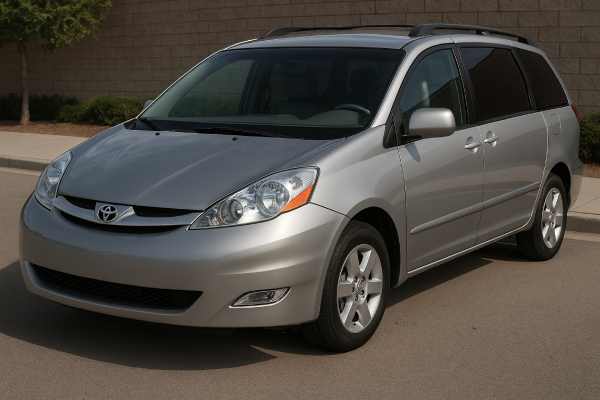
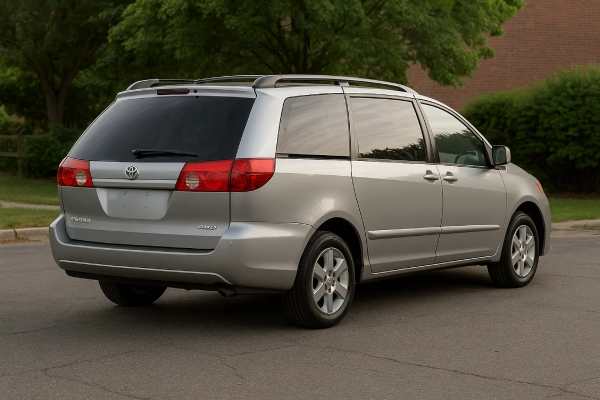
The facelifted Toyota Sienna AWD (XL20) combines a proven 3.5 litre 2GR-FE V6 with an all-wheel-drive system aimed squarely at snow-belt families. Rated at 266 hp and paired with a 5-speed automatic, it adds extra traction without turning the Sienna into a heavy, thirsty SUV. Instead, you get the long-wheelbase comfort and space of a minivan, with an added layer of all-weather confidence.
Compared with front-wheel-drive versions, the AWD Sienna uses a different rear suspension layout, a prop shaft and rear differential, and usually runs on 17-inch wheels with run-flat tyres in place of a spare. That makes it a little heavier and more complex, but for many buyers the trade-off is worth it when winter roads turn slick. This guide walks through the technical details, reliability patterns, maintenance needs and real-world driving impressions so you can decide whether a used XL20 Sienna AWD is the right fit.
Fast Facts
- 266 hp 3.5 litre V6 and automatic AWD system deliver strong performance with secure all-weather traction.
- Spacious three-row cabin and flat-folding third row make it practical for family, shuttle or light cargo duty.
- AWD hardware and run-flat tyres add cost and complexity; underbody corrosion checks are especially important.
- Typical engine oil and filter interval: 5,000–7,500 miles (8,000–12,000 km) or 6–12 months, depending on use and oil type.
What’s inside
- Toyota Sienna AWD XL20 profile
- AWD 2GR-FE specs and data
- AWD trims, equipment and safety tech
- AWD Sienna reliability and faults
- Care schedule and buying checklist
- Driving feel and all-weather use
- How Sienna AWD stacks up
Toyota Sienna AWD XL20 profile
The XL20 generation Toyota Sienna ran from the 2004 to 2010 model years, with a mid-cycle facelift around 2006 and a major powertrain upgrade to the 3.5 litre 2GR-FE V6 from 2007 onward. In this period, the Sienna was unusual among North American minivans in offering full-time all-wheel drive. That makes the AWD version particularly interesting to buyers in regions with heavy snow or steep, wet roads.
Mechanically, the AWD Sienna uses the same 3.5 litre V6 as its front-wheel-drive sibling but adds a transfer case on the transaxle, a prop shaft to the rear, and a rear differential. The system is designed primarily for on-road use, sending most power to the front wheels in normal driving and apportioning torque rearward when slip is detected. It is not an off-road 4×4, but it does a good job of adding traction on wet, icy or gravel surfaces.
The AWD layout forces a few packaging changes. Most notably, the spare tyre well is occupied by the driveline, so Toyota supplied these vans with run-flat tyres instead of a conventional spare wheel. That can be a double-edged sword: you gain the ability to keep driving after a puncture, but run-flat tyres are more expensive and ride quality can suffer as they age. Some owners convert to conventional tyres and carry a compact spare or tyre repair kit, but this needs to be planned carefully.
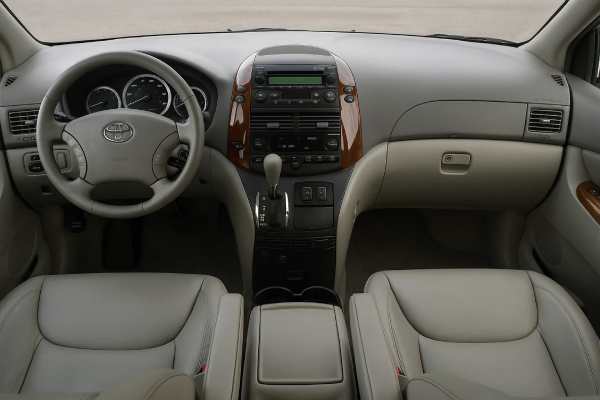
Inside, the Sienna AWD offers the same core strengths as FWD models: three rows of seating, a fold-into-the-floor third row and removable or sliding second-row seats. Depending on trim, you can have a seven-seat layout with captain’s chairs or an eight-seat arrangement with a centre jump seat. The long wheelbase and tall roof create generous space in the first two rows, and even adults can cope with shorter journeys in the third row.
The facelift brought minor exterior tweaks, updated lighting and small interior improvements such as revised trim colours and details. More importantly for shoppers today, later facelift years tend to have stability control fitted as standard and benefit from incremental safety and equipment tweaks. As a package, the AWD Sienna XL20 is best understood as a comfortable, conservative people-mover that trades a little efficiency and mechanical simplicity for meaningful winter-weather capability.
AWD 2GR-FE specs and data
This section focuses on the technical details of the facelift Sienna AWD with the 3.5 litre 2GR-FE V6. Figures can vary slightly by market and trim; always confirm against the documentation for your specific vehicle.
Engine and performance (Engine and Performance)
| Item | Specification |
|---|---|
| Engine code | 2GR-FE |
| Configuration | 60° V6, aluminium block and heads |
| Valvetrain | DOHC, 24 valves, dual VVT-i |
| Displacement | 3.5 L (3,456 cc) |
| Bore × stroke | 94.0 mm × 83.0 mm (3.70 × 3.27 in) |
| Compression ratio | Around 10.8:1 |
| Induction | Naturally aspirated |
| Fuel system | Sequential multi-port fuel injection |
| Maximum power | 266 hp (approx. 198 kW) @ around 6,200 rpm |
| Maximum torque | 245 lb-ft (approx. 332 Nm) @ around 4,700 rpm |
| Timing drive | Chain (no scheduled belt replacement) |
| Fuel type | Regular unleaded petrol |
| Typical official economy (AWD) | Roughly 16–17 mpg US city / 21–23 mpg US highway (about 14–15 / 10–11 L/100 km) |
| Real-world highway at 120 km/h | Often around 10–11.5 L/100 km (21–25 mpg US), depending on load and conditions |
The AWD system adds weight and driveline losses, so fuel use is a little higher than comparable FWD versions. However, the strong V6 means performance remains brisk, even with a full complement of passengers.
Transmission and driveline (Transmission and Driveline)
| Item | Specification |
|---|---|
| Transmission | U151F 5-speed automatic (AWD variant) with lock-up torque converter |
| 1st gear | Approx. 4.24:1 |
| 2nd gear | Approx. 2.36:1 |
| 3rd gear | Approx. 1.52:1 |
| 4th gear | Approx. 1.05:1 |
| 5th gear | Approx. 0.76:1 |
| Reverse | Approx. 3.38:1 |
| Final drive ratio | Typically around 3.48:1 (AWD; varies slightly by year) |
| Drive type | Full-time AWD with front-biased torque split |
| Centre coupling | Mechanical with electronically controlled distribution (on-road traction oriented) |
| Rear differential | Conventional open differential |
Under normal conditions, most torque goes to the front axle, with the system shifting more to the rear if it detects slip or during acceleration. There is no low-range transfer case, so this is a road and light-track system rather than a heavy-duty off-road setup.
Chassis and dimensions (Chassis and Dimensions)
| Item | Specification (typical AWD model) |
|---|---|
| Front suspension | MacPherson struts, coil springs, anti-roll bar |
| Rear suspension | Independent or modified layout to accommodate rear diff and driveshafts (different from FWD torsion beam) |
| Steering | Power-assisted rack-and-pinion |
| Front brakes | Ventilated discs with ABS, EBD, Brake Assist |
| Rear brakes | Solid discs |
| Standard wheels/tyres | 17 in alloy wheels, run-flat tyres (often 225/60 R17) |
| Overall length | Around 5,105 mm (201.0 in) |
| Width | Around 1,965 mm (77.4 in) |
| Height | Slightly higher than FWD, around 1,770 mm (69.7 in) depending on roof equipment |
| Wheelbase | 3,030 mm (119.3 in) |
| Ground clearance | Similar to FWD; roughly 170–180 mm (6.7–7.1 in) |
| Turning circle | Around 11.2 m (36.7–36.8 ft) |
| Curb weight | Typically 1,950–2,000 kg (4,300–4,400 lb) |
| GVWR | Around 2,600 kg (5,730 lb) |
| Fuel tank | Approx. 79 L (21.0 US gal, 17.3 UK gal) |
| Cargo volume | Similar to FWD: generous space behind each row, with over 4.2 m³ available with rear rows folded or removed |
Performance and capability (Performance and Capability)
| Item | Specification |
|---|---|
| 0–60 mph | Roughly 7.8–8.2 seconds |
| 0–100 km/h | Around 8.3–8.7 seconds |
| Top speed | Around 180–185 km/h (112–115 mph), electronically limited |
| Towing capacity (braked) | Around 1,587 kg (3,500 lb) when properly equipped |
| Payload | Typically around 620–650 kg (1,370–1,430 lb) |
| Roof load | Often rated around 75 kg (165 lb); confirm for your market |
Fluids, service capacities and key torques (Fluids and Service Capacities)
Values vary with year; always check your exact model data. Typical ballpark figures:
- Engine oil: around 6.1 L (about 6.4 US qt) with filter; commonly 5W-30 or 0W-20 where specified.
- Coolant: long-life ethylene glycol coolant; total capacity around 9–10 L.
- Automatic transmission: Toyota WS ATF; drain-and-fill on service around 3–4 L.
- Rear differential and transfer case: gear oil meeting Toyota specifications, changed on time/mileage or severe use.
- A/C refrigerant: R134a on most models; exact charge weight listed under the bonnet.
Key torque values to know when planning DIY work include the wheel nut torque (often around 100–110 Nm) and drain plug torques; these should always be confirmed in the service manual.
Electrical (Electrical)
- Alternator: typically in the 130 A range.
- 12 V battery: group size and capacity vary; many use a 55–70 Ah battery.
- Spark plugs: long-life iridium, gapped around 1.1 mm; replacement interval roughly 120,000 miles (192,000 km) under normal conditions.
AWD trims, equipment and safety tech
Trims and options for AWD models
In most markets, the AWD Sienna was not available in every trim level. The most common pattern (especially in North America) is that AWD could be specified on mid and higher trims, while the absolute base model stayed FWD only.
Typical availability:
- LE AWD – A popular combination that balances price and equipment. Often includes 17-inch alloys, upgraded audio and available power sliding doors.
- XLE AWD – Adds comfort and convenience features such as tri-zone climate control, power sliding doors, optional power tailgate, and more upscale interior finishes.
- Limited AWD – Top specification, often with leather seats, power front seats, premium audio, sunroof, and additional convenience features.
The exact mix of features and packages changes by year. Option bundles might include rear-seat entertainment, navigation, parking sensors, and towing preparation (with upgraded cooling). Many vans on the used market have dealer-installed accessories such as roof racks or remote starters; these should be evaluated for installation quality.
Mechanical differences among AWD trims are fairly limited. The AWD hardware itself is similar across grades, but higher trims may carry slightly more curb weight due to added equipment. Towing packages may bring a transmission cooler or different hitch arrangement. Wheel-and-tyre packages can differ: AWD models are more likely to come with 17-inch run-flat tyres and specific alloy designs.
Quick identifiers for an AWD Sienna include:
- Badging or labels indicating “AWD” on the tailgate or sides (depending on market).
- Absence of a conventional spare tyre under the rear; run-flat tyres fitted from the factory.
- Rear differential and driveshaft visible when looking under the vehicle.
VIN decoding and build plates can confirm AWD status and trim level. When shopping, use these to avoid surprises, as some front-drive Siennas may have been fitted with aftermarket “AWD” badges or accessories.
Safety ratings
Crash safety performance for the XL20 Sienna is generally strong when the vehicle is equipped with side and curtain airbags, which are common on AWD-equipped trims. Testing from major bodies has shown:
- Robust occupant protection in moderate-overlap frontal crashes.
- Good performance in side impact tests with side and curtain airbags.
- Rollover resistance figures in line with other minivans of the era.
One area where the Sienna shows its age is in head restraint and seat design for rear-impact whiplash protection; ratings here are often less impressive than more recent designs. However, in the types of frontal and side collisions that cause severe injuries, the structural shell and restraint systems perform well for a mid-2000s vehicle.
Because the AWD system adds weight and complexity under the vehicle, it is important to ensure that accident repairs in this area have been done to a high standard. Poorly repaired collision damage near the rear subframe, diff or prop shaft can affect crash performance and drivability.
Safety systems and driver assistance
For the AWD Sienna, safety hardware typically includes:
- Front airbags, front seat-mounted side airbags and curtain airbags for all three rows.
- Three-point belts at all seating positions, with pretensioners and load limiters on front belts.
- LATCH/ISOFIX anchors in the second row and tether points for child seats in the rear, subject to seating configuration.
- Anti-lock brakes, electronic brake-force distribution and Brake Assist.
- Vehicle Stability Control (VSC) and traction control; availability shifts from optional on some early facelift years to standard on later models and higher trims.
- Tyre pressure monitoring system (TPMS), particularly in later facelift years.
Advanced driver assistance systems such as adaptive cruise control, lane departure warning, or automatic emergency braking were not fitted to this generation Sienna from the factory. Some limited features, like backup cameras or parking sensors, may be present depending on trim or options.
From a service point of view, the absence of complex radar and camera systems simplifies repairs and calibration after suspension work or minor collisions. However, owners should still ensure that ABS and stability control systems are functioning correctly, as they play a key role in keeping the tall, heavy vehicle stable in emergency manoeuvres.
For family buyers, the safest AWD Sienna configurations combine later facelift years, full airbag coverage, VSC, a properly functioning TPMS system and, ideally, a rear-view camera or parking sensors for low-speed manoeuvres in driveways and car parks.
AWD Sienna reliability and faults
In broad terms, the AWD Sienna XL20 shares the strong reliability reputation of its FWD siblings. The 2GR-FE V6 and 5-speed automatic, when maintained, are capable of high mileages. However, the AWD system adds extra components that also age, and there are a few well-known issues to consider.
Engine and cooling issues
The engine itself is generally robust, but key points include:
- VVT-i oil line on early engines – Some early 2GR-FE units used a rubber-section oil hose for the VVT-i system. Over time, the rubber can harden and crack, causing leaks or, in rare cases, sudden rupture. Most vehicles should have had this hose replaced with a metal line via service campaigns or preventative maintenance, but it is important to confirm.
- Water pump seepage – Gradual coolant leaks from the water pump are common as mileage rises. Look for dried coolant around the pump housing or on under-tray panels. Replacement is straightforward for a competent workshop.
- Gasket and seal aging – Valve cover gasket seepage and minor timing cover leaks are typical in older examples. Light dampness may be tolerable, but any leak that reaches exhaust components, drive belts or the alternator should be addressed.
Oil consumption is not a universal complaint on the 2GR-FE Sienna, but any used vehicle should be monitored between services. Long oil-change intervals and heavy city use can worsen wear.
Transmission and AWD driveline
The AWD-specific transmission and driveline components are generally durable but come with their own maintenance needs:
- U151F automatic – Similar in basic design to the FWD unit, this gearbox is robust when fluid is clean and at the correct level. Rough or delayed shifts in a high-mileage van often respond to a series of drain-and-fill ATF services. Ignoring fluid condition, especially if the van tows or climbs long grades regularly, can shorten transmission life.
- Transfer case and rear differential – These components require periodic gear oil changes, especially in severe use (towing, heavy loads, frequent short trips). Neglected oil can lead to bearing noise, whine or vibration.
- Prop shaft and joints – As the van ages, universal joints and centre bearings can develop play, causing vibrations at certain speeds or under load. These parts are repairable or replaceable but add cost compared with FWD examples.
Matching tyres on all four corners are more important for AWD than FWD. Significant differences in rolling circumference between tyres can stress the AWD system, so owners should replace tyres in pairs or sets and maintain rotations on schedule.
Suspension, steering and brakes
The extra mass and hardware of the AWD system, combined with heavy minivan usage, mean that:
- Front struts, rear shocks and suspension bushings are wear items, especially on vans that carry full loads or tow regularly.
- Wheel bearings may wear sooner than on lighter vehicles, leading to humming noises that change with speed or in turns.
- Steering racks can develop leaks or play with age.
These issues are not unique to the AWD Sienna but can appear sooner if the van lives on rough roads or carries heavy passengers and cargo most of the time.
Body, doors and corrosion
Like FWD models, AWD Siennas can experience:
- Sliding door cable and roller wear – Power sliding doors that grind, stick or stop mid-travel are a common complaint on higher-mileage vans. Cable replacement and track cleaning/lubrication are often required.
- Tailgate issues – Power tailgates, where fitted, should be checked for smooth, consistent operation. Weak struts or tired motors can cause slow or incomplete opening.
- Spare tyre carrier recall – Even though AWD models use run-flat tyres and often lack a conventional spare under the rear, it is still wise to check recall history if any carrier hardware is present.
AWD hardware increases the number of parts exposed to road salt and grime. In snow-belt regions, inspect the underbody carefully for corrosion on:
- Rear subframe and suspension mounting points.
- Differential housings and bracketry.
- Brake and fuel lines.
- The areas where the prop shaft runs near the exhaust and floorpan.
Recalls and service actions
Across the XL20 run, key campaigns relevant to AWD models include:
- Replacement of problematic VVT-i oil hoses on certain 2GR-FE engines.
- Corrosion-related inspections and repairs in road-salt regions (depending on market).
To confirm coverage, always run a VIN check on the manufacturer’s or transport authority’s recall website and ask a dealer to confirm which campaigns have been completed.
Pre-purchase reliability checks
For a used AWD Sienna XL20, add these to your inspection list:
- Confirm that the VVT-i oil feed hose, if originally rubber, has been updated to the metal line.
- Check for oil or coolant leaks around the engine front, including the water pump area.
- Inspect driveline components (prop shaft, transfer case, rear diff) for leaks, rust and unusual noises on the test drive.
- Drive the van at multiple speeds and loads, listening for vibrations or humming noises that could indicate bearing or shaft issues.
- Test all power sliding doors and the tailgate repeatedly.
- Inspect the underbody for corrosion, paying special attention to brackets and subframes that carry AWD hardware.
Care schedule and buying checklist
A sensible maintenance approach keeps the AWD Sienna reliable and reduces the chance of expensive surprises. Always cross-check these guidelines with the official schedule for your specific year and market.
Practical maintenance schedule
Engine oil and filter
- Normal use: every 7,500 miles (12,000 km) or 12 months.
- Severe conditions (short trips, heavy city driving, towing, extremes of temperature): every 5,000 miles (8,000 km) or 6 months.
Engine air filter
- Inspect around every 15,000 miles (24,000 km).
- Replace around 30,000 miles (48,000 km) or sooner in dusty environments.
Cabin air filter
- Replace every 15,000–20,000 miles (24,000–32,000 km) or annually.
Spark plugs
- Long-life iridium plugs typically require replacement about every 120,000 miles (192,000 km), but earlier replacement is reasonable if misfires or poor performance appear.
Coolant
- First change often around 100,000 miles (160,000 km) or 10 years for long-life coolant.
- Subsequent changes roughly every 5 years or 50,000 miles (80,000 km).
Automatic transmission fluid (WS ATF)
- For longevity, a drain-and-fill every 50,000–60,000 miles (80,000–100,000 km) is a prudent target, especially for AWD vans or those used for towing.
Transfer case and rear differential oils
- Follow severe-service intervals if you tow, carry heavy loads or drive extensively in snow and slush. A change every 50,000–60,000 miles (80,000–100,000 km) is a reasonable benchmark.
Brake fluid
- Flush every 2–3 years regardless of mileage.
Brake pads and rotors
- Inspect at least annually. Heavier vans in city use can wear front pads relatively quickly.
Power steering fluid
- Inspect annually; consider a partial change around 100,000 miles (160,000 km) if fluid is darkened.
Serpentine belt and tensioner
- Inspect at each service; replace between 90,000 and 120,000 miles (145,000–190,000 km) or when cracks, glazing or squeaks appear.
Timing chain and guides
- No fixed replacement interval; monitor for start-up rattle or timing-related fault codes and investigate promptly.
Tyres, alignment and AWD considerations
- Rotate tyres every 5,000–7,500 miles (8,000–12,000 km).
- Maintain consistent tyre size, brand and wear across all four wheels to protect the AWD system.
- Check alignment when fitting new tyres or after impacts with potholes and kerbs.
12 V battery
- Begin annual testing after around 4 years; replacement is often due around 5–7 years, depending on climate.
Fluid specifications (summary)
- Engine oil: 5W-30 or 0W-20 (where specified), meeting current API standards.
- Coolant: Toyota long-life or super long-life coolant, or an equivalent that meets the same chemistry.
- ATF: Toyota WS only (do not mix with other types).
- Gear oils: correct grade and spec for transfer case and rear differential as per service manual.
- Brake fluid: DOT3 or DOT4 as specified.
Buyer’s checklist
When viewing a used AWD Sienna XL20:
- Paperwork and history
- Look for evidence of regular oil changes and cooling system maintenance.
- Check if ATF, transfer case and diff oils have ever been changed.
- Confirm recall and service campaign completion via official channels if possible.
- Engine bay
- Check for fresh oil or coolant leaks.
- Listen to the engine at cold start for unusual rattles.
- Check the condition of belts, hoses and coolant.
- Underbody and AWD hardware
- Inspect for rust on the rear subframe, diff housings and prop shaft.
- Look for wetness or oil stains around the transfer case and diff.
- Check for damaged or missing underbody shields.
- Road test
- Drive at low and highway speeds, paying attention to vibrations under acceleration or at steady speed.
- Test full-lock manoeuvres in a car park to listen for clunks or binding.
- Apply firm braking from higher speeds to check for vibration or pulling.
- Interior and doors
- Test all sliding doors and tailgate in manual and power modes.
- Verify that child locks, central locking and window switches work properly.
- Ensure climate control blows correctly in all zones, including rear controls.
With a clean history and careful inspection, a well-kept AWD Sienna can be a strong long-term choice in climates where winter traction matters.
Driving feel and all-weather use
Ride and handling
On the road, the AWD Sienna XL20 feels broadly similar to its FWD counterpart but with a slightly more planted sensation in poor conditions. The suspension tuning still prioritises comfort:
- Ride quality – Soft and compliant, especially at highway speeds. The long wheelbase helps smooth out broken surfaces, though sharp impacts can be felt through the structure if the suspension is worn or tyre pressures are high. Run-flat tyres, if still fitted, tend to firm up the ride compared with conventional tyres.
- Cornering – There is plenty of body roll if you corner enthusiastically, reflecting the tall body and comfort-focused springs and anti-roll bars. Steering is light and somewhat isolated, encouraging a relaxed driving style rather than spirited cornering.
In everyday driving, the Sienna AWD feels confident rather than sporty. The chassis is predictable and stable, which is exactly what most owners want from a family minivan.
Powertrain character
The 2GR-FE V6 provides a smooth surge of power from low rpm and revs cleanly when pressed. Around town, it rarely needs more than a gentle squeeze of throttle to keep up with traffic, even fully loaded. On the highway, there is enough power for brisk passing and comfortable merging, with the automatic dropping one or two gears when required.
The 5-speed automatic is tuned for smoothness and efficiency, not crisp performance shifts. It generally selects higher gears early to keep revs (and noise) down. Kickdown is reasonably prompt, and the lock-up torque converter helps keep revs steady in gentle cruising. In mountainous areas or when towing, the gearbox may shift more frequently as it balances power and economy.
Real-world economy
Because of the extra weight and driveline drag, the AWD Sienna uses more fuel than its FWD sibling. Typical owner-reported ranges, assuming a healthy van and mixed use, look roughly like:
- City – 14–16 L/100 km (15–17 mpg US, 18–20 mpg UK), depending on congestion and climate.
- Highway – 10–11.5 L/100 km (21–25 mpg US, mid-20s to high-20s mpg UK) at steady 100–120 km/h (60–75 mph).
- Mixed – Often in the 11–13 L/100 km range (18–21 mpg US).
Short trips, high speeds, roof boxes and towing all push consumption upward. Keeping tyres properly inflated, avoiding unnecessary idling and sticking to regular maintenance can help keep numbers closer to the lower end of these ranges.
Traction and winter behaviour
All-wheel drive is the main reason many buyers seek out this version of the Sienna. In practice, the system provides clear benefits:
- On wet roads – Acceleration is cleaner, with less wheelspin when pulling away briskly from junctions or merging. Stability control and traction control work together to keep the van pointed straight.
- On snow and ice – With proper winter or all-weather tyres, the AWD Sienna feels noticeably more secure when starting off uphill or manoeuvring on compacted snow. It is not immune to physics, but it gives more margin before wheels spin or the vehicle bogs down.
- On gravel or muddy tracks – The system helps maintain traction, but ground clearance and underbody hardware limit true off-road use. Careful driving and moderate speeds are key to avoiding damage.
The stability control calibration in this generation Sienna errs on the safe side. It will step in quickly during aggressive manoeuvres, especially on low-grip surfaces. While that can feel intrusive to an enthusiastic driver, most owners appreciate the added safety net.
Load and towing
When loaded with passengers and luggage, the AWD Sienna maintains good composure. The suspension and AWD system work together to keep the vehicle stable during lane changes and in crosswinds. With a properly set up trailer and functioning trailer brakes, the Sienna can tow small to medium loads confidently.
When towing:
- Expect fuel use to increase significantly (often by 30–50%).
- Watch engine and transmission temperature in hot weather or on long grades.
- Use lower gears or tow modes if fitted to avoid excessive gear hunting.
Keeping up with fluid changes in the transmission, transfer case and differential is especially important for owners who tow or regularly drive fully loaded.
How Sienna AWD stacks up
The AWD Sienna XL20 occupies a distinctive niche among its contemporaries. At the time, most rival minivans in its class were front-wheel drive only, so families wanting both sliding doors and an all-wheel-drive system had few alternatives.
Against other minivans
- Honda Odyssey (3rd generation) – The Odyssey never offered AWD in this generation. It is often praised for slightly sharper steering and handling, and its V6 is competitive in power. However, some Odyssey model years have a more mixed record on automatic transmission durability. For snow-belt buyers who prefer a minivan body style, the Sienna’s AWD option can be a decisive advantage.
- Chrysler Town & Country / Dodge Grand Caravan – These models focus on interior flexibility, with Stow ’n Go seating allowing both the second and third rows to fold into the floor. However, they are more commonly FWD and have a more mixed reliability record, particularly in certain powertrain and electrical areas. If you prioritise AWD and a conservative, long-term mechanical package, the Sienna stands out.
- Kia Sedona / Hyundai Entourage and Nissan Quest – These vans offer good value and feature sets but again are mostly FWD only and may not match the Sienna’s long-term durability reputation or parts availability in all regions.
In simple terms, if you want a mid-2000s minivan with AWD from a mainstream brand, the Sienna is usually the default choice.
Against SUVs and crossovers
Many shoppers today cross-shop an older Sienna AWD with used crossovers or midsize SUVs:
- Space – The Sienna’s three-row cabin and cargo area outclass most crossovers, especially when all seats are in use. Access to the third row and child-seat-friendly sliding doors are big advantages.
- Comfort – Ride quality in a Sienna is generally more supple than in many body-on-frame SUVs of the same era and comparable to or better than some crossovers.
- Capability – Ground clearance and approach/departure angles are not on par with off-road SUVs, but for snowy roads and wet, unpaved access tracks, the AWD system is usually sufficient.
The main trade-off is image: some buyers simply prefer the look and perceived versatility of an SUV. From a purely practical perspective, however, the Sienna AWD is often a more comfortable and efficient way to carry a family and their gear through winter.
Ownership and long-term outlook
For long-term ownership, the AWD Sienna XL20 offers:
- A well-proven V6 engine and transmission, with known issues that are manageable when addressed proactively.
- An AWD system that, while more complex than FWD, is simpler than many modern, electronics-heavy setups.
- A strong supply of parts and service experience, thanks to the popularity of the Sienna platform.
It does ask more of its owner than a simple FWD minivan: fluid changes for extra components, careful tyre management, and vigilance against underbody corrosion. But for drivers who value all-weather peace of mind and minivan practicality, those trade-offs are often acceptable.
For buyers in milder climates who rarely see snow, a FWD Sienna may be the more efficient and cost-effective choice. In snow-belt regions or mountainous areas, the AWD Sienna XL20 remains an appealing used option that bridges the gap between a traditional minivan and a rugged SUV.
References
- 08_SE_Eng_V2_LR 2008 (Specifications Sheet)
- 2008 Sienna Owner’s Manual 2007 (Owner’s Manual)
- 2008 Toyota Sienna 2025 (Safety Rating)
- Safety Recall – A9E Certain 1998 through 2010 Toyota Sienna Vehicles Equipped with a Spare Tire Severe Corrosion of Spare Tire Carrier Cable 2010 (Recall Database)
- Extension of Limited Service Campaign (LSC) 90K 2014 (TSB)
Disclaimer
This article is for informational purposes only and is not a substitute for professional diagnosis, inspection or repair. Specifications, torque values, service intervals and procedures can differ by VIN, model year, market, trim level and installed equipment. Always confirm critical information against the official owner’s manual, workshop manual and technical documentation for your specific vehicle, and follow local regulations and safety practices.
If you found this guide helpful, you are welcome to share it on platforms such as Facebook, X/Twitter or relevant owner forums to support xcar’s work and to help other Toyota Sienna AWD owners and buyers make informed decisions.