
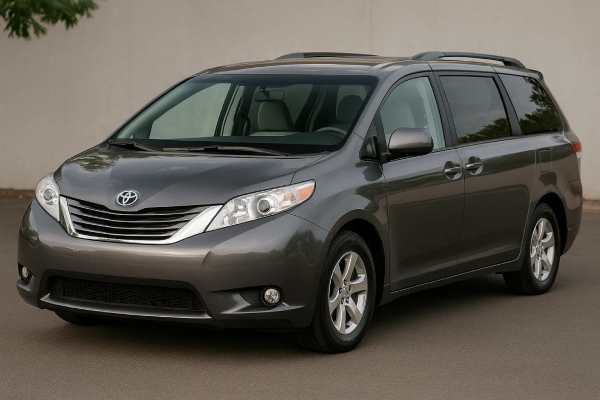
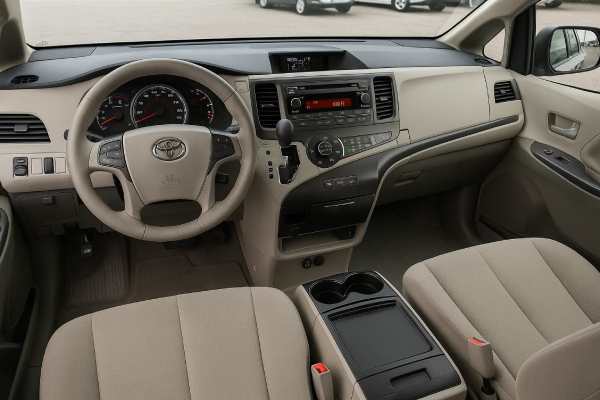
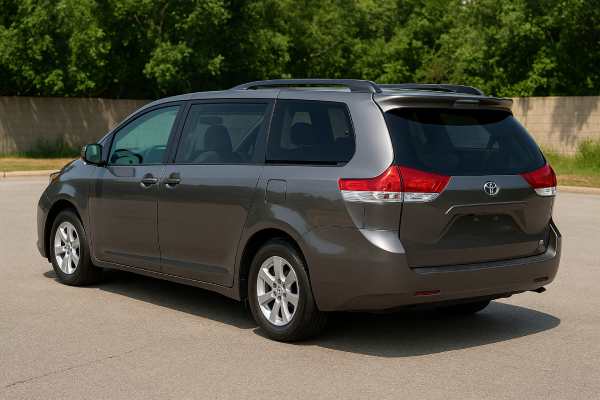
The third-generation Toyota Sienna (XL30) with the 2GR-FE 3.5-liter V6 is the “classic” modern minivan recipe: a huge, flexible interior, strong yet efficient V6, and the long-term durability many owners buy Toyota for. For 2011–2014, the front-wheel-drive V6 configuration became the volume seller in North America, pairing a six-speed automatic with a refined chassis and up to eight seats.
This article focuses on that FWD 3.5-liter configuration specifically. We will walk through its core specifications, how the numbers translate into real-world performance, what to expect for reliability and common issues, and the maintenance approach that keeps these vans working well past 200,000 miles. Finally, we will compare it to key rivals so you can decide whether a Sienna XL30 V6 fits your use case, whether that is family hauling, shuttle duty or occasional towing.
The goal is to give you practical, decision-ready information rather than marketing claims.
Quick Specs and Notes
- Strong 3.5-liter V6 (266 hp) delivers confident acceleration even with seven or eight occupants.
- Spacious, flexible cabin with very large cargo volume when rear seating is folded or removed.
- Proven 2GR-FE V6 and U-series 6-speed automatic have a solid durability record with correct servicing.
- Watch for sliding-door and spare-tire carrier recalls; always verify completion via official VIN lookup.
- Sensible oil-change rhythm: 0W-20 synthetic every 5,000–7,500 miles (8,000–12,000 km) for long-term health.
Contents and shortcuts
- Toyota Sienna XL30 V6 insights
- 2GR-FE XL30 figures and data
- V6 FWD trims and protection tech
- XL30 V6 dependability and faults
- Service strategy and purchase tips
- On-road character and performance
- Sienna V6 versus alternatives
Toyota Sienna XL30 V6 insights
The XL30-generation Sienna replaced the XL20 for the 2011 model year (with production starting in 2010). It kept the familiar layout of a transverse V6 and front-wheel drive with available all-wheel drive, but introduced a more rigid body, improved crash protection, and a thoroughly updated interior.
In this generation, the FWD 2GR-FE 3.5-liter V6 with 266 hp and about 245 lb-ft of torque became the main configuration in North America. It is paired with a six-speed U-series automatic transmission. Compared with the older Sienna, the XL30 feels more “car-like” in daily driving: steering is lighter, noise levels are reduced, and body control is more polished.
Packaging is one of its main strengths. The Sienna offers:
- Seven- or eight-seat configurations.
- A sliding second row with generous legroom and good access to the third row.
- A deep well behind the third row, plus a folding third row that stows almost flat.
Sliding side doors remain a real advantage over three-row crossovers in tight car parks, especially when dealing with child seats.
Underneath, FWD models use:
- MacPherson-strut front suspension.
- Torsion-beam rear axle with coil springs.
- Electric power steering.
- Four-wheel disc brakes with ABS and stability control.
This layout is simple and robust, tuned more for comfort and predictable handling than sharp responses. The structure and airbag layout allowed the Sienna to achieve strong crash-test results, which is a key consideration for a family vehicle.
By now, even the newest 2014 XL30 V6 FWD is over a decade old. Mechanical robustness is generally good; what matters most is how each individual van has been maintained, and whether known recalls and service campaigns have been completed.
2GR-FE XL30 figures and data
This section covers the 3.5-liter 2GR-FE V6 in front-wheel-drive Siennas from 2011–2014. Values can vary slightly by model year and market, so always verify against the documentation for a specific VIN if you are making purchase or repair decisions.
Engine and performance
| Item | Specification |
|---|---|
| Engine code | 2GR-FE |
| Layout | 60° V6, aluminium block and heads |
| Valvetrain | DOHC, 4 valves per cylinder, Dual VVT-i, chain driven |
| Displacement | 3.5 l (3,456 cc) |
| Bore × stroke | 94.0 × 83.0 mm (3.70 × 3.27 in) |
| Compression ratio | Around 10.8:1 |
| Induction | Naturally aspirated |
| Fuel system | Sequential multi-port fuel injection |
| Maximum power | 266 hp (about 198 kW) @ 6,200 rpm |
| Maximum torque | 245 lb-ft (about 332 Nm) @ 4,700 rpm |
| Timing drive | Chain (no routine replacement interval) |
| Recommended fuel | Regular unleaded (87 AKI) in most markets |
In real use, this V6 feels strong and smooth, with good low- and mid-range torque and a willingness to rev when asked. The timing chain and port-injection layout mean no timing belt changes and no severe direct-injection carbon issues, though normal age-related wear still applies.
Fuel economy and efficiency (FWD V6)
EPA-style ratings for front-wheel-drive 3.5-liter Siennas are typically:
| Model years | City | Highway | Combined |
|---|---|---|---|
| 2011–2013 | ~18 mpg US | ~24 mpg US | ~20 mpg US |
| 2014 | ~18 mpg US | ~25 mpg US | ~21 mpg US |
Real-world mixed consumption usually lands in the 19–22 mpg US range, depending on load, driving style, climate, and tyre choice. Short trips, roof racks and heavy cargo can push consumption higher.
Transmission and driveline
| Item | Specification |
|---|---|
| Transmission | U660E 6-speed automatic (FWD V6) |
| 1st gear | 3.300:1 |
| 2nd gear | 1.900:1 |
| 3rd gear | 1.421:1 |
| 4th gear | 1.000:1 |
| 5th gear | 0.713:1 |
| 6th gear | 0.609:1 |
| Reverse | 4.148:1 |
| Final drive ratio | Around 3.94:1 (varies slightly by year) |
| Drive type | Front-wheel drive |
| Differential | Open with electronic traction control |
The U-series automatic is used in many Toyota V6 FWD vehicles. It performs best with clean fluid and moderate heat; fluid changes are strongly recommended if the van tows or operates in hot climates.
Chassis, dimensions and weight
Typical values for a FWD V6 XL30 Sienna:
| Item | Approximate value |
|---|---|
| Overall length | ~200.2 in (5,085 mm) |
| Overall width | ~78.1–78.2 in (1,985–1,990 mm) excluding mirrors |
| Overall height | ~70.7 in (1,795 mm) without roof rails |
| Wheelbase | 119.3 in (3,030 mm) |
| Ground clearance | ~6.5 in (165 mm) |
| Turning circle (kerb-to-kerb) | ~36.9 ft (11.2 m) |
| Curb weight (FWD V6) | ~4,450–4,550 lb (2,020–2,065 kg) depending on trim |
| Fuel tank capacity | About 20 US gal (76 l) |
Suspension and brakes:
| Item | Specification |
|---|---|
| Front suspension | MacPherson strut, coil springs, anti-roll bar |
| Rear suspension | Torsion-beam axle, coil springs |
| Steering | Electric power-assisted rack-and-pinion |
| Front brakes | Ventilated discs with ABS, EBD and Brake Assist |
| Rear brakes | Solid discs with ABS, EBD and Brake Assist |
| Wheels and tyres | Typically 17–18 in alloys, 235-section tyres on many trims |
Cargo and seating:
| Configuration | Approximate cargo volume |
|---|---|
| Behind 3rd row | ~39 ft³ |
| Behind 2nd row (3rd row folded) | ~87 ft³ |
| Behind front seats (rear seating folded/removed) | Up to ~150 ft³ |
Performance and capability
| Metric | Typical figure (FWD V6) |
|---|---|
| 0–60 mph (0–97 km/h) | About 7.5–8.0 s (lightly loaded) |
| Top speed (governed) | Around 115 mph (about 185 km/h) |
| Towing capacity (tow package) | 3,500 lb (≈1,588 kg) |
| Typical payload | Roughly 1,300–1,500 lb depending on trim |
| Roof load (with appropriate rack) | Usually about 150 lb; confirm on door-jamb label |
These figures put the Sienna on the strong side of its class for acceleration and towing, provided it is properly equipped and maintained.
Fluids and key service capacities (approximate)
Always confirm by year and VIN, but for planning:
- Engine oil: 0W-20 synthetic, around 6.4–6.7 qt (6.1–6.3 l) with filter.
- Engine coolant: Toyota Super Long Life Coolant; total capacity roughly 10–12 l.
- Automatic transmission: Toyota WS ATF; drain-and-fill about 3–4 l, total capacity higher.
- Brake fluid: DOT 3 or DOT 4, change on time rather than mileage alone.
- Power steering: electric (no conventional fluid).
- A/C refrigerant: R-134a; charge amount varies slightly by climate package.
For torque specs on critical fasteners (wheel lugs, suspension bolts, drivetrain mounts), always refer to the official service manual. Values can differ by wheel size and hardware.
Safety and driver assistance
Early XL30 Siennas rely mainly on robust passive safety and basic electronic aids:
- Front, side and three-row curtain airbags (some models add a driver knee airbag).
- Four-wheel ABS with electronic brake-force distribution and brake assist.
- Stability control and traction control across the range.
- Well-rated crash performance in major frontal, side and roof-strength tests for the 2011–2014 window.
- Backup camera and parking sensors on mid and higher trims, with availability improving over the years.
- Advanced systems such as lane departure warning, automatic emergency braking and adaptive cruise were not yet standard in this era and are generally absent.
V6 FWD trims and protection tech
The Sienna XL30 FWD 3.5-liter V6 appears across several trims between 2011 and 2014. Exact naming varies by country, but the typical North American lineup looks like this:
- Base / Sienna: Entry-level, cloth upholstery, manual sliding doors, basic audio.
- LE: Popular mid-grade; often adds power sliding doors, upgraded audio, power driver’s seat and more storage features.
- XLE: More comfort-focused; leather seats, power liftgate, tri-zone automatic climate control, sunroof options and sometimes navigation.
- Limited: Range-topping version with premium audio, more sound insulation, dual sunroofs on some vans, and extra luxury features.
The V6 FWD drivetrain is common from LE upwards and appears in many base vans as well. Differences between trims are mainly equipment and cosmetics; mechanical hardware is broadly shared.
Mechanical and functional differences
- Towing preparation: Factory tow packages add items like a larger alternator, upgraded cooling and a trailer wiring harness. These are desirable if you intend to tow near the rated limit.
- Wheels/tyres:
- Base and LE often use 17-inch wheels with higher-profile tyres for comfort.
- SE or sport-themed trims (where offered with FWD V6) can use 18- or 19-inch wheels with firmer ride and sharper turn-in.
- Suspension tune: Basic geometry is shared, but sport-oriented trims can have firmer dampers and anti-roll bars. Most family buyers will prefer the softer LE/XLE ride.
Seating layouts and identifiers
- Seven-seat layouts use second-row captain’s chairs.
- Eight-seat layouts add a removable centre section in the second row that can slide and fold; this is popular for families with three small children across one row.
- Trim identifiers are visible on tailgate badges, grille finishes and interior trim. Leather, wood-effect accents and extra switchgear (power doors, power liftgate) are quick clues for higher trims.
Safety equipment by trim
All trims include:
- Front, side and curtain airbags.
- Stability control, traction control and ABS.
- LATCH/ISOFIX-style anchor points on key rear seating positions.
Higher trims can add:
- Backup camera as standard.
- Rear parking sensors.
- Auto-dimming mirrors and better headlamps.
When shopping, test:
- All power sliding doors (where fitted) from inside, outside and via key fob.
- The power liftgate for smooth operation and proper latching.
- Backup camera clarity and parking sensor function, if present.
XL30 V6 dependability and faults
The 2GR-FE V6 and XL30 platform are generally reliable, but age and mileage reveal several patterns worth understanding.
Engine and drivetrain
Common, usually moderate cost
- Water pump leakage: As mileage accumulates, the water pump’s seals can seep. Look for pink coolant traces around the pump housing, unexplained coolant loss or mild overheating in traffic. Replacing the pump and coolant resolves this.
- Minor oil leaks: Valve cover gaskets and front crank seals can seep after many years. Symptoms include faint burning-oil smells and oily residue on engine surfaces. These are usually addressed during other top-end or front-end service work.
- PCV and throttle-body contamination: A sticky PCV valve or dirty throttle body can cause rough idle or small driveability complaints. Cleaning/replacement is straightforward and often part of catch-up servicing.
Occasional, potentially higher cost
- Transmission shift quality issues when fluid is neglected:
- Symptoms: delayed engagement, flare between gears, gentle shudder in lockup ranges.
- Contributing factors: old ATF, heat from towing or repeated heavy loads.
- Remedy: staged drain-and-fill with correct WS ATF; in severe cases, valve-body work or torque-converter replacement.
- Charging-system and battery issues:
- Symptoms: intermittent electrical warnings, EPS (electric power steering) messages, or unstable idle with heavy electrical load.
- Aging alternators and weak 12 V batteries are common after many years. Proactive battery replacement and charging-system checks prevent many issues.
Chassis and body
- Suspension wear: Expect to refresh front struts, rear shocks, top mounts, and some bushings by around 100,000–150,000 miles if not already done. Symptoms include clunks over bumps, extra body motion and uneven tyre wear.
- Wheel bearings: A low humming noise that increases with speed and changes when the van is steered left or right often indicates a failing front wheel bearing. Replacement is the cure.
- Brakes: Heavy vans like the Sienna can warp rotors if driven hard with cheap pads. Pulsation under braking or steering wheel shake under moderate-to-hard stops usually means new rotors and quality pads are needed.
Sliding doors, tailgate and hardware
- Power sliding doors:
- Issues: failure to open or close fully, beeping and stopping mid-travel, or doors switching to manual operation only.
- Causes: worn cables, corroded rollers, or components covered by recalls and service bulletins.
- What to do: confirm recall status, inspect tracks and cables, and budget for hardware refresh if operation is rough or noisy.
- Spare-tire carrier corrosion (2WD vans in salty climates):
- Issue: steel cable that holds the spare can corrode and potentially fail.
- Inspection: check for rust and stiffness; verify recall completion by VIN; many carriers have been replaced or inspected under campaigns.
- Tailgate lift supports:
- Symptoms: tailgate does not stay up or drops unexpectedly.
- Remedy: replace gas struts; a simple, worthwhile safety fix.
Electronics and interior
- Steering-column and EPS issues (rare): Some owners report intermittent EPS warnings or steering-column noise. These are not widespread, but column replacement can be expensive if required.
- HVAC blend doors: Clicking noises when changing temperature or mode can point to failing actuators. These are annoying rather than dangerous but can require dash work.
- Interior wear: High-mileage family vans often show worn seat bolsters, scratched plastics and tired sliding-door trim. Cosmetic issues do not affect safety but reflect general care.
Recalls and extended coverage
Key areas to confirm via official VIN lookup:
- Sliding-door safety recalls and updates (components and control logic).
- Spare-tire carrier inspections or replacements on affected 2WD vans.
- Brake-light or pedal-related bracket recalls on some early XL30s.
- Any software campaigns for transmission shifting or drivability.
A Sienna with recall work fully documented and a folder of service invoices is a safer bet than a cheaper van with no history.
Service strategy and purchase tips
A sensible maintenance plan is the best way to keep a Sienna XL30 FWD V6 reliable well past 200,000 miles.
Practical maintenance schedule (approximate)
Use this as a planning guideline:
- Engine oil and filter (0W-20 synthetic):
- Every 5,000–7,500 miles (8,000–12,000 km) or 6–12 months.
- Short-trip, hot-climate or towing use benefits from the shorter interval.
- Engine air filter:
- Inspect at 15,000 miles (25,000 km); replace around 30,000 miles (50,000 km) or sooner in dusty regions.
- Cabin air filter:
- Replace every 15,000–20,000 miles (25,000–30,000 km) or 1–2 years.
- Spark plugs (iridium):
- Around 120,000 miles (190,000 km) in many schedules. Some owners prefer 90,000–100,000 miles for peace of mind.
- Coolant (Toyota Super Long Life Coolant):
- First change typically near 100,000 miles (160,000 km), then every 50,000–60,000 miles (80,000–100,000 km) or 5 years.
- Automatic transmission fluid (Toyota WS):
- Preventive drain-and-fill every 60,000–90,000 miles (100,000–150,000 km), especially if towing or driving in high heat.
- Brake fluid:
- Replace every 3 years regardless of mileage.
- Brake pads and rotors:
- Inspect annually; replace pads when thin or if you notice vibration under braking. Clean and lubricate caliper slide pins during brake service.
- Serpentine belt:
- Inspect from around 60,000 miles (100,000 km); replace at first signs of cracking, glazing or noise, or by about 90,000–100,000 miles (150,000–160,000 km).
- Suspension and steering:
- Check struts, shocks, bushings, ball joints and tie rods every 30,000–40,000 miles (50,000–65,000 km). Replace worn parts and align afterwards.
- Tyres, rotation and alignment:
- Rotate every 5,000–7,500 miles (8,000–12,000 km); check pressures monthly; align if you see uneven wear or the steering wheel is off-centre.
- 12 V battery:
- Test yearly after year 4; typical life is 5–7 years depending on climate and load.
Because the 2GR-FE uses a timing chain, there is no scheduled belt replacement. Chain, guides and tensioner are inspected if there are noise complaints or timing-related fault codes.
Decision-level fluid and torque information
Use only as high-level guidance; always confirm exact values in the manual:
- Engine oil: API SN or newer, ILSAC GF-5 or newer, 0W-20 viscosity.
- Wheel lug nuts: often around 100–110 Nm (74–81 lb-ft).
- Drain plugs and other critical fasteners: follow model-year-specific service data.
Buyer’s checklist for a used XL30 FWD V6
- History and documents
- Look for consistent oil-change records (preferably under 7,500 miles / 12,000 km per change).
- Check for documented transmission-fluid changes on higher-mileage vans.
- Run an official recall check and ask for dealer printouts of completed campaigns.
- Exterior and structure
- Inspect underbody and spare-tire carrier for corrosion, especially in areas that use road salt.
- Examine sliding door tracks, cables and lower corners for rust or damage.
- Check for signs of accident repairs: mismatched panels, overspray, uneven panel gaps.
- Interior and functionality
- Test all power doors and the tailgate multiple times from all switches and the key fob.
- Check HVAC in all modes and zones; listen for clicking from the dash when changing settings.
- Fold and slide all seats to ensure mechanisms are smooth and latch properly.
- Road test
- Cold start: listen for abnormal rattles, check for warning lights and idle quality.
- Transmission: ensure smooth engagement and shifts; no harsh bangs, long delays or persistent shudder.
- Steering: the wheel should track straight, with no EPS warnings and no excessive play.
- Braking: strong, straight-line stops with no vibration or pull; spongy feel suggests fluid or hardware attention.
Recommended combinations
- Good targets:
- 2012–2014 LE or XLE FWD V6 with documented maintenance, completed recalls and minimal rust.
- Approach carefully:
- Vans with major underbody rust, incomplete recall status, obvious sliding-door problems, or multiple warning lights.
- Siennas used heavily for towing without documented transmission or coolant servicing.
A well-chosen XL30 Sienna FWD 2GR-FE can be an excellent long-term family or business vehicle if you budget realistically for age-related suspension, brake and cooling-system refreshes.
On-road character and performance
For a large minivan, the FWD 3.5-liter Sienna drives with surprising ease. The electric power steering makes low-speed manoeuvres simple and still provides decent straight-line stability at highway speeds. The long wheelbase helps the van feel planted and calm on the motorway.
Ride quality emphasizes comfort:
- On 17-inch wheels, bumps are rounded off well; sharp edges are muted.
- On 18-inch wheels, impacts are more noticeable but still acceptable for family use.
Body roll is present in corners, as expected, but transitions are predictable. The stability control system steps in early and smoothly if you enter a corner too quickly or make sudden steering inputs on a slippery surface.
The 2GR-FE V6 provides:
- Strong low- and mid-range torque for brisk urban acceleration.
- Confident highway passing when you press deeper into the throttle.
- Smooth, refined noise and vibration, with only a muted growl when revved hard.
The six-speed automatic is tuned for smoothness and fuel economy. In gentle driving it upshifts early, keeping the engine at low rpm. Under heavier throttle, downshifts are decisive and the engine pulls willingly. On rolling hills, you may notice occasional gear hunting; using the manual or sport modes to hold a lower gear can help.
Real-world fuel economy
Typical owner experiences look like:
- City driving: around 15–18 mpg US (about 16–13 l/100 km).
- Highway cruising at 65–70 mph (105–115 km/h): roughly 23–26 mpg US (about 10–9 l/100 km).
- Mixed use: about 19–22 mpg US (12–10.5 l/100 km).
Cold weather, short trips, roof boxes and aggressive driving push these numbers down; gentle highway cruising in mild weather can beat the official combined rating.
Load and towing behaviour
With the factory tow package and proper setup:
- A 3,500 lb (1,588 kg) trailer is realistic for occasional use.
- The V6 maintains speed on moderate grades without strain if coolant and transmission fluids are in good condition.
- Expect fuel consumption to worsen by 25–40% while towing, depending on speed and aerodynamics.
Under heavy passenger and cargo loads:
- Acceleration remains adequate but slower than when lightly loaded.
- Braking distances increase; good pads, rotors and tyres become even more important.
- Tyre pressures should be set correctly for the load to maintain stability and even wear.
In rain or light snow, the FWD Sienna behaves predictably if fitted with good all-season tyres. For frequent driving in deep snow or on steep, unpaved winter roads, winter tyres or the AWD variant make more sense, but many owners manage fine with FWD and suitable tyres.
Sienna V6 versus alternatives
When considering a 2010–2014 Sienna FWD V6, you will likely compare it to other minivans and some large three-row crossovers.
Versus Honda Odyssey (similar years)
- Powertrains: Both use smooth V6 engines. The Sienna’s 2GR-FE has a very strong long-term record; some Odyssey generations have transmission concerns that buyers need to research by year.
- Driving feel: Odyssey leans slightly more “driver-focused” with firmer steering and less body roll. Sienna is softer and more comfort-biased.
- Interior: Odyssey often has clever small-item storage and seating tricks. Sienna offers a bit more cargo room and simpler, familiar controls.
- Ownership: In many markets, Sienna parts and dealer support are excellent, and long-term reliability is a key selling point.
Versus Dodge Grand Caravan / Chrysler Town & Country
- Price: Chrysler vans are usually cheaper on the used market.
- Features: Stow ’n Go seating is a unique advantage, allowing seats to fold into the floor.
- Reliability: Sienna tends to age more gracefully in terms of transmissions and electrical systems, though individual vans vary.
- Ride and refinement: Sienna feels more solid and refined overall, while Grand Caravan emphasises flexibility and value.
Versus Kia Sedona and others
- Value: Sedona often undercuts Sienna on price and can be a good buy if you find a well-maintained example.
- Longevity: Sienna’s powertrain reputation is generally stronger; Sedona may show more variation in corrosion and wear by region.
- Driving: Both ride comfortably; Sienna’s V6 and transmission are particularly smooth.
Ideal owner profile for the XL30 FWD 2GR-FE Sienna
This van suits you if:
- You want a long-term family or shuttle vehicle with space, safety and a strong reliability record.
- You prefer a smooth V6 over smaller turbo engines and are comfortable with minivan-level fuel consumption.
- You tow occasionally, but within the 3,500 lb (1,588 kg) range.
- You value predictable maintenance more than the latest tech features or flashy styling.
If you demand cutting-edge driver-assistance tech, hybrid fuel economy, or SUV image, newer models or different vehicle types may fit better. For straightforward, comfortable, durable people-moving, the XL30 Sienna FWD V6 remains a very strong choice.
References
<a href="https://www.toyota.com/owners/resources/owners-manuals">Toyota Manuals and Warranties | Toyota Owners</a> 2024 (Owner’s Manual Portal)<a href="https://www.fueleconomy.gov/feg/bymodel/2011_Toyota_Sienna.shtml">2011 Toyota Sienna</a> 2011 (Fuel Economy Data)<a href="https://www.fueleconomy.gov/feg/bymodel/2014_Toyota_Sienna.shtml">2014 Toyota Sienna</a> 2014 (Fuel Economy Data)<a href="https://www.iihs.org/ratings/vehicle/toyota/sienna/2011">2011 Toyota Sienna</a> 2011 (Safety Rating)<a href="https://www.edmunds.com/toyota/sienna/2011/features-specs/">Used 2011 Toyota Sienna Specs & Features</a> 2011 (Dimensions and Capacities)
Disclaimer
This article is for informational purposes only and is not a substitute for professional diagnosis, repair or safety advice. Specifications, torque values, fluid capacities and maintenance intervals can vary by VIN, production date, market and installed equipment. Always confirm critical information against your vehicle’s official owner’s manual, service manual and current manufacturer bulletins, and consult a qualified technician before performing repairs or modifications.
If you found this guide helpful, please consider sharing it on platforms such as Facebook or X/Twitter to support xcar’s work and help other Toyota Sienna owners make informed decisions.